Best Essential Oils for Pets

Katie Veldkamp
Lead Certified Aromatherapist
Fact Checked & Approved

Anti-Anxiety Diffuser Blend for Pets
Start here, before any oil comes out of the cupboard: your pet is not a small human, and a dog is not a small cat. The same bottle can be routine for you, fine for your dog at a fraction of your dilution, and genuinely a bad idea around your cat.
The reason is metabolic. Cats lack a liver enzyme that dogs and people have, which makes it harder for them to clear certain compounds — so oils that your dog handles at a low dilution can accumulate in a cat. Dogs tolerate more than cats, but far less than you do, and the smaller the animal the smaller the margin.
"Cats lack an enzyme in their liver that causes them to have difficulty metabolizing certain things that humans and dogs can." — Simply Earth, How to Use Essential Oils Safely With Cats
So this page is organised the way the decision actually gets made. Below are 14 oils drawn from Simply Earth's own published list of oils generally considered safe for dogs — each one cross-checked as an oil we still sell, and each one with a documented use behind it rather than a guess. Four of them show up in Simply Earth's own pet recipes. One of them, Basil, is on our cat avoid list and is marked accordingly.
Two things this page will not do. It will not tell you an oil is "safe for cats" — that is a verdict our own published guidance does not give, and we are not vets. And it will not replace your vet: talk to them first, especially if your animal is pregnant, elderly, on medication, or has a seizure history. Essential oils do not replace the advice, treatment, or medication your vet gives.
THE PETS & ESSENTIAL OILS SERIES
STEP 01
Best Oils

STEP 02 · COMING SOON
Oils & Cats

STEP 03 · COMING SOON
DIY Pet Recipes

STEP 04 · COMING SOON
Dog Master Guide

In this Guide
Free Guide
Get the free Essential Oil Guide
One page. Fridge-ready. Free.
BEST FOR: INSECT DEFENCE + DEODORISING
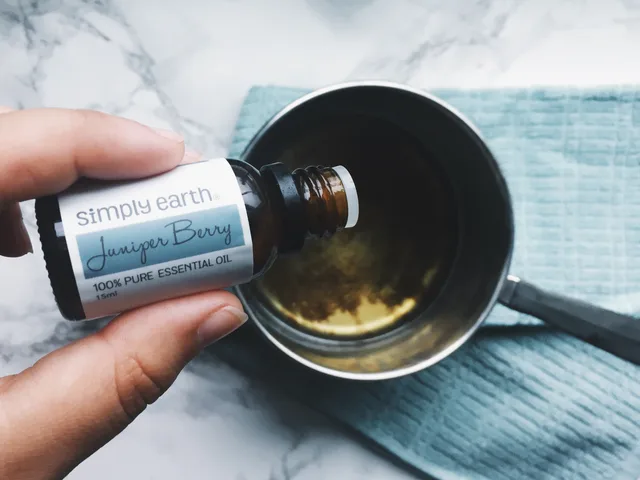
If you judge by what Simply Earth actually puts in its pet recipes rather than by what sounds good, Juniper Berry wins outright. It appears in five of our six published pet recipes — the paw balm, the anti-itch roll-on, the calming diffuser blend, the fur and skin conditioner, and the flea and tick collar. Our own safe-for-dogs list files it under insect repellent and deodorising, which is exactly how the collar and the deodorising spray use it.
AROMATHERAPIST TIP
This is the oil to start with if you are only going to own one for your dog. Twenty drops in a tablespoon of almond oil, rubbed into a bandana and left to dry, is the whole flea and tick collar — no dilution maths, and nothing sitting on skin.


BEST FOR: STIFF JOINTS + ITCHY SKIN
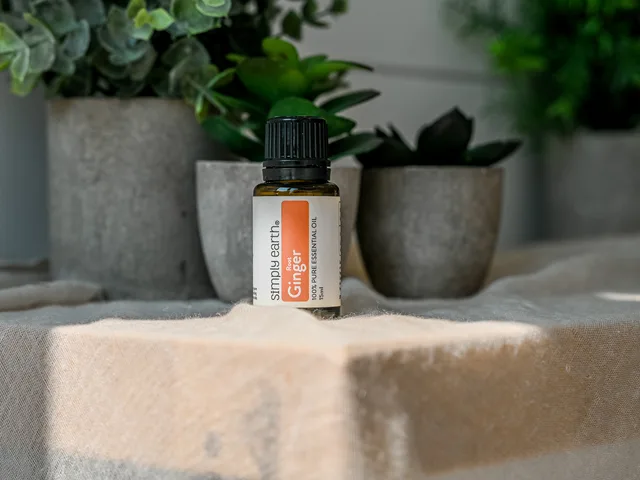
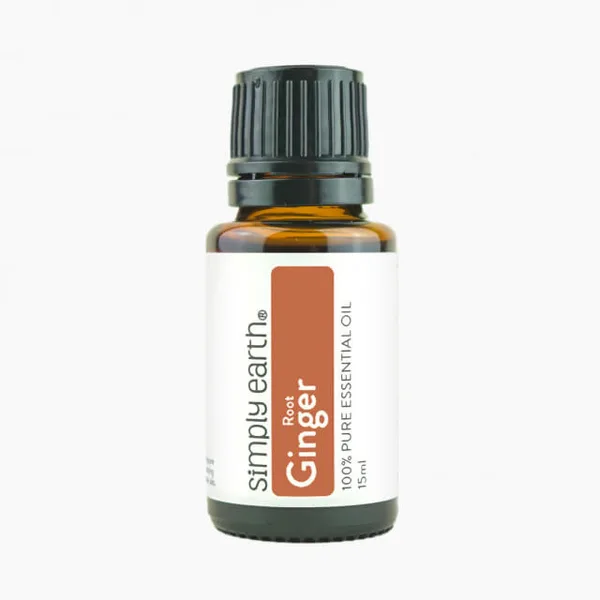
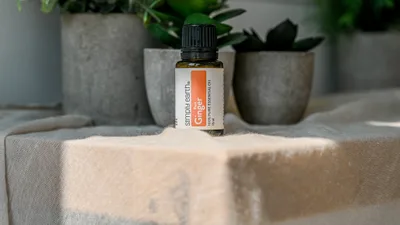
Ginger Root is the second workhorse of our pet recipes, appearing in four of the six — usually alongside Juniper Berry rather than instead of it. It is on our published safe-for-dogs list, and it is the oil doing the warming, soothing half of the paw balm and the anti-itch roll-on. Older dogs who have stiffened up over a cold winter are the classic case.
AROMATHERAPIST TIP
Ginger and Juniper Berry at roughly equal drops is the backbone of both the paw balm and the itchy-skin roll-on. If you are building a small pet kit, buy those two first — between them they make four of our six recipes.
TRY IT IN — OUR PET RECIPES →

BEST FOR: TICKS, FLEAS + MOSQUITOES
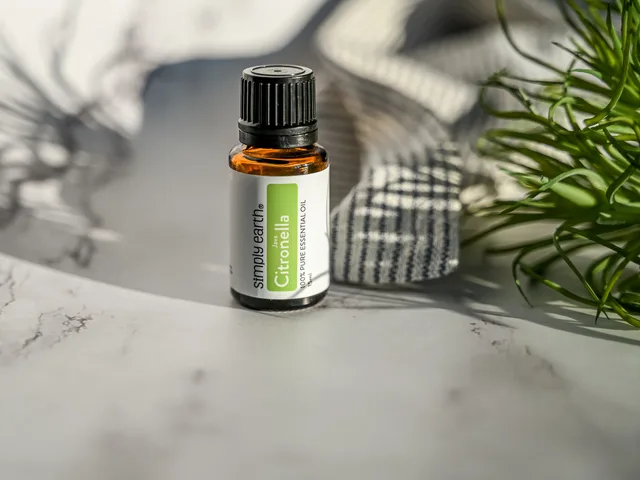
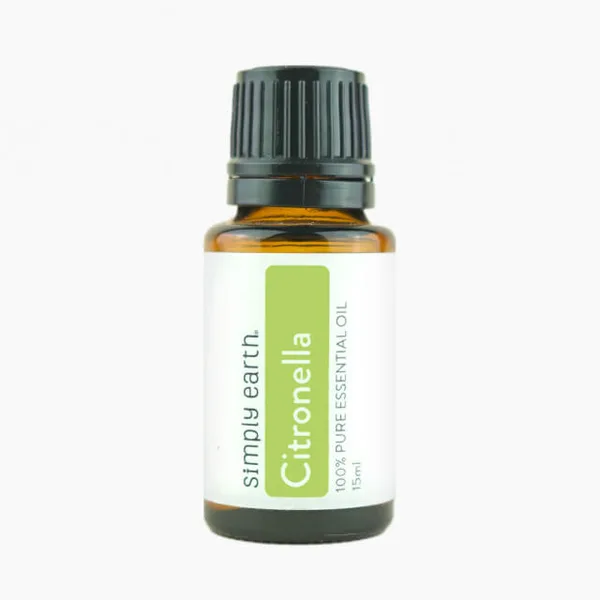
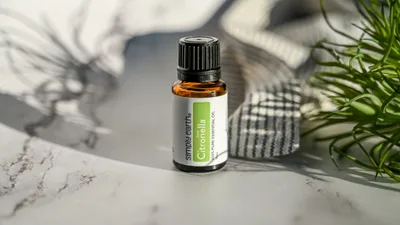
Citronella is the oil most people already associate with keeping insects off, and it is on our safe-for-dogs list specifically as an insect repellent. It partners with Juniper Berry in the flea and tick collar and adds the sharper green note to the fur and skin conditioner. Worth reaching for before a walk through long grass rather than after you have found a tick.
AROMATHERAPIST TIP
Make the collar the night before you need it and let it dry fully. A bandana still damp with carrier oil will mark a pale coat and your sofa, and the aroma is far stronger wet than dry.
TRY IT IN — OUR PET RECIPES →
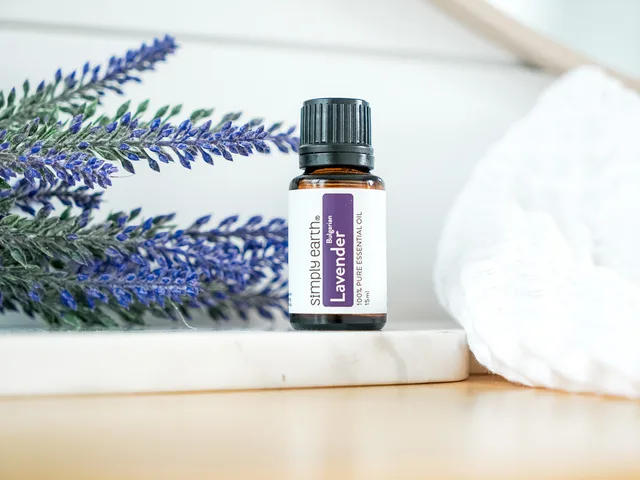
BEST FOR: CALMING + SORENESS
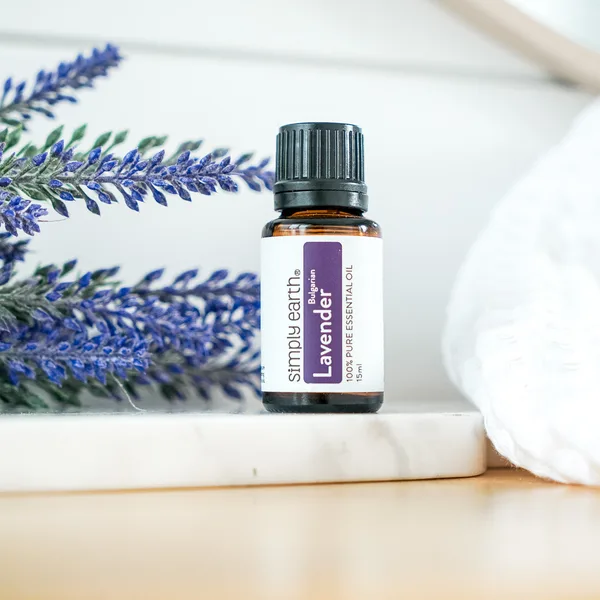
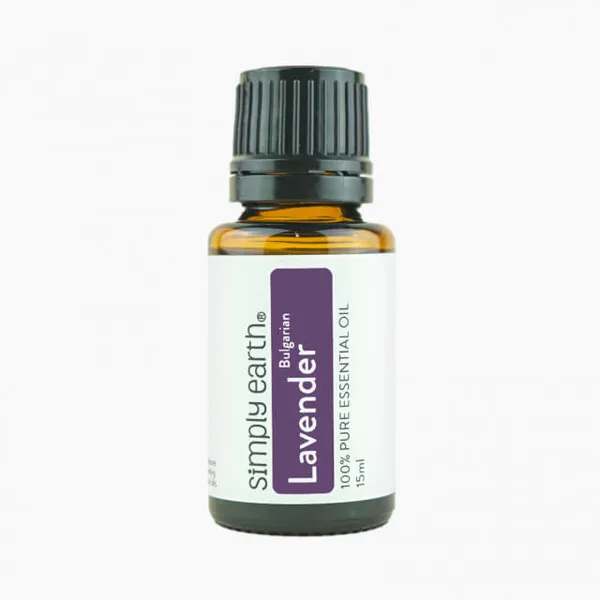
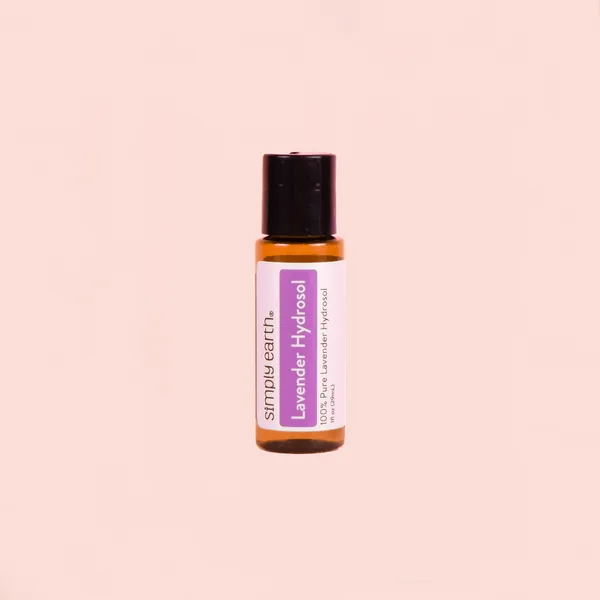
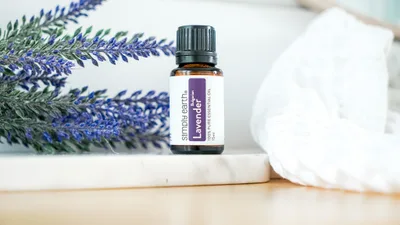
Lavender is on our safe-for-dogs list for calming and pain relief, and it is the oil most owners try first. It also has a second life on this page that no other oil here has. A hydrosol is the water left behind after distillation, far gentler than the oil itself, and Lavender Hydrosol is what our own cat guidance points toward for cats and for very small animals instead of an essential oil.
AROMATHERAPIST TIP
One Simply Earth reader sprays Lavender Hydrosol on her cat bedding, carrier and coat before shows to settle him. That is the honest shape of lavender for a cat — the hydrosol, on bedding, not the neat oil on the animal.
ALSO USED IN — NOT PET RECIPES →

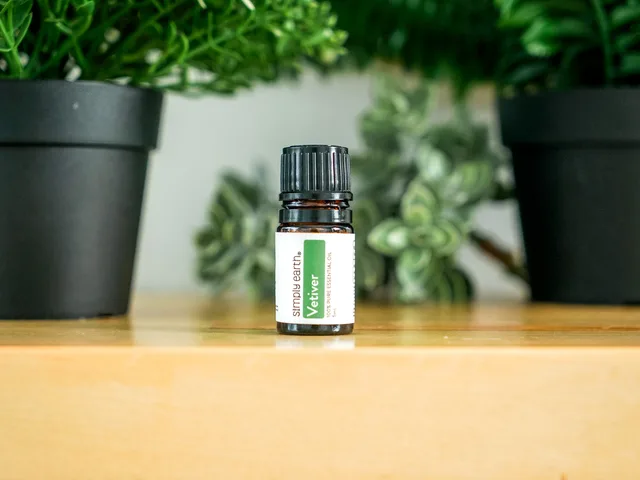
BEST FOR: ANXIETY + SKIN + SLEEP
Vetiver carries the longest annotation on our safe-for-dogs list — soothes anxiety, skin health, aids sleep. It is thick, deep and smoky, and a very small amount goes a long way, which suits a nervous dog far better than something bright and sharp. Think thunderstorms, fireworks, and the hour before you leave the house.
AROMATHERAPIST TIP
Vetiver is viscous enough to sit in the neck of the bottle in a cold room. Warm it in your hand for a minute before you start counting drops, or you will overshoot badly waiting for the first one to fall.
ALSO USED IN — NOT PET RECIPES →

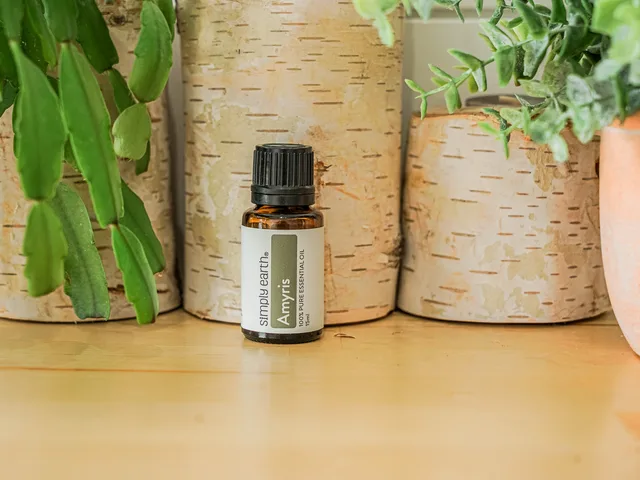
BEST FOR: STRESS RELIEF + COAT CARE
Amyris opens our safe-for-dogs list, annotated for stress relief and skincare. It is soft, woody, and much gentler on the wallet than sandalwood, which is why it turns up in calming blends. For dogs it is a sensible alternative to Vetiver when you want something in the same grounding family but lighter on the nose.
AROMATHERAPIST TIP
Amyris and Lavender together make a quieter diffuser blend than either alone. Two drops in total is plenty in a room your dog shares with you.
ALSO USED IN — NOT PET RECIPES →

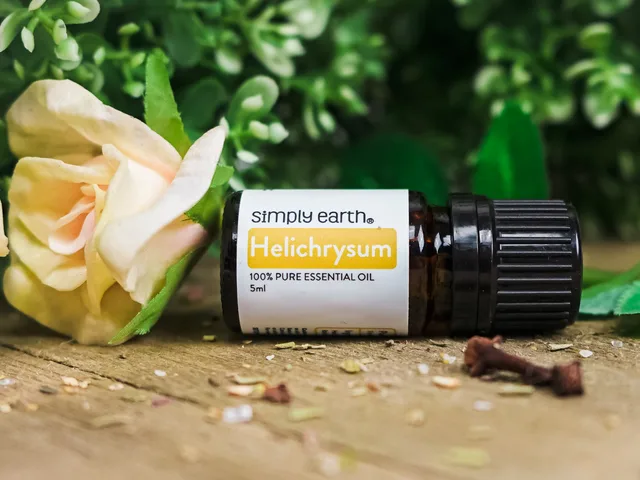
BEST FOR: SKIN HEALING
Helichrysum is on our safe-for-dogs list for skin healing, and it is the most expensive oil on this page by a wide margin — which tells you something about how little of it a distillation yields. Owners reach for it for scrapes, hot spots and skin that has been licked raw, always well diluted into a carrier rather than neat.
AROMATHERAPIST TIP
At this price, buy the 5mL and treat it as a spot treatment rather than something you diffuse. One drop in a teaspoon of carrier oil covers a small patch, and you will not feel you have wasted half the bottle on the air.
ALSO USED IN — NOT PET RECIPES →

BEST FOR: PAIN RELIEF
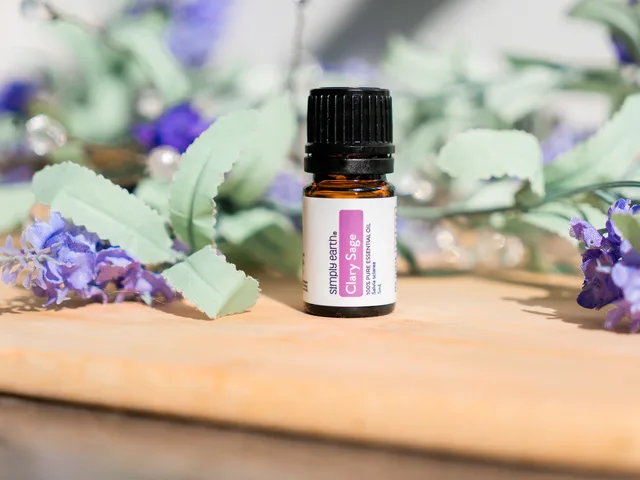
Clary Sage sits on our safe-for-dogs list annotated simply for pain relief. It is herbaceous and slightly sweet, and it blends well with Lavender for a dog that is both sore and unsettled — which, with an older animal, is usually the same dog on the same evening.
AROMATHERAPIST TIP
Clary Sage is one to introduce slowly. Its scent is distinctive and plenty of dogs walk away from it on the first sniff — which, by our own introduction method, is your answer rather than a setback.
ALSO USED IN — NOT PET RECIPES →

BEST FOR: PAIN RELIEF + ANXIETY
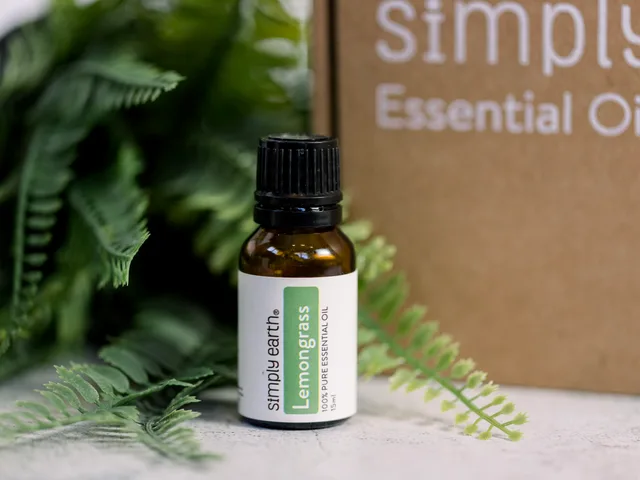
Lemongrass is annotated on our safe-for-dogs list for both pain relief and soothing anxiety — one of only a handful carrying a double entry. It is bright and grassy rather than citrus-sweet, and it is potent, so it is an oil where the dilution rate matters more than usual.
AROMATHERAPIST TIP
Lemongrass is strong enough that one drop too many turns a whole room sharp. Start at a single drop in the diffuser with the door open, and add a second only if your dog chooses to stay in the room.
ALSO USED IN — NOT PET RECIPES →

BEST FOR: DIGESTION
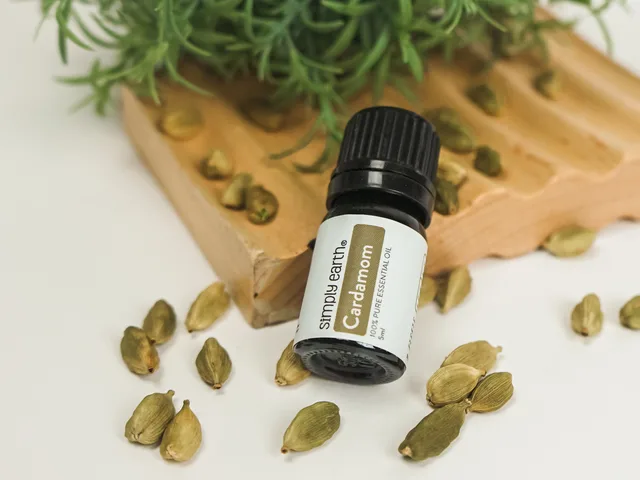
Cardamom is the only oil on our safe-for-dogs list annotated for digestion, which makes it the odd one out here in a useful way. It is warm and sweet-spicy and pairs naturally with Ginger, the other warming oil on this page. Diffused rather than applied is the usual route.
AROMATHERAPIST TIP
Digestive upset in a pet is a vet conversation before it is an essential oil conversation. Use this one for the atmosphere in the room, not as a treatment for something that still needs diagnosing.
ALSO USED IN — NOT PET RECIPES →

BEST FOR: SOOTHING ANXIETY
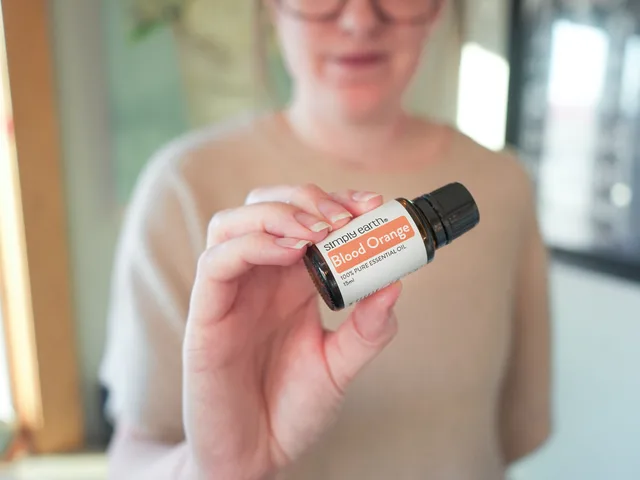
Blood Orange is annotated on our safe-for-dogs list for soothing anxiety, and it is the friendliest smelling oil on this page by some distance. It is a citrus, which matters for the cat column — our cat guidance notes that citrus oils probably will not harm a cat but that cats often dislike the smell, so a multi-pet household should diffuse this one where the cat can walk away.
AROMATHERAPIST TIP
Citrus oils oxidise faster than the woods and roots on this page. Keep this one capped, cool and dark, and expect to replace it sooner than you replace Vetiver.
BEST FOR: SOOTHING ANXIETY
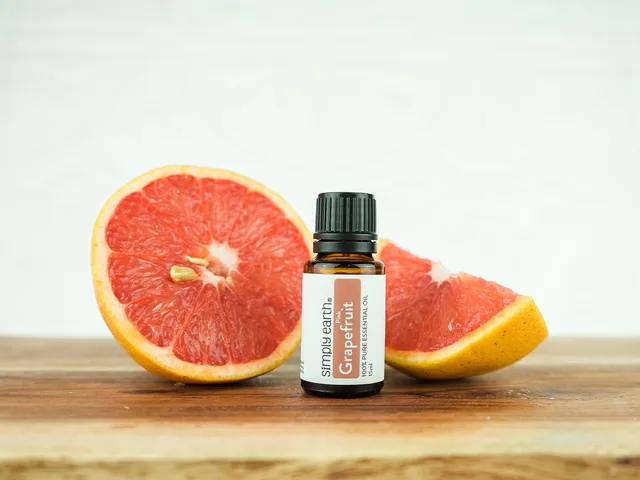
Grapefruit carries the same anxiety annotation as Blood Orange on our safe-for-dogs list, with a sharper, less sugary profile. Owners tend to prefer it in shared living space because it reads as clean rather than sweet. The same citrus caveat applies around cats.
AROMATHERAPIST TIP
If your dog is anxious specifically when left alone, the timing is doing more work than the oil choice. Run the diffuser before you leave rather than as you go, so the room is already settled by the time the door shuts.
ALSO USED IN — NOT PET RECIPES →

BEST FOR: UPLIFTING
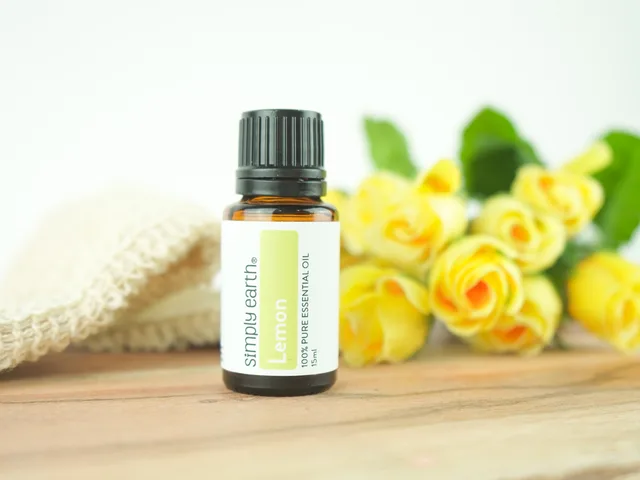
Lemon is annotated on our safe-for-dogs list simply as uplifting, and it is the cheapest oil on this page. It is also the one most households already own, which makes it a sensible first experiment — you are not buying anything new to find out whether your dog tolerates a diffused citrus.
AROMATHERAPIST TIP
Lemon is the oil most likely to already be in your cleaning routine. If you mop with it, that is diffusion your pet never agreed to — the same rule applies, so leave the door open.
ALSO USED IN — NOT PET RECIPES →

BEST FOR: CALMING + NAUSEA — DOGS ONLY
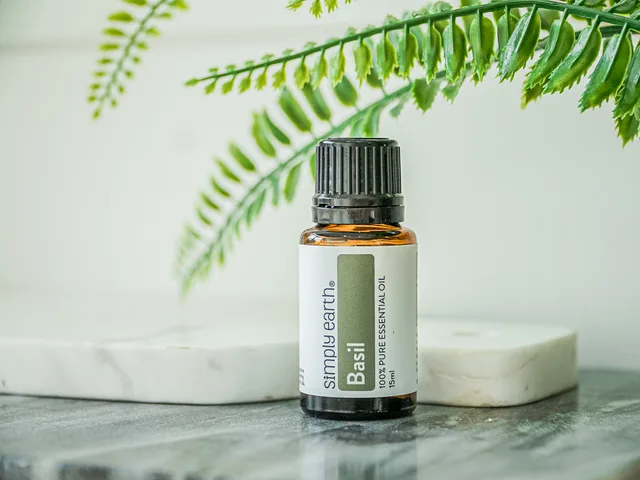
Basil is the reason this page has a species column at all. It sits on our safe-for-dogs list annotated for calming and nausea — and it sits on our cat avoid list, the oils we say not to use topically or in a diffuser around a cat. Both statements are ours and both are current. If there is a cat in the house, this is not the oil to diffuse, however well your dog does with it.
AROMATHERAPIST TIP
In a household with both animals, treat the cat list as the household list. A diffuser does not respect a closed door as reliably as people assume, and the cat cannot tell you it is struggling.
ALSO USED IN — NOT PET RECIPES →

Dog vs. Cat Safety Matrix
Every oil on this page, split by species — because the answer genuinely differs
| The Oil | Dogs — our published use | Cats — our published position |
|---|---|---|
| Juniper Berry | Insect repellent, deodorising | Not on our cat avoid list — vet first, hydrosol preferred |
| Ginger Root | Warming, used in 4 of our pet recipes | Not on our cat avoid list — vet first, hydrosol preferred |
| Citronella | Insect repellent | Not on our cat avoid list — vet first, hydrosol preferred |
| Lavender | Calming, pain relief | Hydrosol is the route we recommend for cats |
| Vetiver | Anxiety, skin health, sleep | Not on our cat avoid list — vet first, hydrosol preferred |
| Amyris | Stress relief, skincare | Not on our cat avoid list — vet first, hydrosol preferred |
| Organic Helichrysum | Skin healing | Not on our cat avoid list — vet first, hydrosol preferred |
| Clary Sage | Pain relief | Not on our cat avoid list — vet first, hydrosol preferred |
| Lemongrass | Pain relief, anxiety | Not on our cat avoid list — vet first, hydrosol preferred |
| Cardamom | Digestion | Not on our cat avoid list — vet first, hydrosol preferred |
| Blood Orange | Soothes anxiety | Citrus — unlikely to harm, but many cats dislike it |
| Grapefruit (Pink) | Soothes anxiety | Citrus — unlikely to harm, but many cats dislike it |
| Lemon | Uplifting | Citrus — unlikely to harm, but many cats dislike it |
| Basil | Calming, nausea | AVOID — on our cat avoid list, topically and diffused |
Get 10% Off the Best Essential Oils for Pets
Every oil our published pet recipes actually call for, plus the hydrosol for cats — 10% off with code PETS10 at checkout.
OUR SIMPLY PURE PROMISE
What Goes Into Your Products Matters
Certified 100% Pure
No fillers, no synthetics. Just pure oil.
GC/MS Third-Party Tested
Every batch independently verified.
Ethically Sourced from Quality Farms
Responsibly harvested. People and planet first.
15mL
Bottle Size
MLM brands: 10mL
$10–22
Per Oil
MLM brands: $25–55+
Public
GC/MS Tests
MLM brands: Rarely
Your Order Changes Lives: 13% of profits fight human trafficking globally.

Key Takeaways
- A dog is not a small cat. Cats lack a liver enzyme that dogs and people have, so an oil your dog handles fine can be a genuinely bad idea around your cat.
- Dilution is by weight. Dogs over 20 lb, 0.5% or less. Dogs under 20 lb, 0.25% or less — or use a hydrosol instead.
- Never trap the aroma. Diffuse 1–2 drops with the door open so your pet can leave the room, and never apply before a crate or carrier.
- Avoid outright: Tea Tree, Birch and Wintergreen for dogs. For cats also Basil, Cinnamon, Clove, Dill, Fennel, Oregano, Peppermint, Thyme, Rosemary, Spearmint and Wintergreen.
- Introduce before you use. Let your pet sniff the bottle with the cap on. Interest is a yes; walking away is a no, and it is worth taking as one.
Essential Oils and Pets: Your Questions
The ones owners actually ask before the first bottle comes out
Which essential oils are safe for dogs? +
Simply Earth publishes a list of oils generally considered safe for dogs that runs to more than forty entries, including Amyris, Balsam Fir, Basil, Blood Orange, Cardamom, Cedarwood, Chamomile, Citronella, Clary Sage, Copaiba, Frankincense, Geranium, Ginger, Grapefruit, Helichrysum, Juniper Berry, Lavender, Lemon, Lemongrass, Myrrh, Palmarosa, Patchouli, Sandalwood, Tangerine and Vetiver. The fourteen profiled on this page are the ones with a documented use attached that we also still sell. Generally considered safe is not the same as safe for your particular animal — talk to your vet first.
Which essential oils should I avoid around my cat? +
Our published cat guidance says not to use these topically or in a diffuser around cats — Basil, Birch, Cinnamon, Clove, Dill, Fennel, Tea Tree, Oregano, Peppermint, Thyme, Rosemary, Spearmint and Wintergreen. Citrus oils probably will not harm a cat but many cats dislike the smell. For dogs the oils we single out to be especially careful of are Tea Tree, Birch and Wintergreen.
What dilution should I use on a dog? +
For a dog over 20 pounds, use a dilution rate of 0.5% or less. For a dog under 20 pounds, use 0.25% or less, or choose a hydrosol instead as the gentler option. Avoid applying an oil before your pet goes into a crate, kennel or carrier, where the aroma has nowhere to go.
Can I diffuse essential oils around my pet? +
Yes, with care. Use only 1–2 drops and always leave the door open so your pet can leave the room if the aroma bothers them. If your pet consistently leaves when a particular oil is running, that is a clear signal that the oil is not a good fit for them.
What is a hydrosol and why use one for a cat? +
A hydrosol is the water left over from the process of extracting the oil from the plant. It carries many of the same benefits but is far less potent than an essential oil, which makes it a good option for cats and small animals. You can apply a hydrosol directly to fur or skin, or use it on bedding and carriers. We sell ready-made Lavender Hydrosol and Rose Hydrosol.
What are the warning signs that an oil is not agreeing with my pet? +
Watch for skin irritation, which is the most common, plus distress, uncharacteristic drooling, squinting, rubbing the face, unusual vocalisation, shaking, tremors, difficulty breathing or vomiting. Wash the area with dish soap and apply a carrier oil, and get your pet into fresh air. Most mild reactions clear within 24 hours, but for anything serious go to a vet or emergency vet. Store oils out of reach, since ingesting them can be toxic.
Does Simply Earth sell an essential oil made for pets? +
No. We do not sell a pet-specific essential oil or blend, and this page does not claim one exists. The oils listed here are our standard single oils and blends, used at pet-appropriate dilutions in recipes our own aromatherapist wrote.
KEEP READING
Go Deeper on the Two Oils This Page Leans On

THE OIL BEHIND THE RECIPES
Juniper Berry Essential Oil
The oil in five of our six pet recipes, covered properly — where it comes from, what else it does, and how to use it.
Read Now →
THE CALMING BLEND
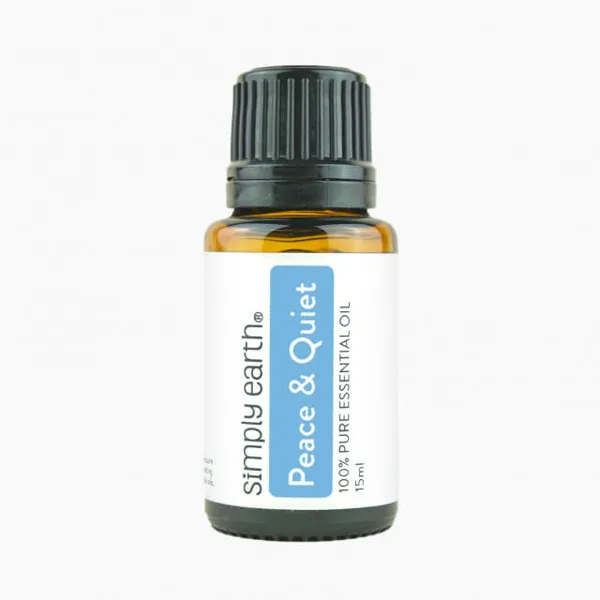
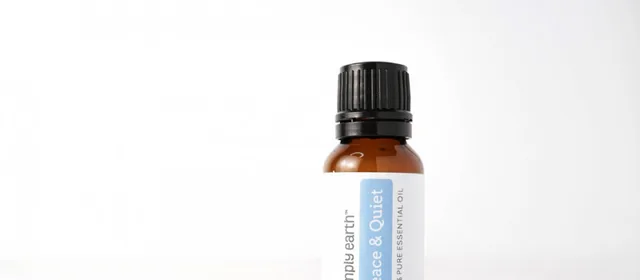
Peace & Quiet Essential Oil Blend
The blend our calming diffuser recipe and dog deodorising spray are both built on.
Read Now →
About the Author: Katie Veldkamp
Katie Veldkamp
Certified Aromatherapist · Co-Founder, Simply Earth
Katie got hooked on oils — then got mad at the prices. So she got certified, flew to farms, and built Simply Earth so nobody has to wonder what is really in their bottle. She wrote every pet recipe linked on this page herself, and she is not a vet — which is why this page sends you to one.
The Free Essential Oil Guide
Simply Earth's free starter guide — what each oil is for, how to dilute it, and how to use it safely at home.
- What each essential oil is for
- Safe dilution and usage basics
Join 47,000+ subscribers making healthier choices naturally.
Free. No spam. Unsubscribe anytime.