
Citronella Essential Oil — Benefits, Uses & Recipes

Katie Veldkamp
Lead Certified Aromatherapist
Fact Checked & Approved
Almost everyone has met citronella, and almost everyone has met it in the same place — a squat green candle on a picnic table. That candle has done citronella a disservice. The oil we bottle is Java citronella, steam-distilled from a tall tropical grass on a farm in Indonesia, and our own product record lists seven distinct uses for it. It cleans. It uplifts. It energizes. It centers. It has a place in diluted skincare. Yes, it deters insects too — but if that is the only reason you own a bottle, you are using about a seventh of it.
In this Guide
Free Cheat Sheet
New to Essential Oils? Start Here.
Get our free Essential Oil Guide — the safe-use basics, dilution rates, and the oils worth buying first.
Start Here
What Is Citronella Essential Oil?
Citronella Essential Oil is steam-distilled from the grass of Cymbopogon winterianus — Java citronella, a tall tropical relative of lemongrass. Ours is grown and distilled in Indonesia, and the oil comes off thin and clear with a top note our product record describes as fresh and citrusy. Our original write-up put it a little more richly, and a little closer to the bottle: woody, fresh and grassy.
It is worth knowing that the word "citronella" covers more than one plant. Java citronella is one of two true commercial citronellas; Ceylon citronella (Cymbopogon nardus) is the other, and the leafy "citronella plant" sold in garden centres every spring is neither. We come back to all three further down the page, because which one you have changes what is in the bottle.
Our Citronella Essential Oil is 100% pure, steam-distilled and third-party tested — no fillers, no synthetic fragrance, no extenders.
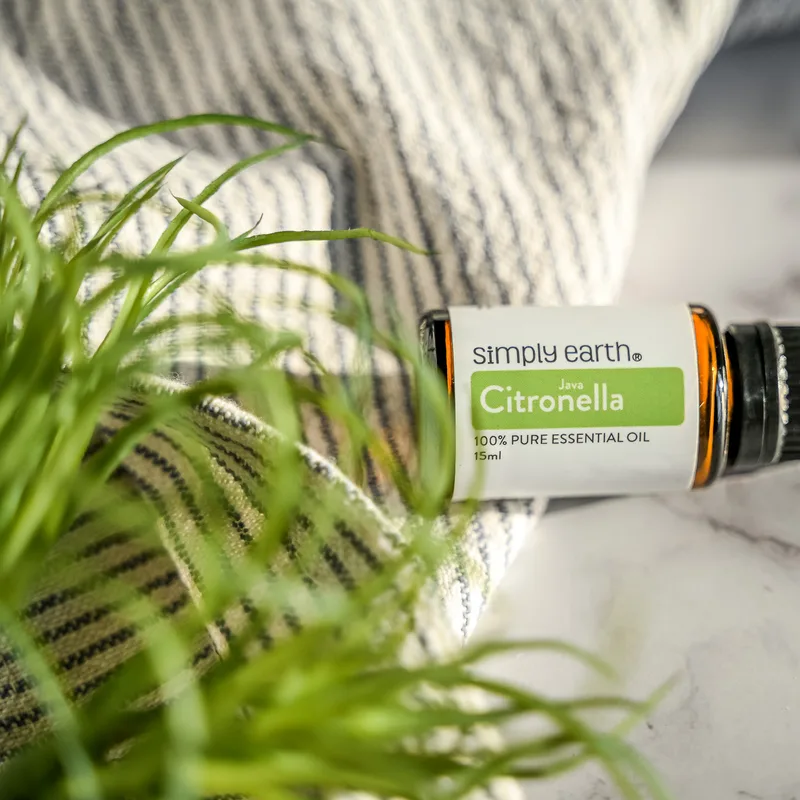
Citronella Essential Oil Deters Insects
The Reason Everyone Already Owns Some
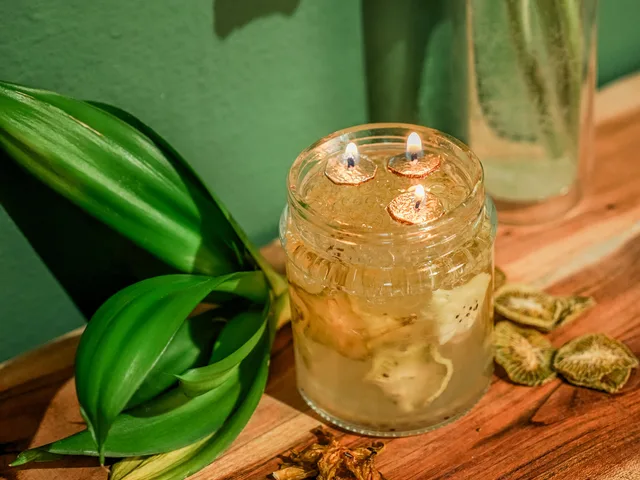 Shop Citronella Essential Oil
BEST FOR: OUTDOOR CANDLES & PATIO DIFFUSING
This is citronella's oldest job, and the one our product record still lists among its uses. Traditionally the oil has been burned in candles and torches and diffused on porches and patios, and that aromatic, outdoor-air use is where it has always belonged. A poured candle or a diffuser running at the edge of the deck is the most natural way to use it. One honest caveat, because it matters — citronella essential oil is not a registered insect repellent, and we do not present it as one. It has not been tested or approved for personal protection, it is not a substitute for a product that has been, and nothing on this page should be read as a claim that it prevents bites or anything carried by them.
KATIE'S TIP
I treat it as atmosphere, not armour. I start a diffuser at the edge of the patio before anyone sits down, and if we are somewhere that genuinely needs protection, I use something registered for that job and keep the citronella for the candles.


Citronella Essential Oil for Natural Cleaning
The Half of This Bottle Nobody Uses
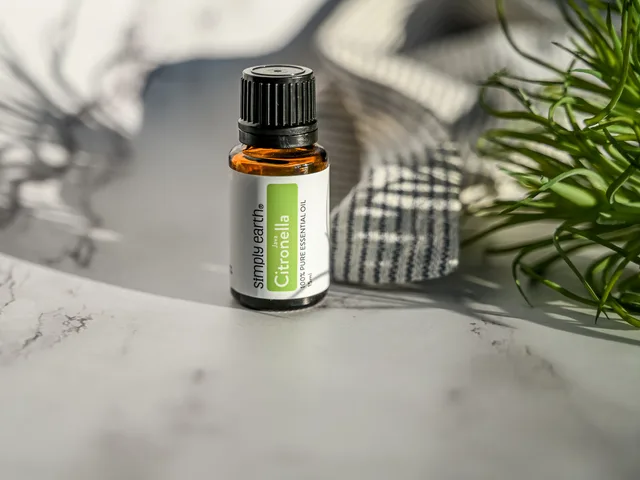 Shop Citronella Essential Oil
BEST FOR: SURFACE SPRAYS & BIN DEODORIZING
Cleans sits in our own list of uses for this oil, and it is the use most citronella owners never try. Citronella belongs to the same lemongrass-family group of oils that earned their place in DIY cleaning — a sharp, green, persistent aroma that holds up in a spray bottle instead of fading out of it the way a thin citrus note does. A 1996 in-vitro study of ten essential oils, cited on our original citronella post, examined antibacterial and antifungal activity across that group. Practically, this is the oil to reach for on bins, boots, garden furniture and anywhere that smells like the outdoors got indoors.
KATIE'S TIP
My unglamorous favourite. A few drops of citronella on a cotton ball goes in the bottom of the kitchen bin whenever I change the bag, and the same trick works in a gym bag or a pair of hiking boots.
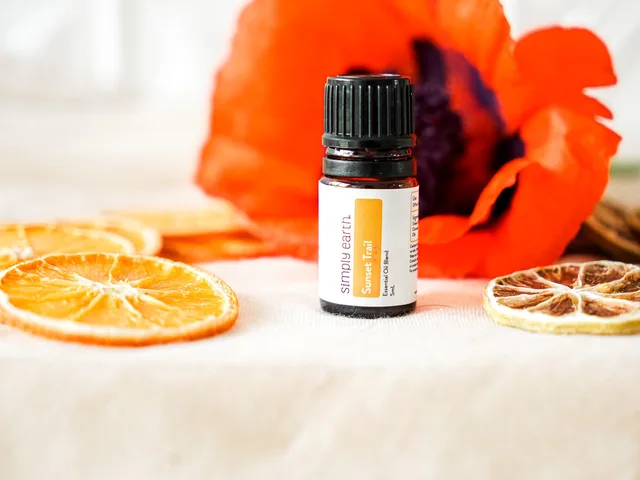
BEST FOR: DIFFUSER BLENDS & OPEN WINDOWS
Uplifts appears on our product record, on our uses-and-safety card for this oil, and on the original post — three places, one message. Our product description puts it more plainly than we usually do, noting that citronella has been shown to reduce negative emotions and calm moods. A 2001 paper on the physiological effects of inhaling fragrances, cited on the legacy post, is the reference behind that language. Our original write-up added a caveat worth keeping — the aroma reads as calming and relaxing to most people and stimulating to some, and the results vary from one person to the next.
KATIE'S TIP
Citronella is what I add when a diffuser blend smells nice but flat. One drop against a couple of citrus drops sharpens the whole thing up without tipping it over into smelling like cleaning day.


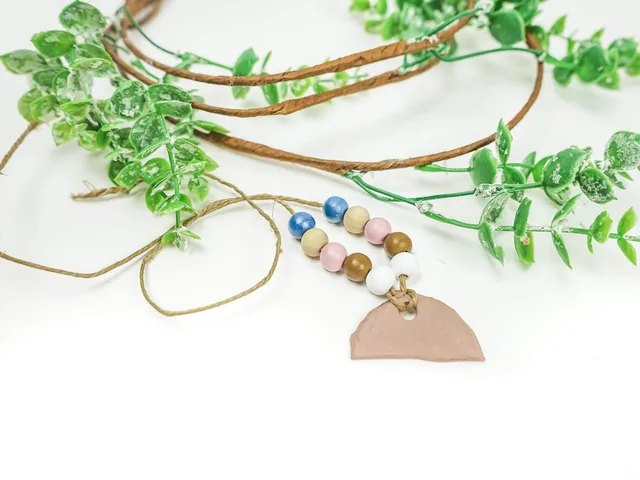
BEST FOR: DIFFUSER JEWELLERY & DESK DIFFUSING
Energizes is one of three uses on our product record that the original post never covered, and it is the one that makes citronella genuinely useful indoors. This is a top note with a blending factor of 3 — sharp, immediate, and gone before it outstays its welcome, which is exactly the profile you want in something you are wearing or keeping on a desk. If you have written this oil off as a summer-only purchase, this is the use that changes your mind.
KATIE'S TIP
A single drop on a clay diffuser pendant lasts me most of a working day. It is the least fussy way to carry an oil around, and citronella is bright enough that you still notice it hours later.

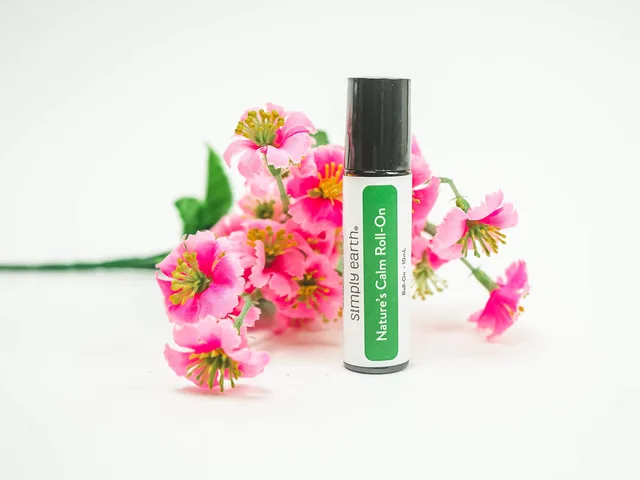
BEST FOR: ROLL-ONS & QUIET-MOMENT BLENDS
Centers is the use that surprises people most, because it sits at the opposite end of the page from the picnic-table candle. It is also the use with the most support in citronella's own chemistry — geraniol and citronellol, two of its three main constituents, are the compounds a published paper cited on our original post examined for their effects on AMPA receptors. Diluted into a roll-on, citronella is grounding without being sleepy, which is a genuinely useful thing to have in a collection full of florals.
KATIE'S TIP
Two drops in a teaspoon of carrier oil in a roller bottle, on the wrists. I reach for it in the middle of a busy day rather than at the end of one — it settles me without slowing me down.
USE IT IN →

Citronella Essential Oil and the Appearance of Skin
A Clarifying Note in DIY Skincare
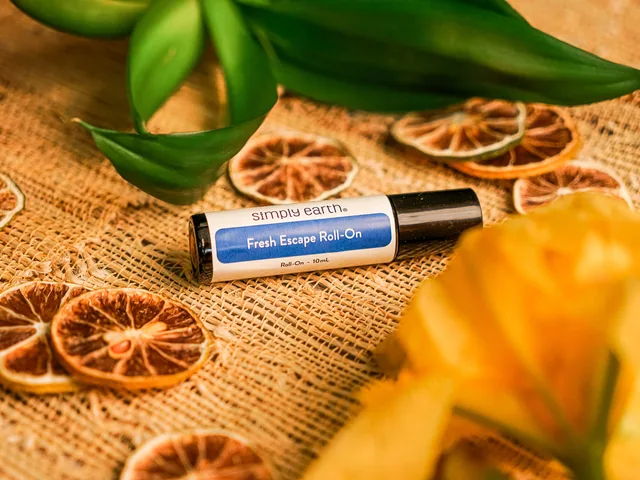 Shop Citronella Essential Oil
BEST FOR: DILUTED FACE & BODY BLENDS
Our product record lists Reduces Appearance of Breakouts among this oil's uses, and our own uses-and-safety card carries the same wording. The original post framed it more loosely as improving the appearance of skin, and noted that citronellol and geraniol are both antioxidants. A 2016 study cited there examined the chemical composition and wound-healing properties of Cymbopogon nardus oil — the Ceylon type rather than the Java in this bottle, which is worth knowing when you go and read it. Treat this as a clarifying addition to a properly diluted blend, at or under the 5% maximum we publish for this oil, and not as a treatment for anything.
KATIE'S TIP
Skin is the one place I am fussy about citronella. I stay well under the 5% ceiling on the face, I patch test on the inside of an elbow first, and I keep the cap tight — an oxidized bottle is far more likely to bother skin than a fresh one.
Citronella Essential Oil Supports Joint Function
The Use Hiding on the Product Record
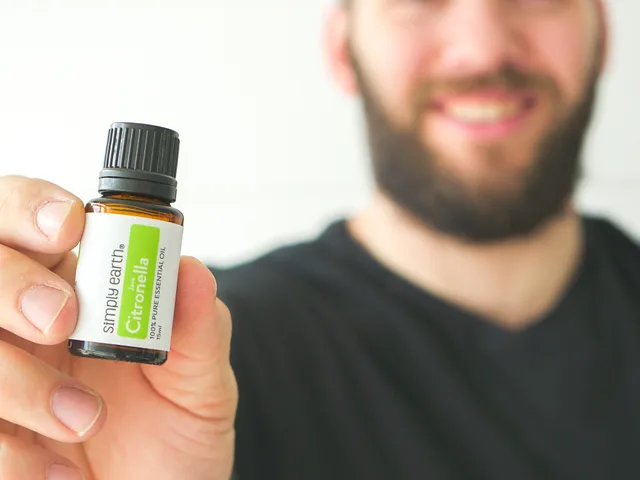 Shop Citronella Essential Oil
BEST FOR: MASSAGE BLENDS & WARM COMPRESSES
Supports Joint Function is listed first among the uses on our own product record for this oil, and it appears nowhere on the original blog post — which is a fair measure of how much of this bottle has gone unwritten. Our earlier write-up pointed the same way from the chemistry side, describing citronellal as promoting joint health and sourcing that to the PubChem entry for the compound. Diluted into a carrier and worked in as a massage blend, or carried in under a warm compress, this is a soft-worded traditional use rather than a clinical one — and it is the reason a roll-on is not a waste of this oil.
KATIE'S TIP
A warm compress gets more out of it than a roll-on does. Two drops in a teaspoon of carrier oil, rub it in, then lay a warm damp cloth over the top for ten minutes and let the heat do the work.
USE IT IN →

Put It to Work
How to Use Citronella Essential Oil + Recipes
Diffuse
- • Add 3–5 drops to a diffuser — outdoors on a porch or patio, or indoors when you want something bright rather than sweet
- • Pair a single drop with citrus or pine to sharpen up a blend that smells flat
- • One drop on a clay diffuser pendant carries most of a working day
Topical
- • Always dilute — we publish a 5% maximum dilution rate for this oil
- • Two drops per teaspoon (5ml) of carrier oil in a roller bottle for a grounding wrist blend
- • Work a diluted blend in as a massage oil, or carry it in under a warm compress
Household & Deodorizing
- • A few drops on a cotton ball in the bottom of a bin, a gym bag or a pair of boots
- • Add to a DIY surface spray for bins, boots and garden furniture
- • Reach for it anywhere that smells like the outdoors came indoors
DIY Recipes
- • Patio Breeze Citronella Candle
- • Honeyed Haven Candles
- • Sunset Trail Diffuser Blend
- • Woodland Diffuser Blend
- • Earthy Diffuser Necklace
- • Nature's Calm Roll-On
- • Fresh Escape Roll-On
Know the Difference
Know the Difference: Java, Ceylon & the Plant That Isn't
Citronella is one of the most mislabelled things in a plant-based cupboard. There are two true commercial citronellas, and Simply Earth has sold both — our early bottles read Ceylon, today's read Java. Then there is the leafy "citronella plant" or "mosquito plant" on sale every spring, which is a scented geranium and not a source of this oil at all. And because citronella's closest relative is a kitchen staple, it gets confused with Lemongrass Essential Oil constantly — same genus, different species, noticeably sweeter. Anything sold as a citronella "fragrance oil" is synthetic and belongs in none of these columns.
Swipe to compare →
Citronella (Java) The one we sell | Citronella (Ceylon) The other true citronella | The "Citronella Plant" Not a citronella at all | |
|---|---|---|---|
| Botanical Name | Cymbopogon winterianus — a tall tropical grass | Cymbopogon nardus — same genus, different species | A Pelargonium, or scented geranium, sold as the mosquito plant |
| Is It a Source of Citronella Oil? | Yes — this is what is in the bottle | Yes — the other commercial citronella | No. Despite the name, it is not distilled for citronella oil |
| Where It Comes From | Indonesia, per our product record | Historically Sri Lanka, which is where the Ceylon name comes from | Garden centres, every spring |
| Distilled From | Steam-distilled grass | Steam-distilled grass | Not distilled for this oil at all |
| Main Constituents | Citronellal, geraniol and citronellol | The same family of constituents in different proportions | Different chemistry entirely, closer to a rose-geranium aroma |
| The Short Version | Thin and clear, fresh and citrusy over a woody, grassy base | Simply Earth carried Ceylon in its early years and sells Java today | A nice houseplant. Buy it as a plant, not as a stand-in for the oil |
| Simply Earth | This page | — | — |
Perfect Pairs
What Citronella Essential Oil Blends Well With
Citronella is a top note with a blending factor of 3 — bright and assertive, so it leads a blend rather than filling one in. Our product record pairs it with soft woods, other citrus and gentle florals, which is exactly how it behaves in a diffuser. You will also find it inside our Pure Space Essential Oil Blend, alongside Lemongrass, Rosemary, Sage and Tea Tree.
From Colonial Cash Crop to Picnic Table
History of Citronella Essential Oil
Citronella's history is a trade history before it is an aromatherapy one. Both commercial species are tropical grasses, and both were built into large-scale export crops during the colonial era — Ceylon citronella (Cymbopogon nardus) out of Sri Lanka, which is where that name comes from, and Java citronella (Cymbopogon winterianus) out of the Indonesian island whose name it still carries.
Java was the newer of the two, and it became the commercially dominant one, prized for a heavier yield of the constituents that perfumers, soap makers and household-goods manufacturers wanted. For most of the twentieth century that is what citronella was — a bulk raw material bought by the drum, rather than something anyone kept a 15ml bottle of on a shelf.
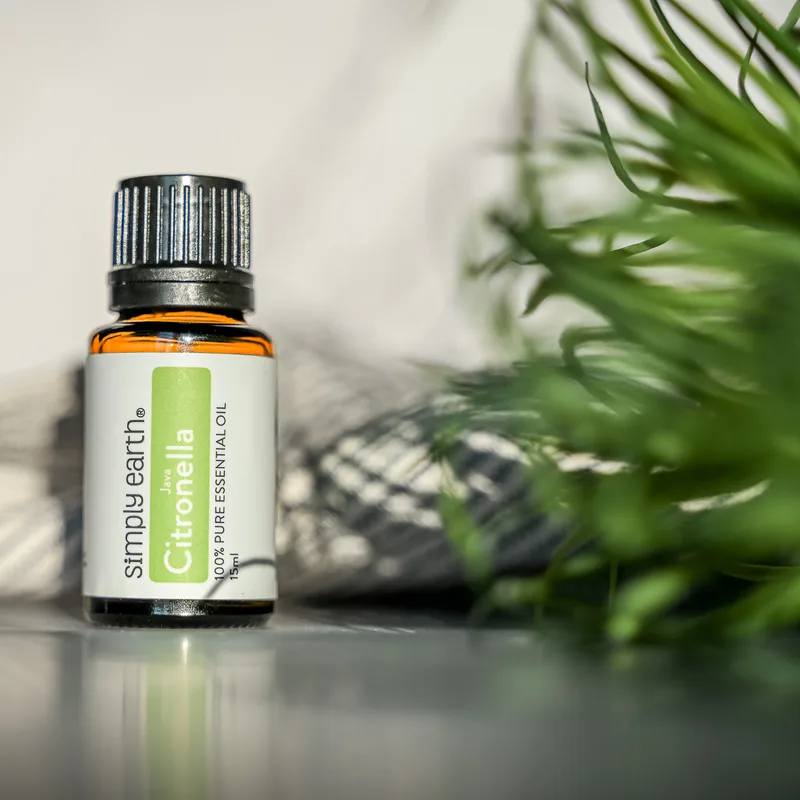
The picnic-table candle is the part of that story everybody remembers, and it is exactly why citronella is at once the most recognised oil in the cupboard and the least explored. Our own product record lists seven uses for it. The candle covers one. The rest of this page is the other six.
The Chemistry
The Science Behind Citronella Essential Oil
Three constituents do the work in this bottle, and our product record names all three:
Citronellal
The aldehyde the oil is named for
The dominant aldehyde in Java citronella and the compound the oil takes its name from. It carries the sharp, fresh, lemon-adjacent note you meet first when you open the bottle. Our original citronella post cited the PubChem entry for citronellal when describing its properties, joint health among them. It is also the constituent the insect-related literature concentrates on, which is a fair reason to be careful about what gets claimed on its behalf.
Geraniol
Soft · Rose-like · Antioxidant
A monoterpene alcohol with a soft, rose-like aroma. It rounds off citronellal's sharper edge, and it is a large part of why citronella works inside a blend rather than simply dominating it. Our product record lists geraniol among this oil's main constituents, and our original post described both geraniol and citronellol as antioxidants.
Citronellol
Geraniol's close partner
The third of the three main constituents named on our product record, and closely related to geraniol in both structure and aroma. A published paper cited on our original post looked at geraniol and citronellol together, examining their effects on the biophysical gating properties of AMPA receptors — which is the chemistry sitting underneath the calming and centering uses further up this page.
Our Citronella Essential Oil is 100% pure, steam-distilled Cymbopogon winterianus — no fillers, no synthetic fragrance, no extenders. We third-party test our products and publish the results. See Our Testing →
Where It Comes From
Where Our Citronella Essential Oil Comes From
This is the part of citronella's story we are proudest of, and we went and filmed it — Citronella: Straight From An Organic Farm In Java, Indonesia was shot on the farm this oil comes from.
Java is volcanic, and that turns out to be the whole point. The soil there is rich in the nutrients a grass crop needs — potassium and magnesium among them — so citronella grown in it gets an unusually good start. On our partner farm the grass is grown under natural farming techniques and carefully controlled conditions, so that it takes as much as it can from that soil before it is cut. The leaves and stems then go to a facility for steam distillation, which is where the oil in your bottle is separated out.
We take sourcing seriously because it is the one part of quality you cannot fix later. The farmer in that photograph is holding the crop this bottle came from.
Java, Indonesia
Country of Origin
Steam Distilled
Straight From the Grass
100% Pure
No Fillers or Extenders

Use It Right
Things to Remember When Using Citronella Essential Oil
Always dilute before applying to skin. We publish a maximum dilution rate of 5% for this oil, and that is a ceiling rather than a target. Full guidance is in our dilution chart.
This is not a registered insect repellent. Citronella essential oil has not been tested or approved for personal protection against insects or anything they carry, and nothing on this page should be read that way. If you need protection, use a product registered for it.
Generally safe when diluted properly. Our product record describes this oil as generally safe and asks only that you follow the dilution instructions. An oil that has oxidized — left with the cap off for long periods — is more likely to irritate skin.
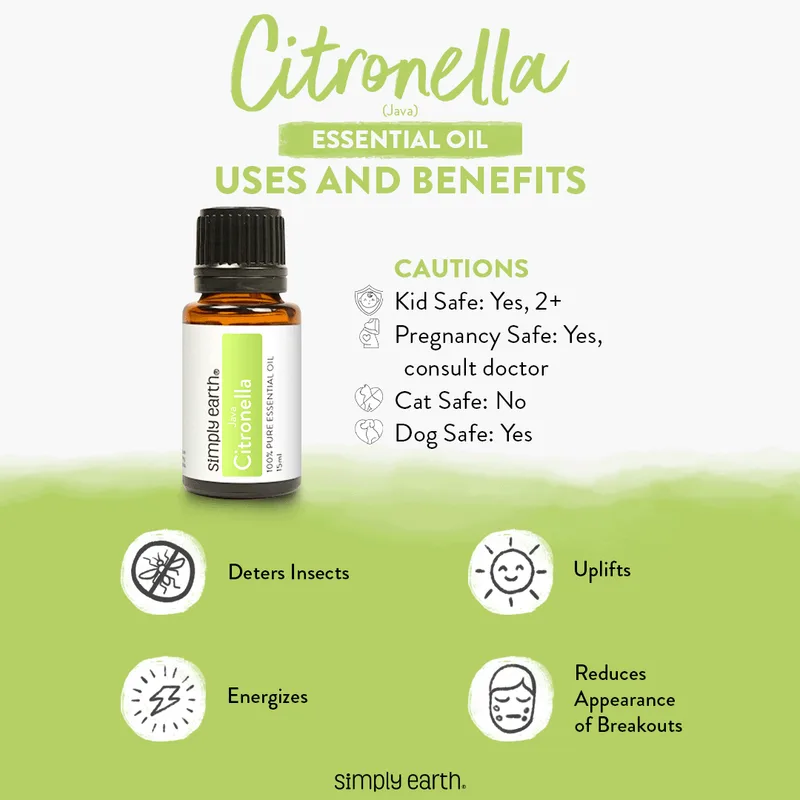
Safe for kids age 2 and up. Use a conservative dilution and keep it away from the face and nose.
Generally safe during pregnancy and breastfeeding. Consult your doctor before use.
Not safe for cats. Our product record lists this oil as not cat safe. Keep it away from them and make sure they can always leave the room — more on cats and essential oils.
Safe to diffuse and use topically on dogs. Read our guide to essential oils for pets.
Sun safe. Unlike the cold-pressed citrus oils, Java citronella is not phototoxic, so it carries no sun-exposure caution.
Shelf life is 4 years. Store it in a cool, dark place with the cap tightly closed, away from heat and direct sunlight.
We don't recommend ingesting essential oils unless under the direction of a doctor certified in aromatherapy — here's why.
These statements have not been evaluated by the Food and Drug Administration. Essential oils are not intended to diagnose, treat, cure, or prevent any disease.
Real Results
What Earthies Are Saying About Citronella Essential Oil
"I love this new essential oil blend! I have been diffusing this one around my house for a few days now and it smells absolutely amazing. I plan to make this into a roller too because I love each oil in this blend."
Alexandria D.
Verified Buyer • Pure Space Essential Oil Blend
"I love the smell of the Peace and Quiet and the citronella and juniper are just what I needed with the warmer weather!"
Steffanie Z.
Verified Buyer • Monthly Subscription Box
"I do love the orange and citronella though! I've made the scent bracelet, calming roll-on and sugar foot scrub and like them."
Julie Bitz
Verified Buyer • Simply Earth Customer
OUR SIMPLY PURE PROMISE
What Goes Into Your Products Matters
Pure & Additive-Free
No fillers, no synthetic fragrance, no extenders.
Third-Party Tested
We test our products and publish the results.
Ethically Sourced from Quality Farms
Grown and steam-distilled in Java, Indonesia.
15mL
Bottle Size
Also available in 8oz and 2lb
5% max
Dilution Rate
Always dilute before skin contact
4 Years
Shelf Life
Stored cool, dark and tightly capped
Your Order Changes Lives: 13% of profits fight human trafficking globally.
Citronella Essential Oil FAQ
The questions Earthies ask most — from the Java-and-Ceylon confusion to the plant at the garden centre that isn't citronella at all.
What is citronella essential oil good for? +
Our product record lists seven uses — supporting joint function, energizing, deterring insects, reducing the appearance of breakouts, uplifting, centering and cleaning. Most people only ever use it for the third one. It is at its best in outdoor candles and diffuser blends, in DIY deodorizing and cleaning, and diluted into roll-ons and massage blends.
Does citronella essential oil keep mosquitoes away? +
Citronella essential oil is not a registered insect repellent, and we do not make protection claims for it. What we can tell you is that deterring insects is one of the uses we list for the oil, and that burning and diffusing it outdoors is its oldest traditional use. If you need reliable protection from insects or anything they carry, use a product that has been tested and approved for that purpose.
What is the difference between Java and Ceylon citronella? +
They are two different species in the same genus. Java citronella is Cymbopogon winterianus and Ceylon citronella is Cymbopogon nardus, named for Sri Lanka. Both are steam-distilled from grass, both are true citronellas, and both carry the same family of constituents in different proportions. Simply Earth carried Ceylon in its early years and sells Java today, sourced from Indonesia.
Is the citronella plant sold in garden centres the same thing? +
No, and this is the most common citronella mix-up there is. The leafy plant sold as a citronella plant or a mosquito plant is a scented geranium, a Pelargonium, and it is not the plant citronella oil is distilled from. It is a perfectly nice houseplant. It is not a source of this oil.
Is citronella essential oil the same as lemongrass? +
No, though they are close relatives in the same genus. Lemongrass is a different species, noticeably sweeter and more straightforwardly lemony. Citronella is sharper, with a woody, grassy undertone underneath the citrus. We sell both, so it is worth smelling them side by side rather than treating one as a substitute for the other.
Is citronella essential oil safe for kids and pets? +
It is safe for children age 2 and up at a conservative dilution, away from the face and nose, and it is generally safe to diffuse and use topically on dogs. It is not cat safe — keep it away from cats and make sure they can always leave the room. It is generally considered safe during pregnancy and while breastfeeding, but consult your doctor first.
How much citronella essential oil should I use on skin? +
We publish a maximum dilution rate of 5% for this oil, and that is a ceiling rather than a target. Two drops per teaspoon of a carrier oil is a comfortable everyday dilution for an adult. Patch test first, and keep the cap tight, because an oxidized oil is more likely to irritate than a fresh one.
About the Author: Katie Veldkamp
Katie Veldkamp
Certified Aromatherapist · Co-Founder, Simply Earth
Katie Veldkamp is Simply Earth's Lead Certified Aromatherapist and the heart behind every product recommendation, recipe, and safety guide on this blog. With years of hands-on aromatherapy practice and a deep love for plant-based wellness, Katie fact-checks every health claim to make sure what you read is safe, science-informed, and actually useful.
Join 20,000+ Earthies Making Their Homes Natural
New recipes, usage guides, and DIY tips—delivered free.
No spam. Unsubscribe any time.

Learn by doing
Make your own natural products every month.
The Simply Earth Recipe Box ships 4 full-size essential oils, 6 natural recipes, and everything you need to make them. No guesswork.
Start My Recipe Box$39.99 for your first box, then $49.99/month. Skip, pause, or cancel anytime.