
Lemon Essential Oil Benefits, Uses & Cleaning Recipes

Katie Veldkamp
Certified Aromatherapist
Fact Checked & Approved
Lemon Essential Oil is cold-pressed from fresh lemon peel, and it smells exactly like the moment you break the rind. It is the oil most people reach for first — the scent is already familiar from every cleaning product in the cupboard — which makes it the easiest oil to use and the easiest one to use wrongly. Lemon is phototoxic: get the dilution right and it earns a permanent spot in your cleaning caddy and your skincare shelf. Here is what it actually does, the one number to know before it touches your skin, and the recipes worth making first.
In this Guide
Free Cheat Sheet
Not sure which oil to reach for?
Get the free Essential Oil Cheat Sheet and understand essential oils with confidence.
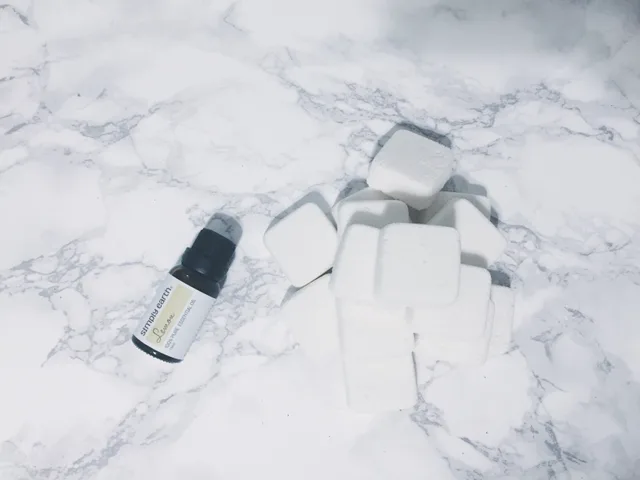
BEST FOR: ALL-PURPOSE SPRAYS
Lab research has found Lemon Essential Oil has antibacterial activity against several strains of bacteria, which is part of why it is one of the most-used oils in DIY cleaning recipes. It also cuts through the smell of a kitchen bin better than anything else on the shelf.
KATIE'S TIP
Mix with white vinegar and water for an all-purpose spray — and shake before every use, since oil and water separate.


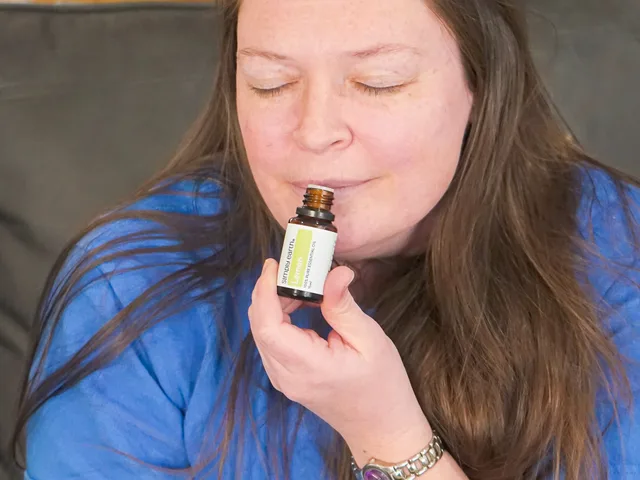
BEST FOR: MORNING DIFFUSER BLENDS
Lemon's sharp citrus top note is one of the most reliably mood-lifting scents in aromatherapy. In one study of essential oil vapours, Lemon produced the strongest anti-stress response among the oils tested.
KATIE'S TIP
Diffuse it first thing, before coffee. Three drops of Lemon and two of Peppermint is the blend I come back to on slow mornings.


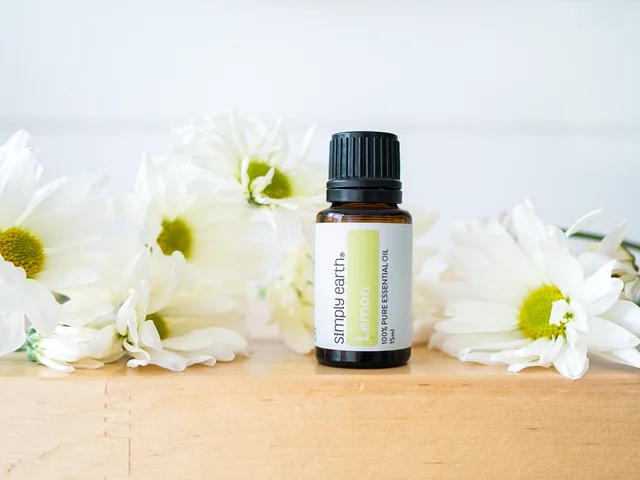
BEST FOR: BLEMISH-PRONE SKINCARE
Lemon Essential Oil is a common addition to facial oils and spot treatments; laboratory research has found it has antimicrobial and anti-inflammatory properties. It is popular in DIY skincare for the look of clearer skin.
KATIE'S TIP
Patch test first, keep it well under the dilution limit, and only ever use it at night — this is the oil you do not wear into the sun.


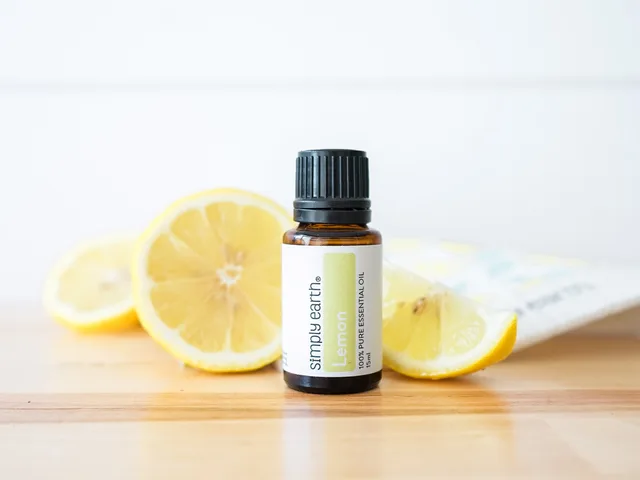
BEST FOR: SEASONAL DIFFUSER BLENDS
Lemon is a traditional favourite when the air feels heavy and seasonal changes make breathing feel like work. Diffused, it makes a room feel freshly aired.
KATIE'S TIP
Pair with Lavender and Peppermint — the classic seasonal trio — and run the diffuser in the bedroom an hour before sleep.


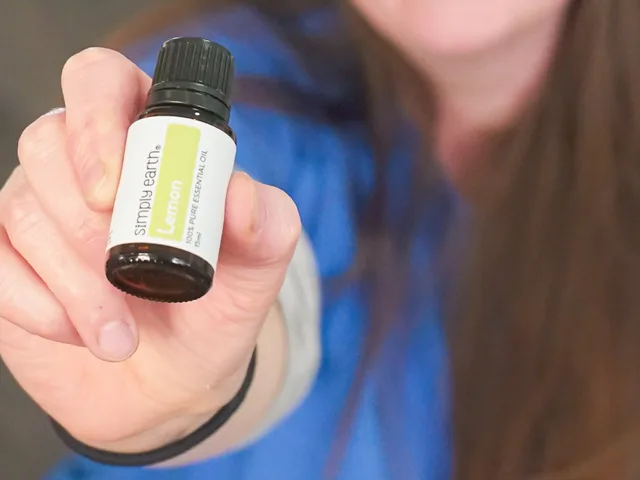
BEST FOR: PREGNANCY AROMATHERAPY, WITH YOUR DOCTOR'S OK
A double-blind randomised controlled trial found that inhaling Lemon essential oil was associated with reduced nausea and vomiting in pregnant participants. It is one of the better-designed studies cited anywhere in this article.
KATIE'S TIP
If you are pregnant and dealing with nausea, talk to your doctor first. Aromatherapy can be a helpful complement to prescribed care — never a replacement for it.


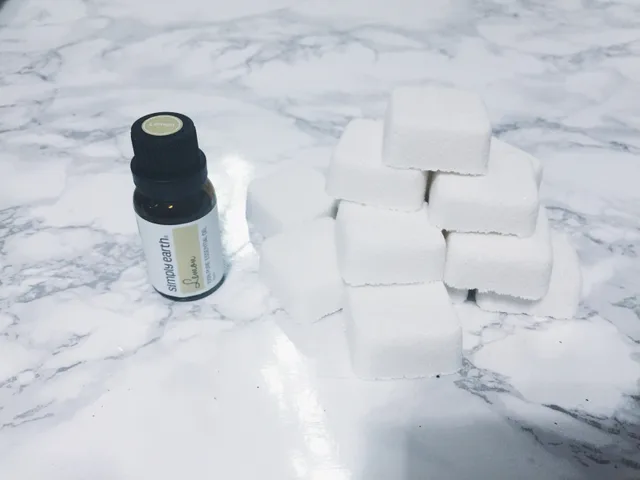
BEST FOR: KITCHEN AND LAUNDRY
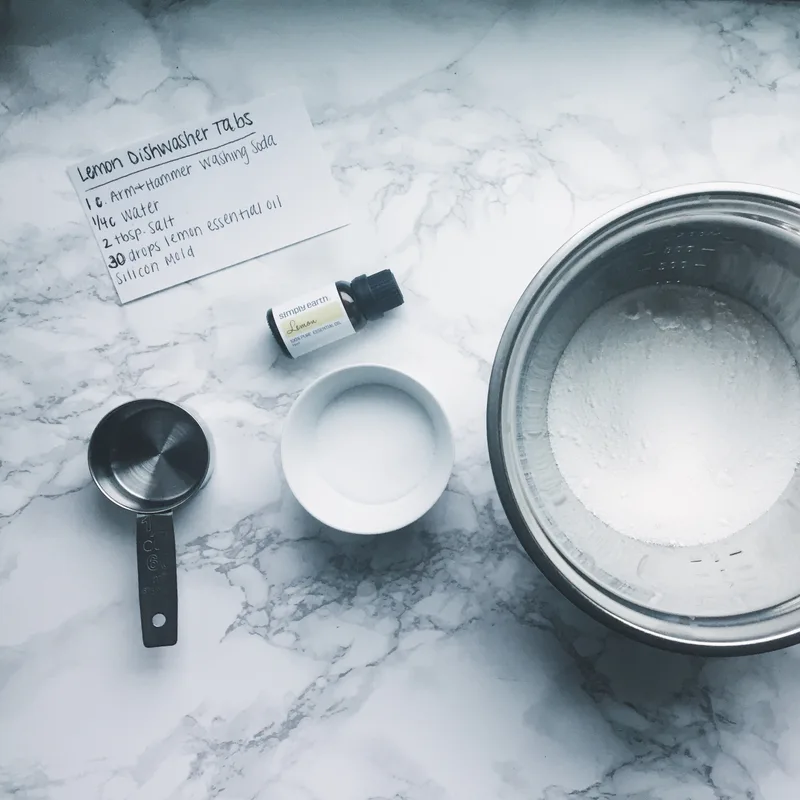
Lemon's solvency is the reason it turns up in dish pastes and laundry sheets as often as in diffusers — it lifts grease and leaves a clean smell rather than a perfumed one.
KATIE'S TIP
A few drops on a wool dryer ball is the lowest-effort way to use Lemon in the whole house.


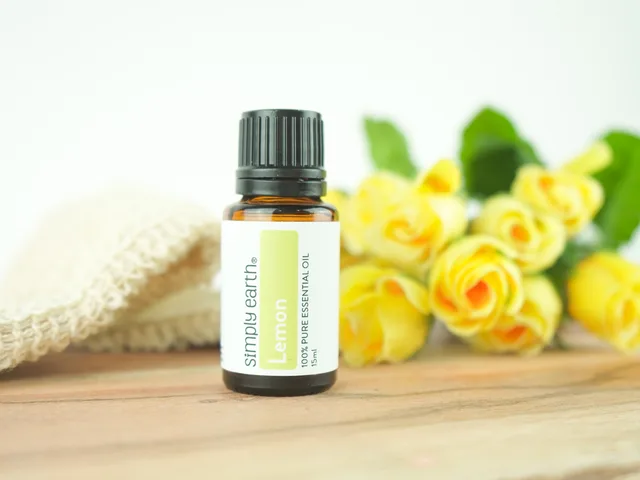
BEST FOR: DIY BODY AND PERSONAL CARE
In body butters, salves and soaps, Lemon does the job a top note is supposed to do. It hits first, lifts the whole blend, then hands off to the heavier oils underneath.
KATIE'S TIP
Lemon fades fastest in a blend. Anchor it with Cedarwood or Vetiver if you want the scent to last past the first hour.


Put It to Work
How to Use Lemon Essential Oil
Diffuse
- • 3–5 drops in the diffuser for a bright, awake room
- • Pair with Peppermint for mornings, Lavender for evenings
- • Diffuse 30–60 minutes at a time rather than continuously
Topical
- • Dilute to 2.5% maximum — about 12 drops per ounce of carrier oil
- • Night use only on any skin that will see sun within 12 hours
- • Patch test on the inner forearm before facial use
Household
- • All-purpose spray with white vinegar and water
- • A few drops on a wool dryer ball for laundry
- • Dish paste and dishwasher tablets
DIY
- • Body butters, salves and cold-process soap as the top note
- • Roll-ons, bath salts and candles
- • Anchor it with a base note so the citrus lasts
Know the Difference
Lemon vs. Lemongrass vs. Lemon Eucalyptus
Three oils share the word "lemon" and a citrus note, and they come from three completely unrelated plants — a citrus tree, a tropical grass and a eucalyptus. Both alternates carry real search volume of their own, so readers genuinely arrive here confused. Simply Earth carries all three, so this is a "which one do you want" table rather than a "which one do we stock" one — the badge below simply marks the oil this page is about.
Swipe to compare →
Lemon Citrus limon | Lemongrass Cymbopogon flexuosus | Lemon Eucalyptus Corymbia citriodora | |
|---|---|---|---|
| Plant part | Fruit peel of a small thorny evergreen citrus tree | The leaves and stalks of a tall tropical grass | The leaves of a eucalyptus tree |
| Extraction | Cold-pressed | Steam-distilled | Steam-distilled |
| Scent | Bright, sharp, true lemon rind | Grassy and lemony, slightly earthy | Sharp lemon-menthol |
| Skin sensitivity | Medium — phototoxic, so keep topical use to 2.5% and out of the sun | Higher — a known sensitiser, patch test first | Higher — a known sensitiser, patch test first |
| Best for | Cleaning, skincare and mornings | Insect blends and deodorising | Insect blends and respiratory support |
| Sold by Simply Earth | Yes — Lemon Essential Oil | Yes — Lemongrass Essential Oil | Yes — Lemon Eucalyptus Essential Oil |
| This article | The subject of this page | — | — |
Perfect Pairs
Lemon Blends Well With…
Lemon is a top note, so it hits first and fades first. Anchor it with a wood or a resin if you want the blend to last. Simply Earth blends that already use Lemon include Clean & Fresh, Citrus Burst, Sparkling Lemon, Clear Skin, Defender, Autumn Air, Bumps & Boo-Boos and Veins.
A Citrus Classic
History of Lemon Essential Oil
Lemon oil has been recognised as a natural cleanser for generations, long before anyone could explain why it worked. Its most famous chapter belongs to the fruit rather than the oil: the British Navy issued lemons on long voyages to counter scurvy, and the word "limey" survives from it. That is a nutritional story about vitamin C, not an aromatherapy one — worth telling honestly, and worth keeping distinct from what the essential oil does.
What the oil brought was preservation and scent. Cold-pressing the peel captures the volatile compounds that make a lemon smell like a lemon, and those same compounds are solvents — which is how Lemon became a fixture of household cleaning products decades before "natural cleaning" was a category. The bottle in your cupboard is doing what people have used lemon peel to do for a very long time, just concentrated.
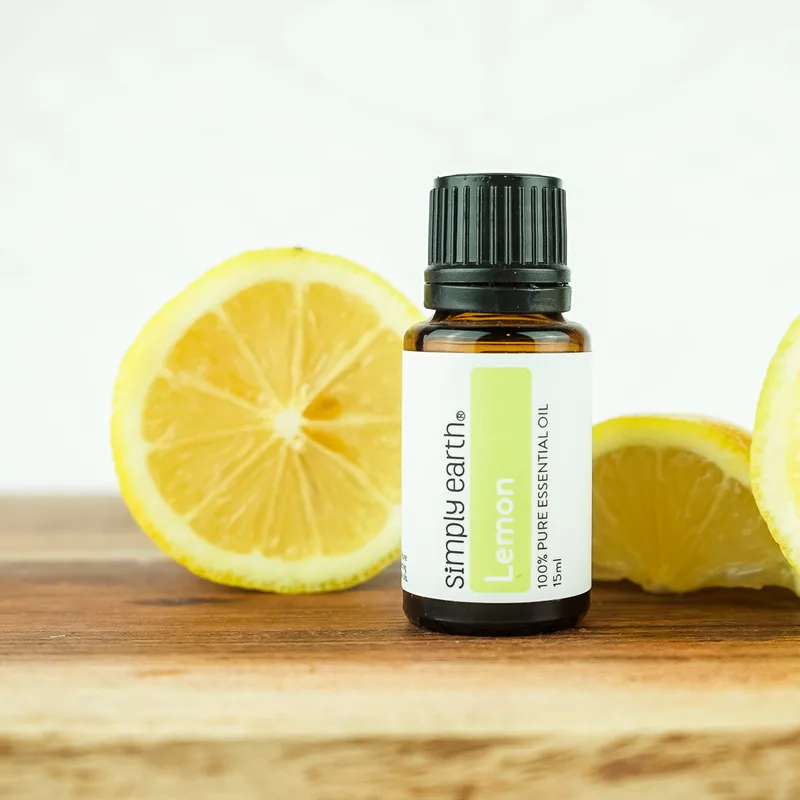
The Chemistry
What's the Science Behind This Oil?
Three naturally occurring compounds give Lemon its bright, sharp, unmistakably citrus character. These are facts from the chemistry literature about the compounds, not claims about what this product does to a person.
Limonene
The dominant compound · Bright · Solvent
The compound most responsible for Lemon's bright, sharp aroma, and the one that dominates the oil's profile. Studied in laboratory research for antibacterial and antioxidant activity, and used industrially as a renewables-based solvent — which is a fair clue as to why Lemon cuts grease.
β-Pinene
Monoterpene · Fresh · Faintly piney
A monoterpene found across the conifer and citrus families. In Lemon it contributes a fresh, faintly piney edge underneath the citrus, which is part of why the oil reads as clean rather than sweet.
γ-Terpinene
Antioxidant · Distinctly lemon
A major constituent of citrus oils with strong antioxidant activity in laboratory studies. It carries a distinctly lemon odour of its own and is widely used in food, cosmetic and perfume manufacturing.
Simply Earth's Lemon Essential Oil is cold-pressed from the peel of Citrus limon. We third-party test our oils and publish the results, and we never blend them with synthetic fragrance, fillers or extenders. A batch GC/MS report is not linked for Lemon yet — the oil has no row in SE's Ingredient Info database and therefore no Spec Sheets relation to cite here. Shop Lemon Essential Oil →
Where It Comes From
Where Our Lemon Comes From
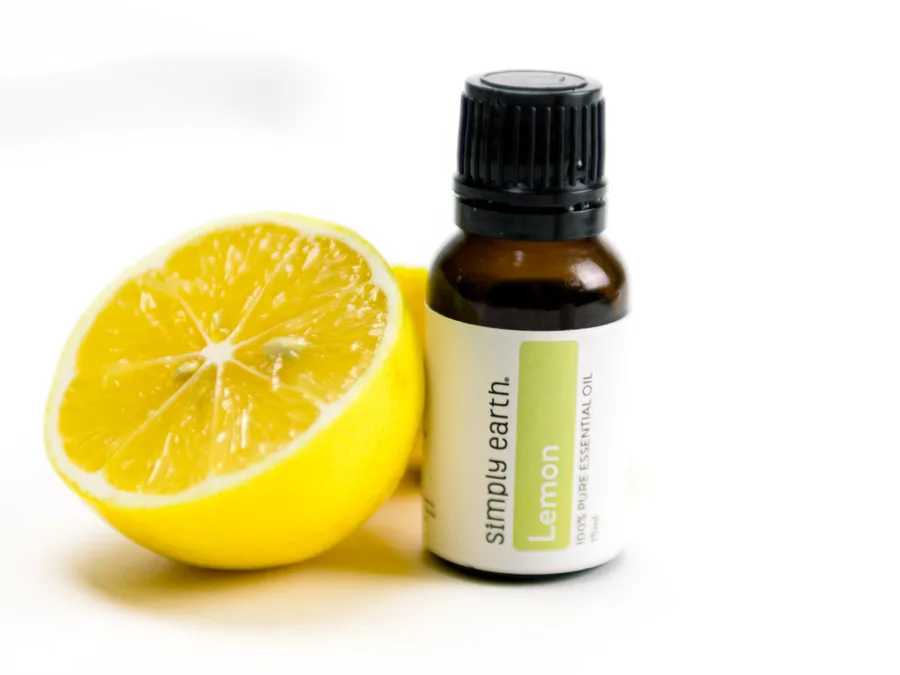
Simply Earth's Lemon Essential Oil is cold-pressed from the fruit peel of Citrus limon, a small thorny evergreen tree that carries round yellow fruit and a strong, bright, unmistakably lemony scent. Cold-pressing rather than distillation is what keeps the aroma so close to the fruit itself — the volatile compounds come straight out of the peel rather than being carried over in steam.
The lemons themselves come from Southern Italy, where they are grown and pressed by Citrusmade, a family-run citrus producer with more than twenty years in the business. Two things about how they work show up in the bottle. The first is timing: they pick when the fruit is at its most aromatic — not early, not late — and cold-press it within hours of harvest, before the peel has a chance to oxidise or pick up the flat notes that come from sitting in storage. The second is traceability. Citrusmade works directly with Italian growers and keeps tight oversight of production, so every drum can be traced back to where the fruit was grown.
That is also why the oil tastes — or rather smells — the same from one bottle to the next. Consistency in a cold-pressed citrus oil is a supply-chain achievement, not a chemistry one.
Use It Right
Things to Remember When Using This Oil
Always dilute before applying to skin. The general maximum dilution for Lemon is 5%, but read the sun-safety note below before you use anything close to it.
☀️ Sun safety is the one that matters. Lemon is phototoxic. Keep topical dilution at 2.5% or less — about 12 drops per ounce of carrier oil — and keep treated skin out of the sun and off tanning beds for at least 12 hours.
Safe to use around kids age 2 and up.
Pregnancy-safe — consult your doctor before use.
Generally safe around dogs. Not cat safe — avoid diffusing around cats or applying it anywhere they could come into contact with it.
Generally safe while breastfeeding.
Shelf life is about one year once opened, which is shorter than most oils because citrus oils oxidise fast. If the scent turns flat, dull or waxy, replace it.
We do not recommend ingesting essential oils. For lemon flavour, use real lemon or lemon juice.
These statements have not been evaluated by the Food and Drug Administration. This product is not intended to diagnose, treat, cure, or prevent any disease.
Real Results
What Earthies Are Saying About It
"I really like this lemon essential oil. I love to use it for my cleaning recipes. It's bright and citrus smell is amazing."
Rosanna
Website Review • Lemon Essential Oil
"I use the lemon and grapefruit oil in my diffuser. I love the smell as it wafts through our home. Thank you!"
Barbara Melvard
Verified Buyer • Lemon Essential Oil
"I only put in Lemon Essential Oil Drops and it smells AMAZING! It works, is reusable and no-waste, cheaper than buying one-time-use car diffusers, and doesn't bother those with fragrance sensitivities because it uses Essential Oils!"
Michelle Bonner
Verified Buyer • Car Essential Oil Diffuser
OUR SIMPLY PURE PROMISE
What Goes Into Your Products Matters
Certified 100% Pure
No fillers, no synthetics. Just pure oil.
GC/MS Third-Party Tested
Every batch independently verified.
Ethically Sourced from Quality Farms
Responsibly harvested. People and planet first.
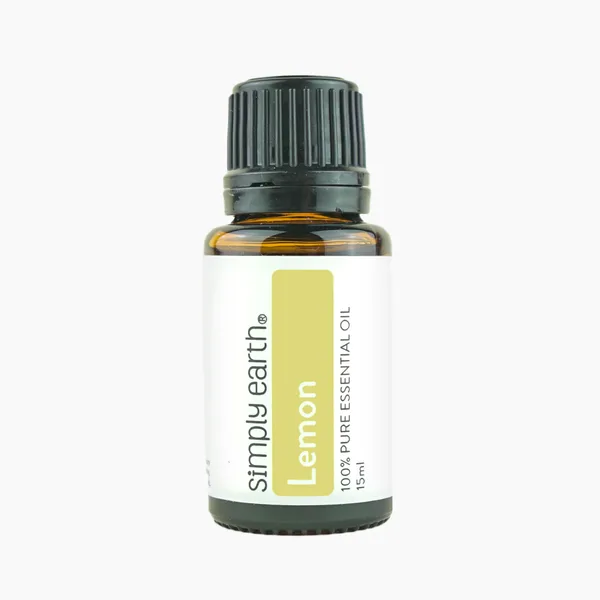
15mL
Bottle Size
MLM brands: 10mL
$10–16
Per Oil
MLM brands: $25–55+
Public
GC/MS Tests
MLM brands: Rarely
Your Order Changes Lives: 13% of profits fight human trafficking globally.
Lemon Essential Oil FAQ
The questions Earthies ask most about using Lemon safely — starting with the sun.
Is lemon essential oil phototoxic? +
Yes. Cold-pressed Lemon Essential Oil is phototoxic, which means treated skin can burn or discolour in sunlight. Keep topical dilution at 2.5% or less — roughly 12 drops per ounce of carrier oil — and keep that skin out of the sun and off tanning beds for at least 12 hours. Diffusing carries no phototoxicity risk at all.
How much lemon essential oil do I put in a diffuser? +
Three to five drops is the sweet spot for most standard diffusers. Run it 30–60 minutes at a time rather than continuously — your nose adapts quickly, and longer sessions lose their effect rather than gaining one.
What is the difference between lemon and lemongrass essential oil? +
They come from completely unrelated plants. Lemon is cold-pressed from the peel of a citrus fruit and smells like true lemon rind. Lemongrass is steam-distilled from a tropical grass and smells grassy and slightly earthy. Lemon is phototoxic; lemongrass is not, but it is a known skin sensitiser. Simply Earth carries both.
Can I use lemon essential oil for cleaning? +
It is one of the most-used oils in DIY cleaning for good reason — its main compound, limonene, is used industrially as a solvent, which is why Lemon cuts grease. Mix it with white vinegar and water for an all-purpose spray, and shake before every use since oil and water separate.
How long does lemon essential oil last? +
About a year once opened. Citrus oils oxidise faster than most, so Lemon has a shorter shelf life than a wood or a resin. If the scent turns flat, dull or waxy, replace it rather than using it on skin.
Is lemon essential oil safe around pets? +
It is generally considered safe around dogs, but it is not cat safe. Avoid diffusing Lemon around cats and never apply it anywhere a cat could come into contact with it. If you diffuse in a shared space, leave the door open so pets can leave the room.
Can I put lemon essential oil in my water? +
We do not recommend ingesting essential oils. A single drop is far more concentrated than it looks, and it does not disperse in water. If you want lemon flavour, use real lemon or lemon juice.
About the Author: Katie Veldkamp
Katie Veldkamp
Certified Aromatherapist · Co-Founder, Simply Earth
Katie Veldkamp is a Certified Aromatherapist and co-founder of Simply Earth. Her mission is to cut through the noise around essential oils so you can use them with confidence. Everything in this article has been reviewed and approved by Katie.
Learn essential oils the easy way
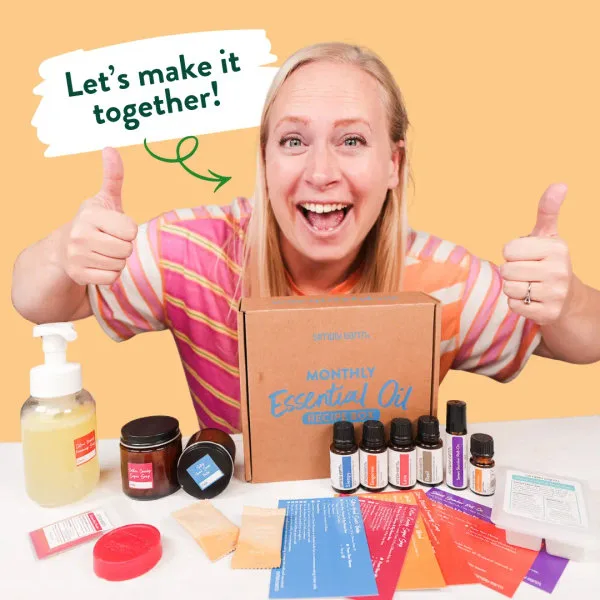
Every month we ship four pure essential oils, six natural recipes, and everything you need to make them. No guesswork.
No spam. Unsubscribe any time.
Learn by doing
Make your own natural products every month.
The Simply Earth Recipe Box ships four full-size essential oils, six natural recipes, and every container and ingredient those recipes call for — so you make the thing instead of reading about it.
Start My Recipe BoxPause, skip or cancel any time. 13% of profits fight human trafficking.