
Lavender Essential Oil: 7 Benefits of True Bulgarian Lavender

Katie Veldkamp
Lead Certified Aromatherapist
Fact Checked & Approved
Lavender is the oil almost everyone starts with, and the one most people never really learn. It gets bought for sleep, then quietly does about six other jobs — skin, scalp, tension, mood, cleaning — while sitting in the drawer. There is also a catch nobody mentions at the checkout: a good deal of what gets sold as "lavender" is a cheaper hybrid that smells close and behaves differently. This is what our Bulgarian lavender actually does, how to use it without wasting it, and how to tell the real thing from its lookalikes.
THE SIMPLY EARTH LAVENDER LINE


Free Cheat Sheet
New to essential oils? Start with the free cheat sheet.
Lavender is the classic first oil. This one-page guide covers the basics — dilution, diffusing, and what to try first.
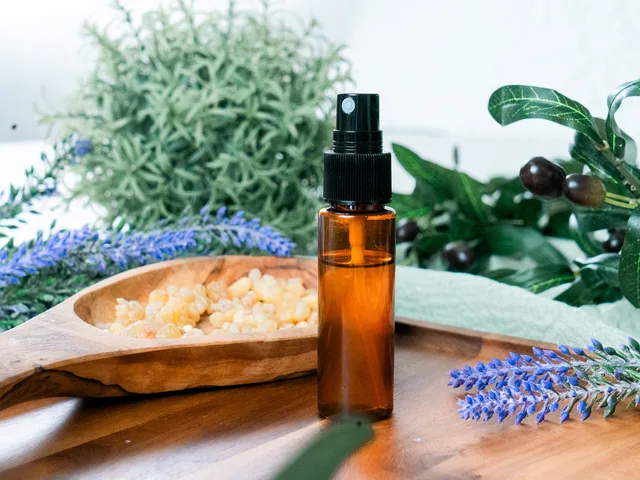
BEST FOR: SLEEP & WINDING DOWN
This is lavender's signature use, and the one it has held for a very long time. The appeal is not that lavender knocks you out — it doesn't — but that a familiar, gentle scent gives your evening a consistent signal that the day is finishing. Most people get more out of it from repetition than from quantity: the same few drops, in the same place, at the same time. A pillow or room spray is the easiest way in, because it puts the scent where you already are rather than asking you to remember a new step.
KATIE'S TIP
Two spritzes on the pillow, every night, beats ten drops once a week. Lavender rewards routine more than it rewards volume — and a 15mL bottle will last months at that rate.


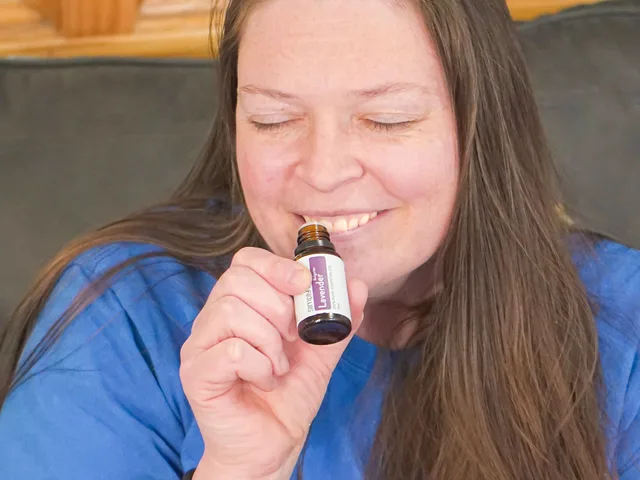
BEST FOR: MOOD & EVERYDAY TENSION
Lavender is usually filed under "calming", which undersells it. Our Bulgarian lavender carries a noticeably sweet, almost fruity edge, and that is the part that reads as a lift rather than a sedative. One long-time customer put it better than we could — she found it "both relaxes me and uplifts my mood at the same time." In practice this is the oil to reach for in the middle of a long afternoon, not only at bedtime, and it is why lavender turns up in so many of our blends.
KATIE'S TIP
Straight from the bottle is a legitimate method. Open it, hold it a few inches away, and take two slow breaths. No diffuser, no dilution, no setup — this is the fastest thing lavender does.


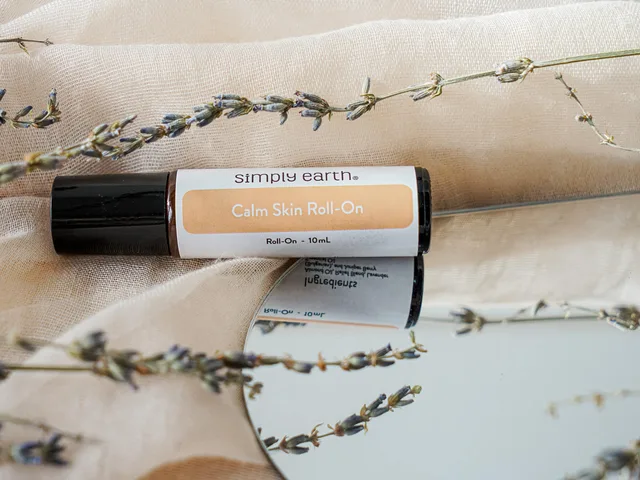
BEST FOR: DRY, IRRITATED & REACTIVE SKIN
Plenty of oils are described as good for skin. Lavender's advantage is that it is mild enough to keep using, which matters more than potency for anything you apply daily. It suits a simple roll-on or salve for rough patches, wind-chapped hands and the general end-of-winter state of skin. It still needs a carrier oil — lavender is gentle, not exempt — and jojoba or fractionated coconut oil both work well.
KATIE'S TIP
Patch test on your inner forearm and wait 24 hours before putting any new oil on your face. Gentle is not the same as universally tolerated, and one small test saves a bad week.


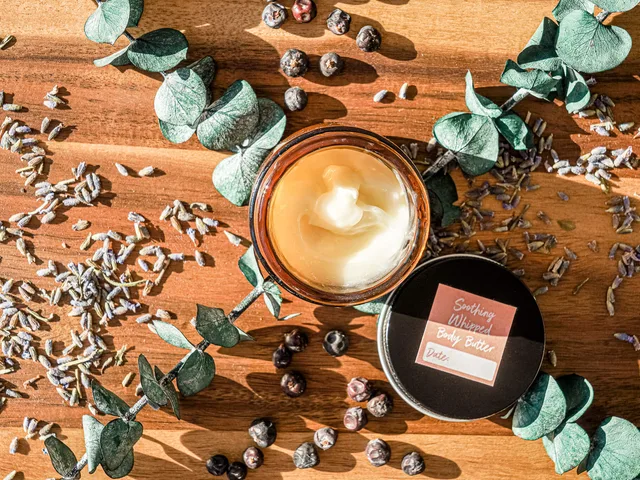
BEST FOR: SKIN APPEARANCE & DAILY CARE
This is lavender in a supporting role rather than a starring one. Added to a body butter, eye balm or lip butter, it gives a rich base recipe a scent that is pleasant enough to finish the jar — and a moisturiser you actually keep using does more for how your skin looks than an ambitious one you abandon. Keep the concentration low in anything for the face and let the carrier oils and butters do the heavy lifting.
KATIE'S TIP
Around the eyes, halve whatever dilution you would use elsewhere. That skin is thinner than the rest of your face and a balm that feels fine on your hands can feel like far too much there.


BEST FOR: SCALP & HAIR CARE
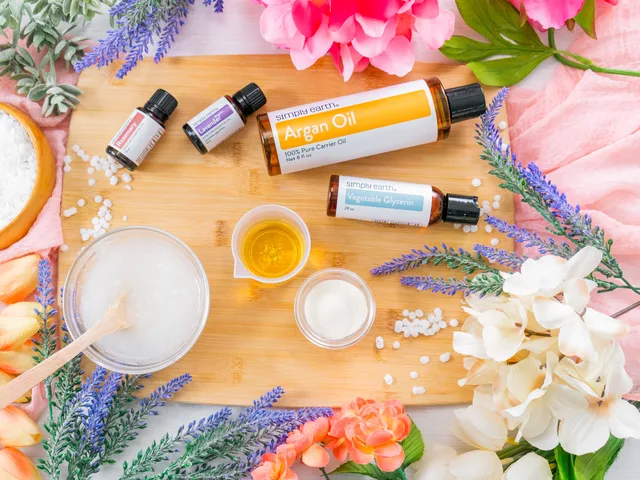
Worth being straight about what this is and isn't. Lavender is a long-standing ingredient in hair rinses, glazes and shower gels, where it contributes scent and a soothed-feeling scalp — and hair that looks better generally starts with a scalp that feels comfortable. We are not claiming it makes hair grow or grow faster. Use it diluted in a rinse or glaze, keep it off the eyes, and treat it as a pleasant part of a washing routine rather than a treatment.
KATIE'S TIP
Lavender pairs naturally with rosemary in hair recipes — the two smell good together and cover the herbal and floral ends at once. Our Rosemary Glass Hair Glaze is built on exactly that pairing.


BEST FOR: TENSION & HEAD DISCOMFORT
This one is on our product listing and somehow never made it into the original article, which is a shame — it is one of the more practical things lavender does. It shows up as tension you carry in your neck, shoulders and jaw at the end of a long day, and it is the reason lavender is in our Head Soothing blend rather than a decorative addition to it. A diluted balm massaged into the shoulders and temples is the usual approach.
KATIE'S TIP
Keep it well away from your eyes when you use it near your temples — a fingertip's worth on the hairline and the back of the neck is plenty, and far easier to control than anything applied closer in.


BEST FOR: FOCUS & MENTAL CLARITY
"Promotes Brain Health" is how our product listing has long described lavender, and it deserves a plainer explanation than the phrase gives. What we are comfortable saying is modest: a calm, familiar scent in the room makes it easier for many people to settle into focused work, and lavender is among the most widely studied oils in aromatherapy for relaxation. We are not claiming it treats, prevents or alters any condition. If you want the honest version — diffuse it while you work and see whether you settle faster.
KATIE'S TIP
Lavender is a middle note, so it neither leads nor lingers. In a working-hours diffuser blend it sits well under a citrus like sweet orange, which carries the top and keeps the mix from feeling sleepy.
USE IT IN

How to Use It
Four Ways In, From Easiest to Most Involved
Diffuse
- • 3–5 drops in a diffuser is enough for most rooms
- • Run it 30 minutes on, 30 minutes off rather than all evening
- • Pair with sweet orange or bergamot to keep a blend from feeling heavy
- • Straight from the bottle works too — two slow breaths, a few inches away
Topical — always diluted
- • Our recommended maximum for lavender is 5%
- • Roughly 1–2% (6–12 drops per ounce) suits daily face and body use
- • Jojoba and fractionated coconut oil are the easiest carriers to start with
- • Patch test any new blend on your inner forearm and wait 24 hours
Around the house
- • A linen spray for pillows, sheets and towels
- • 3 drops on a wool dryer ball, which is how several of our customers use it
- • Add to unscented castile soap for a hand or floor wash
- • Its name comes from washing, so this is lavender's oldest job
DIY & making
- • Body butters, salves, lip and eye balms
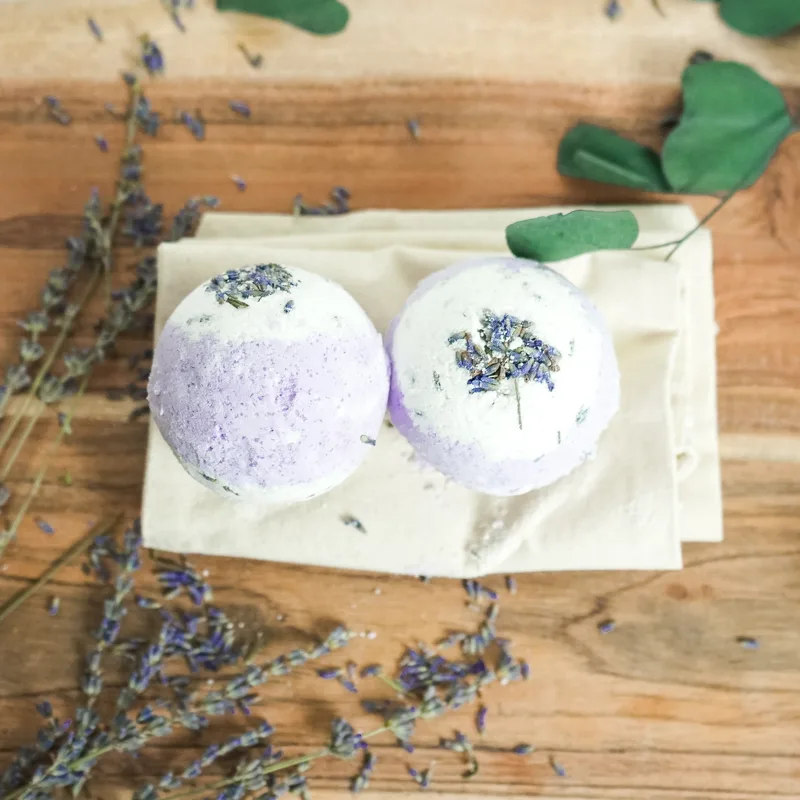
- • Bath bombs, bubble bars and bath salts
- • Shower gels, shampoo and conditioner bars, hair glazes
- • Kid-friendly recipes are possible from age 2 and up — see Things to Remember
Know the Difference
Not Everything Labelled Lavender Is This Lavender
Three things get sold as lavender essential oil and they are not interchangeable. This page is about the first column — our unstandardised, single-origin Bulgarian oil. Also worth knowing: spike lavender (L. latifolia) is a separate species again, much higher in camphor and better suited to muscle and respiratory recipes; lavender fragrance oil is a synthetic and not an essential oil at all; and Lavender Hydrosol is the gentle floral water from the same distillation, safe to use undiluted.
Swipe to compare →
True Lavender Lavandula angustifolia | Lavender 40/42 Standardised blend | Lavandin L. x intermedia | |
|---|---|---|---|
| What it is | A single-origin oil distilled from one lavender species, with whatever chemistry that harvest produced | True lavender blended and adjusted so linalool and linalyl acetate land at a consistent 40–42% every batch | A hybrid of true lavender and spike lavender, grown for yield — much of the cheap "lavender" oil on the market |
| Best for | Rest, skin, scalp, head tension, everyday aromatherapy | Perfumery, soaping and candles, where batch-to-batch consistency matters more than nuance | Cleaning products and room scenting on a budget |
| Aroma | Fresh and floral with a sweet, slightly fruity edge — varies a little by harvest | Predictable and even, by design, harvest after harvest | Sharper and more camphorous — the giveaway if you know what to smell for |
| Camphor | Low | Low and controlled | Noticeably higher, inherited from its spike lavender parent |
| Batch variation | Expected, and part of buying a single-origin oil | Minimal — that is the entire point of standardising | Varies by grower with little disclosure |
| Simply Earth | We carry this | — | — |
Blends Well With
What to Put It Next To
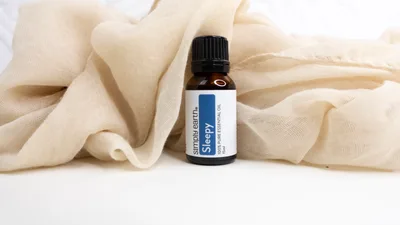
Lavender is a middle note with a blending factor of 7, which is a technical way of saying it plays well with almost everything and rarely dominates. It also does real work inside ten of our own blends — Beauty Within, BO Be Gone, Bumps & Boo-Boos, Farewell Scars, Fit, Good Vibes, Head Soothing, Ladies' Choice, Sleepy and Sweet Dreams.
A Little History
The Name Is a Job Description
Lavender takes its name from the Latin lavare — "to wash". That is not a poetic flourish; it is what the plant was for. Long before it became a sleep aid it was a laundry and bathing herb, which is why lavender still turns up so naturally in soap, linen spray and floor wash. If you use it for cleaning, you are using it the original way.
It has a long documented history in perfumery and preparation of the dead in ancient Egypt, and one story that gets retold often enough to deserve a caveat: when Tutankhamun's tomb was opened in 1923, a faint scent of lavender was said to have still been detectable after some three thousand years. We pass that on as the legend it is rather than as a fact — it is a good story, not a measurement.
The nickname that stuck is more useful anyway. Lavender is often called the Swiss Army knife of essential oils, and the seven benefits above are the reason. Most oils do one thing well. This one does a passable job at rather a lot, which is exactly why it is the sensible first bottle.
The Chemistry
What's Actually in the Bottle
Three main constituents, and one you want to see less of:
Linalyl Acetate
The sweet, fruity edge
An ester of linalool, and the compound behind the slightly fruity sweetness that distinguishes a good Bulgarian lavender from a flat one. It is one of the two constituents that standardised 40/42 lavender is blended to hold at a fixed level — which tells you how central it is to what people recognise as lavender.
Linalool
The calming floral note
The most studied constituent in lavender and the one most associated with its relaxing character. Together with linalyl acetate it accounts for much of why lavender reads as soothing rather than sharp. The balance between these two is also what separates true lavender from lavandin.
cis-β-Ocimene
The fresh, green top
Present in smaller amounts and easy to overlook, ocimene contributes the fresh, faintly green lift at the top of the aroma. It is part of why our lavender does not smell purely powdery or sweet, and part of what makes a single-origin oil smell like a plant rather than a formula.
Camphor — the tell
Worth knowing what should be low rather than high. Lavandin, the cheap hybrid so often sold as lavender, inherits noticeably more camphor from its spike lavender parent. If a "lavender" smells sharp and medicinal rather than sweet and floral, camphor is usually the reason.
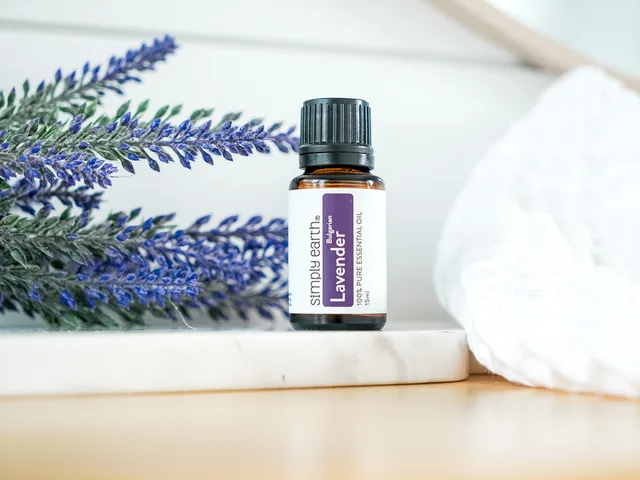
Simply Earth's Lavender is steam-distilled from the flowering tops of Lavandula angustifolia grown in Bulgaria — 100% pure, with no synthetic fragrance, extenders or additives. Every bottle comes with a batch-specific GC/MS report, so the chemistry above is not a general claim about lavender but something you can check against the harvest in your own bottle. See Our Testing →
Where Ours Comes From
Bulgaria, and We Have the Film to Prove It
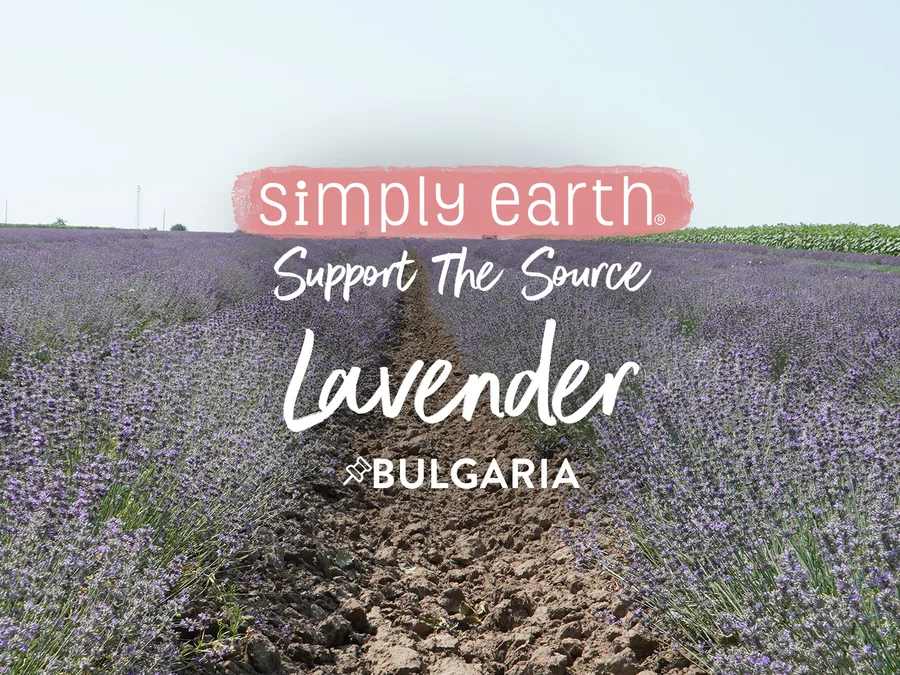
Bulgaria is one of the largest lavender producers in the world, and it is where this oil comes from. That is not a marketing line we can be vague about — it is stamped through our own records twice over. Every size of this product carries the SKU stem EO-LAVENDER(BUL), right down to the retired 2lb bottle, and the origin on the product record reads Bulgarian Super.
We also went there. Our own film, Lavender: Straight From The Bulgarian Lavender Paradise, was shot in the fields these flowering tops are cut from, which is a more useful answer to "where is this from" than a country name on a label.
One thing we are not going to do is put numbers next to that. How many years we have partnered with this farm, and what share of the harvest comes to us directly, are real questions — and they are not recorded anywhere we can cite, so you will not find invented figures here. The origin, the distillation method and the plant part are documented, and those are what the three panels above give you.
Bulgaria
Country of origin
Steam
Distilled, not extracted
Flowering tops
Part of the plant used
Before You Start
Things to Remember
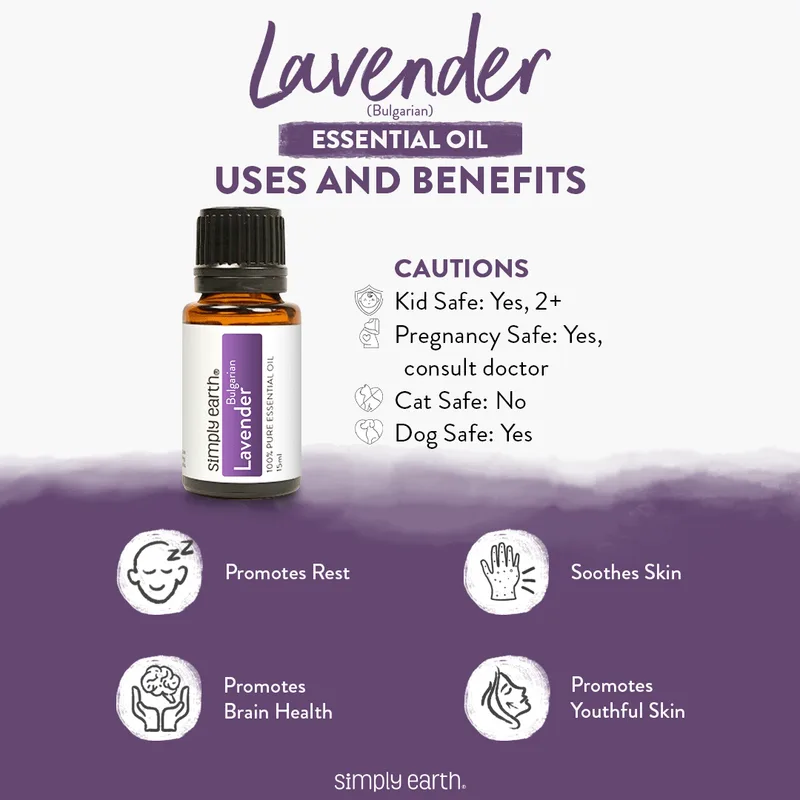
Always dilute for skin. Our recommended maximum for lavender is 5%, and 1–2% is plenty for daily face and body use. See our dilution rates if you would rather work from a chart than do the arithmetic.
Kid safe from age 2 and up. That is the guidance on our product record, and it is why kid-friendly lavender recipes are possible at all. Below age 2, don't.
Pregnant or breastfeeding: yes, but check with your doctor. Lavender is generally considered suitable, and your own doctor is still the right person to clear it with.
Not safe around cats. Cats process essential oils differently to us and lavender is on the no list for them. If you have a cat, be careful where you diffuse and where you leave a linen spray — here is how to use essential oils safely with cats. Lavender is fine around dogs.
No sun sensitivity. Unlike the citrus oils, lavender won't make your skin react to sunlight, so a daytime roll-on is fine.
Patch test anything new. Inner forearm, 24 hours. Gentle is not the same as guaranteed, and lavender is common enough in products that some people have already met it more than they realise.
Shelf life is about 4 years. Keep the cap on tight and the bottle out of direct sun, and it will comfortably outlast the enthusiasm that made you buy it.
These statements have not been evaluated by the Food and Drug Administration. This product is not intended to diagnose, treat, cure or prevent any disease.
What Earthies Are Saying
Three Reviews of This Exact Bottle
"Love this Bulgarian lavender, it's exactly the amount of sweetness I was looking for, very pure! Using it mainly for cold padsicles after delivery. A little goes a long way, worth the purchase!"
Maria Jones
Verified Buyer · Lavender Essential Oil
"When I first purchased this Bulgarian lavender oil I left a 4 star review because this lavender is very different from the French varieties I am used to. I didn't like it as much at first. But after using it for months now, I'd have to say I might like it even better than French lavender! It has very fruity notes to it, that make it sweet like candy. It is absolutely delightful in the diffuser with various citrus oils. It both relaxes me and uplifts my mood at the same time. This oil will be a staple in my collection!"
Emilee Morgan
Lavender Essential Oil
"This Bulgarian Lavender is my favorite, I keep two bottles at all times."
Valerie Pilgreen
Lavender Essential Oil · 15mL
OUR SIMPLY PURE PROMISE
What Goes Into Your Products Matters
Pure & Additive-Free
No synthetic fragrance, no preservatives, no extenders.
Batch-Specific GC/MS
A report for the harvest in your bottle, not a generic one.
Ethically Sourced from Quality Farms
Responsibly harvested. People and planet first.
15mL
Starting Size
Also 8oz and 2lb
5%
Max Dilution
1–2% for daily use
4 yrs
Shelf Life
Stored cool and capped
Your Order Changes Lives: 13% of profits fight human trafficking globally.
Common Questions
Lavender, Answered
Is lavender essential oil safe for kids? +
Yes, from age 2 and up — that is the guidance on our product record, and it is what makes kid-friendly lavender recipes possible. Dilute it properly, keep it off hands that go straight into eyes and mouths, and don't use it on children under 2.
Is it safe around cats and dogs? +
Dogs are fine. Cats are not — they metabolise essential oils differently and lavender is on the no list for them. If you have a cat, think about where you diffuse and where you leave a lavender linen spray, since a cat will find both.
What is the difference between this and Lavender 40/42? +
This is a single-origin Bulgarian oil with whatever chemistry the harvest gave it. Lavender 40/42 is blended so that linalool and linalyl acetate land at a consistent 40–42% in every batch, which is what perfumers, soapers and candle makers want when a scent has to be identical every time. Choose this one for aromatherapy and skin, and 40/42 when consistency matters more than nuance.
Is your lavender organic? +
We do not make an organic claim on this oil. It is described as 100% pure therapeutic grade, steam-distilled from Bulgarian Lavandula angustifolia flowering tops, and every bottle carries a batch-specific GC/MS report so you can see what is actually in it. Pure and certified organic are different claims and we would rather be precise than flattering.
How much should I use? +
For skin, our recommended maximum is 5%, and 1 to 2% — roughly 6 to 12 drops per ounce of carrier oil — covers most everyday face and body use. In a diffuser, 3 to 5 drops is enough for a normal room. Lavender is a case where more is genuinely not better.
Why does Bulgarian lavender smell different from the French lavender I know? +
Because the same species grown in a different place produces a different balance of aromatic compounds. Bulgarian lavender tends to read sweeter and slightly fruitier, where French lavender is often described as softer and more herbaceous. Neither is more correct, and customers who arrive expecting one and get the other do notice. Several have told us the Bulgarian grew on them.
How long does a bottle last? +
The shelf life is about 4 years if you keep it capped and out of direct sunlight. At a few drops a night in a pillow spray or diffuser, a 15mL bottle lasts most people several months.
Can I put it on undiluted? +
We do not recommend it. Lavender is among the gentlest essential oils and it is still concentrated plant material, so it goes into a carrier oil before it goes on skin. If you want something you can genuinely use neat, our lavender hydrosol is the right product for that.
The Simply Earth Lavender Line
Step Before
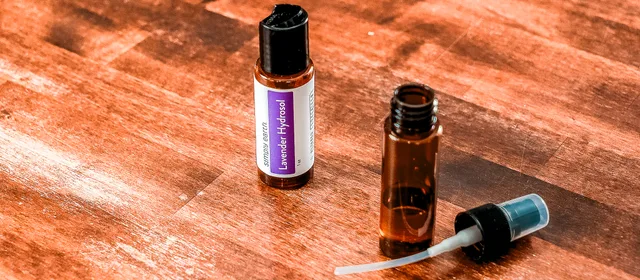
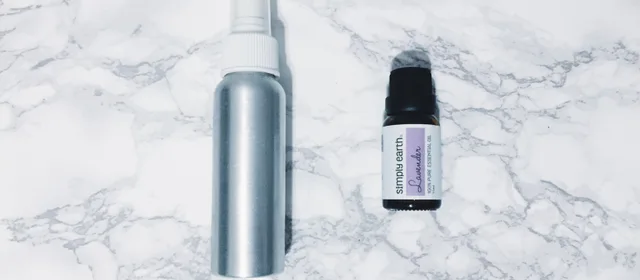
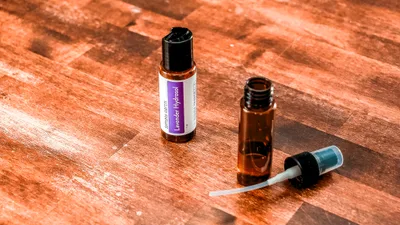
Lavender Hydrosol: The Gentlest Lavender
The floral water from the same distillation — gentle enough to spray straight onto skin, no dilution needed.
Read Now →
Step After
Lavender 40/42 Essential Oil: All You Need to Know
The standardised lavender, blended to a fixed 40–42% for soaping and perfumery. Read this if consistency matters more than nuance.
Read Now →
About the Author: Katie Veldkamp
Katie Veldkamp
Certified Aromatherapist · Co-Founder, Simply Earth
Katie Veldkamp is Simply Earth's Lead Certified Aromatherapist and the heart behind every product recommendation, recipe, and safety guide on this blog. With years of hands-on aromatherapy practice and a deep love for plant-based wellness, Katie fact-checks every health claim to make sure what you read is safe, science-informed, and actually useful.
Join 20,000+ Earthies Making Their Homes Natural
New recipes, usage guides, and DIY tips—delivered free.
No spam. Unsubscribe any time.

Learn by doing
Make your own natural products every month.
The Simply Earth Recipe Box ships 6 essential oils, 4 DIY recipes, and all the supplies—$39/month. Cancel anytime.
Start My Recipe Box40% off your first box with code NEWBOX.