8 Best Essential Oils for Hair

Katie Veldkamp
Lead Certified Aromatherapist
Fact Checked & Approved
Best Essential Oils For Hair Care
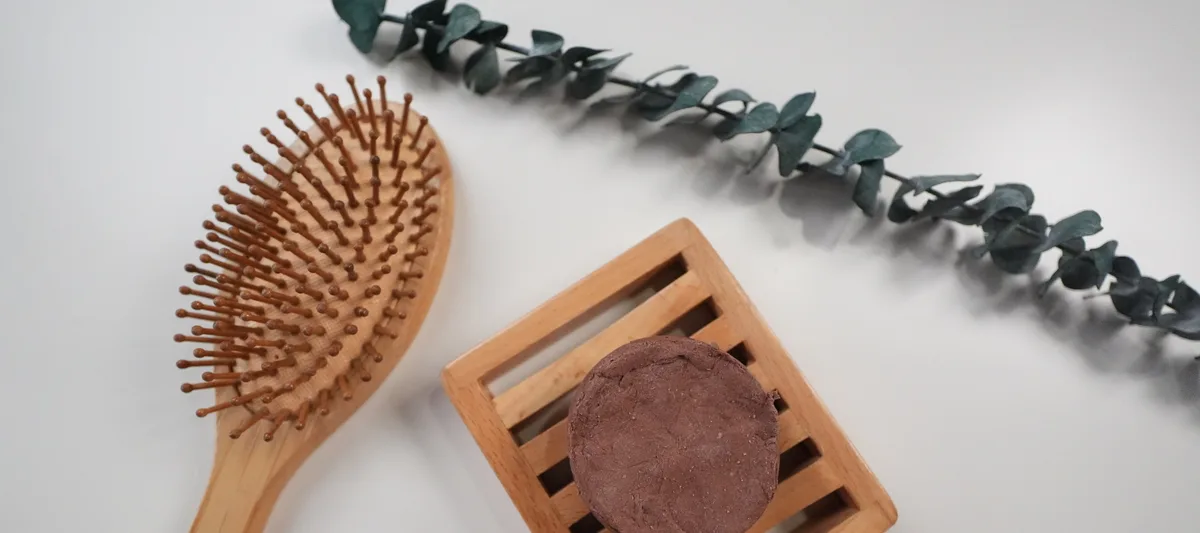
The best essential oils for hair start at the scalp. Limp roots, a dry, tight-feeling scalp, hair that smells tired by Thursday: none of that starts at the ends. It starts at the skin the hair grows out of, and that skin behaves like any other skin on your body. It gets dry, it gets oily, and it feels it when you look after it.
That's where essential oils earn their place in a hair routine. They aren't a replacement for washing properly or eating well, and no oil undoes damage that has already happened. What they do well is help at the root: cleansing a greasy-feeling scalp, comforting a dry, tight-feeling one, cutting through build-up, and leaving hair smelling like something you chose rather than something you put up with.
Below are the eight oils I reach for most, ordered by how often they earn a place in a real hair routine and matched to the hair type each one actually suits.
THE HAIR CARE SERIES
STEP 01 · COMING SOON
Natural Remedies

STEP 02
Best Oils

STEP 03 · COMING SOON
DIY Recipes

STEP 04 · COMING SOON
Master Guide

Free Guide
Get the free Essential Oil Guide
One page. Fridge-ready. Free.
BEST FOR: ALL-ROUND SCALP CARE
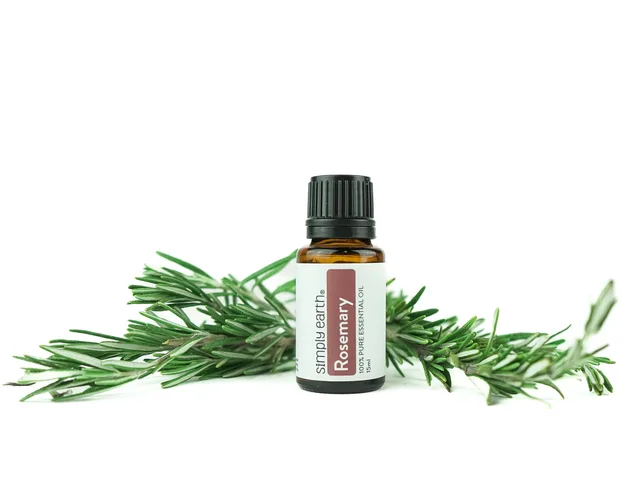
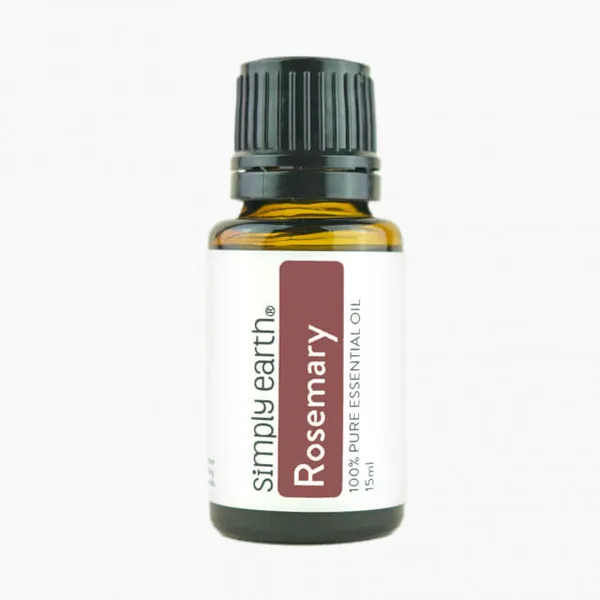
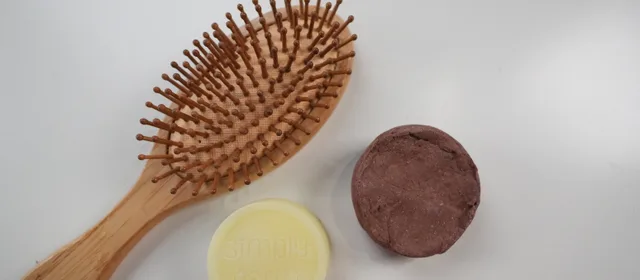
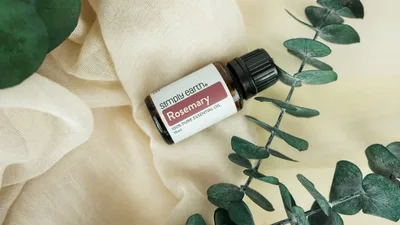
Rosemary nourishes hair for a longer look and helps hair look and feel stronger, and it's the oil my hair recipes are built around. It turns up in my shampoo bars, conditioner bar, scalp scrub, detangler spray, and hair mask, which isn't a coincidence. It's herbal and clean rather than sweet, it doesn't weigh hair down, and it suits almost every hair type. Use it in a scalp massage, in a shampoo bar, or a few drops stirred into the conditioner you already own.
Safety First
Always dilute (5% max). For ages 10 and up. If you're pregnant, check with your doctor first, and skip it in the first trimester. Don't use it if you have epilepsy or high blood pressure. Not for use around cats or dogs.
AROMATHERAPIST TIP
Add 3 to 5 drops to a tablespoon of argan or jojoba oil and work it into your scalp, not your lengths, before you shower. Leave it 20 minutes, then shampoo as normal. Doing it before the wash gets you the scalp benefit without greasy roots afterward.


BEST FOR: A SCALP THAT NEEDS A CLEANSE
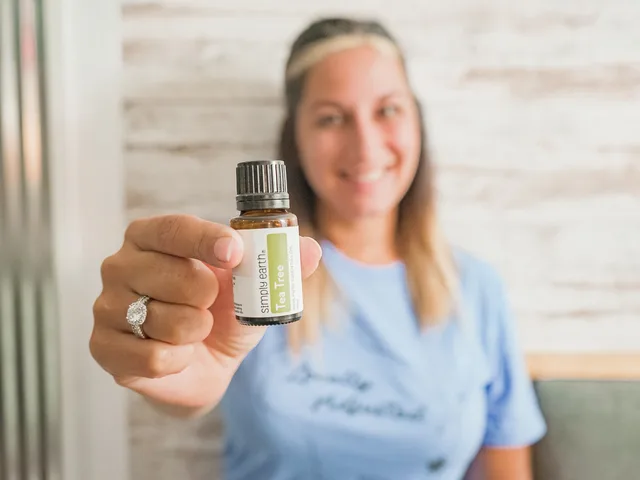
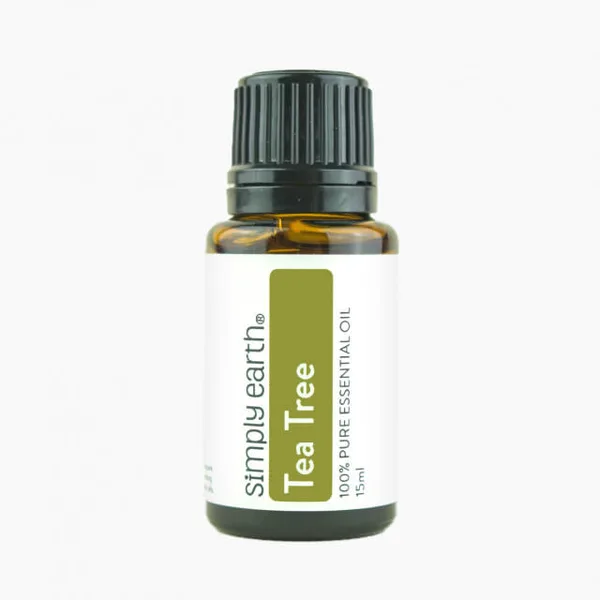
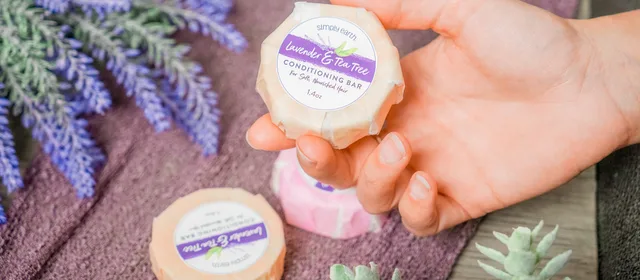
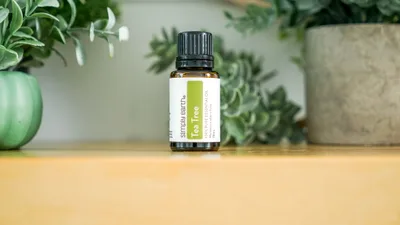
Tea tree helps calm a dry, tight-feeling scalp, and it's cleansing and unmistakably herbal, a good fit when the problem is your scalp rather than your hair. It pairs naturally with lavender, which takes the edge off the sharper note, and that's exactly why my conditioner bars put the two together.
Safety First
Kid safe from age 2. If you're pregnant, check with your doctor first, and skip it in the first trimester. Not for use around cats or dogs.
AROMATHERAPIST TIP
Tea tree is strong and easy to overdo. Two drops per tablespoon of carrier oil is plenty for a scalp treatment. If your scalp is already sore or broken, let it settle before you use tea tree on it at all.
TRY IT IN →

BEST FOR: A DRY SCALP + A WOODY SCENT
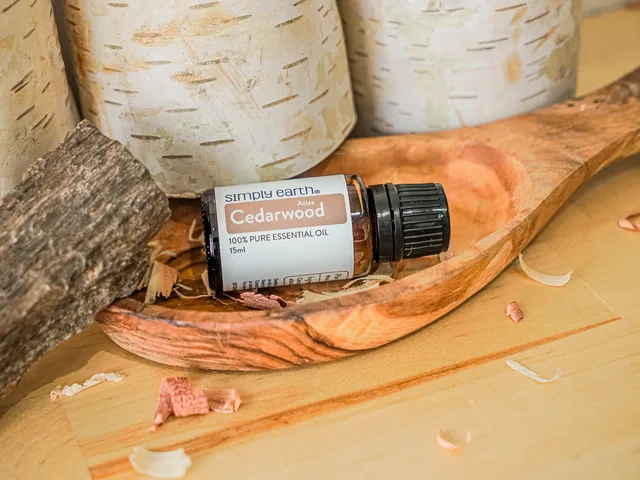
Cedarwood (Atlas) helps calm a dry, tight-feeling scalp. It's also one of the most wearable scents on this list, warm and faintly smoky rather than perfumed, which makes it a good fit if you dislike floral hair products. Simply Earth sells it in two varieties, Atlas and Himalayan. Either works here, and my dry shampoo recipe uses the Himalayan.
Safety First
Kid safe from age 2. If you're pregnant, check with your doctor first, and skip it in the first trimester. Dilute before use and patch test first; keep it away from the eyes.
AROMATHERAPIST TIP
Cedarwood is a partner oil rather than a soloist. Blend it with rosemary at roughly 1:1 in a scalp oil. The rosemary does the work and the cedarwood keeps the whole thing from smelling like a herb garden.
TRY IT IN →

BEST FOR: DULL HAIR AND SLOW MORNINGS
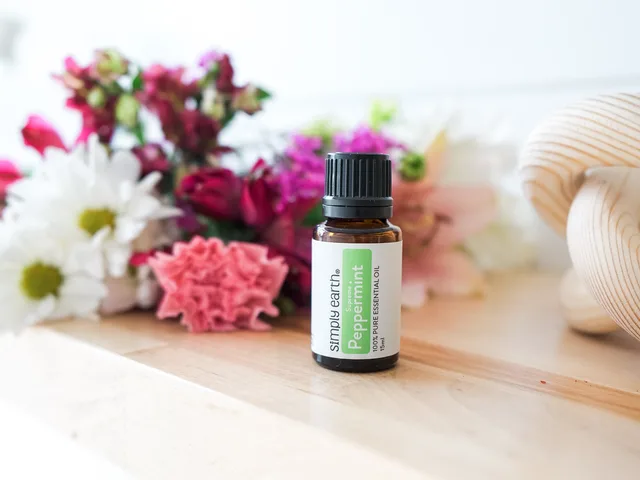
Peppermint nourishes scalp and strands for healthy-looking length, and it's the cold tingle in a good shampoo bar. That sensation is most of the appeal, because it makes a morning wash feel like something actually happened. It's sharp and unmistakably minty, it cuts through the heaviness of a rich conditioner, and it's the partner oil in my Rosemary & Mint Shampoo Bars for exactly that reason.
Safety First
Keep it at 1% on the scalp and away from your eyes. For ages 10 and up. If you're pregnant, check with your doctor first, and skip it in the first trimester. Don't use it if you have cardiac fibrillation or G6PD deficiency. Not for use around cats or dogs.
AROMATHERAPIST TIP
Keep peppermint well away from your eyes and go light on the dose. The cooling feel that's great on a scalp is truly unpleasant on an eyelid. Rinse with cool water rather than hot to keep the tingle going.
TRY IT IN →
BEST FOR: SENSITIVE SCALPS + NIGHT ROUTINES
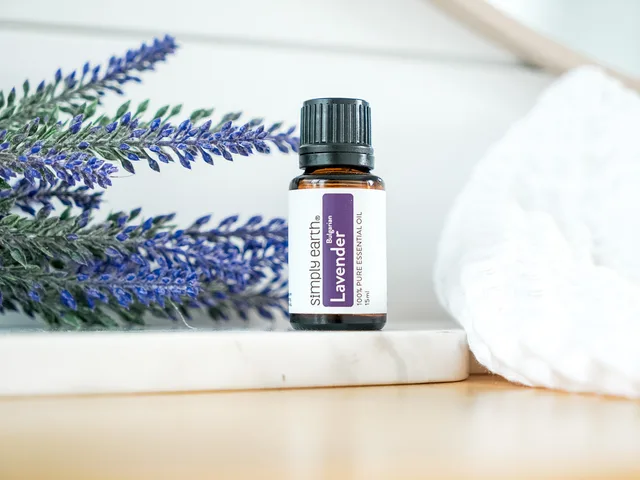
Lavender nourishes scalp and strands for healthy-looking length, and it's the most forgiving oil here. It's gentle enough to use regularly, it blends with almost everything else on this list, and its scent is the one nobody objects to. If your scalp reacts to most things, start with lavender on its own for a couple of weeks before you add anything sharper. It also suits an evening scalp massage, where the calming aroma is half the point.
Safety First
Always dilute (5% max). Kid safe from age 2. If you're pregnant, check with your doctor first, and skip it in the first trimester. Not for use around cats.
AROMATHERAPIST TIP
Lavender is what you add when something else is too intense. Two drops in a tea tree or peppermint scalp blend softens the smell considerably without canceling out what the other oil is doing.

BEST FOR: THICK, COARSE, OR COLOR-TREATED HAIR
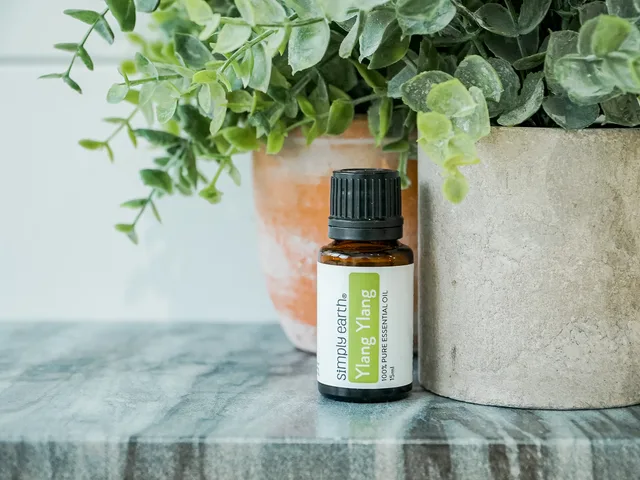
Ylang ylang helps hair look fuller and thicker, and it helps calm a dry, tight-feeling scalp. It's sweet, heavy, and properly floral, the most perfume-like oil on this list. It suits thick or coarse hair that can carry a richer treatment without going limp, which makes it a sensible partner in a shine-focused hair oil rather than in a wash.
Safety First
Dilute well (0.5% max), since it may sensitize skin. Kid safe from age 2. If you're pregnant, check with your doctor first, and skip it in the first trimester. Not for use around cats or dogs.
AROMATHERAPIST TIP
Ylang ylang is potent and the scent lingers. One drop in a blend is usually enough. If you can still smell it clearly the next morning, you used too much.

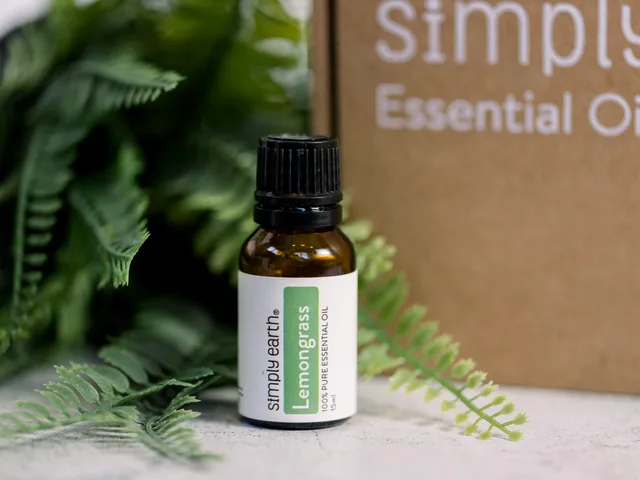
BEST FOR: HAIR THAT SMELLS TIRED BY MIDWEEK
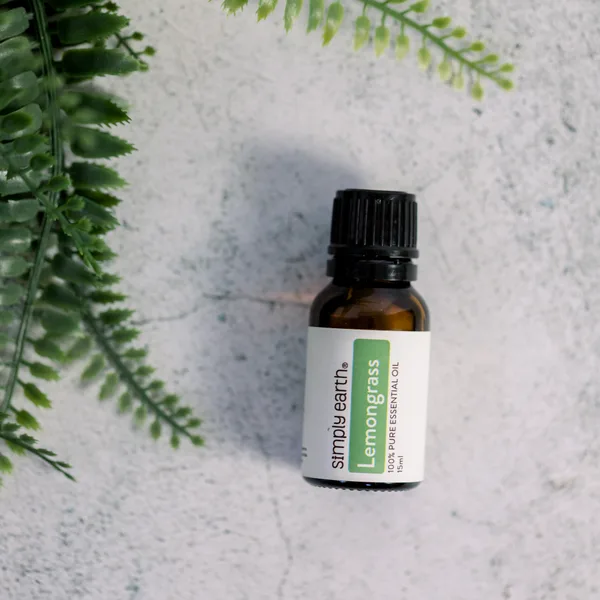
Lemongrass helps hair look and feel stronger, with less breakage, and its earthy, citrusy scent clears away stale smells. If your hair picks up cooking smells, gym air, or smoke and holds onto them, lemongrass is the one that freshens it. It's a practical oil rather than a glamorous one, and it stretches the time between washes.
Safety First
Dilute well (1% max) and avoid damaged or very sensitive skin. For ages 10 and up. Not recommended during pregnancy or breastfeeding. If you take antidepressant medication, talk to your doctor first. Not for use around cats.
AROMATHERAPIST TIP
Lemongrass can be irritating on skin, so keep the dose low at the scalp and favor the lengths. One drop in a dry shampoo or a hair mist does more than three in a scalp oil.


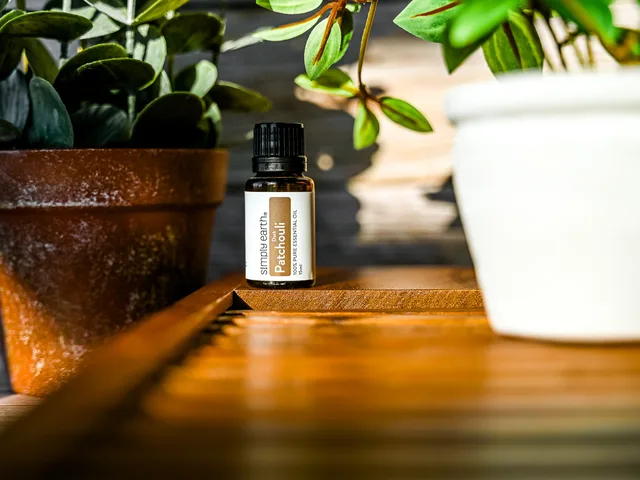
BEST FOR: HAIR THAT BREAKS EASILY
Patchouli (Pogostemon cablin) helps hair look and feel stronger, with less breakage, which is why I add it to my hair mask. Its earthy, musky scent is deep without being heavy once it's diluted, and it pairs beautifully with rosemary. It also helps clear away stale smells, so hair stays fresher between washes.
Safety First
Kid safe from age 2. If you're pregnant, check with your doctor first, and skip it in the first trimester.
AROMATHERAPIST TIP
Use patchouli in a rinse-out mask rather than a leave-in oil. One or two drops per tablespoon of mask is enough, and rosemary keeps the scent from going too earthy.
TRY IT IN →
Match the Oil to Your Hair Type
Your hair type matters more than the ingredient list. Start from the row that sounds like you
| Your Hair or Scalp | The Oil | Why It Fits |
|---|---|---|
| Thick, coarse, or color-treated | Ylang Ylang | Rich and floral, helps hair look fuller |
| Hair that breaks easily | Patchouli (Dark) | Earthy and musky, helps hair look and feel stronger |
| Dry, tight-feeling scalp | Cedarwood (Atlas) | Dry and woody, calms a tight-feeling scalp |
| Scalp that needs a cleanse | Tea Tree | Herbal and cleansing, calms a dry scalp |
| Sensitive or easily irritated scalp | Lavender | The gentlest on the list. Start here if everything else stings |
| Dull hair, slow mornings | Peppermint | Sharp and minty, the cold tingle in a good shampoo bar |
| Hair that smells tired by midweek | Lemongrass | Clears cooking, gym, and smoke smells |
| Not sure, you just want one oil | Rosemary | Suits nearly every hair type, the base of most of my hair recipes |
Get 10% Off the Best Essential Oils for Hair
Enter code HAIR10 at checkout for 10% off your whole order.
Rosemary Essential Oil
Tea Tree Essential Oil
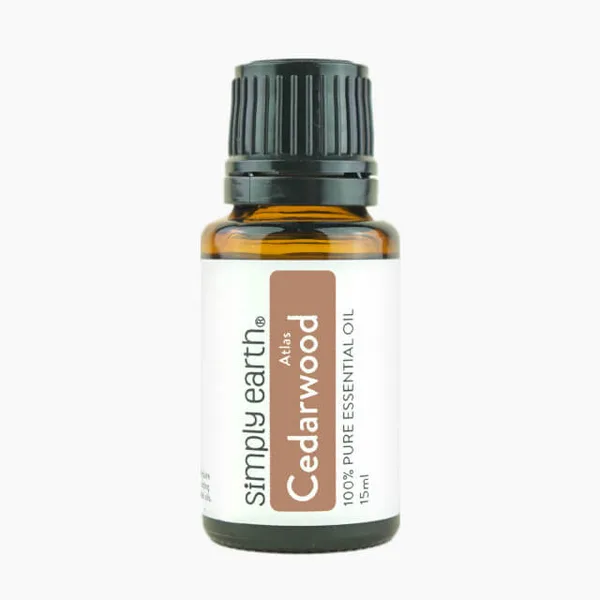
Cedarwood (Atlas) Essential Oil
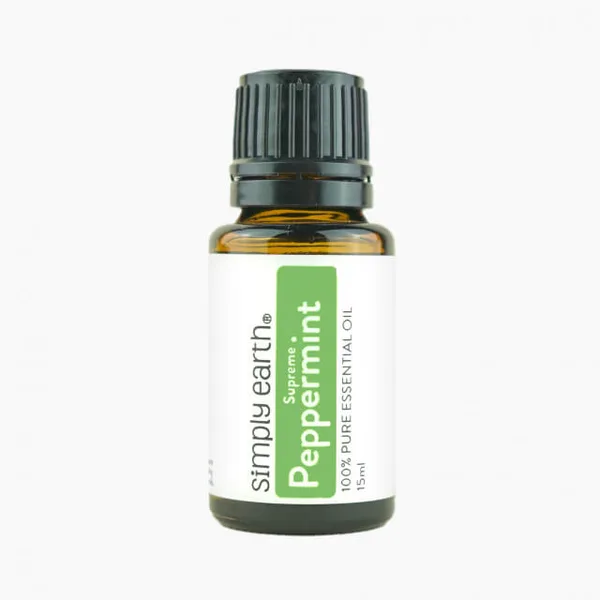
Peppermint Essential Oil
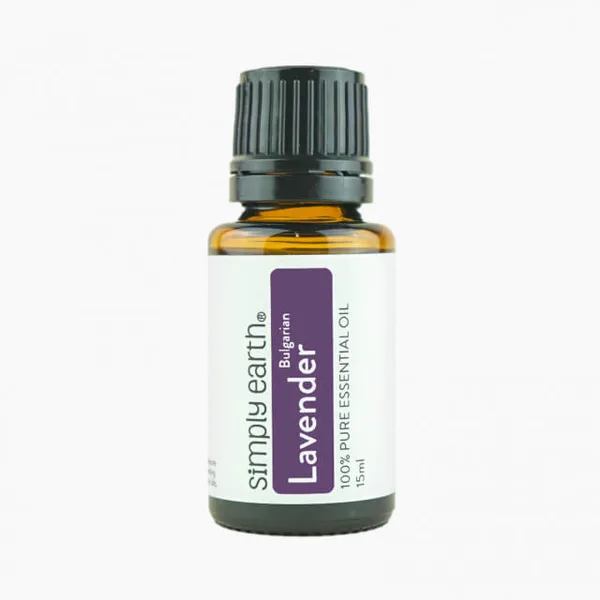
Lavender (Bulgarian) Essential Oil
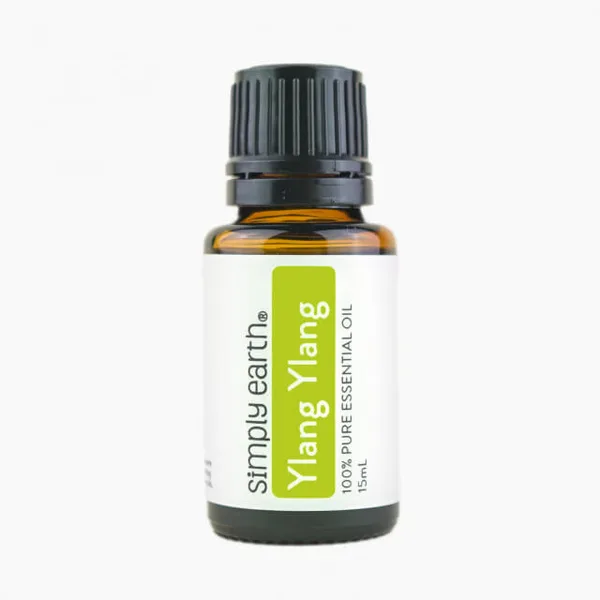
Ylang Ylang Essential Oil
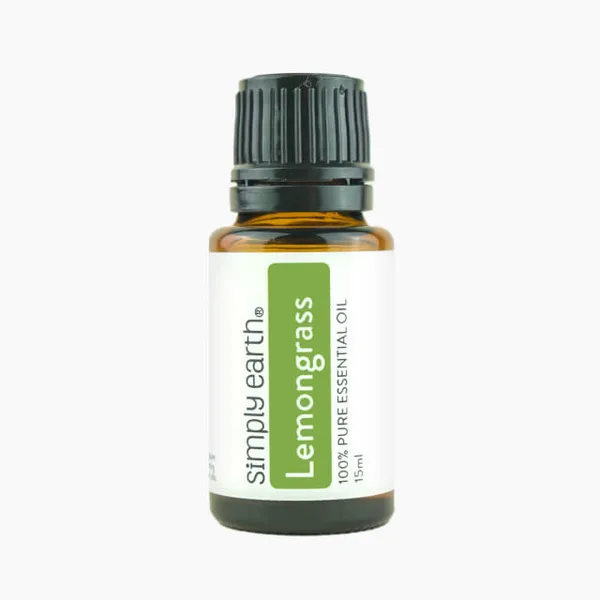
Lemongrass Essential Oil
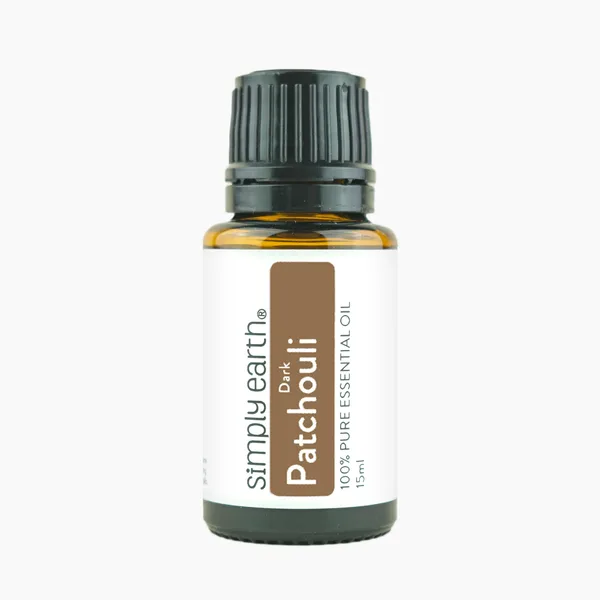
Patchouli (Dark) Essential Oil
Argan Oil
Jojoba Oil
OUR SIMPLY PURE PROMISE
What Goes Into Your Products Matters
Certified 100% Pure
No fillers, no synthetics. Just pure oil.
GC/MS Third-Party Tested
Every batch independently verified.
Ethically Sourced from Quality Farms
Responsibly harvested. People and planet first.
15mL
Bottle Size
MLM brands: 10mL
Fair
Prices on Every Oil
MLM brands: Premium markups
Public
GC/MS Tests
MLM brands: Rarely
Your Order Changes Lives: 13% of profits fight human trafficking globally.

Key Takeaways
- Start with rosemary. It suits nearly every hair type and it's the oil most of my hair recipes are built around. If you buy one bottle, buy that one.
- Look after your scalp, not just your lengths. Dryness, oily roots, and limp hair all start at the skin. Work oils into the scalp and let the lengths look after themselves.
- Always dilute, and always patch test. Use 2 to 5 drops per tablespoon of carrier oil for a scalp treatment. Never apply an undiluted essential oil to your scalp.
- Match the oil to what your hair needs. Tea tree or cedarwood for a dry, tight-feeling scalp, patchouli for hair that breaks, and lemongrass for smell. The wrong oil isn't dangerous, it's just wasted.
Frequently Asked Questions
The questions people actually ask about using essential oils on hair and scalp.
Which essential oil is best for hair? +
Rosemary is the most versatile starting point. It suits most hair types, and it's the oil my shampoo bars, conditioner bar, scalp scrub, and hair mask are built around. If you have a specific need, match it instead: tea tree or cedarwood for a dry, tight-feeling scalp, patchouli for hair that breaks easily, and lemongrass for hair that holds smells.
Can you put essential oils directly on your scalp? +
No. Essential oils are highly concentrated and should always be diluted in a carrier oil such as argan, jojoba, or coconut before they touch your scalp. A useful working range for a scalp treatment is 2 to 5 drops per tablespoon of carrier. The Simply Earth dilution chart at simplyearth.com/pages/dilution-chart has the full breakdown.
How do I add essential oils to my shampoo? +
The simplest method is to add a few drops to the amount of shampoo or conditioner you're about to use, in your palm, rather than to the whole bottle. That keeps the dose controlled and lets you change the oil depending on what your scalp needs that week.
Do essential oils help a dry, tight-feeling scalp? +
Tea tree and cedarwood both help calm a dry, tight-feeling scalp. Essential oils can make a scalp feel more comfortable, but a scalp that keeps getting worse is worth raising with a doctor or dermatologist rather than handling at home indefinitely.
How often should I use essential oils on my hair? +
A diluted scalp treatment once or twice a week is plenty for most people. Cleansing scalp scrubs are better kept to once a week, since stripping build-up more often than that will dry out your lengths.
Are essential oils safe to use on hair during pregnancy? +
Lemongrass isn't recommended during pregnancy or breastfeeding. For the other seven, check with your doctor first, and skip them in the first trimester. Patch test on a small area of skin first regardless.
About the Author: Katie Veldkamp
Katie Veldkamp
Certified Aromatherapist · Co-Founder, Simply Earth
Katie got hooked on oils, then got mad at the prices. So she got certified, flew to farms, and built Simply Earth so nobody has to wonder what's really in their bottle. Over 100,000 customers later, she still writes every guide herself.
The Free Essential Oil Guide
Simply Earth's free starter guide: what each oil is for, how to dilute it, and how to use it safely at home.
- What each essential oil is for
- Safe dilution and usage basics
Join 47,000+ subscribers making healthier choices naturally.
Free. No spam. Unsubscribe anytime.