
Argan Oil Benefits, Uses & Recipes

Katie Veldkamp
Lead Certified Aromatherapist
Fact Checked & Approved
Almost everything on our ingredient shelf has to be diluted before it touches you. Argan is the exception. It is a carrier oil, pressed from the kernels inside the fruit of a Moroccan tree that lives for two centuries, and you use it straight out of the bottle — two or three drops on damp skin, a few smoothed through the ends of your hair, one massaged into a cuticle before bed. That is the whole method. It is also the oil people reach for when they want one bottle to cover skin, hair and nails instead of three, which is exactly how our customers describe using it. Here is what argan actually does, what the research supports and what it does not, and the one thing worth knowing before you buy any bottle of it.
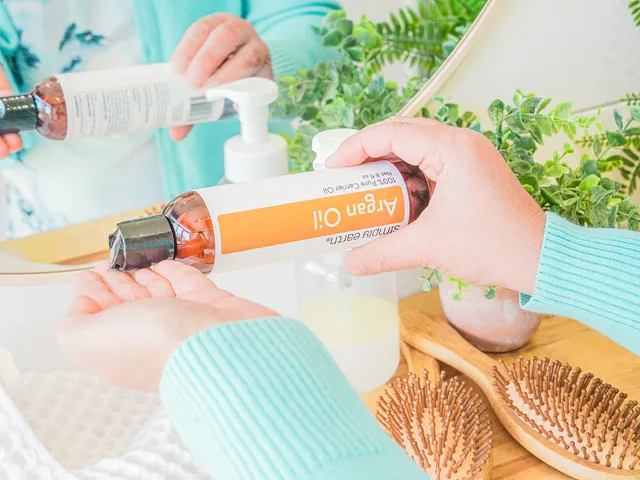
BEST FOR: DRY SKIN, HAIR AND NAILS
Argan is a moisturiser first and everything else second. It replenishes moisture in skin, hair and nails, and it helps skin hold onto the water it already has rather than simply sitting on top of it. That combination is why it suits dry or rough-textured skin so well, and why a single bottle covers three jobs that would otherwise need three products. It is also what makes it a good base for anything you make yourself, because it brings the conditioning with it.
KATIE'S TIP
Damp skin, not dry. Argan spreads further and absorbs better over slightly damp skin straight out of the shower, so you need fewer drops and you will not be left with anything sitting on the surface.



BEST FOR: FACIAL OIL AND NIGHT ROUTINES
Argan is naturally rich in tocopherols — vitamin E — which is an antioxidant, and antioxidants are the part of skincare concerned with protecting skin from everyday environmental stress. Alongside the moisture retention in row 01, that is what sits behind argan's long reputation as a glow oil, and what softens the look of fine lines over time. Worth being plain about the mechanism, because it is not dramatic. Skin that is well-hydrated and protected simply looks better than skin that is not.
KATIE'S TIP
Use it as the last step at night, after anything water-based. Oils seal what is underneath them, so argan goes on top of your serum, never beneath it.
USE IT IN →

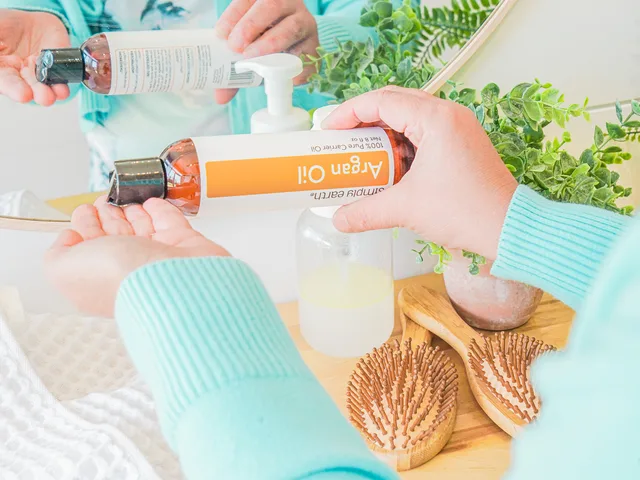
Comforts Dry, Sensitive Skin
Gentle enough that sensitive-skin customers reach for it first.
 Shop Argan Oil
BEST FOR: SENSITIVE OR EASILY IRRITATED SKIN
This is the row where our own customers are the most useful evidence. People with skin they describe as extremely sensitive tell us they use argan as their carrier specifically because it does not cause them trouble, which is not something you can say about every oil on the shelf. It has a light, characteristic nutty scent and no added fragrance, so there is very little in the bottle to react to. If your skin is reactive, that short ingredient list is the point.
KATIE'S TIP
Gentle is not the same as guaranteed. Argan comes from a kernel inside a fruit, so patch test on your inner arm and wait a day before putting it anywhere near your face — and read the tree-nut note further down this page first.
USE IT IN →

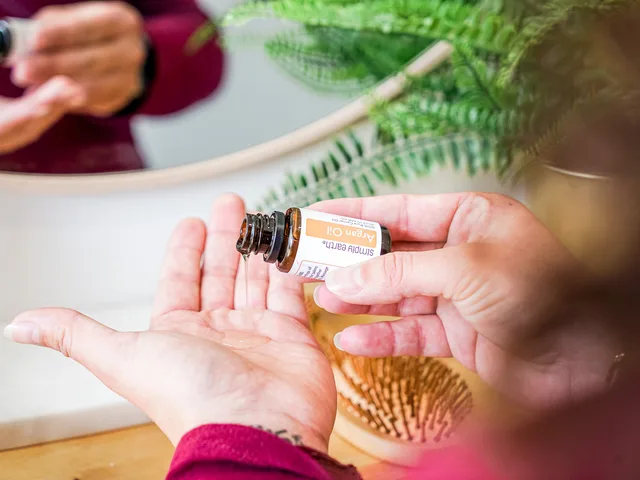
Supports Skin Elasticity
The one benefit on this page with a real human trial behind it.
 Shop Argan Oil
BEST FOR: SKIN THAT HAS BEEN STRETCHED OR IS LOSING BOUNCE
A study published in Clinical Interventions in Aging measured skin elasticity in postmenopausal women using argan oil, applied to the skin and also taken in the diet, and reported a significant improvement in elasticity in the treated group. Worth being precise about what that does and does not cover. The trial was run in postmenopausal women, so it is evidence about that group rather than about everybody, and elasticity is a measurement of how skin behaves — not a claim about preventing or removing anything. Read the study on PubMed.
KATIE'S TIP
Elasticity work is slow work. This is a nightly-for-months habit rather than something you will see after a week, and it is the one benefit here worth being patient about.
USE IT IN →

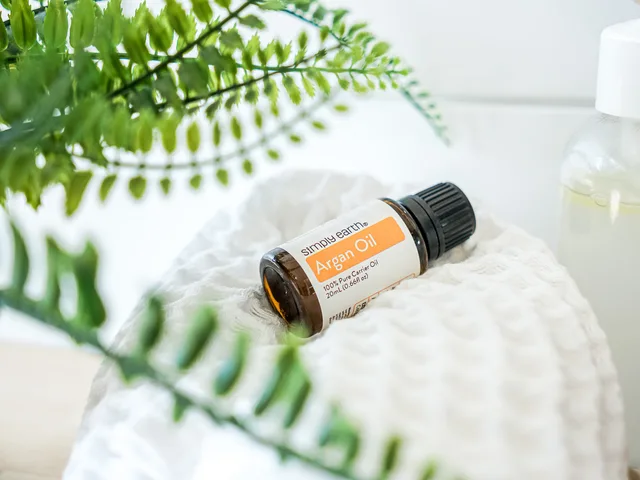
Absorbs Without Feeling Greasy
Average absorption — the reason it works as a daytime oil.
 Shop Argan Oil
BEST FOR: DAYTIME USE AND UNDER MAKEUP
Simply Earth rates argan's absorption speed as average, a 3 on our scale, which is the sweet spot for a face and body oil. Fast oils vanish before they have done much; slow ones sit on the surface and transfer onto your collar. Average means it sinks in over a couple of minutes and then stops being noticeable. Customers describe it soaking in well and leaving no odour they can detect, which is why it survives in a morning routine rather than being relegated to bedtime.
KATIE'S TIP
Mix a single drop into your foundation for a dewy finish. It thins the foundation slightly and stops it grabbing at dry patches, which is a much better use of one drop than applying it separately.
USE IT IN →

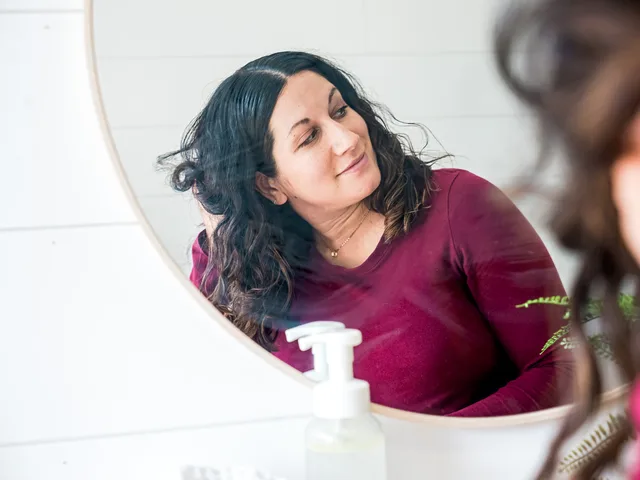
Smooths Frizz and Adds Shine
Where argan earned its reputation outside skincare entirely.
 Shop Argan Oil
BEST FOR: FRIZZ, DRY ENDS AND BREAKAGE
In hair care argan reduces frizz, helps decrease breakage and improves moisture, which is the combination the entire salon-oil category was built on. It is heavy enough to smooth a cuticle and light enough not to flatten hair, so it works on ends without turning roots greasy. This is also the form most people have already met argan in, usually at four times the price and cut with silicones. A bottle of the plain oil does the same job.
KATIE'S TIP
Ends only, and less than you think. Two drops warmed between your palms and smoothed from the mid-lengths down. If you can see where you put it, that was too much.
Softens Cuticles and Brittle Nails
The use nobody buys it for and everybody keeps doing.
 Shop Argan Oil
BEST FOR: BRITTLE NAILS AND ROUGH CUTICLES
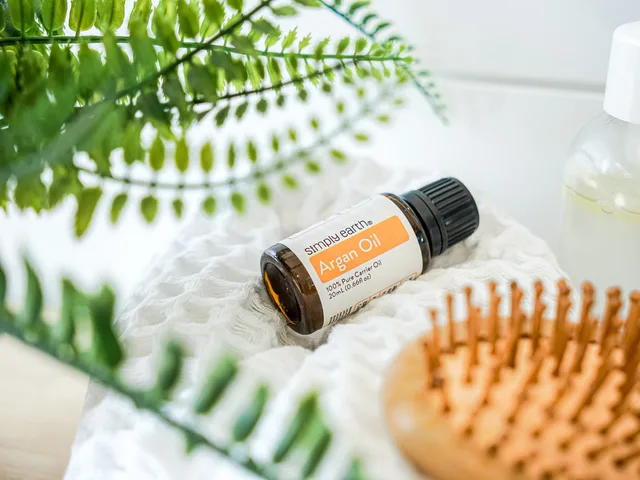
Massaged into the cuticle, argan softens the rough skin around the nail and conditions the nail itself, which is what people mean when they say it helps with brittle nails. It is the smallest of the three jobs this bottle does and the easiest to keep up, because it takes one drop per hand and about fifteen seconds. It is also the use that makes the bottle feel worth it, since you are already holding it for your skin and your hair.
KATIE'S TIP
Do it last thing at night, after you have washed up for the final time. Cuticle oil applied before a round of handwashing is cuticle oil down the drain.
USE IT IN →
Put It to Work
How to Use Argan Oil
For Skin
- • 2–3 drops onto clean, damp skin
- • Use it as a daily facial oil or a night moisturiser
- • Mix a drop into foundation for a dewy finish
- • It goes on last — oils seal in whatever is underneath
For Hair
- • A few drops rubbed between the palms and smoothed onto damp ends
- • Avoid the roots or it will read as greasy
- • Or use it as a pre-shampoo scalp treatment and wash it out
- • It is the base of our Shiny Hair Mask recipe
For Nails
- • Massage one drop into each cuticle before bed
- • Softens rough skin around the nail and conditions brittle nails
- • Fifteen seconds a night is the whole routine
- • Do it after the last handwash of the day
As a Carrier for Essential Oils
- • Argan is the diluent, so it needs no diluting itself
- • Use it in place of fractionated coconut or jojoba in a roller
- • Our dilution chart applies to the essential oil you add, not to the argan
- • Customers layer it half-and-half with Jojoba for a night serum
DIY Boost — Nourishing Body Oil
- • 2 tbsp Argan Oil
- • 5 drops Grapefruit Essential Oil
- • 5 drops Timber Essential Oil Blend
- • Combine in a 1oz bottle and use after showering for very soft skin
DIY Boost — Anything Else You Make
- • Stir it into homemade lotions, scrubs and lip balms
- • It brings the conditioning with it, so you need less of everything else
- • Good in face oils, balms and hair serums
- • Keep finished DIYs cool and dark, and use them within the oil's shelf life
Know the Difference
Cosmetic vs. Culinary Argan
This is the mistake that actually costs people money, because both products are honestly labelled "argan oil" and they are not interchangeable. Culinary argan is pressed from kernels that were roasted first, which is what gives it the strong toasted smell people associate with Moroccan cooking — it belongs on food, not on your face. Cosmetic argan, which is what Simply Earth sells, is pressed from raw kernels and smells only lightly nutty; if a bottle smells like toasted almonds, it is the culinary kind. One more distinction while you are here, and this one is ours to be straight about: our argan is refined as well as cold pressed, meaning it is filtered after pressing, which leaves it paler and milder than unrefined argan and easier to blend into things where you do not want the nuttiness coming through. Neither is the lesser product, but you should know which one you are buying, and the FAQ below explains the difference in full.
Swipe to compare →
Cosmetic Argan What Simply Earth sells | Culinary Argan Roasted, and for food only | Argan-Infused Products Mostly not argan | |
|---|---|---|---|
| What It Is | Oil pressed from raw, unroasted kernels | Oil pressed from kernels roasted first | A conventional base oil with a little argan added |
| Grade | Cosmetic | Food | Varies, usually unstated |
| Smell | Light and characteristically nutty | Strongly toasted and nutty | Whatever the added fragrance is |
| Use It For | Skin, hair and nails | Drizzling on food, never skincare | Reading the ingredients list first |
| Extraction | Cold pressed | Roasted, then pressed | Varies |
| Refined or Unrefined | Refined — filtered after pressing, so paler and milder | Usually unrefined | Varies, usually unstated |
| Price at Simply Earth | $5.99 / 20mL · $19.99 / 8oz | Not sold | Not sold |
| Simply Earth | This page's oil | — | — |
Perfect Pairs
What Argan Oil Pairs With
Two different kinds of pairing, because argan sits on both sides of a blend. The first six are essential oils that Simply Earth recipes actually carry in argan — Grapefruit and Timber in the body oil above, and the rest across our hair-care recipes. The last five are the other carrier oils we sell that argan layers well with; customers most often cut it half-and-half with Jojoba for a night serum.
Thirty Kilos of Nuts Per Litre
History of Argan Oil
The argan tree grows almost nowhere else on earth. It is native to southwestern Morocco and southwestern Algeria, it reaches around ten metres, and it can live for two hundred years. It is built for hard country — a gnarled trunk, thorny branches, small dark leaves only a few centimetres long, and a root system deep enough to hold soil together in near-desert conditions. Long before anyone was selling it for hair, the tree was valued for keeping the ground from blowing away.
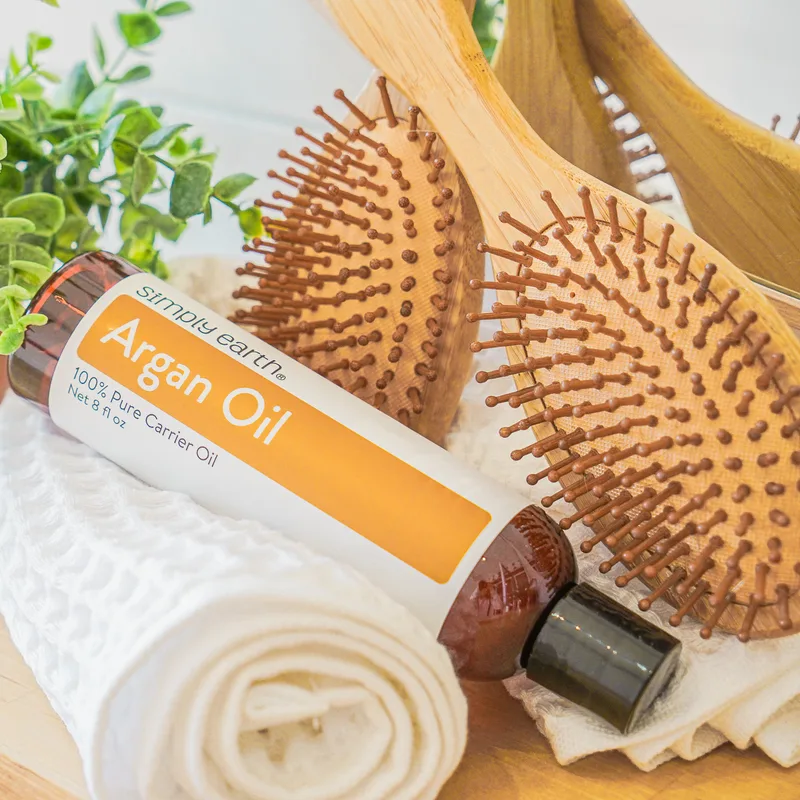
Each fruit holds a hard nut, and inside that nut sit one to three almond-shaped kernels. Those kernels are the oil. Getting to them is the entire story, because there is no shortcut and there never has been. The traditional process runs through gathering the fruit, drying it, cracking the nut, grinding the kernels and kneading the resulting paste until the oil separates — and it is work that has been done, and passed down, by women in Moroccan cooperatives. The arithmetic is worth sitting with. It takes roughly thirty kilos of argan nuts and up to twelve hours of labour to produce one litre of oil.
That is why argan was expensive long before it was fashionable, and why the nickname it picked up in the beauty press — liquid gold — started out as a description of the effort rather than the marketing. When you are counting out two or three drops instead of pouring, you are handling something that took a genuinely disproportionate amount of human work to fill.
The Chemistry
What Is Actually In Argan Oil
A carrier oil is a fatty-acid profile, not an aroma chemistry — so this section names what argan is built from rather than listing constituents.
Oleic Acid
The main fatty acid
A monounsaturated fatty acid and the largest single component of argan oil. Oleic acid is the part that makes an oil feel rich and cushioning on skin, and it is what lets argan soften and condition rather than simply coat. It is also why the oil is stable enough to keep for a couple of years rather than months.
Linoleic Acid
The lighter half
A polyunsaturated fatty acid, and the counterweight to oleic. Linoleic acid is lighter and thinner on the skin, and its presence is a large part of why argan absorbs at a moderate rate instead of sitting heavily on the surface. The balance between these two is essentially what distinguishes one carrier oil from another.
Vitamin E (Tocopherols)
The antioxidant
Argan is naturally well supplied with tocopherols, which is the form of vitamin E that appears in plant oils, and this is the compound behind the antioxidant benefit in row 02. Vitamin E also helps protect the oil itself from going rancid, so it is doing a job in the bottle as well as on your skin.
A note on honesty about numbers, because you will find precise percentages for argan's fatty acid profile all over the internet. We are not printing any here. We third-party test our essential oils and publish those results, but we do not currently hold a GC/MS or fatty-acid assay for this particular carrier oil, so any percentage on this page would be borrowed from somebody else's argan rather than measured on ours. The compounds above are correct and the proportions are not ours to state. See Our Testing →
Where It Comes From
Where Our Argan Comes From
Argan has a genuine single origin, which is rare and which makes this section unusually easy to be specific about. The tree grows in southwestern Morocco and almost nowhere else, our supplier record puts this oil's country of origin as Morocco, and the fruit is harvested across June, July and August. The kernels are cold pressed, and the finished oil is graded Cosmetic and scores a 1 — the lowest hazard band — on the EWG scale.
There is one thing we want to say plainly rather than let it sit implied. Argan oil is traditionally produced by women's cooperatives in Morocco, that is genuinely how most of the world's argan is made, and it is a real and well-documented part of this ingredient's story — which is why it is written up in the history section above. What we cannot currently do is name the cooperative behind this bottle. Our supplier record for this oil names our supplier and the country, and it does not identify a cooperative, so we are not going to tell you we source from one. We would rather leave a gap here than fill it with something that reads well.
Morocco
Where It's Grown
Kernels
Plant Part
Cold Pressed
Extraction
Use It Right
Things to Remember When Using This Oil
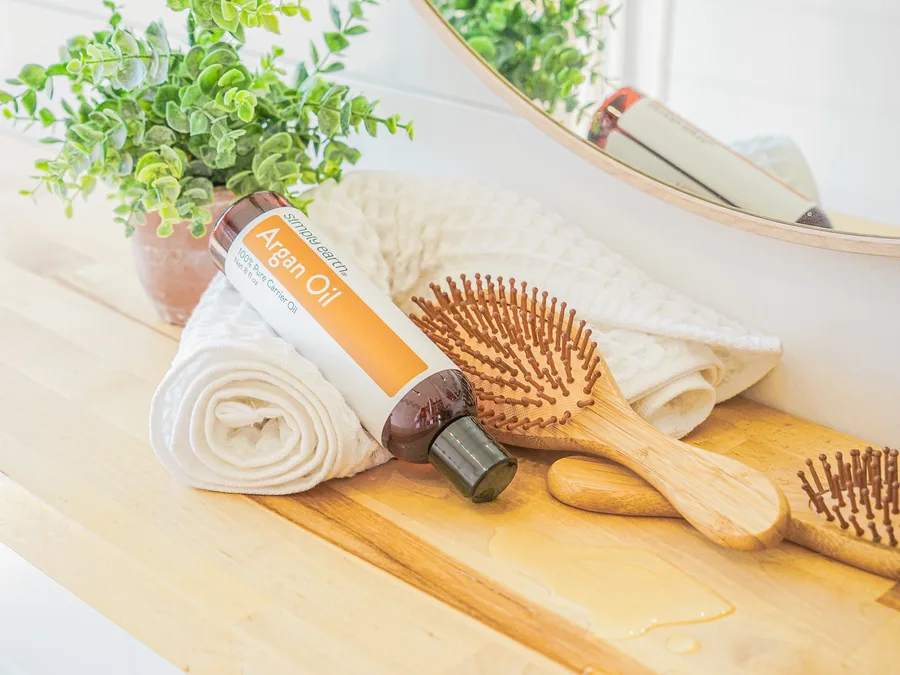
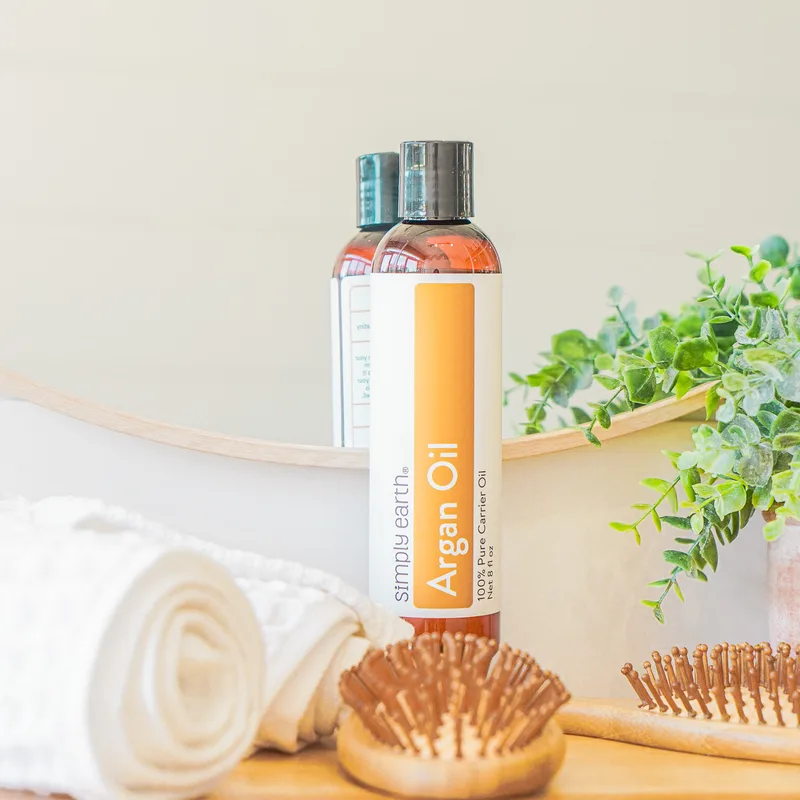
No dilution needed — argan is the carrier. This is a fixed oil, not an essential oil. Use it neat on skin, hair and nails, or use it to dilute something else. If you are adding an essential oil to it, the dilution chart applies to that oil, not to the argan.
Never put it in a diffuser. Fixed oils do not evaporate. Argan in a diffuser will not disperse — it will coat the unit and ruin it.
Tree nut consideration. Argan oil comes from the kernel inside the fruit of the argan tree and may cause a reaction in people with tree nut allergies. If that is you, treat this as an ingredient to clear with your doctor before you use it.
Always patch test first. Apply a little to the inner arm and wait a day before using it on your face — and do this even though argan is one of the gentler oils on the shelf.
It can go rancid, unlike an essential oil. Carrier oils are fats and fats oxidise. Shelf life is around two years, stored cool and dark and with the cap on properly. An argan oil that has turned smells sharp and crayon-like instead of lightly nutty — if yours does, replace it rather than using it up.
Cosmetic grade, so keep it out of the kitchen. The oil on this page is graded for skin. Culinary argan is a different, roasted product.
We do not recommend ingesting essential oils.
These statements have not been evaluated by the Food and Drug Administration. This product is not intended to diagnose, treat, cure, or prevent any disease.
Real Results
What Earthies Are Saying About It
"This is my favorite to mix with argan oil (equal parts) and add in essential oils for a night face serum for sensitive skin. Soaks in very well and no odor that I can notice."
Carol B.
Verified Buyer • Jojoba Oil
"I love this face wash powder as it leaves my face very clean, but not tight and dry. I added in lavender and some rose essential oils… I used argan oil as my carrier."
Dana Henson
Verified Buyer • Face Wash Powder
"I love the nourishing ingredients that are included to make them (argan oil, cocoa butter, etc). I have been using the bars for a few days and they leave my hair feeling so nice and hydrated."
Chelsea
Verified Buyer • DIY Shampoo Bar Kit
OUR SIMPLY PURE PROMISE
What Goes Into Your Products Matters
Cold Pressed, Cosmetic Grade
Pressed from Moroccan argan kernels.
EWG Score of 1
The lowest hazard band on the scale.
Ethically Sourced from Quality Farms
Responsibly harvested. People and planet first.
1
EWG Score
Scale runs 1 to 10
Morocco
Single Origin
Grows almost nowhere else
2 Years
Shelf Life
Store cool and dark
Your Order Changes Lives: 13% of profits fight human trafficking globally.
Argan Oil FAQ
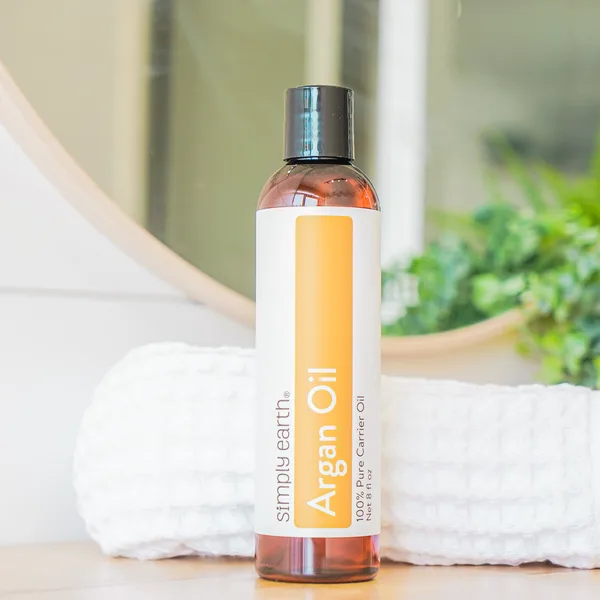
The questions people ask most — about dilution, nut allergies, refining and how long a bottle really lasts.
Do I need to dilute argan oil? +
No. Argan is a carrier oil, which means it is the thing you dilute other oils into. Use it straight from the bottle on skin, hair and nails. The only time a dilution rate comes into it is when you add an essential oil to your argan, and then the rate applies to that essential oil.
Is Simply Earth's argan oil refined or unrefined? +
Refined, and cold pressed. Those describe two different stages — cold pressing is how the oil is separated from the kernel, refining is a filtering step afterwards that lightens the colour and mellows the scent. Refined argan is paler and milder than unrefined, which makes it easier to blend into things where you do not want a nutty note coming through.
Can I use argan oil if I have a nut allergy? +
Speak to your doctor first. Argan oil is pressed from the kernel inside the fruit of the argan tree, and it may cause a reaction in people with tree nut allergies. This is the one safety point on this page we would not want anyone to skim past.
What is the difference between cosmetic and culinary argan oil? +
Culinary argan is pressed from kernels that are roasted first, which gives it a strong toasted smell and makes it a food ingredient. Cosmetic argan, which is what we sell, is pressed from raw kernels and smells only lightly nutty. If a bottle smells strongly of toasted almonds, it is the culinary kind and it does not belong in your skincare.
Will argan oil make my hair greasy? +
Not if you keep it to the ends. Two drops warmed between your palms and smoothed from the mid-lengths down is enough for most hair. Roots are where it goes wrong. If you want it on your scalp, use it as a pre-shampoo treatment and wash it out.
How long does argan oil last before it goes off? +
Around two years, stored cool and dark with the cap closed properly. Unlike essential oils, carrier oils are fats and they do eventually oxidise. You will know — rancid oil smells sharp and slightly crayon-like rather than lightly nutty.
Can argan oil go in a diffuser? +
No, and this is worth stating clearly because it is the most common mix-up between carrier oils and essential oils. Argan is a fixed oil. It does not evaporate, so it will not diffuse, and it will coat and damage the unit.
Does argan oil help with stretch marks? +
Argan supports skin elasticity, and there is a real human study behind that — researchers measured improved skin elasticity in postmenopausal women using argan oil. Elasticity is what that research measured, so elasticity is what we will claim. We are not going to tell you it prevents or removes stretch marks, because that is a different and much bigger claim than the evidence supports.
About the Author: Katie Veldkamp
Katie Veldkamp
Certified Aromatherapist · Co-Founder, Simply Earth
Katie Veldkamp is a Certified Aromatherapist and co-founder of Simply Earth. She personally formulates and reviews SE's essential oil blends and verifies all benefit claims on Simply Earth content before it goes live.
Join 20,000+ Earthies Making Their Homes Natural
New recipes, usage guides, and DIY tips — delivered free.
No spam. Unsubscribe any time.
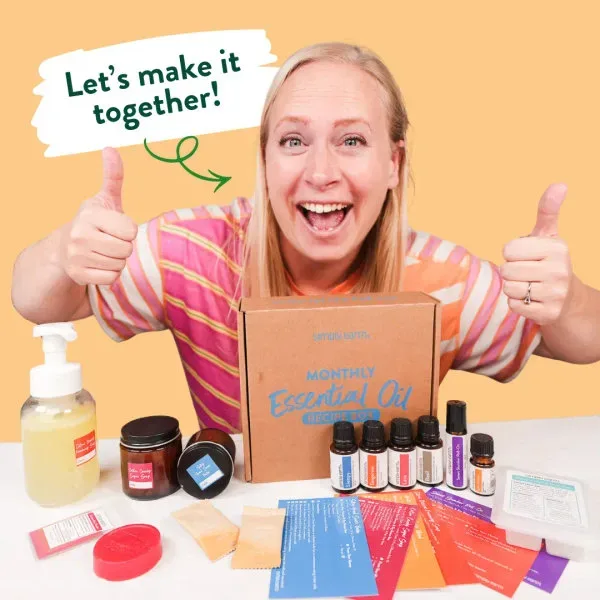
Learn by doing
Make your own natural products every month.
The Simply Earth Recipe Box ships 4 full-size essential oils, 6 natural recipes, and everything you need to make them. No guesswork.
Start My Recipe Box$39.99 for your first box, then $49.99/month. Skip, pause, or cancel anytime.