
Ylang Ylang Essential Oil Benefits, Uses & Recipes

Katie Veldkamp
Lead Certified Aromatherapist
Fact Checked & Approved
Ylang Ylang is the most intensely floral oil most people will ever open, and the first thing to know about it is how little you need. It has been one of the defining florals of fine perfumery for more than a century, it comes from a tree whose flowers are picked by hand in northern Madagascar, and it is potent enough that our own safety guidance caps it at half a percent — a tenth of what most oils allow. Used at that rate it is extraordinary. Used like a lavender, it will overwhelm everything it touches. Here is what it does, how much to use, and what the grades on the label actually mean.
In this Guide
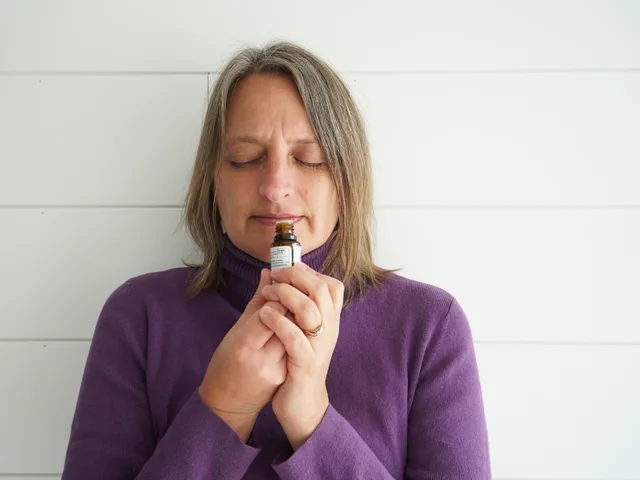
BEST FOR: EVENING DIFFUSER BLENDS
Ylang Ylang is one of the most reliably settling scents in aromatherapy — rich, sweet and slow. Customers most often describe using it in their sleep and relaxation blends, and it is the note that keeps a calming blend from smelling thin.
KATIE'S TIP
One drop. Genuinely. Add Lavender or Cedarwood as the bulk of the blend and let Ylang Ylang sit underneath it — you want to notice it on the second breath, not the first.


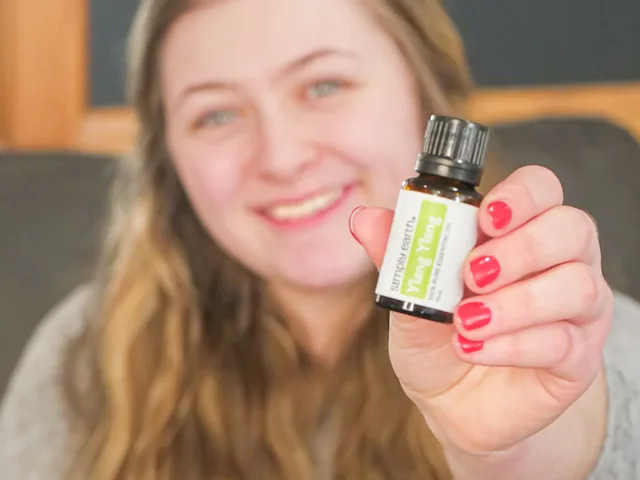
BEST FOR: MOOD-LIFTING BLENDS
Ylang Ylang's sweetness is what makes Simply Earth's Happy Joy blend work — it rounds off the citrus and keeps the blend from turning sharp. On its own it reads warm rather than zesty, which is why it holds up in a room long after a lemon blend has faded.
KATIE'S TIP
Ylang Ylang plus grapefruit is a genuinely lovely surprise. The citrus lifts it and stops the floral becoming cloying.


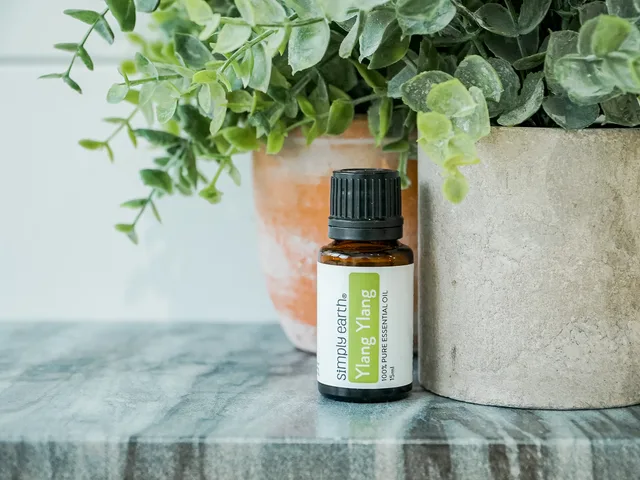
BEST FOR: MORNING SHOWER AND BODY BLENDS
Ylang Ylang's reputation is for calm, but customers use it in morning routines too — the sweetness reads as warm rather than sleepy in a shower blend. It is a good way to get a floral into a morning routine without the blend feeling like a bedtime one.
KATIE'S TIP
In a body wash or shower steamer, Ylang Ylang wakes up differently from a citrus — softer, and it lingers on skin far longer.


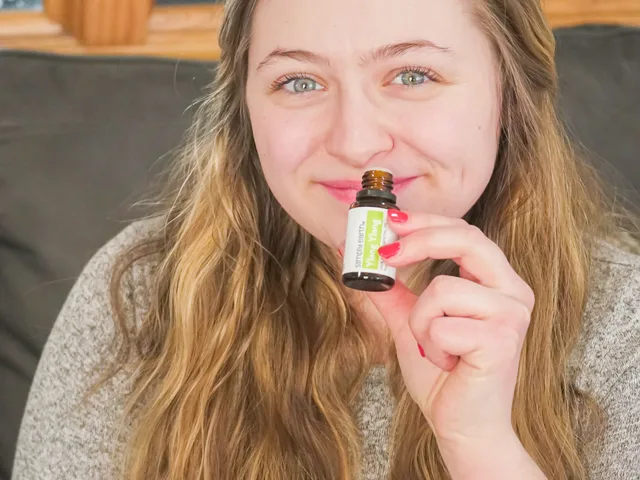
BEST FOR: FACE OILS, VERY WELL DILUTED
Ylang Ylang appears in facial oils and brightening blends across DIY skincare, where it is valued as much for the scent of the finished product as for anything else. The important part of this one is the dilution, not the oil.
KATIE'S TIP
At 0.5% maximum this is one drop in a good two tablespoons of carrier. That is not being cautious — that is the correct amount.

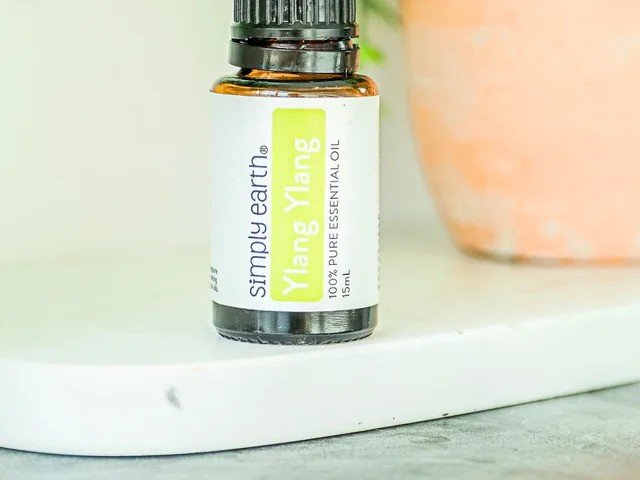
BEST FOR: HAIR AND SCALP CARE
Ylang Ylang is a traditional inclusion in hair oils and is used in DIY dry shampoo and hair sprays for scent and conditioning feel. It is one of the few oils that still smells like itself a day after you have used it.
KATIE'S TIP
Ylang Ylang is why old-fashioned hair oils smelled the way they did. A single drop in a hair oil is plenty, and it will still be there tomorrow.


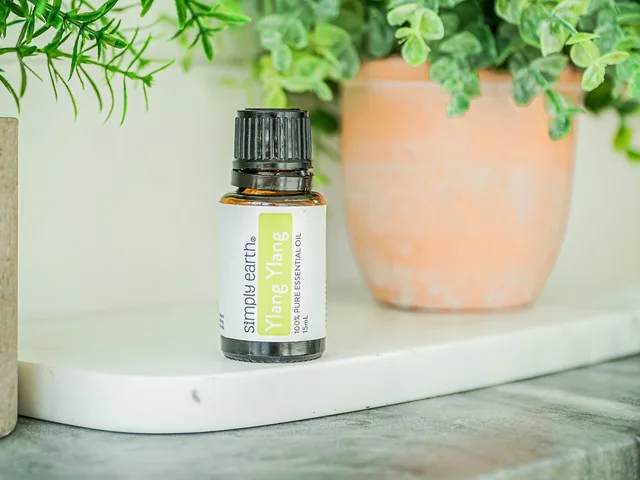
BEST FOR: BEDROOM DIFFUSER AND BODY BLENDS
Ylang Ylang has a long-standing association with romance. In Indonesia the flowers were traditionally scattered on the beds of newly-married couples — a piece of cultural history rather than a claim about what the oil does, and the reason it turns up in so many blends with Sandalwood and Rose.
KATIE'S TIP
With Sandalwood and a touch of sweet orange, in a room spray. It is the classic combination for a reason.

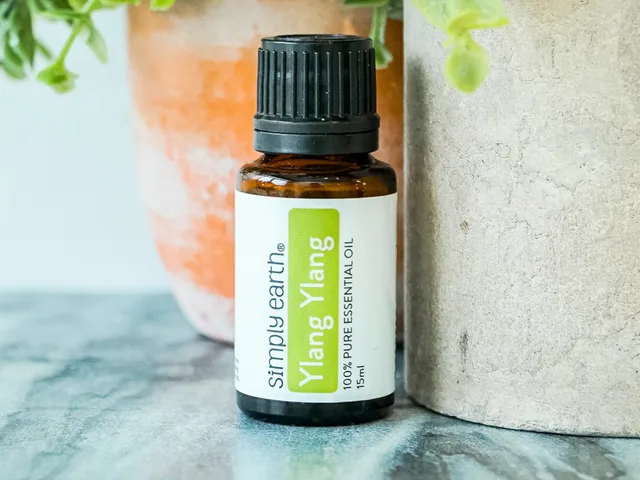
BEST FOR: DIY PERFUME AND BODY SPRAYS
Ylang Ylang is one of the most important florals in commercial perfumery and has been a component of many of the most recognisable fragrances ever made. In a DIY perfume it is a heart note with unusual staying power — it will still be detectable hours after the citrus has gone.
KATIE'S TIP
Ylang Ylang is the note that makes a homemade perfume smell like a perfume rather than a blend of oils. Start at one drop in ten and work up only if you must.
Put It to Work
How to Use Ylang Ylang
Diffuser
- • 1–2 drops only — Ylang Ylang will dominate a blend at anything more
- • Pair with citrus to lift it, or Cedarwood and Sandalwood to ground it
- • Diffuse 30–60 minutes at a time rather than continuously
Topical
- • Dilute to 0.5% maximum — roughly one drop per two tablespoons of carrier
- • This is the strictest limit of any oil in this series, by a factor of ten
- • Patch test before facial use, every time
- • Not phototoxic, so there is no sun-exposure restriction
Hair & Scalp
- • One drop in a hair or scalp oil, massaged in before washing
- • A drop in DIY dry shampoo or a hair spray for scent that lasts
- • Keep it to one drop — this oil does not fade quickly
DIY
- • Perfume and body sprays, as a long-lasting heart note
- • Bath blends, body washes and room sprays
- • Start at one drop in ten parts and work up only if you need to
Know the Difference
Know the Difference — Grades I, II, III and Complete
Ylang Ylang is unusual among essential oils: it is graded, and the grades do not come from different plants. They come from when during the distillation the oil was collected. The first oil off the still is the sweetest and most floral and goes to fine perfumery; the last is heavier and woodier and has historically gone into soap. "Complete" means the distillation was never interrupted, so you get the whole profile. One honest note before you read the table — we are not marking a column as ours. Our own records do not state which grade this oil is, and guessing from the colour, the price or the aroma notes on a label is exactly the kind of guess that ends up wrong, so we would rather tell you that than pick one.
Swipe to compare →
Ylang Ylang I Extra — the first fraction | Ylang Ylang II The middle fraction | Ylang Ylang III The final fraction | Complete The whole distillation | |
|---|---|---|---|---|
| When Collected | First fraction of the distillation | Middle fraction | Final fraction | The whole distillation, uninterrupted |
| Scent | Most intensely sweet and floral | Softer, less complex | Heaviest, woodiest, least floral | Full-spectrum — the complete profile |
| Traditional Use | Fine perfumery | Perfumery and cosmetics | Soap and mass fragrance | Aromatherapy |
| Relative Price | Highest | Middle | Lowest | Middle to high |
| Which One We Sell | — | — | — | — |
Perfect Pairs
Ylang Ylang Blends Well With
Citrus lifts it, woods ground it, and other florals stretch it. If you would rather start from a blend somebody else balanced, Ylang Ylang is already doing the work in Happy Joy, Love, Tranquility, B.O. Be Gone and Sparkling Lemon.
The Flower of Flowers
History of Ylang Ylang Essential Oil
Cananga odorata grows across the tropics of Southeast Asia, and its name is usually traced to a Tagalog phrase meaning something close to "flower of flowers". In Indonesia and the Philippines the yellow, ribbon-petalled blooms were traditionally scattered on the beds of newly-married couples — the origin of the oil's enduring association with romance, and a piece of cultural history that has followed the oil everywhere it has gone since.
Its commercial history is a perfumery one. From the late nineteenth century Ylang Ylang became one of the defining florals of French perfumery, and it remains a component of many of the most recognisable fragrances ever produced. That demand is what moved the centre of production west across the Indian Ocean, to the Comoros and northern Madagascar, where the climate suits the tree and where the great majority of the world's supply is still grown and distilled today.
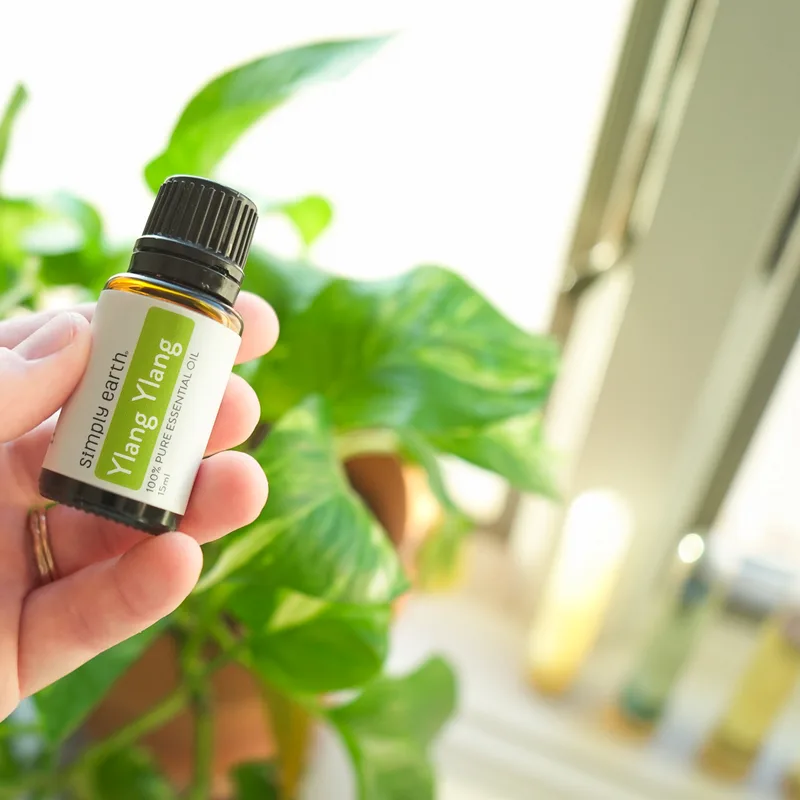
What's Inside
What's the Science Behind This Oil?
These are facts from the chemistry literature about the compounds themselves — not claims about what the oil does for you.
β-Caryophyllene
Sesquiterpene · Warm · Peppery
A sesquiterpene found across many essential oils, including clove, copaiba, rosemary and black pepper. It is described in the research literature as having anti-inflammatory action, and it is part of why Ylang Ylang has a warmth underneath all that sweetness.
Linalool
Terpene alcohol · Floral · Faintly spicy
Found in many flowers and spice plants, contributing a floral note with a touch of spice. It is also an antimicrobial agent widely used in manufacturing soaps, fragrances and household products, which is why it turns up on so many ingredient lists.
Benzyl Acetate
Ester · Sweet · Jasmine-like
An organic ester with a sweet, jasmine-like aroma, and a constituent of Jasmine, Ylang Ylang and Neroli. It is a large part of why Ylang Ylang smells the way it does, and it is used as a flavouring and fragrance ingredient throughout cosmetics and personal care.
Every Simply Earth oil is GC/MS tested by a third party and the results are published, so you can read the report rather than take our word for it. We do not have a spec sheet linked for this particular Ylang Ylang batch yet, so we are not quoting a constituent percentage for it here.
See how we testPicked by Hand, Distilled Within the Hour
Simply Earth & Malagassi Farm, Madagascar
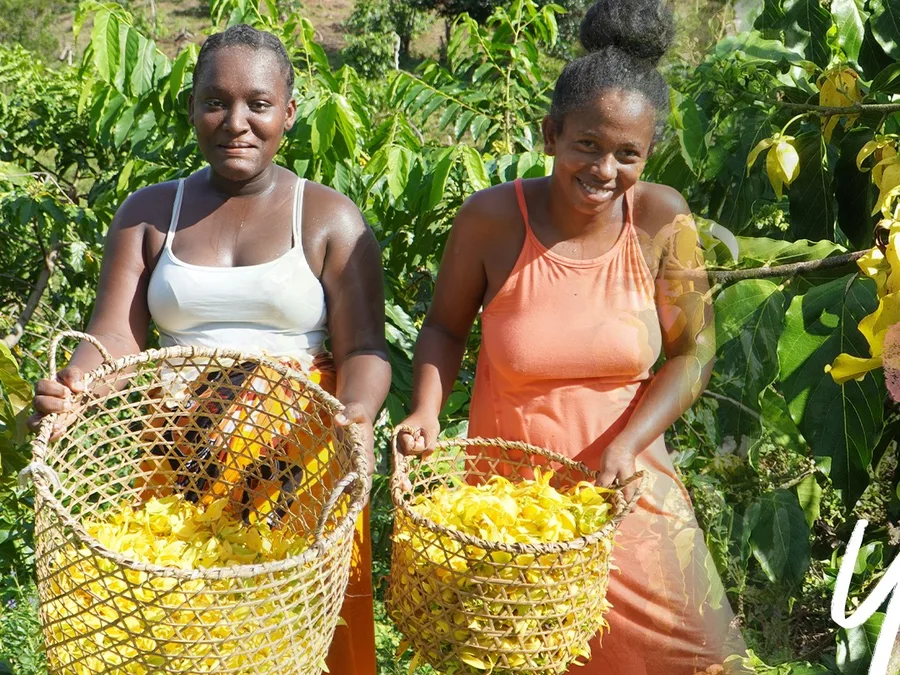
Our Ylang Ylang comes from Malagassi Farm, at the northern tip of Madagascar. Roughly 80% of the world's ylang ylang comes from that region, and Malagassi has been growing and distilling it there for over twenty years.
The flowers are hand-picked by a team of women, who take only the finest blooms to distillation. Because the stills sit close to the fields, the flowers are distilled within the same hour they are picked — and that is the whole trick. The fresh, high floral note at the top of good Ylang Ylang is the first thing to fade after picking, so an hour between the tree and the still is the difference between an oil that smells like the flower and one that smells like a memory of it.
20+ Years
Working with Malagassi Farm
80%
Of the world's supply grows in this region
Within the Hour
From picked to distilled
Use It Right
Things to Remember When Using This Oil
Maximum dilution 0.5% — about one drop per two tablespoons of carrier oil. That is ten times stricter than most oils. Ylang Ylang is potent, and more is not better. Our dilution chart has the measurements for other bottle sizes.
Safe to use around kids age 10 and up — not age 2+ like most oils in this range. Check the age before you put it in a family blend.
Not cat safe and not dog safe. Do not diffuse it around pets or apply it where they could come into contact with it. After the dilution rate, this is the most important line on this page.
Pregnancy-safe — but consult your doctor before use.
Not phototoxic, so there is no sun-exposure restriction after topical use.
Patch test on the inner arm before any facial use.
A very small amount of a strong floral can trigger headaches in sensitive people. Start with one drop in a diffuser and see how the room feels before you add another.
Store in a cool, dark place, and replace the oil if it has oxidised from being left open.
We do not recommend ingesting essential oils.
These statements have not been evaluated by the Food and Drug Administration. This product is not intended to diagnose, treat, cure, or prevent any disease.
Real Results
What Earthies Are Saying About It
"Ylang Ylang has such a pleasant smell and I use it in all sorts of things. Mostly I use it in my sleep/relaxation blends. Ylang Ylang has always been one of my favorites ever since I first experienced its usefulness and delightful smell!"
Diana Stevens
Verified Buyer • Ylang Ylang Essential Oil
"I absolutely LOVE Ylang Ylang from Simply Earth! It's one of my favorite oils and is so uplifting! I've used this oil in diffusers, blends, room sprays, candles, roll-ons, perfumes, car essential oil diffusers, body oils & lotions, you name it! Everyone loves it."
Hannah Bougie
Verified Buyer • Ylang Ylang Essential Oil
"Ylang Ylang is one of my favorites. I make a spritzer to spray on laundry as I fold it, also spray in closets & use as a room refresher. I also make a spritzer to wear as a personal scent."
Mary Delger
Verified Buyer • Ylang Ylang Essential Oil
OUR SIMPLY PURE PROMISE
What Goes Into Your Products Matters
Certified 100% Pure
No fillers, no synthetics. Just pure oil.
GC/MS Third-Party Tested
Every batch independently verified.
Ethically Sourced from Quality Farms
Responsibly harvested. People and planet first.
15mL
Bottle Size
MLM brands: 10mL
$10–16
Per Oil
MLM brands: $25–55+
Public
GC/MS Tests
MLM brands: Rarely
Your Order Changes Lives: 13% of profits fight human trafficking globally.
Ylang Ylang Essential Oil FAQ
The questions Earthies ask most about the flower of flowers — dilution, grades, pets and blending.
What does Ylang Ylang essential oil smell like? +
Intensely sweet and floral, with a slightly fruity, tropical edge and a warm base underneath. It is much richer and heavier than a light floral like Lavender — most people describe it as the most "perfume-like" oil they own. That richness is exactly why one drop goes a very long way.
How much Ylang Ylang should I use? +
Less than you think. For topical use, dilute to 0.5% maximum — roughly one drop per two tablespoons of carrier oil. In a diffuser, 1–2 drops is plenty, and it works best as the smallest part of a blend rather than the main event.
Why is Ylang Ylang's dilution rate so much lower than other oils? +
Because of the risk of skin sensitisation. Most oils in our range are fine at up to 5%; Ylang Ylang's recommended maximum is 0.5%, which is ten times stricter. That is not a note about strength of smell — it is a skin-safety limit, so it is worth measuring rather than eyeballing.
What is the difference between Ylang Ylang I, II, III and Complete? +
They all come from the same flower. The grades describe when in the distillation the oil was collected — the first fraction (I or "Extra") is the sweetest and most floral and goes to fine perfumery, later fractions are progressively heavier and woodier, and "Complete" means the distillation ran uninterrupted so the oil carries the whole profile.
Is Ylang Ylang safe around cats and dogs? +
No. Our records list Ylang Ylang as neither cat safe nor dog safe, so we would not diffuse it in a room your pets use or apply it anywhere they could come into contact with it.
Is Ylang Ylang safe for kids? +
It is safe to use around children aged 10 and up. That is worth double-checking against your other oils, because most of our range is safe from age 2 — Ylang Ylang is one of the exceptions.
What blends well with Ylang Ylang? +
Citrus oils like Bergamot, Grapefruit, Lemon and Sweet Orange lift it and stop it turning cloying. Woods and roots like Cedarwood, Sandalwood, Patchouli and Vetiver ground it. Other florals — Rose, Jasmine, Neroli, Geranium, Clary Sage — stretch it into something more complex.
Can I use Ylang Ylang in a homemade perfume? +
It is one of the best oils for it. Ylang Ylang works as a heart note with unusually good staying power, so it is still there hours after the top notes have burned off. Start at about one drop in ten and work up only if you need to.
About the Author: Katie Veldkamp
Katie Veldkamp
Certified Aromatherapist · Co-Founder, Simply Earth
Katie Veldkamp is a Certified Aromatherapist and co-founder of Simply Earth. She personally formulates and reviews SE's essential oil blends and verifies all benefit claims on Simply Earth content before it goes live.
Learn Essential Oils the Easy Way
New recipes, usage guides, and DIY tips — delivered free.
No spam. Unsubscribe any time.
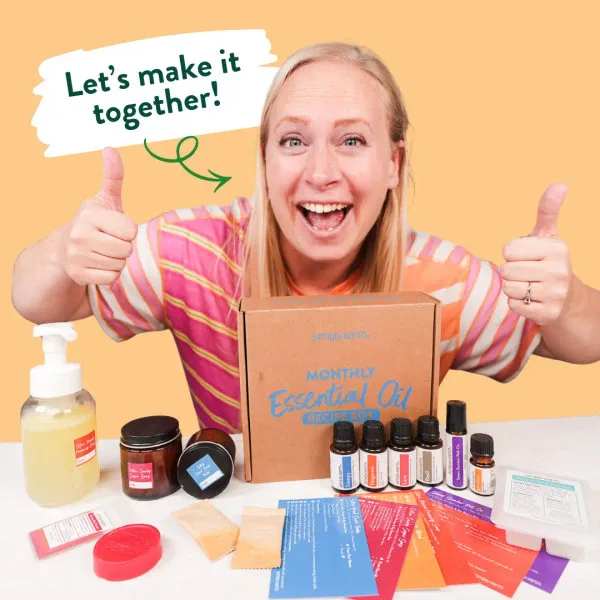
Learn by doing
Make your own natural products every month.
The Simply Earth Recipe Box ships 4 full-size essential oils, 6 natural recipes, and everything you need to make them. No guesswork.
See This Month's Box$39.99 for your first box, then $49.99/month. Skip, pause, or cancel anytime.