
Safer Fragrance Oils: 10 Clean Scents for Candles, Soap & Perfume

Katie Veldkamp
Certified Aromatherapist
Fact Checked & Approved
There are scents essential oils simply cannot make. No amount of blending gets you crème brûlée, or a cologne-style teakwood, or the particular jasmine-and-honeysuckle of a garden after dark — and if you have ever tried to recreate a store-bought candle with pure oils, you already know the disappointment. That gap is why Simply Earth made Safer Fragrance Oils: ten scents, free of parabens, phthalates, dyes and sulfates, built to hold their aroma through wax and soap. They are not essential oils, they do not do what essential oils do, and we are going to be straight with you about both. Here is what they are, when to reach for them instead, and a real Simply Earth recipe for every single one of the ten.
Free Cheat Sheet
Not sure how much to use?
Get the free Safer Fragrance Oils Cheat Sheet — the scents, and how to work them into candles, soap and body care.
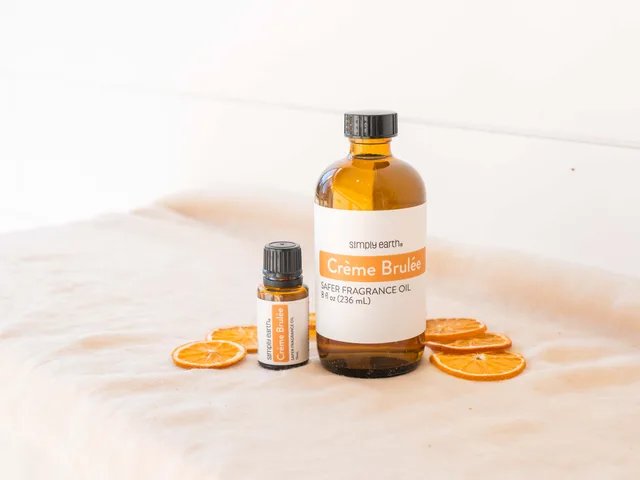
BEST FOR: BAKERY, COLOGNE AND FLORAL SCENTS
This is the whole reason the line exists. Essential oils are distilled from plants, so the scents available to you stop where the plants do — there is no crème brûlée plant, no teakwood cologne, no jasmine-and-honeysuckle bloom you can press into a bottle at a price anyone would pay. Simply Earth's own description of the range is a wider scent palette, and it names exactly the categories that were missing: baked goods, colognes and florals. Crème Brûlée is sweet and toasty. Midnight Garden is floral and enchanting. Neither is possible with a distilled oil.
KATIE'S TIP
If you have been frustrated trying to blend your way to a dessert or designer scent, stop. You are not doing it wrong — the raw material does not exist. This is the shelf to come to instead.


A Stronger, Longer-Lasting Aroma
Scent throw is the reason most candle makers switch.
 Shop Safer Fragrance Oils
BEST FOR: CANDLES, WAX MELTS AND PERFUMES
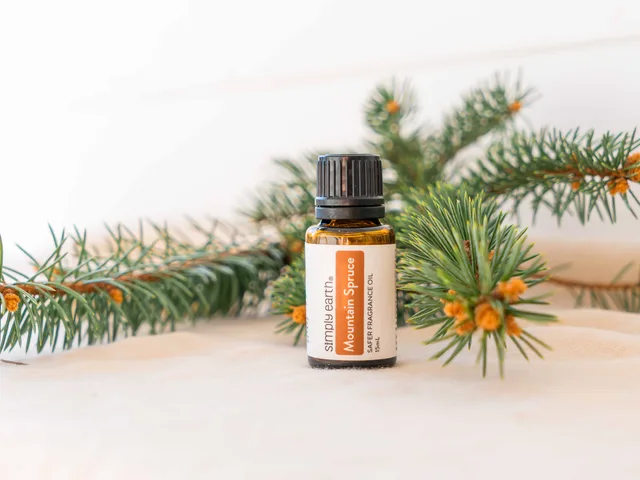
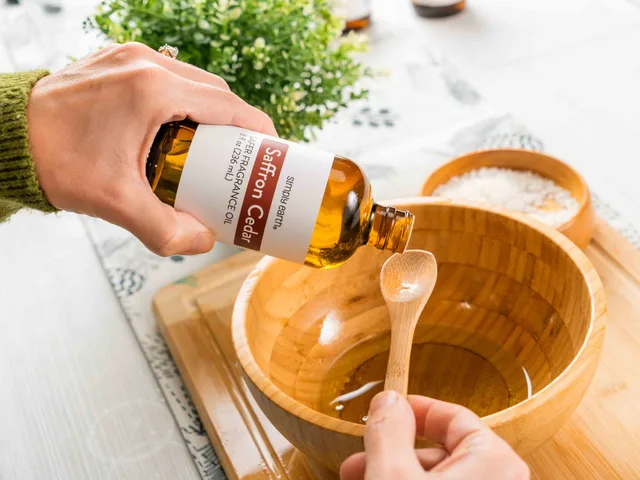
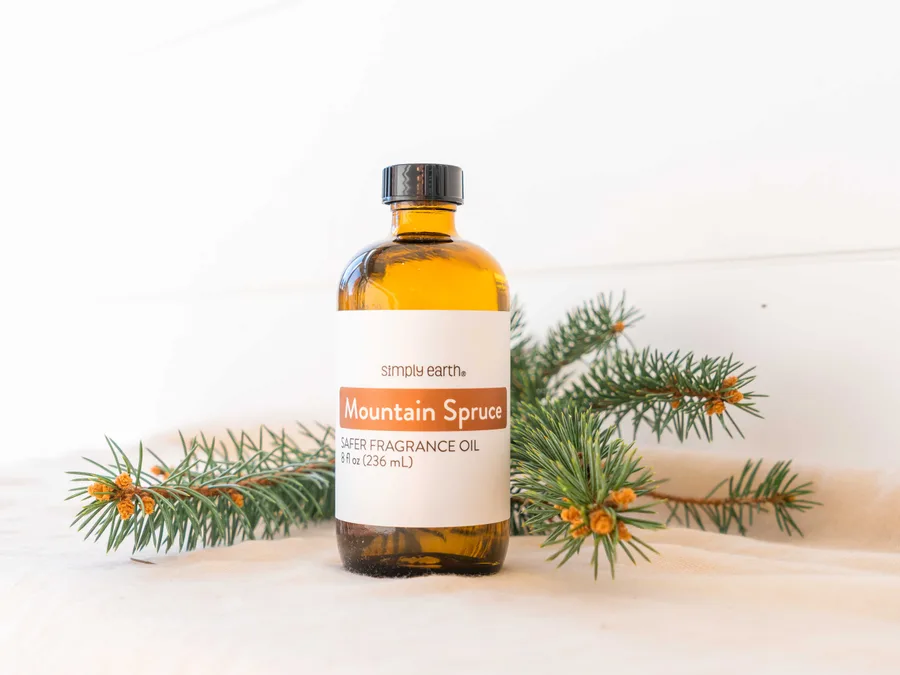
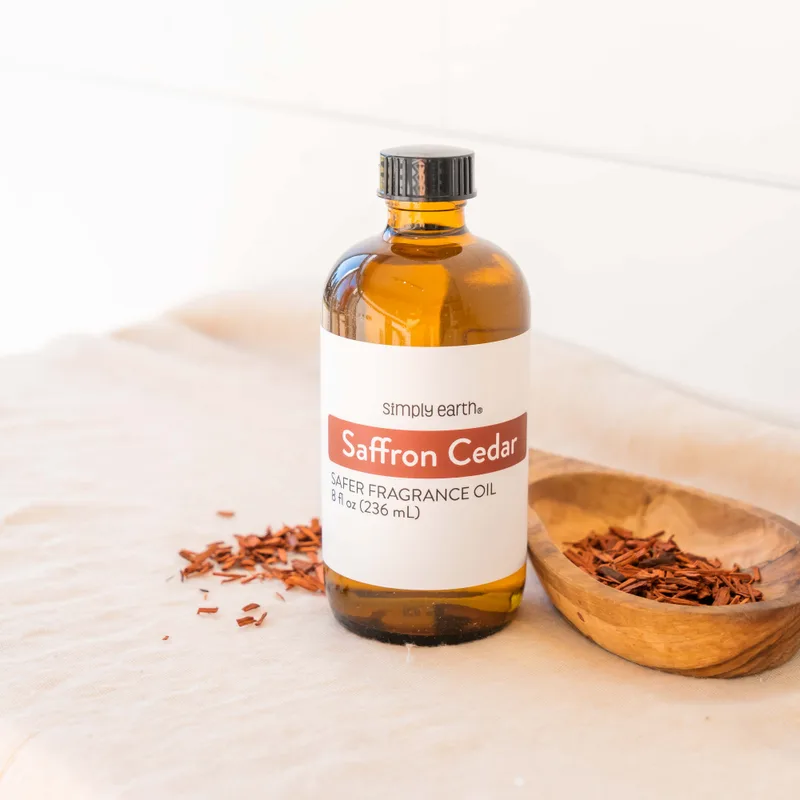
Simply Earth's product record puts it plainly: essential oils can fade in DIY crafts. Heat and time are hard on distilled oils, and a candle that smelled wonderful in the pouring pot can be disappointingly quiet three weeks later. These are formulated for the opposite — a stronger, longer-lasting aroma, which the legacy of this line describes as especially good for candles and perfumes. That is a performance claim about scent, and nothing more than that. The two recipes below are where it shows: Mountain Spruce is the scent in Cabin in the Pines, and Saffron Cedar carries Autumn Amber.
KATIE'S TIP
Cure matters as much as the oil. Give a poured candle a few days before you judge the throw — most people test far too early and conclude the fragrance failed when it simply has not settled yet.


Free From Parabens, Phthalates, Dyes and Sulfates
Four named exclusions, on every bottle in the line.
 Shop Safer Fragrance Oils
BEST FOR: ANYONE AVOIDING CONVENTIONAL FRAGRANCE
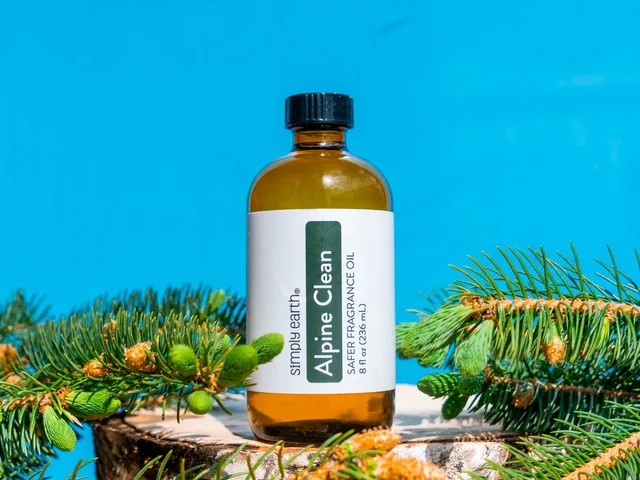
Conventional fragrance is where the ingredient list usually stops being an ingredient list — fragrance is a single word that can stand in for a great many things. Simply Earth's product record names what is left out of these instead of leaving you to wonder: paraben free, phthalate free, dye free and sulfate free. That is the specific claim, it applies across the line, and it is the reason the word in the name is safer rather than safe or natural. It applies just as much to Alpine Clean in the soap below as it does to Coastal Cactus in Sunset Float.
KATIE'S TIP
Worth knowing what this claim is and is not. It is a statement about four specific things that are not in the bottle. It is not a statement that the contents are natural, and Simply Earth does not make that one.


Skin-Safe Blends, Built for Body Care
Formulated for the recipes, not just for the wax pot.
 Shop Safer Fragrance Oils
BEST FOR: LOTIONS, BUTTERS, SCRUBS AND SOAP
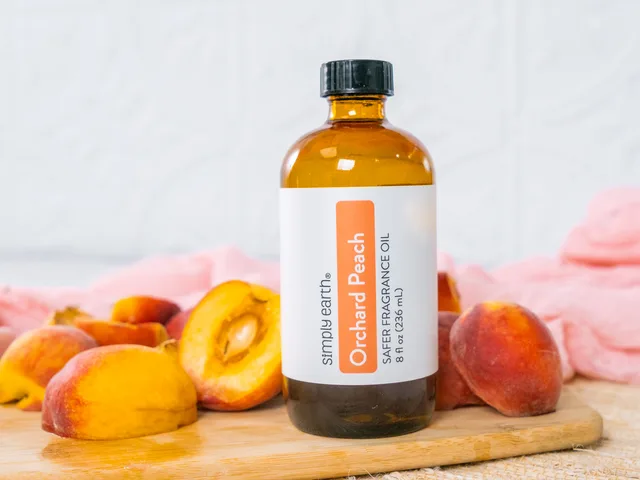
Plenty of fragrance oils on the market are for candles only. These are made with skin-safe ingredients and designed to pair with Simply Earth's DIY recipes, which is why so many of them turn up in lotions, body butters and scrubs rather than only in wax. Every scent ships with usage guidelines for exactly this reason — the safe amount is not the same in a candle as it is in a body butter, and the guidance tells you which is which. Below, Orchard Peach scents a soap and Tropical Zest a lotion — both things that end up on skin.
KATIE'S TIP
Follow the usage rate for the product you are actually making, not the one you remember from the last recipe. A candle tolerates far more fragrance than anything that ends up on skin.


Scent That Survives Soap and Wax
It smells the same coming out as it did going in.
 Shop Safer Fragrance Oils
BEST FOR: COLD-PROCESS SOAP AND POURED CANDLES
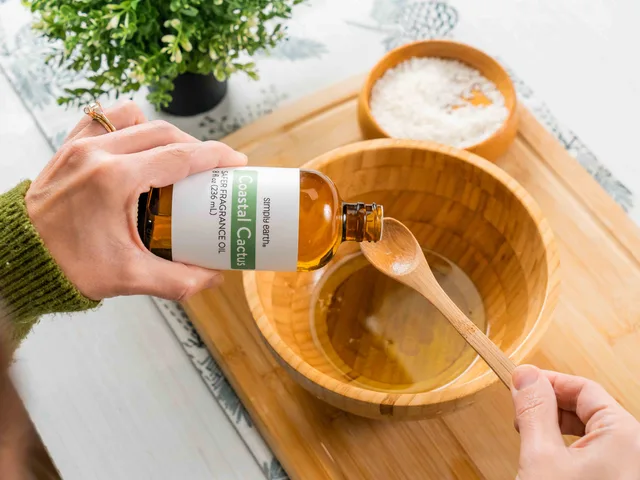
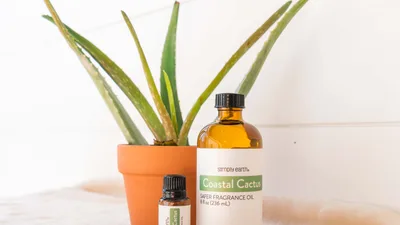
Soap making is unkind to fragrance. Cold process is a chemically active, warm environment, and a delicate aroma can come out of the mould as something you did not intend. Simply Earth's line description for these is reliable — always performs true to scent in all your DIY recipes, which is a claim about consistency rather than strength: what you smelled in the bottle is what you get in the bar. For anyone who has had a batch turn on them, that predictability is the whole point — Caribbean Teakwood through a cold-process loaf, and Coastal Cactus through poured wax melts.
KATIE'S TIP
Add fragrance to melted butters and waxes as they begin to cool rather than at full heat. You lose less of it, and the scent sits more evenly through the finished batch.


A Name That Tells You the Truth
We could have called them something prettier.
 Shop Safer Fragrance Oils
BEST FOR: KNOWING WHAT YOU ARE ACTUALLY BUYING
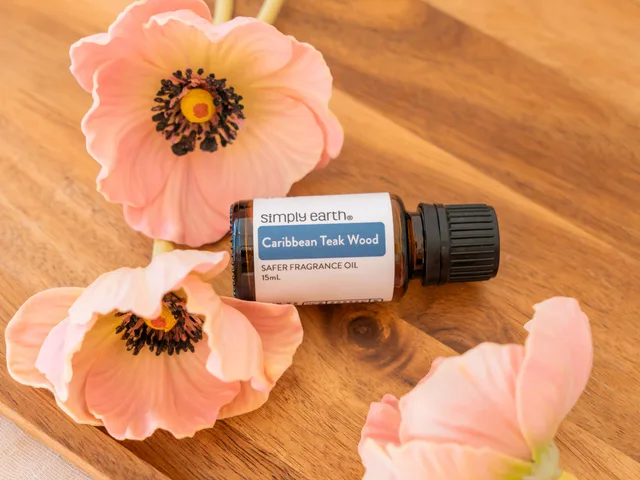
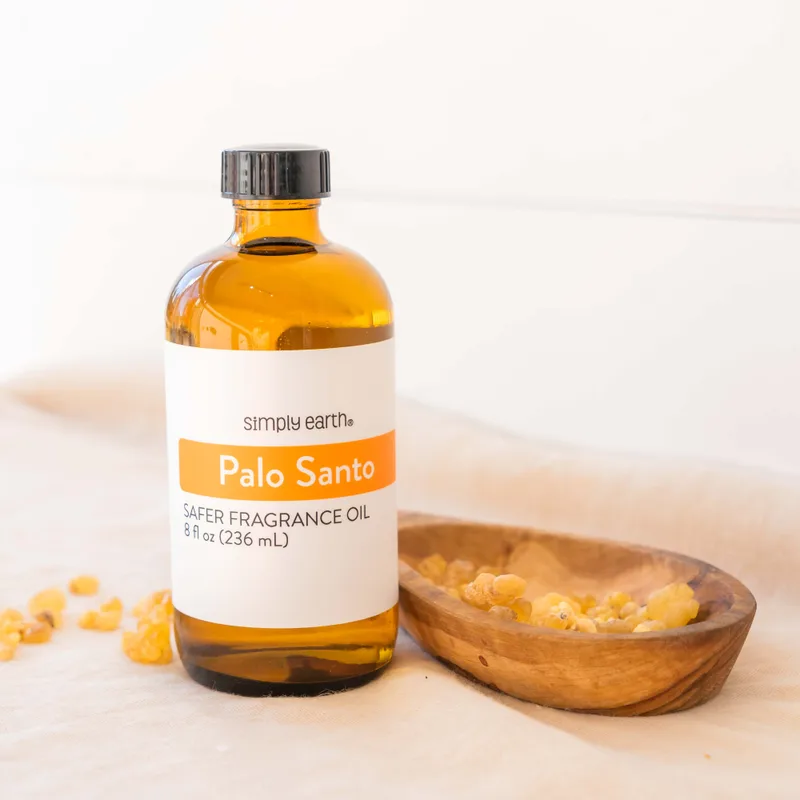
This one is not a product feature so much as a decision, and it is worth saying out loud. Simply Earth's own account of naming the range is blunt: we didn't want to call them something vague like "nature scent" or "botanical blend" — names that might sound natural but leave you wondering what's really inside. That's not our style. So they are called what they are. Safer, because that is a comparison to conventional fragrance and a comparison is what it is — not a claim to be natural, and not a claim to be an essential oil. The candle recipe below is scented with Palo Santo, and the bottle it comes from says exactly that on the front.
KATIE'S TIP
If a scent product's name tells you how it makes you feel but not what it is, that is usually the tell. You should be able to find out what you are buying from the label.
Use it in

An Essential Oil Version of Almost Every Recipe
You are not being pushed off the oils you came for.
 Shop Safer Fragrance Oils
BEST FOR: MAKERS WHO WANT BOTH OPTIONS
Adding a fragrance line to an essential oil company raises a fair question, and Simply Earth answered it in the original announcement: when we share a recipe using a fragrance oil, we'll also include a version made with essential oils whenever possible. That promise has held — recipes like Cabin in the Pines and Fireside Fig print the essential oil substitution right alongside the fragrance oil one. The oils are not going anywhere. This is a second shelf, not a replacement. Both recipes below pair a fragrance oil with essential oils rather than replacing them — Palo Santo in Desert Muse, Orchard Peach in Velvet Peach.
KATIE'S TIP
The essential oil version will almost always smell lighter and fade sooner. That is not a flaw in the recipe — it is the honest difference between the two materials.


Put Them to Work
How to Use Safer Fragrance Oils
Candles & Wax Melts
- • The use the line is best known for, and where throw matters most
- • Add fragrance off the heat, as the wax begins to cool
- • Stir slowly for 2–3 minutes so it binds properly into the wax
- • Let a poured candle cure several days before judging the scent
Soap
- • Cold process is hard on fragrance — these hold up where oils fade
- • Follow the usage rate on the scent's own guidelines, not a generic one
- • Works in both melt-and-pour bases and full cold-process batches
- • Expect the bar to smell the way the bottle did
Perfume & Cologne
- • Where the cologne-style and dessert scents really earn their place
- • Blend with essential oils for depth — most SE perfume recipes do
- • A 10mL spray bottle is the usual format in Simply Earth's recipes
- • Swirl gently to combine rather than shaking
Body Care
- • Lotions, body butters, scrubs and shimmer oils
- • Skin-safe blends, but always at the body-care usage rate
- • Scent lasts noticeably longer on skin than an essential oil will
- • Patch test anything new before you use a whole batch
Room & Home
- • Room sprays, reed diffusers and scented home products
- • Also laundry boosters and other everyday household DIYs
- • ⛔ Never in an ultrasonic or nebulizing diffuser — see the safety guide
- • Passive diffusers only, such as reeds or ceramic stones
Know the Difference
Safer Fragrance Oils vs. Essential Oils
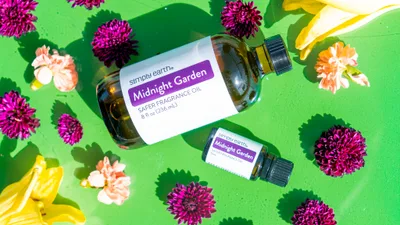
The honest answer to "should I use these instead of essential oils?" is that it depends entirely on what you want the finished thing to do. If you want a scent — a specific, lasting, complicated one — reach for a fragrance oil. If you want the therapeutic side, reach for an essential oil, because a fragrance oil has none of it and Simply Earth will not pretend otherwise. You can also use both in one recipe, and many of ours do. The line currently runs to ten scents, all $7.99 for 15mL: Alpine Clean (woody, crisp and masculine), Caribbean Teakwood (tropical and woody), Coastal Cactus (bright and clean), Crème Brûlée (sweet and toasty), Midnight Garden (floral and enchanting), Mountain Spruce (fresh and earthy), Orchard Peach (juicy, fresh and sweet), Palo Santo (woody and sweet), Saffron Cedar (spicy and warm) and Tropical Zest (bright, fruity and energizing).
Swipe to compare →
Safer Fragrance Oils For when the goal is scent | Essential Oils For when the goal is wellness | |
|---|---|---|
| What They Are | A blend of natural and safe synthetic ingredients | Distilled or pressed from a single plant |
| What They Are For | A gorgeous scent that lasts | Wellness, relaxation and natural support |
| Aromatherapy Benefits | None — these are for scent only, and we say so | Yes, this is what they are chosen for |
| Scent Range | Wide — includes bakery, cologne and florals | Limited to what a plant can actually produce |
| Staying Power | Stronger and longer-lasting, especially in wax | Can fade in candles, soap and heat |
| Best For | Candles, perfume, giftable DIYs, room sprays | Diffusing, body care, roll-ons, natural cleaning |
| In an Ultrasonic Diffuser | No — it can damage the device | Yes, this is what they are designed for |
| What Is Excluded | Parabens, phthalates, dyes and sulfates | Nothing added in the first place |
| Labelled Natural | No, on purpose — they are partly synthetic | Yes |
| Price at Simply Earth | $7.99 for 15mL, also sold in 8oz | Typically $10–16 per bottle |
| This article | The subject of this page | — |
Perfect Pairs
Essential Oils They Blend With
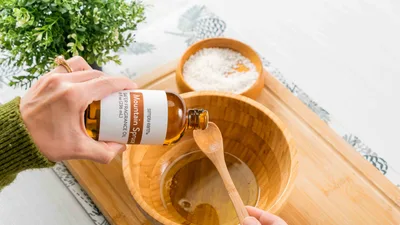
Mixing the two is encouraged, as long as you keep to safe dilutions for both. These are the pairings Simply Earth actually uses in its own fragrance oil recipes — Fir Needle with Mountain Spruce in Cabin in the Pines, Sweet Orange with Palo Santo in the Foaming Sugar Scrub, Cedarwood (Atlas) with Midnight Garden, and Blood Orange with Crème Brûlée in the Golden Hour perfume.
Where This Started
The Story That Sparked a New Direction
This range began with one customer and one candle she could not make.
She wrote to Katie asking how to recreate a candle inspired by Yankee Candle's Midsummer's Night — not for herself, but as a gift for a friend. It is the kind of request Simply Earth gets constantly, and Katie went digging into the scent notes to work out a blend.
The answer was that there wasn't one. As Katie tells it: "I started digging into the scent notes and realized… essential oils alone just weren't going to cut it." Store-bought candles like that one have deep, complex, almost cologne-like profiles that pure essential oils cannot reproduce. A few earthy, woodsy oils would get somewhere in the neighbourhood, but it would not smell the same — and she did not want someone putting that much love into a gift and ending up disappointed.
That is the gap the line was built for. Not to replace anything, and not because fragrance is better, but because there were things people genuinely wanted to make and no honest way to help them make it.
What's Actually in Them
What Is and Isn't in a Safer Fragrance Oil
An essential oil page would show you a constituent breakdown here. A fragrance oil does not have one — there is no single plant behind it and no botanical GC/MS profile to publish. So instead of borrowing chemistry that belongs to a different product, here is what Simply Earth does say about what is in these, what is left out, and what they will not claim.
Four Named Exclusions
From the product record · Every scent in the line
Simply Earth's product listing for these states four specific exclusions: paraben free, phthalate free, dye free and sulfate free. That is the claim in full, and it applies across the range rather than to particular scents. Note what kind of statement it is — four named things that are not in the bottle, which is a more useful and more checkable promise than a vague one about purity.
Natural and Synthetic, Stated Plainly
Not labelled natural · By choice
These are described by Simply Earth as clean, consciously crafted fragrances made with a blend of natural and safe synthetic ingredients, made only with skin-safe ingredients, and created to meet strict safety standards. The company's own FAQ answers "are they natural?" with "not entirely" — a deliberate refusal to use the word, because part of the product is synthetic and saying otherwise would be marketing rather than information.
No Aromatherapy Benefits
Simply Earth's own answer · Unambiguous
This is the honest limit of the whole category and it is worth stating where the chemistry usually goes. Asked directly whether these have aromatherapy benefits, Simply Earth answers "No — fragrance oils are used purely for scent. If you're looking for mood-boosting or wellness support, we recommend using essential oils instead." Nothing on this page claims otherwise, and you should be sceptical of any fragrance oil that does.
Shop the full range
Why We Made Them
Why We Created Safer Fragrance Oils
Simply Earth was built on a promise about natural, effective, safe products, and a fragrance line is an obvious question mark against that. Here is the reasoning, in the company's own words: "over the years, many of you asked for scent options that essential oils alone just couldn't provide. You wanted to recreate nostalgic candles, to gift beautiful-smelling products, and more freedom in your DIYs — while keeping them safe."
The alternative was not that those projects stopped happening. People were buying conventional fragrance oils elsewhere, from ingredient lists that often say nothing more specific than fragrance. Making a version with four named exclusions and published usage guidelines was a better answer than pretending the demand was not there.
That is also why the naming is so deliberately unglamorous. Safer is a comparative word, and it is doing comparative work: safer than conventional fragrance, on four specific counts. It is not safe, it is not natural, and it is not an essential oil. Simply Earth chose the accurate word over the appealing one, which is the same instinct behind publishing this caveat at all.
On the numbers we do not have: there are no farm partnerships, years-partnered figures or farm-direct percentages behind this line, and there could not be — these are formulated fragrances rather than distilled crops. Where an essential oil page would carry sourcing statistics, this one carries nothing, because inventing them would be worse than leaving the space empty.
Use Them Right
Safety & Usage Guide
⛔ Never use a fragrance oil in an ultrasonic or nebulizing diffuser. Those diffusers are built for pure essential oils. Fragrance oils can damage the device, leave residue behind and affect air quality. This is the single most important line on this page.
Passive diffusers are fine. Reed diffusers, ceramic stones and Simply Earth's flower diffuser release scent by slow natural evaporation, and these work beautifully in all of them.
Usage rates differ by project. The safe amount in a candle is not the safe amount in a body butter or a soap. Every scent ships with usage guidelines — follow the one for what you are actually making.
Skin-safe when used as directed. These are made with skin-safe ingredients, which means at the stated rate in the stated kind of product. It does not mean neat on skin.
They have no aromatherapy benefits. Simply Earth says this outright. If you want mood or wellness support, use an essential oil — that is what it is for.
Mixing with essential oils is fine — just keep to safe dilutions for both, and test a scent combination before you commit it to a large batch.
Label anything you give away. If a DIY is leaving your house as a gift, say what is in it. Someone else's allergies are not something you can guess at.
Store them like essential oils — somewhere cool and dry, out of direct light, and out of reach of children and pets.
These statements have not been evaluated by the Food and Drug Administration. This product is not intended to diagnose, treat, cure, or prevent any disease.
Real Results
What Earthies Are Saying
"I made a moisturizing beard salve for my husband and scented it with Alpine Clean. It smells masculine and clean and he loves it! So grateful that the safer fragrance oils have a strong scent throw that lingers but also doesn't give me headaches."
Rivky Bergstein
Verified Buyer • Alpine Clean Safer Fragrance Oil
"The new Safer Fragrance Oils smell amazing! My son and I used Alpine Clean — an earthy, masculine scent — to make a soap bar, while my daughter and I used Tropical Zest to make a fruity perfume. The fragrance oils have a long-lasting scent that is not overpowering."
Jodi Tracy
Verified Buyer • Alpine Clean Safer Fragrance Oil
"This oil smells incredible! I made peach-colored soaps scented with the Orchard Peach fragrance oil and Sweet Orange essential oil — and they smell soooo good! Anyone who smells these soaps breaks into a dreamy grin and grabs one for their shower."
Rivky Bergstein
Verified Buyer • Orchard Peach Safer Fragrance Oil
OUR SIMPLY PURE PROMISE
What Goes Into Your Products Matters
Paraben & Phthalate Free
Two of the four things we name as left out.
Dye & Sulfate Free
The other two. Same across all ten scents.
Published Usage Guidelines
Every scent tells you how much, for what.
10
Scents in the Line
In 15mL and 8oz
$7.99
Per 15mL Bottle
Was $9.99
4
Named Exclusions
Not just "fragrance"
Your Order Changes Lives: 13% of profits fight human trafficking globally.
Safer Fragrance Oils FAQ
The questions Earthies actually ask — including the ones with awkward answers.
Are Safer Fragrance Oils natural? +
Not entirely, and Simply Earth does not label them that way on purpose. They are a mix of natural and safe synthetic ingredients. The decision not to call them natural is deliberate — clarity over buzzwords, even where the buzzword would sell better.
Are they safe for skin? +
Yes, when used as directed. Each Safer Fragrance Oil comes with usage guidelines so you know the safe amount for the specific project you are making, whether that is a lotion, a candle or a perfume. Skin-safe means at the stated rate in the stated product, not neat on skin.
Do they have any aromatherapy benefits? +
No. Fragrance oils are used purely for scent. If you are looking for mood-boosting or wellness support, use an essential oil instead — that is genuinely what it is for, and no fragrance oil is a substitute for it.
Can I use Safer Fragrance Oils in my diffuser? +
Not in an ultrasonic or nebulizing diffuser. Those are designed for pure essential oils and use water or air pressure to mist them, and a fragrance oil can damage the device, leave residue or affect air quality. They do work in passive diffusers — reed diffusers, ceramic stones, or Simply Earth's flower diffuser — which release scent by slow natural evaporation.
Can I mix Safer Fragrance Oils with essential oils? +
Yes. Follow safe dilution rates for both, and test the combination on a small scale before you blend it into a large batch. Plenty of Simply Earth recipes do exactly this — Cabin in the Pines pairs Mountain Spruce with Fir Needle essential oil, for instance.
Will you still share essential oil recipes? +
Absolutely. Whenever Simply Earth shares a recipe using a Safer Fragrance Oil, it also includes an essential oil version wherever possible, so you can pick the one that fits what you are after. The fragrance line is an addition, not a replacement.
How many Safer Fragrance Oils are there? +
Ten as of September 2026 — Alpine Clean, Caribbean Teakwood, Coastal Cactus, Crème Brûlée, Midnight Garden, Mountain Spruce, Orchard Peach, Palo Santo, Saffron Cedar and Tropical Zest. All are $7.99 for a 15mL bottle and also come in an 8oz size for larger batches.
Why are they called "safer" rather than "safe"? +
Because it is a comparison, and the honest word for a comparison is a comparative one. They are safer than conventional fragrance on four specific counts — no parabens, phthalates, dyes or sulfates. Simply Earth chose that over a vaguer name like "nature scent" that would sound better and tell you less.
About the Author: Katie Veldkamp
Katie Veldkamp
Certified Aromatherapist · Co-Founder, Simply Earth
Katie Veldkamp is a Certified Aromatherapist and co-founder of Simply Earth. She formulates and reviews Simply Earth's blends and fragrance range, and it was a customer's question to Katie about recreating a store-bought candle that led to the Safer Fragrance Oils line.
Join 20,000+ Earthies Making Their Homes Natural
New recipes, usage guides, and DIY tips — delivered free.
No spam. Unsubscribe any time.
Learn by doing
Make your own natural products every month.
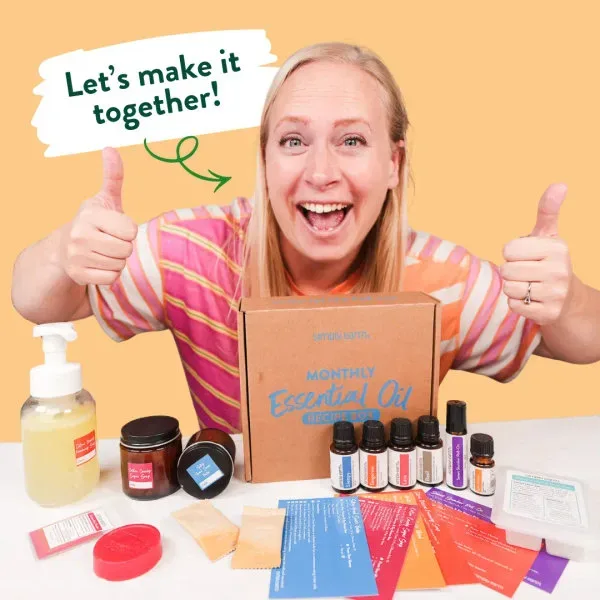
The Simply Earth Recipe Box ships 4 full-size essential oils, 6 natural recipes, and everything you need to make them. No guesswork.
Start My Recipe Box$39.99 for your first box, then $49.99/month. Skip, pause, or cancel anytime.