
Copaiba Balsam Essential Oil Benefits, Uses & Recipes

Katie Veldkamp
Lead Certified Aromatherapist
Fact Checked & Approved
Copaiba is not a household name yet, and that is the only ordinary thing about it. It is not pressed from a peel or distilled from a flower — it is steam distilled from the crude resin of the Copaifera langsdorffii tree, drawn from the trunk while the tree keeps standing. It smells warm and resinous, closer to honey and wood than to anything in the citrus or floral shelf. And it is the oil our customers write the longest reviews about — massage therapists who cannot keep it in the kit, people who took it into hospital with them, people who wanted the calm without the hemp. Below are the seven benefits Simply Earth lists for it, the recipes we make with it, and an honest answer to the question almost everyone arrives with.
In this Guide
Supports Feelings of Wellness
The all-rounder reason copaiba earns a permanent spot.
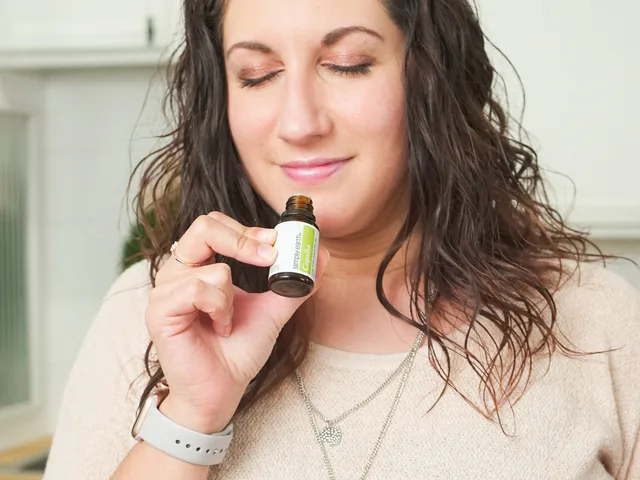 Shop Copaiba Balsam
BEST FOR: SEASONAL MONTHS AND EVERYDAY ROUTINES
Copaiba is the oil people buy for one reason and keep for five. Simply Earth lists supporting feelings of wellness among its uses, and it is the benefit that turns copaiba from a curiosity into a bottle that never quite gets put away. Diffuse it, or work it into a balm you reach for daily.
KATIE'S TIP
Copaiba is a base note — it lingers. One or two drops in a diffuser blend is plenty, and it will still be in the room an hour later.



BEST FOR: EVENINGS AND BEDROOMS
Where eucalyptus and peppermint open airways with a sharp, cooling hit, copaiba is warm and quiet about it. That makes it a far better choice for the evening, for bedrooms, and for anyone who finds the cooling oils too intense. Diffuse it alongside a conifer and you get the effect without the medicine-cabinet smell.
KATIE'S TIP
This is the respiratory oil to reach for at night. The cooling oils are stimulating; copaiba is not.

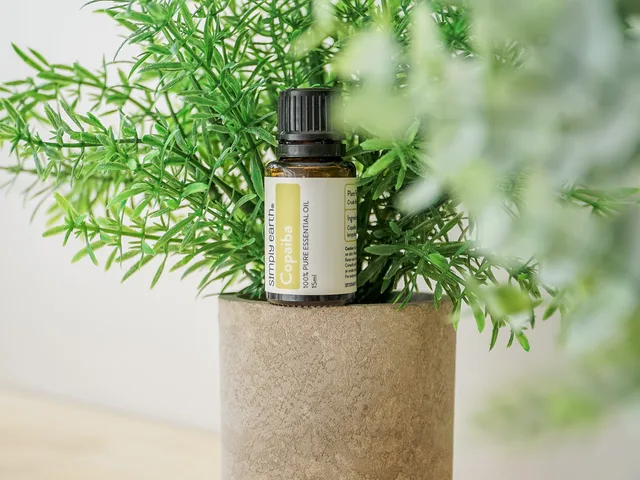
BEST FOR: BEFORE ANYTHING THAT NEEDS A STEADY HEAD
Copaiba's warm, resinous profile is what "grounding" actually smells like. It is the note that stops a bright blend from feeling frantic, and it is why it sits in our Homebody Blend alongside Ho Wood, Amyris and Vetiver. Use it before a difficult conversation, a presentation, or the part of the evening where you would like to stop thinking about work.
KATIE'S TIP
Copaiba plus Frankincense is the steadiest two-oil combination I know. Nothing else needed.


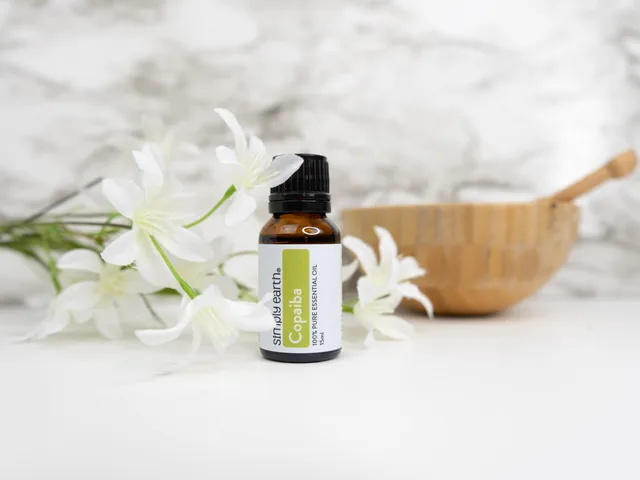
BEST FOR: MASSAGE AND BODY CARE
Copaiba has a long history in body-care preparations, and detoxifying is one of the uses Simply Earth lists for it. Diluted into a lotion, a massage bar or a bath, it turns an ordinary moisturising step into a deliberate one — and because it is a base note, the scent stays with you rather than evaporating in ten minutes.
KATIE'S TIP
Blend it into a lotion base you already own. The oils people actually finish are the ones that live in something they already use.


Reduces the Appearance of Blemishes
The benefit Simply Earth prints on the bottle.
 Shop Copaiba Balsam
BEST FOR: CONGESTED AND REACTIVE SKIN
This is the skin benefit on our own product record, and it is the one with the best evidence behind it. Amazonian communities used copaiba resin for skin conditions for centuries, and a double-blind, placebo-controlled clinical trial published in Alternative Medicine Review in 2012 looked specifically at copaiba essential oil applied to acne vulgaris. It is also notably gentler than the usual clarifying oils, which makes it worth trying on skin that reacts badly to tea tree. Build it into a serum or a face cream at low dilution.
KATIE'S TIP
If tea tree stings your skin, try copaiba instead. Same intent, much softer approach.


BEST FOR: EVENINGS AND WIND-DOWN ROUTINES
This is the benefit that brings most people to copaiba, and the one our reviews keep circling back to. It takes the edge off without making you foggy. One customer calls it "a chill out oil" that "doesn't have a loud, bright scent," which is exactly right — copaiba works on a room slowly. Diffuse it in the evening, or keep a roll-on for the moments that need one.
KATIE'S TIP
Pair it with Lavender for sleep and with Frankincense for focus. Same oil, two completely different jobs depending on the partner.


BEST FOR: TIRED SHOULDERS AND THE DAY AFTER
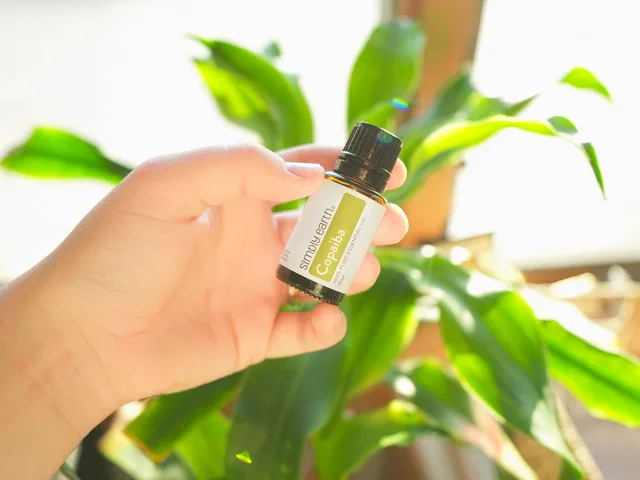
Supporting joint function is the first use listed on our own product record for copaiba, and the customer evidence behind it is the most specific we have for any oil — a massage therapist who cannot keep it in her kit, someone who took it into hospital after surgery. Copaiba also anchors our Relief Blend, which pairs it with Rosemary, Juniper Berry, Eucalyptus and Peppermint and comes as a pre-diluted Relief Roll-On too. Note that Relief carries stricter cautions than copaiba on its own — kids 10 and up, and not recommended in pregnancy or breastfeeding.
KATIE'S TIP
Try it in a bath with Epsom salts, or in a massage bar. This is an oil for once the effort is over rather than before it.

Put It to Work
How to Use Copaiba Essential Oil
Diffuser
- • 1–2 drops as the base of a blend — it lingers far longer than a citrus
- • Evenings, bedrooms, and any room you want warm rather than fresh
- • Pair with Frankincense to ground a blend, or Lavender for sleep
Topical
- • Dilute to 5% or less in a carrier oil, lotion or balm for body and massage use
- • Lower again in serums and face creams for facial skin
- • Sun safe, so there is no sun-exposure restriction after topical use
- • Relief Roll-On if you would rather have it pre-diluted
Bath
- • Disperse in a solubiliser or a carrier first — oils do not dissolve in water
- • With Epsom salts for a post-effort soak
DIY
- • Reed diffusers, shower steamers and massage bars, where a base note pays off
- • Serums, micellar water, face creams and priming butters
- • A blending factor of 3 and a medium consistency make it easy to work with
Know the Difference
Copaiba vs. CBD — What's Actually Different
This is the question most people arrive with, so here is the honest version. Copaiba and CBD come from unrelated plants and are unrelated products — copaiba is a legume, in the same family as peas and beans. What links the two in conversation is one compound, beta-caryophyllene, which copaiba contains at unusually high levels and which is of genuine scientific interest for the way it interacts with the body's own receptor systems. That is why customers who avoid hemp products often ask about copaiba instead — one of the reviews further down this page is a massage therapist saying exactly that, in her own words and about her own clients. But copaiba is not a CBD substitute. It contains no CBD and no THC, it is not a cannabis product, and it is not a treatment for anything. If CBD is what you are after, copaiba is not a quieter version of it; it is a different oil that happens to share one interesting molecule.
Swipe to compare →
Copaiba Balsam Essential Oil Steam distilled from tree resin | CBD Oil Extracted from hemp or cannabis | Hemp Seed Oil A carrier oil, not an essential oil | Copaiba Fragrance Oil Synthetic aroma compound | |
|---|---|---|---|---|
| What It Is | Steam distilled from the crude resin of Copaifera trees, and unusually rich in beta-caryophyllene | Cannabidiol, extracted from hemp or cannabis | A carrier oil pressed from hemp seeds, containing no cannabinoids | A synthetic aroma compound made to smell like copaiba |
| Related to Cannabis? | No. Copaiba is a legume, not a cannabis plant | Yes. It is a cannabis extract | Yes, but from the seed, which carries no cannabinoids | No, and it is not an essential oil either |
| Contains THC? | None. It is not a cannabis product at all | Trace amounts, legally limited | No | No |
| What We Sell It For | Aromatherapy, skin care and body care | Not carried by Simply Earth | Not carried as an essential oil | Never a substitute for the real oil |
| Which One We Sell | We carry this | — | — | — |
Perfect Pairs
Copaiba Blends Well With
Our own record pairs Copaiba with Frankincense, Jasmine, Peru Balsam, Sandalwood and Ylang Ylang — resins, woods and heavy florals, all of them base or heart notes that can stand up to it. If you would rather start from a blend somebody else balanced, copaiba is already doing the work in Homebody and Relief.
Where It Comes From
Tapped From a Tree, Not Distilled From a Flower
Copaiba Balsam Essential Oil is steam distilled from the crude resin of Copaifera langsdorffii, and the resin is the unusual part. It is not pressed from a peel or distilled from a flower or a leaf. It is drawn from the trunk of a living tree — the tree can go on growing, and be drawn from again.
Copaifera belongs to the Fabaceae family, the legumes, and grows up to around eighteen metres tall with thick leaves. One quiet piece of trivia that follows the oil everywhere: despite the name, copaiba balsam is not a true balsam. The species is native to South America and the oil is produced mainly in Brazil, Venezuela and Colombia.
What is genuinely remarkable is how long people have known about it. Indigenous communities in the Amazon have used copaiba resin for centuries in a range of ways, particularly for skin conditions, and it was used as an ointment for various ailments by communities across northern and northeastern Brazil. Today it is used mostly for emotional wellbeing, seasonal threats and body aches — which is very close to the list our own product record still carries.
What's Inside
What's the Science Behind This Oil?
These are facts from the chemistry literature about the compounds themselves — not claims about what the oil will do for you.
trans-beta-Caryophyllene
Sesquiterpene · Warm · Peppery
Copaiba's signature constituent, present at unusually high levels. A sesquiterpene of considerable scientific interest for the way it interacts with the body's own receptor systems, and the reason copaiba comes up at all in conversations about CBD. It is also found in clove, rosemary and black pepper.
trans-alpha-Bergamotene
Sesquiterpene · Warm · Faintly sweet
Another sesquiterpene, contributing to the warm, faintly sweet resinous character that makes copaiba read as honey and wood rather than as anything green or sharp.
Germacrene D
Sesquiterpene · Woody · Earthy
Adds woody depth, and turns up across a wide range of resinous and woody botanicals. It is part of why copaiba sits so comfortably underneath frankincense and sandalwood in a blend.
Every bottle of our Copaiba Balsam Essential Oil ships with a batch-specific GC/MS report, which for copaiba matters more than usual — beta-caryophyllene is the whole story of this oil, and the report lets you read its level for yourself rather than taking a number on trust. We do not have a spec sheet linked for this particular batch yet, so we are not quoting a percentage here.
See how we testSupport the Source
Where Our Copaiba Comes From
Copaifera grows across South America, and copaiba oil is produced mainly in Brazil, Venezuela and Colombia. Ours comes from Brazil — that is what the spec on our own product record says, and it is the figure we trust over anything a blog post has repeated over the years.
Drawing resin is a slower, gentler business than most harvests. The trunk is opened, the resin runs, and the tree is left standing to keep growing — which means a living tree is worth more than a felled one, and for once the incentive points the right way.
We should be straight about one thing, though. For oils like our Grapefruit and our Clove we can name the farm and the family. For copaiba we cannot yet — we have the country and the process, and no named partner farm on record. Rather than dress that up, we have left it out, and it is on our list to fix.
Brazil
Origin on our product spec
100%
Of batches GC/MS tested
Resin
The part of the plant we distil
Use It Right
Things to Remember When Using This Oil
Always dilute before applying to skin. Copaiba is gentler than most oils, but dilution is still the rule — our record puts it at 5% or less, and lower again on the face. Our dilution chart has the measurements for other bottle sizes.
Kid safe for ages 2 and up. That is the standard for most of our range, but check it against the other oils in a family blend rather than assuming.
Cat safe and dog safe. Copaiba is one of the oils our records clear for homes with pets — a genuine point in its favour, since many are not.
Pregnancy safe and breastfeeding safe, but consult your doctor first. Homebody Blend, which contains copaiba, is cleared for children, pregnancy, breastfeeding and pets. Relief Blend is not — it is kids 10 and up and not recommended in pregnancy or breastfeeding, so do not read copaiba's profile onto the blend.
Sun safe. Copaiba is not phototoxic, so there is no sun-exposure restriction after topical use.
Patch test on the inner arm before you put it in anything for your face.
Copaiba is not a cannabis product and contains no THC or CBD. It is also not a substitute for anything prescribed to you. If you are managing a condition, talk to your doctor before adding it to a routine.
Shelf life is around five years, which is long for an essential oil. Keep the cap on and store it cool and dark — oxidised oil is more likely to irritate.
Keep out of reach of children and away from eyes. We do not recommend ingesting essential oils.
These statements have not been evaluated by the Food and Drug Administration. This product is not intended to diagnose, treat, cure, or prevent any disease.
Real Results
What Earthies Are Saying About It
"Purchasing a great deal of this recently, I cannot keep it in my tool kit for long as clients find it's analgesic effects speedy and long lasting. For the client who has concern or issue with hemp and cbd products, THIS is your ticket… Not an oil for smell, but a powerhouse for effect."
Joyce Inderkum
Verified Buyer • Copaiba Balsam Essential Oil
"I brought this to the hospital when I had surgery! It gave me so much relief from inflammation paired with Lavender. I hardly leave home without them! This is a MUST HAVE!"
Kristal Morgan
Verified Buyer • Copaiba Balsam Essential Oil
"In my opinion y'all have a far superior Copaiba than the other 3-4 I've smelled. I know it's a chill out oil and doesn't have a loud, bright scent but some of the others I have tried almost have zero smell. Y'all are my Copaiba dealers for life."
Cherie Hudson
Verified Buyer • Monthly Subscription Box
OUR SIMPLY PURE PROMISE
What Goes Into Your Products Matters
Certified 100% Pure
No fillers, no synthetics. Just pure oil.
GC/MS Third-Party Tested
Batch-specific reports with every bottle.
Ethically Sourced from Quality Farms
Responsibly harvested. People and planet first.
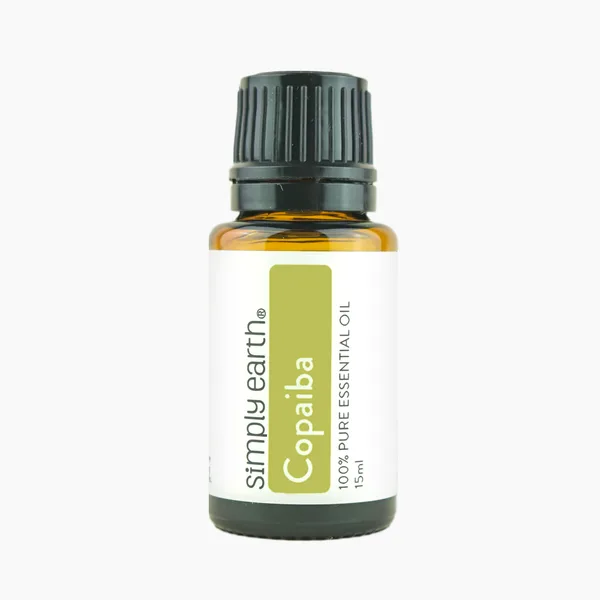
15mL
Bottle Size
MLM brands: 10mL
$10–16
Per Oil
MLM brands: $25–55+
Public
GC/MS Tests
MLM brands: Rarely
Your Order Changes Lives: 13% of profits fight human trafficking globally.
Copaiba Essential Oil FAQ
The questions Earthies ask most — the CBD comparison, safety around kids and pets, and what to blend it with.
What does copaiba essential oil smell like? +
Warm and resinous — our own record describes the aroma as warm, rich, pleasant and honey-like. It is much closer to wood and honey than to anything citrus or floral, and it is a base note, so it stays in a room long after the brighter oils in a blend have burned off. Several customers note that it is not a loud scent, which is exactly the point.
Is copaiba the same as CBD? +
No. They come from unrelated plants and they are unrelated products. Copaiba is an essential oil steam distilled from the resin of a South American legume tree; CBD is cannabidiol extracted from hemp or cannabis. What links them in conversation is beta-caryophyllene, a compound copaiba is unusually rich in that is of scientific interest for how it interacts with the body's own receptor systems. Copaiba is not a CBD substitute and does not produce CBD's effects.
Does copaiba essential oil contain THC? +
No. Copaiba is not a cannabis product at all — it comes from Copaifera trees in the Fabaceae family, the legumes. There is no THC and no CBD in it.
What is beta-caryophyllene? +
A sesquiterpene, and copaiba's signature constituent, present at unusually high levels. It also occurs in clove, rosemary and black pepper. It is the compound that draws scientific attention to copaiba, and it is the reason the oil comes up in conversations about the cannabinoid system at all. Every bottle ships with a batch-specific GC/MS report so you can see the levels for your own bottle.
How do you use copaiba essential oil? +
Diffuse one or two drops as the base of a blend, or dilute it to 5% or less in a carrier oil, lotion or balm for body and massage use. Use it lower again in anything for your face, and patch test first. In the bath, disperse it in a solubiliser or carrier oil before it goes anywhere near the water.
Is copaiba essential oil safe for kids and pets? +
Our records list copaiba as kid safe for ages 2 and up, and both cat safe and dog safe, which makes it one of the friendlier oils for a house with animals in it. It is also listed as pregnancy safe and breastfeeding safe with your doctor's go-ahead. Relief Blend, which contains copaiba, is stricter — kids 10 and up, and not recommended in pregnancy or breastfeeding.
What does copaiba blend well with? +
Our own record pairs it with Frankincense, Jasmine, Peru Balsam, Sandalwood and Ylang Ylang — resins, woods and heavy florals that can hold their own against a base note. Lavender is the pairing for sleep and Frankincense the one for focus. Copaiba is also already blended into Homebody and Relief if you would rather not build it yourself.
Is copaiba balsam a true balsam? +
No, despite the name. Copaiba is drawn as a crude resin from the trunk of the Copaifera tree and steam distilled, and the plant part on our spec is listed as balsam, but botanically it is not a true balsam. It is a piece of trivia rather than something that changes how you use the oil.

About the Author: Katie Veldkamp
Katie Veldkamp
Certified Aromatherapist · Co-Founder, Simply Earth
Katie Veldkamp is a Certified Aromatherapist and co-founder of Simply Earth. She personally formulates and reviews SE's essential oil blends and verifies all benefit claims on Simply Earth content before it goes live.
Learn Essential Oils the Easy Way
New recipes, usage guides, and DIY tips — delivered free.
No spam. Unsubscribe any time.

Learn by doing
Make your own natural products every month.
The Simply Earth Recipe Box ships 4 full-size essential oils, 6 natural recipes, and everything you need to make them. No guesswork.
Start My Recipe Box$39.99 for your first box, then $49.99/month. Skip, pause, or cancel anytime.