
Amyris Essential Oil Benefits, Uses & Recipes

Katie Veldkamp
Certified Aromatherapist
Fact Checked & Approved
Amyris is the oil most people meet under someone else's name. It is sold across the industry as West Indian sandalwood, and it is not a sandalwood — it is a Caribbean tree in the citrus family that happens to smell warm, woody and faintly of vanilla. That mix-up has done Amyris a disservice, because it is genuinely good on its own terms: a thick, slow, base-note oil that anchors everything you blend it with and that Simply Earth quietly puts inside three of its most-loved blends. Here is what it actually does, why it is not the sandalwood on the label, and eight recipes that already use it.
In this Guide
Free Cheat Sheet
New to base notes?
Get the free Essential Oil Cheat Sheet and use every oil in your cabinet with confidence.

BEST FOR: EVENING DIFFUSING AND BEDTIME ROLL-ONS
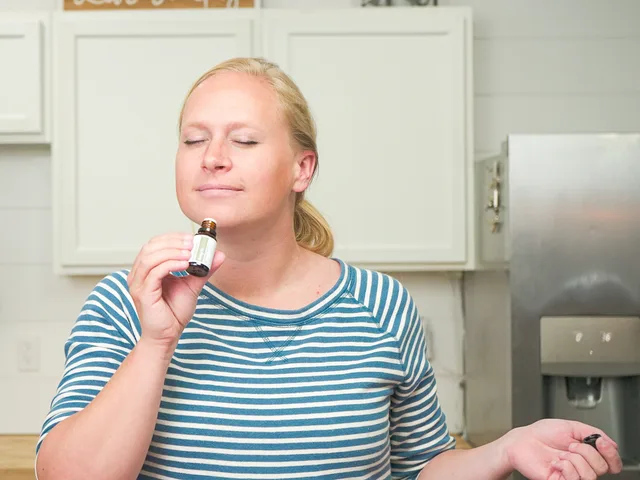
This is the use Amyris is best known for, and it has a genuinely interesting reason behind it. One of the oil's main constituents is valerianol — a compound that also occurs in valerian root, the herb with the long folk association with sleep. That is a shared ingredient rather than a shared effect, but it is why Amyris keeps turning up in rest blends, and why it is the oil we reach for at the end of a day rather than the start of one.
KATIE'S TIP
Amyris is a base note, so it lingers long after the brighter oils in a blend have burned off. Diffuse it 30 minutes before bed rather than at bedtime and the room will still smell of it when you get there.


BEST FOR: DIFFUSER BLENDS WHEN A ROOM FEELS UNSETTLED
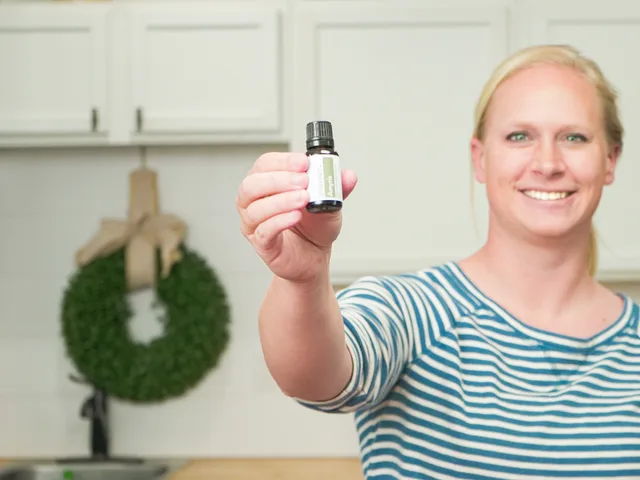
Centering is the first use Simply Earth lists for this oil, and it is the one people describe most consistently in their own words. Amyris does not lift a mood the way sweet orange does; it settles one. The aroma is warm and low and slightly sweet, and it fills a space without demanding attention — which is exactly why it works as the quiet backbone of a diffuser blend rather than its headline.
KATIE'S TIP
If a blend smells busy or scattered, add one drop of Amyris rather than reducing anything. It tends to pull the other oils together instead of competing with them.


BEST FOR: DIFFUSING WHILE YOU WORK OR STUDY
Supporting focus is on Simply Earth's list of uses for Amyris, and it is the claim with the most specific research attached. A 2021 study measured EEG activity while participants inhaled a blend of sweet orange, lavender and amyris, and reported changes the authors associated with concentration. That is one small study on a three-oil blend rather than on Amyris alone — worth knowing, and worth not overstating.
KATIE'S TIP
Pair it the way that study did. Two drops of sweet orange, two of lavender and one of Amyris is a genuinely pleasant desk blend, and the Amyris is what stops the other two smelling thin by mid-afternoon.
Use it in
BEST FOR: FACIAL OILS AND BALMS AT LOW DILUTION
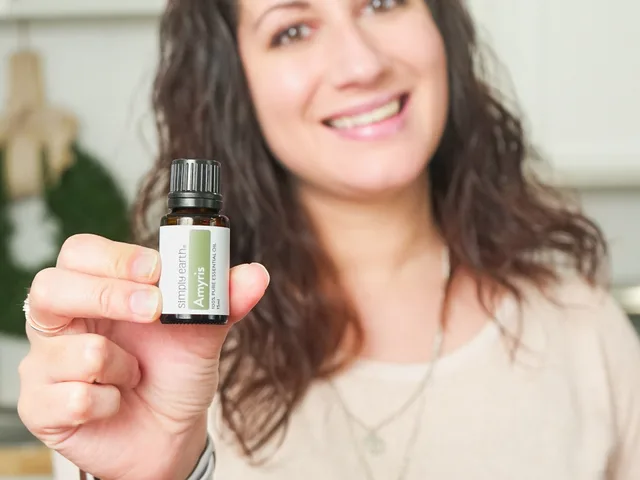
Amyris has a long history in cosmetic formulation, and Simply Earth lists tightening and the appearance of fine lines among its uses. Laboratory work on Amyris balsamifera oil has also examined antioxidant activity. As always, that is chemistry in a dish rather than a promise about your face — but it is the reason this oil sits in balms and serums as often as it sits in diffusers.
KATIE'S TIP
A little goes a long way here. Amyris has a blending factor of 3, so in a facial oil start at one drop per tablespoon of carrier and build up only if you want more of the aroma.
Use it in

BEST FOR: BODY BUTTERS, SOAPS AND HAND-CARE RECIPES
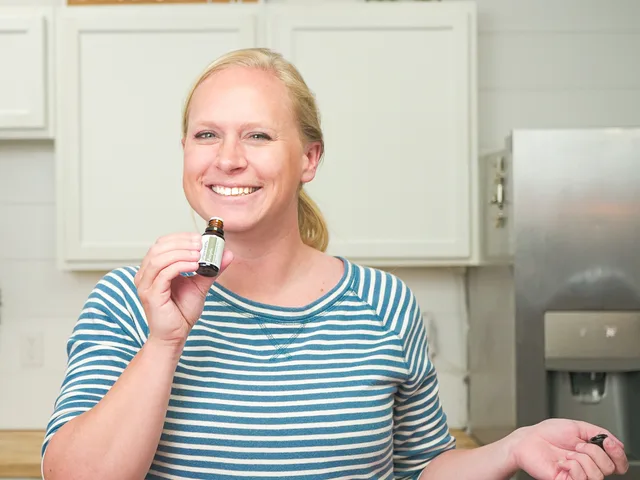
Soothing skin is the seventh use Simply Earth lists for Amyris and the one that does not appear on our older writing about this oil at all. It is also the use our customers report back most often without being asked — the DIY Golden Glow Body Butter Kit is built around Amyris, and the reviews of it talk about hands rather than about aroma. Between a thick, fatty oil and a warm base-note scent, it is a natural fit for anything you rub in rather than diffuse.
KATIE'S TIP
Amyris is viscous enough that it blends more easily into a warm base than a cold one. Add it to melted butters and waxes just as they start to cool, not after they have set up.


BEST FOR: HAND SOAPS AND OTHER LEAVE-A-SCENT CLEANING RECIPES
Cleaning is on Simply Earth's list of uses for Amyris, and laboratory research on Amyris balsamifera oil has looked at antibacterial and antifungal activity. In practice, though, this is not the oil you reach for to make a surface spray — Amyris is expensive relative to lemon or tea tree and its aroma is too warm to read as "clean". Where it earns its place is in things that stay on skin, like a hand soap, where you actually want the scent to linger.
KATIE'S TIP
Save Amyris for cleaning recipes you will smell afterwards. In a foaming hand soap it leaves a soft, woody finish; in a floor cleaner it is simply wasted.
Use it in

Promotes Immunity
The strongest claim on this page, and the one to read carefully.
 Shop Amyris Essential Oil
BEST FOR: UNDERSTANDING WHAT THE RESEARCH ACTUALLY SAYS
Simply Earth lists this among Amyris's uses, and there is real research behind the interest — a 2021 paper in Fitoterapia modelled the antimicrobial activity of essential oils used for respiratory tract infections and included Amyris among them. That work was done on microbes in a laboratory, not on people with infections, and it does not show that diffusing this oil prevents or treats illness. No essential oil should be used in place of medical care. We list the use because SE lists it, and we would rather tell you exactly how thin the evidence is than imply more.
KATIE'S TIP
If you are unwell, see a healthcare professional. Diffusing something that smells comforting is a nice thing to do alongside that, and it is not a substitute for it.
Put It to Work
How to Use Amyris Essential Oil
Diffuse
- • 2–3 drops is plenty — Amyris has a blending factor of 3
- • Best in the evening; it lingers long after brighter oils fade
- • Pair with Sweet Orange, Lemon or Mandarin to lift it
Topical
- • Simply Earth's special dilution rate for this oil is 5%
- • That is unusually generous for an essential oil — it is a mild one
- • Patch test on the inner forearm and never apply it undiluted
Perfumery
- • A base note and a natural fixative — it makes a blend last
- • Use it to anchor citrus and florals that otherwise vanish
- • One drop in a roll-on changes how long the whole thing holds
DIY
- • Body butters, balms and soaps — it blends into warm bases
- • Add it to melted butters as they begin to cool, not after
- • Use a glass dropper; this oil is too thick for a euro dropper
Know the Difference
Amyris vs. True Sandalwood
This is the most important thing to understand about Amyris, and almost every listing you will find gets it wrong. Amyris is routinely sold as "West Indian sandalwood", and it is not a sandalwood at all — the true sandalwoods are Santalum species in the family Santalaceae, while Amyris sits in Rutaceae, the citrus family. They are not close relatives; they simply produce a similar warm, woody, resinous aroma from a similar part of the tree. Aromatherapists have used Amyris in place of sandalwood for decades precisely because Indian sandalwood was harvested to vulnerability, and Amyris is not under that pressure. None of which makes Amyris a fake — it makes it a good oil with a confusing name. If it is true sandalwood you want, our Sandalwood Essential Oil is Santalum spicatum, the cultivated Australian species.
Swipe to compare →
Amyris Often sold as West Indian sandalwood | Indian Sandalwood The classic, and the problem | Australian Sandalwood What Simply Earth sells as sandalwood | |
|---|---|---|---|
| Botanical Name | Amyris balsamifera — not a true sandalwood | Santalum album | Santalum spicatum |
| Botanical Family | Rutaceae — the citrus family | Santalaceae | Santalaceae |
| Plant Part | Wood and branches | Heartwood | Heartwood |
| Where Ours Comes From | Haiti | India | Australia |
| Conservation Status | Not of concern | Vulnerable, from heavy over-harvesting | Cultivated and managed |
| Aroma | Woody and sweet with a vanilla edge; close, not identical | The classic — soft, creamy, deep | Rich and sweet, delicately woody and floral |
| Relative Price | The most affordable way into this family of scents | Among the most expensive oils on the market | Lower than Indian sandalwood, still a premium oil |
| Sold by Simply Earth | Yes — Amyris Essential Oil | No, on conservation grounds | Yes — sold as Sandalwood Essential Oil |
| This article | The subject of this page | — | — |
Perfect Pairs
Amyris Blends Well With…
Amyris is a base note with a blending factor of 3, which makes it one of the easiest oils on the shelf to blend — it holds the bottom of a mixture without shouting. These are the pairings Simply Earth lists for it, and the pattern is clear: bright citrus like Sweet Orange and Lemon for contrast, or other woods like Vetiver and Cypress to deepen it.
From the Torchwood
What Is Amyris Essential Oil?
Amyris essential oil is steam-distilled from the wood and branches of Amyris balsamifera, a bushy tree that grows wild across the Caribbean. What comes out is a clear, pale yellow oil, noticeably thicker than most essential oils, with a warm woody aroma and a distinct sweetness that people almost always describe as vanilla-like.
The tree's name is the oldest clue to what it is. Amyris comes from the Greek amyron, meaning intensely scented, and long before anyone distilled it the wood was valued for a more practical property: it is so loaded with resin that it burns readily and slowly, with a fragrant flame. Simply Earth's own product notes record that local communities used the wood for exactly that, as torches and candles, for centuries.
That resin content is the whole story of the oil, in both directions. It is why Amyris is thick enough to need a glass dropper instead of the euro dropper that comes fitted to thinner oils, and it is why the aroma sits so low and lasts so long — the same qualities that make it a base note and a natural fixative in perfumery.
The Chemistry
The Science Behind This Oil
Simply Earth lists valerianol, α-eudesmol and α-elemol as this oil's main constituents. All three are sesquiterpene alcohols — heavy, slow-evaporating molecules — which is the whole reason Amyris acts as a base note. What follows is chemistry about those compounds, not claims about what this product will do for a person.
Valerianol
The headline constituent · Also in valerian root
Also known as jinkoh-eremol, valerianol is the compound that makes this oil interesting, because it also occurs in valerian root — the herb with the long folk association with rest. It is a sesquiterpene alcohol, and in industry it is used as a surfactant and emulsifier. A shared compound is not a shared effect, but it is the most-cited reason Amyris appears in rest and sleep blends.
α-Eudesmol
A fixative compound · Used in perfumery
Alpha-eudesmol is another sesquiterpene alcohol and a recognised volatile oil component. Perfumers use it as a fixative, which is the technical term for something that slows how quickly the rest of a fragrance evaporates. This is the chemistry behind the practical trick of adding a drop of Amyris to make a roll-on last.
α-Elemol
Fixative and dressing agent · Widely used
Alpha-elemol is used commercially as a fixative and dressing agent and as a raw material for organic synthesis, as well as in fine fragrance and personal care. Like the other two it is a heavy, low-volatility alcohol. Three sesquiterpene alcohols is an unusual profile, and it is why Amyris behaves the way it does.
Simply Earth's Amyris Essential Oil is steam-distilled from the wood and branches of Amyris balsamifera in Haiti. We third-party GC/MS test our oils and publish the results, and we never blend them with synthetic fragrance, fillers or extenders — which matters here because "West Indian sandalwood" is a name used loosely across the industry, and knowing exactly which species is in the bottle is the point. A batch GC/MS report is not linked for Amyris yet — the oil has no row in Simply Earth's Ingredient Info database and therefore no Spec Sheets relation to cite here. Shop Amyris Essential Oil →
Where It Comes From
Where Our Amyris Comes From
Simply Earth's Amyris comes from Haiti, and it is one of the few oils we sell where the tree is genuinely wild rather than cultivated. Amyris balsamifera grows as a bushy tree across the Caribbean, and in Haiti it grows on its own — our own sourcing notes describe the trees as bushy and wild-growing, and the same species turns up throughout the region and well beyond it.
What gets distilled is the wood and branches rather than a heartwood core, which is a meaningful difference from true sandalwood. A sandalwood tree has to reach decades of maturity before its fragrant heartwood is worth harvesting, and getting it has traditionally meant felling the tree. Amyris does not carry that constraint, which is the practical reason it became the substitute rather than simply the cheaper option, and why its conservation status is not a concern in the way Santalum album's is.
Beyond the country, the species and the plant part, we are not going to invent detail we do not have. We do not currently publish how long we have worked with our Amyris supplier or what proportion of this oil is farm-direct, and rather than fill those numbers in we have left them out and flagged them internally.
Use It Right
Things to Remember When Using This Oil
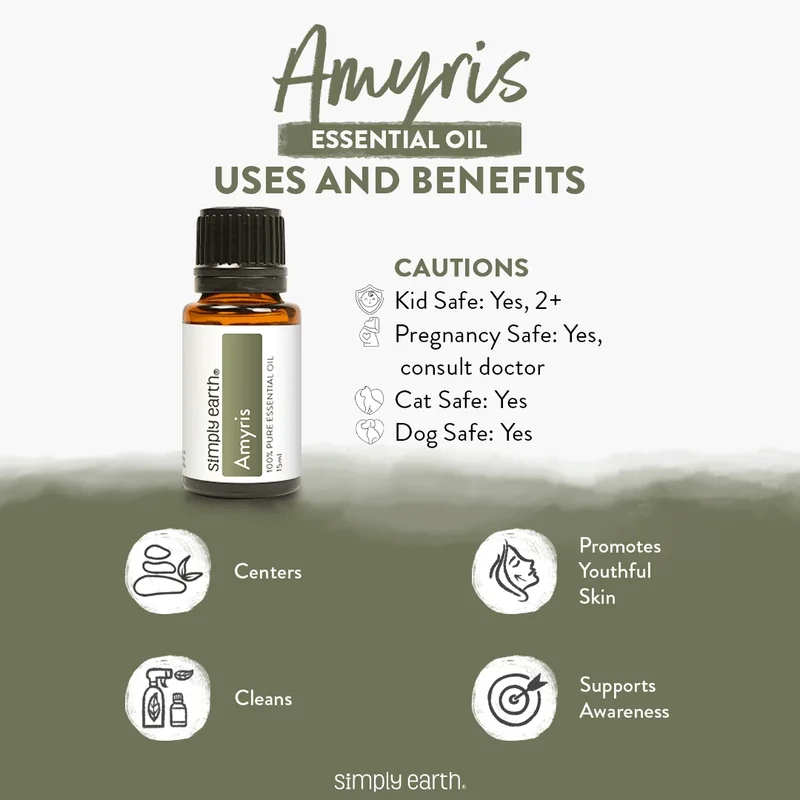
Always dilute before it touches skin. Simply Earth's special dilution rate for Amyris is 5% — unusually generous for an essential oil, and a fair sign of how mild this one is.
This oil is thick. Amyris is too viscous for the euro dropper fitted to most bottles, so use a glass dropper instead, clean it with alcohol, and keep a separate one for your thick oils. Store the bottle with its original screw cap rather than leaving a rubber-bulb dropper in it.
May be used by children aged 2 and over, at dilution. Keep it out of reach of younger children.
Generally considered safe during pregnancy and while breastfeeding — consult your doctor before use.
Cat safe and dog safe. Amyris is one of the oils Simply Earth lists as fine to diffuse around both, though pets should always be able to leave the room.
Sun safe — Amyris is not phototoxic, so treated skin does not need to stay out of daylight.
Do not swallow it. Simply Earth's product record is explicit that this oil is harmful if swallowed, and we do not recommend ingesting essential oils unless you are under the direction of a doctor certified in aromatherapy.
Shelf life is about four years — longer than most oils, another consequence of those heavy, slow constituents. Store it sealed, in the dark, away from heat.
Not sure how much carrier to use? Simply Earth publishes a free dilution chart you can keep next to your oils.
These statements have not been evaluated by the Food and Drug Administration. This product is not intended to diagnose, treat, cure, or prevent any disease.
Real Results
What Earthies Are Saying About It
"I was so glad this was included in a monthly subscription. I don't know if I would have thought to try this, and it is now one of my favorite oils. It is very subtle on its own, but it is magical when you add it to blends. It makes everything you mix it with richer and softer, whether you diffuse it or put it in a roller or spray."
Diane S
Website Review • Amyris Essential Oil
"The Golden Glow body butter is so smooth and smells amazing. Good Vibes and Amyris are perfect together. It smells like a spa day. It has made my dry hands feel so much better!"
Alexandria D.
Verified Buyer • DIY Golden Glow Body Butter Kit
"Body butter is a bit more time consuming to make but I promise that you won't be disappointed. Remember — Amyris essential oil is very thick, I had to remove the dropper. My hands are amazingly soft right now."
Jaimie Erickson
Verified Buyer • DIY Golden Glow Body Butter Kit
OUR SIMPLY PURE PROMISE
What Goes Into Your Products Matters
Certified 100% Pure
No fillers, no synthetics. Just pure oil.
GC/MS Third-Party Tested
Every batch independently verified.
Ethically Sourced from Quality Farms
Responsibly harvested. People and planet first.
15mL
Bottle Size
MLM brands: 10mL
$10–16
Per Oil
MLM brands: $25–55+
Public
GC/MS Tests
MLM brands: Rarely
Your Order Changes Lives: 13% of profits fight human trafficking globally.
Amyris Essential Oil FAQ
The questions Earthies ask most about Amyris — starting with the one about sandalwood.
Is amyris essential oil the same as sandalwood? +
No, and this is the most common misunderstanding about it. Amyris is Amyris balsamifera, a Caribbean tree in Rutaceae — the citrus family. True sandalwoods are Santalum species in a completely different family, Santalaceae. The two are not closely related. They produce a similar warm, woody, resinous aroma, which is why Amyris has been used as a sandalwood alternative for decades, but Amyris is its own oil with its own chemistry.
Why is amyris called West Indian sandalwood? +
Because it smells like sandalwood, grows in the West Indies, and became the standard substitute when Indian sandalwood grew scarce and expensive. The name is a trade nickname rather than a botanical one, and it has stuck well enough that a lot of listings drop the "West Indian" part and just say sandalwood. If a supplier sells you sandalwood at an unusually low price, checking the botanical name on the label is always worth doing.
What does amyris essential oil smell like? +
Warm, woody and sweet, with a soft balsamic depth and a vanilla-like edge. It is much gentler than most wood oils — where cedarwood is sharp and dry, Amyris is rounded and slightly creamy. It is also quiet. Several of our customers describe it as almost too subtle on its own and then transformative in a blend, which is a fair summary of how a base note behaves.
Why is my amyris essential oil so thick? +
Because it is meant to be. Amyris is distilled from resinous wood and its main constituents are heavy sesquiterpene alcohols, so the oil is moderately viscous rather than watery. Nothing has gone wrong with your bottle. The euro dropper fitted to most essential oil bottles cannot handle it, so use a glass dropper, clean it with alcohol afterwards, and keep the bottle's original screw cap on for storage.
Which Simply Earth blends contain amyris? +
Three of them, and they are a good illustration of what the oil does. Homebody Blend is Ho Wood, Amyris, Copaiba and Vetiver. Love Blend is Amyris, Bergamot, Sweet Orange and Ylang Ylang. Tranquility Blend is Lemon, Patchouli, Sweet Orange, Amyris and Ylang Ylang. In every one Amyris is the base note underneath brighter or more floral oils — it is the layer that makes the blend last.
Is amyris essential oil safe for kids and pets? +
Simply Earth lists Amyris as safe for children aged 2 and over at dilution, and as both cat safe and dog safe, which is unusual — a lot of oils are one or neither. It is also listed as generally safe during pregnancy and breastfeeding, though you should consult your doctor first. As with any oil, make sure pets can leave a room you are diffusing in.
What does amyris blend well with? +
Simply Earth lists Cypress, Lemon, Mandarin, Sweet Orange, Himalayan Cedarwood, Citronella, Sandalwood and Vetiver. The pattern is either bright citrus for contrast or other woods for depth. Amyris has a blending factor of 3 and sits at the bottom of a mixture, so it is forgiving — one drop is usually enough to change how long a blend holds.

About the Author: Katie Veldkamp
Katie Veldkamp
Certified Aromatherapist · Co-Founder, Simply Earth
Katie Veldkamp is a Certified Aromatherapist and co-founder of Simply Earth. Her mission is to cut through the noise around essential oils so you can use them with confidence. Everything in this article has been reviewed and approved by Katie.
Learn essential oils the easy way
Every month we ship four pure essential oils, six natural recipes, and everything you need to make them. No guesswork.
No spam. Unsubscribe any time.

Learn by doing
Make your own natural products every month.
The Simply Earth Recipe Box ships 4 full-size essential oils, 6 natural recipes, and everything you need to make them. No guesswork.
Start My Recipe Box$39.99 for your first box, then $49.99/month. Skip, pause, or cancel anytime.