
SCI Powder: The Secret to Gentle, Creamy Lather

Katie Veldkamp
Certified Aromatherapist
Fact Checked & Approved
We have all made the DIY cleanser that did not work. It either refused to foam at all, or it foamed beautifully and left your skin tight, squeaky and stripped. That gap between clean and gentle is the hardest thing to close in natural formulation, and it is almost always a surfactant problem. SCI Powder — Sodium Cocoyl Isethionate on the label — is the surfactant most home formulators reach for once they have hit that wall. It is derived from coconut fatty acids, it produces a dense creamy foam rather than a sudsy one, and it is mild enough that the industry nickname for it is "baby foam." This guide covers what it actually is, what Simply Earth's own label says to do with it, the usage rates that matter, the safety step people skip, and the seven Simply Earth recipes that already call for it.
In this Guide
Free Cheat Sheet
New to formulating with essential oils?
Get the free Essential Oil Cheat Sheet and use every oil in your cabinet with confidence.
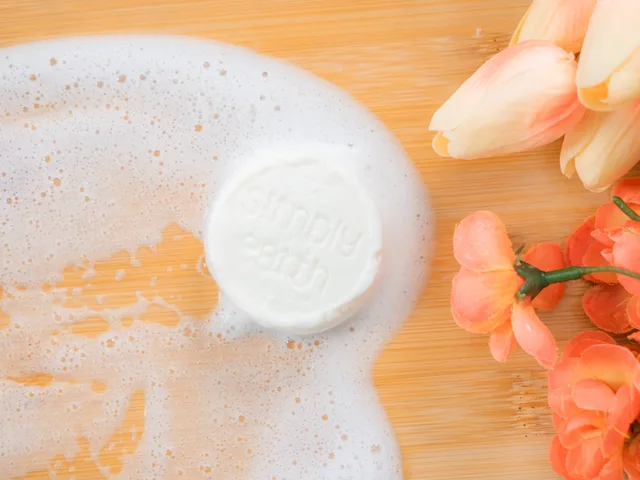
BEST FOR: SENSITIVE SKIN & FACIAL CLEANSERS
A surfactant works by reducing the surface tension of water — one end of the molecule is drawn to water, the other to oil, which is how it lifts grease off skin and lets it rinse away. Harsh sulfates like SLS do that job so aggressively that they take the skin's own lipids with them, which is the tight feeling after washing. SCI is far milder about it. It cleans thoroughly while leaving the barrier largely intact, which is why it turns up in cleansers aimed at sensitive and dry skin rather than in degreasers.
KATIE'S TIP
If a cleanser you have made feels tight afterwards, the surfactant is usually the culprit before the oils are. Swapping the sulfate out for SCI is the single change that fixes it most often.


Makes a Creamy Lather, Not a Sudsy One
The difference between dish bubbles and a spa cleanser.
 Shop SCI Powder
BEST FOR: ANYTHING YOU WANT TO FEEL EXPENSIVE
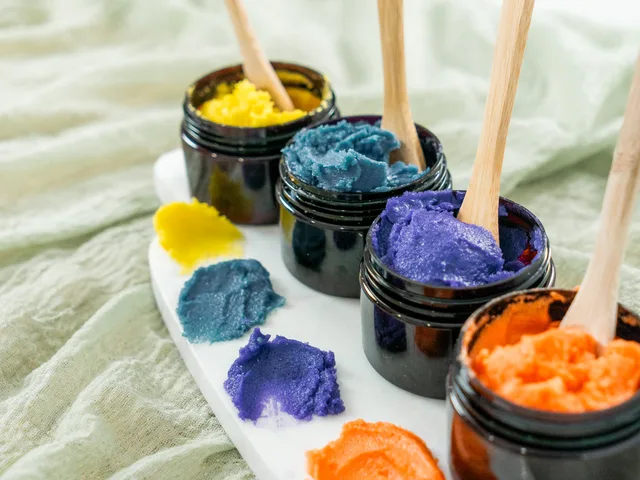
Not all foam is the same. Big, loose, fast-popping bubbles are what a sulfate gives you. SCI produces a dense, small-celled, stable foam that behaves more like whipped cream than like dish soap — it holds together in the hand, spreads further, and rinses clean. This is the single quality that makes a homemade product stop feeling homemade, and it is why SCI is the base of choice for shampoo bars and facial cleansers rather than a lather booster added at the end.
KATIE'S TIP
Give it a moment. SCI foam builds as you work it, so the lather you have after three seconds is not the lather you will have after ten. People add far too much powder because they judged it too early.

BEST FOR: WINTER, DRY CLIMATES & LEAVE-ON BLENDS
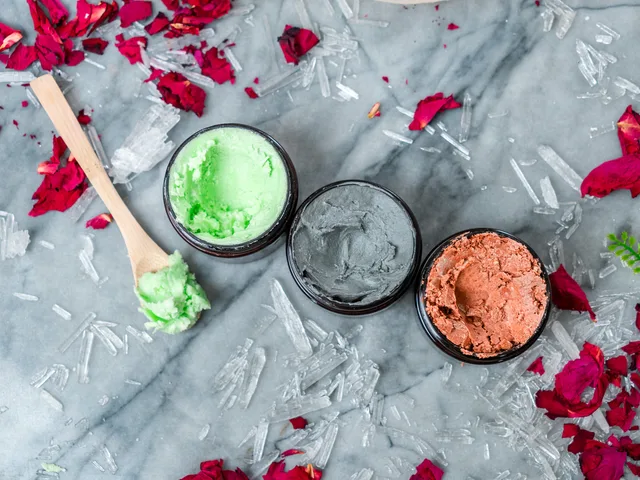
"Squeaky clean" is not a compliment — that squeak is the sound of skin with nothing left on it. Because SCI is gentler on the lipid barrier than a sulfate, skin washed with it tends to feel soft and supple instead. Simply Earth's own product description puts moisturising alongside versatile and eco-friendly as the three things this powder is for. It is also why SCI can be used, at a much lower rate, in products that stay on the skin rather than rinsing straight off.
KATIE'S TIP
Pair it with a butter or a carrier oil in the same formula. SCI does not have to do the moisturising by itself, and a whipped product is the easiest place to prove that to yourself.

BEST FOR: LOW-WASTE & PLASTIC-FREE PROJECTS
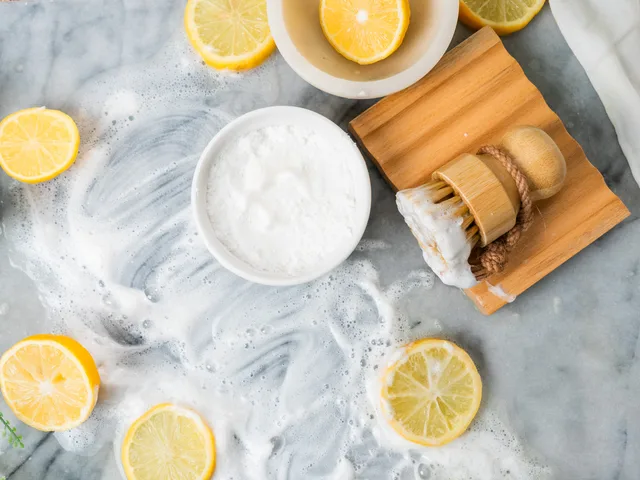
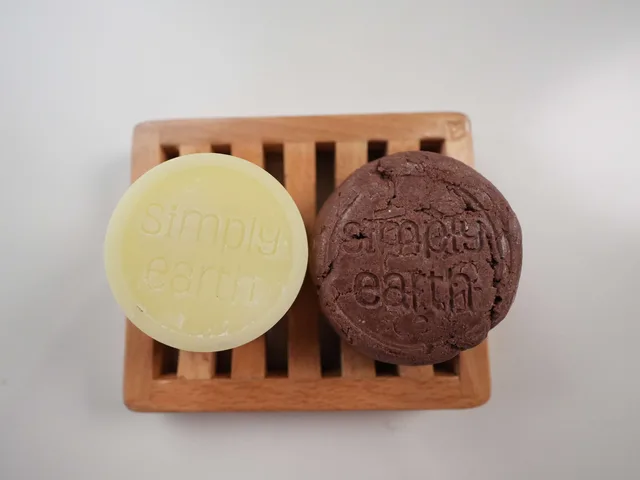
SCI is made from the fatty acids of coconut oil, and it breaks down rather than persisting. For anyone building a low-waste bathroom or kitchen that matters twice over — the ingredient itself is biodegradable, and because it is a solid it makes solid products possible. A dish soap bar or a shampoo bar removes a plastic bottle from the shelf permanently, and SCI is the reason those bars lather at all.
KATIE'S TIP
This is the benefit that compounds. Every liquid product you convert to a bar with SCI is a bottle you stop buying, not just one you stop buying once.


Works Without Any Water in the Formula
A solid surfactant, which is rarer than it sounds.
 Shop SCI Powder
BEST FOR: SHAMPOO BARS, TRAVEL & WATERLESS BEAUTY
Most surfactants arrive as a liquid, which means any product built on them is mostly water and needs a preservative system to stay safe. SCI is a dry powder. That one property is what makes waterless beauty practical at home — you can press a shampoo bar, a cleansing bar or a dish block and have it hold its shape, lather properly and keep without the preservative load a water-based formula demands. It also travels dry, which no liquid cleanser does.
KATIE'S TIP
Bars made with SCI want curing time. Give them a few days somewhere cool and dry before you judge how they perform — a fresh bar and a cured bar are genuinely different products.
BEST FOR: CLEAN-BEAUTY FORMULATING
The Environmental Working Group's Skin Deep database rates cosmetic ingredients from 1 to 10, and Sodium Cocoyl Isethionate sits at 1 — the lowest hazard band available. Simply Earth's own Face Wash Powder write-up lists SCI at EWG 1 alongside the other two surfactants in that formula, so this is not a number we are taking on trust from a single source. For anyone formulating to a clean-beauty standard, that rating is what makes SCI a foundation ingredient rather than a compromise.
KATIE'S TIP
An EWG score describes the ingredient, not your finished product. The rate you use it at and the handling step below still matter — a low-hazard powder is still a powder.
BEST FOR: KITCHEN & BATHROOM CLEANERS
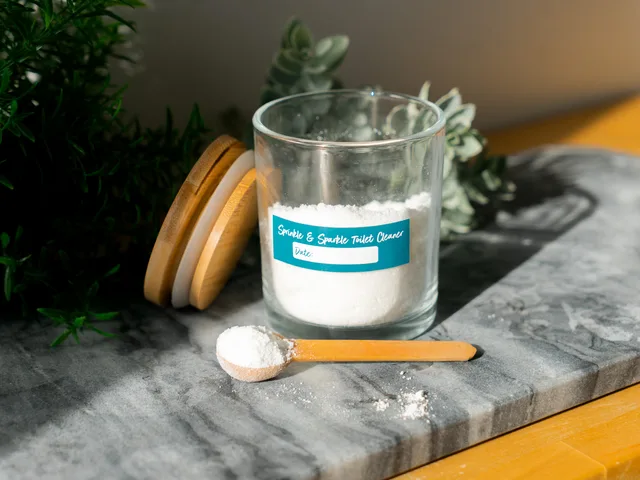
Simply Earth's product description leads with *versatile*, and the recipe library bears that out — four of the seven Simply Earth recipes that call for SCI are household cleaners rather than body care. The same gentle cleansing action that suits facial skin also loosens grease on a plate and grime in a toilet bowl, with the advantage that what goes down the drain afterwards is coconut-derived and biodegradable. If you already keep SCI for shampoo bars, it is doing half your cleaning cupboard's job too.
KATIE'S TIP
In cleaning recipes SCI is easy to over-dose — the Sprinkle & Sparkle recipe caps it at a tablespoon and tells you to leave it out entirely on a septic system. More foam is not more clean.

Put It to Work
How to Use SCI Powder
Solid Shampoo Bars
- • SCI is the base, not an additive — it is most of what the bar is made of
- • Combine it dry with SLSa, kaolin clay and cornstarch before adding liquids
- • Press firmly into the mould; air pockets are what make a bar crumble
- • Cure the bars a few days somewhere cool and dry before first use
Facial and Body Cleansing Bars
- • This is where SCI's mildness earns its keep — it will not disrupt facial skin
- • Melt your oils first, then add the SCI and keep the mixture on the heat
- • The powder will not dissolve completely, and it is not supposed to
- • Add essential oils last, off the heat, so you do not flash them off
Creamy Body and Liquid Washes
- • Add a small percentage to boost lather and give the wash a pearlescent feel
- • Combine SCI with water and glycerin in a double boiler, and heat gently
- • Do not boil — stir until the powder has integrated, then cool
- • A stored water-and-powder mix does not keep the way a dry blend does
Household Cleaners
- • Dissolve it in very hot water first for sprays, or it leaves a crunchy residue
- • Keep the dose low — a tablespoon is plenty in a toilet or sink cleaner
- • Omit it entirely if you are on a septic system and want a low-suds version
- • Pair it with baking soda and citric acid for the fizzing scrubs
Measuring and Storing
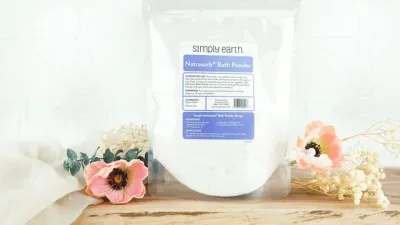
- • Wear a face mask every time you measure — this is on Simply Earth's own label
- • Work in a well-ventilated area and avoid raising dust from the bag
- • Warm your water phase; SCI does not dissolve readily in cold water
- • Keep the pouch sealed and dry, away from steam and the reach of children
Know the Difference
SCI, SLSa or Foam Boost?
SCI Powder has no natural varieties the way a plant oil does — it is a manufactured surfactant, so there is no Bulgarian-versus-French question to answer here. The comparison that actually helps is against the other two surfactants Simply Earth sells, because most good formulas use more than one. The short version: SCI is the engine, the ingredient doing the cleaning and forming the body of the lather. SLSa is the wow factor — it makes the foam bigger and fluffier but is not as kind to skin on its own. Foam Boost is a liquid that smooths the whole thing out and keeps the foam stable. One further note on form: SCI is sold in several particle grades — coarse noodles and prills as well as fine powder — and what Simply Earth sells is the fine powder, which is why it blends readily into a dry base and why the dust precaution matters.
Swipe to compare →
SCI Powder Sodium Cocoyl Isethionate — the mild primary surfactant | SLSa Powder Sodium Lauryl Sulfoacetate — the lather booster | Foam Boost Cocamidopropyl Betaine — the liquid co-surfactant | |
|---|---|---|---|
| What It Is For | The primary cleansing agent — the engine of the formula | Boosting volume and fluffiness of the foam | Softening the blend and stabilising the lather |
| Form | Fine dry powder | Fine dry powder | Liquid |
| Foam Character | Dense, creamy, small-celled and stable | Big, fluffy, fast-building bubbles | Adds slip and stability rather than volume |
| Mildness | Very mild — suitable for facial skin | Mild, but more drying than SCI on its own | Mild, and often used to reduce the harshness of others |
| Works in a Waterless Bar | Yes — this is its main advantage | Yes, as a partner rather than a base | No, it is a liquid |
| Dust Hazard When Measuring | Yes — wear a mask | Yes — wear a mask | No, it is a liquid |
| Sold by Simply Earth | Yes — SCI Powder | Yes — SLSA Powder | Yes — Foam Boost |
| This article | The subject of this page | — | — |
Perfect Pairs
SCI Powder Blends Well With…
For a surfactant the useful pairing list is co-surfactants and additives rather than essential oils. The legacy pairing Simply Earth calls the power couple is SCI with Foam Boost, which makes the lather creamier and more stable — and the store lists SLSA Powder, Foam Boost and Body Wash Powder as its related products. The rest of this list is what our own published SCI recipes actually contain: kaolin clay and cornstarch to build the body of a bar, shea butter for conditioning, menthol crystals in the shaving butter, and Tea Tree, Rosemary and Peppermint for scent.
The Shift
Why Formulators Moved Away From Sulfates
SCI does not have an origin story the way a distilled botanical does — there is no harvest, no first recorded use, no monastery still. What it has instead is a displacement story, and that is the honest one to tell.
For most of the twentieth century the surfactant in almost everything that foamed was a sulfate, usually sodium lauryl sulfate. Sulfates are cheap, they are extremely effective, and they lather enormously — which is exactly why they became the default. The trade-off only became a talking point later: that same efficiency strips the skin's own lipids along with the dirt, and for people with sensitive, dry or reactive skin the result is a cleanser that works and still leaves them worse off.
Sodium Cocoyl Isethionate is one of the answers the industry reached for. It is built from coconut fatty acids rather than petroleum, it cleans through the same basic surfactant mechanism, and it is mild enough to use on a face. It was in commercial syndet bars — the gentle cleansing bars sold as alternatives to true soap — long before home formulators could buy it by the bag, which is the part worth knowing: this is a professional-grade ingredient that became available to the rest of us, not a craft substitute for one.
What changed for DIY specifically is availability in small quantities. Once a home formulator could buy a few ounces of a solid, mild, primary surfactant, the waterless shampoo bar stopped being a commercial-only product. Most of the bar recipes in Simply Earth's library exist because of that one shift.
The Science
The Chemistry and the EWG Score
One ingredient, one of the lowest hazard scores available, and one solubility quirk worth planning around.
Sodium Cocoyl Isethionate
The only ingredient · EWG 1
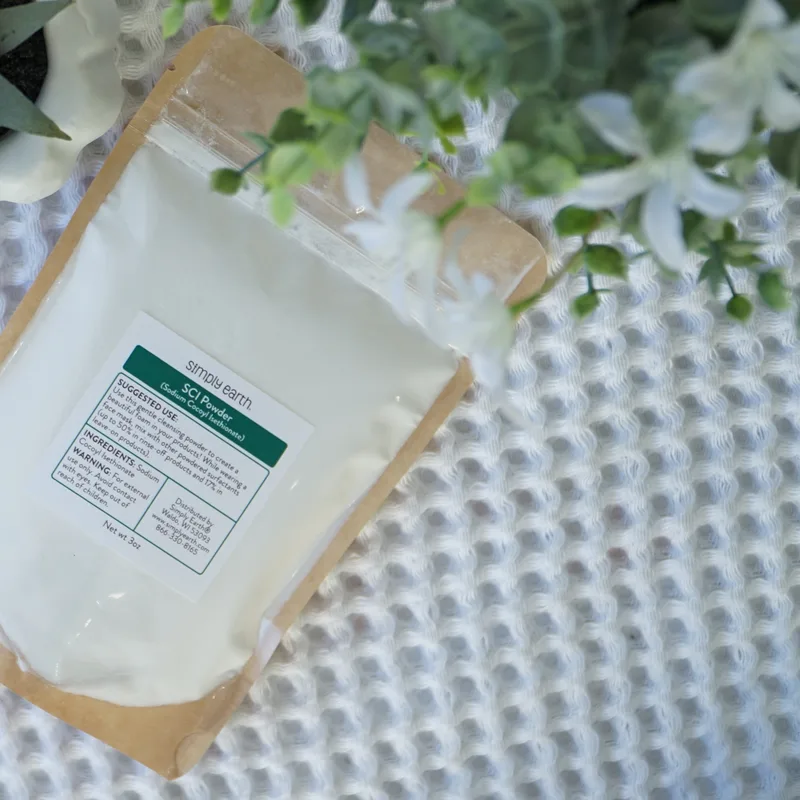
SCI Powder is not a blend — Simply Earth's label lists exactly one ingredient, Sodium Cocoyl Isethionate. It is the sodium salt of an ester formed between coconut fatty acids and isethionic acid, which is the chemistry behind both its mildness and its solid form. The Environmental Working Group's Skin Deep database rates it 1, the lowest hazard band available, and Simply Earth's own Face Wash Powder ingredient breakdown independently lists it at EWG 1.
How a Surfactant Actually Works
Hydrophilic head · lipophilic tail
Every surfactant molecule has two ends that want different things — one is drawn to water, the other to oil. Dropped into a wash, they arrange themselves around droplets of grease with their oil-loving ends inward and their water-loving ends facing out, which suspends the grease in water so it can be rinsed away. Foam is a side effect of the same property: the molecules stabilise the boundary between air and water. That is why lather and cleaning power are related but not the same thing.
Why It Is Called a Syndet
Synthetic detergent · not true soap
True soap is made by reacting a fat with lye, and it is alkaline — usually around pH 9 to 10, well above skin's own slightly acidic surface. SCI is a syndet, a synthetic detergent, and it cleans at a pH much closer to skin's own. That is the technical reason a SCI bar can be used on a face where a traditional soap bar often should not be, and it is also why SCI bars need no lye and no saponification step at all.
Solubility and Heat
The formulating constraint
SCI does not dissolve readily in cold water, which is the single property that trips up first-time users. In liquid formulations the water phase has to be warmed — gently, never boiled — for the powder to integrate smoothly, and in cleaning sprays it needs very hot water or it leaves a crunchy residue behind. In a solid bar it never fully dissolves at all; it stays suspended in the base, which is exactly what makes the bar work.
Where It Comes From
Where SCI Powder Comes From
This is the section an ingredient guide normally fills with a farm, a harvest window and a distiller. SCI Powder cannot answer it that way, and we would rather say so than invent one.
What is true is the raw material. SCI is derived from the fatty acids of coconut oil — that part is not marketing, it is where the cocoyl in the name comes from. Those fatty acids are reacted with isethionic acid to produce the ester, which is then neutralised to its sodium salt and dried to a powder. So there is a coconut crop at the bottom of the chain, several processing steps above it, and a specification at the top.
What we are not going to tell you is the rest. We do not currently publish which supplier manufactures our SCI, how long we have worked with them, which country the coconuts are grown in, or what share of the material is sourced direct. Those numbers exist somewhere in a supply chain, but they are not in any database we can point you at, and filling them in with plausible-sounding figures would be worse than leaving them out. They are flagged internally instead.
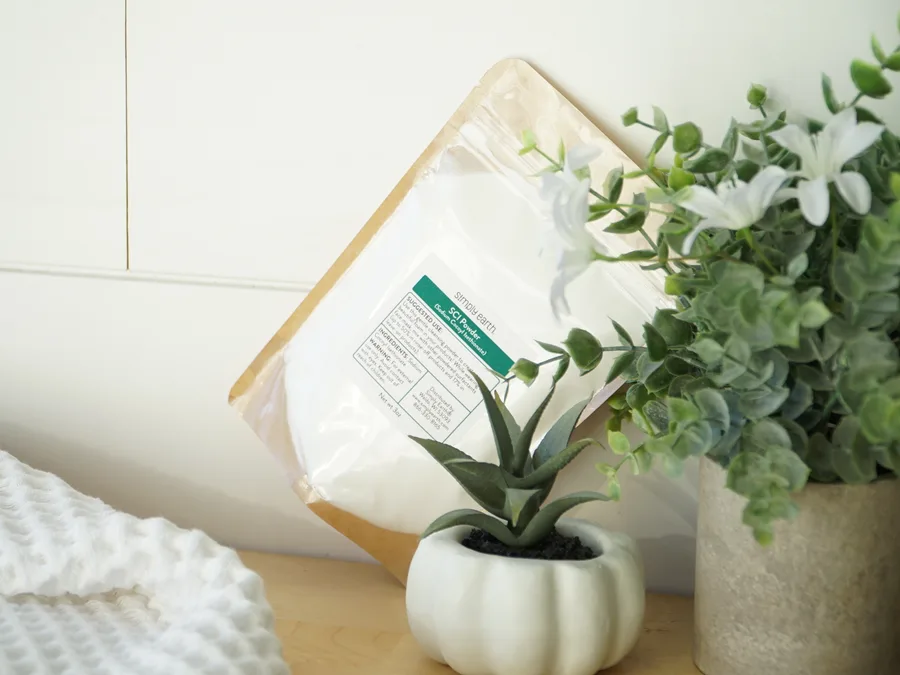
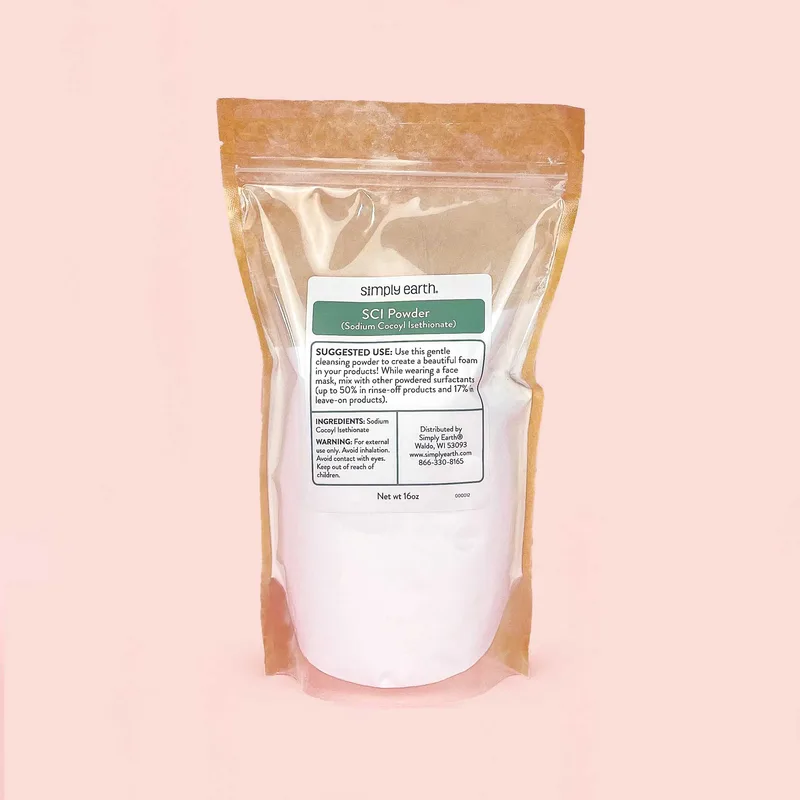
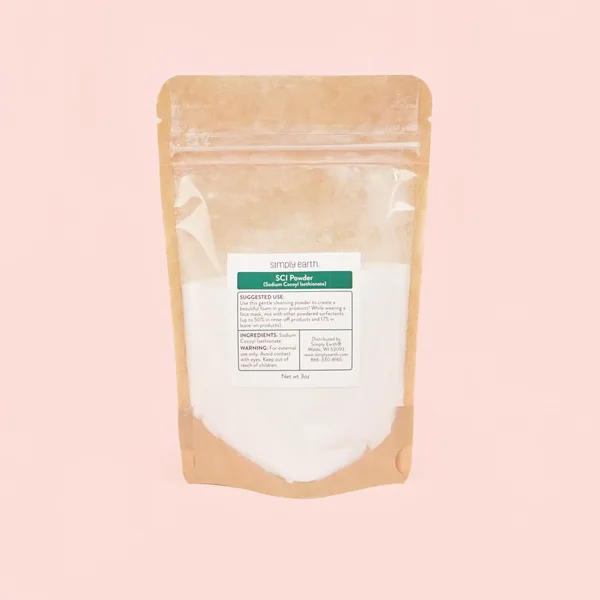
What the label does tell you is the end of the journey: SCI Powder is distributed by Simply Earth from Waldo, Wisconsin, and the bag carries one ingredient and nothing else.
Use It Right
Things to Remember When Using It
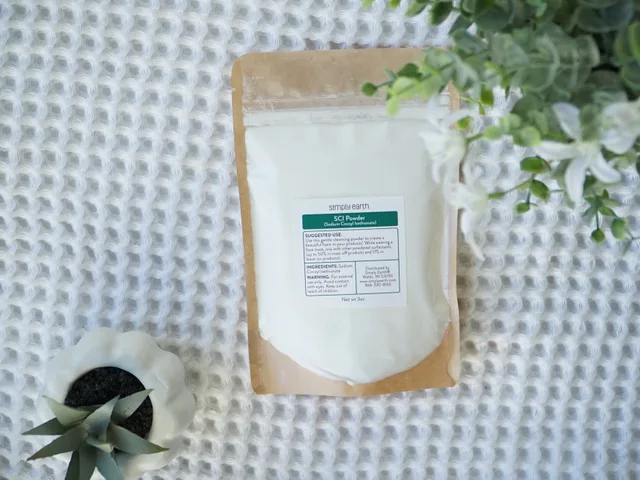
Wear a face mask every time you measure it. This is not a general caution, it is printed on Simply Earth's own label: "While wearing a face mask, mix with other powdered surfactants." SCI is a very fine powder, it becomes airborne easily, and it is a respiratory irritant. Eye protection is sensible at the same moment.
The label's usage rates are up to 50% in rinse-off products and 17% in leave-on products. Those two numbers come straight off the Simply Earth pouch. Rinse-off means anything that leaves the skin within a minute or two — bars, washes, scrubs. Leave-on means anything that stays. Do not carry a rinse-off rate into a leave-on formula.
Work in a well-ventilated area and do not raise dust. Tip the powder gently rather than pouring from height, and stir rather than whisk when you are combining dry ingredients. Several of our own recipes include this instruction in the method for exactly this reason.
Patch test the finished product, not the raw powder. Make up your bar, wash or scrub, then test it on your inner forearm and leave it 24 hours. Mildness in general is not the same as mildness for you.
For external use only. Avoid contact with eyes. Also printed on the label. If it does get in, rinse thoroughly with water.
Warm your water phase, but never boil it. SCI does not dissolve readily in cold water, and boiling is not the fix — gentle heat and patience is. In cleaning sprays, undissolved SCI leaves a crunchy residue on the surface you were trying to clean.
Keep it out of reach of children, and keep the pouch sealed and dry. A fine powder in a resealable bag looks like a lot of other things in a kitchen cupboard.
We do not recommend ingesting essential oils unless you are under the direction of a doctor certified in aromatherapy.
Not sure how much carrier to use in the essential oil side of your formula? Simply Earth publishes a free dilution chart you can keep next to your oils.
These statements have not been evaluated by the Food and Drug Administration. This product is not intended to diagnose, treat, cure, or prevent any disease.
Real Results
What Earthies Are Saying About Bars Made With It
"I have very thin, baby fine hair and it cleaned very well. It suds up nicely and rinsed out well. I am always looking for natural alternatives for all my beauty needs and will definitely be making these again."
Katie A Jensen
Verified Buyer • DIY Shampoo Bar Kit
"The shampoo bar lather up real good and left my hair feeling clean. I have really long hair and was very skeptical of the conditioner bar, and whether it was going to leave my hair tangled and hard to comb, but it did not. I highly recommend it."
Terri Rodriguez
Verified Buyer • DIY Shampoo Bar Kit
"I've tried making diy shampoo bar soaps before, but it never worked how I wanted, and I didn't want to use lye. This recipe is SO easy to follow and makes AMAZING shampoo bars. I can't believe how well my hair loves these bars!"
Kate
Verified Buyer • DIY Shampoo Bar Kit
OUR SIMPLY PURE PROMISE
What Goes Into Your Products Matters
One Ingredient, Nothing Else
The label lists Sodium Cocoyl Isethionate and stops there.
EWG Score of 1
The lowest hazard band on the Skin Deep scale.
Coconut-Derived & Biodegradable
Plant-sourced fatty acids, not petroleum sulfates.
EWG 1
Skin Deep Score
SLS: EWG 1–3
50%
Max Rinse-Off Rate
Leave-on: 17%
1
Ingredients on the Label
No fillers or carriers
Your Order Changes Lives: 13% of profits fight human trafficking globally.
SCI Powder FAQs
The questions formulators ask most often before their first batch.
What is SCI Powder? +
SCI Powder is Sodium Cocoyl Isethionate, a mild surfactant derived from the fatty acids of coconut oil. It comes as a fine white-to-off-white powder and is used as the primary cleansing and foaming agent in shampoo bars, facial cleansing bars, body washes, scrubs and household cleaners. It is nicknamed "baby foam" because the lather it produces is dense and creamy rather than sudsy, and because it is gentle enough for facial skin.
Is SCI Powder a sulfate? +
No. SCI is a sulfate-free surfactant, which is the main reason people choose it over sodium lauryl sulfate. It cleans through the same basic mechanism but is much less aggressive on the skin's natural lipid barrier, so it does not tend to leave skin tight or stripped.
How much SCI Powder should I use? +
Simply Earth's label gives two rates — up to 50% in rinse-off products such as bars, washes and scrubs, and 17% in leave-on products. Always work out which category your formula falls into before you scale, and never carry a rinse-off rate into something that stays on the skin.
Do I really need to wear a mask when using SCI Powder? +
Yes. Simply Earth's own label says to mix it while wearing a face mask. SCI is a very fine powder that becomes airborne easily and can irritate the lungs, so the risk is entirely at the measuring and mixing stage — not in the finished product. Work in a well-ventilated area and avoid raising dust.
Why will my SCI Powder not dissolve? +
Because the water is too cold. SCI does not dissolve readily at room temperature and needs a gently warmed water phase to integrate — though never a boiling one. In a solid bar it is not supposed to dissolve at all; it stays suspended in the base. In a cleaning spray, undissolved SCI is what leaves a crunchy residue.
Is SCI Powder the same as SLSa? +
No, and they do different jobs. SCI is the primary surfactant — the engine of the formula and the source of the creamy body of the lather. SLSa (Sodium Lauryl Sulfoacetate) is a lather booster that makes foam bigger and fluffier but is less gentle on its own. Many good bar recipes, including ours, use both together.
Can I make shampoo bars with SCI Powder without lye? +
Yes. SCI is a syndet — a synthetic detergent — so it needs no saponification and no lye at all. You combine it dry with your other powders, bind it with melted oils and butters, press it into a mould and cure it. That is what makes SCI bars approachable for anyone who does not want to handle lye.
Is SCI Powder safe for sensitive skin? +
It is one of the milder surfactants available and is widely used in products formulated for sensitive skin, with an EWG Skin Deep score of 1. That said, mildness in general is not a guarantee for any individual — patch test your finished product on an inner forearm for 24 hours before using it on your face.
About the Author: Katie Veldkamp
Katie Veldkamp
Certified Aromatherapist · Co-Founder, Simply Earth
Katie Veldkamp is a Certified Aromatherapist and co-founder of Simply Earth. She personally formulates and reviews SE's blends and ingredients and verifies all benefit claims on Simply Earth content before it goes live.
Get new DIY recipes in your inbox
Join 50,000+ Earthies making their own natural products. New recipes, formulating tips and ingredient guides — no spam.
Unsubscribe anytime. We never share your email.

Learn by doing
Make your own natural products every month.
The Simply Earth Recipe Box ships 4 full-size essential oils, 6 natural recipes, and everything you need to make them. No guesswork.
Start My Recipe Box$39.99 for your first box, then $49.99/month. Skip, pause, or cancel anytime.