Start Your DIY Journey – 20% Off + FREE Shipping

Simply Earth

Shea Butter Soap Base: Benefits, Uses & Recipes

Katie Veldkamp

Katie Veldkamp

Lead Certified Aromatherapist

Fact Checked & Approved

Sep 9, 2026 10 min read
A block of white shea butter melt and pour soap base beside finished colored soap bars

If you have ever stood in front of two soap bases wondering which one to buy, this is the difference in one sentence: glycerin base sets clear, and shea butter base sets opaque white. That single property decides how your colors read, whether an embed shows through, and how conditioning the finished bar feels. Shea butter melt and pour base is the one to reach for when you want a soft, creamy-looking bar with real shea butter in the formula — no lye, no cure time, and about half an hour from cutting the block to unmolding a finished soap.

Deeply Moisturizing

The reason most people pick this base over a clear one.

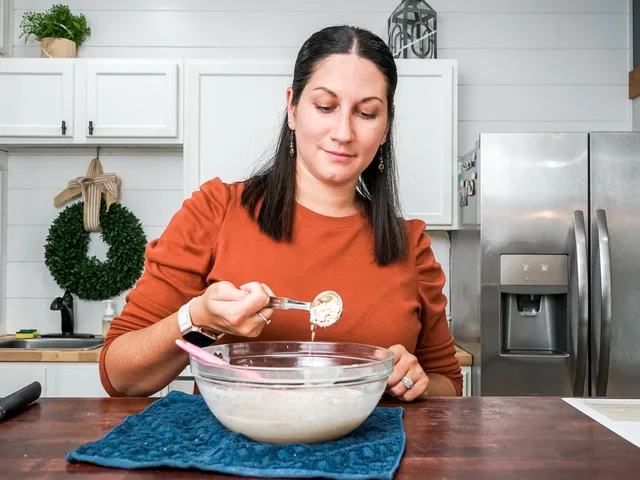
Melted white shea butter soap base being measured in a glass bowl in a kitchenShop Shea Butter Melt & Pour Soap Base

BEST FOR: DRY SKIN, WINTER BARS, HAND SOAP

Shea butter is a natural emollient, which means it helps skin hold on to moisture rather than stripping it during a wash. That is the trade-off you are making when you choose this base — it lathers a little more gently than a stripped-down clear base, and it leaves more behind on the skin. Simply Earth's own product description is blunt about the job it is built for — an easy-to-use, moisturizing white soap base.

KATIE'S TIP

If you are making bars for winter or for hands that get washed twenty times a day, this is the base I reach for. The difference is noticeable by about day three of using the bar.

Rich in Vitamins A, E & F

Shea butter brings its own nutrients to the bar.

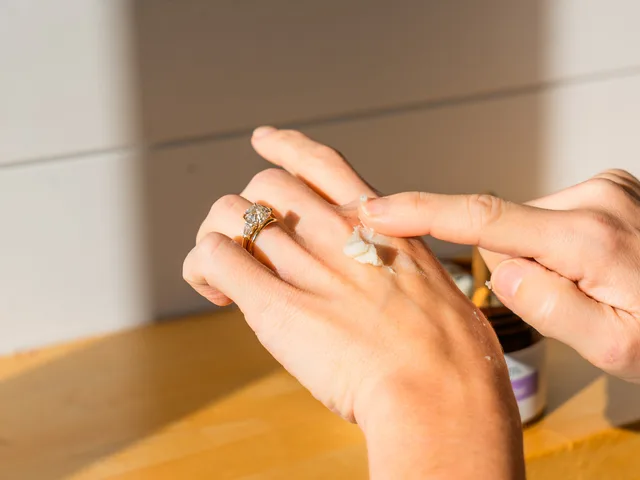
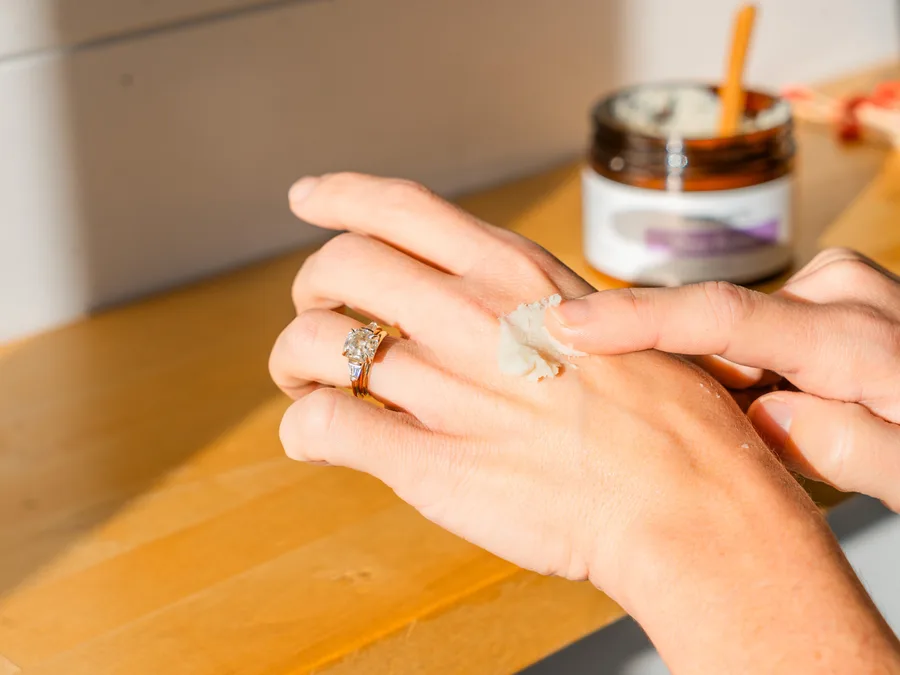
Shea butter being rubbed into the back of a handShop Shea Butter Melt & Pour Soap Base

BEST FOR: FACE BARS & EVERYDAY BODY SOAP

Raw shea butter comes from the nut of the African karite tree and carries vitamins A, E and F along with other nutrients that support the skin barrier. In a wash-off product you are not getting the same exposure you would from a leave-on balm — but it is a genuinely different formula from a base that is only surfactants, water and sugar alcohols.

KATIE'S TIP

Shea butter is worth knowing in its own right, not just as a soap ingredient. It is the same butter that goes into body balms and lip care.

Simple, Recognizable Ingredients

Fourteen components, and you can pronounce most of them.

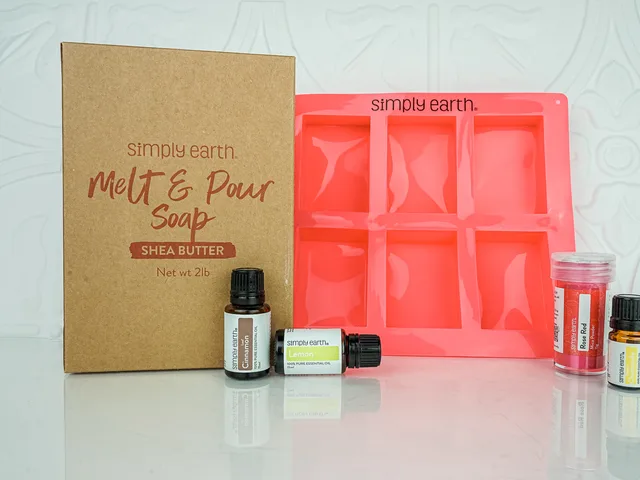
Simply Earth Melt and Pour Shea Butter soap base box laid out with silicone molds, mica powders and essential oilsShop Shea Butter Melt & Pour Soap Base

BEST FOR: MAKERS WHO READ LABELS

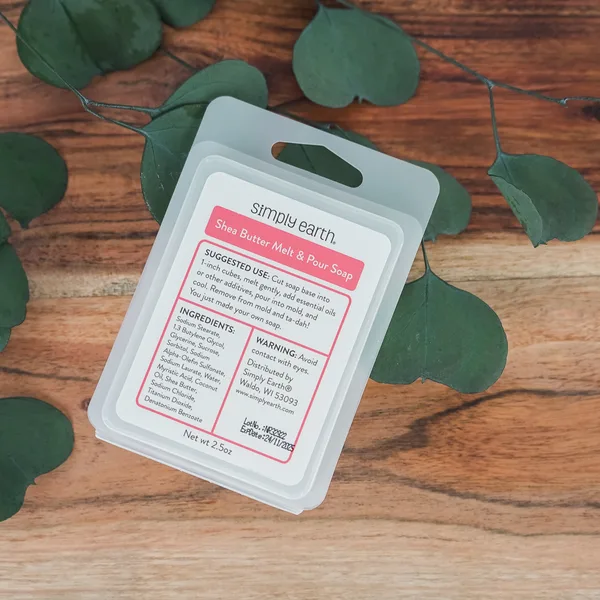
The full ingredient list is published further down this page, all fourteen components with their EWG scores. The base is SLS free, PEG free and paraben free. It is a manufactured base rather than a from-scratch soap, and we would rather show you exactly what is in it than call it something it is not.

KATIE'S TIP

Scroll to "What's Actually In It" if you want the full breakdown before you buy. I would rather you read it than take my word for it.

May Soothe the Look of Dry, Irritated Skin

A gentler wash for skin that reacts to everything.

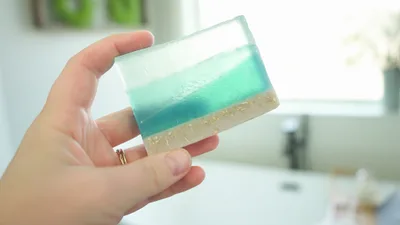
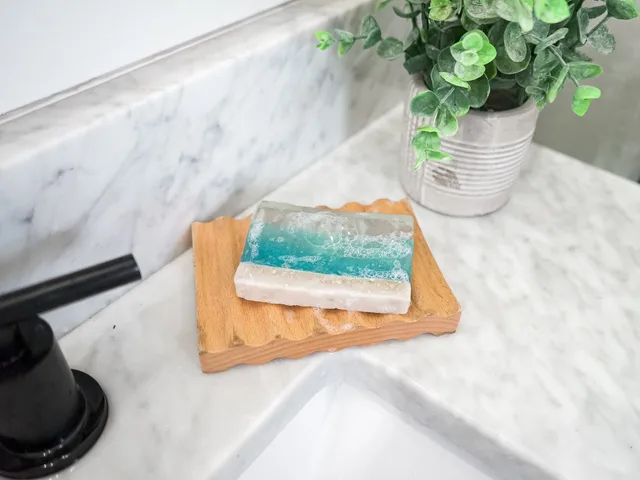
A finished handmade soap bar resting on a dish beside a bathroom sinkShop Shea Butter Melt & Pour Soap Base

BEST FOR: SENSITIVE SKIN & REACTIVE SKIN

Shea butter has a long traditional association with calming the appearance of dry, irritated skin, and customers making bars with this base regularly mention how it feels on sensitive skin. This is a cosmetic, wash-off product — it is not a treatment for any skin condition, and if you have one, talk to your dermatologist before changing what you wash with.

KATIE'S TIP

Patch test a finished bar on your inner arm before you commit a whole batch to it, especially if your skin is reactive.

An Opaque, Creamy White Finish

This is the one thing glycerin base cannot do.

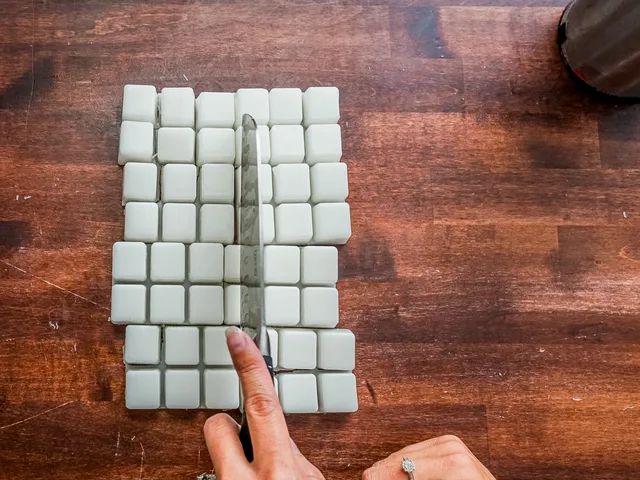
A block of white shea butter soap base being cut into cubes with a knifeShop Shea Butter Melt & Pour Soap Base

BEST FOR: PASTELS, LAYERS & SOLID COLOR BARS

Titanium dioxide, the white pigment in the formula, is what makes this base set opaque rather than clear. That changes how you design with it. Colors read as soft pastels instead of stained-glass jewel tones, layers stack with a crisp visible edge, and anything you embed inside the bar will be hidden rather than suspended in view. If you want the botanical you dropped in to show through, you want the clear glycerin base instead.

KATIE'S TIP

Layer the two. A white shea layer under a colored glycerin layer is the easiest way to make a bar look far more difficult than it was.

Foams Well, With a Mild Scent of Its Own

A blank canvas for whatever you want it to smell like.

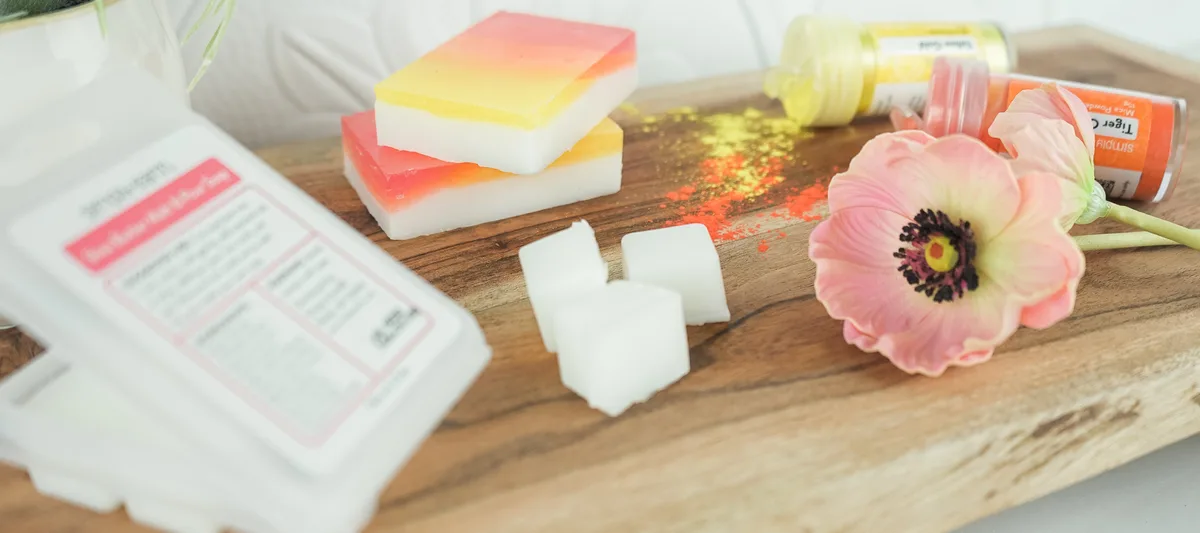
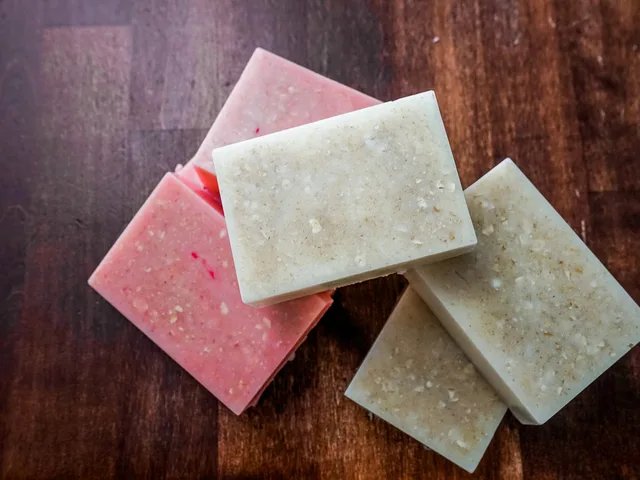
Finished cream and pink handmade soap bars stacked on a surfaceShop Shea Butter Melt & Pour Soap Base

BEST FOR: ESSENTIAL OIL BLENDS

Our own soap base guide describes the shea base plainly — it is a white base that is nourishing to the skin, has a neutral odor, and foams well. The mild scent matters more than it sounds — a base with a strong smell of its own fights whatever essential oil you add. This one mostly gets out of the way.

KATIE'S TIP

Shea is my favourite base for a shaving bar for exactly this reason — it is moisturizing and it does not argue with the scent you chose.

Beginner-Friendly — No Lye, No Cure Time

Cut, melt, add, pour. About thirty minutes.

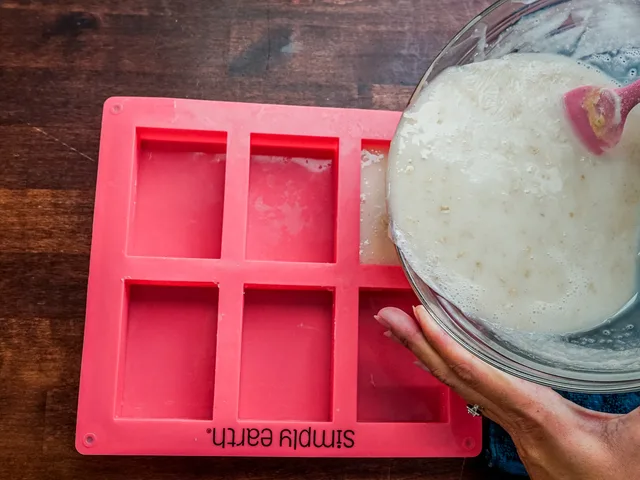
Melted soap base being poured into a pink Simply Earth silicone soap moldShop Shea Butter Melt & Pour Soap Base

BEST FOR: FIRST-TIME SOAP MAKERS & GIFTS

Melt and pour skips the two things that put people off soap making — handling lye, and waiting four to six weeks for bars to cure. The saponification has already happened. You are re-melting a finished soap, customizing it and letting it set, which takes about thirty minutes. If you want the from-scratch version later, our soap making 101 guide covers it.

KATIE'S TIP

Almost every review of this base mentions the same thing — people were intimidated before they started and surprised by how simple it turned out to be. That matches what I see in workshops.

Put It to Work

How to Use Shea Butter Soap Base

Melting

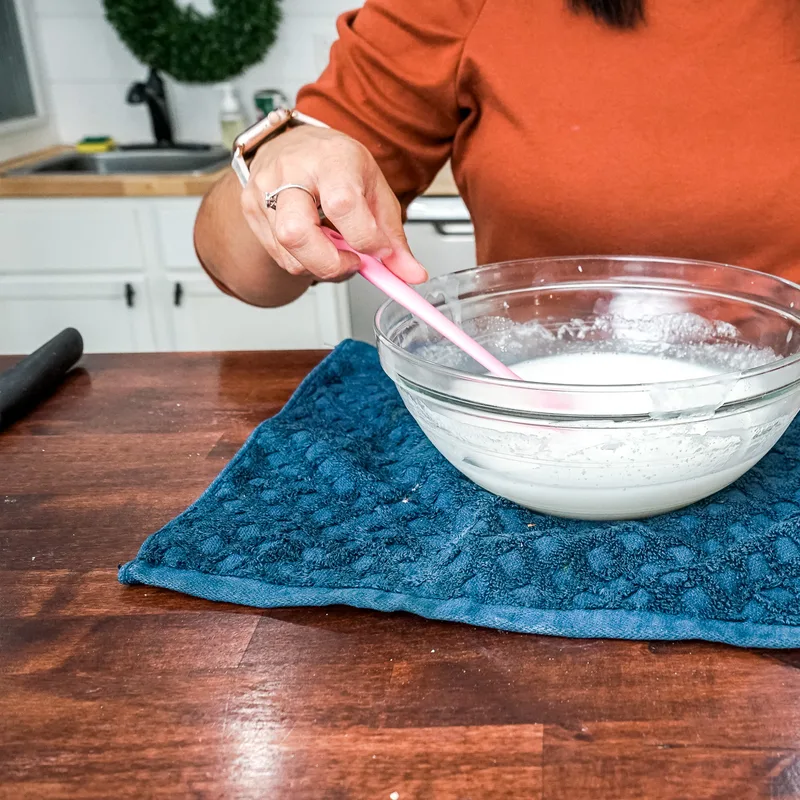
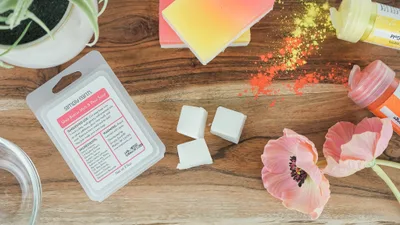
  • • Cut the block into roughly 1-inch cubes so it melts evenly
  • • Microwave in 30-second bursts, stirring between each one
  • • Or use a double boiler over low heat and stir as it goes
  • • Stop as soon as the last lumps disappear — overheating scorches the base and can leave the finished bar rubbery

Adding Color & Fragrance

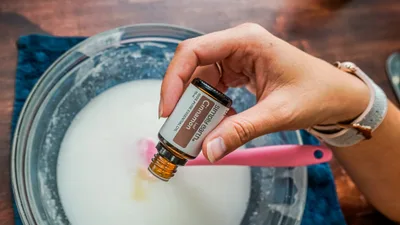
  • • Essential oil load: about 2 teaspoons (0.3 oz) per pound of base
  • • Or measure by percentage: 1–2% is roughly 10–20 drops per 100g of base
  • • Do not exceed 3% — too much oil can stop the bar hardening properly
  • • Let the melted base cool slightly before adding essential oils so less scent flashes off
  • • Mica powder colors read as soft pastels in this base, not jewel tones — a little goes further than you expect

Pouring & Curing

  • • Pour into a silicone mold and spritz the surface with isopropyl alcohol to pop surface bubbles
  • • For layers, let each layer set until firm, then spritz with alcohol before pouring the next so they bond
  • • Leave to set at room temperature for about 30 minutes
  • • Unmold once completely firm and cool — there is no 4–6 week cure the way there is with cold process

Storage

  • • Keep unused base tightly wrapped so it does not dry out or pick up scent
  • • Store finished bars somewhere dry and out of standing water
  • • Let bars dry between uses on a draining dish — this is the single biggest thing that makes a handmade bar last
  • • Keep both base and finished bars out of direct sun and away from heat

Know the Difference

Shea vs. Glycerin vs. Oatmeal vs. Castile

The honest version of this decision is short. Pick shea if you want a creamy, conditioning, opaque bar. Pick glycerin if you want to see through it. Everything else is a variation on those two.

Swipe to compare →

Shea Butter Base

Opaque and conditioning

Glycerin Clear Base

Transparent and versatile

Oatmeal Base

Shea and glycerin, plus oats

Castile Base

Olive-oil soap, melt and pour form

FinishSets opaque white — the titanium dioxide in the formula is what makes it soSets clear and colorless, so additives stay visible inside the barOpaque, with visible oat pieces suspended through the barOpaque, usually combined with glycerin to make it pourable
Feels LikeNourishing and moisturizing, with a neutral odor, and it foams wellGentle, smooth and moisturizing — good on face and handsGently exfoliating; the oats are soft enough for facial useFoams well but can be drying, so it is not ideal for the face
Best ForSolid colors, pastels, layered bars, shaving soap and body barsSuspending botanicals, embeds and anything you want to see through the soapFace bars and any recipe where you want a natural exfoliantBody and hand bars where a firm, high-foaming soap is the goal
Watch Out ForEmbeds and botanicals disappear inside the bar rather than showing throughIt tends to collect condensation — look for a low-sweat varietyThe oats settle if you pour while the base is still very hotDrying on sensitive skin; better below the neck
What We SellShea Butter Melt & Pour Soap Base, in 2 lb and 2 oz — SLS free, PEG free, paraben freeGlycerin Melt & Pour Soap Base, in 2 lb and 2 oz — SLS free, PEG free, paraben freeNot currently sold as a base — add oats to the shea base insteadNot currently sold as a melt and pour base
Simply Earth We carry this———

Perfect Pairs

What to Add to Shea Butter Soap Base

Because the base sets opaque, colorants read as soft pastels rather than jewel tones — start with less mica than you think you need and build up. Lavender and Lemon are the workhorses for hand soap, Cedarwood and Pine suit a woodsy bar, and Orange with Patchouli makes an excellent shaving soap. Ground oatmeal stirred in just before pouring turns any of these into a gentle exfoliating bar.

LavenderLemonCedarwoodPineFrankincenseOrangePatchouliMica PowderGround Oatmeal

Where It Comes From

Shea Butter Has Been Skincare for Centuries

The shea in your soap base starts as the nut of the karite tree, which grows across a broad belt of West Africa. The butter pressed from those nuts has been used for centuries to moisturize and protect skin, hair and lips, and it carries genuine cultural significance in the regions where the tree grows — it is not a modern cosmetic invention that happened to find its way into soap.

That history is also the practical argument for this base. Raw shea butter is loaded with vitamins A, E and F, and those are the nutrients doing the conditioning work in a shea butter bar. It is the one ingredient in the formula that came from a tree rather than a reactor, and it is the reason this base feels different from a clear one.
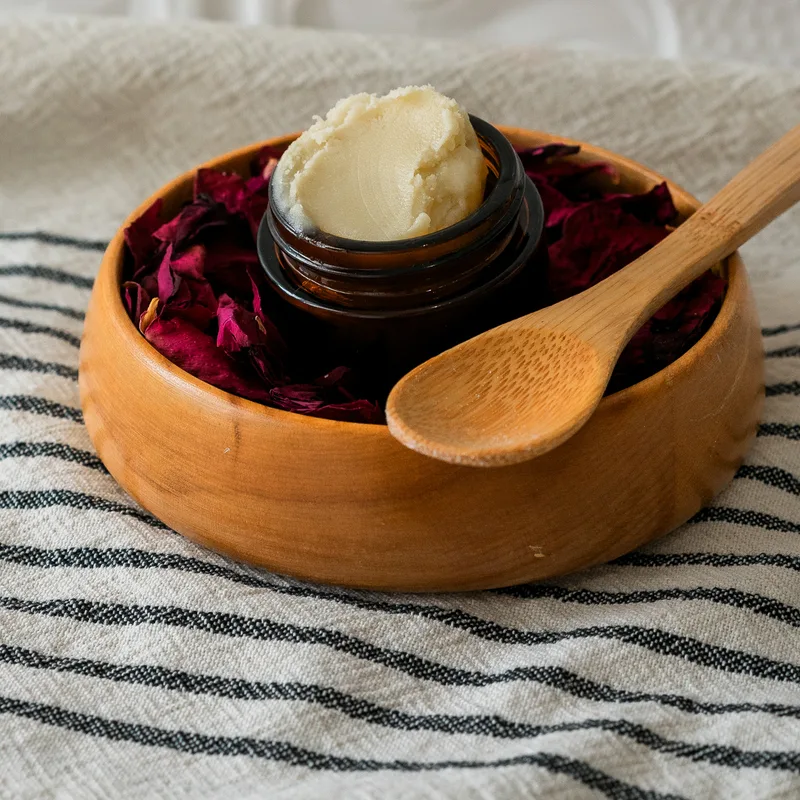
Raw shea butter in an open jar set in a wooden bowl with dried rose petals

What's Inside

What's Actually In It — All 14 Ingredients

The complete INCI list for the base, with EWG scores in brackets. This is a manufactured melt and pour base, not a from-scratch soap, so there is no GC/MS constituent report the way there is for an essential oil.

Shea Butter (1)

The one that gives the base its name

The nutrient-rich cosmetic butter that makes this base what it is. It lends the bar a creamy texture, helps control viscosity while you work, and brings the moisturizing, emollient character and the vitamins that a plain surfactant base has no way to deliver. This single ingredient is the whole difference between this base and the clear glycerin one.

Titanium Dioxide (1–3)

The reason the bar is white

A solid white pigment, and the second ingredient that separates this base from its clear sibling. It is what makes the finished bar opaque rather than transparent, which is why colors read as pastels here and why embeds stay hidden inside the soap. Its job in this formula is color, not skin care.

Sodium Stearate (1)

The main soap

The sodium salt of stearic acid, a fatty acid found naturally in various butters and oils. It is the most common fatty acid salt in modern soap and does the actual cleaning work, which is a large part of why this base is mild enough for most skin types.

1,3 Butylene Glycol (1)

Texture and preservation

A small organic alcohol that acts as an antimicrobial agent and a viscosity-decreasing agent, keeping the finished product smooth rather than grainy.

Glycerine (1–2)

Humectant

Found naturally in vegetable oils and animal fats, glycerine is a humectant — it draws moisture toward the skin rather than pulling it away. Yes, it is in this base too; the clear base is simply built around much more of it.

Sucrose (1)

Lather and softness

Plain plant-derived sugar. In soap it helps boost lather and contributes to that soft, conditioned feel after a wash.

Sorbitol (1)

Viscosity control

A sugar alcohol that gives the base its body — smooth to work with, never overly slippery — and helps condition skin during cleansing.

Sodium Alpha-Olefin Sulfonate (1)

Surfactant

A widely used surfactant that creates an effective but gentle detergent action. It is dosed carefully in a base like this so the soap cleans without stripping skin.

Sodium Laurate (1)

Lather

A surfactant and emulsifier classified as soap, and the ingredient most responsible for a rich, luxurious lather. It is also believed to have antimicrobial properties.

Water

Solvent

The solvent that lets everything else combine without needing extra heat, which helps the other ingredients keep their natural properties.

Myristic Acid (1)

Cleansing and emulsifying

An organic acid derived from palm oil, coconut oil and butterfat. It acts as a cleansing agent and an emulsifier, binding oils and butters together so the bar stays uniform.

Coconut Oil (1)

Conditioning

A skin conditioner, moisturizer and emollient all at once. Alongside shea butter it is the second plant oil doing conditioning work in this formula.

Sodium Chloride (1)

Ordinary table salt

Salt, used here to regulate viscosity and give the base a consistent, workable body.

Denatonium Benzoate (1)

A deliberate bittering agent

The ingredient people ask about most, so it is worth being direct. It is often called the bitterest compound in the world, and it is in the formula for exactly one reason — to make the soap taste so unpleasant that nobody swallows it by accident. It is not a fragrance and it is not a preservative.

How We Source It

A Manufactured Base, Honestly Labelled

This is the part where an essential oil page would tell you about a farm, a distiller and a harvest. A melt and pour soap base does not have one. It is manufactured to a formula, and pretending otherwise would be inventing a story that does not exist.

What we can tell you is what is in it and what is not. The full fourteen-ingredient list is published above with EWG scores, and the base is SLS free, PEG free and paraben free. It ships in a 2 lb block and a 2 oz sample size, so you can try it before committing to a full block.

Shop Shea Butter Melt & Pour Soap Base
Shea butter being worked into the hands
Shea butter — the plant ingredient at the centre of this base

Use It Right

Safety & Things to Remember

  • Melted soap base is hot enough to burn. Heat it in short bursts, stir between each one, and let it cool slightly before you pour.

  • Do not overheat the base. Scorched soap can set rubbery or sweat, and once it is overheated there is no fixing it.

  • Use a microwave-safe glass bowl or a double boiler — never a thin plastic container.

  • Keep water out of the base. Water thins the soap, interferes with setting and shortens the life of the finished bar.

  • Shea butter comes from the nut of the karite tree. If you have a tree nut allergy, talk to your doctor before using shea butter products, and patch test before making a full batch.

  • Do not exceed a 3% essential oil load, roughly 30 drops per 100g of base — too much oil can stop the soap hardening properly.

  • Patch test a finished bar on the inner arm before regular use, especially on sensitive or reactive skin.

  • Keep the base, your tools and finished bars out of reach of children while you work. The base contains a deliberate bittering agent, but it is still not food.

  • These statements have not been evaluated by the Food and Drug Administration. This product is not intended to diagnose, treat, cure, or prevent any disease.

Real Results

What Earthies Are Saying

"This soap base is so fun and easy to work with! I love how my soaps turned out and it feels great on my sensitive skin."

Verified Buyer

Website Review • Shea Butter Melt & Pour Soap Base

"It was super easy to melt the soap base and pour it back into my design. The finished soap holds up well, and lathers nicely, which is awesome to see for a DIY project as well."

Verified Buyer

Website Review • Shea Butter Melt & Pour Soap Base

"I've always wanted to try my hand at DIY soaps, but I've always been intimidated by the whole process. Let me tell you — this made it so easy. The end result is way beyond my usual skill level."

Verified Buyer

Website Review • Shea Butter Melt & Pour Soap Base

OUR SIMPLY PURE PROMISE

What Goes Into Your Products Matters

SLS, PEG & Paraben Free

Fourteen ingredients, all published on this page.

No Lye, No Cure Time

Melt, customize, pour. Ready in about 30 minutes.

Made for Real Beginners

Backed by recipes, guides and a team who answers questions.

2 lb

Block Size

Sample size: 2 oz

14

Ingredients

All published, with EWG scores

~30 min

Start to Finish

Cold process: 4–6 weeks

Your Order Changes Lives: 13% of profits fight human trafficking globally.

Simply Earth Melt & Pour Soap Base in Shea Butter, 2 lb box

Shea Butter Soap Base FAQ

The questions makers ask most before their first batch.

What is the difference between shea butter and glycerin soap base? +

Shea butter base sets opaque white and glycerin base sets clear. That is the practical difference and it drives everything else — colors read as soft pastels in shea and as jewel tones in glycerin, and anything you embed shows through a glycerin bar but disappears inside a shea one. Shea also contains real shea butter, which makes the finished bar more conditioning.

How much essential oil do I add to shea butter soap base? +

About 2 teaspoons — roughly 0.3 oz — per pound of soap base. If you prefer to work in percentages, 1–2% is the usual range, which is about 10–20 drops per 100g of base. Do not go past 3%, because too much oil can keep the bar from hardening properly.

Is shea butter soap base good for sensitive skin? +

Many people with sensitive skin find it gentler than a stripped-down clear base, because the shea butter and coconut oil leave more conditioning behind. It is still a cleanser, so patch test a finished bar on your inner arm first. If you have a diagnosed skin condition, check with your dermatologist before switching what you wash with.

Does shea butter soap base contain tree nuts? +

Shea butter is pressed from the nut of the karite tree, so anyone with a tree nut allergy should treat it with caution and speak to their doctor before using shea butter products.

Why is there a bittering agent in the ingredient list? +

Denatonium benzoate is added deliberately to make the soap taste extraordinarily bitter, so that nobody — a child especially — swallows it by accident. It has no fragrance or skincare function.

Can I mix shea butter and glycerin soap base in the same bar? +

Yes, and it is one of the easiest ways to make a bar look far more advanced than it is. Several of our recipes do exactly that, layering an opaque white shea layer against a colored clear glycerin layer. Let each layer firm up and spritz it with isopropyl alcohol before pouring the next so they bond.

How long does melt and pour soap take to set? +

About 30 minutes at room temperature for a standard bar. Unlike cold process soap, there is no 4–6 week cure — the saponification already happened before the base reached you, so the bar is ready to use as soon as it is fully firm and cool.

Why did my soap turn out rubbery or sweaty? +

Almost always overheating, or moisture. Melt in short bursts and stop as soon as the last lumps go, keep water out of the base, and store finished bars somewhere dry and off standing water.

About the Author: Katie Veldkamp

Katie Veldkamp

Katie Veldkamp

Certified Aromatherapist · Co-Founder, Simply Earth

✓ NAHA Certified⭐ 50K+ Recipe Box Members📺 125K YouTube Subscribers

Katie Veldkamp is a Certified Aromatherapist and co-founder of Simply Earth. She personally formulates and reviews SE's recipes and ingredients and verifies all benefit claims on Simply Earth content before it goes live.

Never Miss a Recipe

Join 20,000+ Earthies Making Their Homes Natural

New recipes, usage guides, and DIY tips — delivered free.

No spam. Unsubscribe any time.

Simply Earth Recipe Box

Learn by doing

Make your own natural products every month.

The Simply Earth Recipe Box ships 4 full-size essential oils, 6 natural recipes, and everything you need to make them. No guesswork.

Start My Recipe Box

$39.99 for your first box, then $49.99/month. Skip, pause, or cancel anytime.