
Menthol Crystals: Benefits, Uses & Real Usage Rates

Katie Veldkamp
Lead Certified Aromatherapist
Fact Checked & Approved
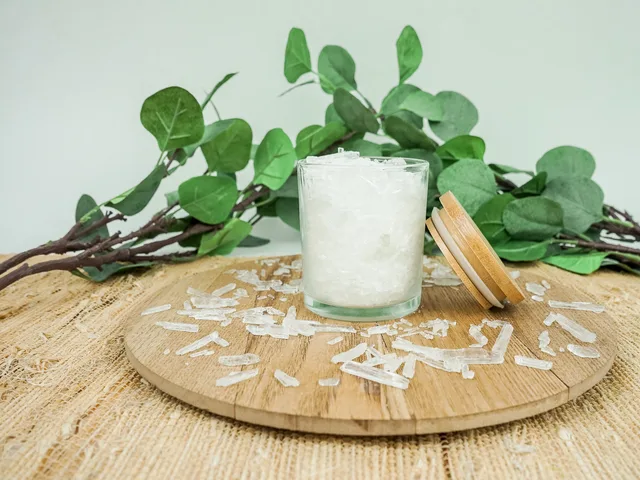
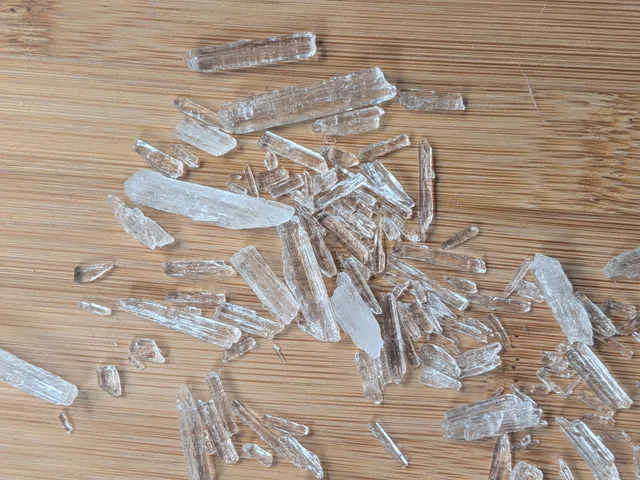
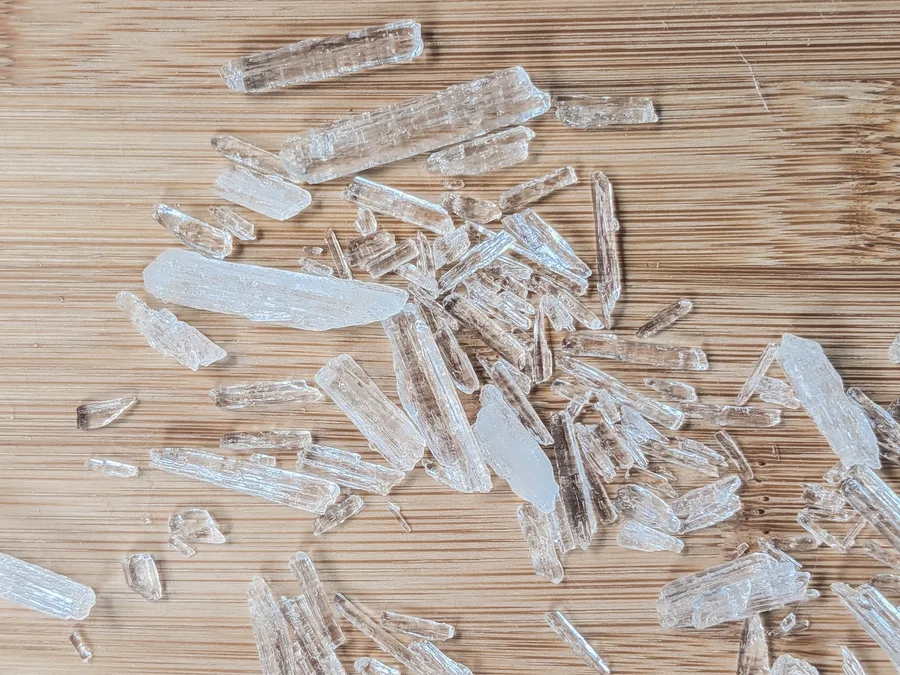
Menthol crystals are the sharpest thing in most DIY cupboards, and the one people are most likely to get wrong. They arrive as white, needle-like crystals that smell like a cough drop from across the room, they melt just above body temperature, and a fraction of a percent is the difference between a balm that feels wonderful and one that stings. This is the ingredient behind every chest rub, shower steamer and cooling foot spray you have ever used — and unlike an essential oil, it is a single compound, which makes it both easier to understand and less forgiving. Here is what Simply Earth's own records say it does, exactly how much to use in each kind of product, and the eight recipes we build with it.
Supports Easy Breathing
The reason it ends up in every chest rub and shower steamer
 Shop Menthol Crystals
BEST FOR: Shower steamers, chest balms, steam inhalation, nasal inhalers
This is the benefit Simply Earth leads with on the product itself — Natural & Supports Easy Breathing is the first line on the label. Our ingredient record files menthol's first use category as respiratory and wellness products, and describes the effect as creating a sensation of easier breathing and cooling comfort. That wording is deliberate. Menthol does not physically open your airways; it triggers cold receptors in your nose and throat, and your brain reads that cold rush as air moving more freely. The American Lung Association describes the same cooling, sensation-altering mechanism. It is why one whiff of a steamer hitting hot water feels like your head just cleared.
KATIE'S TIP
Shower steamers get the highest rate of anything we make — 3 to 5 percent — because the menthol has to survive being pressed into a dry tablet and then released all at once in steam. Do not use steamer rates in a balm.


Creates a Real Cooling Sensation on Skin
Not a fragrance effect — an actual temperature illusion
 Shop Menthol Crystals
BEST FOR: Cooling lotions, after-sun gels, summer sprays, foot products
Simply Earth's product record puts it plainly — when applied to the skin in DIY skin care products, menthol creates a cooling sensation on the skin. Our ingredient record repeats it four different ways across its benefits list — a cooling sensation to the skin, a clean cooling after-feel, a crisp cooling skin feel, skin that feels refreshed and invigorated. The important part for a formulator is that nothing is actually getting colder. Menthol binds to the same receptor your skin uses to detect cold, so the sensation arrives without any change in temperature, which is why it works just as well in a room- temperature balm as in something you keep in the fridge.
KATIE'S TIP
If you want the cooling to last rather than flash and fade, put it in something that stays on the skin — a balm or a butter — rather than a spray that evaporates in a minute.


Eases the Feel of Tired Muscles and Joints
The oldest use, and the best understood
 Shop Menthol Crystals
BEST FOR: Muscle rubs, sports balms, joint creams, post-workout sprays
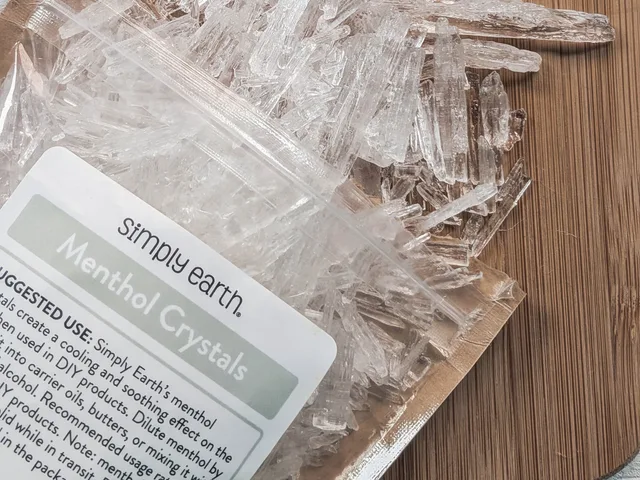
Simply Earth's product page opens its description with this one — muscle and joint discomfort can keep you from enjoying life, and the natural cooling effect of menthol can be soothing to those areas. Our ingredient record files it as the pain-relief use category and is careful about the mechanism — the cooling sensation can temporarily distract from feelings of minor discomfort. That is genuinely how it works, and it is the one claim on this page with a solid pharmacology review behind it — Pergolizzi and colleagues (2018) set out how menthol acts in topical analgesic products through the same cold receptor rather than by treating anything underneath.
KATIE'S TIP
Body balms and oils sit at 1 to 2 percent. That is a much smaller number than most people expect from something that smells this strong, and going higher does not make it work better — it just makes it sting.


Adds a Sharp, Clean, Unmistakably Minty Aroma
One ingredient that scents the whole batch
 Shop Menthol Crystals
BEST FOR: Anything that needs a cold, clean top note without more liquid oil
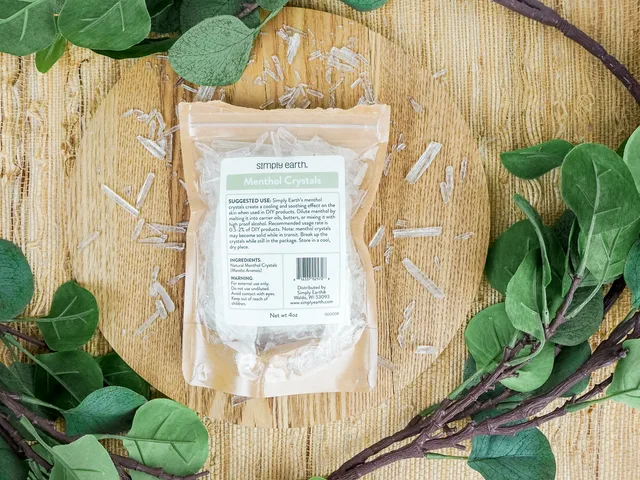
Our ingredient record describes the aroma as sharp, cooling, medicinal and intensely minty, and lists contributes a fresh, minty aroma as a benefit in its own right. This matters more than it sounds. Because menthol arrives as a solid, you can push a formula's scent much further without adding any more liquid to it — a distinction that decides whether a lip balm sets firm or stays soft. It is also why a jar of crystals will perfume a cupboard through a closed bag, and why our storage guidance exists at all.
KATIE'S TIP
Crush the crystals before you weigh them. Whole needles melt unevenly and you can end up with a hot spot of concentrated menthol in one corner of the batch.
Works as a Natural Deodorising Agent
The use almost nobody buys it for, and then keeps buying it for
 Shop Menthol Crystals
BEST FOR: Foot sprays, shoe powders, deodorants, bathroom and gym-bag sprays
Simply Earth's product record lists this as a benefit outright — menthol can function as a natural cleaning agent, supporting a fresh smell — and our ingredient record names deodorants and foot creams among its cosmetic uses. Three of the eight recipes we build on menthol crystals are foot products, and that is not an accident. A cold, sharp aromatic does something a floral or a citrus cannot — it reads as clean rather than as covered up.
KATIE'S TIP
In a foot spray, menthol and a preservative are doing two different jobs. Anything with water in it needs the preservative too — the menthol is not keeping your spray fresh, it is keeping your feet feeling fresh.
USE IT IN →

Elevates How a Finished Product Feels to Use
The reason a homemade balm starts feeling shop-bought
 Shop Menthol Crystals
BEST FOR: Shaving products, cleansers, masks, scalp treatments, lip balm
Our ingredient record lists this separately from the cooling itself — menthol enhances the sensory experience of topical products, adds a refreshing sensory element to formulations, and supports a revitalising product experience. In practice this is the gap between a balm that works and a balm you look forward to using. It is also the most rate-sensitive benefit on this page, since lip balms sit at 0.1 to 0.5 percent, which is a tiny amount by weight and still plenty to feel.
KATIE'S TIP
Lip balm is where people overshoot most often. Our rate tops out at 0.5 percent for a reason — above that it stops being pleasant and starts burning, and lips have no tolerance for a second attempt.
BEST FOR: Anyone reading labels rather than trusting them
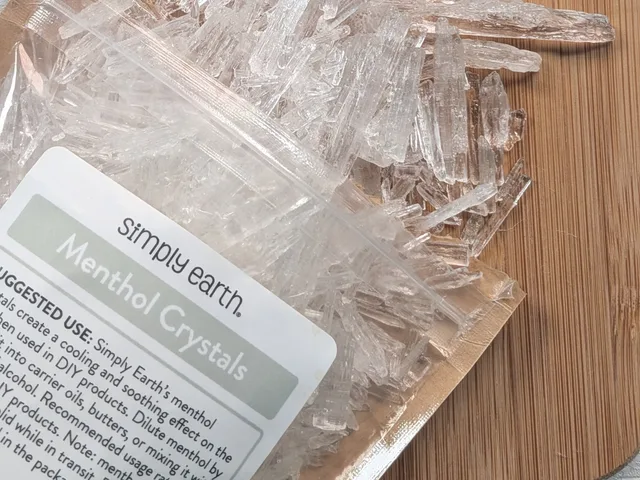
The very first line under Benefits on Simply Earth's product page is that menthol is a natural product obtained from mint plants — and it is listed first because it genuinely distinguishes what is in the bag. Menthol can also be made synthetically, at scale, and a great deal of the menthol in commercial products is. As the original version of this article put it — crystals can also be obtained synthetically, which we do not recommend nor use. Ours are steam-distilled from mint leaves and then crystallised out of the resulting oil — a physical separation, not a synthesis.
KATIE'S TIP
If a supplier will not tell you the botanical name and the CAS number, you are not being told whether it is natural. Ours are Mentha arvensis and 2216-51-5.
Put It to Work
How to Use Menthol Crystals in Natural Products
Mentholated Rub, Balm or Cream
- • The classic use, and the one the original version of this article put first.
- • Melt the crystals in with your carrier oils and butters while they are warm, then pour. Menthol dissolves into oil and melts at around 107°F, so it goes in with the wax rather than after.
- • Simply Earth's rate for body balms and oils is 1 to 2 percent of the total batch weight.
- • Cypress, Frankincense and Ravensara are the oils we pair into our own menthol balms.
Shower and Bath Products
- • Shower steamers, bath melts, bath salts and soaks — the format where menthol is most dramatic, because steam releases all of it at once.
- • This is the highest rate Simply Earth recommends for any menthol product — 3 to 5 percent — specifically for a strong vapo-steam effect.
- • Add the crystals to the dry mix rather than dissolving them first, and press the tablets promptly so the aroma stays in the steamer instead of your kitchen.
- • Keep steamers out of the direct path of the water. They should sit on the shower floor to the side and release slowly.
Massage Oil, Balm or Cream
- • Menthol's oldest application and the one with the clearest mechanism behind it — a cooling sensation that temporarily distracts from minor discomfort.
- • Same 1 to 2 percent range as any other body balm or oil. A massage product covers a lot of skin at once, so this is not a place to round up.
- • Warm the carrier oil gently, stir the crushed crystals in until the liquid is completely clear, then let it cool before bottling.
Personal Care for Skin and Hair
- • Cleansers, masks, scalp treatments, deodorants, foot creams, aftershaves and lip balm all appear in Simply Earth's own list of menthol's cosmetic uses.
- • Rates differ sharply by product. Lip balm is 0.1 to 0.5 percent, soap is 0.5 to 2 percent, and body products are 1 to 2 percent.
- • Menthol can be dissolved into alcohol as well as oil, which is what makes sprays and toners possible.
- • Keep it away from the eye area entirely, and off anywhere the skin is already broken or irritated.
Aromatherapy and Inhalation
- • A few crystals in a bowl of hot water, in a personal inhaler, or in a diffuser tray give an immediate aromatic hit with no formulating at all.
- • Start with far less than looks right. One or two crystals is a strong steam inhalation for most people.
- • Never put menthol crystals directly into a water-based ultrasonic diffuser expecting them to dissolve — they are oil and alcohol soluble, not water soluble.
- • Do not do a steam inhalation with a young child, and never apply anything mentholated directly under a child's nose.
Know the Difference
Menthol Crystals vs. Synthetic Menthol vs. Peppermint Oil
Menthol occurs across the whole mint family, which is why you will see it credited to peppermint and to cornmint in different places — including on our own product page, which describes the crystals as coming from the peppermint plant. Our ingredient record, our locked spec sheet and our supplier documentation all name Mentha arvensis, so that is what this page says.
Swipe to compare →
Natural Menthol Crystals Crystallised from mint oil | Synthetic Menthol Made in a reactor, not a still | Peppermint Essential Oil The whole oil, not the isolate | |
|---|---|---|---|
| What it actually is | A single compound — menthol — separated out of steam-distilled mint oil by freezing and crystallisation | The same molecule built synthetically from other starting materials rather than separated from a plant | A complete essential oil containing menthol alongside menthone, menthyl acetate and dozens of other constituents |
| Botanical source | Mentha arvensis — cornmint, also called Japanese mint. CAS 2216-51-5 | None. There is no plant in the supply chain | Mentha piperita — true peppermint |
| Form and strength | White crystals that melt around 107°F. Usage rates run from 0.1% in lip balm to 5% in shower steamers | Chemically equivalent, sold in the same crystal form | A liquid oil, used by the drop. Far less concentrated in menthol than the crystals are |
| Best for | Maximum cooling and clean minty aroma without adding liquid to your formula — balms, steamers, foot products, lip balm | Industrial-scale manufacturing where cost per kilo is the deciding factor | Aromatherapy blends and recipes that want peppermint's full, rounder character rather than pure cold |
| What to watch | Powerful enough that a fraction of a percent matters. Never apply undiluted, and keep it away from eyes and the area under the nose | Simply Earth does not recommend or use it, and a supplier who will not give you a botanical name may be selling it | Carries its own safety profile and dilution rules, which are not the same as the crystals' |
| Simply Earth | We carry this | — | — |
Perfect Pairs
Essential Oils That Pair Well With Menthol Crystals
Every oil here is one we actually put alongside menthol crystals in a Simply Earth recipe — Breathe Easy Blend leads because it appears in six of the eight.
Where It Comes From
A Cold Nobody Could Explain for Two Thousand Years
Mint has been valued for its cooling quality for as long as anyone has written things down. Simply Earth's own ingredient record traces menthol's use through traditional herbal practice in ancient Greece, Rome, Egypt, India, China and Japan — six civilisations that independently decided this one plant family was worth cultivating for how it felt rather than how it tasted.
What none of them could have known is that the sensation is a misunderstanding. Mint does not cool anything. Menthol happens to fit the receptor your nerves use to detect actual cold, so the signal your brain receives is indistinguishable from the one a cold breeze would send. Every culture that reached for mint to cool down was, in a sense, correct by accident — and it took until 2002 for anyone to identify the receptor responsible.
The crystals themselves are a much more recent idea. Rather than using the whole oil, menthol is concentrated out of it: the mint leaves are steam-distilled, and then the resulting oil is chilled until the menthol freezes into needle-shaped crystals and can be separated from everything else. Today India grows Mentha arvensis on a scale that makes it one of the largest sources of the world's menthol.
What's Inside
The Science Behind Menthol Crystals
One compound, four properties that decide how you formulate with it — taken from Simply Earth's own ingredient record and spec sheet.
L-Menthol
The whole ingredient, in one molecule
This is what separates menthol crystals from every essential oil on this site. An oil is dozens of constituents in varying proportion; menthol crystals are one compound, with one CAS number — 2216-51-5 — and the INCI name our record carries in full is cyclohexanol, 5-methyl-2-(1-methylethyl). There is no batch-to-batch chemistry to compare, which is why this page shows physical constants instead of a constituent breakdown.
A 107°F Melting Point
Why it behaves the way it does
Our spec sheet records the melting point as 107°F, which is just above body temperature and the single most useful number here. It is why the crystals melt cleanly into warm oils and butters without scorching, why a balm carries them evenly, and why a jar left in a hot car will arrive as a solid block. The flash point sits at 200 to 212°F, so keep them well away from a direct flame when melting.
Oil and Alcohol Soluble
The formulating rule that trips people up
Menthol dissolves readily into carrier oils, butters and waxes, and Simply Earth's product guidance notes it can also be solubilised into alcohol. What it will not do is dissolve in water. Drop crystals into a water-based spray and they will float, clump and never disperse — which is why every water-containing recipe on this page melts them into an oil phase first.
The TRPM8 Receptor
The reason none of this is imagined
Menthol binds to the same receptor your nerve endings use to sense cold. No heat actually leaves your skin and no airway actually widens — the receptor fires and your brain interprets the signal as cold and as clearer breathing. This is the mechanism behind the topical analgesic review by Pergolizzi and colleagues cited above, and it explains why the effect arrives within seconds and fades as the menthol evaporates.
Menthol crystals are a single-constituent material, so there is no batch GC/MS profile to publish the way there is for an essential oil. What there is instead is a locked, approved product specification — botanical name, CAS number, melting point, appearance and shelf life — held against every order.
See the product detailsSimply Earth Sourcing
How We Source Menthol Crystals
Simply Earth's menthol crystals come from Mentha arvensis — cornmint, sometimes called Japanese mint — and our records name that species consistently: on the ingredient record, on the INCI, and on the locked product specification that every order is checked against.
The process is a physical separation rather than a synthesis, and that is the part worth understanding. The mint leaves are steam-distilled into an essential oil, and that oil is then chilled until the menthol freezes out of it as needle-shaped crystals. Nothing is built up from other starting materials and nothing is added. It is the same molecule the plant made, simply taken out of the company it arrived in.
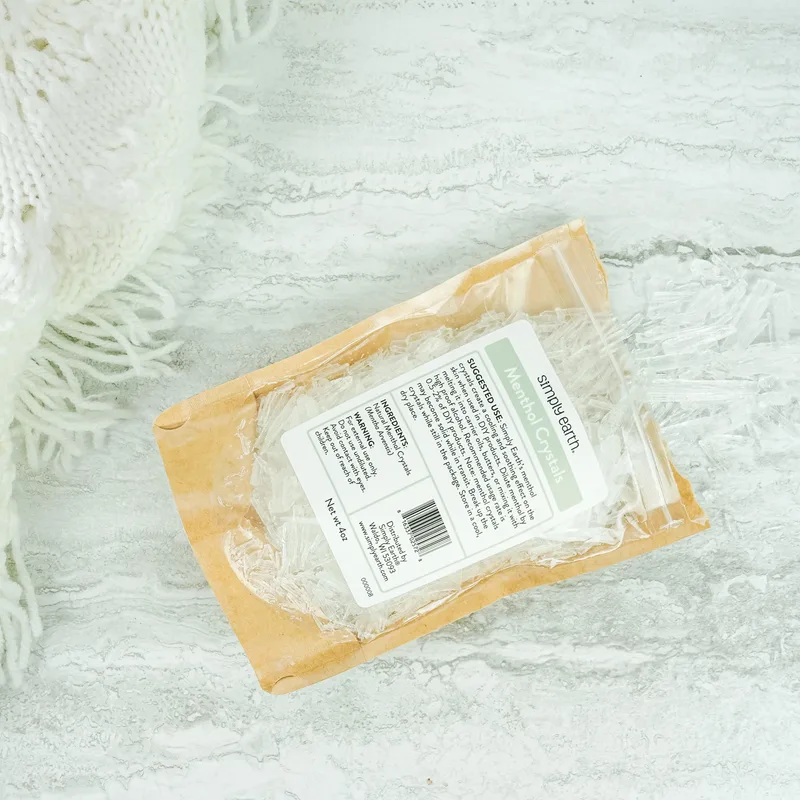
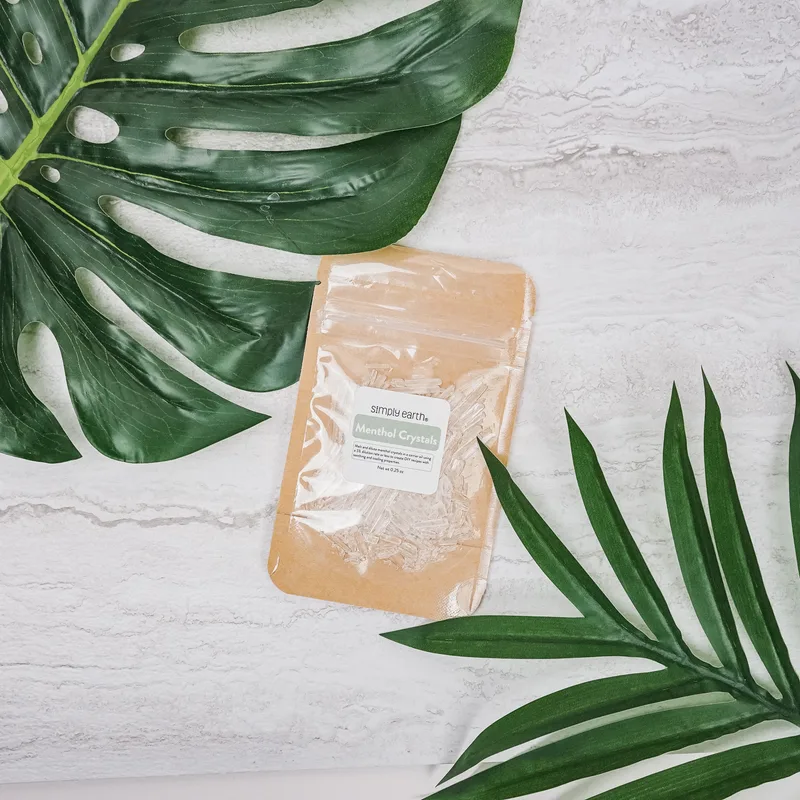
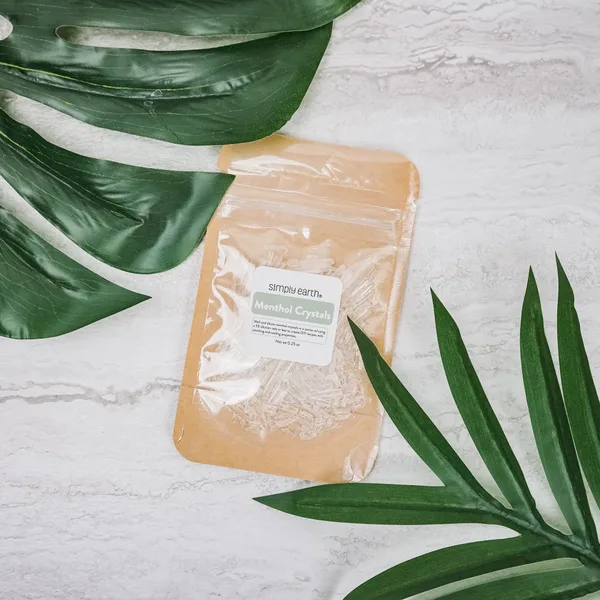
We hold menthol crystals to a locked specification — botanical name, CAS number, appearance, colour, melting point and shelf life all fixed and approved before an order ships — and we sell them in 0.25oz and 4oz sizes so a home formulator can buy a sensible amount of something this concentrated rather than a kilo of it.
Mentha arvensis
Botanical Source
Steam + Freeze
How It's Made
3–5 Years
Shelf Life
Use It Right
Safety & Usage Rate Guide
Never apply menthol crystals undiluted. Simply Earth's safety guidance is explicit — use only in properly diluted formulations, and avoid direct application of undiluted crystals to skin. A crystal placed on skin is roughly a hundred times the concentration any finished product would use.
Know your rate before you start, because it changes with the product. Simply Earth's recommended rates are lip balms 0.1–0.5%, body balms and oils 1–2%, soap 0.5–2%, and shower steamers 3–5%. Weigh them; do not count crystals.
5% of the finished product's weight is the ceiling. Our product guidance says not to use menthol in amounts over 5%, and only shower steamers should approach it. If a recipe you found online goes higher, the recipe is wrong.
Keep it away from your eyes, and never put it directly under the nose. Simply Earth's guidance names both — avoid the eyes and mucous membranes, and avoid applying mentholated products to sensitive skin or directly beneath the nose. This is the route by which menthol causes real trouble, not the skin contact people worry about.
Do not use it under the nose or in steam inhalations for young children. Simply Earth's records set no minimum age for menthol crystals, so treat that as a reason for caution rather than permission. Ask your paediatrician before using anything mentholated on a young child, and keep it off their face entirely.
Patch test every new formula. Menthol can be irritating to the skin. We recommend applying a small patch of your finished DIY product to your inner arm before you use it properly — especially at the upper end of a rate range.
Take care when melting, and work where there is air moving. Our safety guidance calls for care when heating or melting, and for use in well-ventilated areas. The flash point is 200–212°F, so melt gently over low heat and never over a direct flame. The vapour off a warm batch is strong enough to sting your eyes.
For external use only, and out of reach of children and pets. Both are stated in Simply Earth's safety guidance for this ingredient. Store the bag somewhere a curious child cannot reach it — these look a great deal like something edible.
Store airtight, cool and out of sunlight. Shelf life is three to five years, but menthol sublimes — our storage guidance notes the crystals can evaporate slowly if left exposed to air. A loosely closed bag loses strength and scents everything around it.
These statements have not been evaluated by the Food and Drug Administration. This product is not intended to diagnose, treat, cure, or prevent any disease.
Real Results
What Earthies Are Saying About It
"I love making my own candles and mixing in the menthol crystals. It helps with congestion at night. I started using Vicks and then I got the crystals and now I love the candles."
Elizabeth P.
Verified Buyer • Menthol Crystals
"I started making my own lip balms a couple years ago but they were always missing something. I would add too many menthol-y oils and would end up with lip balms that were too soft. Since adding these menthol crystals my lip balm is a whole new level!"
Laura
Verified Buyer • Menthol Crystals
"The combination of the menthol crystals with the cedarwood Himalayan and cardamom essential oils is perfect to help open your airways and make breathing easier, especially if you have a cold or the flu."
C. Martin
Verified Buyer • DIY Shower Steamers Kit
OUR SIMPLY PURE PROMISE
What Goes Into Your Products Matters
Natural, Never Synthetic
Crystallised from real mint oil. Never reactor-made.
Locked Product Spec
Botanical name, CAS number and melting point, fixed and approved.
Responsibly Sourced
Reputable suppliers. People and planet first.
Your Order Changes Lives: 13% of profits fight human trafficking globally.
Common Questions
Menthol Crystals FAQ
The questions makers ask most — and the two about rates and children that are worth reading before you open the bag.
How much menthol crystal should I use in a recipe? +
It depends entirely on the product. Simply Earth's recommended rates are 0.1 to 0.5 percent for lip balms, 1 to 2 percent for body balms and oils, 0.5 to 2 percent for soap, and 3 to 5 percent for shower steamers. Five percent of the finished product's weight is the absolute ceiling for anything.
How do I melt menthol crystals? +
Crush them first, then stir them into your warm oil, butter or wax phase until the liquid runs completely clear. They melt at about 107°F, so the gentle heat you are already using to melt beeswax or shea butter is plenty. Melt over low heat rather than a direct flame — the flash point is 200 to 212°F.
Will menthol crystals dissolve in water? +
No. Menthol is soluble in oils, butters, waxes and alcohol, but not in water. In a water-based recipe such as a spray you need to dissolve the crystals into an oil or alcohol phase first, or they will simply float and clump.
Are menthol crystals the same thing as peppermint essential oil? +
No. Peppermint essential oil is a complete oil containing menthol alongside menthone, menthyl acetate and many other constituents. Menthol crystals are just the menthol, separated out and far more concentrated. You cannot swap one for the other drop for drop.
Are Simply Earth's menthol crystals natural or synthetic? +
Natural. Ours are steam-distilled from mint leaves and then crystallised out of the resulting essential oil — a physical separation, not a synthesis. Menthol can be made synthetically and a lot of commercial menthol is, but Simply Earth does not recommend or use it.
Are menthol crystals safe for children? +
Simply Earth's records set no minimum age for menthol crystals, so please treat that as a reason for caution rather than a green light. Our own guidance is to keep them out of reach of children and pets and to avoid applying anything mentholated directly under the nose — that is the route by which menthol causes problems in young children. Ask your paediatrician before using a mentholated product on a young child.
How long do menthol crystals last, and how should I store them? +
Three to five years, stored in an airtight container somewhere cool and out of sunlight. Menthol sublimes, which means the crystals evaporate slowly if left exposed to air — a bag that is not properly sealed will lose strength and perfume the whole cupboard.
Why do menthol crystals feel cold when nothing is actually cooling? +
Because menthol binds to the receptor your nerve endings use to detect cold. The receptor fires and your brain reads the signal as cold, even though no heat has left your skin. It is the same mechanism behind the feeling of easier breathing — nothing physically opens, but the sensation is real.
About the Author: Katie Veldkamp
Katie Veldkamp
Certified Aromatherapist · Co-Founder, Simply Earth
Katie Veldkamp is a Certified Aromatherapist and co-founder of Simply Earth. She personally formulates and reviews SE's essential oil blends and verifies all benefit claims on Simply Earth content before it goes live.
Join 20,000+ Earthies Making Their Homes Natural
New recipes, usage guides, and DIY tips — delivered free.
No spam. Unsubscribe any time.
Learn by doing
Make your own natural products every month.
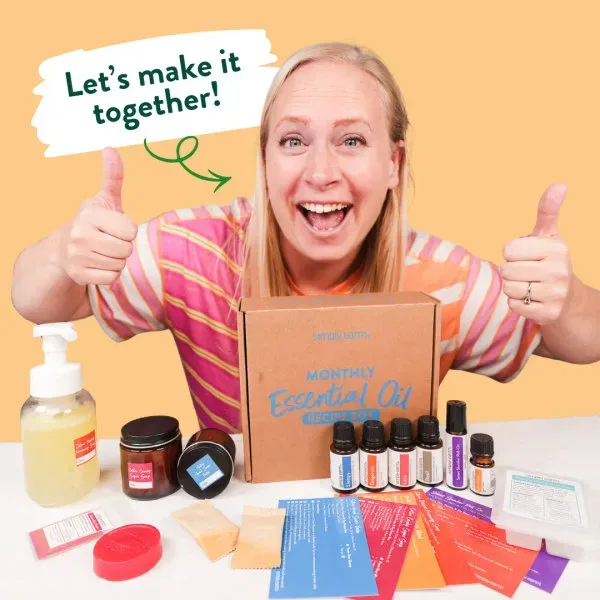
The Simply Earth Recipe Box ships 4 full-size essential oils, 6 natural recipes, and everything you need to make them. No guesswork.
Start My Recipe Box$39.99 for your first box, then $49.99/month. Skip, pause, or cancel anytime.