
What Is a Natural Solubilizer and How Does It Work?

Katie Veldkamp
Lead Certified Aromatherapist
Fact Checked & Approved
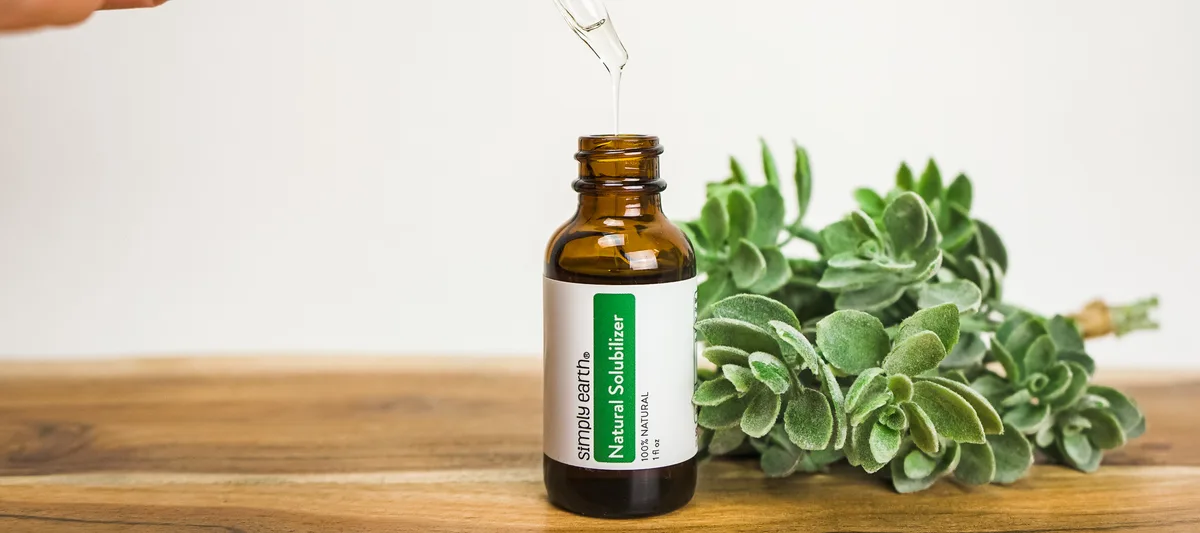
Oil and water do not mix. Everyone knows this, and then everyone makes a room spray anyway, shakes it, and watches neat essential oil settle back onto the surface within a minute. That floating layer is the problem: it is undiluted oil, and it lands on skin undiluted. A solubilizer is what fixes it. Simply Earth's is Caprylyl/Capryl Glucoside — a plant-derived gentle surfactant that wraps essential oil into droplets small enough to stay suspended in water. The result is a mixture that is clear instead of cloudy, stable instead of separating, and safe instead of a gamble. This guide covers what is actually in the bottle, the seven things it does for a formula, the 1:1 to 1:10 method step by step, how a solubilizer differs from an emulsifier, and the thirteen Simply Earth recipes built on it.
Free Cheat Sheet
Not sure how much to use?
Get the free Natural Solubilizer Quick Facts Cheat Sheet — the ratios, the method, and what a correctly mixed batch should look like.
Start Here
Why Your Room Spray Separates
Water molecules are strongly attracted to each other. Essential oil molecules are not attracted to water at all. Put the two in a bottle and the water closes ranks, squeezing the oil out into its own layer — which, because most essential oils are less dense than water, floats on top.
Shaking does not fix this. It breaks the oil into droplets that immediately begin finding each other again, and within a minute or two you are back where you started, with a layer of neat essential oil sitting on the surface. That layer is the actual problem. It is not a cosmetic complaint about a cloudy bottle — it is undiluted essential oil, sitting exactly where the next spray will pick it up and put it on skin.
A surfactant molecule is built to solve precisely this. One end is attracted to water, the other to oil. Add enough of them and they surround each oil droplet, water-loving ends facing outward — and the water now accepts the droplet, because what it meets is a water-friendly surface. Simply Earth's Natural Solubilizer is one such surfactant, Caprylyl/Capryl Glucoside, and that is the entire ingredient list. It has no aroma of its own and no therapeutic properties. It is not something you use for anything; it is the thing that makes the rest of your recipe work.
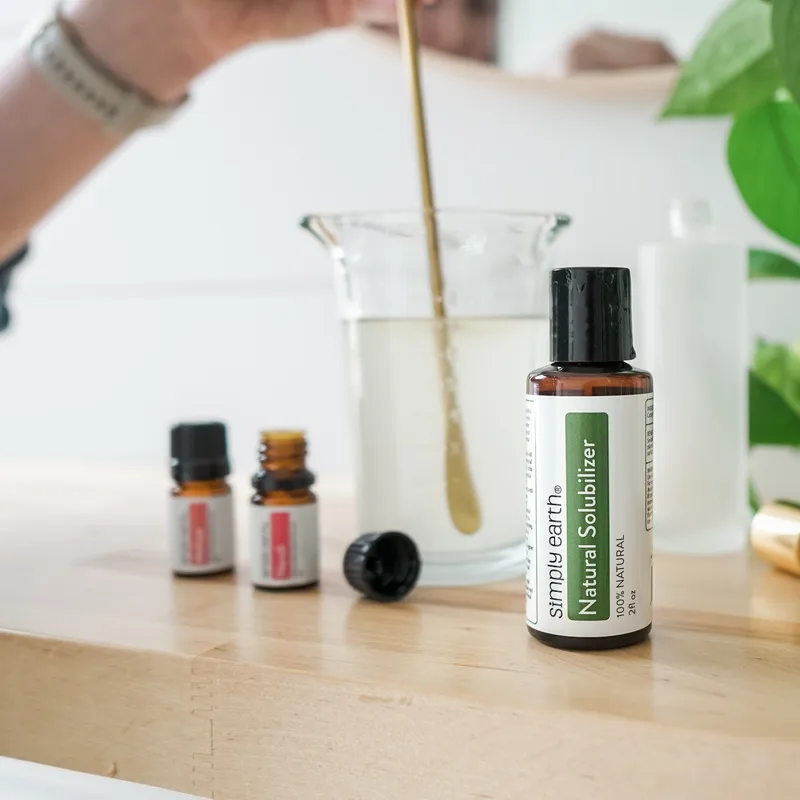
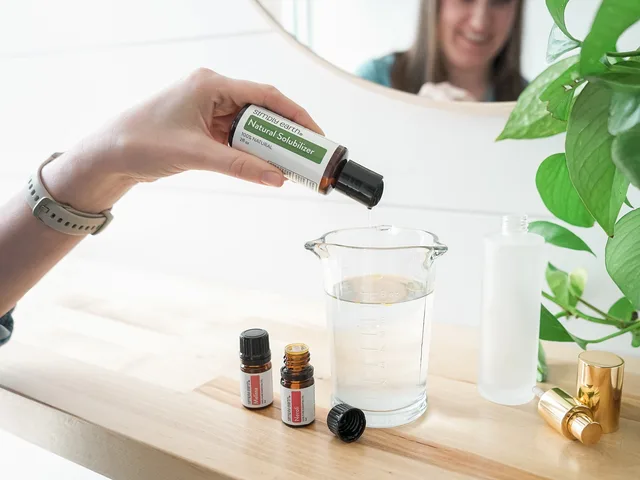
BEST FOR: ROOM SPRAYS, LINEN SPRAYS & MICELLAR WATER
Without a solubilizer, essential oil sits on top of water in a separate layer, and it goes back to sitting there within a minute of the last shake. With one, the oil disperses evenly through the water and stays that way — so the tenth spray from the bottle delivers the same thing the first one did. That consistency is the entire reason this ingredient exists, and it is the difference between a recipe that works and a bottle you have to apologise for.
Katie's Tip
If you have ever made a room spray that smelled strong for two sprays and of nothing afterwards, this is why. The oil was never in the water — it was floating on it, and the first presses took it all.


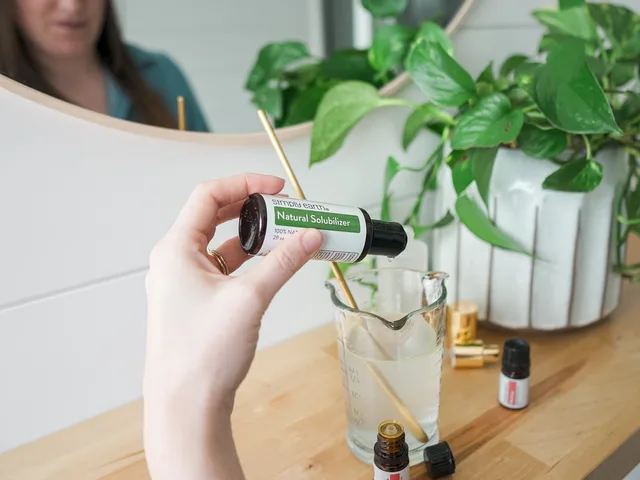
BEST FOR: ANYTHING THAT TOUCHES SKIN
A floating layer of essential oil is undiluted essential oil. Spray it and that neat oil is what lands on skin — not the diluted mist the recipe intended. Solubilising means the oil is properly dispersed through the water before it ever reaches you, which is the same principle as diluting into a carrier oil, applied to a water-based product instead. This is the benefit to care about. A cloudy spray is a cosmetic problem; a floating layer is a safety one.
Katie's Tip
Body sprays and facial mists are where this matters most, because they go onto skin by design. If you make only one thing with a solubilizer, make it one of those.


It Makes the Product Look Right
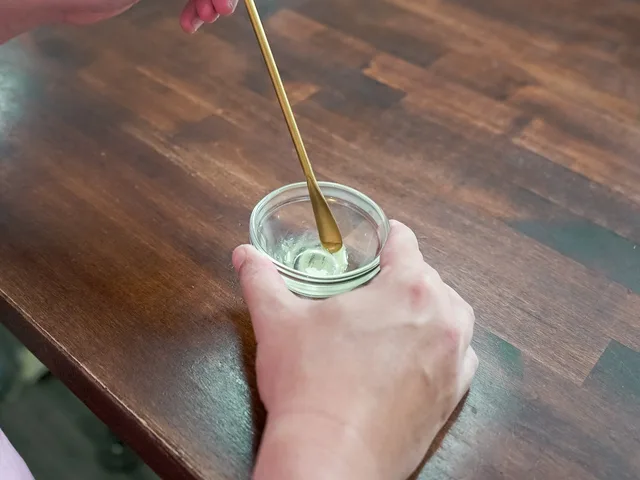
Clear, not cloudy — and clarity is your test.
 Shop Natural Solubilizer
BEST FOR: ANYTHING YOU ARE GIFTING OR SELLING
A correctly solubilised mixture is clear. Cloudiness or visible droplets mean you have not added enough solubilizer yet — which makes the appearance of the batch a readout of whether the chemistry actually worked. That is unusually useful for a home formulator, because most formulation mistakes are invisible. This one tells you while you can still fix it, and the fix is simply more solubilizer, drop by drop, until the cloud clears.
Katie's Tip
Let the bubbles settle before you judge clarity. Whisking air into a mixture makes it look cloudy for a minute or two even when it is perfectly solubilised.


Plant Derived, and That Is the Whole List
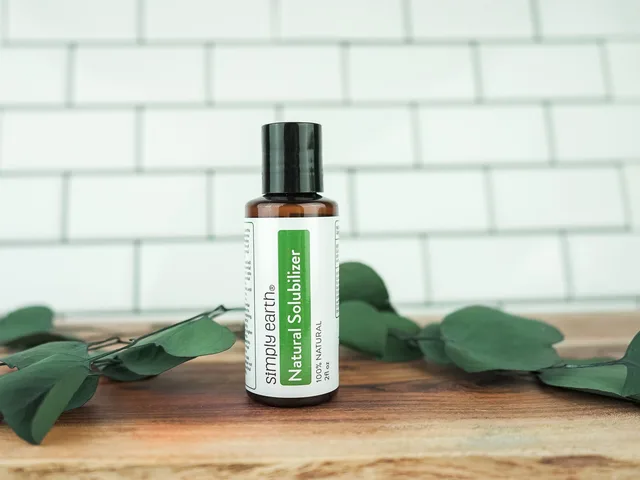
Caprylyl/Capryl Glucoside. One ingredient.
 Shop Natural Solubilizer
BEST FOR: ANYONE KEEPING A NATURAL INGREDIENT LIST
Simply Earth's solubilizer is plant-derived rather than petrochemical, which is the point of reaching for it in a natural formulation at all. It is made from fatty alcohols and glucose, and the ingredient panel is one line long — no preservatives, no fillers, no fragrance. If you are making your own products specifically so that you can read and recognise everything in them, a one-ingredient functional additive is about as good as that gets.
Katie's Tip
Write the ingredient on the bottom of anything you gift. "Caprylyl/Capryl Glucoside" answers the question before it gets asked, and it is a short answer.


BEST FOR: FACIAL PRODUCTS & MICELLAR WATER
Simply Earth's product record describes it as a natural surfactant and solubilizing agent, and names micellar water as one of its uses. Micellar water is not a metaphor here — it is literally a mild surfactant holding oil in suspension in water, which is exactly what this ingredient does. That is what makes a genuine micellar water possible at home rather than a bottle of cloudy water with oil on top of it.
Katie's Tip
Facial recipes are where trial and error pays off most. Get the mixture properly clear before you commit the batch to a bottle you intend to use on your face.
BEST FOR: FOAMING SOAPS, CLEANERS & DETERGENTS
Beyond solubilising, it can support an emulsion — helping an oil phase and a water phase stay combined in a thicker product rather than splitting back apart on the shelf. It appears in Simply Earth's own foaming hand soap and liquid laundry detergent kits for exactly that reason, alongside a preservative. Co-emulsifier means "helps", not "replaces": a proper lotion or cream still needs a primary emulsifier, and this ingredient will not make one on its own.
Katie's Tip
If a recipe is separating and you are reaching for more solubilizer, check first whether what you actually wanted was an emulsifier. They are not interchangeable.


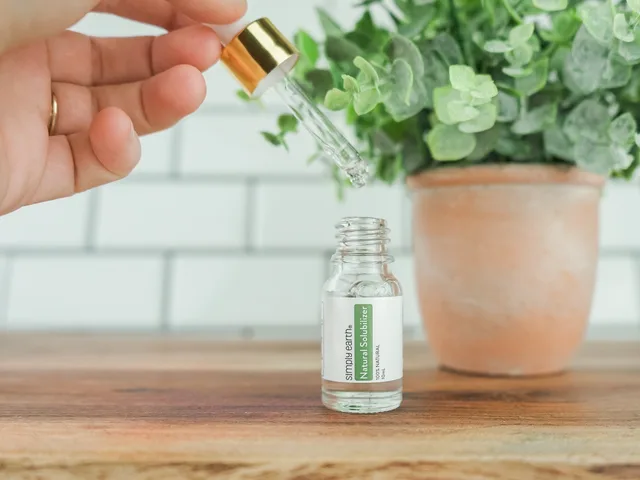
BEST FOR: WATER-BASED DIFFUSERS & AIR FRESHENERS
Simply Earth's short description names diffusers alongside micellar water as a use for this ingredient. In a water reservoir it does the same job it does in a spray bottle — it helps the oil disperse through the water rather than pooling on the surface, so what the diffuser lifts is the blend you put in rather than whatever happened to be floating at the top that minute. The same logic carries into gel and reed air fresheners, where the oil has to stay distributed through a water-based base for the scent to last.
Katie's Tip
A little goes a long way in a diffuser. Start well under what you would use in a spray and add from there — you are dispersing a few drops, not a whole bottle.

Put It to Work
How to Use Simply Earth's Natural Solubilizer
1. Mix the Oil and Solubilizer First
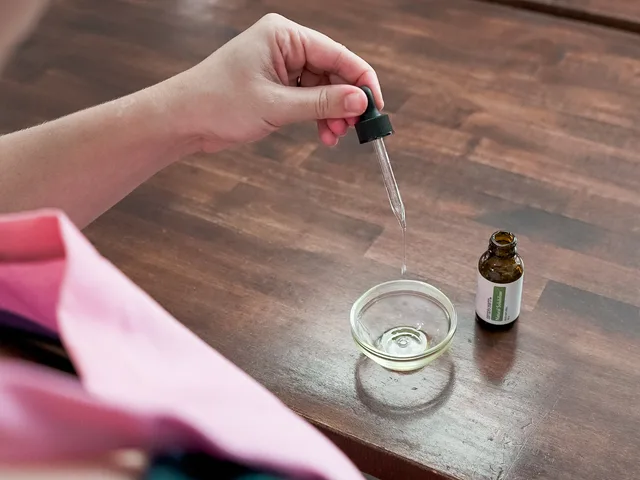
- • Combine your essential oils and the solubilizer in a small bowl or beaker
- • Never add essential oil straight to water — the mixing has to happen first
- • Start at a 1:1 ratio of essential oil to solubilizer
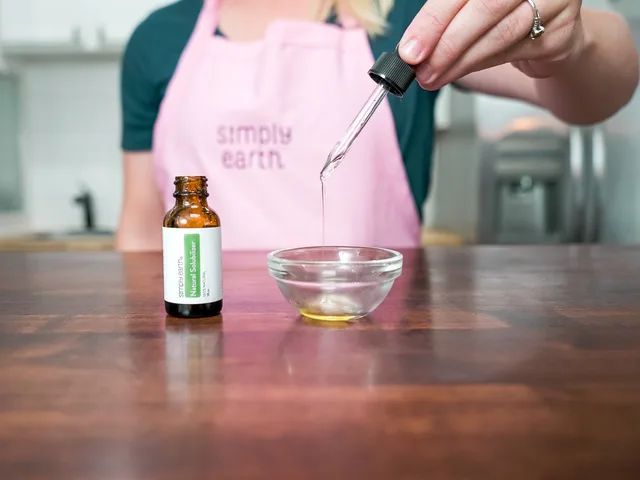
- • Add the solubilizer to the oils drop by drop, not all at once
- • Stir between additions until the two combine into one uniform mixture
2. Work Up the Ratio If You Need To
- • 1:1 is the starting point, not the answer for every oil
- • Work up toward 1:10 solubilizer to essential oil as needed
- • Different essential oils genuinely need different amounts — expect trial and error
- • Thicker and heavier oils tend to need more than light citrus oils
- • Note what worked for each blend so you are not re-deriving it next time
3. Add the Water Slowly
- • Once the oil and solubilizer are uniform, slowly stir in your water
- • Keep the solubilised essential oil to 1–5% of the total water volume
- • Pouring water in fast is the most common way a batch goes cloudy
- • Distilled water is the better choice for anything going on skin
- • Keep stirring gently as the water goes in rather than shaking afterwards
4. Read the Mixture
- • Look for a clear mixture — clarity is how you know it worked
- • Cloudy means not enough solubilizer yet; add more, drop by drop
- • No essential oil should float on the surface. If it does, you are not done
- • Bubbles are normal — let them settle before judging clarity
- • Judge the batch after it has rested a minute, not while it is still moving
5. Preserve It, or Use It Fast
- • Anything water-based will grow bacteria, yeast and mold
- • Simply Earth's own kits pair the solubilizer with Geogard ECT preservative
- • Do not bottle a water-based recipe with no preservative and no plan
- • Without one, refrigerate and use within days rather than weeks
- • Sanitise bottles, tools and surfaces before you start
Know the Difference
Solubilizer vs Emulsifier
These two get used interchangeably and they are not the same thing. A solubilizer disperses a small amount of oil through a large amount of water and leaves you with something clear. An emulsifier binds an oil phase and a water phase into something thick and opaque. If your recipe is a spray, a mist or a toner, the first column is what you want — and a solubilizer will not thicken into a lotion however much of it you add.
Swipe to compare →
Natural Solubilizer Caprylyl/Capryl Glucoside | Emulsifier Binds an oil phase to a water phase | Just Shaking It No additive at all | |
|---|---|---|---|
| What it actually does | Disperses essential oil through water and holds it there | Binds oil and water into a stable cream or lotion | Nothing lasting — it separates again within a minute or two |
| What the result looks like | A clear liquid | An opaque lotion, cream or body milk | Two visible layers, with oil on top |
| Best for | Sprays, mists, micellar water, toners, reed and water diffusers | Lotions, creams and body butters | Not a method |
| Safety on skin | Oil is properly dispersed before it reaches you | Oil is properly dispersed before it reaches you | Neat, undiluted essential oil sits on the surface |
| How much you use | 1:1 up to 1:10 with the oils; 1–5% of total water volume | Per that emulsifier's own label | N/A |
| Will it make a lotion on its own | No — it is a co-emulsifier at best, not a primary one | Yes, that is the job | No |
| Sold at Simply Earth | Yes — 10 mL and 2 oz | Sold separately | N/A |
| Simply Earth | We carry this | — | — |
Where It Belongs
What to Make With It
A solubilizer has no companion-oil list the way an essential oil does — it has no aroma to pair with anything. What it pairs with is formats. These are the kinds of Simply Earth recipe that put essential oil into water and therefore want a solubilizer in them, and there are thirteen recipes in the Simply Earth catalogue that list it as an ingredient.
What Is Actually in It
What Is Actually in the Bottle
On most Simply Earth ingredient pages this is where a farm appears, along with the family who run it and the season the harvest came in. The Natural Solubilizer has none of that, and inventing it would be exactly the kind of story this page should not tell. It is a manufactured formulation ingredient, and what stands in for a farm here is the ingredient panel — which is one line long.
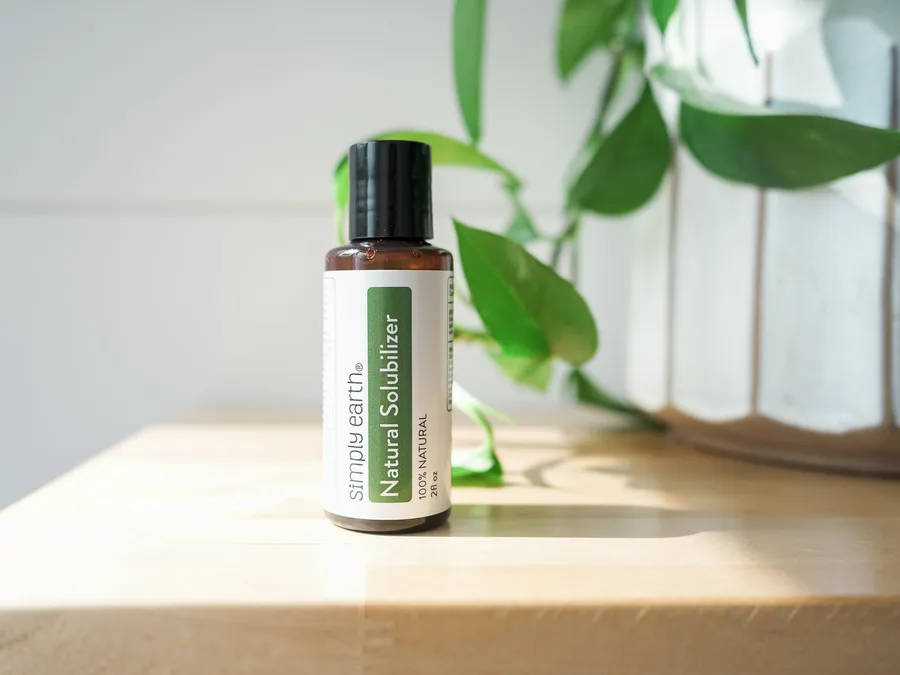
That line is Caprylyl/Capryl Glucoside: a plant-derived non-ionic surfactant made from fatty alcohols and glucose. No preservative, no filler, no fragrance, no carrier. Simply Earth sells it in two sizes, a 10 mL for trying it and a 2 oz for anyone making regularly, and it arrives as a clear, slightly viscous liquid.
Two things we are deliberately not putting on this page, because no Simply Earth record holds them: the specific supplier behind the ingredient, and any years-partnered or farm-direct figure of the kind we publish for our oils. Those numbers exist for crops we buy from growers; they do not exist for a manufactured input, and a plausible-sounding one would be worse than none. There is also no GC/MS report for this product, and there should not be — GC/MS exists to profile a distilled plant extract that varies from harvest to harvest, and this is a single compound made to a fixed specification. Both gaps have been flagged to our sourcing team, and this section gets updated if there is ever something real to add.
1:1 → 1:10
Oil to solubilizer ratio
1–5%
Of total water volume
1
Ingredient on the panel
The Chemistry
How Solubilisation Actually Works
One surfactant, wrapping oil droplets small enough that water accepts them and light passes straight through — which is why a batch that worked looks clear.
Caprylyl/Capryl Glucoside
The entire ingredient list
A non-ionic surfactant derived from fatty alcohols and glucose. "Non-ionic" means it carries no electrical charge, which is a large part of why it is mild enough to belong in a product that goes on a face. It is the only thing in the bottle — there is no second active, no carrier and no preservative alongside it.
Micelles
The structures it forms
A surfactant molecule has a water-loving end and an oil-loving end. Add enough of them to a mixture and they arrange themselves around each droplet of essential oil — oil-loving ends pointing inward, water-loving ends facing out. The oil ends up trapped inside a sphere whose outside surface the water is perfectly happy to accept. That sphere is a micelle.
Why clarity is the test
Droplets smaller than visible light
A droplet small enough to sit inside a micelle is smaller than the wavelength of visible light, so it does not scatter light on its way through — and the mixture reads as clear rather than milky. Cloudiness means the droplets are still too large, which means there is not yet enough surfactant to wrap them all. This is why "add solubilizer until it goes clear" is a real instruction rather than an aesthetic one.
Why the ratio varies
1:1 to 1:10, and why it is a range
Different essential oils have different molecular sizes and different affinities for water, so the amount of surfactant needed to wrap them differs too. That is the honest reason the guidance is a range rather than a number — a light citrus oil and a heavy resinous one will not behave the same way, and no single ratio covers both.
The same chemistry as micellar water
Why one ingredient makes both
Micellar water is, literally, water with micelles in it — mild surfactant holding oil in suspension so it can lift the oil and grime off your skin and rinse away. It is the same mechanism described above, put to a different purpose. That is why Simply Earth's product record names micellar water and diffusers in the same short line.
GC/MS report
N/A — not an essential oil
Simply Earth publishes GC/MS reports for its essential oils because those are distilled plant extracts whose constituent profile shifts with every harvest. The Natural Solubilizer is a single manufactured compound made to a fixed specification, so there is no harvest-to-harvest variation to test for. The ingredient panel is the equivalent document here.
Get It Right
Things to Remember
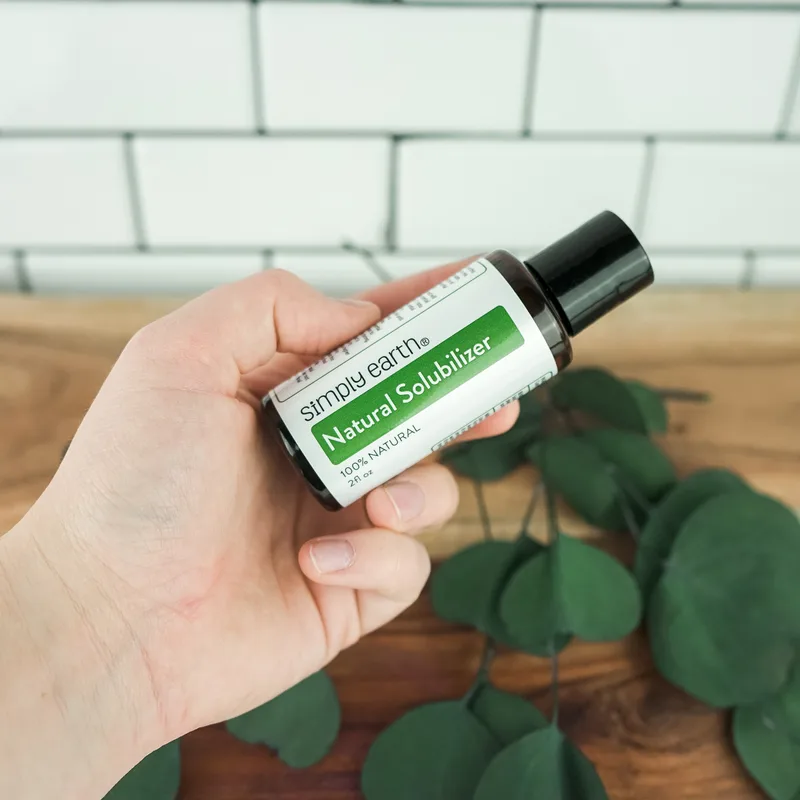
Mix the essential oil and the solubilizer together first, in a small bowl or beaker, before any water goes near them. Adding essential oil straight to water is the single most common reason a batch never comes clear.
Add the solubilizer drop by drop and stir between additions. Too much is wasteful; too little leaves oil floating, which is the thing you were trying to prevent.
Keep the solubilised essential oil to 1–5% of the total water volume, and expect to land somewhere between a 1:1 and a 1:10 ratio of oil to solubilizer depending on which oils you used.
Always use a preservative in a water-based product, or refrigerate it and use it within days. A solubilizer disperses oil; it does nothing whatsoever to stop bacteria, yeast or mold, and every water-based recipe grows all three.
A clear mixture means it worked. Cloudiness or floating oil means it did not — let the bubbles settle first, then add more solubilizer drop by drop until the cloud clears.
This is a formulation ingredient, not an aromatherapy product. It has no aroma, no therapeutic properties and no benefits for the body. Everything it does, it does for your recipe.
A solubilizer is not an emulsifier. It will not turn an oil phase and a water phase into a lotion or a cream, however much of it you add.
For external use in properly formulated products only. Do not ingest. Keep out of reach of children, and discontinue use if irritation or redness occurs.
These statements have not been evaluated by the Food and Drug Administration. This product is not intended to diagnose, treat, cure, or prevent any disease.
Real Results
What Earthies Are Saying
"I've tested multiple solubilizers. They're often tricky, but this solubilizer works better than anything else I've tried! It's a huge bonus that it's natural as well."
Latricia
Website Review • Natural Solubilizer (2oz)
"Natural Solubilizer: this product allows the essential oils and water mix, so you do not have to shake your detergent every time you want to use your detergent. Simply Earth's Natural Solubilizer you can safely dilute essential oils into water so that your water-based products are safe to use."
Doris Pullias
Website Review • DIY Soap Nut Liquid Laundry Detergent Kit
"I received the 10ml size in my recipe box in June of 2023 to use with the Candied Clove Gel Natural Air Freshener. I ran out making these as gifts, so I've purchased the 2 oz size for making a few Christmas gifts. It works great!"
Valerie Pilgreen
Website Review • Natural Solubilizer
OUR SIMPLY PURE PROMISE
What Goes Into Your Products Matters
One Ingredient, Listed
Caprylyl/Capryl Glucoside. No preservatives, no fillers, no fragrance.
Plant Derived
Made from fatty alcohols and glucose, not petrochemicals.
Gentle Enough for Skincare
A mild non-ionic surfactant — the same chemistry as micellar water.
Your Order Changes Lives: 13% of profits fight human trafficking globally.
Questions
Natural Solubilizer, Answered
What is a natural solubilizer? +
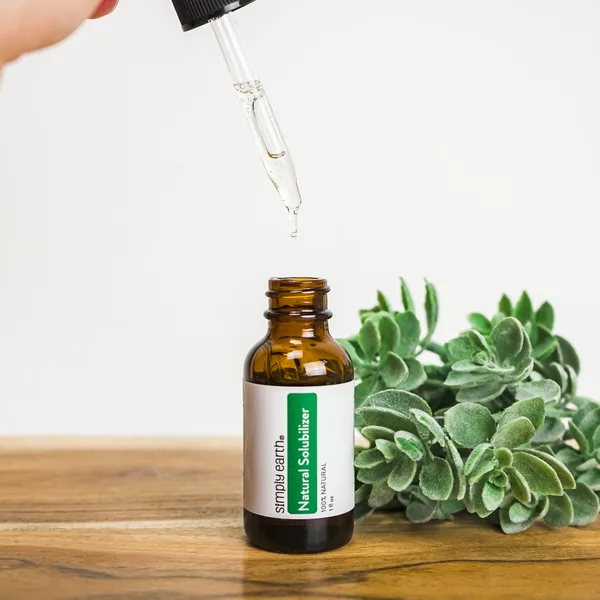
It is an ingredient that lets essential oil disperse evenly through water instead of floating on top of it. Simply Earth's is Caprylyl/Capryl Glucoside, a plant-derived non-ionic surfactant made from fatty alcohols and glucose. Each surfactant molecule has a water-loving end and an oil-loving end, so enough of them will surround a droplet of essential oil and present a water-friendly surface to the water around it. The oil stays suspended, and the mixture goes clear.
How much solubilizer do I use? +
Start at a 1:1 ratio of essential oil to solubilizer and work up toward 1:10 as needed, and keep the solubilised essential oil to 1–5% of your total water volume. The range is genuinely a range — different essential oils need different amounts, so expect some trial and error. Add the solubilizer to the oils drop by drop, stirring between additions, rather than measuring it all in at once.
What is the difference between a solubilizer and an emulsifier? +
A solubilizer disperses a small amount of oil through a large amount of water and leaves you with a clear liquid — sprays, mists, toners, micellar water. An emulsifier binds an oil phase and a water phase together into something thick and opaque, like a lotion or a cream. Simply Earth's Natural Solubilizer can act as a co-emulsifier, in the sense that it helps hold a thicker product together, but it will not make a lotion on its own and is not a substitute for a primary emulsifier.
Why is my mixture still cloudy? +
Cloudiness means there is not yet enough solubilizer to wrap all the oil droplets, so some of them are still large enough to scatter light. Add more, drop by drop, until the cloud clears. One thing to rule out first — bubbles from stirring or shaking will make a perfectly good mixture look cloudy for a minute or two, so let the batch settle before you judge it.
Do I still need a preservative? +
Yes. A solubilizer disperses oil through water; it does nothing at all to stop bacteria, yeast or mold, and anything water-based will grow them. Simply Earth's own kits pair the Natural Solubilizer with Geogard ECT preservative for exactly this reason. Without a preservative, refrigerate the product and use it within days rather than bottling it and leaving it on a shelf.
Can I just shake the bottle instead? +
Not with any lasting result. Shaking breaks the oil into droplets that immediately begin recombining, and within a minute or two the layer is back on the surface. That layer is neat, undiluted essential oil, which is the real problem — it means the next spray puts undiluted oil onto skin rather than the diluted mist the recipe intended.
Can I use it in a diffuser? +
Yes — Simply Earth's product record names water-based diffusers alongside micellar water as a use. In a diffuser reservoir it does the same job it does in a spray bottle, helping the oil disperse through the water rather than pooling on the surface. Use noticeably less than you would in a spray; you are dispersing a few drops into a small reservoir.
Does the Natural Solubilizer have a scent or any benefits of its own? +
No. It is a formulation ingredient rather than an aromatherapy product — it has no aroma, no therapeutic properties and no benefits for the body. Everything it does, it does for your recipe: it disperses the oil, keeps the mixture clear and stable, and makes a water-based product safe to put on skin.
About the Author: Katie Veldkamp
Katie Veldkamp
Certified Aromatherapist · Co-Founder, Simply Earth
Katie Veldkamp is a Certified Aromatherapist and co-founder of Simply Earth. She personally formulates and reviews Simply Earth's DIY ingredient line and verifies product claims on Simply Earth content before it goes live. The ratios, the 1–5% guidance and the method on this page come from the Simply Earth product record and the company's own formulation guidance.
Join 20,000+ Earthies Making Their Homes Natural
New recipes, usage guides, and DIY tips — delivered free.
No spam. Unsubscribe any time.
Learn by doing
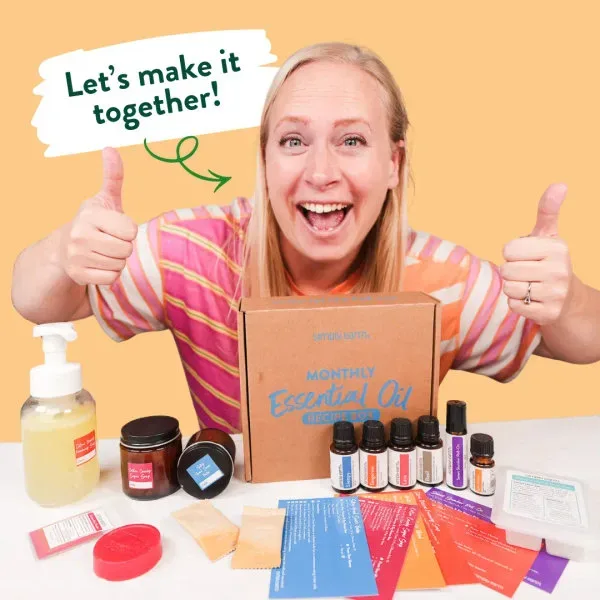
Make your own natural products every month.
The Simply Earth Recipe Box ships 4 full-size essential oils, 6 natural recipes, and everything you need to make them. No guesswork.
Start My Recipe Box$39.99 for your first box, then $49.99/month. Skip, pause, or cancel anytime.