
Fractionated Coconut Oil: The Carrier That Never Solidifies

Katie Veldkamp
Lead Certified Aromatherapist
Fact Checked and Approved
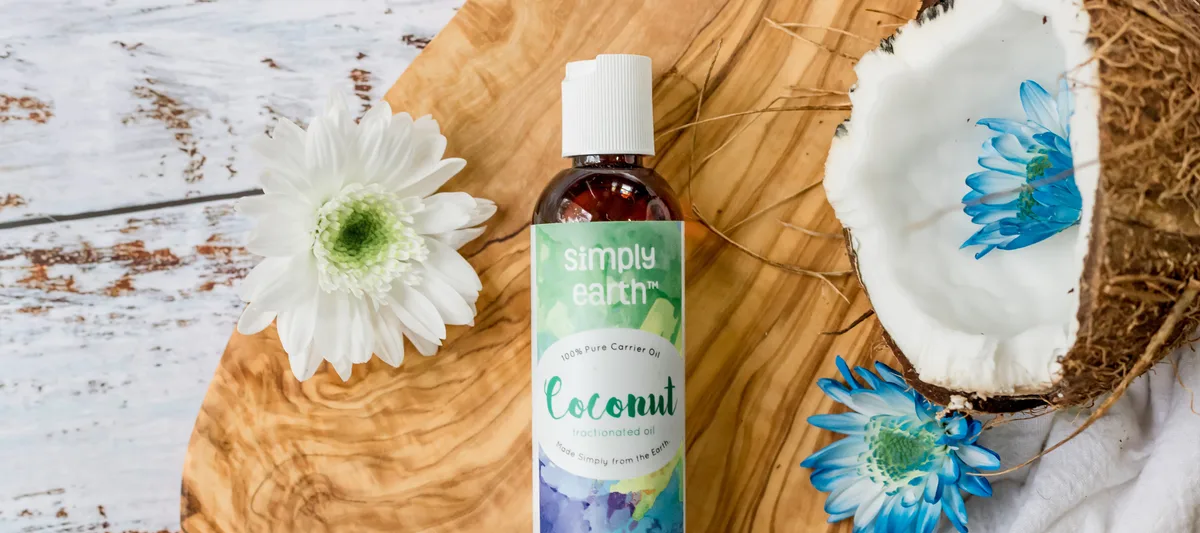
Almost nothing on an essential oil shelf is meant to touch your skin on its own. Fractionated coconut oil is the thing the rest of it goes into — the clear, pourable liquid at the bottom of a roller bottle, the base of a massage blend, the reason a drop of Peppermint does not burn. It is coconut oil with the long-chain fats taken out, which is a small-sounding change that alters everything practical about it: it stays liquid in a cold bathroom, it keeps for two years, it has no smell of its own, and it sinks in without leaving a slick behind. It is the carrier that turns up in more Simply Earth recipes than any other — 89 of them, at last count. Here is what it actually does, what Simply Earth's own records and the bottle's own label say about it, and how it differs from the jar of solid coconut oil sitting next to it on the shelf.
New to carrier oils
Not sure how much essential oil goes into your carrier?
Get the free Essential Oil Cheat Sheet and start blending with confidence.
It Stays Liquid, So There Is Nothing to Melt
The property the whole product is named after.
 Shop This Carrier Oil
BEST FOR: ROLL-ONS, COLD BATHROOMS, ANYTHING YOU POUR
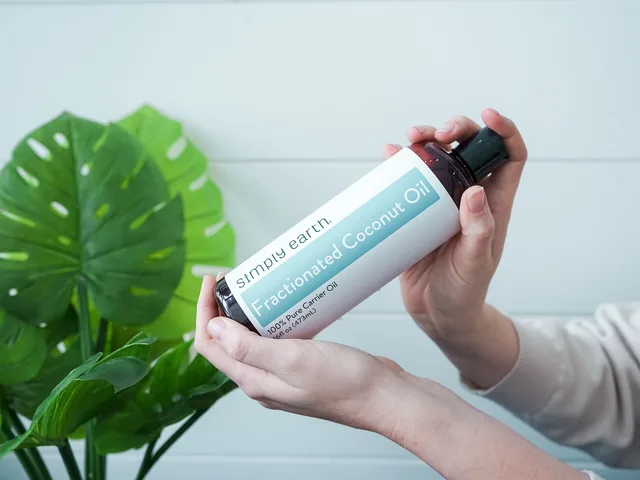
Solid coconut oil is a solid at room temperature — you scoop it, and in a cool room you warm it in your hands before it does anything useful. Fractionated coconut oil never does that. Removing the long-chain fatty acids drops the melting point far enough that it pours straight from the bottle in a cold bathroom in February, which is the single reason it is the default base for roller bottles. Nothing seizes, nothing separates, and a roll-on you made in July still rolls in January.
KATIE'S TIP
This is the one I hand people who are making their first roller bottle, because there is no step where it can go wrong. Fill to the shoulder, add your drops, put the roller ball back in.


BEST FOR: STOCKING UP, BULK DIY, INFREQUENT MAKERS
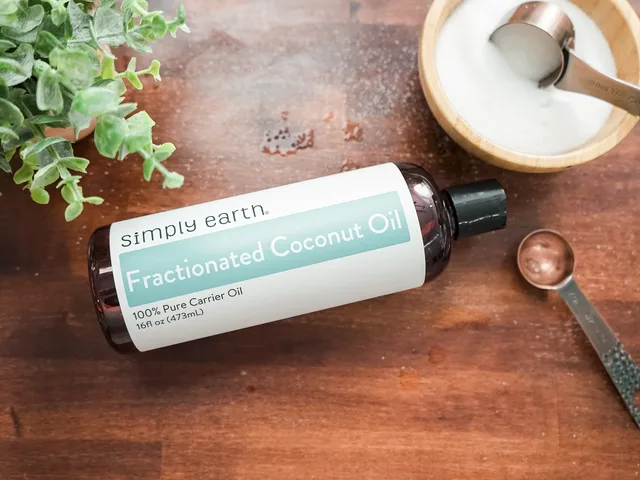
Simply Earth's own records put the shelf life at two years — the product listing says "storage life up to 2 years", the ingredient record says "2 Years", and the raw material spec sheet says the same. That is unusually long for a plant oil, and it is a direct consequence of fractionation — the components most prone to going rancid are largely what gets removed. It is why this is the carrier worth buying by the gallon, and why a bottle you opened last spring is still fine.
KATIE'S TIP
Write the date you opened it on the bottle with a marker. Two years is long enough that you will not otherwise remember, and that is exactly when people start guessing.


It Absorbs Fast and Does Not Leave a Film
Why it works on skin you are about to dress.
 Shop This Carrier Oil
BEST FOR: DAYTIME USE, FACE, ANYTHING BEFORE CLOTHES
Simply Earth grades this oil Fast Absorption Rate (2) on the same internal scale that puts solid coconut oil at Slow (4) — so the comparison is measured rather than marketing. The product listing describes it as "versatile, non-greasy, moisturizing", and the bottle's own label says it "absorbs easily into the skin, will not clog pores". In practice that means you can use it on your face or before getting dressed without the wait that heavier carriers ask for.
KATIE'S TIP
Less than you think. A carrier this light spreads much further than a butter does, so start with half what you would normally pour and add more only if you need it.


BEST FOR: PERFUME BLENDS, DELICATE FLORALS, ANY BLEND YOU CARE ABOUT
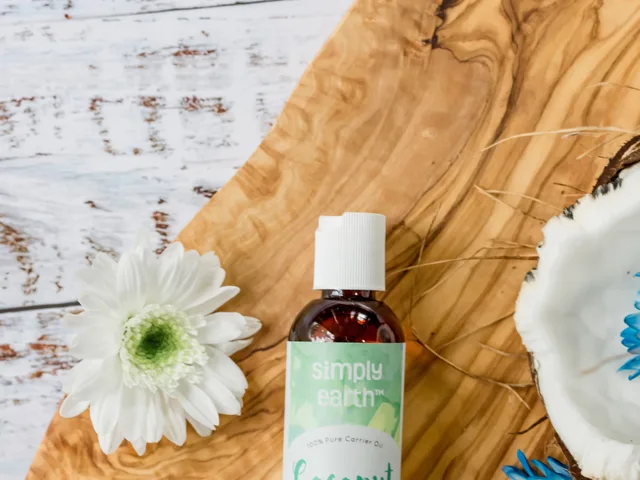
The label's aroma line is one word — odourless. This matters more than it sounds. Put four careful drops of Roman Chamomile into a carrier that smells of something, and you are now smelling both. Virgin coconut oil smells distinctly of coconut and will make every blend tropical whether you wanted that or not. Fractionated coconut oil contributes nothing, which is exactly what a carrier should contribute.
KATIE'S TIP
If you are building a perfume roll-on and want to judge the blend honestly, this is the base to use. Anything with its own scent will flatter some oils and fight others.


It Blends Into Essential Oils Without Fighting Them
The reason it is in almost every recipe we write.
 Shop This Carrier Oil
BEST FOR: DILUTING ANY ESSENTIAL OIL, FIRST-TIME BLENDERS
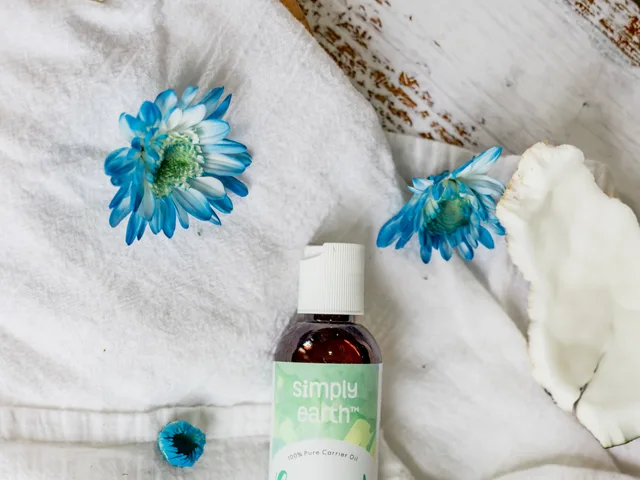
Simply Earth's label calls it "the best carrier oil for topical application to the skin", noting that it "blends easily with essential oils". That is borne out by our own recipe library rather than merely asserted — 89 Simply Earth recipes call for this one oil, more than any other carrier we sell. If you are diluting something and have no particular reason to reach for a speciality oil, this is the default, and it is the default for practical reasons rather than romantic ones.
KATIE'S TIP
Remember that this oil is the diluent, not the thing being diluted. It has no dilution rate of its own, which trips up a surprising number of people reading their first chart.


It Moisturises Skin and Conditions Hair
What it does on its own, with nothing added.
 Shop This Carrier Oil
BEST FOR: DRY HEELS, DULL HAIR, AFTER-SHOWER SKIN
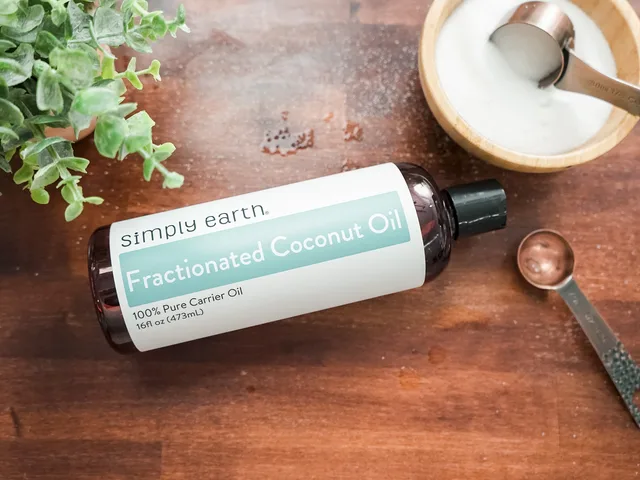
Simply Earth's ingredient record lists what this oil does unaccompanied — it moisturises skin without a greasy feel, is used on dry skin and cracked heels, and on the hair side may help moisturise the hair follicle and revive dull or dry hair. The label adds that it "deeply penetrates, nourishes, moisturizes and softens the skin". None of that requires an essential oil in it at all, which is worth knowing on the days you do not feel like making anything.
KATIE'S TIP
Heels and elbows, straight from the bottle, right after a shower while the skin is still damp. It is the least ceremonial use of this oil and probably the one I reach for most.
BEST FOR: MAKEUP REMOVAL, OIL CLEANSING, SHAVING
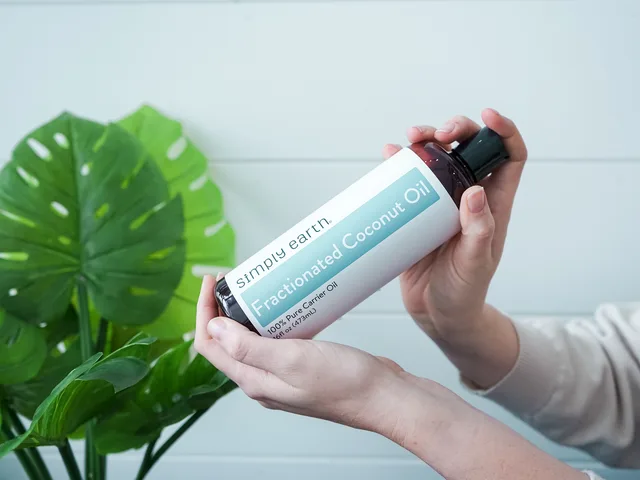
Both the product listing and the ingredient record put this one plainly — it is used in DIY makeup removers, hair masks and shaving lotions, and works as a skin cleanser and makeup remover on its own. Oil lifts oil-based makeup that water will not touch, and because this particular oil is light and rinses cleanly, it does the job without leaving the residue a heavier butter would.
KATIE'S TIP
A little on a cotton pad takes off eye makeup more gently than most dedicated removers. Follow with your normal cleanser if you like a properly clean feeling afterwards.
Put It to Work
How to Use Fractionated Coconut Oil
Roll-Ons and Dilution
- • The default base for a 10ml roller bottle, filled to the shoulder
- • Stays pourable in a cold room, so nothing needs warming first
- • Has no dilution rate of its own, because it is the diluent
- • Used in the Focus, Rest Easy, Breathe Deep and Head Soothing roll-ons
Massage and Body
- • Enough slip for a full massage without a heavy greasy finish
- • Absorbs fast enough to use before getting dressed
- • Odourless, so the blend on top is what you smell
- • Used in the At Home Hot Stone Massage Oil and Happy Feet Foot Soak
Skincare and Cleansing
- • Works as a makeup remover and oil cleanser on its own
- • The label states it absorbs easily and will not clog pores
- • A base for facial oils, balms and after-shower moisturising
- • Used in the Bi-Phasal Facial Cleanser and Grapefruit Beauty Balm
DIY Blending Base
- • The liquid phase in scrubs, balms, lotion dots and cream blushes
- • A two-year shelf life makes it practical to buy by the gallon
- • Blends with butters and waxes once they are melted
- • Used in the Dreamy Sugar Scrub and Sunset Glow Lotion Dots
Know the Difference
Fractionated vs. Solid Coconut Oil
These two come from the same fruit and even share a botanical name, which is why they get mixed up constantly, but they behave like different ingredients and the table shows where that starts. Two rows carry the whole story. The first is what happens at room temperature — one pours and one has to be scooped and warmed, and that alone decides which of them can live in a roller bottle. The second is absorption, where Simply Earth grades fractionated coconut oil Fast (2) and solid coconut oil Slow (4) on the same internal scale, which is the measured version of the claim that one is the light one. Everything else follows from fractionation itself: taking the long-chain fats out is what removes the coconut smell, lightens the feel and leaves the oil liquid. If you want the coconut scent and a butter-like texture for a lip balm or a body butter, the solid jar is the right buy. If you want a neutral base that behaves the same way every month of the year, this is it. Apricot and argan are in the table because they are the carriers people actually weigh against it — apricot matches it for speed, and argan is the richer choice for hair and nails.
Swipe to compare →
Fractionated Coconut Oil The subject of this page | Coconut Oil (Solid) The one it is confused with | Apricot Oil The other fast, light carrier | Argan Oil The richer one | |
|---|---|---|---|---|
| Botanical Name | Cocos nucifera | Cocos nucifera | Prunus armeniaca | Argania spinosa |
| INCI | Caprylic/capric triglyceride | COCOS NUCIFERA OIL | PRUNUS ARMENIACA (APRICOT) KERNEL OIL | Argania spinosa kernel oil |
| Plant Part | Coconut meat | Coconut meat | Kernels, from inside the stone | Seeds |
| Extraction | Fractionation | Cold pressed | Cold pressed | Cold pressed |
| At Room Temperature | Stays liquid | Solid, needs scooping | Liquid | Liquid |
| Absorption | Fast Absorption Rate (2) | Slow Absorption Rate (4) | Fast Absorption Rate (2) | Average Absorption Rate (3) |
| Aroma | Odourless | Characteristic coconut odour | Bland, refining removes most of the odour | Characteristic |
| Colour | Clear to very pale yellow | Clear liquid, white solid | Straw coloured | Yellow to golden yellow |
| Shelf Life | 2 years | 2 years | 2 years | 2 years |
| EWG Score | 1 | 1 to 2 | 1 | 1 |
| Allergy Note | Possible but unlikely, heat processed | None known on the SE record | A Prunus, not a substitute for almond | May affect tree nut allergies |
| Size and Price at Simply Earth | $19.99 / 16oz and $85.99 / gallon | $9.99 / 12oz | Sold separately | Sold separately |
| Simply Earth | This page's oil | — | — | — |
Perfect Pairs
What Fractionated Coconut Oil Pairs With
This is not a "blends well with" list in the aroma sense — the whole point of this oil is that it has no aroma to blend. These are the essential oils Simply Earth recipes most often dilute into it, across roll-ons, massage blends and skincare. If you are layering carriers rather than essential oils, apricot oil keeps things equally light, argan oil adds richness for hair and nails, and solid coconut oil brings body when you want a balm rather than a liquid.
From the Tree of Life
Where Fractionated Coconut Oil Comes From
The coconut palm is thought to have originated in South Asia — the Philippines, Malaysia and Indonesia — and it has since become the stock image of a tropical island. It grows as tall as a hundred feet, carries pinnate leaves, and is slow to start: a coconut palm takes at least six years to fruit at all, and does not reach its peak until somewhere between fifteen and twenty.
It is called the Tree of Life for practical reasons rather than poetic ones, because very little of it is wasted. The leaves roof and fence houses. The trunks become building material. The hard shell is burned into charcoal, the husk fibres become mats, brushes and mattresses, and the sap ferments into vinegar or palm wine. The young nut holds the drinking water; the mature flesh is what gets pressed for milk and for oil.
Fractionated coconut oil sits at the end of that last branch, and it is a genuinely modern thing in a way the rest of the list is not. It does not occur in nature and it is not something you could make in a kitchen. The oil is pressed from the mature coconut meat first, and then a second industrial step — heat, and separation — pulls it apart into fractions and keeps one of them. Everything this page describes comes from that second step rather than from the coconut.
The Science
What Fractionation Actually Does
GC/MS testing is N/A for this ingredient, and that is the correct answer rather than a missing one — gas chromatography profiles the volatile aromatic compounds of a distilled essential oil, and fractionated coconut oil is a fixed carrier oil with no volatile fraction to profile. Simply Earth holds no fatty-acid assay for it either, so no percentages appear anywhere on this page.
Caprylic/Capric Triglyceride
The INCI name · CAS 73398-61-5
This is what fractionated coconut oil is actually called on an ingredient panel, and the name is the explanation. What remains after fractionation is chiefly the medium-chain fats — caprylic and capric — recombined as triglycerides. If you have seen this oil sold as "MCT oil", that is the same class of material under a different name.
The Long-Chain Fats, Removed
What fractionation takes out
Whole coconut oil is dominated by longer-chain saturated fats, and those are what make it solid at room temperature and give it its coconut smell. Fractionation separates them out. Almost every practical difference between the jar and the bottle traces back to this one subtraction rather than to anything being added.
Why It Stays Liquid
Melting point, in plain terms
Shorter fatty-acid chains melt at lower temperatures than longer ones. Take the long chains out and the melting point of what is left falls below room temperature, so the oil stays pourable in a cold room instead of setting. That is the whole mechanism behind the name on the label.
Why It Keeps So Long
Two years, on three SE records
Fractionation also removes much of what would otherwise go rancid, which is why Simply Earth's product listing, ingredient record and raw-material spec sheet all independently put the shelf life at two years. That is long for a plant oil, and it is the practical reason this is the carrier people buy by the gallon.
Where It Comes From
How We Source Ours
Here is the honest version. Simply Earth publishes real farm stories for a number of its ingredients — the partner, the country, the harvest, how long we have worked together. Fractionated coconut oil is not one of them. Our records hold the material facts above, and the two-year shelf life on the raw-material spec sheet, but no supplier country, no harvest season and no years-partnered figure exists in any Simply Earth system for this ingredient.
We would rather write that down than invent a farm to fill the space. It is also not especially surprising for this particular oil: fractionation is an industrial separation step carried out after pressing, so the supply chain behind it looks less like a single orchard and more like a processing route. That is a real gap on our side rather than a fact about the ingredient, and it sits with our sourcing team.
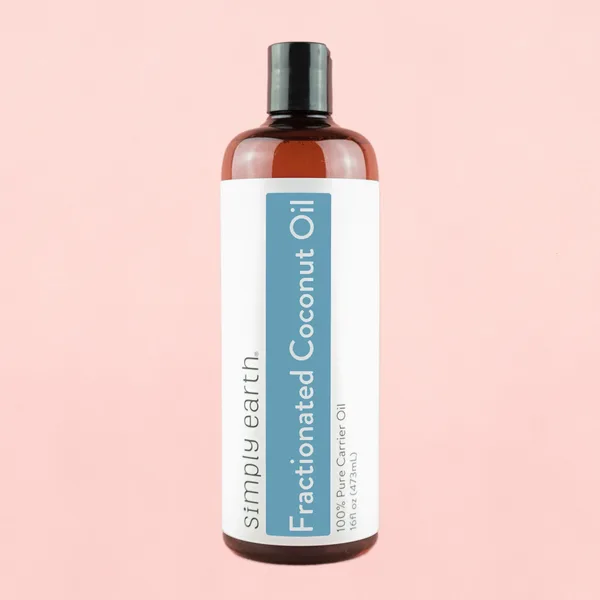
What we can tell you is what is in the bottle. It is 100% pure fractionated coconut oil, Cocos nucifera, pressed from mature coconut meat and then heat-processed and separated. Nothing else is added, and the label carries the same single ingredient line as this page.
Coconut Meat
Plant Part
Fractionation
Extraction Method
2 Years
Shelf Life
Use It Right
Things to Remember When Using It
For external use only. Keep out of reach of children. This is the warning printed on the bottle, and it is worth repeating because a clear, mild-looking liquid oil in a kitchen invites the wrong assumption.
A coconut allergy does not automatically rule this out, but it does not clear it either. Simply Earth's gallon label puts it precisely — "although unlikely because of the heat processing, allergic reactions to this oil are a possibility. If in doubt, consult with your doctor before using Fractionated Coconut Oil." The heat and separation strip out most of the protein that allergies respond to, which is why reactions are uncommon. It is not why they are impossible.
Patch test first, on the inner arm, especially if you know you react to coconut in any form. Simply Earth's ingredient record recommends exactly this.
The label states it "absorbs easily into the skin, will not clog pores". Simply Earth does not publish a numeric comedogenic rating for this oil, and it is worth treating any specific number you find elsewhere with some caution — those ratings are contested and vary between sources.
If irritation, redness or discomfort occurs, discontinue use.
Shelf life is two years. Store it closed, out of direct sunlight, at normal room temperature. It does not need refrigerating, and chilling it proves nothing — unlike solid coconut oil, this one is supposed to stay liquid.
This oil is the diluent, so it has no dilution rate of its own. What needs diluting is the essential oil going into it, and our dilution chart gives the drops-per-volume ratios.
These statements have not been evaluated by the Food and Drug Administration. This product is not intended to diagnose, treat, cure, or prevent any disease.
Real Results
What Earthies Are Saying
"I love this carrier oil for everything! I use it in all of my EO recipes. It's light, odorless and goes on smoothly and dries quickly. It's a perfect addition to your essential oil kit!"
Ariana G.
Verified Buyer • 100% Pure Fractionated Coconut Oil
"I use the coconut oil as a base under lotion and make-up. It's not greasy and feels great on my skin. I'll get this product again."
Iris B.
Verified Buyer • 100% Pure Fractionated Coconut Oil
"I've been making roller bottles with my oils and this is the perfect carrier oil for that."
Carol M.
Verified Buyer • 100% Pure Fractionated Coconut Oil
OUR SIMPLY PURE PROMISE
What Goes Into Your Products Matters
Certified 100% Pure
No fillers, no synthetics. Just pure carrier oil.
One Ingredient
Fractionated coconut oil. Nothing else.
Ethically Sourced from Quality Suppliers
Responsibly made. People and planet first.
16oz
Bottle Size
2 Years
Shelf Life
1
EWG Score
Your Order Changes Lives: 13% of profits fight human trafficking globally.
Fractionated Coconut Oil FAQ
The questions we get asked most about the carrier oil that goes into nearly everything.
What is the difference between fractionated and regular coconut oil? +
Fractionation removes the long-chain fatty acids from coconut oil and keeps the medium-chain ones. The practical result is a different ingredient. The fractionated version stays liquid at room temperature, has no scent, absorbs faster, and keeps for two years. Regular or virgin coconut oil is solid at room temperature, smells of coconut, and is graded Slow Absorption on Simply Earth's internal scale. Both are real Simply Earth products, and neither is a substitute for the other.
Is fractionated coconut oil the same as MCT oil? +
They are the same class of material. The INCI name for fractionated coconut oil is caprylic/capric triglyceride, which is what is being sold when a bottle is labelled MCT oil. The difference is usually the intended use — Simply Earth's is a cosmetic carrier oil, labelled for external use only.
Does fractionated coconut oil go rancid? +
Far more slowly than most plant oils, because fractionation removes much of what would otherwise oxidise. Simply Earth's product listing, ingredient record and raw-material spec sheet all put the shelf life at two years. Store it closed and out of direct sunlight. It does not need refrigerating.
Will fractionated coconut oil clog my pores? +
Simply Earth's product label states that it "absorbs easily into the skin, will not clog pores". We do not publish a numeric comedogenic rating for it, and we would encourage some scepticism about the specific numbers you will find elsewhere, because those ratings are contested and differ between sources. If your skin is acne-prone, patch test before putting any new oil on your face.
Can I use it if I am allergic to coconut? +
Ask your doctor first. Simply Earth's own label says that "although unlikely because of the heat processing, allergic reactions to this oil are a possibility". The heat and separation involved in fractionation remove most of the protein that triggers food allergies, which makes a reaction uncommon rather than impossible. Patch test on the inner arm whatever you decide.
How much essential oil do I add to fractionated coconut oil? +
That depends on the essential oil and on who it is for, not on the carrier — this oil is the thing doing the diluting, so it has no dilution rate of its own. Our dilution chart gives the drops-per-volume ratios, and it is the chart to reach for when you are filling a roller bottle for the first time.
Does it stay liquid in a cold room? +
Yes, and that is the entire point of it. Lowering the melting point below room temperature is what fractionation achieves, so a roll-on made in summer still rolls in winter. If a bottle sold as fractionated coconut oil turns solid on you, it is not fractionated.
Can I cook with it? +
Not with this one. Simply Earth's fractionated coconut oil is labelled for external use only and is sold as a cosmetic carrier oil. Culinary MCT and coconut oils are produced and packaged to food standards, and this is not one of them.
Carrier Oils at Simply Earth
The Journey Continues
Keep Going With Carrier Oils
Step Before
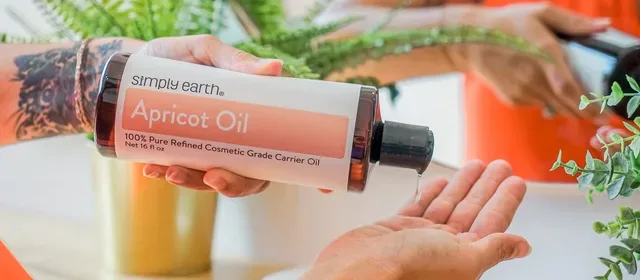
Apricot Oil: A Lighter, Faster Carrier Oil
The other fast-absorbing carrier, and the one to read if you want a light base with a little more skin-feel than this one has.
Read Now →

Step After
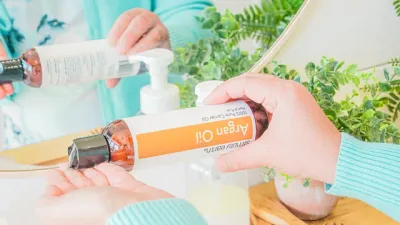
Argan Oil: Skin, Hair and Nails, One Bottle
Where to go when you want a richer carrier. Argan is the one people move to for hair, nails and drier skin.
Read Now →

About the Author: Katie Veldkamp
Katie Veldkamp
Certified Aromatherapist · Co-Founder, Simply Earth
Katie Veldkamp is a Certified Aromatherapist and co-founder of Simply Earth. She personally formulates and reviews SE's essential oil blends and verifies all benefit claims on Simply Earth content before it goes live.
Join 20,000+ Earthies Making Their Homes Natural
New recipes, usage guides, and DIY tips—delivered free.
No spam. Unsubscribe any time.
Learn by doing
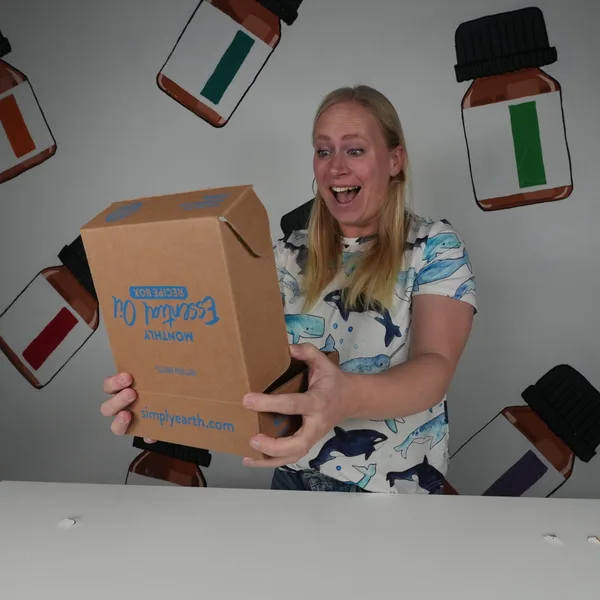
Make your own natural products every month.
The Simply Earth Recipe Box ships 4 full-size essential oils, 6 natural recipes, and everything you need to make them. No guesswork.
Start My Recipe Box$39.99 for your first box, then $49.99/month. Skip, pause, or cancel anytime.