
7 Cinnamon Leaf Essential Oil Benefits & How to Use It

Katie Veldkamp
Lead Certified Aromatherapist
Fact Checked & Approved
Almost every bottle sold as "cinnamon oil" leaves out the two things you actually need to know — which species it is, and which part of the tree it came from. Simply Earth's is steam-distilled from the leaves of organically grown Cinnamomum zeylanicum in Ceylon, which makes it a eugenol-driven oil with a clove-like edge rather than the sharp, sweet bark oil most people are picturing. That difference changes how it smells, what it is good at, and how carefully you have to dilute it. Below are the seven uses Simply Earth publishes for it, the seven recipes we actually make with it, how to tell leaf from bark from cassia on a shelf, and the 0.5% rule that matters more here than almost anywhere else.
Free Download
Cinnamon leaf caps at 0.5%. Get the dilution right.
Get the free Essential Oil Cheat Sheet — dilution rates, safety basics and starter recipes on a single page you can keep beside your oils.
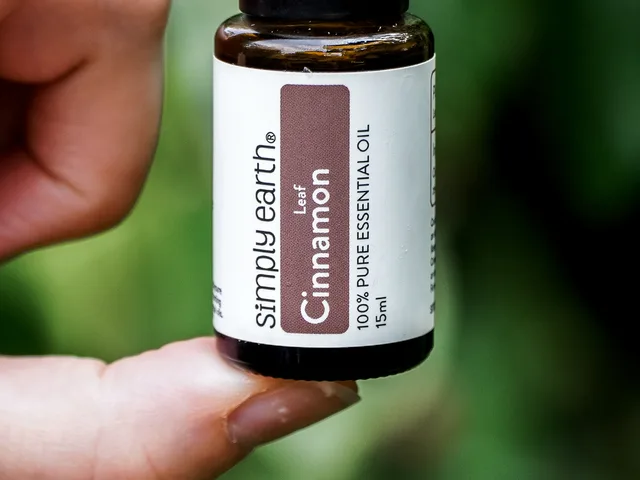
Supports Heart Wellness
The first use Simply Earth prints on the bottle.
 Shop Cinnamon Leaf Essential Oil
BEST FOR: PAIRING WITH A ROUTINE YOU ALREADY HAVE
This is the first use on our own product record, and the research behind it is specific about the conditions. One study found that cinnamon extract combined with long-term aerobic training showed positive effects on heart function in an animal model — the training was part of the finding, not background to it. So treat this one as something that sits alongside exercise and the rest of a heart-healthy routine rather than standing in for any of it, and read it as supportive rather than therapeutic. See the study.
KATIE'S TIP
Aromatic use is the easiest place to start with this oil, because the diffuser never asks you to get a dilution right. Save the skin work for a roll-on you have measured once and can reuse.
USE IT IN →


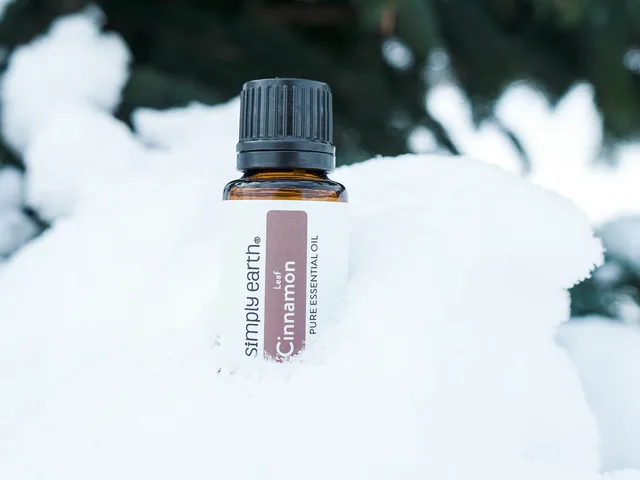
Promotes Circulation
The warming one, and the reason it feels like it is doing something.
 Shop Cinnamon Leaf Essential Oil
BEST FOR: COLD HANDS AND FLAT, GREY AFTERNOONS
If you want something to warm your life up, this is the one. Cinnamon leaf is stimulating, energising and genuinely warming on skin, and promoting circulation is the second use on our product record. It has a long traditional history here too, particularly around increasing blood flow. That warming character is also exactly why the dilution ceiling further down this page is so low — the sensation and the risk come from the same place, so warm is the goal and hot is the warning. More on cinnamon as a medicinal plant.
KATIE'S TIP
A roll-on is the sane way to do topical cinnamon leaf. Measure 0.5% into a 10mL roller once and you never have to think about the maths again.

Supports Healthy Habits
The antioxidant angle, and the blend it earned a place in.
 Shop Cinnamon Leaf Essential Oil
BEST FOR: THE MONTHS WHEN EVERYTHING GOES ROUND THE HOUSE
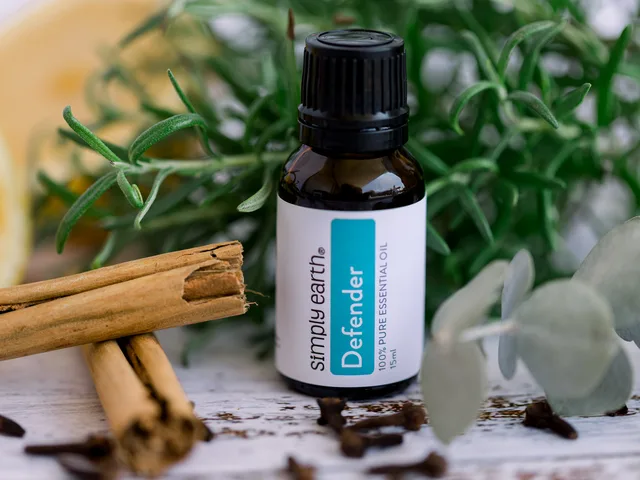
Cinnamon leaf has been shown to have considerable antioxidant activity, and antioxidant compounds act as health-protecting agents by responding to free radicals. This is the property that earned it a place in Defender, our own blend built around cinnamon's reputation for supporting a household through the sniffly months. It is also why it turns up in so many cleaning and air-freshening recipes — the same character does useful work on surfaces and in the air, not only on people.
KATIE'S TIP
Defender already contains cinnamon leaf, so you rarely need both in one recipe. If you are using the blend, the single oil is usually redundant.

BEST FOR: THE MID-AFTERNOON REACH FOR SOMETHING SWEET
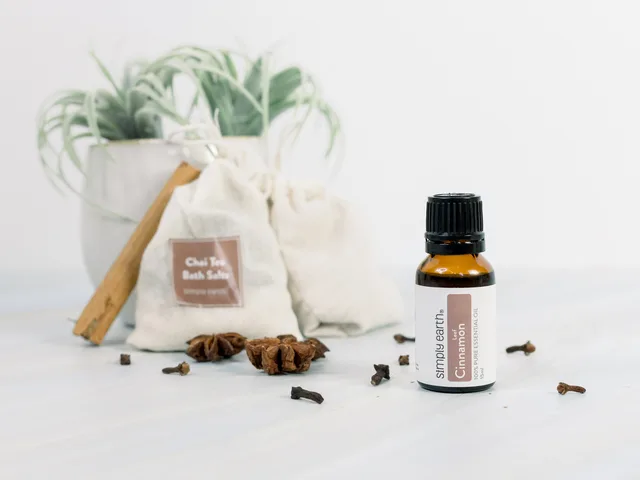
Cinnamon's best-known modern reputation is around appetite, and the research most often cited looks at cinnamon's role in blood sugar regulation, which is in turn linked to appetite and cravings. Worth being precise about what that is and is not — that work is about cinnamon as a plant and it is not a weight-loss claim about this bottle. What the oil can honestly offer is the aromatic half of the habit. Reaching for a warm, sweet-smelling inhaler instead of the biscuit tin is a small substitution, and small substitutions are what actually hold. See the research.
KATIE'S TIP
An inhaler beats a diffuser for this one, because cravings do not wait until you are in the room with the diffuser. Keep it in a bag or a desk drawer.

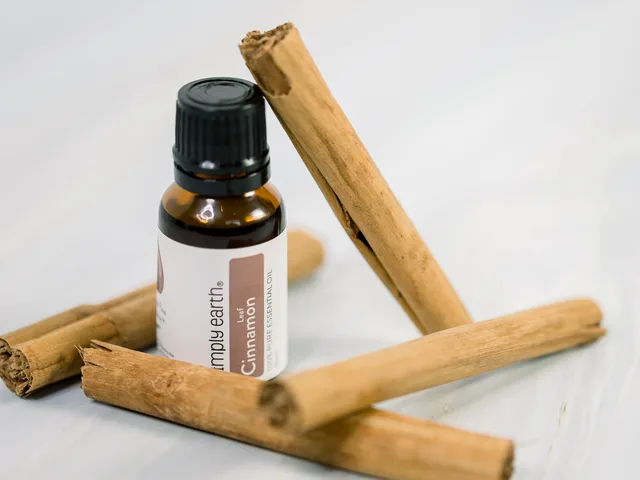
BEST FOR: STUFFY ROOMS AND THE TAIL END OF A COLD
A 2015 review of essential oils in respiratory tract conditions — cinnamon among them — described anti-microbial, anti-bacterial and anti-inflammatory actions relevant to respiratory infections. Read that as supportive comfort rather than treatment. In practice the useful version of this benefit is aromatic and ambient. A well-diluted room spray or a candle in a room you are already sitting in does more for how a stuffy evening feels than anything you would put on skin. Read the review.
KATIE'S TIP
Keep cinnamon leaf well back from the face. It is an oil to put in the room rather than under the nose, and it can irritate the mucous membranes if you get too close to it.

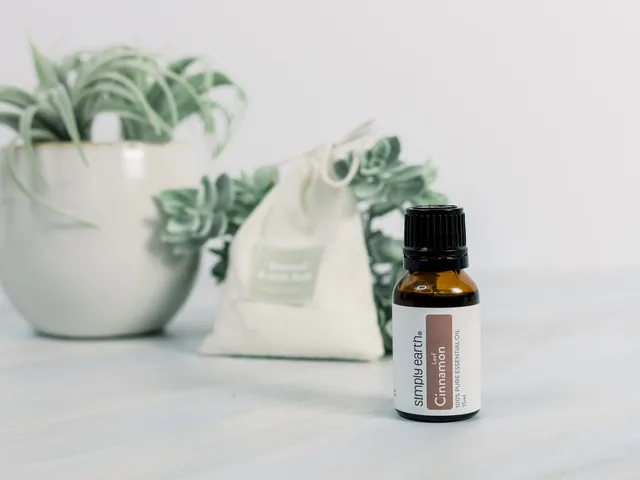
BEST FOR: KITCHENS, ENTRYWAYS AND ANYWHERE THAT HOLDS A SMELL
This is the one with the most evidence and the most recipes attached to it. One study tested essential oil formulations against five malodour- causing bacteria and reported antimicrobial, bacteriostatic and bactericidal activity, with cinnamon leaf among the oils carrying those properties. That is why it turns up in so much of what we publish — room sprays, diffuser blends, candles and simmer pots all lean on it. It does not mask a smell so much as change what the room smells of. See the study.
KATIE'S TIP
Test any cinnamon leaf spray on a hidden corner first. It is a golden-yellow to brown oil and it can mark pale fabric and painted surfaces.
Cleanses Skin
The seventh use on our product record — and the one with the strictest limit.
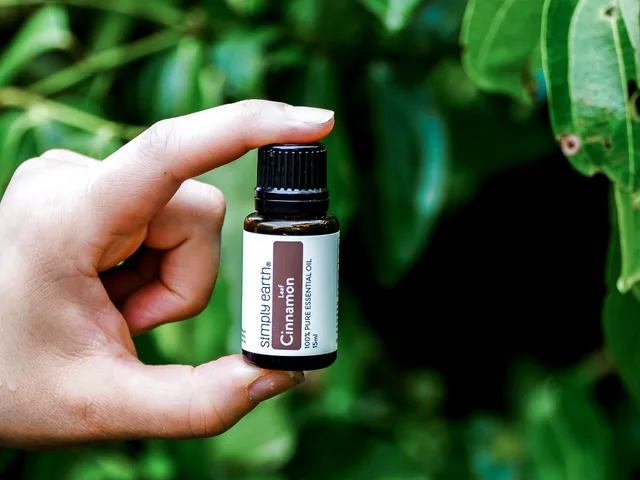 Shop Cinnamon Leaf Essential Oil
BEST FOR: A WASH-OFF RECIPE RATHER THAN A LEAVE-ON ONE
Cleansing skin is the seventh use Simply Earth lists on this oil, and it is the one that needs the most care in how it is used. The same eugenol that makes cinnamon leaf a capable cleanser is what makes it a dermal sensitiser, so the sensible home for this benefit is a wash-off product rather than a leave-on one — a soap or a scrub that is on the skin briefly and then rinsed away. Our Apple Cinnamon Oatmeal Soap is exactly that, and it is the recipe we would point you to first. Whatever you make, the 0.5% ceiling still applies.
KATIE'S TIP
Wash-off beats leave-on every time with this oil. Contact time is the variable you control most easily, and it matters as much as the percentage.
USE IT IN →

Put It to Work
How to Use Cinnamon Leaf Oil
Diffuser
- • 1–2 drops of cinnamon leaf to 3–4 drops of citrus or a conifer
- • It has a blending factor of 1, so it sits back rather than taking over
- • Best in kitchens, entryways and damp rooms in autumn and winter
- • Not cat safe or dog safe — give pets a way out of the room first
Topical (always diluted)
- • Simply Earth lists a special dilution rate of 0.5% for this oil
- • That is roughly 3 drops per fluid ounce of carrier oil
- • Patch test on the inner arm before any wider use
- • Never neat, never near the eyes, external use only
Household & Air
- • Room sprays and surface sprays, where its deodorising work is real
- • Simmer pots and diffuser blends through the colder months
- • Test on a hidden corner first — it can mark pale surfaces
DIY & Making
- • Soaps and scrubs, where the oil is rinsed away rather than left on
- • Candles and wax melts, which hold its warm spice well
- • Inhalers for aromatic use away from the house
Know the Difference
Leaf vs. Bark vs. Cassia
Three different products get sold as "cinnamon oil", and the label often tells you which one you are holding only if you already know what to look for. Simply Earth stocks two of them, so the comparison below is our own product data rather than received wisdom. The short version — our cinnamon leaf is true Ceylon cinnamon distilled from leaves, and because its lead compound is eugenol it leans towards clove rather than towards the spice rack. Cassia is a different species, sweeter and rounder, and is usually what people are actually picturing. Bark oil is the sharpest of the three and we do not carry it. Fragrance oil is not an essential oil at all. If a label just says "cinnamon oil" with no species and no plant part, it has told you nothing. Our full write-up on the sweeter sibling is over on the cassia page.
Swipe to compare →
Organic Cinnamon Leaf The one this page is about | Cassia Also on our shelf | Cinnamon Bark Oil We do not carry it | Cinnamon Fragrance Oil Not an essential oil at all | |
|---|---|---|---|---|
| The Actual Plant | Cinnamomum zeylanicum — true, or Ceylon, cinnamon | Cinnamomum cassia — a different species entirely | Either species, depending on the seller | None of it — a synthetic aroma compound |
| Part Distilled | Leaves | Leaves | Bark | Nothing is distilled |
| Where Ours Comes From | Ceylon | Vietnam | Not carried by Simply Earth | Not carried by Simply Earth |
| Lead Compound | Eugenol — closer in character to clove than to the spice rack | Cinnamaldehyde — the source of both the sweetness and the heat | Cinnamaldehyde, typically higher than in leaf oil | No plant compounds at all |
| How It Smells | Warm and spicy with a clove edge and woody undertones | Sweeter and rounder — the one people call cinnamon by mistake | The sharpest and most intense of the three distilled oils | Sweet and one-note, closer to a bakery than to a tree |
| Organic | USDA + MOSA certified organic | Conventional | Varies by seller | Not applicable |
| Blending Factor | 1 | 5 | Not carried by Simply Earth | Not applicable |
| Max Topical Dilution | 0.5%, plus a blood-thinning and drug-interaction caution | 0.5% | Treat as a hot oil | Not for skin use as an aromatherapy oil |
| How to Spot It on a Label | Says cinnamon leaf and names Cinnamomum zeylanicum | Says cassia, or names Cinnamomum cassia outright | Says cinnamon bark, and usually costs noticeably more | Says fragrance oil or perfume oil — never an essential oil |
| Simply Earth | We carry this | — | — | — |
Good Company
Blends Well With…
Cinnamon leaf has a sweet-spicy, warm, woody aroma and a blending factor of 1, which means it sits underneath a blend rather than running it. It works with citrus, with other warm spices, and with the resinous and floral oils that give it somewhere to sit. You will also find it inside two Simply Earth blends already — Defender, which leans on its household-support character, and Gingerbread, which leans on the smell of a house in December.
A fun fact about cinnamon
One of the Oldest Plants We Still Argue About
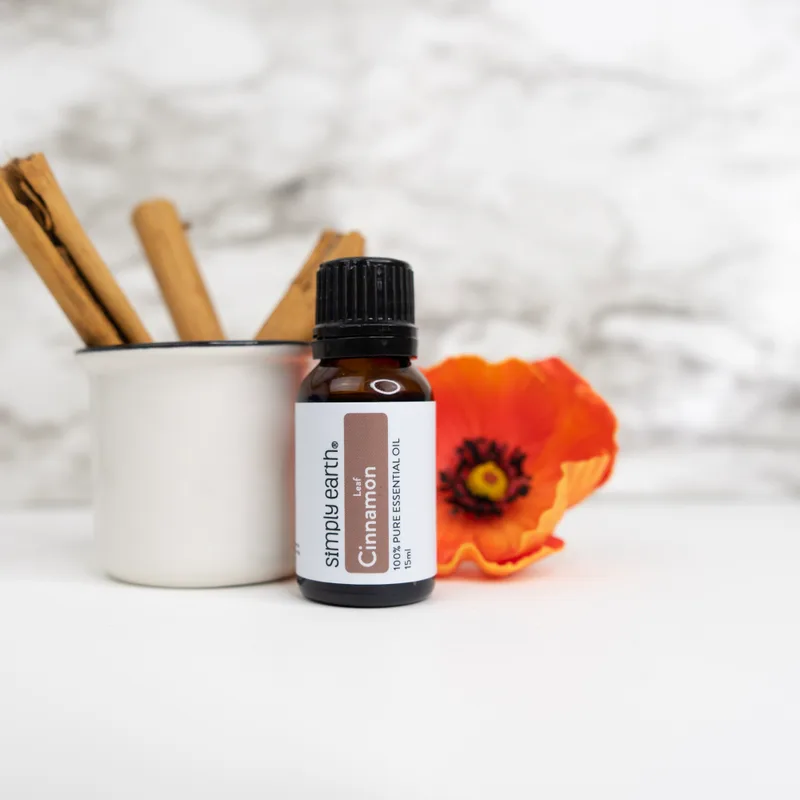
Cinnamon has one of the longest paper trails of anything on our shelf. Ancient Middle Eastern cultures reached for it for colds, digestive complaints and as a general stimulant, and it is believed to be among the oldest plants humans put to deliberate use at all. For most of that history it was also one of the most valuable — worth enough to be worth lying about where it came from.
The tree itself is less dramatic than the trade around it. It grows roughly twenty to sixty feet high, with small yellow flowers, thick leathery leaves and reddish-brown bark. Ceylon — modern Sri Lanka — is where true cinnamon is native, and it is still where ours is grown.
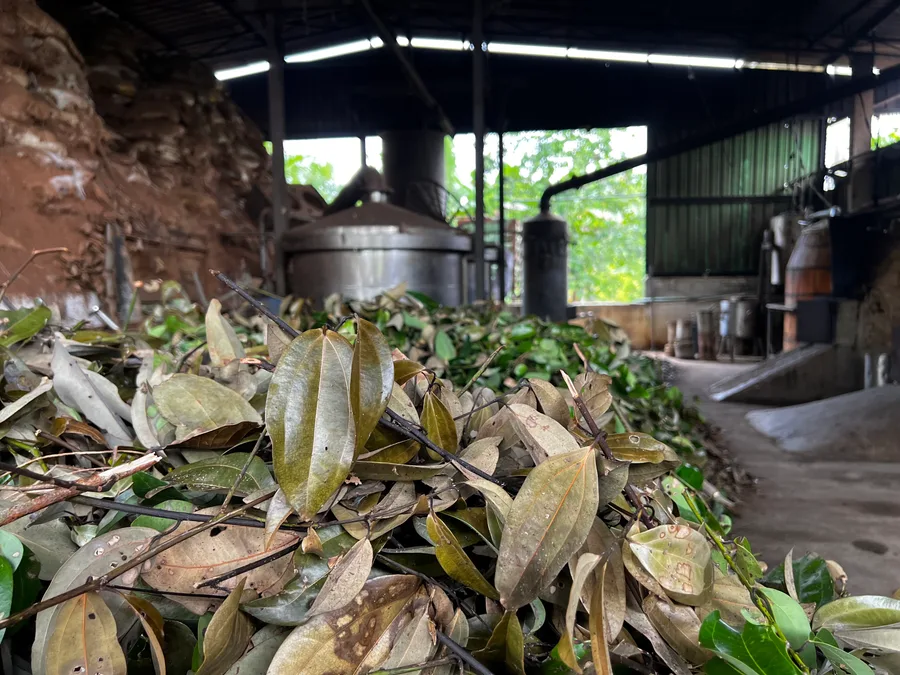
What changed is which part of it gets used. The quills in your cupboard are bark, and so is the oil most people picture. Ours is distilled from the leaves, which produces something warmer and more clove-like than the bark version. It is the quieter half of a very loud plant.
The Chemistry
The Science Behind Cinnamon Leaf Oil
Three naturally occurring compounds account for cinnamon leaf's warm, spicy, faintly woody character:
Eugenol
The lead constituent, at about 82.8%
The compound that defines this oil, and the one every caution on this page traces back to. Eugenol is what gives cinnamon leaf its spicy, clove-like scent rather than the sweeter bark character, and it is recognised as having local antiseptic and anaesthetic properties. It also carries most of the antimicrobial work behind the cleaning and deodorising uses. The same molecule is doing the appealing work and the risky work, which is why the ceiling is 0.5%.
trans-beta-Caryophyllene
Warm · Woody · Peppery
A sesquiterpene that occurs widely across spice and herb oils and gives this one its woody, faintly peppery undertone. It is part of why cinnamon leaf reads as rounder and less sharp than a bark oil, and why it settles into a blend rather than sitting on top of it.
Benzyl benzoate
Soft · Balsamic
A naturally occurring ester with a soft, faintly balsamic character. It is a minor constituent here, but it contributes to the depth at the back of the aroma and is one of the markers that shows up on a lab report when you are checking that a bottle really is leaf oil.
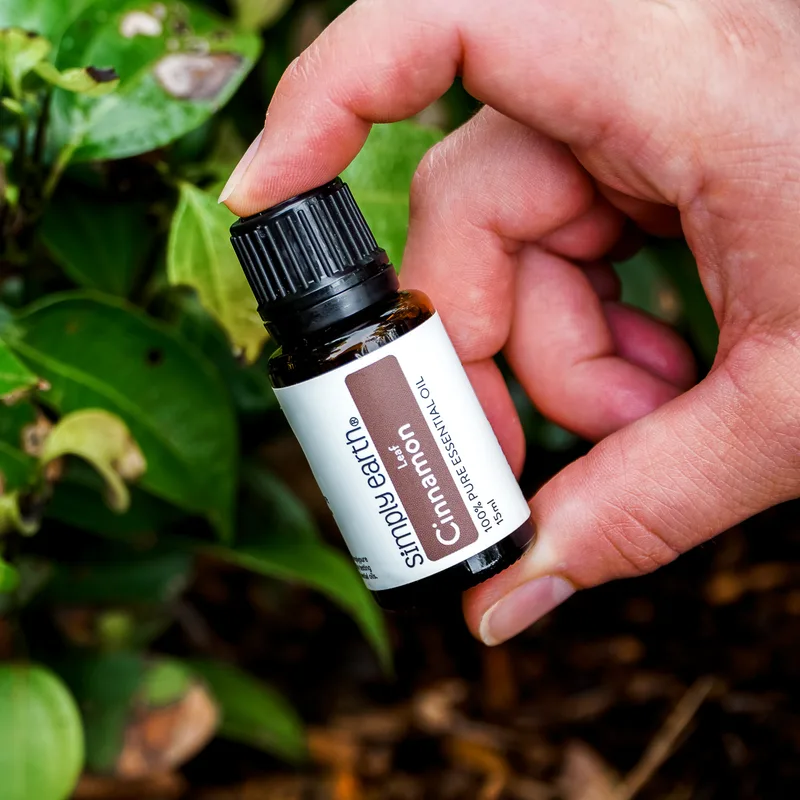
Simply Earth's Cinnamon Leaf Essential Oil is steam-distilled from the leaves of organically grown Cinnamomum zeylanicum in Ceylon, and every bottle ships with a batch-specific GC/MS report. For this oil that matters more than most — leaf, bark and cassia are routinely sold under each other's names, and the constituent profile is the only thing that settles which one is actually in the bottle. See Our Testing →
Support The Source
From a Sri Lankan Cinnamon Garden
Our cinnamon comes from HDDeS Extracts in Sri Lanka, where the trees are native to the land they grow on — which is a rarer thing than it sounds for a crop this widely traded.
What sets the farm apart is what it does not use. No pesticides and no synthetic fertilisers, which is why the soil there is in the condition it is in. Instead they work on keeping the balance of moisture and nitrogen right, using natural mulch and organic fertiliser, so the ground stays self-sustaining rather than being propped up each season. The trees are kept in good health for their whole lives rather than worked hard and replaced, and during any given harvest year only a small percentage of leaves is taken from each tree.
It is not only the cinnamon that benefits. The farm actively replants its own cinnamon stock and puts indigenous species back in alongside it, and the biodiversity that comes with that supports a great deal of other life on the same ground. The people matter as much as the plants — workers there are treated with respect and have perks including free electricity, water and health insurance.
Simply Earth filmed this one, if you would rather see it than read about it — Cinnamon: Straight From The World's Best Cinnamon Plantation.
Ceylon
Where It's Grown
Leaves
Plant Part
Public
GC/MS Results
Use It Right
Things to Remember When Using Cinnamon Leaf Oil
Cinnamon leaf is a hot oil — Simply Earth sets a special dilution rate of 0.5% on skin, lower than almost anything else we sell. That is roughly 3 drops per fluid ounce of carrier oil. See our dilution chart, and if a blend feels hot rather than warm, add carrier rather than pushing through it.
It is a blood thinner, and that is the caution this oil has that its relatives do not. Simply Earth's own record notes that cinnamon has blood-thinning properties and may complicate clotting disorders, and that drug interactions are possible. If you take an anticoagulant or have a clotting condition, talk to your doctor before using it at all.
Never apply it neat, and patch test first. Eugenol is a known dermal sensitiser, which means reactions can build with repeated exposure rather than showing up the first time. Patch test on the inner arm, keep it off broken or already-irritated skin, and prefer wash-off recipes to leave-on ones.
Do not use it if you are pregnant or breastfeeding. Simply Earth lists this oil as safe for neither. That is a firm no rather than a check-with-your-doctor, so pick a different oil for those months.
Kids 10 and up only, and it is neither cat safe nor dog safe. Give pets a way out of any room you are diffusing in, never apply it to an animal, and keep the bottle where children cannot reach it.
It is sun safe, and it keeps for 5 years. Unlike the citrus oils it blends with, cinnamon leaf is not phototoxic, so it will not make skin more sensitive to sunlight. Store it capped and out of direct light — an oxidised oil is more likely to irritate skin than a fresh one.
Keep it away from your face, and do not ingest it. It can irritate the mucous membranes in your nose, so diffuse it into a room rather than inhaling closely from the bottle. We do not recommend ingesting essential oils unless you are under the direction of a doctor certified in aromatherapy.
These statements have not been evaluated by the Food and Drug Administration. This product is not intended to diagnose, treat, cure or prevent any disease.
Real Results
What Earthies Are Saying
"I put a few drops of cinnamon and nutmeg essential oils on the wool dryer balls for my laundry. It is delightful to be pulling on a t-shirt and getting the comforting scents. Very enjoyable. I have also diffused cinnamon with geranium, very lovely."
Theresa Stewart
Verified Buyer • Cinnamon Leaf Essential Oil
"I absolutely love the smell of the cinnamon essential oil. It has a great spicy aroma that makes my house smell so warm and cozy when I put it in my diffuser!!"
Shelby Egee
Verified Buyer • Cinnamon Leaf Essential Oil
"There are many good benefits from cinnamon. I love the smell as well. A lot of people aren't aware of the medicinal and health benefits as well as the healing benefits of cinnamon. I'm glad I got this because I'll be getting more."
Amma Afriyie
Verified Buyer • Cinnamon Leaf Essential Oil
OUR SIMPLY PURE PROMISE
What Goes Into Your Products Matters
Certified 100% Pure
No fillers, no synthetics. Just pure oil.
GC/MS Third-Party Tested
Every batch independently verified.
Ethically Sourced from Quality Farms
Responsibly harvested. People and planet first.
15mL
Bottle Size
MLM brands: 10mL
Ceylon
Where It's Grown
Leaf-distilled, farm-direct
Organic
USDA + MOSA
MLM brands: Rarely
Your Order Changes Lives: 13% of profits fight human trafficking globally.
Cinnamon Leaf Essential Oil FAQ
The questions people actually ask about cinnamon oil — starting with the one the label usually fails to answer.
What is cinnamon leaf essential oil good for? +
Simply Earth lists seven uses — supporting heart wellness, promoting circulation, supporting healthy habits, balancing cravings, comforting respiration, deodorising and cleansing skin. In practice its most dependable everyday work is aromatic and household. Of the seven recipes we publish that contain it, five are things you diffuse, spray or burn.
Is cinnamon leaf oil the same as cinnamon bark oil? +
No, and the difference is bigger than it sounds. Both can come from the same tree, but leaf oil is dominated by eugenol while bark oil is dominated by cinnamaldehyde. That makes leaf oil warmer and more clove-like and bark oil sharper and sweeter, and it means their safety profiles are not interchangeable. Simply Earth sells the leaf oil. If a bottle just says cinnamon oil with no plant part named, you do not know which one you have.
What is the difference between cinnamon and cassia? +
They are different species. True cinnamon is Cinnamomum zeylanicum, also called Ceylon cinnamon, and cassia is Cinnamomum cassia. Simply Earth sells both, and the practical difference is the lead compound — our cinnamon leaf is driven by eugenol and leans towards clove, while cassia is driven by cinnamaldehyde and is the sweeter, rounder one most people are actually picturing when they say cinnamon.
How much should I dilute cinnamon leaf essential oil? +
Simply Earth publishes a special dilution rate of 0.5%, which is roughly 3 drops per fluid ounce of carrier oil. That is lower than almost anything else on our shelf. It is a hot oil, so never apply it neat and always patch test on the inner arm before wider use.
Who should not use cinnamon leaf oil? +
Anyone pregnant or breastfeeding — Simply Earth lists it as safe for neither. It is for children 10 and up only, and it is neither cat safe nor dog safe. It also has blood-thinning properties and possible drug interactions, so anyone on an anticoagulant or with a clotting disorder should speak to their doctor first.
Is cinnamon leaf essential oil organic? +
Ours is. Simply Earth's Cinnamon Leaf Essential Oil is USDA and MOSA certified organic, which is not true of every oil on our shelf — our cassia, for instance, is conventional. Every bottle also ships with a batch-specific GC and MS report.
What does cinnamon leaf essential oil smell like? +
Warm and spicy, with woody undertones and a distinctly clove-like edge that surprises people expecting the smell of a cinnamon roll. It is a middle note with a blending factor of 1, which means it blends in rather than taking over, and it needs less correcting in a blend than cassia does.
Which Simply Earth blends contain cinnamon leaf? +
Defender, which leans on cinnamon's household-support character, and Gingerbread, which leans on the smell of a house in December. If you already own either one, you usually do not need the single oil in the same recipe.
Where does Simply Earth's cinnamon come from? +
HDDeS Extracts in Sri Lanka, where the trees are native to the land and are grown without pesticides or synthetic fertilisers. Only a small percentage of leaves is harvested from each tree in a given year, and the farm replants both cinnamon and indigenous species alongside it.
About the Author: Katie Veldkamp
Katie Veldkamp
Certified Aromatherapist · Co-Founder, Simply Earth
Katie Veldkamp is a Certified Aromatherapist and co-founder of Simply Earth. She personally formulates and reviews SE's essential oil blends and verifies all benefit claims on Simply Earth content before it goes live.
Join 20,000+ Earthies Making Their Homes Natural
New recipes, usage guides, and DIY tips — delivered free.
No spam. Unsubscribe any time.

Learn by doing
Make your own natural products every month.
The Simply Earth Recipe Box ships 4 full-size essential oils, 6 natural recipes, and everything you need to make them. No guesswork.
Start My Recipe Box$39.99 for your first box, then $49.99/month. Skip, pause, or cancel anytime.