
Cassia Essential Oil: Benefits, Uses & Recipes

Katie Veldkamp
Lead Certified Aromatherapist
Fact Checked & Approved
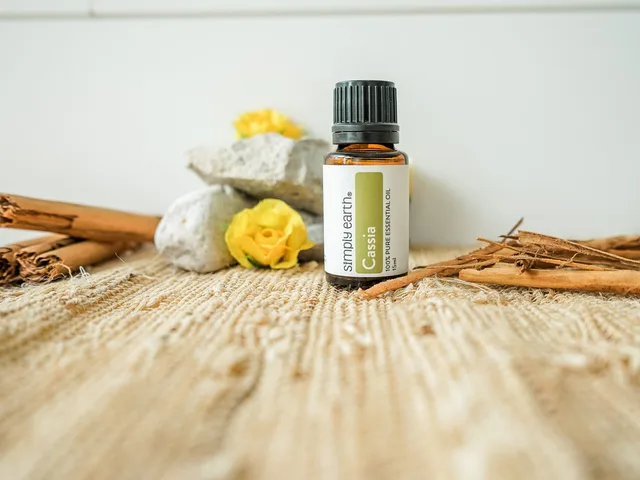
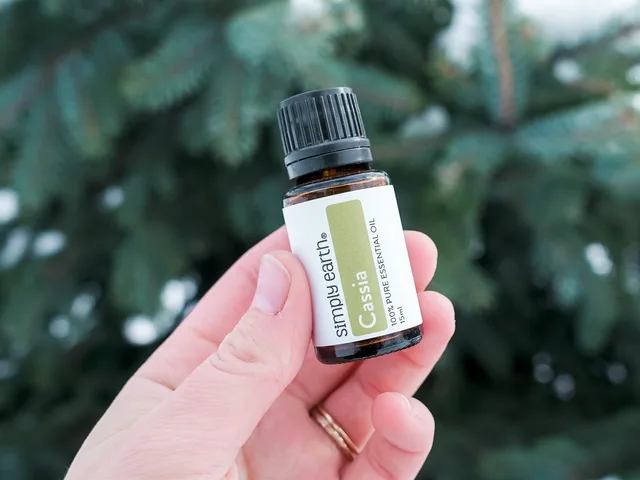
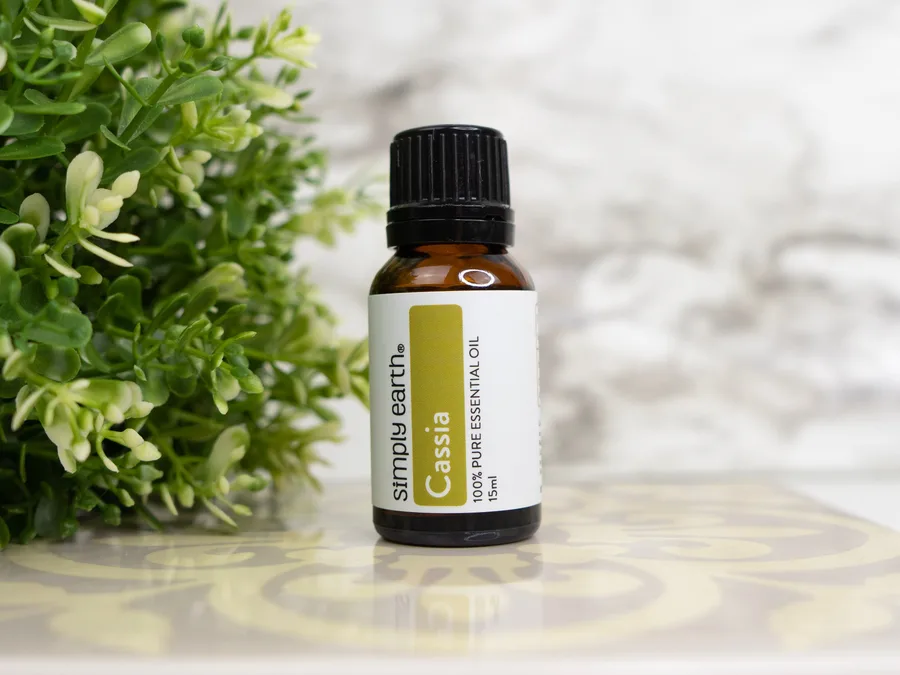
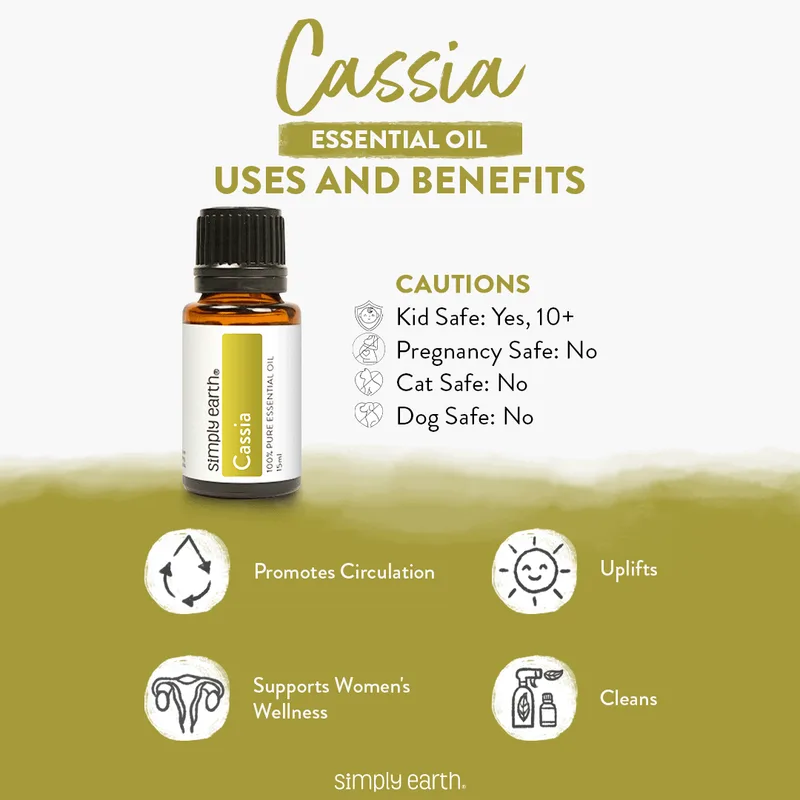
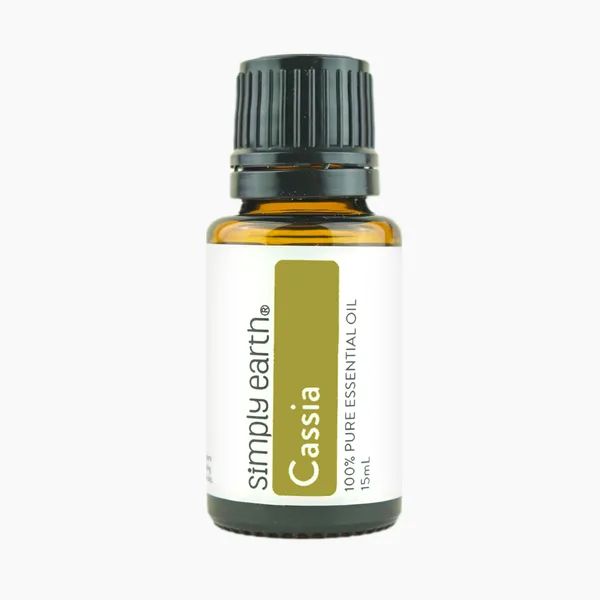
Cassia is what most people are actually picturing when they think of cinnamon — warm, sweet, unmistakably spicy, the smell of a house in October. It comes from a different tree, though, and that distinction is worth more than trivia. Simply Earth's Cassia is steam-distilled from the leaves of Cinnamomum cassia grown in Vietnam, and it is one of the most potent oils on our shelf — a hot oil with a firm 0.5% dilution ceiling, lower than almost anything else we sell. Below are seven benefits, the ten recipes we actually make with it, how to tell cassia from cinnamon leaf when you are buying, and the safety notes worth reading before you open the bottle.
Free Download
Cassia is a hot oil. Get the dilution right.
Get the free Essential Oil Cheat Sheet — dilution rates, safety basics and starter recipes on a single page you can keep beside your oils.
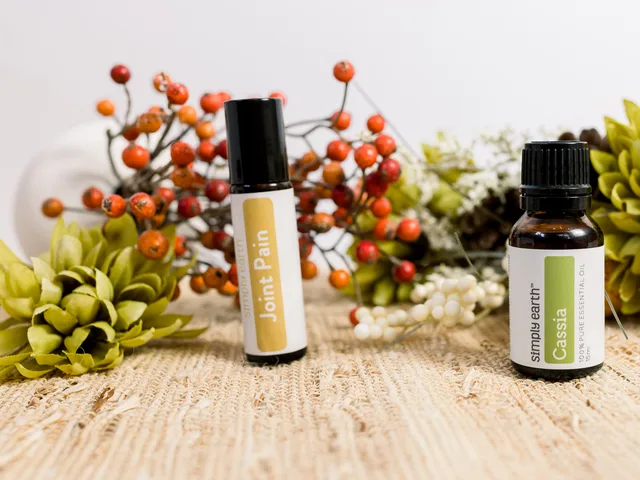
BEST FOR: STIFF, COLD HANDS AND ACHY MUSCLES
Cassia creates a warming sensation on the skin, and warmth is what makes a stiff joint easier to move through. It is the first use on our own product record, and there is research behind it — one study found Cinnamomum cassia bark extract had an anti-arthritic effect in experimental models, and a second found the essential oil from the plant's leaves — the part we distil — had anti-inflammatory effects on stimulated cells. Read as supportive rather than curative, and keep it to 0.5%.
KATIE'S TIP
Warmth on skin is not the same as more oil on skin. If a blend feels hot rather than warm, you have gone over 0.5% — add carrier, do not power through it.
USE IT IN →

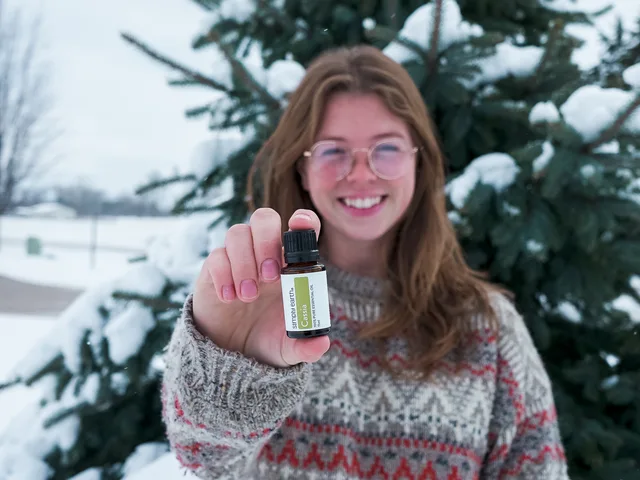
BEST FOR: THE FEW DAYS A MONTH WHEN WARMTH HELPS
Cassia's warming, soothing character is why it has long been reached for during a cycle, and it is listed among the uses on our own product record. Many people find the combination of the aroma and a well-diluted warm compress or massage more comfortable than either on its own. Treat it as one supportive part of a wider routine rather than a remedy, and note the pregnancy and breastfeeding cautions further down this page before you make it a habit.
KATIE'S TIP
Build it into a roll-on once rather than mixing a fresh blend each time. At 0.5% you are measuring a couple of drops into a full 10mL roller, and that is much easier to get right in one go.
USE IT IN →
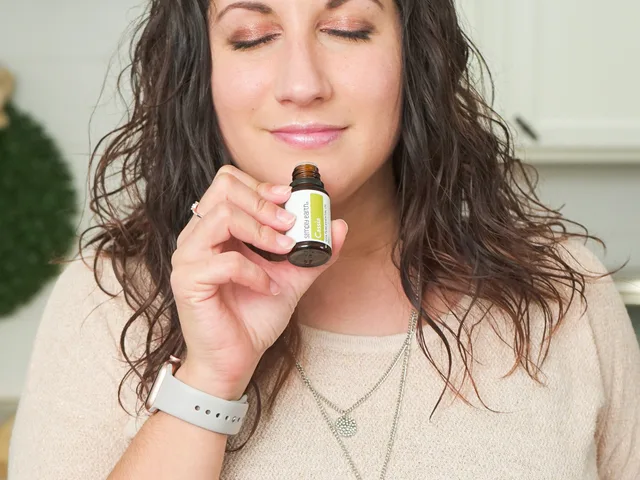
BEST FOR: DARK MORNINGS AND FLAT AFTERNOONS
This is the benefit the old title of this article was built around, and it is the one Earthies mention most. Cassia's bright, spicy aroma has been studied for mood effects — research on cinnamaldehyde, its lead compound, looked at stress-induced anxiety-related behaviour in mice — and in practice it is simply a smell that makes a room feel occupied and warm. Diffusing is the easiest route, and a cassia candle does the same job more slowly.
KATIE'S TIP
Cassia and sweet orange is the pairing to start with. The citrus keeps cassia from reading as heavy, and it is the backbone of half the fall recipes on this page.


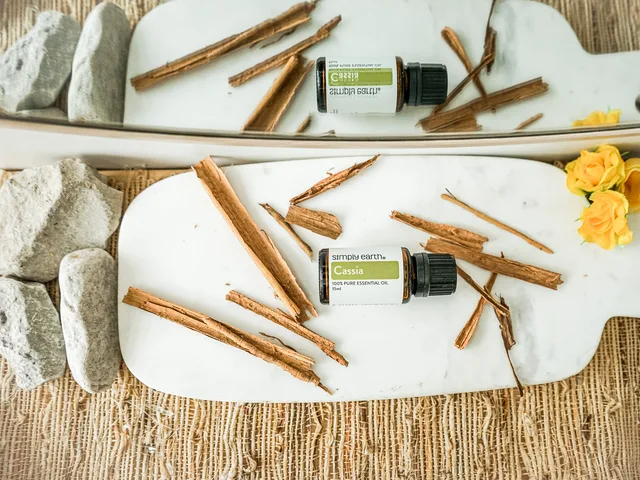
BEST FOR: THE AIR IN A CLOSED-UP HOUSE
Like its cinnamon cousins, cassia carries natural antimicrobial compounds — one study looked at the antimicrobial activity of cinnamon oil and cinnamaldehyde from Cinnamomum cassia specifically. It is a genuine reason to reach for it when the windows have been shut for a month, rather than something added at the end for the smell. A word of warning before you build it into a spray, though — cassia is dark and it stains.
KATIE'S TIP
Test any cassia cleaning spray on a hidden corner first. Golden-brown oil on a pale counter or a plastic switch plate discolours over time, and it is not the kind of thing you notice until it is done.

BEST FOR: AFTER A HEAVY OR RICH MEAL
Cinnamomum cassia is one of the fifty fundamental herbs of traditional Chinese medicine, and settling the stomach is the use it has carried longest — one paper evaluated the antiemetic potential of a related cinnamon bark extract. Simply Earth lists it among the oil's uses too. Aromatically after a meal, or very well diluted over the stomach, is the sensible way in. Never swallow it — see the safety notes below.
KATIE'S TIP
This is an inhale-it use, not a take-it use. Cassia is a kitchen spice in its ground form and an essential oil is not a food ingredient — the two are not interchangeable.

BEST FOR: SEASONAL CHANGE AND SHARED ROOMS
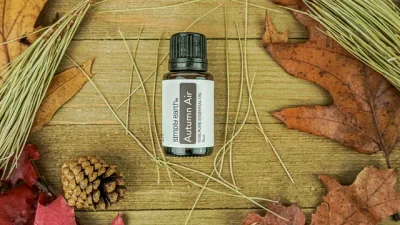
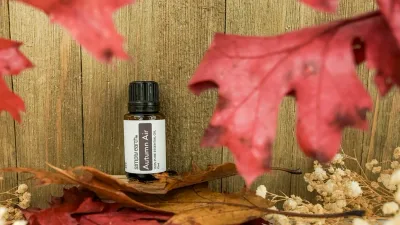
Cassia is the spicy heart of our Autumn Air blend, alongside Ho Wood, Lemon, Balsam Fir and Orange — a blend whose own listed uses are a fall aroma and killing germs. That is really the honest version of this benefit — diffusing cassia through the months when everyone in the house is passing something around makes the air feel cleaner and the room feel better, and Simply Earth lists supporting immunity among its uses.
KATIE'S TIP
Diffuse it in the room the family actually sits in. Give the cat and the dog a way out first — cassia is safe for neither.
BEST FOR: A SEASONAL ROUTINE YOU KEEP UP
Our product record lists seven uses for cassia, and this is the seventh — the fortifying, bracing quality that sits behind the other six rather than standing apart from them. It is the least specific of the seven and we are not going to dress it up as more than it is — cassia is a warming oil that people reach for when they want a routine that feels solid, which is exactly why it anchors a seasonal blend rather than a year-round one. Take it as an aromatic ritual, not a therapeutic promise.
KATIE'S TIP
Cassia with a conifer is the combination worth knowing here. Balsam fir gives it a spine that citrus does not, and the pair carries a candle for hours.


Put It to Work
How to Use Cassia Oil
Diffuser
- • 1–2 drops of cassia to 3–4 drops of citrus or conifer
- • Cassia dominates a blend quickly — start lower than feels right
- • Best in autumn, damp rooms, and after cooking
- • Give pets a way out of the room before you switch it on
Topical (always diluted)
- • Simply Earth lists a special dilution rate of 0.5% for cassia
- • That is roughly 3 drops per fluid ounce of carrier oil
- • Patch test on the inner arm before any wider use
- • Never neat, never near eyes, external use only
Candles & Wax Melts
- • Cassia's best-loved use — six of our ten cassia recipes are candles
- • Holds its scent through the pour and throws well once lit
- • Pairs with orange for brightness, balsam fir for depth
DIY & Household
- • Roll-ons and inhalers for on-the-go aromatic use
- • Surface and air sprays, where its cleaning character does real work
- • Test on a hidden corner first — cassia stains pale surfaces
Know the Difference
Cassia vs. Cinnamon
This is the confusion worth clearing up, and it is the reason this page exists in the form it does. Cassia and cinnamon are sold under each other's names constantly — and Simply Earth happens to stock both, which means the comparison below is our own product data rather than received wisdom. The short version: cassia is a different species from true cinnamon, it is the sweeter and rounder of the two, and it is usually what you were picturing. Cinnamon leaf is the more medicinal one and leans towards clove, because its lead compound is eugenol rather than cinnamaldehyde. Both of ours are distilled from leaves, both cap at 0.5% on skin, and only the cinnamon leaf is certified organic. If a label just says "cinnamon oil" with no species and no plant part, it has told you nothing.
Swipe to compare →
Cassia The one this page is about | Organic Cinnamon Leaf Also on our shelf | Cinnamon Bark Oil We do not carry it | Cinnamon Fragrance Oil Not an essential oil at all | |
|---|---|---|---|---|
| The Actual Plant | Cinnamomum cassia — a different species from true cinnamon | Cinnamomum zeylanicum — true, or Ceylon, cinnamon | Either species, depending on the seller | None of it — a synthetic aroma compound |
| Part Distilled | Leaves | Leaves | Bark | Nothing is distilled |
| Where Ours Comes From | Vietnam | Ceylon | Not carried by Simply Earth | Not carried by Simply Earth |
| Lead Compound | Cinnamaldehyde — the source of both the sweetness and the heat | Eugenol — closer in character to clove than to cassia | Cinnamaldehyde, typically at a higher level than leaf oil | No plant compounds at all |
| How It Smells | Sweeter and rounder — the one people call cinnamon by mistake | Warmer and more medicinal, with a clove edge | The sharpest and most intense of the three distilled oils | Sweet and one-note, closer to a bakery than to a tree |
| Organic | Conventional | Certified organic | Varies by seller | Not applicable |
| Blending Factor | 5 | 1 | Not carried by Simply Earth | Not applicable |
| Max Topical Dilution | 0.5% | 0.5%, plus a blood-thinning and drug-interaction caution | Treat as a hot oil | Not for skin use as an aromatherapy oil |
| How to Spot It on a Label | Says cassia, or names Cinnamomum cassia outright | Says cinnamon leaf and names Cinnamomum zeylanicum | Says cinnamon bark, and usually costs noticeably more | Says fragrance oil or perfume oil — never an essential oil |
| Simply Earth | We carry this | — | — | — |
Perfect Pairs
Cassia Oil Blends Well With…
Simply Earth's own blending list for cassia. Sweet orange is the easiest place to start and balsam fir is the one worth trying next — cassia sits with both in our Autumn Air blend. It is a middle note with a blending factor of 5 and a medium consistency, and it will take over a blend sooner than you expect, so start with less of it than of whatever you are pairing it with.
A fun fact about cassia
One of the Oldest Named Spices
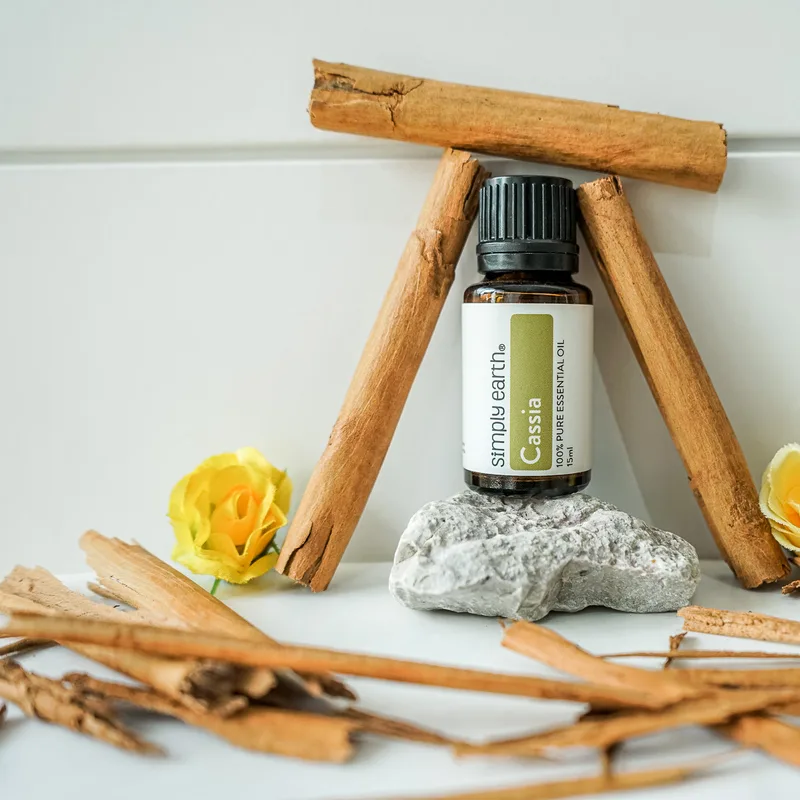
Cassia has one of the longest paper trails of anything on our shelf. It is counted among the fifty fundamental herbs of traditional Chinese medicine, where it has been used for centuries, and it is one of the handful of aromatics named in the Bible — which makes it one of the earliest spices anyone bothered to write down at all.
That longevity is not an accident of trade routes. Cassia is an evergreen tree that grows up to twenty metres, with thick leathery leaves and white flowers, and it has been cultivated across Southeast Asia for so long that the wild and the farmed versions have thoroughly blurred together. The aroma is the reason: warm, sweet and instantly recognisable, and strong enough that a very small quantity travels a very long way.
What has changed is which part gets used and how. The spice in your cupboard is bark. The oil in this bottle is distilled from the leaves, which produces something noticeably sweeter and rounder than the bark version — and, in our case, it is still made in the country that has been growing these trees the longest.
The Chemistry
The Science Behind Cassia Oil
Three naturally occurring compounds account for cassia's sweet, spicy, faintly woody character:
Cinnamaldehyde
The lead constituent
The compound that makes cassia smell like cassia, and the one every caution on this page traces back to. It is what gives cinnamon and cassia their flavour and aroma, it carries the antimicrobial and antifungal activity behind the cleaning use, and it is also the reason this is a hot oil with a 0.5% ceiling. The same molecule is doing the appealing work and the risky work.
ortho-Methoxycinnamaldehyde
Cassia specific
A naturally occurring compound of Cinnamomum cassia, used commercially as a flavour and fragrance agent. It is one of the constituents that distinguishes cassia from true cinnamon on a lab report, which is part of why a GC/MS result is the only reliable way to tell the two apart once they are in a bottle.
Cinnamyl acetate
Sweet · Floral-fruity
An ester that occurs naturally in the plant and carries a sweet, floral-fruity character. This is a large part of why people describe cassia as the sweeter, rounder of the two oils, and why it reads as inviting in a candle where a sharper spice oil would read as medicinal.
Simply Earth's Cassia Essential Oil is steam-distilled from the leaves of Cinnamomum cassia grown in Vietnam, and every bottle ships with a batch-specific GC/MS report. For this oil that matters more than most — cassia and true cinnamon are routinely sold under each other's names, and the constituent profile is the only thing that settles which one is actually in the bottle. See Our Testing →
Support The Source
From Vietnam's Cassia Forests
Our cassia comes from the mountains of Vietnam, where it is grown and distilled by people who have been doing it for a very long time.
It is worth saying plainly which part of the plant that means, because it is the thing people get wrong about this oil. Cassia bark is the spice in your cupboard; cassia leaf is what we steam-distil, and it produces the sweeter, rounder oil this page has been describing. Harvesting it is skilled seasonal work, and the growers doing it know these trees far better than anyone reading this ever will.
Buying farm-direct is the part that matters most to us. It means the families doing that work are paid properly for it, and it means we can trace a bottle back to their trees rather than to a broker — which is also what makes the GC/MS report on the bottle worth reading, because a test result only means something when you know which oil it belongs to.
Vietnam
Where It's Grown
Leaves
Plant Part
Public
GC/MS Results
Use It Right
Things to Remember When Using Cassia Oil
Cassia is a hot oil — Simply Earth caps it at 0.5% on skin, lower than almost anything else we sell. That is roughly 3 drops per fluid ounce of carrier oil. See our dilution chart, and if a blend feels hot rather than warm, add carrier.
Never apply it neat. Simply Earth lists cassia as possibly skin irritating and recommends a skin test before you use it at all. Patch test on the inner arm, and keep it off sensitive, broken or already-irritated skin.
Do not use cassia if you are pregnant or breastfeeding. Simply Earth lists it as safe for neither. This is a firm no rather than a check-with-your-doctor, so choose a different oil for those months.
Children 10 and up only. For a younger child, choose a gentler oil rather than fewer drops of this one.
Not cat safe, and not dog safe. Never apply it to an animal, and give pets a way out of the room before you diffuse.
Keep it away from eyes and mucous membranes. Cassia is for external use only. If contact happens, flush with a carrier oil rather than water.
Never ingest it. Cassia is a kitchen spice in its ground form, but cassia essential oil is not a food ingredient. Topical and aromatic use only, unless you are under the direction of a doctor certified in aromatherapy.
It stains. The oil is golden-yellow to brown, and pale surfaces, fabrics and plastics discolour over time — test before you put it in a cleaning spray meant for a white counter.
Oxidised oil is more likely to irritate. Simply Earth lists a 4-year shelf life — keep the cap on, cool and out of direct light, and if the aroma has turned sharp, move that bottle to candle duty.
These statements have not been evaluated by the Food and Drug Administration. Essential oils are not intended to diagnose, treat, cure, or prevent any disease.
Real Results
What Earthies Are Saying
"This is the BEST Cassia I have ever used. It's got a sweet cinnamon like scent, but light and fresh and not quite as harsh as cinnamon. So good, I put it in the diffuser with tangerine the second I opened it!"
Heather Paul
Verified Buyer • Cassia Essential Oil
"I admit I did not like this oil at first as it was so different from what I was expecting. I love it now as it really grew on me. It brightens up a room with a very warm and pleasant scent. This Cassia is a new favorite of mine now."
Suzanne Snyder
Verified Buyer • Cassia Essential Oil 15ml
"So much better way to warm up the house. Absolutely love this. But caution, you only need one drop."
Patricia J.
Verified Buyer • Cassia Essential Oil
OUR SIMPLY PURE PROMISE
What Goes Into Your Products Matters
Certified 100% Pure
No fillers, no synthetics. Just pure oil.
GC/MS Third-Party Tested
Every batch independently verified.
Ethically Sourced from Quality Farms
Responsibly harvested. People and planet first.
15mL
Bottle Size
MLM brands: 10mL
Vietnam
Where It's Grown
Leaf-distilled, farm-direct
Public
GC/MS Tests
MLM brands: Rarely
Your Order Changes Lives: 13% of profits fight human trafficking globally.
Cassia Essential Oil FAQ
The questions people actually ask about cassia — starting with the one that sends most of them here in the first place.
What is cassia essential oil good for? +
Simply Earth lists seven uses — promoting circulation, supporting women's wellness, uplifting, cleaning, aiding digestion, boosting immunity and strengthening. In practice its best-loved work is aromatic. Cassia is the oil people reach for to make a house smell like autumn, and six of the ten recipes we publish for it are candles.
Is cassia the same as cinnamon? +
No, though they are close relatives and are constantly sold under each other's names. Cassia is Cinnamomum cassia; true, or Ceylon, cinnamon is Cinnamomum zeylanicum. Simply Earth sells both, and the practical difference is the lead compound — cassia is driven by cinnamaldehyde and tastes and smells sweeter and rounder, while our cinnamon leaf oil is driven by eugenol and leans towards clove. If a label just says "cinnamon oil" with no species and no plant part, it has told you nothing.
Is cassia oil made from bark or leaves? +
Simply Earth's cassia is steam-distilled from the leaves. This is worth checking when you buy, because bark-distilled cassia is a different product at a different price and a different intensity. The spice in your kitchen cupboard is bark; the oil in our bottle is leaf.
How much should I dilute cassia essential oil? +
Lower than almost anything else. Simply Earth publishes a special dilution rate of 0.5% for cassia, which is roughly 3 drops per fluid ounce of carrier oil. It is classed as a hot oil, so never apply it neat and always patch test on the inner arm before wider use.
Who should not use cassia oil? +
Anyone who is pregnant or breastfeeding — Simply Earth lists cassia as safe for neither. It is also for children 10 and up only, and it is neither cat safe nor dog safe, so give pets a way out of the room before you diffuse and never apply it to an animal.
What does cassia essential oil smell like? +
Warm, sweet and spicy — recognisably cinnamon-like, with a slightly woody edge. Most people find it sweeter and less harsh than cinnamon oil, which is exactly why it is the one that reads as autumn rather than as medicine. It is a middle note with a blending factor of 5 and it will take over a blend sooner than you expect.
Which Simply Earth blends contain cassia? +
Autumn Air, where cassia is the spicy heart of the blend alongside Ho Wood, Lemon, Balsam Fir and Orange. It is a good place to start if you want the fall aroma without measuring a blend yourself.
Where does Simply Earth's cassia come from? +
The mountains of Vietnam, where it is grown and steam-distilled from the leaves by growers we buy from directly. We publish a batch-specific GC/MS report with every bottle, which for this oil matters more than most — constituent profile is the only reliable way to tell cassia from true cinnamon once it is in a bottle.
About the Author: Katie Veldkamp
Katie Veldkamp
Certified Aromatherapist · Co-Founder, Simply Earth
Katie Veldkamp is a Certified Aromatherapist and co-founder of Simply Earth. She personally formulates and reviews SE's essential oil blends and verifies all benefit claims on Simply Earth content before it goes live.
Join 20,000+ Earthies Making Their Homes Natural
New recipes, usage guides, and DIY tips — delivered free.
No spam. Unsubscribe any time.

Learn by doing
Make your own natural products every month.
The Simply Earth Recipe Box ships 4 full-size essential oils, 6 natural recipes, and everything you need to make them. No guesswork.
Start My Recipe Box$39.99 for your first box, then $49.99/month. Skip, pause, or cancel anytime.