
Sweet Almond Oil Benefits, Uses & Recipes

Katie Veldkamp
Lead Certified Aromatherapist
Fact Checked & Approved
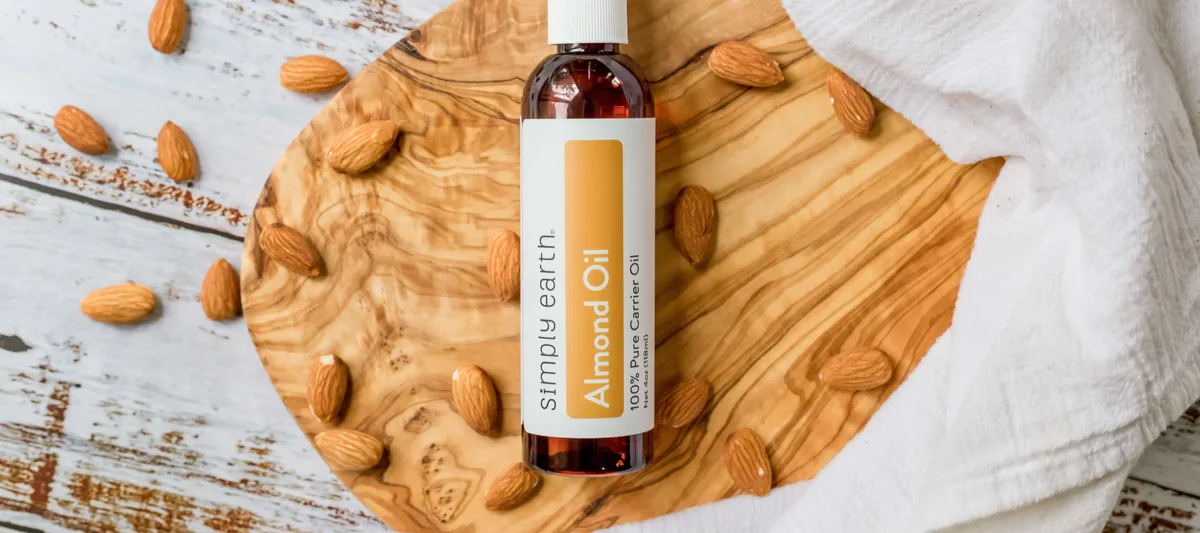
If you have ever made anything from a Simply Earth recipe, you have almost certainly used sweet almond oil. It is the carrier we reach for first, and our own product copy puts the reason better than we could improve on: it is like Goldilocks' porridge, just right. Not so heavy that it sits on your skin, not so light that it does nothing. It moisturises without clogging pores, it carries vitamins A, B and E, it absorbs at an ordinary, sensible rate, and it is cheap enough that you can use it freely instead of rationing it. That combination is why it turns up in lip balms, lotions, body butters, hair masks and massage oils across our whole recipe library. Here is what it actually does, fourteen real recipes that use it, and the one thing on this page we would rather you did not skim past — sweet almond oil comes from a tree nut.
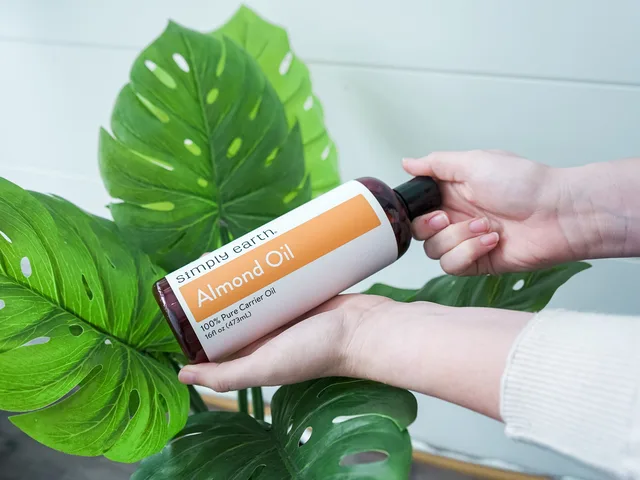
BEST FOR: DRY SKIN AND EVERYDAY USE
Sweet almond oil is an emollient, which is the class of ingredient that helps skin hold onto the water it already has rather than simply coating it. That is the whole mechanism, and it is a modest one stated honestly. What makes almond the one people keep buying is where it sits on the range — substantial enough to actually do something on dry skin, light enough that you can wear it under clothes without regretting it. Our own record describes it as not too oily but still moisturising, and after years of putting it in recipes that remains the fairest description of it.
KATIE'S TIP
Put it on damp skin, not dry. Straight out of the shower, while there is still water on you, is when a carrier oil does the most — it seals in the water rather than having to supply it.


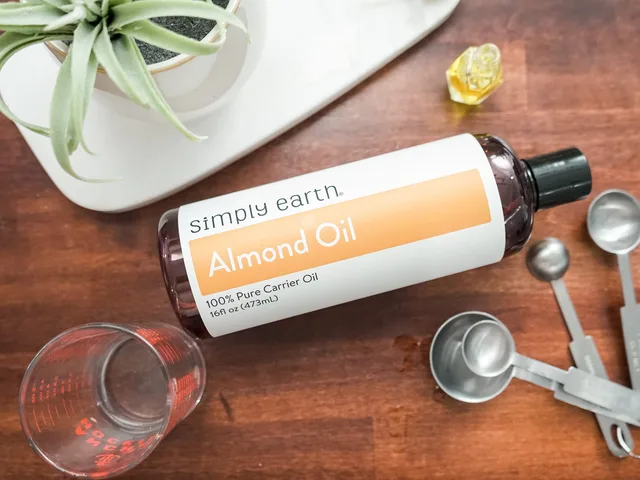
BEST FOR: COMBINATION SKIN AND FACIAL RECIPES
This is the balance that earns almond oil its place in facial recipes where a heavier oil would not survive. Our product record is specific about it — it nourishes, but it does not clog pores — and that is why it shows up in serums and cleansing recipes rather than being confined to body care. It is also gentle enough to use for taking make-up off, which is one of the uses SE's ingredient record names directly. None of this means it is guaranteed to suit your face; it means the oil is not working against you before you start.
KATIE'S TIP
Patch test anyway. "Does not clog pores" is a property of the oil, not a promise about your skin — inner arm, wait a day, then your face.
USE IT IN →


BEST FOR: EVERYDAY SKIN MAINTENANCE
Sweet almond oil is naturally supplied with vitamins A, B and E, and those are the three our product record names. Vitamin E is the one worth understanding, because it is an antioxidant and it is doing two jobs at once — a role in skincare, and a role in the bottle, where it helps slow the oil's own oxidation and is part of why almond keeps for around two years rather than months. This is a workhorse ingredient rather than a treatment, and consistency does considerably more for you here than concentration would.
KATIE'S TIP
Buy the size you will actually finish inside two years. A gallon is excellent value and poor value at the same time if half of it goes rancid in the cupboard.
USE IT IN →


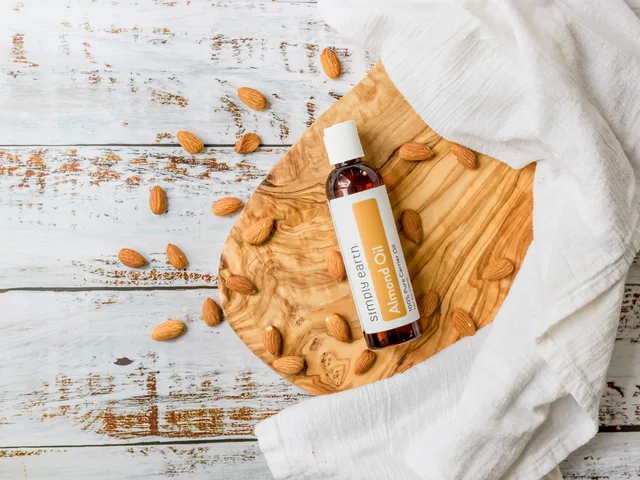
BEST FOR: HANDS, HEELS AND ANYWHERE THAT CRACKS
The parts of you that get the roughest are usually the parts that get washed, worked and weathered the most, and they are where an emollient is most obviously useful. Almond oil is soft enough to use often and cheap enough that using it often is realistic, which matters more than potency for skin that is simply dry rather than unwell. It is the base of both of the recipes below for exactly that reason — a hand balm you will reapply all winter, and a heel cream thick enough to stay put overnight.
KATIE'S TIP
On heels, put it on at night and wear socks over it. An oil that gets wiped off on the carpet in ninety seconds has not had a chance to do anything.
USE IT IN →

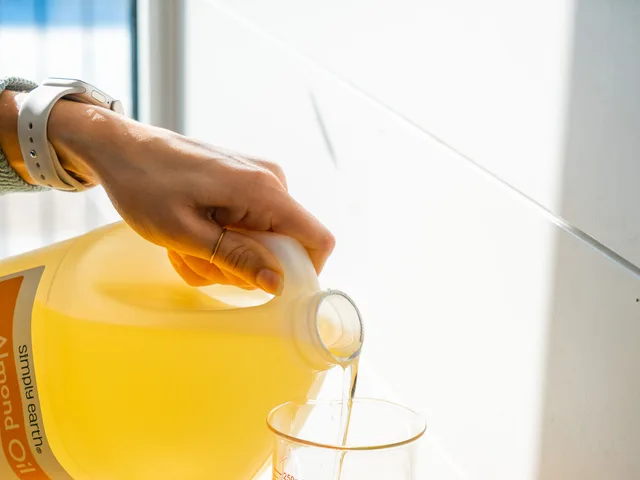
BEST FOR: DRY ENDS, FRIZZ AND PRE-WASH SCALP OILING
Our ingredient record credits sweet almond oil with helping smooth frizzy hair and with a lasting effect on hair and nails, and hair oiling is one of the oldest uses this oil has. The practical version is unglamorous — a small amount through the mid-lengths and ends, or a heavier application to the scalp left on before you wash. It is the base of our Silky Strands Hair Mask, where it goes in after the emulsifier so the mixture turns creamy rather than greasy.
KATIE'S TIP
If you put it on your scalp, shampoo twice. Once will not shift it, and that is the entire reason people conclude hair oiling "does not work for them".
USE IT IN →

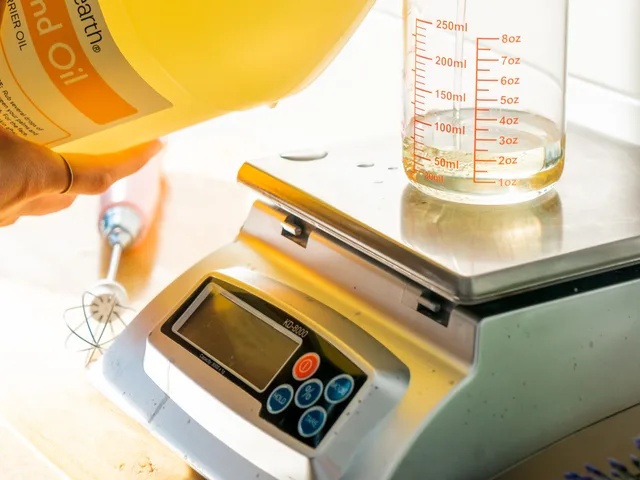
BEST FOR: MASSAGE OILS, ROLL-ONS AND ANY DIY WITH ESSENTIAL OILS IN IT
This is the row that explains why a bottle of almond oil is in almost every maker's cupboard. Essential oils are far too concentrated to put on skin neat; they have to be diluted into a fixed oil, and sweet almond is the one most massage and body recipes assume. It has enough slip to actually work with, it absorbs at an average rate rather than flashing off or sitting in a film, and its own scent — mild and faintly oily — stays out of the way of whatever you have blended into it.
KATIE'S TIP
The dilution chart applies to the essential oil you are adding, not to the almond oil. The almond oil is the thing doing the diluting.
USE IT IN →


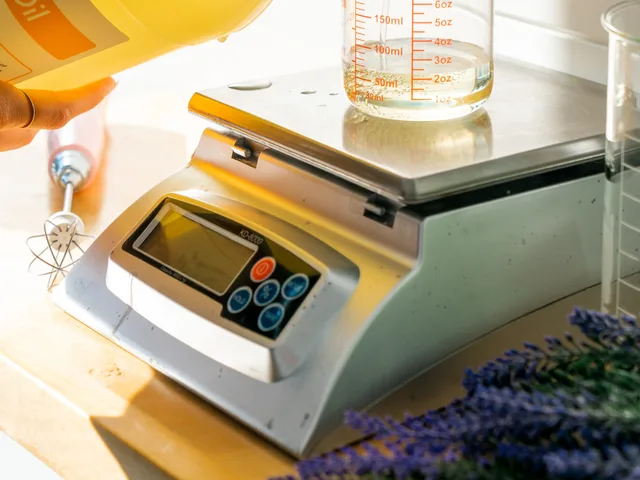
BEST FOR: ANYONE WHO WANTS ONE CARRIER OIL INSTEAD OF FIVE
Our ingredient record lists almond oil as a component of lotion, soap, body butter, lip balm, shampoo, conditioner, body wash, serum and facial cleanser, and that range is not marketing — it is the reason this is the first carrier oil most people buy. It melts happily with beeswax and butters, it disperses essential oils into bath salts, and it is forgiving enough that a recipe usually still works if you are slightly out on the measurement. The three recipes below are deliberately unlike each other to make the point.
KATIE'S TIP
In bath salts, the oil is what stops the essential oils floating on the surface in a neat little slick. Stir it into the salt first, then add anything else.


Put It to Work
How to Use Sweet Almond Oil
For Skin
- • A few drops onto clean, damp skin straight after a shower
- • Use it neat as a body oil, or as the oil step in a routine
- • It goes on last — oils seal in whatever is underneath them
- • Also works as a gentle cleansing oil for taking make-up off
For Hair and Scalp
- • A small amount warmed between the palms, smoothed onto damp ends
- • Keep it off the roots unless you are doing a pre-wash treatment
- • As a scalp treatment — apply, leave an hour, then shampoo twice
- • Also used on beards, nails and cuticles
As a Carrier for Essential Oils
- • Almond oil is the diluent, so it needs no diluting itself
- • Use it in roll-ons, massage oils and body oils
- • Our dilution chart applies to the essential oil you add, not the almond
- • Swap it for apricot or fractionated coconut if you want something lighter
In Bath and Body
- • Stir it through bath salts so the essential oils disperse
- • Melt it with beeswax and butters for balms and salves
- • It is the base of our sugar-scrub and sugar-soap recipes
- • Keep finished DIYs cool and dark and use them within the oil's shelf life
DIY Boost — Two-Ingredient Body Oil
- • 2 tbsp Almond Oil
- • 10 drops of any skin-safe essential oil you like
- • Combine in a 1oz bottle and use on damp skin after a shower
- • This is the whole recipe, and it is where most people start
DIY Boost — Overnight Cuticle Oil
- • 1 tsp Almond Oil in a small dropper bottle
- • 2 drops Lavender Essential Oil
- • One drop massaged into each cuticle before bed
- • Fifteen seconds a night, and it is the cheapest nail care there is
Know the Difference
Sweet vs. Bitter Almond Oil
Almonds come in two kinds, and this is the distinction that matters when you are buying oil. Sweet almonds are the edible ones, and sweet almond oil is the only kind used in skincare — it is what Simply Earth sells and what every recipe on this site means. Bitter almonds are a different variety, they contain compounds that make them unsuitable for the uses on this page, and you should not be putting bitter almond oil on your skin. There is a third thing on shelves worth naming too: "almond oil" that is really an almond fragrance, which smells intensely of marzipan and is not a carrier oil at all. Real sweet almond oil barely smells of anything — our own record describes the aroma as a characteristic mild oily odour, so if a bottle smells like a bakery, it is not the ingredient you want. One more thing we would rather say than leave implied: ours is refined as well as cold pressed. Cold pressing is how the oil comes out of the seed; refining is a filtering step afterwards that leaves it paler and milder and easier to blend into recipes where you do not want anything coming through. Neither is the lesser product, but you should know which one you are buying.
Swipe to compare →
Sweet Almond Oil What Simply Earth sells | Bitter Almond Oil A different tree, not for skincare | "Almond" Fragrance Oil Usually no almond in it at all | |
|---|---|---|---|
| What It Is | Fixed oil pressed from the seeds of sweet almonds | Oil from the bitter almond variety | A synthetic marzipan-type scent in a base |
| Botanical | Prunus dulcis | Prunus amygdalus var. amara | None — it is a fragrance |
| Grade | Cosmetic | Not sold for skincare | Fragrance |
| Extraction | Cold pressed | Pressed, then processed | Compounded, not pressed |
| Refined or Unrefined | Refined — filtered after pressing, so paler and milder | Varies | Not applicable |
| Smell | Mild and characteristically faint | Strongly of marzipan | Strongly of marzipan |
| Use It For | Skin, hair, nails and every DIY recipe | Nothing on this site | Scenting candles and soap, never as a carrier |
| Tree Nut Allergen? | Yes — it is a tree nut | Yes | Check the label |
| Price at Simply Earth | $19.99 / 16oz · $49.99 / 1 gal | Not sold | Not sold |
| Simply Earth | This page's oil | — | — |
Perfect Pairs
What Sweet Almond Oil Pairs With
Two different kinds of pairing, because almond oil sits on both sides of a blend. The first seven are essential oils and blends that Simply Earth recipes actually carry in almond oil — Sweet Orange and Autumn Air in the Holiday Spice Lip Balm, Relief and Juniper Berry in the Relief Massage Oil, Ladies Choice in the Silky Strands Hair Mask, Fit in the Smooth Start Body Butter. The last five are the other carriers and butters we sell that almond works alongside; most of our balm recipes pair it with a hard butter to set.
Where It Comes From
The oil that has been in the cupboard for millennia
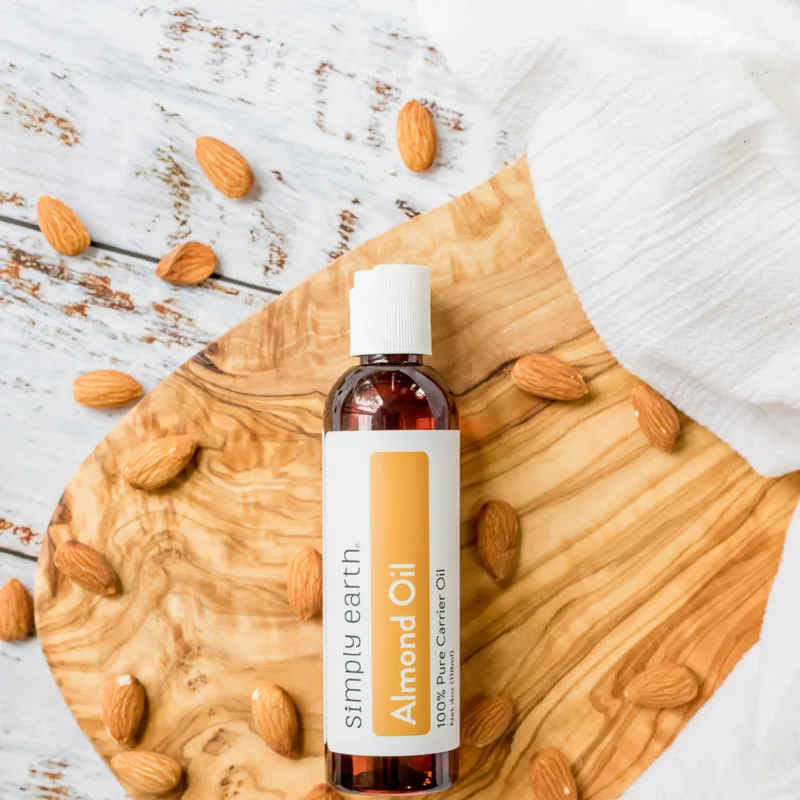
Almonds are the seeds of Prunus dulcis, a tree in the same genus as the peach, the plum and the cherry. Our own ingredient record puts the tree's origins in the Middle East and Asia, and almonds were among the earliest tree crops anyone bothered to domesticate — they travelled west along the same routes as the rest of the ancient food trade and have been cultivated worldwide ever since.
The division that has always mattered is between sweet and bitter almonds. Sweet almonds are the ones that are good to eat, and they are the only ones pressed for the oil used on skin. Bitter almonds are a separate variety and a separate story. That distinction is old, it is the reason the oil is still labelled "sweet almond oil" rather than just "almond oil" in most of the world, and it is genuinely useful rather than merely traditional.
Press a sweet almond and what comes out is a pale yellow, mild, barely-scented oil that has been used on skin and hair for as long as people have been recording such things. It has never really gone out of use. Nothing has come along that is enough of an improvement to displace it, and quite a lot of what has come along is more expensive and does less.
The Chemistry
What Is Actually In Sweet Almond Oil
A carrier oil is a fatty-acid profile rather than an aroma chemistry — so this section names what almond oil is built from instead of listing constituents.
Oleic Acid
The main fatty acid
A monounsaturated fatty acid and the largest single component of sweet almond oil. Oleic acid is the part that makes an oil feel rich and cushioning rather than thin, and it is what lets almond oil soften and condition instead of simply sitting on the surface. It is also a large part of why the oil is stable enough to keep for around two years.
Linoleic Acid
The lighter half
A polyunsaturated fatty acid, and the counterweight to oleic. Linoleic acid is lighter and thinner on skin, and its presence is most of the reason almond oil absorbs at an average rate rather than lingering. The balance between these two fatty acids is essentially what makes one carrier oil feel different from another.
Vitamins A, B and E
What our record names
Simply Earth's product record credits sweet almond oil with vitamins A, B and E. Vitamin E is the one with two jobs — it is an antioxidant, and it also helps protect the oil itself from oxidising, which is part of why almond oil keeps reasonably well for a fat. These three are what our record names, and we have not added anything to the list.
A note on honesty about numbers, because you will find precise fatty-acid percentages for sweet almond oil all over the internet. We are not printing any here. We third-party test our essential oils and publish those results, but we do not currently hold a GC/MS or fatty-acid assay for this carrier oil, so any percentage on this page would be borrowed from somebody else's almond oil rather than measured on ours. The compounds above are correct; the proportions are not ours to state. See Our Testing →
Support The Source
Where Our Almond Oil Comes From
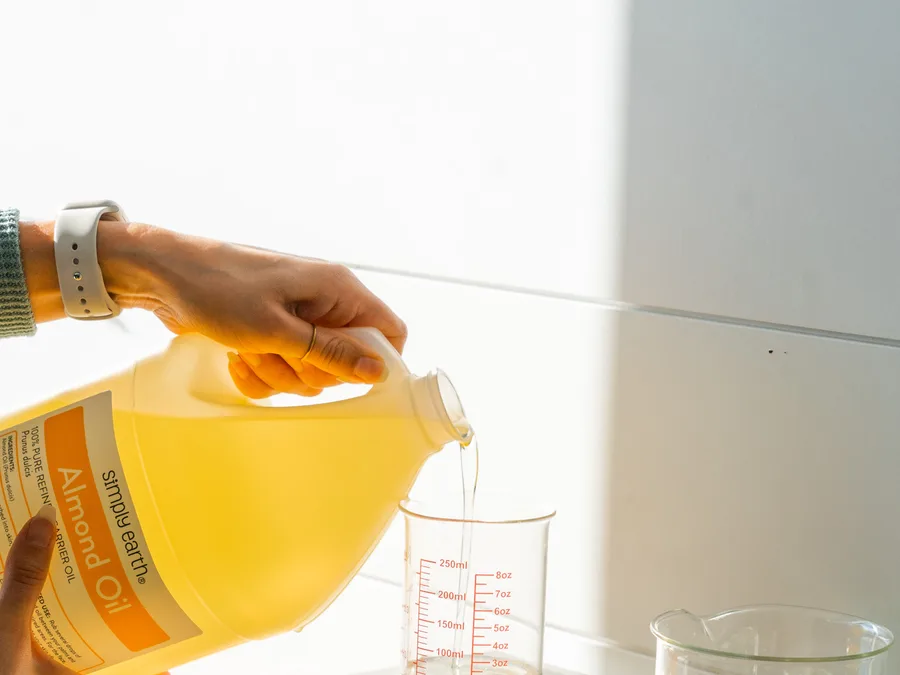
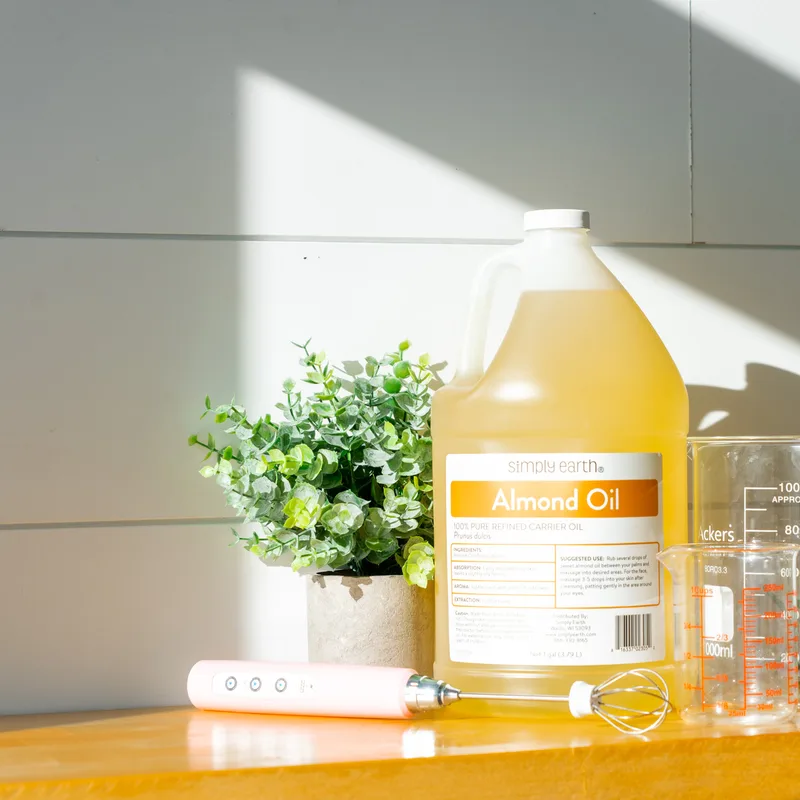
Here is what we can tell you with confidence, because it comes off our own records. This oil is cold pressed from the seeds of sweet almonds, Prunus dulcis. It is refined after pressing, which is the filtering step that leaves it pale yellow and mild. It is graded Cosmetic, it scores a 1 on the EWG scale — the lowest hazard band there is — and its INCI name is Prunus Amygdalus Dulcis Oil. Shelf life is two years, stored cool and out of direct sunlight.
Here is what we are not going to tell you. We do not have a country of origin recorded for this oil. Almonds are grown commercially in a lot of places and our ingredient record describes the species as native to the Middle East and Asia, but that is a fact about the tree, not a statement about our supply chain, and we are not going to let the two blur together. Plenty of pages would put a country in this section because it reads better with one. We would rather leave the gap visible and go and fill it properly.
Seeds
Plant Part
Cold Pressed
Extraction
Cosmetic
Grade
Use It Right
Things to Remember When Using This Oil
Almonds are a tree nut, and this is the important one. Simply Earth's own ingredient record states that almond oil is not recommended for those who are allergic to tree nuts. If that is you, do not use this oil without speaking to your doctor first, and reach for a different carrier instead — apricot or fractionated coconut are the usual swaps. This applies to anything you make with it, and to anything you give away.
No dilution needed — almond oil is the carrier. This is a fixed oil, not an essential oil. Use it neat on skin, hair and nails, or use it to dilute something else. If you are adding an essential oil to it, the dilution chart applies to that oil, not to the almond oil.
Never put it in a diffuser. Fixed oils do not evaporate. Almond oil in a diffuser will not disperse — it will coat the unit and ruin it.
Always patch test first. Apply a little to the inner arm and wait a day before using it more widely, even though almond is one of the gentler oils on the shelf.
It can go rancid, unlike an essential oil. Carrier oils are fats and fats oxidise. Shelf life is around two years, stored cool and out of direct sunlight with the cap on properly. Almond oil that has turned smells sharp and crayon-like instead of mild — if yours does, replace it rather than using it up.
Cosmetic grade, so keep it out of the kitchen. The oil on this page is graded for skin, not for food.
We do not recommend ingesting essential oils.
These statements have not been evaluated by the Food and Drug Administration. This product is not intended to diagnose, treat, cure, or prevent any disease.
Real Results
What Earthies Are Saying About It
"Simply Earth's recipe uses Shea Butter and Almond Oil… I used my microwave to melt the beeswax, almond oil, and shea butter. The deodorant leaves a nice thick layer on my skin and it's not greasy. I'm very happy with the outcome."
Mary
Verified Buyer • DIY Natural Deodorant Kit • 4★
"I had a hiccup in the process to begin with, but I figured out a way to salvage it (reheated and added a little more almond oil). This was my first time making deodorant and it was a fun and easy process. I highly recommend!!"
Kentra
Verified Buyer • DIY Natural Deodorant Kit
"For the ones that I used a lot of mica powder I increased the amount of almond oil and castor oil slightly. I absolutely loved the end result and can't wait to make even more customized lip glosses!"
Joanna
Verified Buyer • DIY Petal & Pout Lip Gloss Kit
OUR SIMPLY PURE PROMISE
What Goes Into Your Products Matters
Cold Pressed, Cosmetic Grade
Pressed from the seeds of sweet almonds.
EWG Score of 1
The lowest hazard band on the scale.
Ethically Sourced from Quality Farms
Responsibly harvested. People and planet first.
1
EWG Score
Scale runs 1 to 10
Cosmetic
Grade We Sell
Graded for skin, not food
2 Years
Shelf Life
Store cool and dark
Your Order Changes Lives: 13% of profits fight human trafficking globally.
Sweet Almond Oil FAQ
The questions people ask most — about nut allergies, refining, breakouts and how long a bottle really lasts.
Do I need to dilute sweet almond oil? +
No. Almond oil is a carrier oil, which means it is the thing you dilute other oils into. Use it straight from the bottle on skin, hair and nails. A dilution rate only comes into it when you add an essential oil to your almond oil, and then the rate applies to that essential oil.
Can I use sweet almond oil if I have a nut allergy? +
Speak to your doctor first. Almonds are a tree nut, and Simply Earth's own ingredient record states that this oil is not recommended for people who are allergic to tree nuts. This is the one safety point on this page we would not want anyone to skim past. If you need a carrier oil and you are avoiding tree nuts, apricot oil and fractionated coconut oil are the straightforward swaps.
Is Simply Earth's almond oil refined or unrefined? +
Refined, and cold pressed. Those describe two different stages — cold pressing is how the oil is separated from the seed, and refining is a filtering step afterwards that lightens the colour and mellows the scent. Refined almond oil is paler and milder, which makes it easier to blend into recipes where you do not want anything coming through.
What is the difference between sweet and bitter almond oil? +
They come from two different varieties of almond. Sweet almonds are the edible kind and the only kind pressed for the oil used in skincare — that is what we sell and what every recipe on this site means. Bitter almonds are a separate variety containing compounds that make them unsuitable for these uses. If a bottle smells strongly of marzipan it is either bitter almond or a synthetic almond fragrance, and neither belongs in your skincare.
Will sweet almond oil break me out? +
It is one of the less likely carrier oils to, which is why it turns up in so many facial recipes — our product record specifically notes that it nourishes without clogging pores. That is a property of the oil rather than a promise about your skin, so patch test on your inner arm and wait a day before putting it on your face.
How long does sweet almond oil last before it goes off? +
Around two years, stored somewhere cool and out of direct sunlight with the cap closed properly. Unlike essential oils, carrier oils are fats and they eventually oxidise. You will know — rancid oil smells sharp and slightly crayon-like rather than mild.
Can sweet almond oil go in a diffuser? +
No, and it is worth stating clearly because it is the most common mix-up between carrier oils and essential oils. Almond oil is a fixed oil. It does not evaporate, so it will not diffuse, and it will coat and damage the unit.
How does sweet almond oil compare to other carrier oils? +
Almond sits in the middle of the range, which is exactly why it is the default. Apricot oil is lighter and absorbs faster, fractionated coconut oil is lighter still and never solidifies, and argan is richer and better suited to hair and nails. If you only want one bottle, almond is the one that covers the most ground — unless you are avoiding tree nuts, in which case start with apricot.

About the Author: Katie Veldkamp
Katie Veldkamp
Certified Aromatherapist · Co-Founder, Simply Earth
Katie Veldkamp is a Certified Aromatherapist and co-founder of Simply Earth. She personally formulates and reviews SE's essential oil blends and verifies all benefit claims on Simply Earth content before it goes live.
Get a New Recipe in Your Inbox Every Week
Real recipes from our makers, plus first access to new oils and kits.
No spam. Unsubscribe any time.
Learn by doing
Make your own natural products every month.
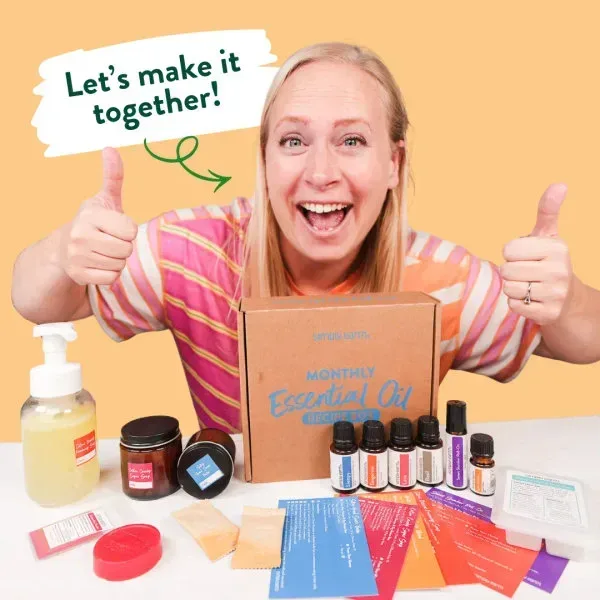
The Simply Earth Recipe Box ships 4 full-size essential oils, 6 natural recipes, and everything you need to make them. No guesswork.
Start My Recipe Box$39.99 for your first box, then $49.99/month. Skip, pause, or cancel anytime.