
Wintergreen Essential Oil Benefits, Uses & Safety

Katie Veldkamp
Certified Aromatherapist
Fact Checked & Approved
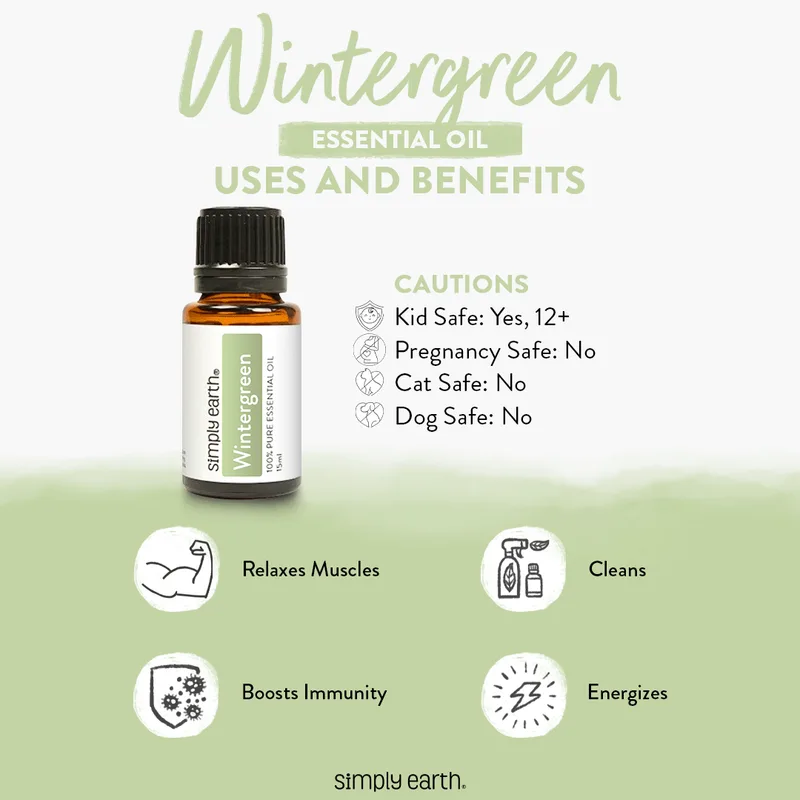
Open a bottle of wintergreen and there is no mistaking it — sharp, sweet and intensely minty, the smell of muscle rubs and old-fashioned root beer. That is not a coincidence. Wintergreen's single main constituent is methyl salicylate, the compound behind a great many over-the-counter warming rubs. It is a genuinely useful oil, and it is also the most restricted oil we sell: Simply Earth caps it at a 2% dilution, ages twelve and up, and not during pregnancy or breastfeeding or around cats and dogs. That 2% figure is the most useful number on this page, because almost nothing written about wintergreen online tells you where the line is.
In this Guide
Free Cheat Sheet
New to essential oils? Start here.
Get the free Essential Oil Cheat Sheet — which oils to reach for, how much to dilute, and what to make first.
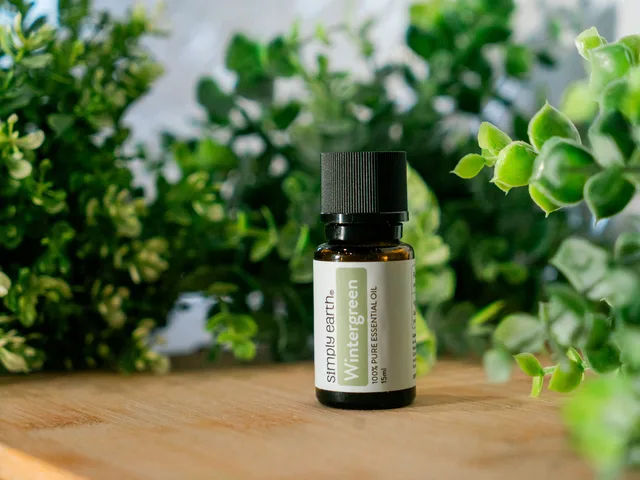
BEST FOR: TIRED, OVERWORKED MUSCLES AFTER EXERTION
Relaxing muscles is the first use Simply Earth lists for wintergreen, and it is the one the oil is best known for. Its warming, penetrating quality is the reason methyl salicylate found its way into so many topical muscle products in the first place. Well diluted in a carrier oil, it is a traditional choice after a hard day on your feet.
KATIE'S TIP
Dilute properly and start with less than you think. Simply Earth's own figure for this oil is 2% — about two drops per teaspoon of carrier — and wintergreen is not an oil that rewards enthusiasm.

BEST FOR: MORNING BLENDS AND A FLAGGING AFTERNOON
Diffused in small amounts, wintergreen is instantly alerting — a top note with real carry. Simply Earth gives it a blending factor of 2, which is the polite way of saying it will take over anything you put it near unless you are careful with the count.
KATIE'S TIP
One drop. Genuinely one. Pair it with lavender or vanilla to round off the sharp edge rather than adding a second drop of wintergreen.
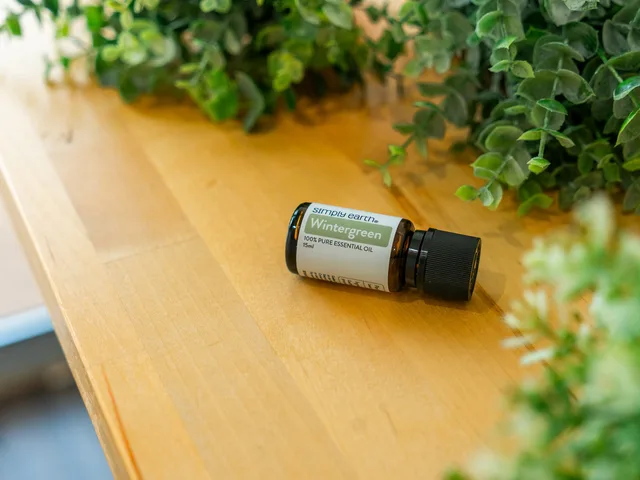
BEST FOR: GYM BAGS, SHOES AND SPORTS LAUNDRY
The same penetrating minty character that makes wintergreen impossible to ignore makes it good at cutting through stale smells. Deodorizing is on Simply Earth's own list of uses for it, and it is one of the easiest ways to get value from the bottle.
KATIE'S TIP
A room or fabric spray is the easiest use here, and it has the advantage of avoiding skin contact entirely. Keep it away from anywhere a pet sleeps.
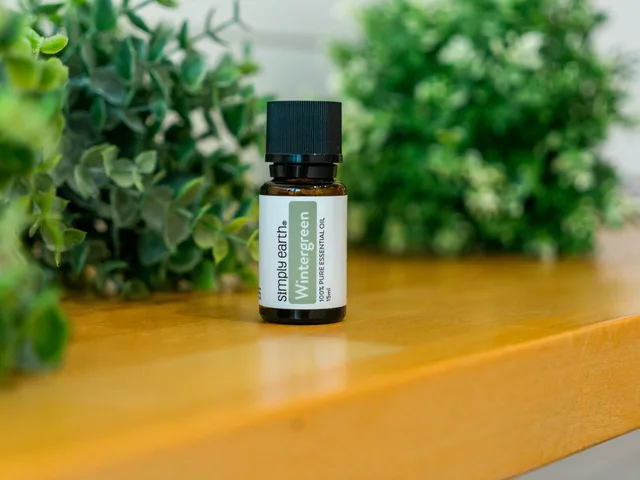
BEST FOR: SURFACES AND GENERAL FRESHENING
Wintergreen has traditionally been used in cleaning preparations, and it is a sharp, fresh addition to a homemade surface spray. It smells clean rather than perfumed, which is usually what you want in a kitchen.
KATIE'S TIP
Use a natural solubilizer so the oil disperses instead of floating on top. Keep it off surfaces that pets walk on and then lick — wintergreen is neither cat safe nor dog safe.
Reduces the Appearance of Breakouts
Clarifying, and the row where dilution matters most.
 Shop Wintergreen Essential Oil
BEST FOR: OCCASIONAL SPOT USE ON BLEMISH-PRONE SKIN
This is on Simply Earth's list of uses, and it is an appearance-level, cosmetic benefit rather than a treatment for any skin condition. It is also the use most likely to go wrong, because facial skin is where a 2% ceiling stops being a guideline and starts being the whole point.
KATIE'S TIP
If you are at all unsure, use tea tree instead — it is far gentler for this job and Simply Earth sells it. Never take wintergreen near your eyes, and never use it neat.
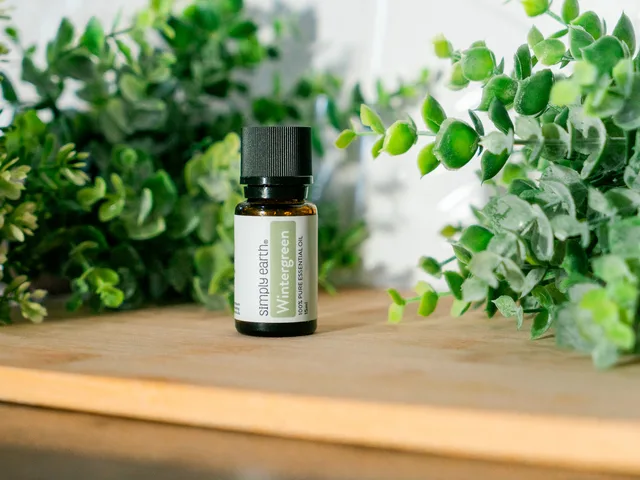
BEST FOR: AROMATIC COMFORT AFTER A HEAVY MEAL
Wintergreen appears in traditional warming preparations used externally over the stomach, well diluted, and that is the use Simply Earth lists. It is worth being very clear about what that does and does not mean: this is an external, aromatic use, and nothing on this page is a suggestion to swallow any of it.
KATIE'S TIP
External only, at 2% or less. Wintergreen must never be ingested — methyl salicylate is toxic in small amounts if swallowed. Diffusing it is the safer route to the same warm, settled feeling.
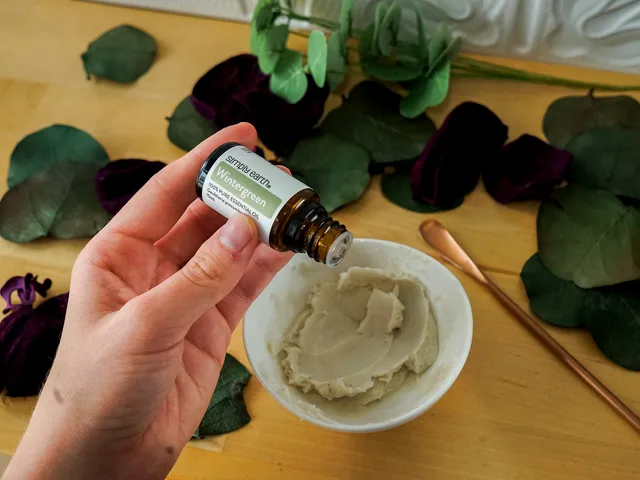
BEST FOR: SEASONAL WELLNESS BLENDS
Wintergreen has a long-standing place in seasonal wellness preparations, used aromatically, and supporting immunity is one of the uses Simply Earth lists for it. Treat that as the traditional role it is rather than a medical claim — this is an oil for a diffuser in a cold month, not a substitute for anything.
KATIE'S TIP
Diffuse it in a blend rather than alone. One drop of wintergreen with lavender and marjoram gives you the lift without the sharpness taking over the room.
Put It to Work
How to Use Wintergreen Safely
Diffuse
- • 1 drop is plenty — wintergreen has a blending factor of 2 and carries
- • Blend it with lavender, peppermint, marjoram or vanilla
- • Never in a room a cat or dog cannot leave
Topical
- • 2% is wintergreen's special dilution rate — about two drops per teaspoon
- • Always dilute in a carrier oil, and patch test before every new blend
- • Not for children under 12, and not during pregnancy or breastfeeding
DIY
- • Muscle balms and roll-ons, kept at or under 2%
- • A melt-and-pour soap, where it pairs well with anise star and patchouli
- • Use less than a recipe suggests if it was written for a gentler oil
Household
- • Shoe, gym-bag and fabric sprays
- • Surface sprays with a natural solubilizer so the oil disperses
- • Keep it off anywhere a pet walks, sleeps or licks
Know the Difference
Wintergreen, Birch and Peppermint
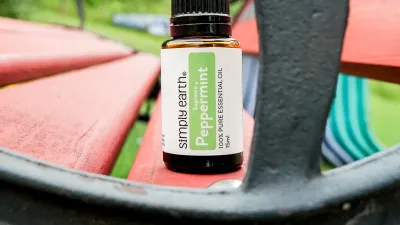
Wintergreen and sweet birch are the two oils people most often mix up, and for once that confusion is chemically justified — both are dominated by methyl salicylate, both smell almost the same, and both carry the same cautions. Simply Earth does not sell birch. Peppermint is the more interesting comparison, because it is the oil a lot of people reaching for wintergreen actually want: it is cooler, gentler, far less restricted, and it does most of the everyday jobs without a 2% ceiling attached. If you are choosing between them for general use, peppermint is usually the more sensible choice — and we would rather say so than sell you the stronger bottle.
Swipe to compare →
Wintergreen Gaultheria procumbens | Birch (Sweet) Betula lenta | Peppermint Mentha piperita | |
|---|---|---|---|
| Main constituent | Methyl salicylate — effectively the whole oil | Methyl salicylate — chemically near-identical | Menthol |
| Aroma | Strong, sweet and minty | Almost indistinguishable from wintergreen | Cool and minty, much softer |
| Kid safe | 12 and over only | Restricted, for the same reason | 6 and over, depending on supplier |
| Pregnancy and breastfeeding | No to both | No to both | Caution — check with your doctor |
| Cat and dog safe | No to both | No to both | Caution — check with your vet |
| Sold by Simply Earth | Yes — Wintergreen Essential Oil, 15mL | No | Yes — Peppermint Essential Oil |
| This article | The one Simply Earth sells | — | — |
Perfect Pairs
Wintergreen Blends Well With…
These are the five pairings Simply Earth lists for wintergreen. They have something in common — every one of them is softer than wintergreen is. With a blending factor of 2 and a top-note position, wintergreen leads whatever it joins, so the job of the other oils is to round it off rather than compete. Lavender and Marjoram are the easiest places to start, and Peppermint doubles the mint if that is what you are after.
Where It Comes From
What Is Wintergreen Essential Oil?
Wintergreen essential oil is steam-distilled from the leaf of Gaultheria procumbens, a low, creeping evergreen that grows across the forest floor of North America and Canada, producing glossy leaves and bright red berries. Indigenous peoples of North America used those leaves long before Europeans arrived, most often as a tea — which is where the plant's other name, teaberry, comes from.
That same leaf gave the nineteenth century one of its defining flavours. Wintergreen is the taste in traditional root beer, in teaberry gum, and in a long line of liniments and rubs. The compound responsible is methyl salicylate, and it is close chemical kin to aspirin, which is a fair part of why those old rubs worked as well as they did.
What comes out of the still is a thin, clear to pale yellow oil with a strong, sweet, minty aroma, sitting as a top note. It is one of the most concentrated single-constituent oils available anywhere — and almost everything about how it should be handled follows from that one fact.
The Science
The Science Behind This Oil
One card, deliberately. A single-constituent oil is unusual, and padding this section out with compounds borrowed from general literature would tell you less than the one real answer does.
Methyl Salicylate
The only main constituent Simply Earth lists · A salicylate ester
Most essential oils are a crowd of compounds. Wintergreen is essentially one, and Simply Earth's record lists methyl salicylate as its sole main constituent. It is the source of the aroma, of the warming sensation on skin, and of every single restriction in the safety section below. Methyl salicylate belongs to the salicylate family — the same chemical group as aspirin — and it is the active ingredient in many over-the-counter topical warming rubs. That relationship is the most useful thing to understand about this oil, and it is also why Simply Earth's own record notes that wintergreen can inhibit blood clotting and should be used in small amounts for short periods. If you take blood thinners, are sensitive to aspirin or salicylates, or have a bleeding disorder, talk to your doctor before using it.
Certified pure — batch-specific GC/MS reports available with every bottle. That matters more on wintergreen than on almost any other oil we sell. When an oil is essentially one compound, and that compound can be made synthetically for a fraction of the cost, adulteration is the known risk rather than a theoretical one. A synthetic bottle will smell close to right. The batch report is how you rule it out.
Shop Wintergreen Essential OilSupport the Source
Where Our Wintergreen Comes From
Simply Earth's wintergreen is steam-distilled from the leaf of Gaultheria procumbens and sourced from China. That is worth stating plainly alongside the history above, because the two are different questions: the plant's native range is North American, and the oil on our shelf comes from a Chinese distiller. Neither fact contradicts the other.
Purity is the whole question with this oil, more than with almost any other we sell. Because wintergreen is essentially a single compound, and because synthetic methyl salicylate is cheap and chemically similar, wintergreen is one of the most commonly adulterated oils on the market. A bottle of synthetic will smell close to right and behave quite differently. The only way to know which one you are holding is a batch-specific GC/MS report — so every batch of ours is tested before bottling, and the report ships with the bottle.
Use It Right
Things to Remember When Using This Oil
⛔ Never ingest wintergreen essential oil. Methyl salicylate is toxic in small amounts if swallowed, and that risk is highest for children.
🔥 Wintergreen has a special dilution rate of 2% — about two drops per teaspoon of carrier oil. Simply Earth's own record is explicit: dilute to no more than 2% when using topically.
Simply Earth's record also notes that this oil can inhibit blood clotting, and should be used in small amounts for short periods of time because it is very strong. Speak to your doctor first if you take blood thinners, are sensitive to aspirin or salicylates, or have a bleeding disorder.
Keep it well out of reach of children. The smell is sweet and inviting, which is precisely the risk. This oil ships with a child-resistant cap for that reason.
May be used by children aged 12 and over, at dilution — the most restrictive age limit in our range.
Not pregnancy safe and not breastfeeding safe. We do not recommend it in either case.
Not cat safe and not dog safe. Do not diffuse it where a pet cannot leave the room, and keep it off surfaces they contact.
Patch test before first use, every time you make a new blend, and avoid contact with the eyes. For external use only.
Sun safe — wintergreen is not phototoxic, so treated skin does not need to stay out of daylight.
Shelf life is about five years. Store it sealed, in the dark, away from heat.
Not sure how much carrier to use? Simply Earth publishes a free dilution chart you can keep next to your oils.
These statements have not been evaluated by the Food and Drug Administration. This product is not intended to diagnose, treat, cure, or prevent any disease.
Real Results
What Earthies Are Saying About It
"Just a couple of drops in a roll-on with almond oil, or in a diffuser, does the trick. This oil is very potent and does come with several precautions so do your research before using. If it's safe for you then I highly recommend it!"
Crystal M.
Verified Buyer • Wintergreen Essential Oil
"I just tried Simply Earth's new Wintergreen Essential Oil, and wow — I'm in love! It's crisp and refreshing. You can really tell it's high-quality and pure, because the scent feels so natural. If you're looking for something that smells like winter in a bottle, this is it."
Joy R.
Verified Buyer • Wintergreen Essential Oil
"As with all other EO from Simply Earth, wintergreen is AMAZING! Crisp, refreshing and a great addition to my collection!"
Teresita N.
Verified Buyer • Wintergreen Essential Oil
Certified 100% Pure
No fillers, no synthetics. Just pure oil.
GC/MS Third-Party Tested
Every batch independently verified.
Ethically Sourced from Quality Farms
Responsibly harvested. People and planet first.
15mL
Bottle Size
MLM brands: 10mL
$10–16
Per Oil
MLM brands: $25–55+
Public
GC/MS Tests
MLM brands: Rarely
Your Order Changes Lives: 13% of profits fight human trafficking globally.
Wintergreen Essential Oil FAQ
The questions Earthies ask most about wintergreen — starting with the two that matter for safety.
How do I dilute wintergreen essential oil safely? +
Simply Earth gives wintergreen a special dilution rate of 2%, and the record is worded as a ceiling rather than a suggestion — dilute to no more than 2% when using topically. In practice that is roughly two drops of wintergreen per teaspoon of carrier oil such as almond, jojoba or fractionated coconut. Start lower than that if your skin is at all sensitive, patch test on the inner forearm, and never apply wintergreen undiluted.
Is wintergreen essential oil the same as birch? +
Chemically they are very close. Sweet birch (Betula lenta) and wintergreen (Gaultheria procumbens) are both dominated by methyl salicylate, they smell almost identical, and they carry the same set of cautions. They are different plants from different families, but if a recipe calls for one and you have the other, the safety rules do not change. Simply Earth sells wintergreen and does not sell birch.
Can wintergreen essential oil be ingested? +
No. This is the one absolute on this page. Methyl salicylate is toxic in small amounts if swallowed, and the risk is highest for children, which is why the bottle ships with a child-resistant cap and why it should be stored well out of reach. We do not recommend ingesting any essential oil unless you are under the direction of a doctor certified in aromatherapy, and wintergreen is not an exception to that.
Can children use wintergreen essential oil? +
Simply Earth lists wintergreen as suitable for children aged 12 and over, at dilution. That is the most restrictive age limit in our whole range. For anyone younger, ask an aromatherapist for a gentler alternative rather than diluting wintergreen further — peppermint and lavender cover most of the same ground with far fewer restrictions.
Is wintergreen safe during pregnancy or breastfeeding? +
No. Simply Earth lists wintergreen as neither pregnancy safe nor breastfeeding safe, so we do not recommend it in either case. Consult your doctor before using any essential oil if you are pregnant, nursing, receiving treatment or taking medication.
Is wintergreen safe around cats and dogs? +
No. Simply Earth lists wintergreen as neither cat safe nor dog safe, so we do not recommend using it around either. That includes diffusing it in a room a pet cannot leave, and using it on floors or surfaces a pet walks on and then licks. Talk to your vet before using any essential oil around an animal.
Why does wintergreen get compared to aspirin? +
Because its one main constituent, methyl salicylate, belongs to the salicylate family — the same chemical group as aspirin. That relationship explains why the oil feels warming on skin and why it is so restricted. Simply Earth's record notes that wintergreen can inhibit blood clotting and should be used in small amounts for short periods. If you take blood thinners, are sensitive to salicylates or have a bleeding disorder, speak to your doctor before using it.
What can I actually make with wintergreen essential oil? +
Start in a diffuser, because it needs no dilution decision — one drop with lavender, marjoram or vanilla. For anything that touches skin, a simple roll-on or balm at 2% or less is the usual route, and a fabric or surface spray keeps it off skin entirely. Wintergreen appears in far fewer recipes than most oils, which is a fair reflection of how restricted it is, so treat it as an accent in a blend rather than the base of one.
About the Author: Katie Veldkamp
Katie Veldkamp
Certified Aromatherapist · Co-Founder, Simply Earth
Katie Veldkamp is a Certified Aromatherapist and co-founder of Simply Earth. Her mission is to cut through the noise around essential oils so you can use them with confidence. Everything in this article has been reviewed and approved by Katie.
Learn essential oils the easy way
Every month we ship four pure essential oils, six natural recipes, and everything you need to make them. No guesswork.
No spam. Unsubscribe any time.

Learn by doing
Make your own natural products every month.
The Simply Earth Recipe Box ships 4 full-size essential oils, 6 natural recipes, and everything you need to make them. No guesswork.
Start My Recipe Box$39.99 for your first box, then $49.99/month. Skip, pause, or cancel anytime.