
Vetiver Essential Oil: Benefits, Uses & Recipes

Katie Veldkamp
Lead Certified Aromatherapist
Fact Checked & Approved
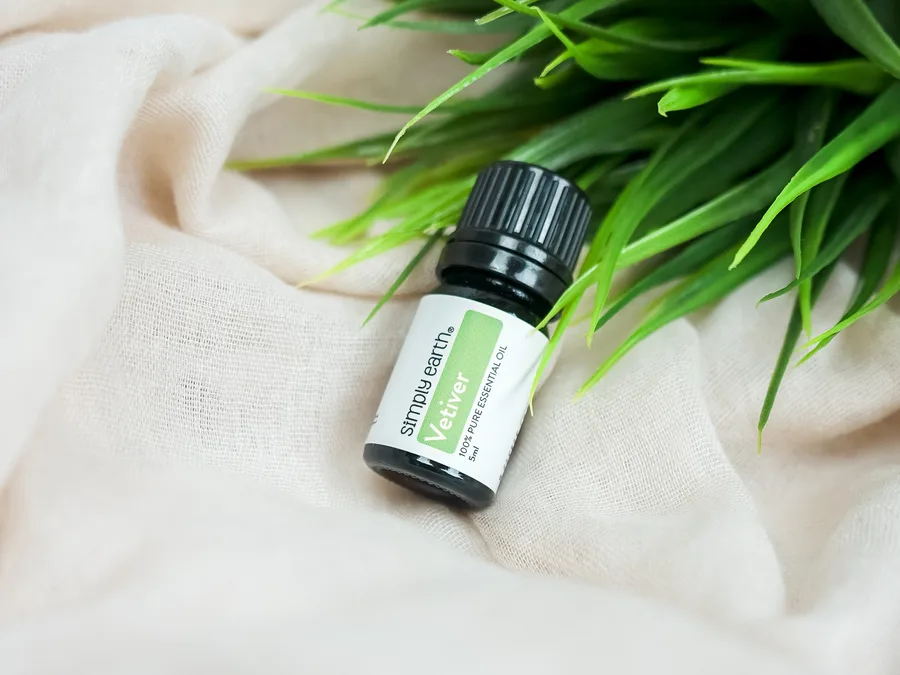
Vetiver is a grass, and the part we distil is underground. Its roots grow straight down in a mat dense enough that the plant is planted deliberately across the tropics to stop hillsides washing away — erosion control first, oil second. Steam-distil those roots and you get something unlike anything else on the shelf: a thick, golden-to-dark-brown oil that pours slowly and smells deep, smoky and earthy. One of our customers calls waiting for it to leave the bottle "part of the experience". Below are the seven uses Simply Earth publishes for it, the two recipes we actually make with it, how it differs from the other deep base notes people consider alongside it, and why a blending factor of 1 means one drop is genuinely one drop.
Free Download
New to essential oils? Start here.
Get the free Essential Oil Cheat Sheet — which oils to reach for, how much to dilute, and what to make first, on a single page you can keep beside your oils.
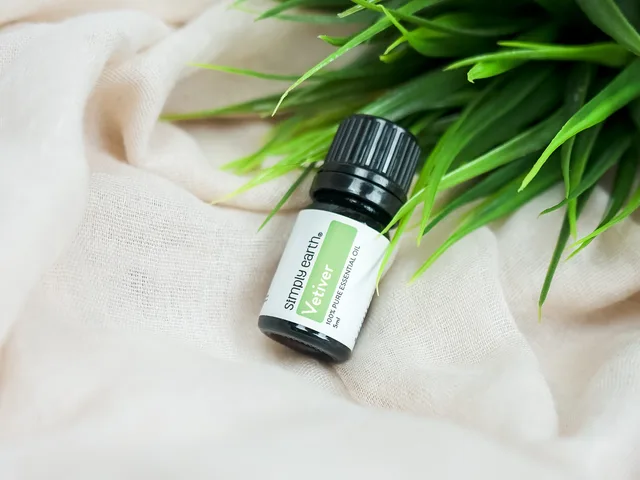
BEST FOR: MATURE, TIRED-LOOKING SKIN
This is the first use on our own product record, and it is the one that surprises people who only know vetiver as a perfume ingredient. Diluted into a facial oil or a balm it supports skin that looks refreshed rather than tight. Our record describes it as highly beneficial for the skin — an appearance-level, cosmetic benefit rather than a treatment for anything.
KATIE'S TIP
It is thick. Warm the bottle in your hands for a moment and let the drop take its time rather than shaking it — shaking a slow oil mostly gets you oil up the sides of the cap.
USE IT IN →

Reduces the Appearance of Breakouts
The seventh benefit, and the one the old post left out.
 Shop Vetiver Oil
BEST FOR: CONGESTED OR BLEMISH-PRONE SKIN
A cosmetic, appearance-level benefit — vetiver helps skin look clearer and more even. It is not a treatment for any skin condition, and nothing here says otherwise. This is the use our product record lists that the previous version of this article never mentioned, which is the whole reason this page now runs to seven benefits instead of six.
KATIE'S TIP
Pair it with geranium, which is on vetiver's own blends-well-with list further down this page, in a light facial oil. Two drops of vetiver is plenty for a whole bottle.
USE IT IN →
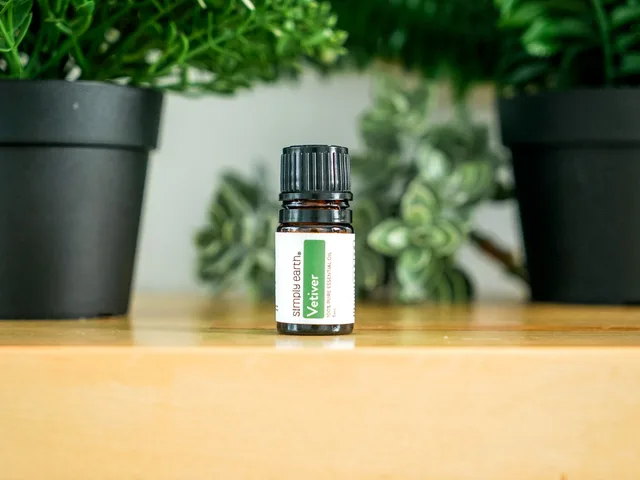
BEST FOR: EVENINGS AND OVERSTIMULATED DAYS
Deep, heavy and quiet, vetiver is one of the most settling aromas there is — a base note in the emotional sense as well as the perfumery one. Our product record puts its mental-health character first, describing the oil as calming, relaxing and sensual. It is the oil to reach for when a citrus would be exactly the wrong idea.
KATIE'S TIP
Blending factor 1. One drop is genuinely one drop — vetiver will dominate anything you put it near, and there is no undoing it once it is in the bottle.
USE IT IN →

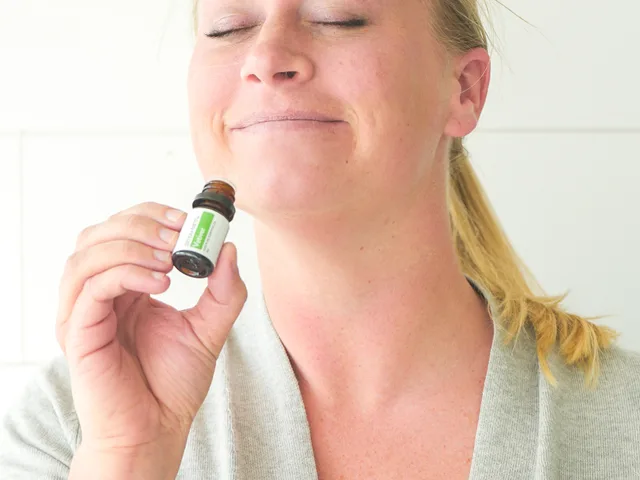
BEST FOR: SCATTERED DAYS AND TRANSITIONS
It is hard to separate vetiver's grounding reputation from the plain fact that it is a root oil from a plant whose whole job is holding soil in place. Whatever you make of the symbolism, the aroma does something similar to a room — it gives everything else somewhere to sit.
KATIE'S TIP
One of our customers diffuses 3 drops of vetiver with 3 drops of lemon and calls it Fresh Rain Shower. It is the easiest way to meet this oil without being overwhelmed by it.
USE IT IN →
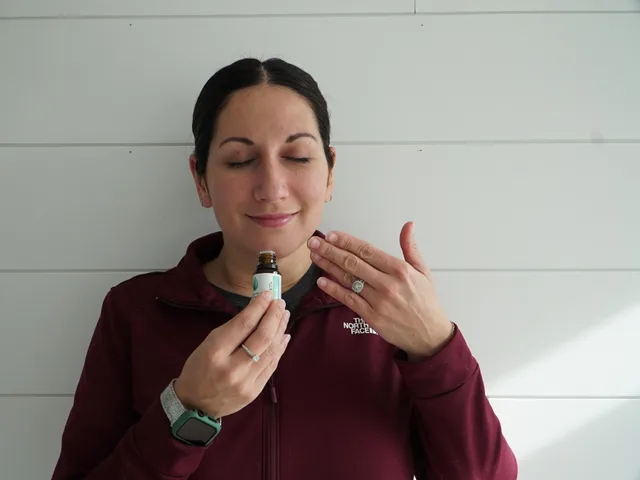
BEST FOR: DEEP WORK AND STUDY
Where citrus lifts, vetiver settles — and for some people that is what focus actually requires. This is one of the seven uses on our product record, and it is the one that most rewards experimenting, because whether a heavy base note helps you concentrate or sends you to sleep turns out to be quite personal.
KATIE'S TIP
Try it against grapefruit pink, which is on its blends-well-with list. The contrast between a bright top note and a heavy base is what makes that blend work rather than either oil on its own.
USE IT IN →
BEST FOR: EVENING PERFUME AND BLENDS
Vetiver has been a fixture in fine fragrance for a very long time — warm, smoky and lasting. As a fixative it holds lighter aromas in place, which is the technical reason a natural perfume built on vetiver stays on skin instead of disappearing in twenty minutes. Our own Desert Muse perfume pairs it with palo santo.
KATIE'S TIP
This is the one benefit where we publish two recipes that actually contain vetiver, so it is the easiest place to start if you want to taste what the oil does in a finished blend.
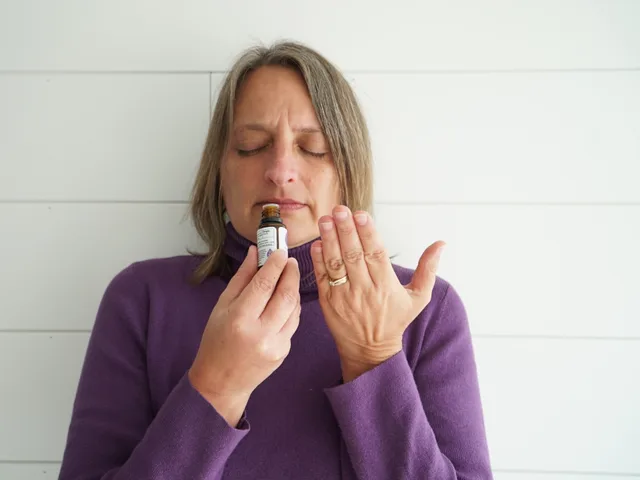
BEST FOR: SEASONAL WELLNESS BLENDS
Vetiver has a traditional place in wellness preparations and is used aromatically as part of a seasonal routine. This one is on Simply Earth's product record in these words, so we have not dropped it — but we have not hardened it either. Treat it as traditional aromatic use sitting alongside the ordinary things that actually keep you well, not as a substitute for any of them.
KATIE'S TIP
Diffuse it as a base underneath something brighter rather than on its own. A room of neat vetiver is a lot, and it is not what anyone means by a wellness blend.
USE IT IN →
Put It to Work
How to Use Vetiver Oil
Diffuser
- • 1 drop of vetiver to 3–4 drops of something brighter — it is a blending factor 1 oil
- • Fresh Rain Shower, from a customer — 3 drops vetiver and 3 drops lemon
- • Cat safe and dog safe, which is not true of every oil on our shelf
Topical & Skincare
- • Always dilute — facial oils, balms and body butters are where it belongs
- • Simply Earth publishes a special dilution rate of 5% for this oil
- • Warm the bottle in your hands first, because the oil is thick and slow
Perfume
- • Vetiver is a base note and a fixative — it makes a natural perfume last
- • Pairs with palo santo, sandalwood, patchouli and the heavier florals
- • Start at one drop per blend and work up, never the other way round
Candles & Wax Melts
- • It holds up well to heat, which not every delicate oil does
- • One customer adds it to palo santo wax melts
- • Keep it off pale fabrics and surfaces — the oil is darkly coloured
Know the Difference
Vetiver vs. Patchouli vs. Sandalwood
These are the three deep base notes people weigh against each other, and Simply Earth sells all three as separate oils — so nothing below is a case for one standing in for another. They are genuinely different plants: vetiver is a grass distilled from its roots, patchouli is a mint-family shrub distilled from its leaves, and sandalwood is a tree distilled from its heartwood. Vetiver is the driest and smokiest of the three and by some distance the most dominant in a blend, which is what a blending factor of 1 against sandalwood's 3 actually means in practice. If you want the sweeter, muskier version of earthy, that is patchouli. If you want something soft and creamy that sits quietly underneath everything else, that is sandalwood.
Swipe to compare →
Vetiver The one this page is about | Patchouli (Dark) Also on our shelf | Sandalwood Also on our shelf | |
|---|---|---|---|
| The Actual Plant | Vetiveria zizanioides — a tall tropical grass | Pogostemon cablin — a leafy mint-family shrub | Santalum album — a slow-growing tree |
| Part Distilled | Root | Leaf | Heartwood |
| Where Ours Comes From | China | Indonesia | India |
| How It Smells | Woody and herbaceous — earthy, smoky and dry | Earthy too, but sweeter and muskier | Creamy, soft and quietly woody |
| Consistency | Thick — it pours slowly enough that people comment on it | Thick | Medium |
| Colour | Golden or dark brown | Dark amber | Pale gold |
| Blending Factor | 1 — it will dominate a blend | 2 | 3 |
| Note | Base | Base | Base |
| Certification | Conventional | Conventional | Conventional |
| Sold by Simply Earth | Yes — its own SKU | Yes — its own SKU | Yes — its own SKU |
| You are reading about | This page | — | — |
Good Company
Blends Well With…
This is Simply Earth's own list for vetiver, and there is a pattern in it worth noticing. Half of it is bright and floral — geranium, grapefruit pink, jasmine, ylang ylang — because vetiver needs something above it to keep a blend from turning into a bog. The other half is the company it keeps at the bottom: patchouli and sandalwood, the other two base notes. Lavender sits comfortably in either camp. With a blending factor of 1, vetiver is the oil you add last and in single drops.
A fun fact about vetiver
The Grass That Holds the Hillside Together
Vetiver is a tall perennial grass, and everything interesting about it happens underground. Its roots grow straight down rather than spreading sideways, in a dense mat that can reach several metres, which makes the plant extraordinarily good at anchoring soil. Across the tropics it is planted in hedgerows for exactly that reason. The oil is the second job, not the first.
That same root is what gets harvested, washed, dried and steam-distilled. It is slow, heavy work for a small yield — you are digging up a plant rather than picking from it — and that is a large part of why vetiver costs what it does and why the oil that comes out is so concentrated.
In perfumery it has been indispensable for centuries, because vetiver is a fixative: it holds lighter aromas in place and gives a composition a floor to stand on. In India the plant has another life entirely, woven into screens that are wetted so the breeze coming through them cools and scents a room — which is roughly the oldest diffuser anyone has built.
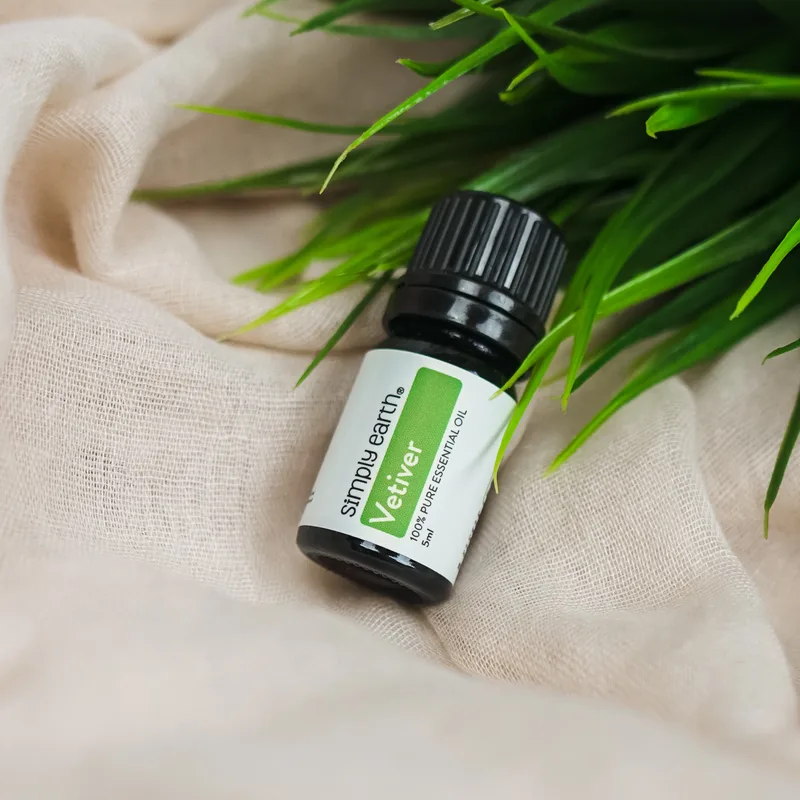
The Chemistry
The Science Behind Vetiver Oil
Simply Earth names four main constituents for this oil, and they have something in common that explains almost everything else on this page:
Khusimol
Sesquiterpene alcohol · the signature one
One of vetiver's defining compounds, and the one whose name gives the game away — it comes from “khus”, the Indian name for the plant itself. It sits at the centre of the oil's heavy, rooty character.
α-Vetivone
Sesquiterpene ketone · the smoky one
This is where much of vetiver's smoky character comes from, and a major reason the oil works as a fixative. Heavier molecules evaporate more slowly, which is the whole mechanism behind a base note lasting on skin when a citrus has long gone.
trans-Isovalencenol
Sesquiterpene alcohol · the woody backbone
Part of the heavy, woody-earthy backbone that makes vetiver read as dense rather than sharp. It is one of the four constituents Simply Earth names on the product record for this oil.
Vetiselinenol
Sesquiterpene alcohol · the dry, rooty depth
Contributes to the dry, rooty depth that separates vetiver from the sweeter earthiness of patchouli. Together these four are all sesquiterpenes — larger, heavier molecules than the monoterpenes that dominate citrus oils.
All four are sesquiterpenes — larger, heavier molecules than the monoterpenes that make up a citrus oil. That single fact is the chemistry behind why vetiver is thick enough that people comment on the pour, why it lasts on skin when lighter oils vanish, and why it sits at the bottom of a blend rather than on top of it. Every bottle ships with a batch-specific GC/MS report. See Our Testing →
Support The Source
Roots From China
Simply Earth's vetiver is steam-distilled from roots grown in China. The harvest is unavoidably manual in a way that leaf and flower crops are not — the roots have to be dug out of the ground, washed and dried before any distillation can begin, and the yield from all that work is small. It is one of the more labour-intensive oils we carry, and the price reflects it honestly.
Every batch is GC/MS tested before bottling, and the report ships with the oil. For a thick, dark, expensive oil that is easy to dilute and hard to judge by eye, that report is the only thing that actually tells you what is in the bottle.
China
Where It's Grown
Root
Plant Part
Public
GC/MS Results
Use It Right
Things to Remember When Using Vetiver Oil
Dilute it, and note that Simply Earth publishes a special dilution rate of 5% for this oil. Our record also sets a dermal maximum of 15% because of its isoeugenol content, measured at about 1.3%. See our dilution chart, and patch test on the inner arm before any wider use.
Kid safe from age 2, and safe around pets. Simply Earth lists vetiver as kid safe for ages 2 and up, cat safe, dog safe and sun safe — which is a friendlier profile than a lot of what shares a shelf with it. It is not phototoxic, so it will not make skin more sensitive to sunlight.
Pregnant or breastfeeding: yes, but talk to your doctor first. Our record lists it as safe for both with that caveat attached, so treat the conversation as the step rather than the formality.
Blending factor 1 — it will dominate anything you put it near. This is the single most practical thing to know about vetiver. One drop is genuinely one drop. Add it last, count it, and remember there is no way to take it back out of a blend once it is in.
It is very thick, and it is darkly coloured. Warm the bottle in your hands and be patient with the pour. Keep it away from pale fabrics, pale worktops and anything you would mind staining — golden to dark brown is exactly what it sounds like.
It keeps for 5 years. Store it capped and out of direct light. An oxidised oil is more likely to irritate skin than a fresh one, and at vetiver's price you want the full five years out of it.
For external use only. Keep it away from your eyes, and we do not recommend ingesting essential oils unless you are under the direction of a doctor certified in aromatherapy.
These statements have not been evaluated by the Food and Drug Administration. This product is not intended to diagnose, treat, cure or prevent any disease.
Real Results
What Earthies Are Saying
"I love vetiver. Waiting for the liquid gold to come out of the bottle is part of the experience. Used some today in a diffuser blend — Fresh Rain Shower: 3 drops vetiver, 3 drops lemon."
Mar W.
Verified Buyer • Vetiver Essential Oil
"I love vetiver and palo santo so this recipe was for me! The scent is very warm and a bit romantic and especially nice for the evening."
Becky L.
Verified Buyer • Desert Muse Perfume
"In my side container, I added Amber and Vetiver to the Palo Santo and made a wax melt. Mmm, it's in the warmer now — I just couldn't wait."
Jaimie E.
Verified Buyer • DIY Blessings Candle Kit
OUR SIMPLY PURE PROMISE
What Goes Into Your Products Matters
Certified 100% Pure
No fillers, no synthetics. Just pure oil.
GC/MS Third-Party Tested
Every batch independently verified.
Ethically Sourced from Quality Farms
Responsibly harvested. People and planet first.
China
Where It's Grown
Steam-distilled from root
Root
Plant Part
Dug, washed, dried, distilled
5 Years
Shelf Life
Stored capped, out of light
Your Order Changes Lives: 13% of profits fight human trafficking globally.
Vetiver Essential Oil FAQ
The questions people actually ask about vetiver — starting with the one almost nobody guesses right.
What is vetiver essential oil good for? +
Simply Earth lists seven uses — promoting skin rejuvenation, reducing the appearance of breakouts, calming, centering, supporting awareness, supporting romantic feelings and boosting immunity. In practice its most dependable everyday work is aromatic and in perfumery, because it is a base note and a fixative. Both of the recipes we publish that contain it are scent-led.
What part of the vetiver plant does the oil come from? +
The roots. Vetiver is a tall tropical grass, and unlike almost everything else on our shelf the oil is distilled from underground rather than from leaves, flowers or peel. The roots grow in a dense mat several metres deep, which is why the plant is also grown deliberately for erosion control.
Why is vetiver oil so thick? +
Because its main constituents are sesquiterpenes — larger, heavier molecules than the monoterpenes that dominate citrus oils. That is also why it pours slowly, why it lasts so long on skin, and why it works as a fixative in perfume. Warm the bottle in your hands and be patient with it.
What is the difference between vetiver and patchouli? +
They are different plants distilled from different parts. Vetiver is a grass distilled from its roots; patchouli is a mint-family shrub distilled from its leaves. Both are earthy base notes, but vetiver is drier and smokier while patchouli is sweeter and muskier. Simply Earth sells both separately, and vetiver has a blending factor of 1 against patchouli's 2, so it dominates a blend more readily.
How much vetiver should I use in a blend? +
Start with one drop. Vetiver has a blending factor of 1, the lowest on our scale, which means it takes over a blend faster than almost anything else. A common starting ratio is 1 drop of vetiver to 3 or 4 drops of a brighter oil. Add it last, and count the drops — there is no removing it afterwards.
How do I dilute vetiver essential oil? +
Simply Earth publishes a special dilution rate of 5% for this oil, and our record sets a dermal maximum of 15% because of its isoeugenol content. Always dilute in a carrier before topical use and patch test on the inner arm first.
Is vetiver oil safe for kids and pets? +
Simply Earth lists it as kid safe from age 2, cat safe, dog safe and sun safe. For pregnancy and breastfeeding our record says yes with the caveat that you should consult your doctor first. As always, dilute before topical use and keep it out of reach of children.
Which Simply Earth recipes contain vetiver? +
Two of the recipes we publish contain it — the Desert Muse Perfume, which pairs vetiver with palo santo, and the Signature Cologne Collection, whose Midnight Ember blend is built on vetiver and palo santo together. Both are scent-led, which is exactly what you would expect from a fixative base note.
Does vetiver essential oil stain? +
It can. The oil is golden to dark brown and thick, so treat it like anything else that colour — keep it off pale fabrics and pale worktops, and wipe the neck of the bottle before you cap it.
About the Author: Katie Veldkamp
Katie Veldkamp
Certified Aromatherapist · Co-Founder, Simply Earth
Katie Veldkamp is a Certified Aromatherapist and co-founder of Simply Earth. She personally formulates and reviews SE's essential oil blends and verifies all benefit claims on Simply Earth content before it goes live.
Join 20,000+ Earthies Making Their Homes Natural
New recipes, usage guides, and DIY tips — delivered free.
No spam. Unsubscribe any time.

Learn by doing
Make your own natural products every month.
The Simply Earth Recipe Box ships 4 full-size essential oils, 6 natural recipes, and everything you need to make them. No guesswork.
Start My Recipe Box$39.99 for your first box, then $49.99/month. Skip, pause, or cancel anytime.