
Turmeric Infusion: A Skincare Oil You Make Yourself

Katie Veldkamp
Lead Certified Aromatherapist
Fact Checked & Approved
Turmeric has an obvious problem in skincare, and everyone who has tried it knows exactly what it is: the stuff stains. It stains fingers, it stains counters, and it will absolutely stain a white towel. That is the reason most people try a turmeric face mask once and never again. An infusion solves it. Instead of putting turmeric powder on your skin, you steep the powder in a carrier oil, then strain the powder out — what you keep is the golden oil, not the grit. Simply Earth's own recipe card is direct about the result: turmeric can temporarily stain skin, and using it in an infusion makes that far less likely to happen. This guide covers what a turmeric infusion actually is, seven things it gives you, both methods for making it (30 minutes on a stovetop, or four to five weeks on a windowsill), how it differs from turmeric essential oil and raw turmeric powder, and the fourteen Simply Earth recipes it drops straight into.
Free Cheat Sheet
New to Essential Oils? Start With the Free Guide
One printable page covering the oils most worth owning first — including the ones you will be adding to your finished infusion.
Start Here
What a Turmeric Infusion Actually Is
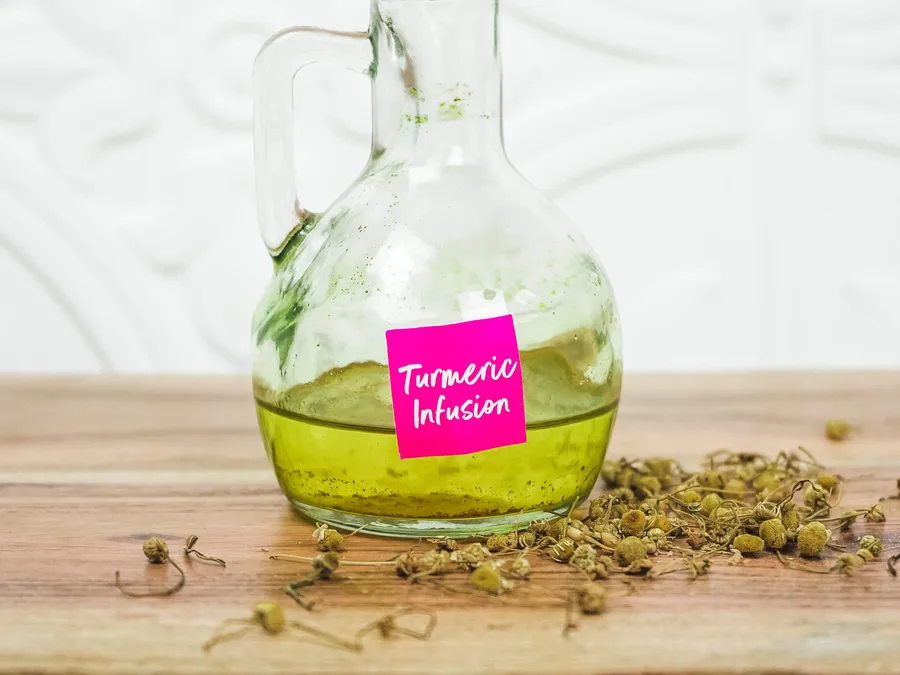
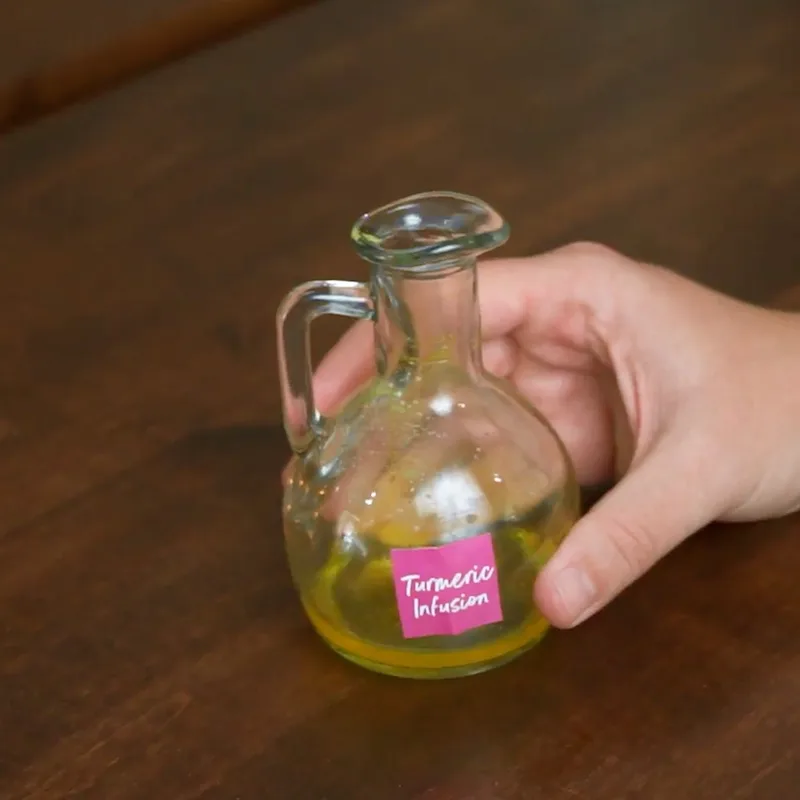
An infusion is one of the oldest preparations in herbalism and one of the simplest: you steep a plant material in a carrier oil until the oil takes on what the plant has to give, then you strain the plant material out. There is no distillation, no still, no press. What comes out the other side is a carrier oil that has changed colour and picked up some of the plant's fat-soluble compounds — and in turmeric's case, a deep golden yellow is the visible proof it worked.
Simply Earth's published recipe uses 1 teaspoon of turmeric spice, 2 tablespoons of almond oil, and a 1 oz container. That is the whole ingredient list. Almond oil is the carrier doing the dissolving, and it is not a passive one — our product record describes it as full of vitamins A, B and E, moisturising without clogging pores, which means the finished infusion brings the carrier's own benefits along with the turmeric's.
The distinction that matters most on this page: an infusion is not an essential oil. A turmeric essential oil is a distilled, highly concentrated aromatic extract that has to be diluted before it touches skin. A turmeric infusion is already carried — it is mostly almond oil — so it goes on neat. Getting those two confused is the single most common mistake with this ingredient, and it is why the comparison table further down exists.
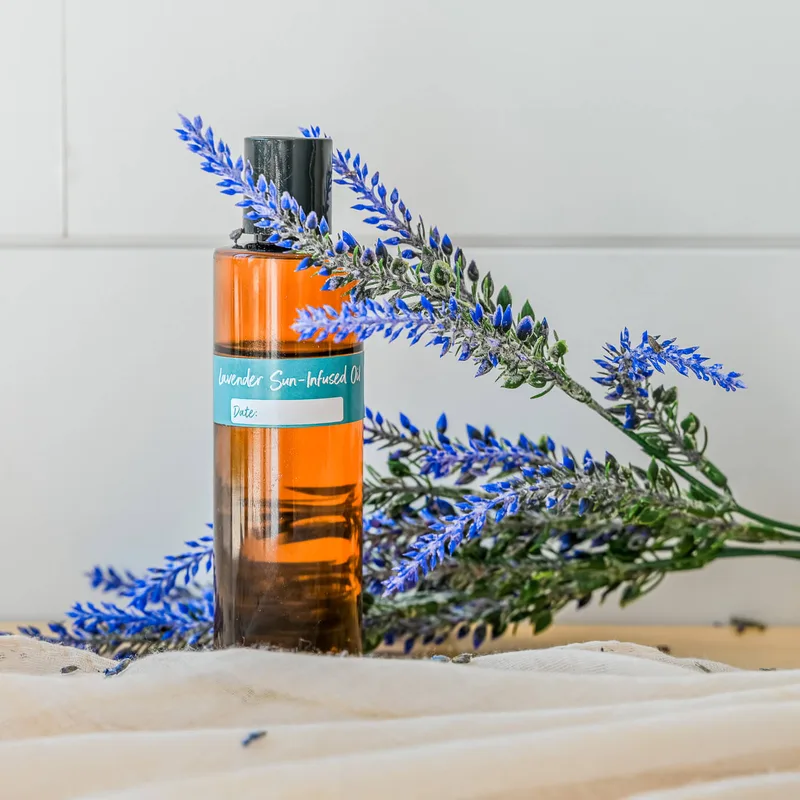
It Brightens Without the Mess
The colour goes into the oil, not onto your towels.
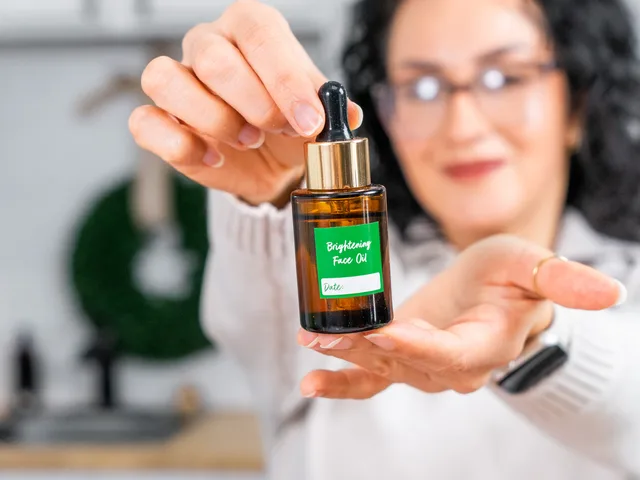 Get the Turmeric Infusion Recipe
BEST FOR: DULL, UNEVEN-LOOKING SKIN
Brightening is the reason most people come to turmeric in the first place, and the infusion is how you get at it without wearing it. Simply Earth's own recipe card gives a skin-brightening face mask built directly on this infusion: 1 teaspoon of the infusion mixed with 2 teaspoons of aloe vera and 1 drop of Lemon Essential Oil, left on the face for 10 minutes and rinsed away. Because the turmeric has been strained out, you are applying a tinted oil rather than a gritty paste, which is a completely different experience on skin.
Katie's Tip
Rinse a brightening mask off with lukewarm water and a soft cloth rather than scrubbing. The point of using an infusion is that you are not trying to remove ground-up spice from your face.
Use it in


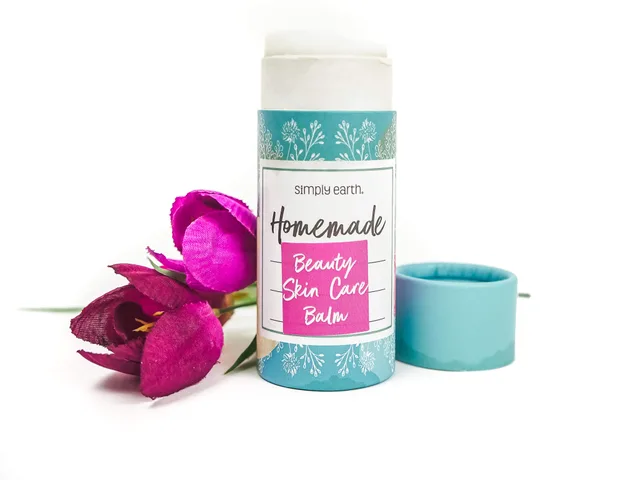
It Drops Straight Into a Balm
Anywhere a recipe asks for a carrier oil, this goes instead.
 Get the Turmeric Infusion Recipe
BEST FOR: BALMS, SALVES & BUTTERS
This is the benefit the whole page is named after, and it comes straight from Simply Earth's recipe card rather than from us: use this infusion in place of carrier oils in other recipes, such as the Skin Care Balm. That one line turns a single 1 oz jar into an upgrade for a large part of the Simply Earth recipe catalogue. A balm made with plain almond oil and a balm made with turmeric-infused almond oil are the same recipe, the same ratios and the same method — one of them is just golden.
Katie's Tip
Swap it one for one by volume. The infusion is almond oil with turmeric steeped into it, so it behaves in a melt exactly the way the almond oil it replaced would have.


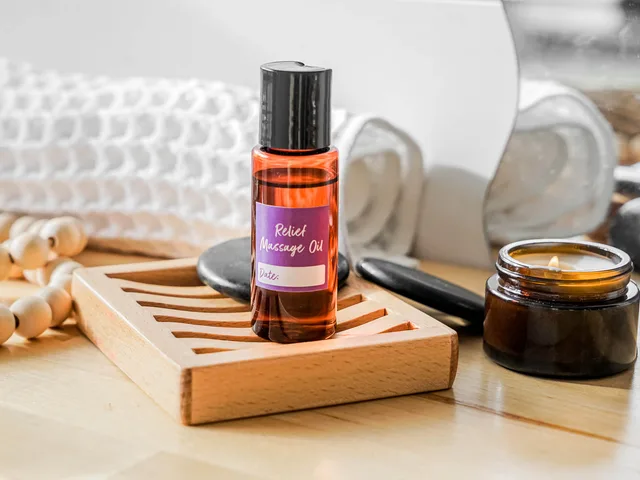
It Makes a Soothing Massage Oil
A ready-carried base that needs nothing added to be usable.
 Get the Turmeric Infusion Recipe
BEST FOR: TIRED, OVERWORKED AREAS
Simply Earth's recipe card gives a massage blend as the first way to use the finished infusion: add 5 drops of Spearmint, 5 drops of Marjoram and 5 drops of Lemon Essential Oil to the turmeric infusion, then massage the oil onto the areas that need it for soothing relief. Because the base is already a carrier oil, there is no dilution maths to do — you are adding essential oils to an oil, not trying to make a concentrate safe.
Katie's Tip
Warm a little in your palms before it goes on. An infused oil spreads further and feels considerably nicer when it is not straight out of a cold cupboard.
Use it in


It Is Far Less Likely to Stain
The single biggest objection to turmeric on skin, answered.
 Get the Turmeric Infusion Recipe
BEST FOR: ANYONE WHO HAS STAINED A TOWEL
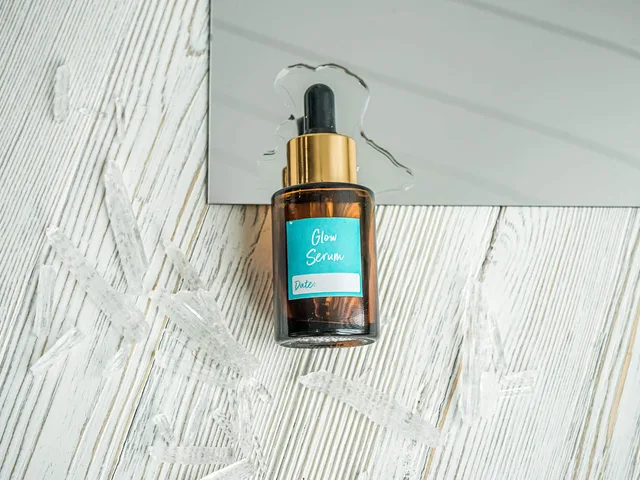
Simply Earth's recipe card states it plainly: turmeric can temporarily stain the skin, and using it in an infusion makes this less likely to happen. That is the honest version of the claim — less likely, not impossible, and temporary rather than permanent. The mechanism is straightforward. Straining removes the pigmented solids, so what stays behind is a tinted oil rather than a powder that can sit in skin texture. Fabric is a separate question from skin, and a golden oil can still mark a light towel.
Katie's Tip
The recipe card asks for a small patch test before using this product, and that is worth doing on your inner arm rather than your face — both for sensitivity and to see how much colour your own skin picks up.


The Carrier Is Doing Real Work
Almond oil moisturises without clogging pores.
 Get the Turmeric Infusion Recipe
BEST FOR: DRY SKIN THAT STILL BREAKS OUT
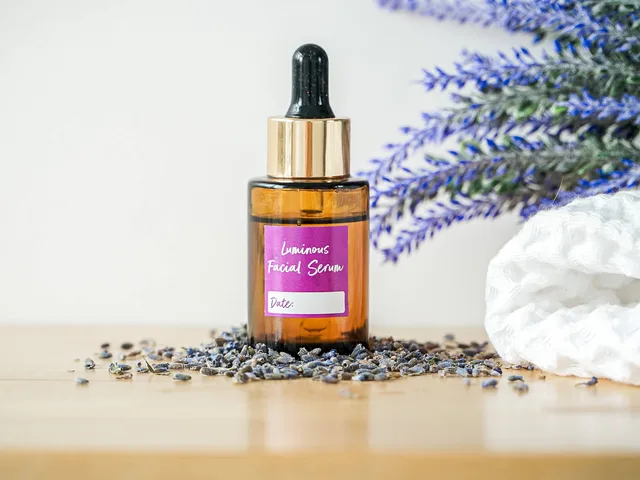
An infusion is only ever as good as what you infused into, and the Simply Earth product record for Almond Oil is specific about what it brings: it isn't too oily but still moisturises, and it nourishes without clogging pores. That combination is genuinely difficult to find, and it is the reason almond oil is the carrier our published turmeric recipe names rather than something heavier. Roughly speaking, two tablespoons of your finished 1 oz infusion are almond oil — so its properties are most of what you are putting on your skin.
Katie's Tip
If almond is off the table for you because of a nut allergy, infuse into a different carrier instead. The method does not change, and jojoba, fractionated coconut and sunflower are all bases our team regularly names.


Vitamins A, B and E Come With It
You inherit the carrier's profile, not just the turmeric's.
 Get the Turmeric Infusion Recipe
BEST FOR: EVERYDAY SKIN AND NAIL CARE
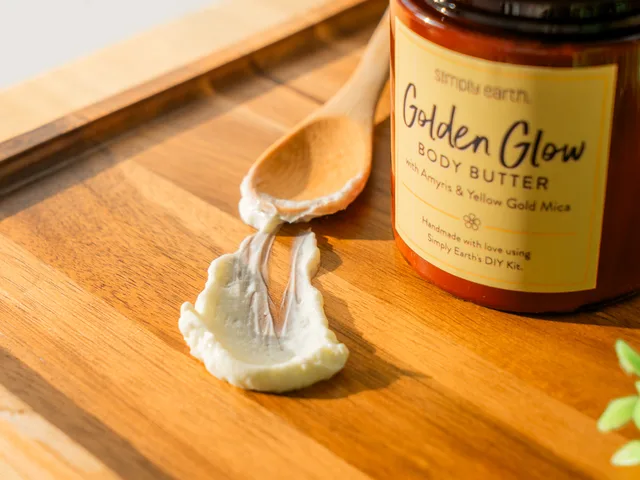
Our Almond Oil product record lists vitamins A, B and E, and notes it can have a lasting effect on hair and nails as well as skin. None of that is lost when you infuse into it — infusing adds turmeric's fat-soluble compounds to the oil rather than replacing anything that was already there. It is worth naming because it changes how you should think about the finished jar: this is not a single-purpose turmeric preparation, it is a nourishing carrier oil that also carries turmeric.
Katie's Tip
Do not waste the last of a jar on your face alone. Cuticles, dry knuckles and the ends of hair all take an infused oil happily, and they are far more forgiving of a little colour.


You Can Make It Tonight
30 minutes on the stove, or 4 to 5 weeks in a window.
 Get the Turmeric Infusion Recipe
BEST FOR: MAKING IT THIS EVENING
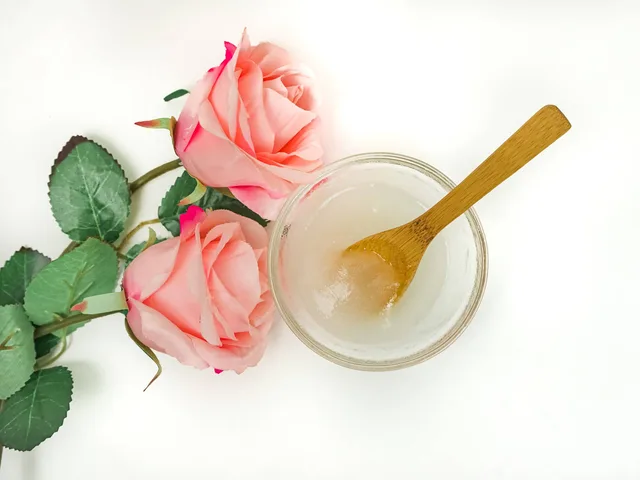
Most ingredients you either own or you don't. This one you can decide to have in half an hour. Simply Earth's recipe gives two routes to the same jar: the slow one, where everything goes in a clear sealable jar in a sunny window for 4 to 5 weeks with the occasional shake, and the fast one, where you warm the almond oil and turmeric powder together on low heat for 30 minutes. Strain through a fine mesh sieve into a 1 oz container either way. The legacy recipe puts the estimated shelf life of the finished oil at 1 year.
Katie's Tip
The stovetop method wants low heat and patience, not speed. You are coaxing compounds out of the powder, and oil that gets too hot is a worse carrier than oil that took a little longer.


Put It to Work
How to Make and Use Turmeric Infusion
1. What You Need
- • 1 teaspoon turmeric spice
- • 2 tablespoons almond oil, or another carrier oil of your choice
- • A 1 oz container to store the finished oil in
- • A fine mesh sieve, or cheesecloth, for straining
- • A clear sealable jar as well, if you are using the sunny-window method
2. The Sunny Window Method
- • Add all the ingredients to a clear sealable jar
- • Place the jar in a sunny window
- • Let the mixture sit for 4 to 5 weeks, shaking it occasionally
- • Strain the mixture through a fine mesh sieve into your 1 oz container
- • Slower than the stovetop route, and the one to choose if you are not in a hurry
3. The Stovetop Method
- • Heat the almond oil and turmeric powder together on low heat for 30 minutes
- • Keep the heat low — you are steeping the powder, not frying it
- • Strain the mixture through a fine mesh sieve into your 1 oz container
- • Same finished oil as the window method, ready the same evening
4. Using the Finished Oil
- • Massage blend — add 5 drops Spearmint, 5 drops Marjoram and 5 drops Lemon Essential Oil, then massage onto the areas that need it
- • Brightening face mask — mix 1 tsp of the infusion with 2 tsp aloe vera and 1 drop Lemon Essential Oil, leave on for 10 minutes and rinse away
- • Carrier swap — use it in place of carrier oils in other recipes, such as the Beauty Skin Care Balm
- • Apply it on its own as a simple facial or body oil
5. Storing It
- • Keep the strained oil in a sealed container
- • Estimated shelf life of the finished infusion is 1 year
- • Store it out of direct sunlight once it has been strained
- • Label the jar with the date you made it — an infusion looks the same at month 1 and month 11
Know the Difference
Infusion vs Essential Oil vs Powder
These four get talked about as if they were interchangeable, and they are not. Only one of them is a ready-to-use skincare oil, and only one of them is the reason turmeric has a reputation for staining everything it touches. If you have read that turmeric essential oil needs careful dilution and wondered why this page says the opposite, this table is the answer — the advice is correct for a distilled oil and simply does not describe an infusion. The closest thing in our own range is Calendula Infused Oil, which is made exactly the same way with a different plant.
Swipe to compare →
Turmeric Infusion Turmeric steeped in a carrier oil | Turmeric Essential Oil Distilled, highly concentrated | Turmeric Powder The ground spice itself | Turmeric CO2 Extract Pressurised CO2 extraction | |
|---|---|---|---|---|
| What it actually is | A carrier oil that turmeric has been steeped into, then strained out | A distilled aromatic extract of the rhizome | Dried, ground turmeric root — the kitchen spice | A concentrated extract made using pressurised carbon dioxide |
| Already diluted? | Yes — it is mostly carrier oil by volume | No. Concentrated, and must be diluted before skin contact | No — it is a dry powder, not an oil at all | No. Concentrated, and must be diluted before skin contact |
| Staining behaviour on skin | Least likely of the four — the solids are strained out | Not pigment-led, but a concentrate to be handled carefully | The worst offender. This is what stains fingers and towels | Varies by extract; still a concentrate, not a ready-to-use oil |
| Goes on skin neat? | Yes — this is the whole point of making it | No | No — it needs a base, and brings the staining with it | No |
| What you use it for | Facial oils, balms, massage oils, and as a carrier swap in other recipes | Aromatic and blending uses, at appropriate dilution | Cooking, and DIY masks where you accept the mess | Formulating, where a standardised concentrate is wanted |
| How you get it | Make it at home in 30 minutes, or 4 to 5 weeks in a window | Bought as a finished essential oil | Bought as a spice | Bought as a specialist extract |
| Available from Simply Earth | We publish the recipe, and sell the almond oil it is built on | N/A — not currently in the Simply Earth range | N/A — not currently in the Simply Earth range | N/A — not currently in the Simply Earth range |
| Available from Simply Earth | We publish this recipe | — | — | — |
What to Add to It
What to Add to Your Finished Infusion
An infused carrier does not have a companion-oil list the way an essential oil does — it is the base, not the note. These are the things our own recipes add to it. The first three are the exact blend on Simply Earth's turmeric recipe card; the butters and waxes are what turn it into a balm; the rest are the essential oils our skincare recipes most often pair with a facial oil.
Where It Comes From
Where the Ingredients Come From
A turmeric infusion has two origin stories, and only one of them is ours to tell properly. The carrier is Simply Earth Almond Oil, botanically Prunus dulcis, sweet almond — and it comes from Spain, which is where our Support the Source series followed it. That is a real supply chain with real growers behind it, and it is the half of this recipe we can stand behind in detail.
The turmeric is the other half, and here we are going to be straight with you: the recipe calls for turmeric spice, which for most people making this at home means the jar in the kitchen cupboard rather than anything we supply. Simply Earth does not currently sell turmeric powder, so we cannot tell you which farm your turmeric came from, how it was dried, or when it was harvested. If that provenance matters to you — and for anything going on your face it reasonably might — buy a turmeric you already trust, ideally an organic one, before you infuse it.
Two figures we are deliberately not printing here, because no Simply Earth record holds them: a years-partnered number and a farm-direct percentage for the turmeric itself. Those exist for crops we buy directly; they do not exist for an ingredient we do not currently carry, and a plausible-sounding number would be worse than an honest gap. Both have been flagged to our sourcing team.
Prunus dulcis
Carrier Botanical
Spain
Where the Almonds Grow
Infused
Not Distilled
The Chemistry
The Chemistry of a Golden Oil
Why fat pulls colour out of turmeric when water won't, what the clinical literature actually supports, and why there is no lab report for something you made on a windowsill.
Curcuminoids
What gives the oil its colour
The yellow pigments in turmeric are a group of compounds called curcuminoids, of which curcumin is the best known. They are what turn a clear carrier oil gold, so the colour change you watch happen in the jar is the most direct evidence you have that the infusion is working. Simply Earth makes no therapeutic claim about curcumin content in this recipe, and we do not measure it.
Why oil, and not water
The reason an infusion works at all
Curcumin is poorly soluble in water and far happier in fat, a point made in a widely cited review of curcumin research published in Foods in 2017. That single property is the entire logic of this preparation — a carrier oil can take up what a cup of water largely cannot, which is why turmeric is traditionally steeped into oils and fats rather than brewed.
What the clinical evidence says
A systematic review, and its limits
A systematic review of the clinical evidence for turmeric and curcumin on skin health was published in Phytotherapy Research in 2016. It found studies reporting benefits across a range of skin conditions while being explicit that the evidence base was limited and that larger, better-designed trials were needed. That is the honest state of the science, and it is the reason this page stays on cosmetic skincare rather than treatment.
What the carrier contributes
Prunus dulcis, sweet almond oil
Most of the finished infusion by volume is almond oil, so most of what reaches your skin is almond oil. Our product record for it names vitamins A, B and E, and describes an oil that moisturises without clogging pores. The label adds the specifics: 100% pure refined carrier oil, cold pressed, easily absorbed into skin with a slightly oily feel, and a subtle scent with a hint of nuttiness. Its own storage life is up to 2 years, which is longer than the 1 year our recipe estimates for the finished infusion.
GC/MS report
N/A — an infusion is not a distilled oil
Simply Earth publishes GC/MS reports for its essential oils because a distilled oil has a constituent profile that shifts from harvest to harvest and can be tested against. A home-made infusion has no equivalent document. What ends up in your jar depends on your turmeric, your carrier, your method and your steeping time, so there is nothing standardised to report — and we would rather say that than publish a profile that does not describe what you made.
Heat, and why low matters
The one variable you control badly
The stovetop method asks for low heat across 30 minutes rather than high heat quickly. Carrier oils degrade with heat and time, and an oil pushed too hard is a poorer base than one taken gently — which is the practical reason the recipe gives a temperature instruction at all, and why the windowsill version exists as the unhurried alternative.
Before You Make It
Things to Remember
Tree-nut allergy — read this first. The carrier in this recipe is almond oil, and the caution printed on our Almond Oil label is explicit: made from almonds, a tree nut. Though skin reactions are rare, those with nut allergies should consult their doctor before using sweet almond oil. If that applies to you or to anyone who will use the finished product, infuse into jojoba, fractionated coconut or sunflower instead — the method is identical.
From the same label — for external use only, and keep out of reach of children. That applies to the finished infusion exactly as it applies to the carrier it is built on.
Patch test before you use it. Simply Earth's recipe card asks for a small patch test before using this product. Do it on an inner arm and give it time before anything goes near your face.
Staining is reduced, not eliminated. Turmeric can temporarily stain skin, and infusing makes that less likely — but a golden oil will still mark light fabric. Keep it away from good towels, pale bedding and pale clothing.
Do not apply essential-oil dilution rules to this. An infusion is already carried, so it is not a concentrate that needs diluting. Those rules exist for distilled essential oils and simply do not describe what is in this jar.
Keep the heat low on the stovetop method. Low heat for 30 minutes is the instruction. Rushing it with higher heat gives you a worse carrier oil, not a faster infusion.
Strain it properly. The point of an infusion is that the solids come out. Use a fine mesh sieve or cheesecloth, and do not leave powder sitting in the finished bottle.
Mind the shelf life. The estimated shelf life of the finished oil is 1 year. Store it sealed and out of direct sunlight, and label the jar with the date you made it.
Source your own turmeric thoughtfully. Simply Earth does not currently sell turmeric powder, so the spice is yours to choose. For anything going on your face, pick one you would be happy to eat.
These statements have not been evaluated by the Food and Drug Administration. This product is not intended to diagnose, treat, cure, or prevent any disease.
Real Results
What Earthies Are Saying
"I recently made some facial oil using a carrier oil, a few drops of turmeric, several drops of this Tangerine e.o., and one drop of Simply Earth's Marjoram e.o. It's divine!"
Susan
Verified Buyer • Tangerine Essential Oil
"I've already infused my calendula oil, made the skin healing gel, the digest help as I have Crohn's disease and finally, the no stress blend! I plan on using some of the infused calendula oil in the cuticle recipe coming in the July box."
Marilyn Hawkins
Verified Buyer • Monthly Subscription Box
"This is by far my FAVORITE box ever! It is so easy to use and the most affordable way to learn how to start making your own herbal infused oils and salves. Perfect to start your natural living journey."
Kate
Verified Buyer • DIY Home Remedy Salves & Ointments Kit
OUR SIMPLY PURE PROMISE
What Goes Into Your Products Matters
Three Ingredients, Listed
1 tsp turmeric spice, 2 Tbsp almond oil, a 1 oz container. That is all of it.
A Carrier With a Source
Simply Earth Almond Oil — Prunus dulcis, sourced from Spain.
Made by You, Not by Us
A published recipe rather than a bottle — you control every input.
Your Order Changes Lives: 13% of profits fight human trafficking globally.
Questions
Turmeric Infusion, Answered
Does turmeric infusion stain your skin? +
It is much less likely to than raw turmeric. Simply Earth's own recipe card puts it this way: turmeric can temporarily stain the skin, and using it in an infusion makes this less likely to happen. The reason is that the pigmented solids are strained out, so you apply a tinted oil rather than a powder. Note the wording though — less likely, and temporary when it does happen. Fabric is a separate matter, and a golden oil can still mark a pale towel.
How long does it take to make? +
Either 30 minutes or 4 to 5 weeks, depending on which method you pick. The stovetop method heats the almond oil and turmeric powder together on low heat for 30 minutes. The sunny-window method puts everything in a clear sealable jar on a windowsill for 4 to 5 weeks with the occasional shake. Both are strained through a fine mesh sieve into a 1 oz container, and both give you the same finished oil.
Is turmeric infusion the same as turmeric essential oil? +
No, and the difference matters for safety. A turmeric essential oil is distilled and highly concentrated, and needs diluting before it goes near skin. A turmeric infusion is turmeric steeped into a carrier oil and then strained — it is already carried, mostly almond oil by volume, and goes on neat. Advice written for the essential oil does not apply to the infusion, and vice versa.
Can I use something other than almond oil? +
Yes, and you should if there is a nut allergy involved — almond is a tree nut. The recipe names almond oil, but the method works with any carrier. Jojoba, fractionated coconut and sunflower are the bases our team most often names. A longer-keeping carrier gives the finished infusion a longer life.
How long does the finished infusion last? +
The estimated shelf life of the finished oil is 1 year. Keep it sealed, out of direct sunlight, and label the jar with the date you made it — an infused oil looks much the same at one month and at eleven. For reference, our Almond Oil on its own has a storage life of up to 2 years, so the infusion is the shorter-lived of the two.
What can I actually use it in? +
Simply Earth's recipe card gives three uses: a massage blend with 5 drops each of Spearmint, Marjoram and Lemon Essential Oil; a skin-brightening face mask with 2 tsp aloe vera and 1 drop of Lemon; and — the most useful one — using it in place of carrier oils in other recipes, such as the Beauty Skin Care Balm. That last instruction means it drops into any of our skincare recipes built on a carrier oil.
Do I need to dilute it before putting it on my skin? +
No. It is already diluted, in the only sense that matters — the turmeric was steeped into a carrier oil and most of what is in the bottle is that carrier. This is the most common point of confusion with this ingredient, and it comes from applying essential-oil rules to something that is not an essential oil. Patch test it, as the recipe card asks, but do not try to dilute it further.
Where does Simply Earth's turmeric come from? +
We do not currently sell turmeric powder, so the spice in this recipe is one you source yourself — which means we cannot tell you its farm or harvest. What we can account for is the carrier: Simply Earth Almond Oil is sweet almond, Prunus dulcis, sourced from Spain. For anything going on your face, choose a turmeric you would be happy to cook with.
About the Author: Katie Veldkamp
Katie Veldkamp
Certified Aromatherapist · Co-Founder, Simply Earth
Katie Veldkamp is a Certified Aromatherapist and co-founder of Simply Earth. She personally formulates and reviews Simply Earth's DIY ingredient line and verifies product claims on Simply Earth content before it goes live. The recipe, method, staining note and usage blends on this page come from Simply Earth's own published Turmeric Infusion recipe card; the carrier oil details come from the Simply Earth product record.
Join 20,000+ Earthies Making Their Homes Natural
New recipes, usage guides, and DIY tips — delivered free.
No spam. Unsubscribe any time.
Learn by doing
Make your own natural products every month.
The Simply Earth Recipe Box ships 4 full-size essential oils, 6 natural recipes, and everything you need to make them. No guesswork.
Start My Recipe Box$39.99 for your first box, then $49.99/month. Skip, pause, or cancel anytime.