
Calendula Solar Infused Oil: The Flower You Make Into an Oil

Katie Veldkamp
Lead Certified Aromatherapist
Fact Checked and Approved
Calendula is the odd one out on our ingredient shelf. It does not arrive as an oil, and there is no such thing as a calendula essential oil worth buying — the flower is too delicate to distil into one. What we sell is a small pouch of dried flowers, and what you do with them is put them in a jar of carrier oil and leave them on a windowsill for two or three weeks while the sun does the work. That is the whole method, and it has not changed in a very long time. What comes out is a golden oil you can use on its own, or drop straight into any skincare recipe that calls for a carrier. Here is what the flowers actually do, the exact quantities from our own recipe, and the swap that makes a jar of this more useful than most people realise.
Calendula Soothes Skin That Has Had a Hard Time
The Reason Anybody Bothers Infusing It
 Shop Dried Calendula Flowers
BEST FOR: DRY, ROUGH AND DISTRESSED SKIN
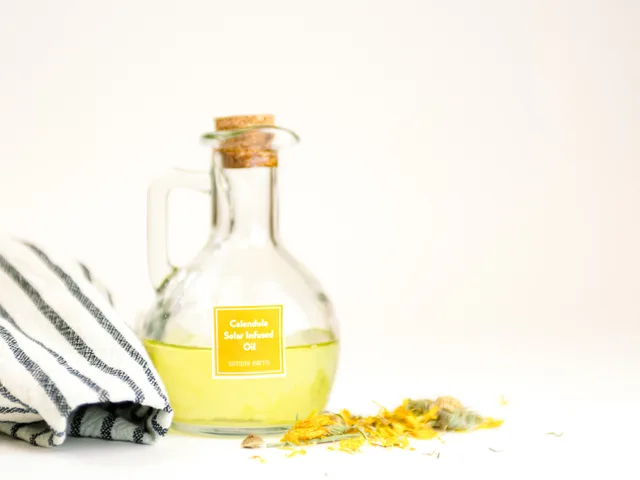
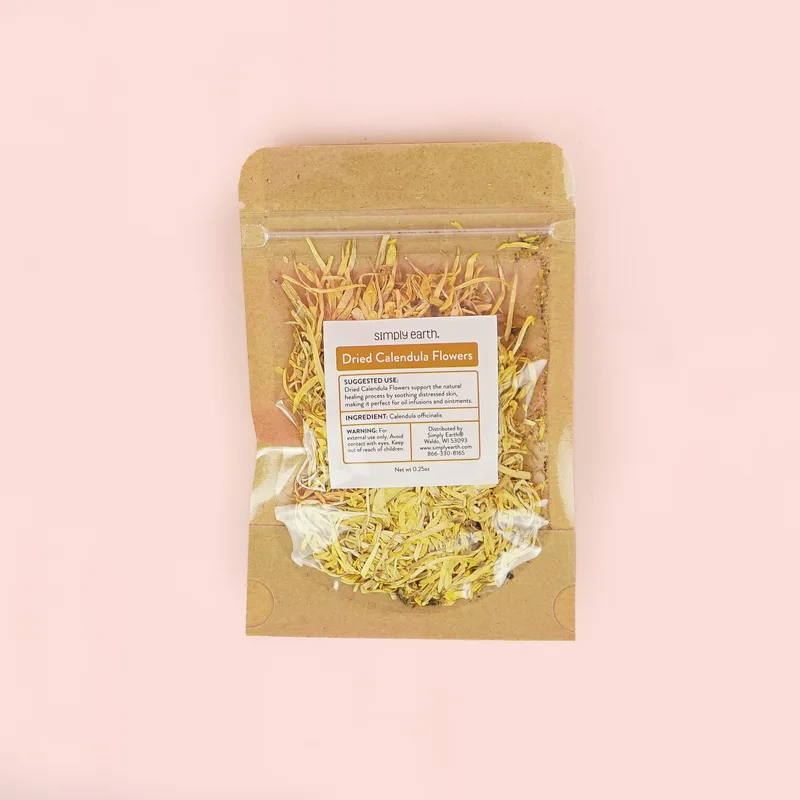
This is the one that earns the jar, and we are going to quote our own label rather than reach for something stronger. The pouch says calendula flowers support the natural healing process by soothing distressed skin, making it perfect for oil infusions and ointments. That is Simply Earth's wording, printed on the product, and it is the honest shape of what this flower is for — comfort for skin that is dry, rough or irritated. Older versions of this page went considerably further than that. We are not going to.
KATIE'S TIP
Give it somewhere to work. A finished infusion does the most on skin that is already clean and slightly damp, and on the patches you actually notice - elbows, knuckles, shins, the corners of a nose in winter.
USE IT IN →

The Sun Does the Extraction, Slowly and for Free
Why It Is a Windowsill and Not a Saucepan
 Shop Dried Calendula Flowers
BEST FOR: ANYONE WHO WANTS TO MAKE SOMETHING PROPERLY
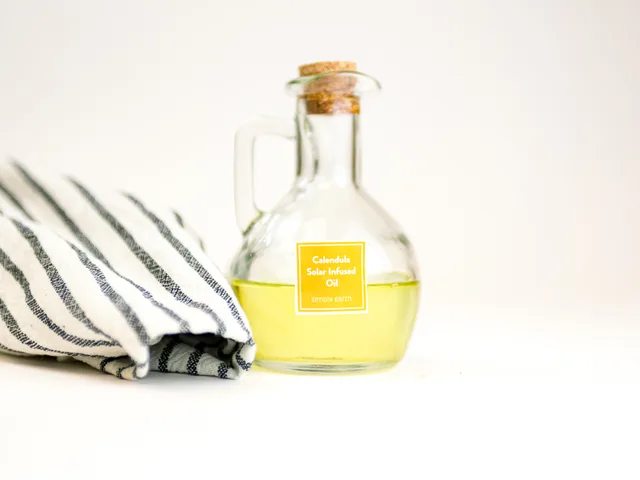
Solar infusion is low, slow and almost entirely hands-off. You pack dried flowers into a clear jar, cover them with a carrier oil, seal it, put it in a sunny window and shake it once a day for two to three weeks. The clear glass is not a styling choice — it is there so the sun can get in. Warmth opens the plant material and the oil draws out what is in it, gently enough that nothing gets scorched. It costs you a jar, a windowsill and the patience to leave it alone.
KATIE'S TIP
Start it on a day you will remember, because the daily shake is the only part people forget. I put mine above the kitchen sink for exactly that reason - you cannot avoid seeing it.
USE IT IN →
A Finished Infusion Swaps Straight Into Any Recipe
One for One, Wherever a Carrier Is Called For
 Shop Dried Calendula Flowers
BEST FOR: EVERY SKINCARE RECIPE YOU ALREADY MAKE
This is the most useful thing on the page and hardly anybody says it out loud. An Earthie asked our team whether she could use her calendula sun-infused oil where a recipe called for almond oil. The answer was yes, without qualification — because a calendula infusion is a carrier oil, just one with flowers steeped through it. It makes a 1:1 substitute in skincare and body care recipes. So a single jar quietly upgrades every balm, salve, serum and body oil you already make, without changing a ratio.
KATIE'S TIP
This is why I tell people to infuse more than they think they need. The first batch always gets used up faster than expected, because once you realise it swaps in anywhere, it starts going in everything.
USE IT IN →
It Is the Starting Point for Salves, Balms and Ointments
What Makers Actually Do With It
 Shop Dried Calendula Flowers
BEST FOR: DIY BALMS, SALVES AND OINTMENTS
Our product record is specific about where these flowers end up. They are used in salves, balms, lotions, and other skincare recipes — and that is the natural career of an infused oil, because a salve is mostly just an infused oil thickened with a wax or a butter. Infuse the calendula first, then melt it with beeswax and shea and you have gone from a pouch of dried flowers to a finished tin without ever buying a pre-made base.
KATIE'S TIP
Infuse before you plan the salve, not after. The oil takes three weeks and the salve takes twenty minutes, so the jar on the windowsill is always the thing holding up the schedule.
BEST FOR: FIRST-TIME INFUSERS
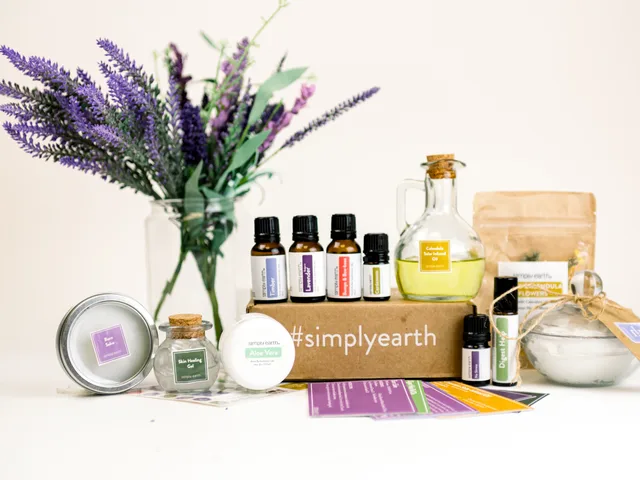
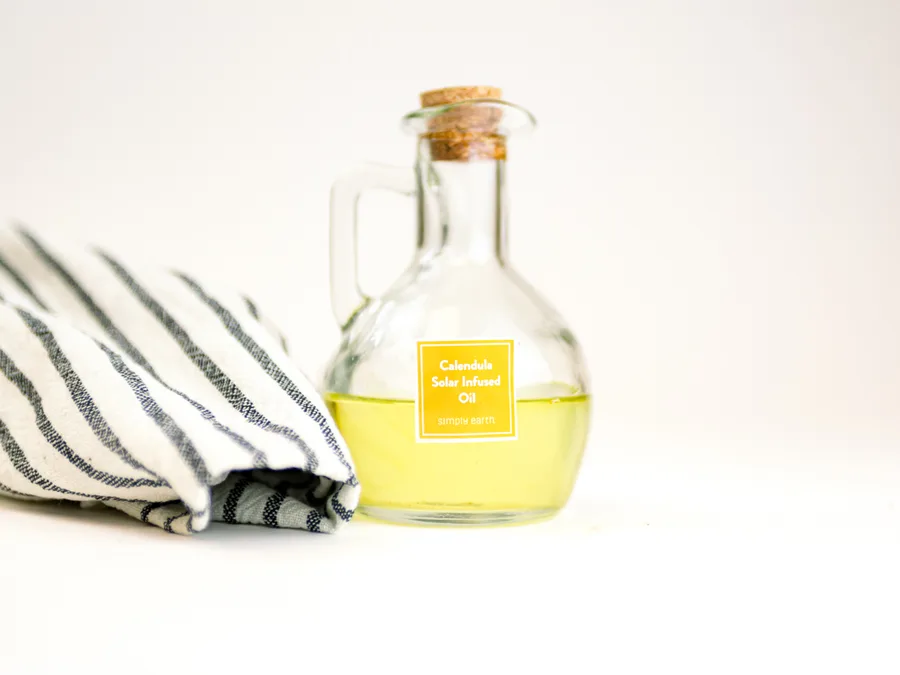
Most DIY projects give you nothing to look at until the end. This one changes colour in front of you. The carrier goes in nearly clear and comes out somewhere between pale gold and deep yellow, and that shift is the visible half of the extraction — pigment moving out of the petals and into the oil. It is genuinely satisfying, and it is also the simplest progress check you have. If after a fortnight in the sun the oil still looks exactly like it did on day one, something is wrong with the light rather than with the flowers.
KATIE'S TIP
Take a photo on day one. Colour shifts slowly enough that you will talk yourself out of believing it is happening, and the photo settles it.
A Quarter Ounce Goes a Remarkably Long Way
The Cheapest Ingredient on the Shelf
 Shop Dried Calendula Flowers
BEST FOR: MAKERS ON A BUDGET
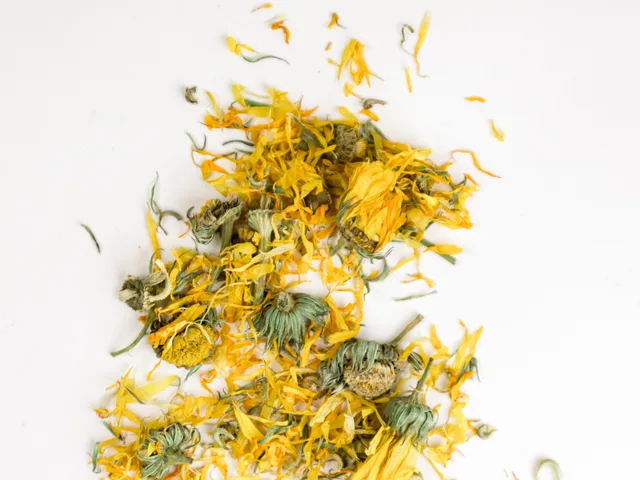
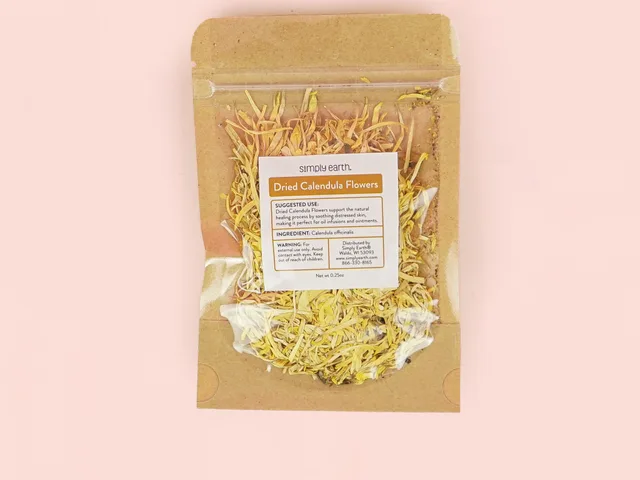
Dried calendula flowers are $2.99 at Simply Earth, against a compare price of $8.99, and they are sold in a 0.25 oz pouch. Dried petals are extremely light, so a quarter ounce is a surprising amount of flower — our own published recipe is built around 0.1 oz, which is well under half a pouch. For the price of a coffee you get enough botanical for more than one jar of infused oil, which is not a sentence you can write about many ingredients.
KATIE'S TIP
Pack the jar loosely. The instinct is to cram in as many flowers as possible, but they need room to move in the oil - an overstuffed jar infuses less evenly, not more strongly.
It Is One Ingredient, With Nothing to Calculate
No Dilution Maths, No Drop Counting
 Shop Dried Calendula Flowers
BEST FOR: PEOPLE NEW TO MAKING THINGS
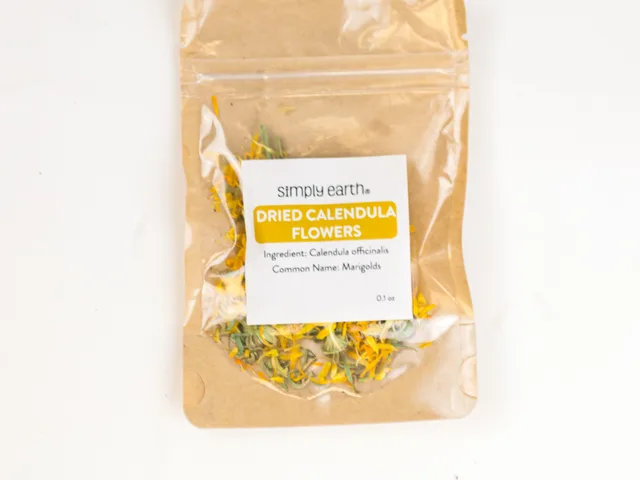
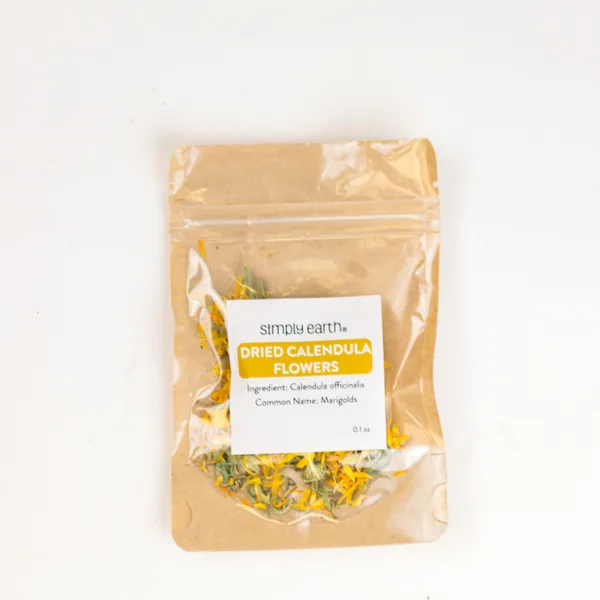
Nothing on our shelf is easier to be confident with. There is no dilution percentage to work out, no drop count to get wrong and no diffuser involved, because this is a dried flower rather than a concentrated oil. The label carries one instruction and it is a plain one — for external use only, avoid contact with eyes, keep out of reach of children. The ingredient line reads Calendula officinalis, and the older pouches add the name most people actually know it by — marigolds.
KATIE'S TIP
If essential oils have felt intimidating, start here instead. There is no way to get the strength wrong, which makes it a very forgiving first thing to make.
Put It to Work
How to Make and Use Calendula Infused Oil
The Solar Infusion, as We Publish It
- • You need 0.1 oz dried calendula flowers and about 3/4 cup of avocado oil or another carrier oil
- • You also need cheesecloth or a fine mesh sieve, and a 6 to 8 oz clear, airtight jar
- • Lightly pack the flowers into the bottom of the jar
- • Cover the flowers with carrier oil until there is about 1 inch of oil above them
- • Seal the jar, place it in a sunny window, and let it sit for 2 to 3 weeks, shaking the mixture daily
- • If the jar is not airtight some oil may evaporate, so top it up if that happens
- • Strain the finished oil through the sieve or cheesecloth into a sealable container and discard the flowers
- • Estimated shelf life of the finished oil is 1 year
What Our Current Kit Uses Instead
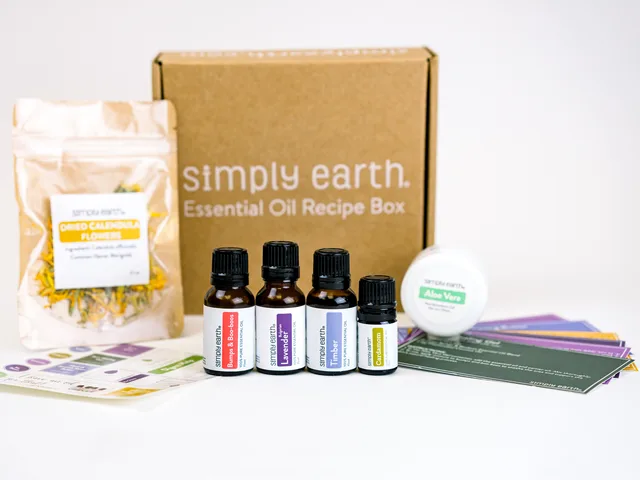
- • Our Calendula Sun-Infused Oil kit recipe ships 0.25 oz dried calendula flowers rather than 0.1 oz
- • It uses fractionated coconut oil as the carrier, not avocado oil
- • It comes with a 4 oz amber glass jar and a serum bottle to decant into
- • Both versions are real, so use whichever matches what you have
Using the Finished Oil
- • Apply it on its own to dry, rough or irritated patches of skin
- • Swap it one for one anywhere a skincare recipe asks for a carrier oil
- • Use it as the oil in a salve or balm, melted with beeswax and a butter
- • Keep it in a sealed container out of direct sunlight once it is strained
Choosing What to Infuse Into
- • Our published recipe uses avocado oil or another carrier of your choice
- • Our kit version uses fractionated coconut oil
- • Almond, jojoba and sunflower are the bases our team most often names
- • A longer-keeping carrier gives the finished infusion a longer life
Know the Difference
Solar vs. Heat Infusion, and Which Carrier to Use
The column worth stopping on is the last one, because it clears up the confusion this page exists for: there is no calendula essential oil to buy, from us or realistically from anyone, and a page that offers you one has confused an infusion with a distillate. Calendula is a flower you steep, not a plant you distil, which is why the ingredient in our shop is a pouch of dried petals rather than a 15 mL bottle. Between the two methods you can actually do at home, solar infusion is slower and gentler and heat infusion is faster and needs supervising — we publish the solar version because the waiting is the only demanding part of it, and because a jar on a windowsill is very hard to ruin. As for what to steep them in, our own recipe says avocado oil or another carrier, our current kit uses fractionated coconut oil, and our team most often points people at almond, jojoba or sunflower. None of those is wrong; a longer-keeping carrier simply buys the finished oil a longer life.
Swipe to compare →
Solar Infusion The method on this page | Heat Infusion The hurry-up version | Calendula CO2 Extract The industrial one | Calendula Essential Oil Not really a thing | |
|---|---|---|---|---|
| What It Is | Dried flowers steeped in a carrier oil using sunlight | Dried flowers warmed in a carrier oil over low heat | Flower compounds pulled out with pressurised carbon dioxide | A distilled oil that retail does not meaningfully offer |
| How Long It Takes | 2 to 3 weeks | A few hours | Industrial process, not a home method | Not applicable |
| Can You Do It at Home | Yes, and it needs no equipment | Yes, but it needs watching | No | No |
| What You End Up With | A carrier oil carrying calendula | A carrier oil carrying calendula | A concentrated extract | Nothing you can buy from us |
| Does Simply Earth Sell It | We sell the flowers and publish the recipe | We sell the flowers for this too | No | No |
| Our Published Carrier | Avocado oil in the recipe, fractionated coconut oil in the kit | Your choice of carrier | Not applicable | Not applicable |
| Est. Shelf Life | 1 year | Depends on the carrier | Not applicable | Not applicable |
| What It Costs to Start | $2.99 for a 0.25 oz pouch of flowers | $2.99 for the same pouch | Not sold at Simply Earth | Not sold at Simply Earth |
| Simply Earth | This page's method | — | — | — |
Perfect Pairs
What Calendula Infused Oil Pairs With
A finished calendula infusion has very little smell of its own, so this is not a blending list in the aroma sense — these are the oils it carries. The first five are the ones Simply Earth has actually shipped alongside it: Bumps and Boo-boos, Lavender, Timber and Cardamom travelled with the calendula pouch in the June 2020 Recipe Box, and Breathe Easy came with it in our DIY Home Remedy Salves and Ointments Kit. The rest are skin-friendly singles from our shelf that suit the kind of balm or serum an infused oil usually ends up in. Whatever you add, the dilution guidance you follow is the essential oil's own — the infusion is the carrier, not the thing being diluted.
The Flower Itself
Where Calendula Comes From
Calendula officinalis is a garden flower before it is an ingredient. Our older pouches printed the common name right on the label — marigolds — which is the name most people recognise, and it is the reason a fair few customers have grown the thing themselves without realising it was the same plant they had been buying dried.
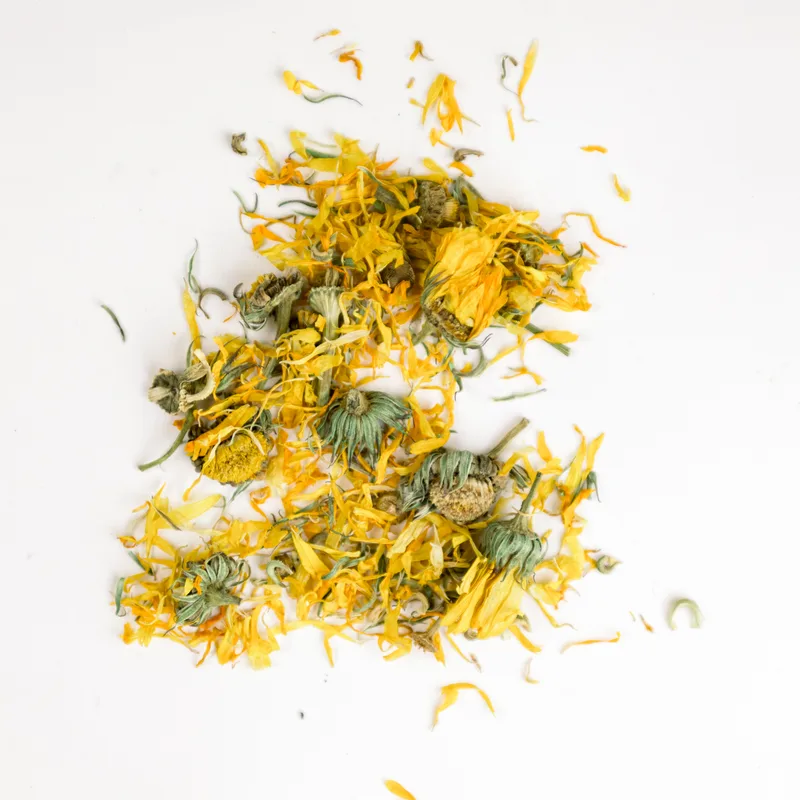
It is a daisy-family flower, and it behaves like one: easy to grow, generous with blooms, and forgiving of gardeners who forget about it. The petals are the part that matters here. Dried properly they hold their colour, which is why a pouch of them looks like it does, and why the oil turns gold rather than staying clear.
What makes it an infusion herb rather than an essential oil is simply what the flower has to give. There is not enough volatile oil in a calendula bloom to distil a bottle from, and the compounds people actually want out of it come away happily into a fat instead. So the traditional method is the one that works: put the flowers in oil and wait. That is not a folksy flourish on top of a modern process — for this particular flower it is still the process.
The Chemistry
What Actually Moves Into the Oil
Calendula is infused, not distilled — so this section is about transfer from flower to carrier, and it deliberately gives no percentages.
Sunlight, as the Method
Low and slow, rather than hot and fast
Solar infusion works because gentle warmth over a long period opens the dried plant material and lets the oil draw compounds out of it without ever getting hot enough to damage them. Two to three weeks of a sunny window does what a saucepan does in an afternoon, with far less that can go wrong. The clear jar is functional — it is there to let the light through.
The Pigments
The visible part of the extraction
The colour shift from near-clear carrier to golden oil is the part of the process you can actually watch. Colour compounds in the petals are fat soluble, so they move into the oil readily, and they are the most obvious sign that the transfer is happening at all. It is not a proxy for strength, but it is a genuine sign that something moved.
The Carrier Does Half the Work
Whatever you infuse into is most of what you get
An infused oil is mostly carrier oil. Whatever you steep the flowers in brings its own fatty-acid profile, its own feel on skin and its own shelf life, and the calendula rides along in it. That is why the choice of base is a real decision rather than a detail, and why a longer-keeping carrier makes a longer-keeping infusion.
Dryness Is the Whole Safety Margin
Water is the enemy of an infusion
Dried flowers are used rather than fresh for a concrete reason. Any water carried into the jar gives mould and rancidity somewhere to start, and an oil infusion has no preservative in it to argue back. This is the chemistry behind every instruction in the safety section below — a fully dried botanical and a fully dry jar are not fussiness, they are the method working.
Being straight about the limits of this section: there is no GC/MS report for calendula and there never will be one, because GC/MS describes a distilled essential oil and this is a dried flower steeped in a fat. Simply Earth publishes no constituent breakdown or assay for it either, which is why you will not find a number anywhere on this page. A Safety Data Sheet for Calendula Flower does exist in our operations records, from both our supplier and ourselves. What we can point you at is our testing programme. See Our Testing →
Where It Comes From
Where We Source Our Calendula
Here is the honest state of what we can tell you. We know exactly what this ingredient is — Calendula officinalis, sold as dried flowers, in a 0.25 oz pouch, distributed by Simply Earth from Waldo, Wisconsin. A Safety Data Sheet exists for it from our supplier and from us.
What we do not have is a story. There is no country of origin, no harvest window, no named grower and no years-partnered figure recorded for calendula in any of our systems — not because the relationship does not exist, but because nobody has written it down where a page like this can reach it.
We would rather leave that visibly empty than fill it with something evocative. The three figures above are small and they are all true, which we think is the better trade. If you came here wanting to know whose field these flowers grew in, that is a fair question, and the answer is one we owe you rather than one we have.
Calendula officinalis
Botanical Name
Dried Flowers
What We Sell
Infused
Not Distilled
Use It Right
Things to Remember When Making Calendula Infused Oil
For external use only. Our label says it plainly — for external use only, avoid contact with eyes, and keep out of reach of children. That goes for the dried flowers and for the oil you infuse from them.
Your flowers must be fully dry, and so must the jar. Any moisture in a solar infusion is what causes it to go mouldy or rancid. Use dried flowers rather than fresh, make sure the jar is clean and completely dry before you start, and do not be tempted to rinse anything.
Use a clear, airtight jar. Clear so the sunlight can reach the flowers, airtight so the oil does not evaporate. If some does evaporate anyway, top the jar back up with more carrier oil.
Strain it properly and discard the plant material. Once the two to three weeks are up, pour the oil through a fine mesh sieve or cheesecloth into a sealable container and throw the flowers away. Plant matter left sitting in the finished oil is the most common way a good infusion spoils early.
Estimated shelf life is 1 year. That is the figure we publish with this recipe. Store the finished oil sealed and out of direct sunlight — the windowsill is for the infusing, not for the keeping. Fixed oils go rancid rather than simply fading, so trust your nose.
Calendula is a daisy-family flower. If you have known allergies to plants in that family, patch test on a small area first and talk to your doctor before using it more widely. That is ordinary caution with any new botanical, and it is worth saying out loud for this one.
This is not an essential oil, and it is not used like one. There is no dilution rate to calculate, no drop count, and it is never diffused. If you are adding essential oils to your finished infusion, follow the dilution guidance for those oils — the infusion is the carrier.
These statements have not been evaluated by the Food and Drug Administration. This product is not intended to diagnose, treat, cure, or prevent any disease.
Real Results
What Earthies Are Saying About Calendula
"This was my first monthly subscription box and it didn't disappoint me. I've already infused my calendula oil, made the skin healing gel... I plan on using some of the infused calendula oil in the cuticle recipe coming in the July box."
Marilyn H.
Verified Buyer • Monthly Recipe Box
"The hardest part about this kit? Waiting the 2-4 weeks for the sun infused calendula oil to be ready to be used!!! LOL What a bargain to be able to make each of these four items, and have plenty leftover to make more when I run out!"
Keri Lee S.
Verified Buyer • DIY Home Remedy Salves and Ointments Kit
"I have always been interested in Essential Oils, but was always overwhelmed when it came time to use them... I have also been Solar infusing my Calendula flowers to use on burns and insect bites."
Celya F.
Verified Buyer • Monthly Recipe Box
OUR SIMPLY PURE PROMISE
What Goes Into Your Products Matters
Pure and Additive-Free
No fillers, no synthetic fragrance, no extenders.
Third-Party Tested
We test our products and publish the results.
Ethically Sourced from Quality Farms
Responsibly harvested. People and planet first.
One
Ingredient
Dried Calendula officinalis, nothing else
$2.99
For a 0.25 oz Pouch
Against a compare price of $8.99
1 Year
Est. Shelf Life
Of the finished infused oil
Your Order Changes Lives: 13% of profits fight human trafficking globally.
Calendula Infused Oil FAQ
The questions Earthies ask most — starting with the one about whether calendula essential oil exists at all.
What is calendula infused oil good for? +
Mostly for skin that is dry, rough or irritated, and for the things you make out of it. Our label describes calendula flowers as supporting the natural healing process by soothing distressed skin, which is what makes them worth infusing in the first place. The finished oil can be used on its own, or used as the carrier in balms, salves, ointments, serums and body oils.
Is there such a thing as calendula essential oil? +
Not in any meaningful retail sense, and this is the single most useful thing on this page. Calendula does not yield enough volatile oil to be distilled into a bottle the way lavender or peppermint are. What exists is calendula infused oil — dried flowers steeped in a carrier — and that is what Simply Earth sells the ingredients for. If a shop offers you a calendula essential oil, it is worth asking what is actually in the bottle.
How long does calendula oil take to infuse? +
Two to three weeks in a sunny window, shaking the jar daily. That is the timing in our published recipe. One customer reviewing our DIY kit called the wait the hardest part of the whole project, which is about right — the work is nothing and the patience is everything.
Which carrier oil should I infuse calendula into? +
Our published recipe uses avocado oil or another carrier of your choice, and our current Calendula Sun-Infused Oil kit uses fractionated coconut oil. Our team most often points people at almond, jojoba or sunflower. There is no wrong answer here — the carrier brings its own feel and its own shelf life, so a longer-keeping oil makes a longer-keeping infusion.
Can I use calendula infused oil instead of the carrier oil in a recipe? +
Yes, one for one. We were asked this directly by a customer who wanted to use her calendula sun-infused oil where a recipe called for almond oil, and the answer was an unqualified yes. A calendula infusion is a carrier oil with flowers steeped through it, so it substitutes 1:1 in skincare and body care recipes without changing any ratios.
Why solar infusion rather than heating it? +
Because it is gentler and far harder to ruin. Heat infusion gets you there in an afternoon but needs watching, and too much heat damages what you are trying to extract. Solar infusion uses low, slow warmth over two to three weeks, which asks nothing of you but a daily shake. The clear jar is part of the method rather than a styling choice — the sunlight has to reach the flowers.
How long does the finished oil last? +
The estimated shelf life we publish is one year. Store it sealed and out of direct sunlight once you have strained it — the sunny window is for the infusing stage only. Strain the plant material out properly too, because flowers left sitting in the finished oil are the usual reason a batch spoils early.
Do I need to dilute calendula infused oil? +
No. It is a carrier oil, so it is the thing other oils get diluted into. There is no dilution percentage for it, no drop count, and you never diffuse it. If you are adding essential oils to your infusion, follow the dilution guidance for the essential oil you are adding.
About the Author: Katie Veldkamp
Katie Veldkamp
Certified Aromatherapist · Co-Founder, Simply Earth
Katie Veldkamp is Simply Earth's Lead Certified Aromatherapist and the heart behind every product recommendation, recipe, and safety guide on this blog. With years of hands-on aromatherapy practice and a deep love for plant-based wellness, Katie fact-checks every health claim so that what you read is safe, science-informed, and actually useful.
Join 20,000+ Earthies Making Their Homes Natural
New recipes, usage guides, and DIY tips—delivered free.
No spam. Unsubscribe any time.
Learn by doing
Make your own natural products every month.
The Simply Earth Recipe Box ships 4 full-size essential oils, 6 natural recipes, and everything you need to make them. No guesswork.
Start My Recipe Box$39.99 for your first box, then $49.99/month. Skip, pause, or cancel anytime.