
Perfumer's Alcohol: The Ingredient That Makes DIY Perfume Actually Last

Katie Veldkamp
Certified Aromatherapist
Fact Checked & Approved
Almost everyone who tries to make perfume at home hits the same wall. You blend oils you love, you put them in a pretty bottle, and an hour later the scent has vanished — or it never really lifted off your skin at all. The missing piece usually isn't the oils. It's the base. Perfumer's alcohol is a 190-proof denatured ethanol made specifically for fragrance work, and it is the thing that takes a blend of essential oils and turns it into something that sprays cleanly, dries without stickiness, and keeps releasing scent for hours instead of minutes. It is also the answer to the question almost every DIY perfumer eventually asks: no, vodka is not the same thing, and this page explains exactly why.
Dissolves Essential Oils Completely
The difference between a blend and a separation.
 Shop Perfumer's Alcohol
BEST FOR: SIGNATURE PERFUMES & COLOGNES
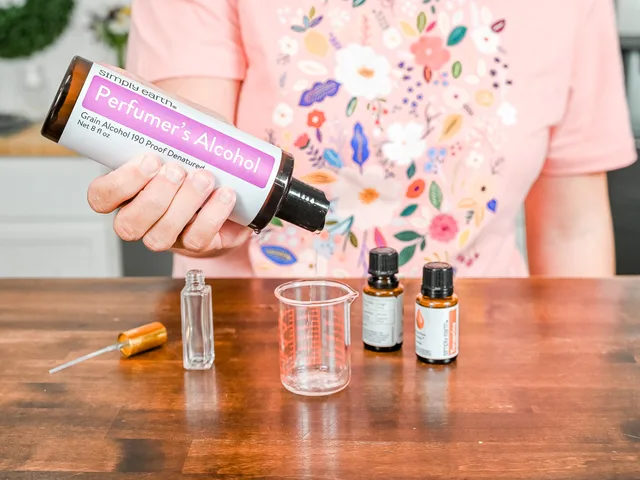
Essential oils and water do not mix — drop oil into water and it beads on the surface, which is why a water-only perfume separates the moment you stop shaking it. Perfumer's alcohol is a solvent, so the oils actually go into solution rather than floating on top of one. Simply Earth's own product notes describe it as perfect for solubilizing essential oils, and that single property is what lets each note in a blend read clearly instead of muddying together.
KATIE'S TIP
Add your oils to the alcohol first and swirl before you add anything else. Getting them fully dissolved at the start is much easier than trying to rescue a blend that has already separated.


BEST FOR: GIFTS & ANYTHING IN A GLASS BOTTLE
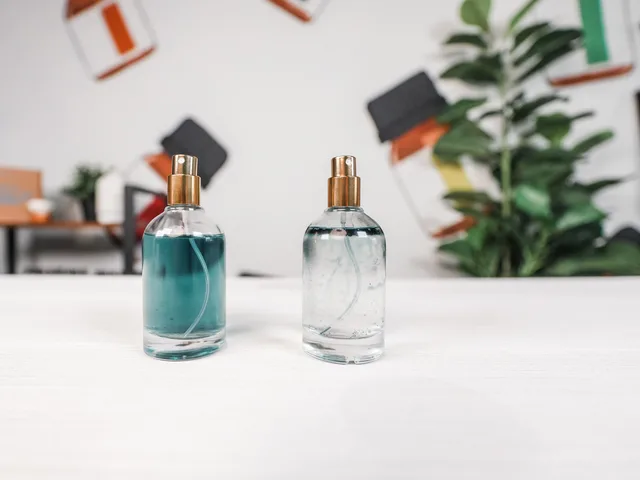
Cloudiness is the classic tell of a substitute base. When there is too much water in the mix, the dissolved oils fall back out of solution and the liquid goes hazy. Simply Earth describes this base as one that prevents cloudiness, giving your DIY perfumes and room sprays a professional, crystal-clear finish every time. If you are making something to give away, this is the benefit people notice before they ever smell it.
KATIE'S TIP
If a finished blend still looks slightly hazy, it usually means the water went in before the oils had fully dissolved. Next batch, give the oils and alcohol a full minute together first.


Carries Scent Into Sprays and Reed Diffusers Too
Not just perfume — anything that needs to throw scent.
 Shop Perfumer's Alcohol
BEST FOR: ROOM SPRAYS, LINEN MISTS & REED DIFFUSERS
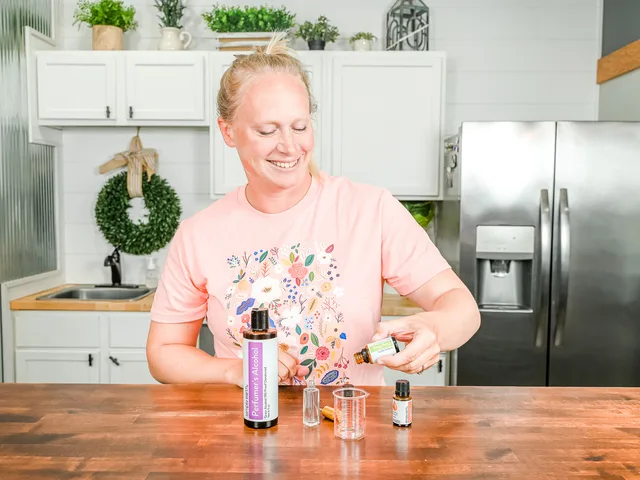
Simply Earth lists this base as suited to solubilizing essential oils in perfumes, room sprays, or reed diffusers — three quite different products that share one problem, which is getting oil to disperse evenly through a liquid and then leave it again as scent. In a reed diffuser the alcohol helps the blend travel up the reeds; in a room spray it stops the oils pooling at the top of the bottle.
KATIE'S TIP
For reed diffusers, a thinner mix climbs the reeds faster but also runs out faster. Start with the recipe's ratio before you adjust it.


Dries Fast, With No Sticky Residue
It evaporates and leaves only the scent behind.
 Shop Perfumer's Alcohol
BEST FOR: EVERYDAY WEAR & QUICK REFRESHES
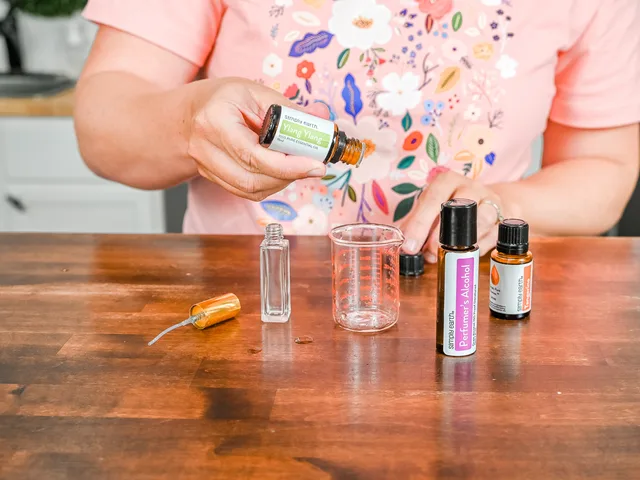
Ethanol evaporates quickly at room temperature, which is exactly what you want from a perfume base — it carries the aromatic compounds off the bottle and onto your skin or your linens, then gets out of the way. The result, as Simply Earth's original guide put it, is a product that dries fast and leaves behind a fragrance that lingers without any sticky residue. Oil-only roll-ons cannot do this; they stay on the skin as oil.
KATIE'S TIP
Spray, then wait about thirty seconds before you judge the scent. The alcohol note lifts off first and what is left underneath is the actual blend.
BEST FOR: PERFUMES, BODY SPRAYS & FACIAL MISTS
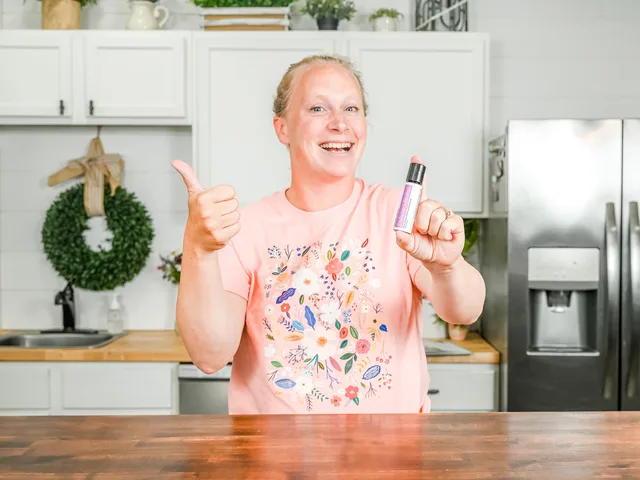
This is the distinction that matters most for anything you wear. Simply Earth's guidance is explicit — perfumer's alcohol is specifically formulated to be skin-safe, unlike rubbing alcohol, which can be harsh on the skin. That does not make it a moisturiser, and it does not remove the need to dilute your essential oils properly. It means the base itself is intended for leave-on products rather than for wiping down a countertop.
KATIE'S TIP
A skin-safe base still means diluted oils. Patch test any new blend on your inner arm before you wear it somewhere you cannot wash off.
May Help Your Formulations Keep Longer
At a high enough percentage, alcohol works against spoilage.
 Shop Perfumer's Alcohol
BEST FOR: WATER-CONTAINING SPRAYS & MISTS
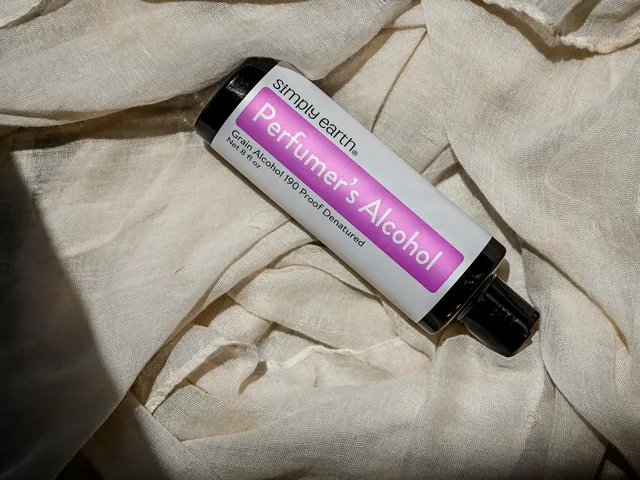
Anything with water in it can grow things. Simply Earth's original guidance is that incorporating at least 20% perfumer's alcohol into a formulation may help extend its shelf life. Worth being straight about the limits, though — alcohol at that level is a help, not a broad-spectrum preservative system, and a water-based product you intend to keep for months still wants a proper preservative. Make small batches and use them.
KATIE'S TIP
I date the bottom of every spray bottle with a marker. It is a two-second habit that saves you guessing whether a mist is from March or from last year.
USE IT IN →
Strong Enough for Cleaning Recipes
The same property, pointed at a different job.
 Shop Perfumer's Alcohol
BEST FOR: SURFACE SPRAYS & DIY CLEANING BLENDS
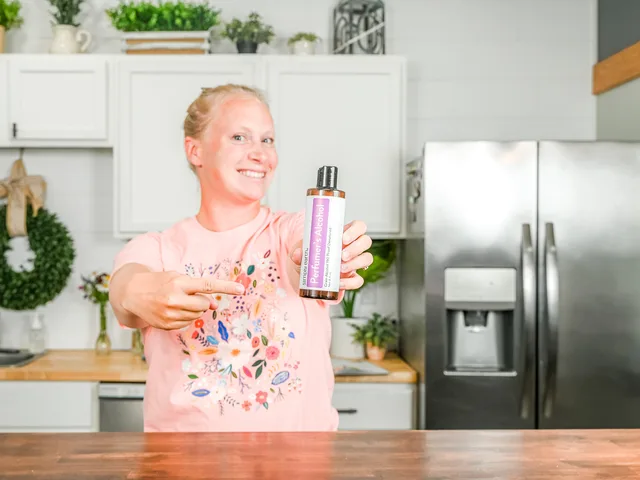
A 190-proof base is a genuinely high alcohol concentration, and that is what makes it useful in homemade surface sprays and cleaning blends — paired with vinegar and essential oils it cuts grease and evaporates without streaking. One important caveat — public-health guidance for hand sanitiser is that the finished product needs at least 60% alcohol, and mixing this base with aloe, glycerin and water lowers that percentage. A homemade blend is not tested against that standard, so treat DIY sanitiser as a nice-to-have rather than as protection you rely on.
KATIE'S TIP
For surfaces, mix it fresh in a small glass bottle rather than a big batch. High-proof alcohol will slowly craze some cheap plastic sprayers.
Put It to Work
How to Use Perfumer's Alcohol — 50 mL to No More Than 50 Drops
Signature Perfume
- • 50 mL perfumer's alcohol
- • Up to 50 drops of essential oil in total
- • Balance the drops across the notes: 15 top, 25 middle, 10 base
- • Combine in a glass spray bottle and swirl until fully dissolved
- • Let it meld at least a few days before you judge it — the blend changes
- • Heavier base-note blends want longer; our Bohemian Sunset recipe asks for 3–4 weeks
- • Spray on pulse points
Room & Linen Spray
- • 1 oz glass spray bottle
- • 1 Tbsp perfumer's alcohol
- • 30 drops of essential oil
- • 1 Tbsp distilled water
- • Add the oils to the alcohol first, then the water last
- • Shake before each use and mist into the room, not at furnishings
Reed Diffuser
- • A narrow-necked glass bottle and a bundle of reeds
- • Perfumer's alcohol as the carrier, essential oils as the scent
- • Flip the reeds every few days to refresh the throw
- • Follow the recipe ratio first — a thinner mix climbs faster but empties faster
Surface & Cleaning Spray
- • Perfumer's alcohol paired with vinegar and essential oils
- • Mix small, fresh batches in a glass bottle
- • Evaporates without streaking on glass and hard surfaces
- • Spot-test before using it on finished wood or natural stone
DIY Hand Sanitiser
- • Perfumer's alcohol with vegetable glycerin, aloe vera and essential oils
- • Glycerin and aloe keep it from drying out your hands
- • Every non-alcohol ingredient lowers the finished alcohol percentage
- • Not tested to the 60% public-health standard — soap and water first
Know the Difference
Perfumer's Alcohol vs. Vodka vs. Rubbing Alcohol
Can I just use vodka? It is the most common question about this ingredient, and the honest answer is that you can make something — it just will not be the thing you were trying to make. The gap is mostly water.
Swipe to compare →
Perfumer's Alcohol 190 proof, denatured, made for fragrance | Vodka Typically 80 proof (40% alcohol) | Rubbing Alcohol Isopropyl, made for disinfecting | Witch Hazel Water-based botanical extract | |
|---|---|---|---|---|
| Alcohol strength | 95% ethanol — high enough to take oils fully into solution | Around 40% — the rest is water, which is where the trouble starts | High, but isopropyl rather than ethanol | Low; mostly water with a small amount of alcohol |
| Made for fragrance? | Yes — formulated specifically for perfumery | No — made for drinking | No — made for disinfecting | No — made as a toner and light spray base |
| Clarity of the result | Crystal clear; formulated to prevent cloudiness | Often cloudy, because the water content drops oils back out of solution | Clear, but the isopropyl smell competes with your blend | Usually cloudy with more than a few drops of oil |
| Safe for leave-on skin products? | Yes — Simply Earth formulates it to be skin-safe | Drinkable, but not formulated for perfumery | No — Simply Earth notes it can be harsh on the skin | Yes, commonly used in sprays and toners |
| Best use | Perfumes, colognes, body and room sprays, reed diffusers | Drinking | Cleaning and disinfecting surfaces | Toners and light facial or linen mists |
| Simply Earth | We carry this | — | — | — |
Works Alongside
What Perfumer's Alcohol Mixes With
This one has no aroma to pair with anything. What matters instead is what it will happily carry — these are the ingredients that turn up alongside it in Simply Earth's own perfume, spray, diffuser and cleaning recipes.
Why Alcohol at All
Why Perfume Is Made With Alcohol in the First Place
For most of history, perfume was fat. Scent was captured in oils, waxes and pomades and worn close to the skin, because that was the only way to hold aromatic material in place. Those perfumes were intimate by necessity — you had to be near someone to smell them.
Alcohol changed the shape of the whole craft. A volatile spirit will hold aromatic compounds in solution and then leave, which means the scent lifts off the skin as a cloud rather than sitting on it as a film. That is where the familiar idea of a perfume having a top, a heart and a base comes from — different molecules evaporate at different speeds, and an alcohol base is what lets you experience that sequence over hours instead of all at once.
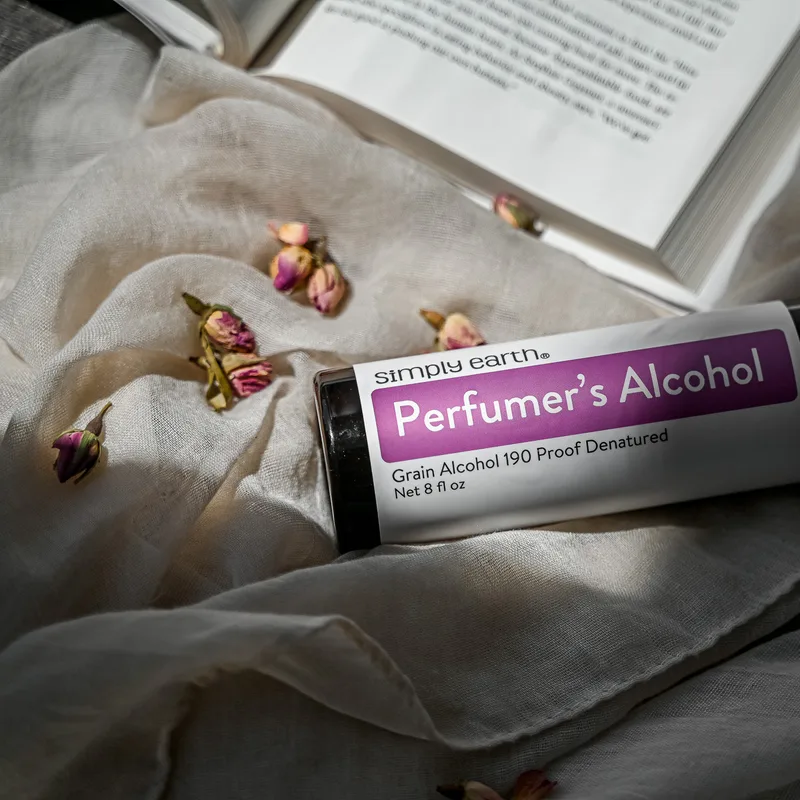
The denatured part is regulatory rather than aromatic. Alcohol intended for perfumery and cosmetics has a small amount of a denaturing agent added so that it cannot be drunk, which is what separates it from beverage spirits. As Simply Earth's own guide puts it, denaturation renders the alcohol undrinkable while maintaining its effectiveness in blending essential oils and aromatic compounds. You lose nothing that matters to the perfume, and you gain a base sold as a formulating ingredient rather than as a drink.
What's Actually In the Bottle
What's In Perfumer's Alcohol
There is no GC/MS report for this one, and there should not be — it is a manufactured solvent rather than a distilled plant oil.
190 Proof Ethanol
95% alcohol · The working strength
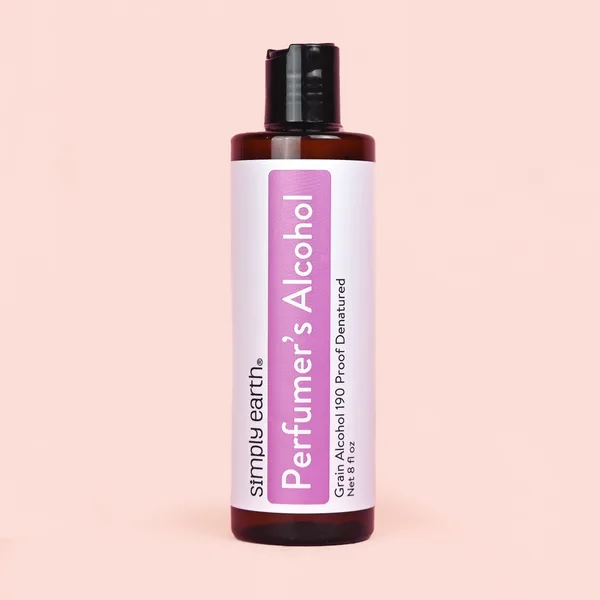
Simply Earth's perfumer's alcohol is 190 proof, or 95% ethanol. That concentration is the whole point — it is high enough to take essential oils fully into solution and leaves almost no water behind to push them back out again. A 40% spirit simply cannot do the same job.
The Denaturant
What makes it undrinkable
A denatured alcohol has a small quantity of an additive included so that the ethanol cannot be consumed. Simply Earth's guidance is that this process makes the alcohol undrinkable while leaving its ability to blend essential oils and aromatic compounds intact — which is why cosmetic and perfumery alcohol is sold this way.
Clean Evaporation
Why nothing sticky is left behind
Ethanol evaporates readily at room temperature, carrying the aromatic molecules with it and leaving no oily film. This is what produces the fast-drying, non-sticky finish, and — combined with a formulation built to prevent cloudiness — the clear, professional look of the finished product.
Where It Comes From
The Honest Answer About Sourcing
Most pages in this series can tell you where a plant grew and who grew it. This one cannot, and pretending otherwise would be the wrong kind of story. Perfumer's alcohol is a manufactured formulating ingredient — denatured ethanol blended to a specific strength for fragrance work. There is no single-origin farm behind it, no harvest season, and no batch of botanical material to trace.
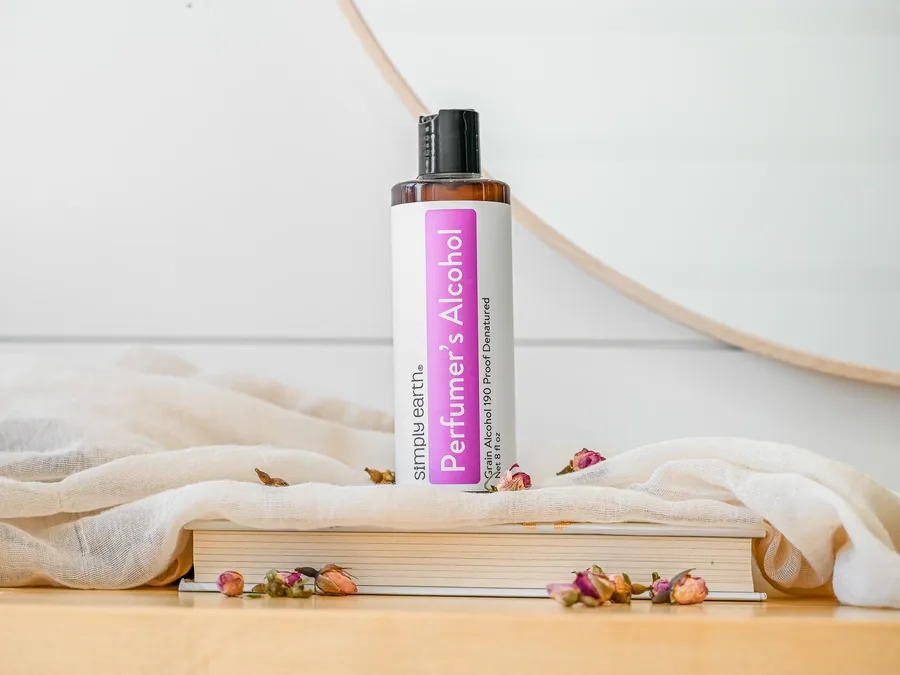
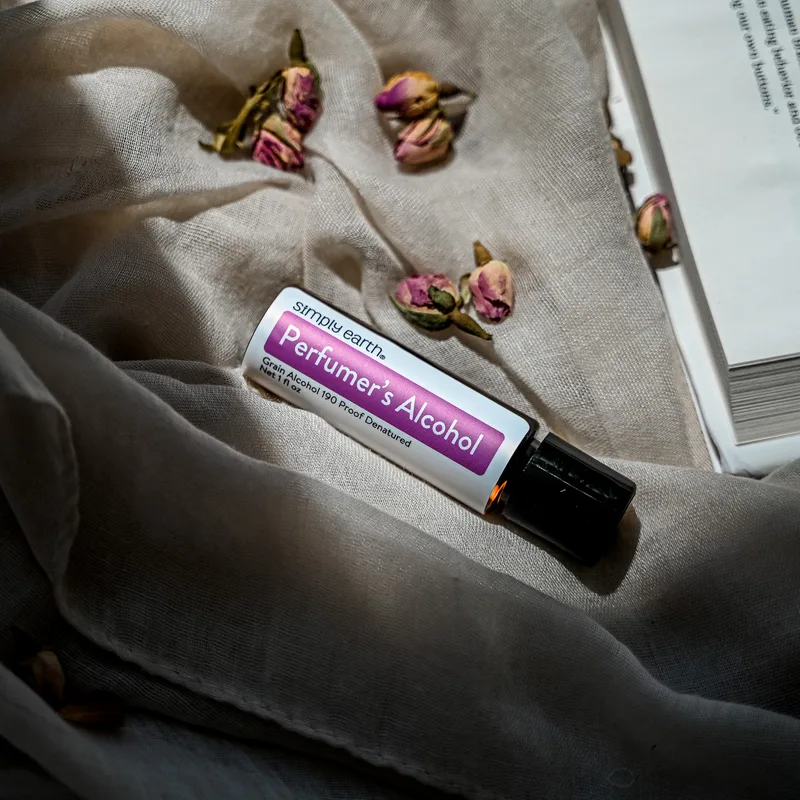
What we can tell you is what is in the bottle and what it is for. Simply Earth's perfumer's alcohol is 190 proof — 95% ethanol, denatured — and it is sold as a base for perfumes, body and room sprays, reed diffusers and cleaning blends rather than as an aromatic in its own right. It carries the same Earth-Tastic Guarantee as everything else in the range.
The reason it sits in an essential oil company's catalogue at all is that it solves a problem the oils create. We spend a great deal of care on what goes into a bottle of essential oil; that care is wasted if the only way to wear it is neat on the skin or floating on top of a jar of water. This is the ingredient that makes the rest of the shelf usable.
Use It Right
Safety & Shelf Life
Highly flammable. This is the safety point that matters most and the one people skip. Keep it away from open flame, stovetops, candles and heat sources, and blend in a well-ventilated space.
For external use only. It is denatured specifically so that it cannot be consumed. Keep it out of reach of children and pets.
Avoid contact with eyes. If contact occurs, flush immediately with water.
Shelf life is 2 years from the date the bottle is opened. Label the bottle when you open it so you are not guessing later.
Still dilute your essential oils properly. A skin-safe base does not make an undiluted oil safe. See our dilution chart for guidance, and patch test any new blend on your inner arm first.
Take care when using essential oils around pregnant women, children and pets. Consult your doctor, and always give animals a way to leave the room.
Do not treat DIY sanitiser as protection you rely on. Public-health guidance is that a finished hand sanitiser needs at least 60% alcohol, and a homemade blend is not tested against that standard.
These statements have not been evaluated by the Food and Drug Administration. This product is not intended to diagnose, treat, cure, or prevent any disease.
Real Results
What Earthies Are Saying
"This is my first experience with perfumers alcohol. It is an excellent product. I've already made a couple different perfumes and reed diffusers with it. So much fun. Thank you!"
Rosanna A.
Verified Buyer • Perfumer's Alcohol
"I made my very own perfume blend which I named Ambience — 15 drops of ylang ylang and 25 drops of fragrance oil in a 10 ml perfume bottle. Swirl the oils together, then add the perfumers alcohol and lightly shake. Let it meld in a cool dry place for 24 to 48 hours and enjoy."
Brenda D.
Verified Buyer • Midnight Garden Safer Fragrance Oil
"I also made a spray air freshener with water and perfumers alcohol — which I love as it's so easily portable, and just a few mists do the job perfectly. Make one for your kitchen and another for the bedrooms!"
Rivky B.
Verified Buyer • Pure Space Essential Oil Blend
OUR SIMPLY PURE PROMISE
What Goes Into Your Products Matters
190 Proof (95% Ethanol)
The strength fragrance work actually needs.
Formulated Skin-Safe
Made for leave-on products, not for wiping counters.
Earth-Tastic Guarantee
Try it risk-free, like everything else we sell.
Your Order Changes Lives: 13% of profits fight human trafficking globally.
Perfumer's Alcohol FAQ
The questions people actually ask before their first batch — ratios, substitutes, and why it went cloudy.
What is perfumer's alcohol? +
It is a high-strength denatured ethanol made specifically for fragrance work. Simply Earth's is 190 proof — 95% ethanol — with a denaturant added so it cannot be consumed. It has no scent of its own; its job is to dissolve essential oils and aromatic compounds so they spray cleanly, dry without residue and release scent gradually.
Can I use vodka instead of perfumer's alcohol? +
You can make something, but it will not perform the same way. Vodka is typically around 40% alcohol and most of the remainder is water, which is what makes oils fall back out of solution and turns the blend cloudy. Perfumer's alcohol is 95% ethanol and is formulated to stay clear.
How much essential oil do I use per bottle? +
Simply Earth's guidance for a perfume is up to 50 drops of essential oil in 50 mL of perfumer's alcohol — and fewer is fine. A good starting split across the notes is 15 drops top, 25 drops middle and 10 drops base. For a 1 oz room spray, use 1 Tbsp perfumer's alcohol, 30 drops of essential oil and 1 Tbsp distilled water.
How long does a homemade perfume need to sit before I use it? +
Longer than you think, and it depends on the blend. Simply Earth's general guidance is to let a perfume meld for a few days before you judge it, and one Earthie who reviewed the product rests hers in a cool, dark place for 24 to 48 hours. But our own Bohemian Sunset perfume recipe asks you to let the scent develop for 3 to 4 weeks. The heavier the base notes, the longer it wants. Give it at least a few days, and do not throw out a blend that smells harsh on day one.
Is perfumer's alcohol safe on skin? +
Simply Earth formulates it to be skin-safe, and specifically contrasts it with rubbing alcohol, which can be harsh. That said, a skin-safe base does not make an undiluted essential oil safe — dilute your oils properly and patch test any new blend before wearing it.
Why did my DIY perfume turn cloudy? +
Almost always too much water, or water added before the oils had fully dissolved into the alcohol. Add your essential oils to the perfumer's alcohol first, swirl until everything is in solution, and only then add any distilled water.
Can I make hand sanitiser with it? +
You can make a sanitising blend with vegetable glycerin, aloe vera and essential oils, and it is a common DIY project. Be realistic about it, though — public-health guidance is that a finished hand sanitiser needs at least 60% alcohol, and every non-alcohol ingredient you add lowers that percentage. Soap and water remains the better option.
How long does perfumer's alcohol last? +
Two years from the date the bottle is opened. Keep it tightly closed, away from heat and flame, and write the opening date on the bottle so you are not guessing.
About the Author: Katie Veldkamp
Katie Veldkamp
Certified Aromatherapist · Co-Founder, Simply Earth
Katie Veldkamp is a Certified Aromatherapist and co-founder of Simply Earth. She personally formulates and reviews SE's essential oil blends and verifies all benefit claims on Simply Earth content before it goes live.
Join 20,000+ Earthies Making Their Homes Natural
New recipes, usage guides, and DIY tips — delivered free.
No spam. Unsubscribe any time.
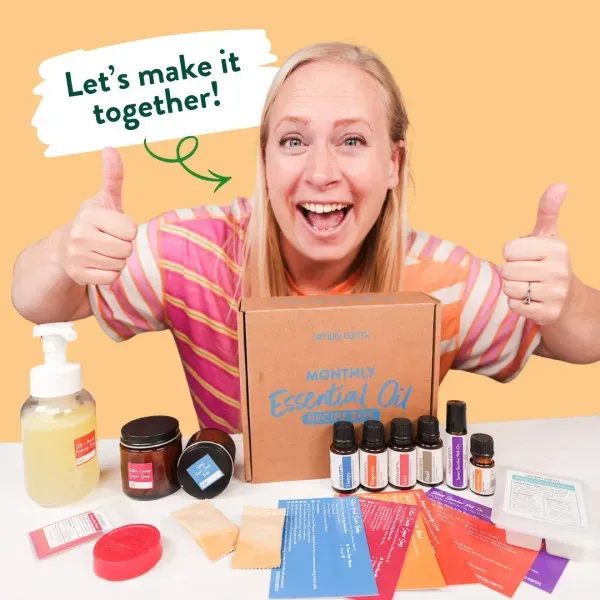
Learn by doing
Make your own natural products every month.
The Simply Earth Recipe Box ships 4 full-size essential oils, 6 natural recipes, and everything you need to make them. No guesswork.
Start My Recipe Box$39.99 for your first box, then $49.99/month. Skip, pause, or cancel anytime.