
Mica Powder Safety: What You Need to Know Before You Color

Katie Veldkamp
Certified Aromatherapist
Fact Checked & Approved
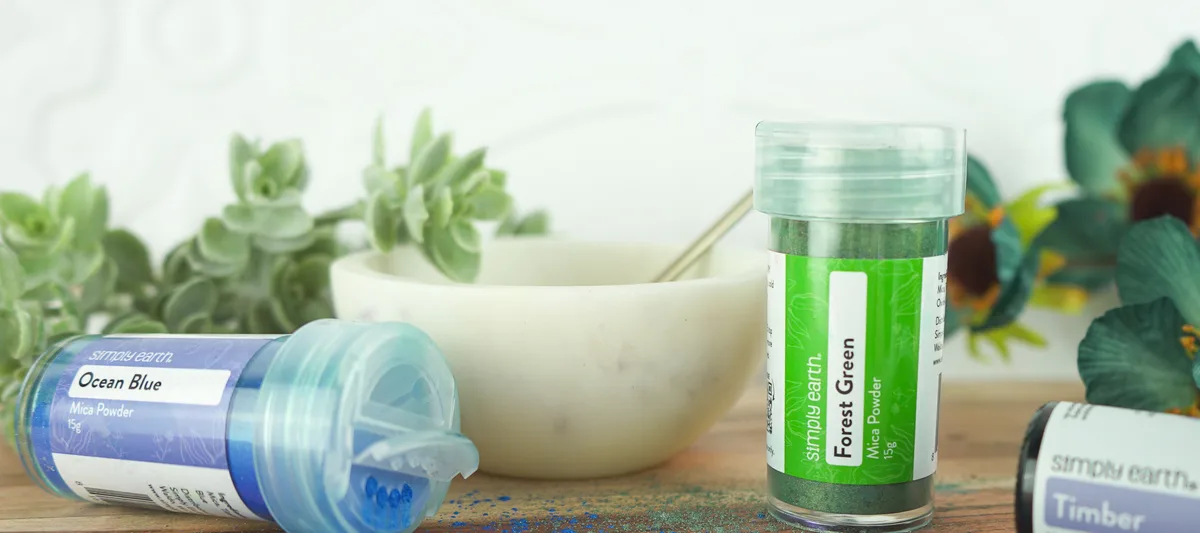
Mica powder is the easiest way to get real color into a DIY product, and it is also the ingredient people most often use without checking. The part that catches makers out is that "mica powder" is not one ingredient with one safety answer. It is mica — a mined mineral — blended with colorants, and it is the colorants that decide where a given color can legally and safely go. Nine of the twelve colors we carry are cleared for lips, eyes, bath bombs and soap. Three of them are not, and we pulled those three from our own bath bomb recommendations after a second look at the evidence. Below is the full chart, the reason behind it, and the handling details — dispersing, measuring, and the dust mask nobody mentions — that make the difference between a clean pour and a clumpy one.
Free Download
Want the safety chart on one page?
Get our free Mica Powder Cheat Sheet — the full lip, eye, bath bomb and soap chart for all 12 colors, plus dispersal ratios, measuring tips and a recipe example.
It's a Mined Mineral, Not a Dye
The base of every jar is stone, not a synthetic colorant.
 Shop Mica Powder
BEST FOR: MAKERS AVOIDING SYNTHETIC DYES
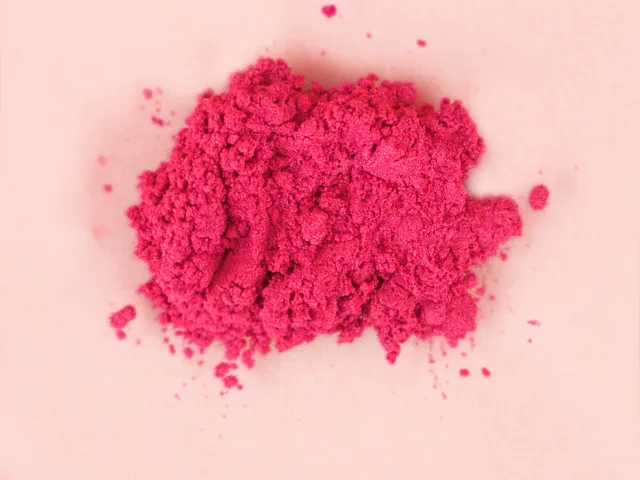
Mica is a naturally occurring stone mineral — off-white, flaky and naturally shimmery — and it is what the FDA lists under Color Index 77019. Our own Mica Powder Cheat Sheet puts it plainly: Simply Earth mica powder is all natural and contains no dyes, only natural pigments and oxides, and every component can be found in nature. That matters practically, not just philosophically. Plant and food dyes like beet root powder are not listed by the FDA for use as cosmetic colorants, so a maker who wants real color and wants to stay inside the rules has a much shorter list to choose from than the internet suggests. Mica is on it.
KATIE'S TIP
If you want to know exactly what is in the jar you are holding, the ingredient line is printed on every label — and it changes by color. Pearl is mica and titanium dioxide only. Ocean Blue adds ultramarine blue. That one line is what drives everything in the safety chart further down.
USE IT IN →


A Pinch Genuinely Does the Job
Our own recommended starting dose is an eighth of a teaspoon.
 Shop Mica Powder
BEST FOR: SMALL BATCHES AND FIRST ATTEMPTS
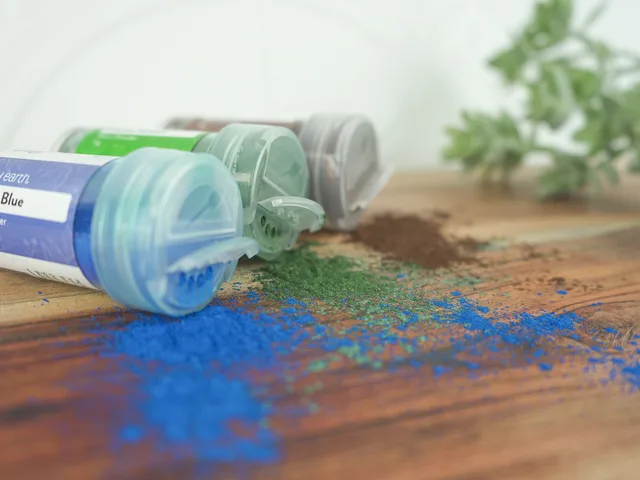
The quick facts on our cheat sheet give a recommended use of an eighth of a teaspoon to start, adding more as needed — and in most small-batch recipes you will not need much more than that. This is the quality that makes mica forgiving. A colorant you have to add in bulk changes the texture and the economics of a recipe; one that works at a pinch does not. It is why a single 15g jar lasts most makers through a great many batches, and why the 1.5g sample packets are a real way to try a color rather than a token. Recipes in our own library bear this out — several call for as little as 1/32 of a teaspoon.
KATIE'S TIP
Because the doses are so small, eyeballing it will not give you the same color twice. Mini measuring spoons go down to 1/64 tsp — the ones labelled tad, dash, nip, smidgen and drop — and a cosmetic scale is more precise still. If you want a recipe you can repeat, measure it.


BEST FOR: PRODUCTS YOU MAKE AHEAD OR GIFT
This is the difference that turns people into mica users. Our cheat sheet tells the story from Katie's own bench: beet root powder worked in lip gloss recipes at first, but over time it sank out of the product, because beet root wants to be with water rather than oil. Mica powders mix well with oil and will not sink out over time, which produces more consistent, evenly colored products that keep their color. On the mineral side the reason is straightforward — the safety data sheet for our pigments lists them as insoluble in water and stable under normal conditions. A pigment that does not dissolve and does not react is a pigment that still looks right three months later.
KATIE'S TIP
Stability is not the same as being heat-proof. The same data sheet lists high temperature as a condition to avoid and notes the material decomposes rather than melting cleanly, so add mica to melted bases as they cool rather than holding them hot.

It Sits on the FDA's Permitted Color List
Listed as a color additive — which is not the same as "FDA approved".
 Shop Mica Powder
BEST FOR: ANYONE SELLING WHAT THEY MAKE
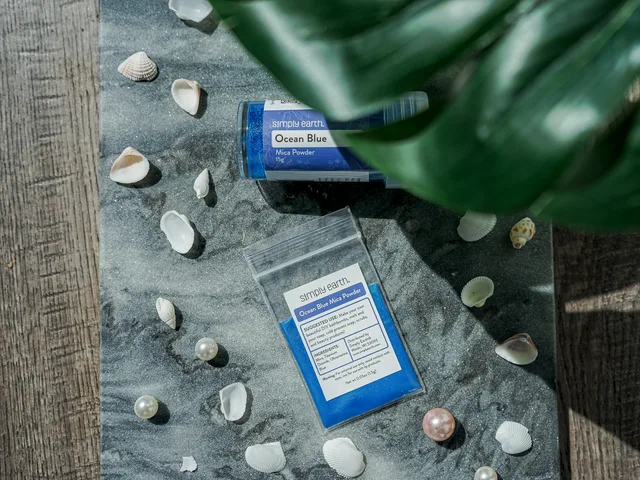
Worth being precise about, because the wording matters. The FDA does not "approve" finished cosmetics, and it specifically cautions against that phrase on cosmetic labelling. What it does do is publish a list of color additives permitted for use in cosmetics, and mica and the colorants in our powders are on it. Crucially, that listing is not a blanket pass — each additive is listed against intended-use categories: eye area, general use including the lip area, and external use. That is the whole basis of the chart further down this page, and it is why two jars that look equally harmless can have different rules attached.
KATIE'S TIP
If you sell what you make, read the listing for the specific colorant rather than for "mica". The restriction almost never lands on the mica — it lands on the ultramarine, the chromium oxide green or the manganese violet blended with it.
USE IT IN →


Every Color We Carry Works in Soap
Soap sits in its own regulatory category, so the colorant limits lift.
 Shop Mica Powder
BEST FOR: SOAP MAKERS
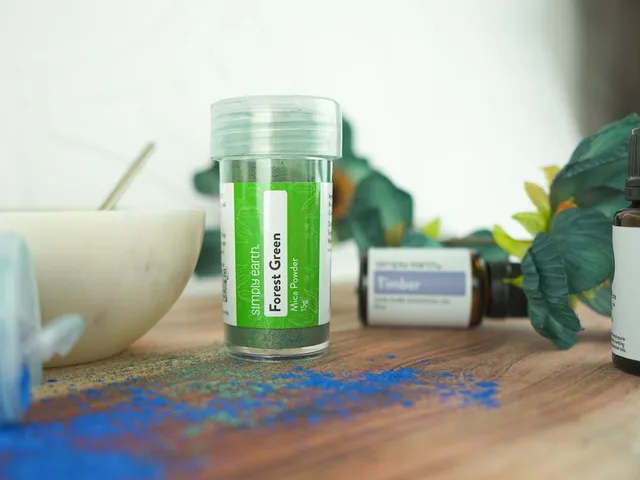
This is the one clean answer on the whole page. The FDA classifies soap as a separate product category from cosmetics — soap is made to cleanse, while a lotion, balm or gel can be doing several other jobs — and because soap falls outside the cosmetic category, the intended-use limits on cosmetic colorants do not apply to it. In practical terms: all twelve Simply Earth mica colors can be used in soap, including the three that are restricted everywhere else. Melt and pour, cold process, or a glycerin base — the color list is the full list.
KATIE'S TIP
Melt and pour is the one place mica clumps, because there is no carrier oil to carry it. Disperse it first in 99% isopropyl alcohol — roughly 1 tsp alcohol to ¼ tsp mica — then stir that into the base. The alcohol flashes off within the hour and takes its smell with it.
Twelve Colors Built to Be Mixed
The range is a palette, not twelve separate decisions.
 Shop Mica Powder
BEST FOR: CUSTOM SHADES AND COLOR MATCHING
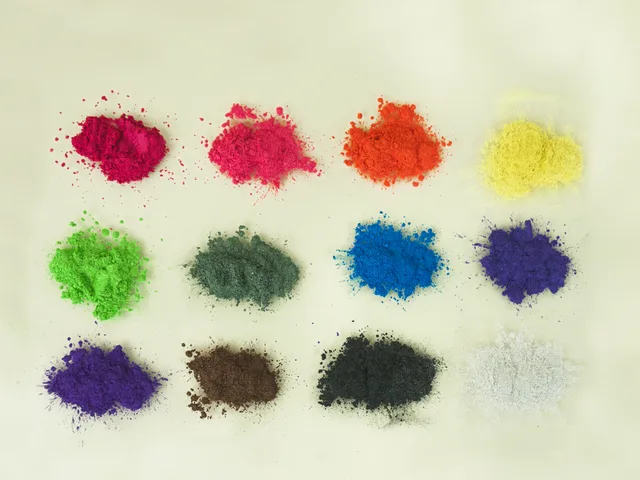
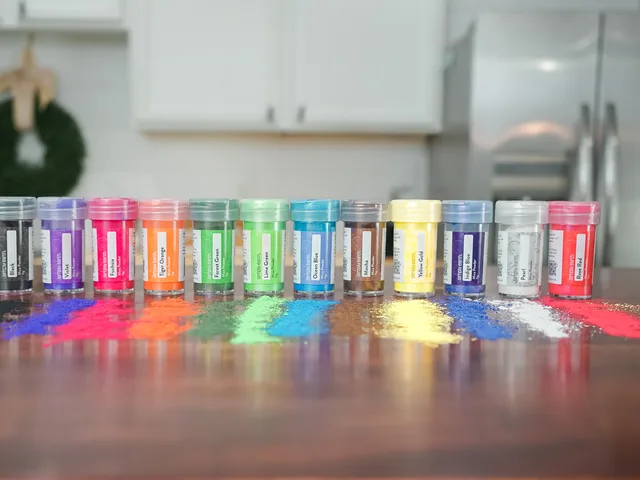
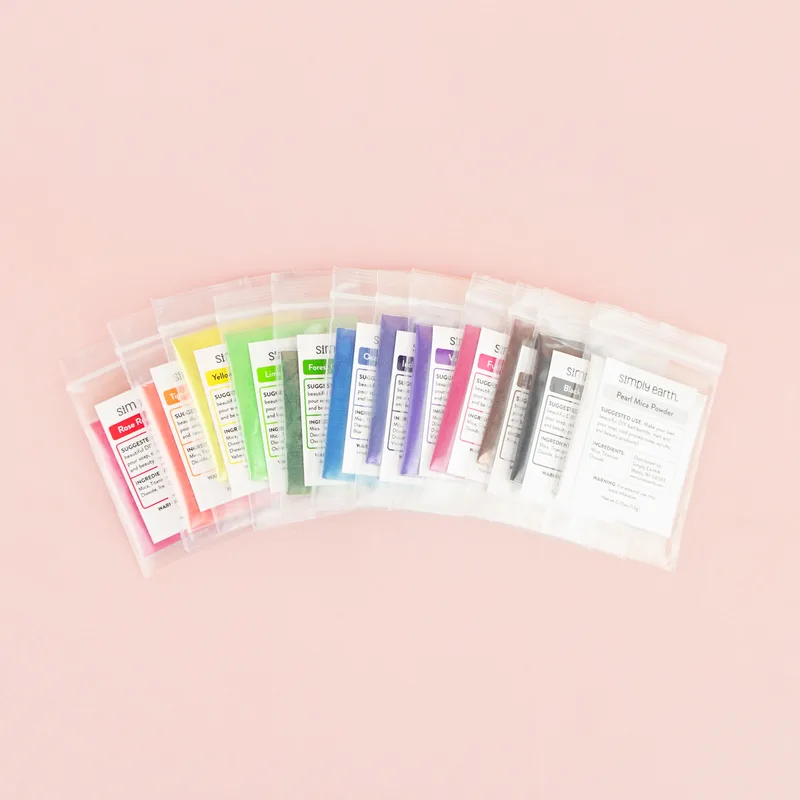
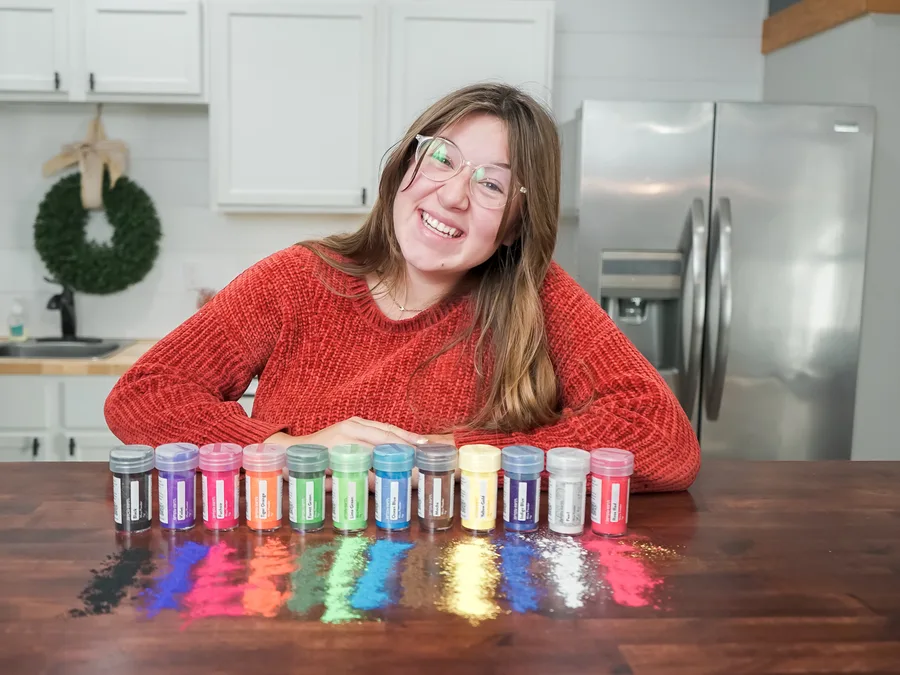
We carry twelve: Fuchsia, Rose Red, Tiger Orange, Yellow Gold, Lime Green, Forest Green, Ocean Blue, Indigo Blue, Violet, Pearl, Mocha and Black — available individually in 15g jars with sifter caps, or as a sample pack of all twelve in 1.5g packets. Because they are all the same kind of material, they blend with each other predictably, which is what makes custom shades realistic rather than a gamble. Pearl is the one worth calling out separately: it is mica and titanium dioxide with no added colorant, so it lightens and adds shimmer to any other color without shifting the hue.
KATIE'S TIP
If you are matching a shade, mix your colors in a little carrier oil first and look at them on white paper. Dry powder reads much darker in the jar than it will in a finished lotion or balm.
USE IT IN →

Insoluble, Odorless and Unreactive
It adds color without adding anything else to your formula.
 Shop Mica Powder
BEST FOR: RECIPES BUILT AROUND A SCENT
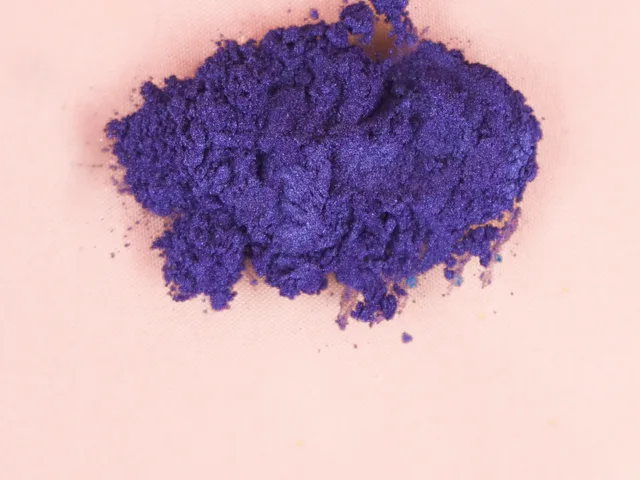
A colorant that brings its own smell will fight whatever you have blended. Mica does not — our quick facts list its odor as simply none, and the safety data sheet agrees. It is also insoluble in water and stable under normal conditions, with a particle size in the 10–60 micron range, which is fine enough to disappear into a balm without grit. The practical upshot is that mica is one of the few things you can add to a recipe that changes only the one variable you wanted to change. Shelf life is listed at two years stored cool, dark and dry.
KATIE'S TIP
Keep it away from strong acids, strong alkalis and oxidizing agents — those are the incompatible materials named on the data sheet. In ordinary body care that is rarely an issue, but it is worth knowing if you are formulating something unusual.
USE IT IN →

Put It to Work
How to Use Mica Powder
Body butters, scrubs & lotions
- • Stir the mica into a liquid oil first — almond oil or melted coconut oil work well — then add that colored oil to your recipe
- • Add more and stir again if you want it more vibrant; it is easier to build color up than to take it back out
- • This is the easiest category to work in, because the carrier oil does the dispersing for you
Melt & pour soap
- • There is no carrier oil to carry the pigment, so mica added straight to the base tends to clump
- • Disperse it first in 99% isopropyl alcohol — about 1 tsp alcohol to ¼ tsp mica — until it blends smoothly, then stir that into the melted base
- • The alcohol evaporates and does not stay in the soap; after an hour or so you will not be able to smell it
- • All twelve colors are cleared for soap, so this is the one place you can use the whole range
Bath bombs
- • Mix the mica into your baking soda first — baking soda is absorbent and helps the color blend evenly and more vibrantly
- • Expect it to float. Mica mixes with oil rather than water, so it rises with the oils in the bomb and then sticks to any soap scum on the tub
- • Rinse the tub down before and after to stop rings forming, or add emulsifying wax to the recipe so the mica goes down the drain with the water
- • Nine of our twelve colors are cleared for bath bombs. Lime Green, Forest Green and Ocean Blue are not — see the chart below
Lip balm & makeup
- • Add the mica to the melted oils before you pour
- • Use a lip-safe color. Lime Green, Forest Green and Ocean Blue should not go in lip balms, lipsticks or any other lip recipe
- • Every other color we carry is cleared for the lip area and for the eye area, which is what makes DIY eyeshadow and blush workable
Measuring & storage
- • Start at ⅛ tsp and build from there
- • Eyeballing works, but will not repeat. Mini measuring spoons go to 1/64 tsp, and a cosmetic scale is more precise again
- • Wear a dust mask while you measure. Mica is very fine and goes airborne easily, and inhaling it is the one real hazard in normal use
- • Store cool, dark and dry. Expected shelf life is two years
Know the Difference
Which Colors Are Safe Where?
This is the chart the page exists for, and the honest version of it has an exception in it. Nine of our twelve colors are cleared for lips, eyes, bath bombs and soap. Three — Lime Green, Forest Green and Ocean Blue — are not, because of the specific colorants blended into them rather than because of the mica. Every color we sell is fine in soap. The last two columns are things we do not sell, included because they come up constantly when people research natural colorants.
Swipe to compare →
The Unrestricted Nine Fuchsia · Rose Red · Tiger Orange · Yellow Gold · Indigo Blue · Violet · Pearl · Mocha · Black | Lime Green · Forest Green · Ocean Blue Restricted by their colorants | Synthetic Mica Fluorphlogopite — not sold by Simply Earth | Plant & Food Dyes Beet root and similar — not sold as colorants | |
|---|---|---|---|---|
| Lip products | Yes | No — chromium oxide green and ultramarines are not listed for the lip area | Depends on the colorant blended with it, same as natural mica | Generally not listed by the FDA as cosmetic colorants |
| Eye area | Yes | Yes — the eye-area listing is the one these three do hold | Depends on the colorant | Not listed |
| Bath bombs | Yes | No — we withdrew this recommendation ourselves; see below | Depends on the colorant | Not listed |
| Soap | Yes | Yes — soap sits outside the cosmetic colorant rules entirely | Yes | Unreliable — most fade or shift |
| What's in it | Mica and titanium dioxide, plus iron oxides, manganese violet or tin dioxide depending on the shade | Mica and titanium dioxide plus chromium oxide green, chromium hydroxide green or ultramarine blue | Lab-grown mica rather than mined, chemically near-identical | Plant and food matter, which behaves very differently in oil |
| Sold by Simply Earth | Yes — 15g jars, or all twelve in the sample pack | Yes — same jars and sample pack, with the limits on the label | No | No |
| Where to begin | Cleared for every use | — | — | — |
Perfect Pairs
What to Mix Mica Powder With
Mica has no scent of its own, so this is not a blending question in the way it is on an oil page — it is about what you disperse it in. The first two are the everyday carriers that do the work for you. Isopropyl alcohol is the melt-and-pour fix, baking soda is the bath bomb fix, and emulsifying wax is what stops a colored bath bomb leaving a ring around the tub. The rest are bases mica routinely goes into in our own recipes.
Where It Started
What Mica Actually Is
Mica is a rock-forming mineral, and an unusually common one. It occurs as a silicate that splits into thin, flexible, highly reflective sheets — which is why you can find it glinting on a hiking trail on a sunny day, and why it has been used decoratively for a very long time before anyone put it in a lip balm. In its raw state it is off-white and shimmery rather than colorful. The color in a jar of mica powder is not the mica.
That is the single most useful thing to understand about this ingredient. Oxides and mineral pigments are added to the mica to produce the shade — iron oxides, ultramarines, chromium oxides, manganese violet, titanium dioxide, tin dioxide — and it is those additions that carry the regulatory restrictions. Our own cheat sheet is direct about what we do and do not put in: Simply Earth mica powder is all natural and contains no dyes, only natural pigments and oxides, and every component can be found in nature.
There is also a lab-made version, and it is worth knowing the name because you will see it on other brands' labels. Synthetic mica is called fluorphlogopite. It is close to chemically identical to the mined mineral, and its appeal is that growing it in a lab sidesteps the supply-chain questions that mined mica raises. We do not carry it — the mica in our powders is mined, and the next section is about what we know and do not know regarding where it comes from.
What's Inside
What's Actually in the Jar?
Mica is a mineral, so there is no GC/MS report and no aroma constituents to publish — those belong to essential oils. What it has instead is a composition, and our supplier publishes one. The percentages below come from the safety data sheet for one of our pigments and are representative rather than identical across all twelve; the exact ratio shifts with the color.
Mica
CAS 12001-26-2 · CI 77019 · 50–55% of the blend
The mineral base, and the reason the powder shimmers rather than simply being colored. On the safety data sheet our supplier provides, mica makes up roughly half to a little over half of the blend by composition and is listed as not classified for hazard. It is the component that is on the FDA's permitted color additive list in its own right, and it is the component that is chemically inert in a formula.
Titanium Dioxide
CAS 13463-67-7 · CI 77891 · 44–49% of the blend
The second-largest component by a wide margin, and the one doing the opacity and brightness. It is what makes Pearl work as a straight lightener with no added color, and it is why a pinch of mica reads clearly against an oil base rather than disappearing into it. Like the mica, it is listed as not classified on the supplier data sheet.
Oxides and mineral pigments
Iron oxide, ultramarine, chromium oxide, manganese violet, tin dioxide
The smallest fraction and the entire reason the safety chart exists. In the sheet we checked, iron oxide accounted for under one percent of the blend — and yet it is this fraction, varying by color, that determines whether a jar can go near a lip or into a bath. Chromium oxide green, chromium hydroxide green and ultramarine blue are the three that carry restrictions across our range.
The INCI on our own quick-facts sheet reads Mica, Titanium Oxide, plus oxides or pigment depending on color — and that last clause is the important one. Physically the powder is insoluble in water, odorless, with a particle size of 10–60 microns and a density around 3.0 kg/L. Shelf life is two years stored cool, dark and dry. If you want to see how the colors actually behave against each other, the twelve-color sample pack is the cheapest way to find out. Shop the Mica Powder Sample Pack →
Where It Comes From
Where Our Mica Comes From
Mica sourcing deserves a straight answer rather than a warm one, because mined mica has a genuinely documented association with child labor in parts of the global supply chain. That is the reason a section like this exists on a colorant page at all, and it would be wrong to skip past it.
Here is what our own records actually hold. Our mica pigments are supplied by Kolortek Co., Ltd., based at No. 9 Haikou Road, Huaian, Jiangsu, China. On file we have a signed declaration from Kolortek addressed to Simply Earth, dated 27 September 2021, stating that the company does not condone child labor and has no products involved with it. We also hold safety data sheets from the same supplier for the individual pigments. Our cheat sheet describes our mica as ethically sourced, and this declaration is the document that statement rests on.
We would rather tell you the shape of that evidence than let it sound stronger than it is. A supplier declaration is a supplier's own statement, not an independent third-party audit, and ours is now several years old. Our records name the supplier and the country of manufacture; they do not name the specific mine the mineral is worked from, and we are not going to invent one. If the question of mined versus lab-grown mica is the deciding one for you, the honest position is that we sell mined mica from a supplier who has declared no child labor in writing — and that a synthetic fluorphlogopite, which we do not carry, avoids the question rather than answering it.
Use It Right
Things to Remember When Using Mica Powder
Avoid inhaling it. This is the real hazard in ordinary use, and it is printed on our own labels — mica is a very fine powder that goes airborne easily. Our cheat sheet recommends wearing a dust mask while you measure, and the supplier data sheet lists respiratory irritation, cough and difficulty breathing under repeated long-term exposure.
Work in a ventilated spot and do not lean over the bowl while the powder is dry and moving. The data sheet's advice is to provide adequate ventilation and avoid dust generation.
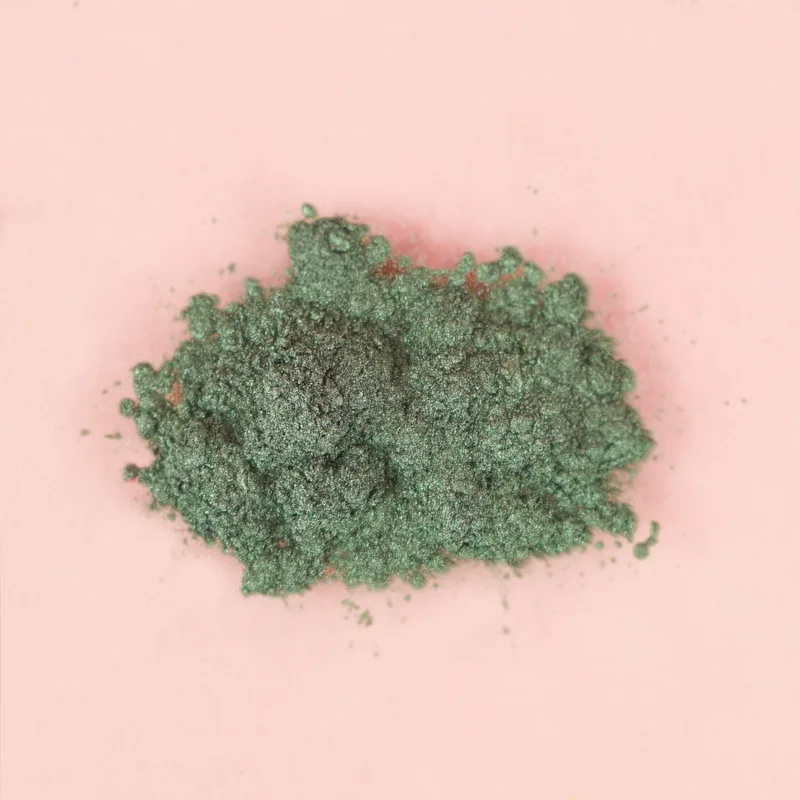
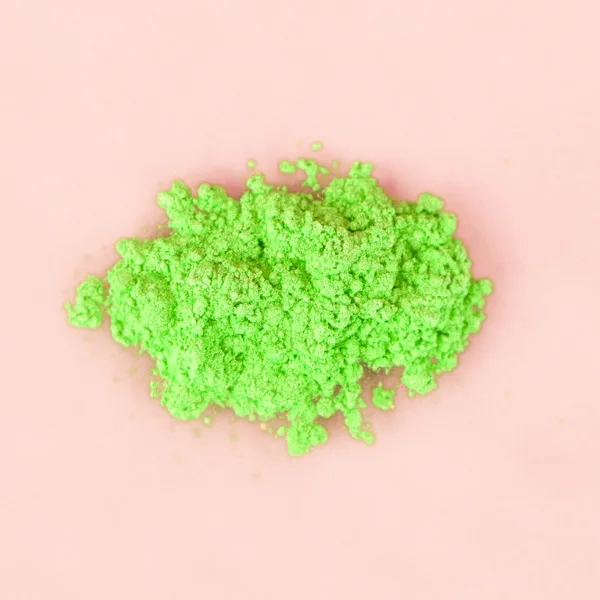
Lime Green, Forest Green and Ocean Blue should not be used in lip products. Their colorants — chromium oxide green, chromium hydroxide green and ultramarines — are not listed for use around the mouth.
The same three should not be used in bath bombs. We recommended them for bath bombs originally, then withdrew that recommendation out of caution, because the external-use listing those colorants hold does not extend to areas covered by mucous membranes — and a bath is exactly that situation.
Every other color we carry is cleared for lips, eyes, bath bombs and soap, and every color including those three is fine in soap. Whether a given jar is lip safe is printed on its label.
For external use only. This is on the label of every jar, and we do not recommend ingesting mica powder.
Keep it out of your eyes as a raw powder, even for the eye-safe colors — "cleared for use in eye makeup" is not the same as "fine to get loose powder in your eye". The data sheet's first aid advice is to flush with gently flowing water and seek attention if irritation persists.
Store it cool, dark, dry and sealed. Expected shelf life is two years, and that assumes moisture stays out of the jar.
Keep it away from strong acids, strong alkalis, oxidizing agents and high temperatures — the incompatibilities named on the supplier data sheet.
These statements have not been evaluated by the Food and Drug Administration. This product is not intended to diagnose, treat, cure, or prevent any disease.
Real Results
What Earthies Are Saying About Mica Powder
"I had so much fun combining different colors of mica and essential oils to custom make lip gloss. I love playing with colors! I used the included colors for all tubes but the purple one — I used some of Simply Earth's violet mica. I absolutely loved the end result."
Joanna
DIY Petal & Pout Lip Gloss Kit
"The kit came with Citrus Burst essential oil blend and Coastal Cactus safer fragrance oil. The scent is zesty and bright. I love the pink and yellow mica powders and pink straws that add flare."
Heather Pettigrew
DIY Sunset Float Melt and Pour Soap Kit
"This is a wonderful kit! The Golden Glow body butter is so smooth and smells amazing. It has made my dry hands feel so much better! I love the use of mica powder for the extra shimmer!"
Alexandria D.
DIY Golden Glow Body Butter Kit
OUR SIMPLY PURE PROMISE
What Goes Into Your Products Matters
No Dyes, Only Minerals
Natural pigments and oxides — every component found in nature.
Supplier Declaration on File
A signed no-child-labor declaration from our named supplier.
Safety Printed on Every Label
Lip, eye and bath guidance on the jar, not buried online.
12
Colors We Carry
Individually, or all twelve in a sample pack
9
Cleared For Every Use
Lips, eyes, bath bombs and soap
2 Years
Shelf Life
Stored cool, dark and dry
Your Order Changes Lives: 13% of profits fight human trafficking globally.
Mica Powder FAQ
The questions we get asked most about using mica powder safely.
Is mica powder safe to use on skin? +
In normal cosmetic use, yes — mica and the mineral pigments blended with it are on the FDA's list of color additives permitted in cosmetics, and the supplier safety data sheet classes the pigment as not hazardous and describes this type of inorganic pigment as practically non-toxic. The real caution is not skin contact but inhalation. It is a very fine powder that goes airborne easily, so wear a dust mask while you measure it and mix somewhere ventilated. Two of our colors also carry use restrictions — see the chart above.
Which Simply Earth mica colors are lip safe? +
Nine of the twelve. Fuchsia, Rose Red, Tiger Orange, Yellow Gold, Indigo Blue, Violet, Pearl, Mocha and Black are all cleared for the lip area. Lime Green, Forest Green and Ocean Blue are not, because they contain chromium oxide green, chromium hydroxide green or ultramarine blue, none of which are listed for use around the mouth. Every jar states whether it is lip safe on its label.
Why can't I use Ocean Blue, Forest Green or Lime Green in bath bombs? +
We originally did recommend them for bath bombs, because their colorants are listed by the FDA as safe for external use. We then took a second look. The external-use category does not apply to areas covered by mucous membranes, and mica powder in a bath can come into contact with them — so out of caution we withdrew the recommendation for those three. It is a precautionary call on our side rather than a reported problem, and we would rather explain it than quietly change a label.
What is the difference between natural and synthetic mica? +
Natural mica is mined — a silicate mineral that splits into shimmering sheets. Synthetic mica is grown in a lab and called fluorphlogopite; it is close to chemically identical. The practical difference is not performance but supply chain, since mined mica has a documented association with child labor in parts of the world and a lab-grown version sidesteps that question. Simply Earth's mica powders are made with mined mica from a supplier who has given us a written no-child-labor declaration. We do not carry synthetic mica.
How do I stop mica from clumping in melt and pour soap? +
Disperse it before it goes in. Melt and pour has no carrier oil to carry the pigment, which is why it clumps. Mix roughly ¼ tsp of mica into about 1 tsp of 99% isopropyl alcohol until it is smooth, then stir that into your melted base. The alcohol evaporates out and within an hour you will not be able to smell it. For body butters, scrubs and lotions you do not need this trick — just stir the mica into a liquid oil first.
How much mica powder should I use? +
Start with ⅛ teaspoon and add more until you like the color. That is the recommended starting point on our own quick-facts sheet, and for small batches you often need less — some of our recipes call for as little as 1/32 tsp. Because the amounts are so small, eyeballing it will not give you the same shade twice; mini measuring spoons go down to 1/64 tsp and a cosmetic scale is more precise again.
Why does mica leave a ring around my bathtub? +
Because mica mixes with oil rather than water. In a bath bomb it floats up with the oils instead of dispersing through the water, and then sticks to whatever soap residue is on the side of the tub. Rinsing the tub down before and after helps. Adding emulsifying wax to the recipe helps more — it lets the mica move with the water and go down the drain.
Can I use mica powder in soap even if it is not lip or bath safe? +
Yes. The FDA classifies soap as its own product category, separate from cosmetics, so the intended-use limits that apply to cosmetic colorants do not apply to soap at all. All twelve of our colors — including Lime Green, Forest Green and Ocean Blue — can be used in melt and pour or cold process soap.
About the Author: Katie Veldkamp
Katie Veldkamp
Certified Aromatherapist · Co-Founder, Simply Earth
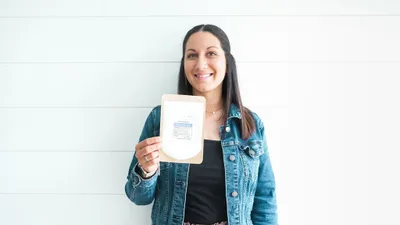
Katie Veldkamp is a Certified Aromatherapist and co-founder of Simply Earth. She wrote our original mica powder safety guidance and the cheat sheet this page draws on — including the part where we changed our own bath bomb recommendation. Everything in this article has been reviewed and approved by Katie.
Get natural recipes in your inbox
New recipes, ingredient guides and honest safety information — no spam, and you can unsubscribe whenever you like.
No spam, ever. Unsubscribe in one click.
Learn by doing
Make your own natural products every month.
The Simply Earth Recipe Box ships 4 full-size essential oils, 6 natural recipes, and everything you need to make them. No guesswork.
Start My Recipe Box$39.99 for your first box, then $49.99/month. Skip, pause, or cancel anytime.