
Lime Essential Oil Benefits, Uses and the Sun Rule

Katie Veldkamp
Certified Aromatherapist
Fact Checked & Approved
Lime Essential Oil is pressed straight out of the peel — no steam, no heat, just the fruit squeezed until the oil comes out. That is why it smells less like a candle and more like the moment you cut into a lime. It is one of the most useful oils on the shelf for cleaning, for a morning that needs starting, and for skin that wants brightening. It also comes with one rule that genuinely matters: cold-pressed lime is not sun safe. Get that one thing right and the rest of this page is just good news.
In this Guide
Free Cheat Sheet
Not sure which oil to reach for?
Get the free Essential Oil Cheat Sheet and understand essential oils with confidence.
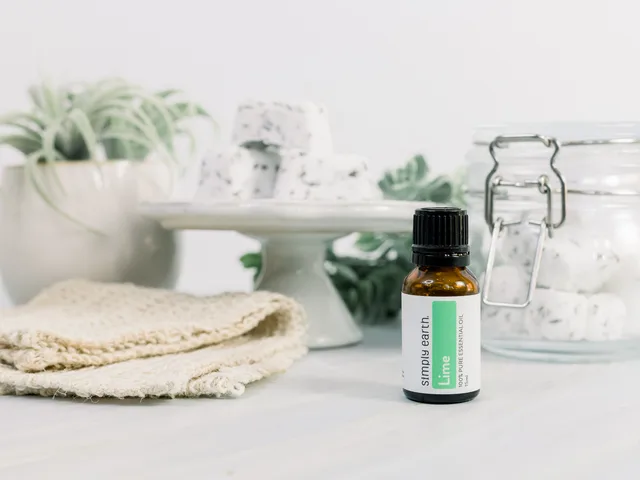
BEST FOR: SURFACE SPRAYS & DISH SOAP
Lime is high in limonene, the same compound that makes citrus peel such a good degreaser, and laboratory research has reported antibacterial activity for lime oil. That combination is why it turns up in so many homemade cleaning recipes — it cuts through grease and leaves a room smelling like someone just opened a window.
KATIE'S TIP
Lime is a solvent, which is exactly why it works — and exactly why you should keep it off sealed stone and waxed wood. Test a hidden corner first.


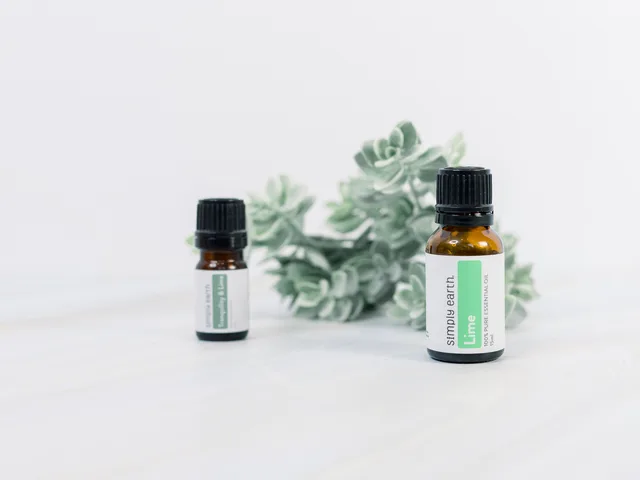
BEST FOR: EVENING WIND-DOWNS & RESETS
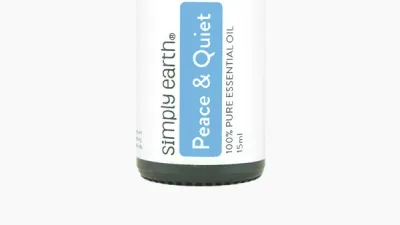
Most people file citrus under "energising" and stop there, but lime sits further back than lemon or grapefruit — it lifts without buzzing. That is why it works inside calming blends rather than fighting them, and why Simply Earth uses it in Peace & Quiet alongside Cedarwood and Frankincense.
KATIE'S TIP
If lemon feels too sharp in the evening, swap in lime. Same brightness, much softer landing — it is my go-to for the hour before bed.


BEST FOR: MORNINGS & MIDDAY SLUMPS
Lime's aroma is one of the fastest mood shifts available from a bottle — inhalation reaches the part of the brain that handles emotion almost immediately, which is why a single deep breath off the bottle can change the tone of a morning. It is the oil to reach for when coffee has not landed yet.
KATIE'S TIP
Keep it on your desk, not in the cupboard. An oil you can see is an oil you actually use — three breaths straight from the bottle counts as a reset.


BEST FOR: QUEASY MOMENTS & CAR JOURNEYS
Citrus aromas have long been used to take the edge off queasiness, and lime is among the easiest to tolerate when your stomach is unsettled — it is sharp enough to cut through, without the sweetness that can make nausea worse. Research has also looked at lime oil for spasmolytic activity. Inhalation is the route here, not ingestion.
KATIE'S TIP
Put a drop on a tissue rather than a diffuser when you feel off. You want to be able to put it down the second it stops helping.


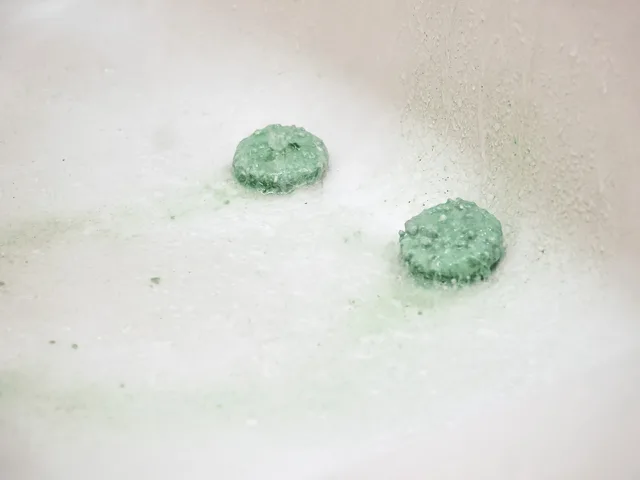
BEST FOR: NIGHT-TIME ROUTINES ONLY
Lime has been studied for antimicrobial activity, and it is a genuinely useful addition to a clarifying routine — which is why it shows up in shaving and cleansing recipes. The catch is non-negotiable and it is the reason this row says "night-time only": cold-pressed lime is phototoxic, so anything you put it on has to stay out of the sun.
KATIE'S TIP
Evening application, every time, and give it at least 12 hours before that skin sees daylight. If your routine is a morning one, use a steam-distilled citrus instead.



BEST FOR: PATIOS, PORCHES & OPEN WINDOWS
Lime has been examined in laboratory research for insecticidal activity against Aedes aegypti, the mosquito behind dengue and Zika. That is a lab finding rather than a field-tested repellent claim, so treat lime as a pleasant deterrent on a summer evening rather than protection you would rely on — a lime candle on the table, not a substitute for real repellent where mosquito-borne disease is a risk.
KATIE'S TIP
Burn a citrus candle upwind of where people are sitting rather than in the middle of the table. Scent travels with the breeze, not against it.


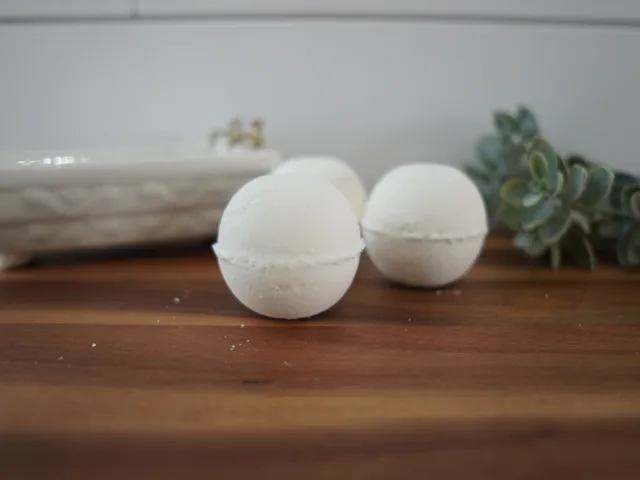
BEST FOR: SOAPS, DEODORANTS & TOP NOTES
Lime is a top note with a blending factor of 3, which in practice means a very small amount changes the character of a whole blend. Drop it into something heavy — a woody soap, a butter, a deodorant — and the entire thing reads fresher. This is the benefit that makes lime worth keeping even if you never use it on its own.
KATIE'S TIP
Because it is a top note, lime fades first. Anchor it with a wood or a resin if you want the brightness to still be there an hour later.


Put It to Work
How to Use Lime Essential Oil
Diffuse
- • 3–5 drops in the diffuser for a bright, awake room
- • Pair with Eucalyptus for mornings, Cedarwood for evenings
- • Diffuse 30–60 minutes at a time rather than continuously
Topical
- • Dilute to 5% maximum — roughly 45 drops per ounce of carrier oil
- • Night use only on any skin that will see sun within 12 hours
- • Patch test on the inner forearm before facial use
Household
- • Surface sprays, solid dish soap and dishwasher tablets
- • A few drops on a wool dryer ball for laundry
- • Keep it off sealed stone and waxed wood — lime is a solvent
DIY
- • Bath bombs, shower steamers and cold-process soap
- • Roll-ons, candles and natural deodorant
- • Use it as the top note and anchor it with a wood or resin
Know the Difference
Cold-Pressed vs. Steam-Distilled Lime
This is the one comparison on this page that is a safety question rather than a preference. Lime oil is made two ways, and only one of them is phototoxic. Pressing the peel cold keeps everything in the fruit — including the furanocoumarins that make treated skin burn in sunlight. Steam distillation leaves those behind, which is why a steam-distilled lime can go in a daytime moisturiser and a cold-pressed one cannot. Simply Earth carries the cold-pressed oil, so every safety note on this page assumes that is what is in your hand.
Swipe to compare →
Lime, Cold-Pressed Citrus aurantifolia | Lime, Steam-Distilled Citrus aurantifolia | Lemon, Cold-Pressed Citrus limon | |
|---|---|---|---|
| How it is made | Expressed — the peel is pressed cold, with no heat at all | The peel or the whole fruit is carried over in steam | Expressed — the peel is pressed cold |
| Scent | Fresh, zesty and true to the fruit | Flatter and sharper, with the fruity top notes cooked off | Bright, sharp, true lemon rind |
| Sun safe? | No — phototoxic. Keep treated skin out of the sun for 12+ hours | Generally yes — distillation leaves the phototoxic compounds behind | No — phototoxic, and the tighter limit of the two |
| Best for | Cleaning, diffusing, candles and night-time skincare | Daytime skincare and leave-on products | Cleaning, skincare and mornings |
| Sold by Simply Earth | Yes — this is the one we carry | No | Yes — Lemon Essential Oil |
| This article | The one Simply Earth carries | — | — |
Perfect Pairs
Lime Blends Well With…
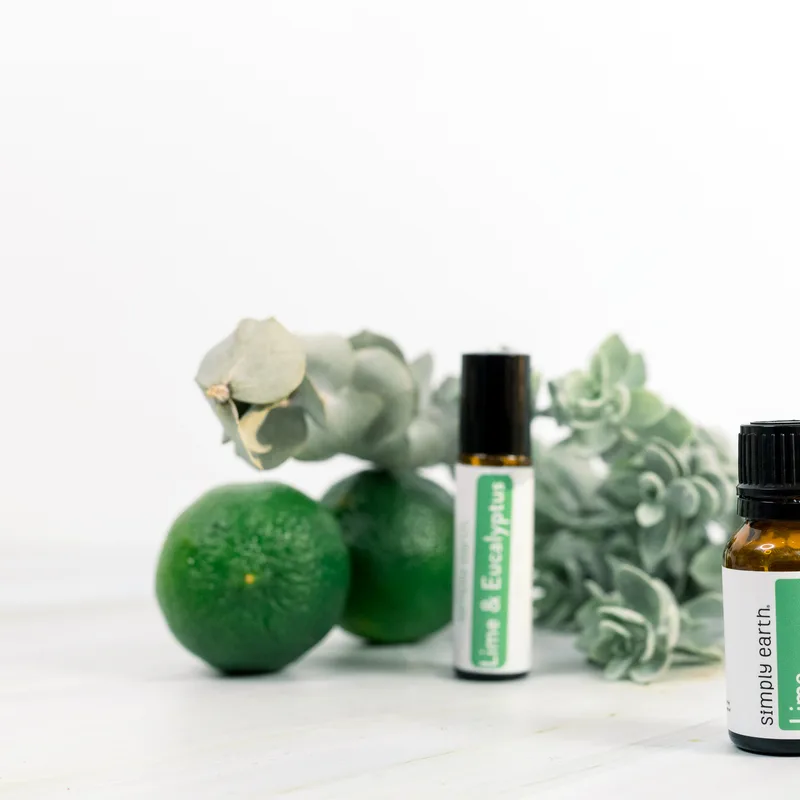
Lime is a top note with a blending factor of 3, so it hits first and fades first — anchor it with a wood or a resin if you want the blend to last. Simply Earth blends that already use Lime include Citrus Burst and Peace & Quiet, which is also available as a roll-on.
A Traveller's Fruit
History of Lime Essential Oil
The lime's origin story is genuinely unsettled. Most scholars point to the Indonesian archipelago, or the Asian mainland nearby, as where the fruit began — but the record thins out quickly the further back you look, and nobody can draw a clean line. What is better documented is how it spread. Around 1000 A.D., Arab traders appear to have carried limes into India, the Eastern Mediterranean and Africa, and from there the fruit worked its way into kitchens, medicine chests and rituals across three continents.
That is a story about the fruit rather than the oil, and it is worth keeping the two apart. Lime's most famous historical chapter — British sailors issued citrus against scurvy, and the nickname "limey" that stuck because of it — is a nutrition story about vitamin C, which the essential oil does not contain. What the oil inherited was the scent and the peel's solvent chemistry: press the rind cold, and you capture the part of the lime that does the cleaning and the lifting, concentrated into a bottle.
The Science
What's the Science Behind This Oil?
Every batch of Simply Earth Lime ships with a batch-specific GC/MS report, so the numbers behind these three compounds are not something you have to take on trust.
Limonene
The dominant compound · Bright · Solvent
A colourless liquid and the major component of citrus peel oils, most familiar as the smell of oranges. Limonene does double duty in industry as a flavouring agent, a renewables-based solvent in cleaning products and a fragrance ingredient — and it is also used as a botanical insecticide and organic herbicide, which lines up with two of the benefits above.
γ-Terpinene
Antioxidant · Lemony · A citrus signature
Gamma-terpinene acts as an antioxidant and a plant metabolite, and it is a major component of essential oils made from citrus fruit. It carries a lemon odour of its own and has strong antioxidant activity, which is part of why it is used so widely across food, cosmetics and perfumery.
β-Pinene
Monoterpene · Woody-green · The base note
A monoterpene found across the plant world, with a woody, green, pine-like smell. In lime it sits underneath the bright citrus top notes and gives the oil a little more depth than a purely zesty profile would have on its own.
Where It Comes From
Where Our Lime Comes From
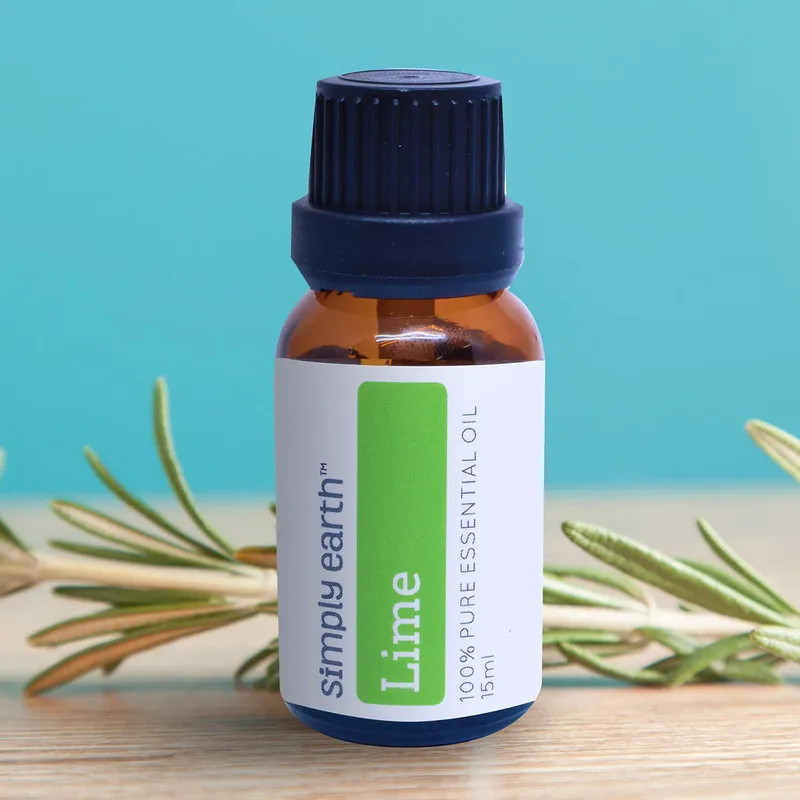
Simply Earth's Lime Essential Oil is expressed from the peel of Citrus aurantifolia and comes from Italy, where it is grown and pressed by Citrusmade — the same family-run citrus producer behind our Lemon. The trees grow in Sicily, and the conditions there do most of the work: a Mediterranean climate that gives the fruit steady warmth and long sun, and volcanic soil that feeds trees which are, by citrus standards, fussy about where they will thrive.
Cold-pressing is what keeps the oil so close to the fruit. There is no steam and no heat involved — the peel is simply pressed until the oil comes out, so the volatile compounds go straight from the rind into the bottle instead of being carried over and partly cooked off. It is also why this oil is phototoxic and a distilled one is not: pressing keeps everything, including the compounds that react with sunlight.
Simply Earth has a video from the farm itself — Lime: Straight From The First Fully Organic Citrus Farm — if you would rather see the orchards than read about them.
Use It Right
Things to Remember When Using This Oil
☀️ Sun safety is the rule that matters most. Cold-pressed Lime is not sun safe. Simply Earth's own guidance is explicit — exposure to the sun must be avoided after application to the skin. Keep treated skin out of sunlight and off tanning beds for at least 12 hours.
Always dilute before applying to skin. The maximum dilution for Lime is 5% — roughly 45 drops per ounce of carrier oil — and night-time use is the only sensible way to use anything near that on exposed skin.
Safe to use around children aged 10 and up.
Pregnancy-safe — consult your doctor before use.
Safe while breastfeeding — consult your doctor before use.
Dog safe. NOT cat safe — avoid diffusing around cats or applying it anywhere they could come into contact with it.
Shelf life is about 2 years. Citrus oils oxidise faster than most, and an oxidised oil is more likely to irritate skin — if the scent turns flat, dull or waxy, replace it.
We do not recommend ingesting essential oils. For lime flavour, use real lime or lime juice.
These statements have not been evaluated by the Food and Drug Administration. This product is not intended to diagnose, treat, cure, or prevent any disease.
Real Results
What Earthies Are Saying About It
"Lime Essential Oil Blend when diffused smells fresh and invigorating. I also like to use it in my diy multipurpose cleaning spray."
Malena Hernandez-Frettlohr
Verified Buyer • Lime Essential Oil
"Lime just like every other oil I have received has been amazing. Recipes that come with monthly box are always spot on and fantastic. Keep up the great work."
Trisha Wilson
Verified Buyer • Lime Essential Oil
"I was very excited to get my very first box. I made my own toothpaste, using solid coconut oil baking soda and lime essential oil. I'm almost empty and I can't wait to make another bottle."
Denise DePuy
Verified Buyer • Essential Oil Hero Course
OUR SIMPLY PURE PROMISE
What Goes Into Your Products Matters
Certified 100% Pure
No fillers, no synthetics. Just pure oil.
GC/MS Third-Party Tested
Every batch independently verified.
Ethically Sourced from Quality Farms
Responsibly harvested. People and planet first.
15mL
Bottle Size
MLM brands: 10mL
$10–16
Per Oil
MLM brands: $25–55+
Public
GC/MS Tests
MLM brands: Rarely
Your Order Changes Lives: 13% of profits fight human trafficking globally.
Lime Essential Oil FAQ
The sun rule, the dilution, the pets, and everything else worth knowing before you open the bottle.
Is lime essential oil phototoxic? +
Yes — the cold-pressed kind is, and that is the kind Simply Earth carries. Treated skin can burn or discolour in sunlight. Keep that skin out of the sun and off tanning beds for at least 12 hours after application. Diffusing carries no phototoxicity risk at all, so if you only ever diffuse it, this warning does not apply to you.
What is the difference between cold-pressed and steam-distilled lime oil? +
Cold-pressing squeezes the oil out of the peel with no heat, which keeps everything in the fruit — including the compounds that make skin react to sunlight. Steam distillation leaves those compounds behind, so a steam-distilled lime is generally sun safe but smells flatter and less like the fresh fruit. Simply Earth carries the cold-pressed oil.
How many drops of lime essential oil go in a diffuser? +
Three to five drops suits most standard diffusers. Run it for 30–60 minutes at a time rather than continuously — your nose adapts fast, and a longer session loses its effect rather than building on it.
Can I use lime essential oil on my skin? +
Yes, diluted, and ideally at night. The maximum dilution is 5% — about 45 drops per ounce of carrier oil — and any skin you apply it to needs to stay out of the sun for at least 12 hours afterwards. Patch test on the inner forearm before you use it anywhere on your face.
Is lime essential oil safe around pets? +
It is generally safe around dogs. It is not cat safe — avoid diffusing it around cats and keep it off anywhere they could brush against or lick.
Does lime essential oil repel mosquitoes? +
Laboratory research has reported insecticidal activity for lime oil against Aedes aegypti mosquitoes. That is a lab result, not a field-tested repellent claim, so a lime candle on the patio is a pleasant deterrent rather than protection you should rely on — especially anywhere mosquito-borne illness is a real risk.
How long does lime essential oil last? +
About 2 years. Citrus oils oxidise faster than most, and an oxidised oil is more likely to irritate skin — so if the scent goes flat, dull or slightly waxy, replace it rather than pushing on.
What does lime essential oil blend well with? +
It pairs naturally with other citrus — Lemon, Sweet Orange, Green Mandarin and Pink Grapefruit — and it is especially good over woods and resins like Cedarwood, Vetiver and Ho Wood, which anchor it so the brightness lasts. Bergamot, Geranium, Lavender, Neroli, Nutmeg, Palmarosa, Rosemary and Ylang Ylang all work too.
About the Author: Katie Veldkamp
Katie Veldkamp
Certified Aromatherapist · Co-Founder, Simply Earth
Katie Veldkamp is a Certified Aromatherapist and co-founder of Simply Earth. Her mission is to cut through the noise around essential oils so you can use them with confidence. Everything in this article has been reviewed and approved by Katie.
Learn essential oils the easy way
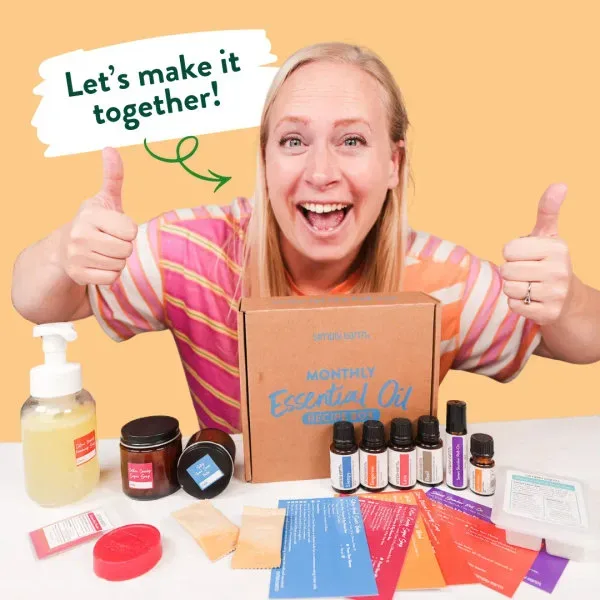
Every month we ship four pure essential oils, six natural recipes, and everything you need to make them. No guesswork.
No spam. Unsubscribe any time.
Learn by doing
Make your own natural products every month.
The Simply Earth Recipe Box ships 4 full-size essential oils, 6 natural recipes, and everything you need to make them. No guesswork.
Start My Recipe Box$39.99 for your first box, then $49.99/month. Skip, pause, or cancel anytime.