
Ho Wood Essential Oil Benefits, Uses & Why It Replaced Rosewood

Katie Veldkamp
Lead Certified Aromatherapist
Fact Checked & Approved
For years, rosewood was the oil people reached for when they wanted something soft, woody and quietly floral. Then the trees started running out. Rosewood is a threatened species, and it is not an oil you can buy in good conscience any more. Ho wood is what the industry moved to — steam-distilled from the twigs and bark of Cinnamomum camphora, rich in the same linalool that gave rosewood its character, and harvested without taking the tree out of the forest. At $12.99 it is also one of the least expensive oils we sell, which is a rare thing to be able to say about a substitution that is genuinely the better choice.
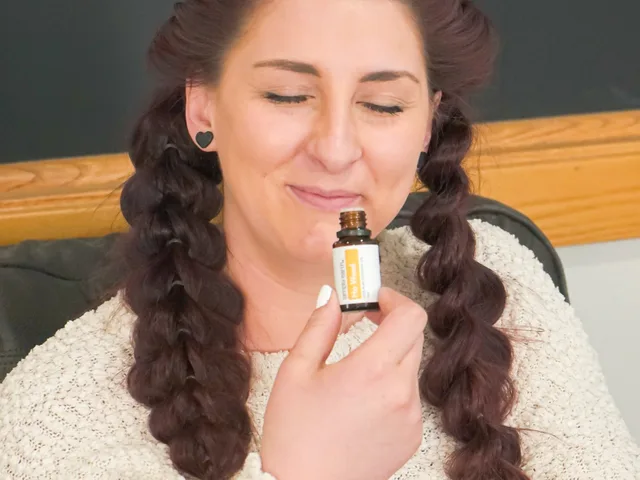
BEST FOR: EVENING WIND-DOWN AND BUSY HEADS
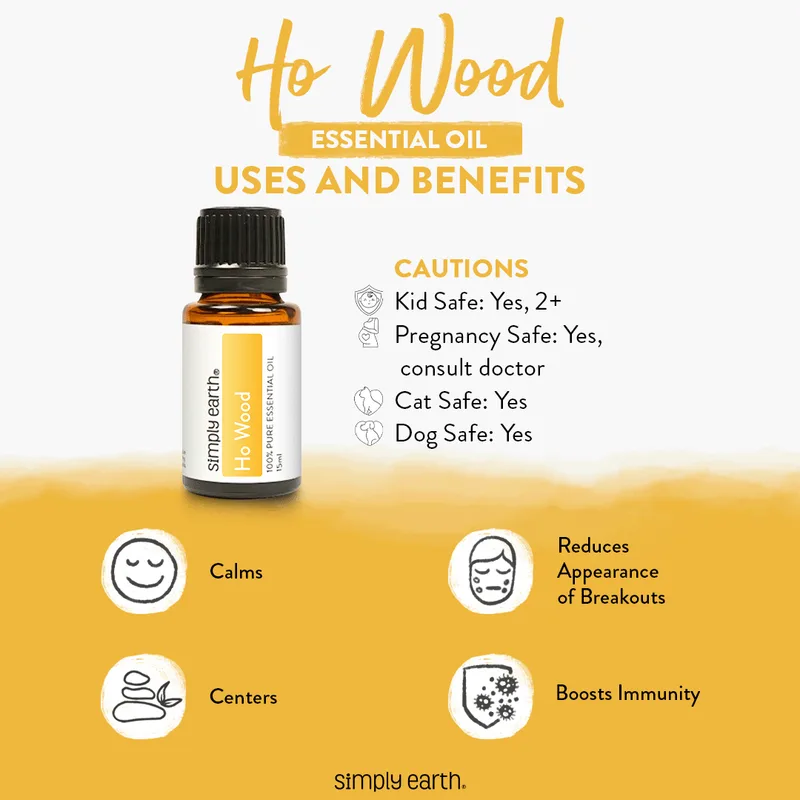
Calming is the first use on Simply Earth's own list for this oil, and the reason is in its chemistry — ho wood is dominated by linalool, the same monoterpene alcohol that gives lavender its reputation. What makes ho wood worth knowing is that it delivers that familiar soft, settling character in a completely different scent. It is woody and faintly floral rather than sweet and herbaceous, which matters if lavender is an oil you have simply had enough of.
KATIE'S TIP
If lavender has never worked for you, try this before you give up on calming oils altogether. Same headline compound, completely different scent — and it is in our Sleepy and Homebody blends for exactly this reason.


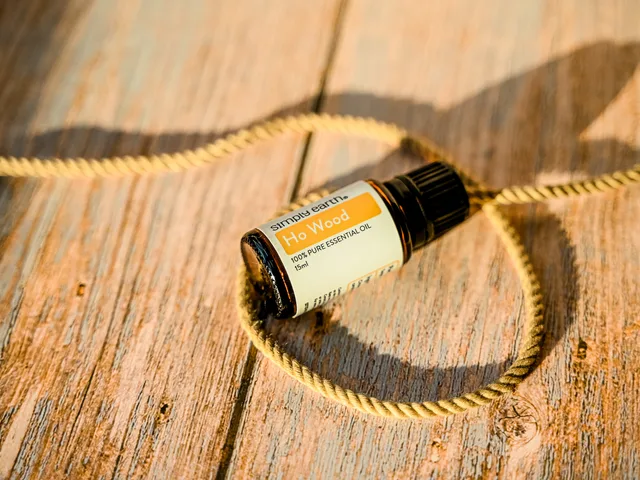
BEST FOR: MEDITATION AND TRANSITIONS BETWEEN TASKS
Centering is the second use Simply Earth lists, and ho wood is unusually good at it for a practical reason — it is a middle note with a woody base, so it steadies a blend without sinking it. The heavy grounding oils can take over a room. Ho wood holds the floor and still lets a citrus or a floral read clearly above it, which is why it turns up in our Good Vibes and Lava blends.
KATIE'S TIP
Ho wood has a blending factor of 4, which makes it one of the most forgiving oils in the range. If you are learning to blend, this is a good oil to learn on — it is very hard to overdo.


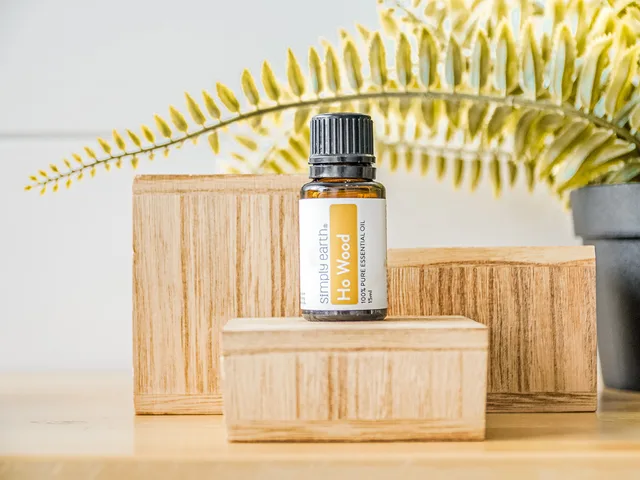
BEST FOR: SENSITIVE OR EASILY IRRITATED SKIN
This is the benefit the old version of this article left out, and it is on Simply Earth's product record. Ho wood is mild, which is genuinely unusual for a wood oil — most of them are better suited to a diffuser than to your face. Diluted properly in a carrier, ho wood earns a place in a facial oil, a balm or a body lotion rather than only in the air.
KATIE'S TIP
Pair it with Geranium. Geranium is on ho wood's own blends-well-with list, and the two together are a natural fit for skincare — Simply Earth's own Rooted Bloom and Tranquil Bloom recipes both use exactly that pairing.


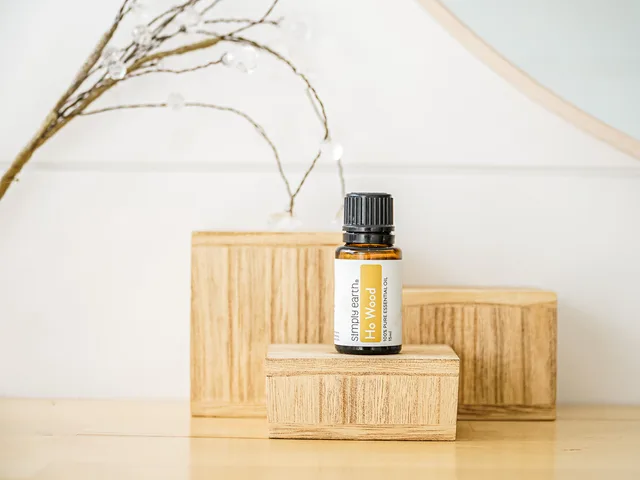
BEST FOR: CONGESTED OR BLEMISH-PRONE SKIN AND SCALP
Simply Earth lists this as reducing the appearance of breakouts, and that wording is deliberate — it is a cosmetic, appearance-level benefit that helps skin look clearer, not a treatment for any skin condition. Where ho wood earns its place is comfort. It occupies the same slot in a routine that tea tree usually does, without the sting or the smell.
KATIE'S TIP
Ho wood is gentler than tea tree for the same job, and it smells considerably better. Patch test on your inner arm first, as you would with any new oil going onto your face.


BEST FOR: MATURE OR DULL-LOOKING SKIN
Rejuvenation is the seventh use on Simply Earth's list, and ho wood shows up in facial blends aimed at skin that needs reviving. The property that makes it useful here is the same one that makes it useful everywhere else on this page — it is mild enough for regular use, and with skincare that is usually what decides whether something works at all.
KATIE'S TIP
Consistency beats strength here. A small amount daily does more than a lot occasionally — which is another argument for an oil this gentle.


BEST FOR: AROMATIC COMFORT THROUGH THE MONTH
Ho wood has a traditional place in blends made for monthly balance, used aromatically or diluted into a roll-on or a massage oil. This is traditional use rather than a clinical claim, and it is on Simply Earth's own list of uses for the oil. What recommends it over the alternatives is simply that it is easier to live with — the oils usually suggested here are spicier and far more assertive.
KATIE'S TIP
A heatable aromatherapy pillow is the easiest way to use it for this — Simply Earth's Warm & Well pillow combines ho wood with rose geranium and dried lavender buds.


BEST FOR: SEASONAL WELLNESS BLENDS
Simply Earth's product record lists promoting immunity among this oil's uses, and ho wood has a long traditional place in seasonal wellness preparations used aromatically as part of a routine. Treat this as traditional use rather than a clinical effect. In practice ho wood plays a supporting role here — it is the soft base that makes a sharper wellness blend breathable, which is exactly the job it does in our Fortify and Autumn Armor recipes.
KATIE'S TIP
Diffuse it underneath something brighter rather than on its own. Ho wood rounds off the medicinal edge of eucalyptus and the Defender blend without cancelling either out.


Put It to Work
12 Ways to Use Ho Wood Essential Oil
Diffuse
- • 3 to 4 drops for a soft, woody, quietly floral room
- • An evening wind-down blend with bergamot or lavender
- • A seasonal wellness blend under eucalyptus or Defender
Topical & Skincare
- • A facial oil for sensitive skin, diluted in a carrier
- • A balm or body butter for dry patches and tired-looking skin
- • A comfort roll-on for monthly support
DIY & Candles
- • Wax melts — pair it with Coastal Cactus fragrance oil
- • Poured candles and reed diffusers for a soft woody base
- • Solid perfumes and roll-ons, where its staying power helps
Household
- • A carpet refresher with baking soda, as Earthies actually use it
- • A laundry scent booster
- • A room spray soft enough not to dominate a small space
Know the Difference
Ho Wood vs. Rosewood vs. Camphor
Two of these three columns are the same botanical species, and that is the most confusing thing about this oil. Ho wood and camphor both come from Cinnamomum camphora — different chemotypes and different parts of the tree yield oils as unalike as a soft floral and a sharp medicinal. Rosewood is a different tree entirely, Aniba rosaeodora, an Amazonian hardwood that was distilled for its linalool-rich oil until wild populations collapsed. Ho wood is used in place of rosewood because both are linalool-rich and share that soft, woody-floral character — not because the two oils are chemically identical. Simply Earth sells ho wood and camphor. We do not sell rosewood, and we will not.
Swipe to compare →
Ho Wood The subject of this page | Rosewood The oil ho wood replaced | Camphor (White) Same tree, different chemotype | |
|---|---|---|---|
| Botanical Name | Cinnamomum camphora | Aniba rosaeodora | Cinnamomum camphora |
| Plant Part | Twig & bark | Heartwood | Wood |
| Main Constituents | Linalool, trans-Linalool oxide | Linalool-rich | 1,8-Cineole, alpha-Pinene, Limonene, Camphor |
| Aroma | Woody and floral, soft | Woody and floral, sweeter | Fresh and medicinal, penetrating |
| Conservation Status | Sustainably harvested | Threatened species — wild populations collapsed | Sustainably harvested |
| Kid Safe | Yes, from age 2 | N/A — not sold by Simply Earth | Yes, from age 10 |
| Pregnancy & Breastfeeding | Yes, consult your doctor | N/A — not sold by Simply Earth | No — avoid both |
| Cat & Dog Safe | Yes, both | N/A — not sold by Simply Earth | No — neither |
| Max Dilution | 5% | N/A — not sold by Simply Earth | 5% |
| We Carry This | Yes — 5mL and 15mL | No — and we will not | Yes — 15mL |
| Simply Earth | This page's oil | — | — |
Perfect Pairs
Ho Wood Blends Well With…
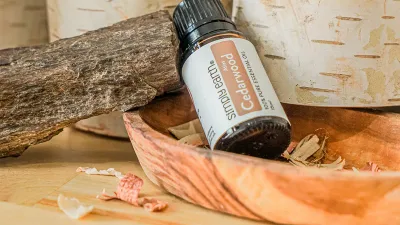
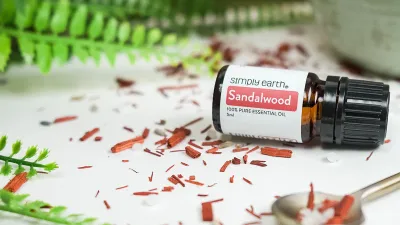
This is Simply Earth's own blending list for ho wood. Bergamot lifts it, Cedarwood and Sandalwood deepen the woody base, and Geranium turns it towards skincare. With a blending factor of 4 it is genuinely forgiving — it will sit underneath almost anything without fighting it, which is why six of our own blends use it.
Where It Comes From
The Tree That Replaced a Disappearing One
Cinnamomum camphora is a large evergreen of the Lauraceae family, native to east Asia and growing 20 to 30 metres tall. From a distiller's point of view it is a genuinely strange plant: depending on the chemotype and the part of the tree used, one species yields oils as different as sharp medicinal camphor and soft, floral ho wood.
Ho wood comes from the twigs and bark rather than the heartwood, and that distinction matters far more than it sounds. Taking heartwood means taking the tree. That is precisely what happened to rosewood — Aniba rosaeodora, an Amazonian hardwood distilled for its linalool-rich oil until wild populations collapsed and it was listed as a threatened species.
Ho wood offered the perfume and aromatherapy industries a way out: a high-linalool oil with a similar soft, woody-floral character, taken from a fast-growing tree in a way that lets the tree keep growing. It is now the standard substitution, and it is the reason this oil is on our shelf and rosewood is not.
The Science
What Is Actually in the Bottle
Two main constituents, taken straight from Simply Earth's product record for this oil.
Linalool
The one that does the work
A monoterpene alcohol and ho wood's dominant constituent. Linalool is responsible for the soft, calming, faintly floral character of this oil, and it is the same compound that characterises lavender. It is also the entire reason ho wood can stand in for rosewood — rosewood's value was its linalool, and ho wood delivers that without the threatened tree.
trans-Linalool oxide
The rounder edge
An oxidation product of linalool and the second constituent Simply Earth lists for this oil. It contributes a slightly sweeter, rounder quality to the aroma, and it is part of why ho wood reads as gentler and less sharp than the other oils distilled from the same species.
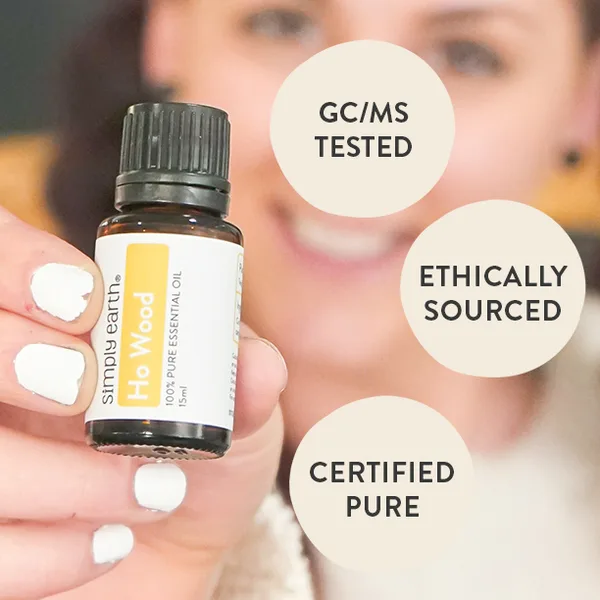
Certified Pure — batch-specific GC/MS reports are available with every bottle. That matters more on ho wood than on most oils: the whole case for using it rests on its linalool content, so the batch report is how you confirm you got what you paid for.
See the current batch reportSimply Earth Sourcing
How We Source Ho Wood
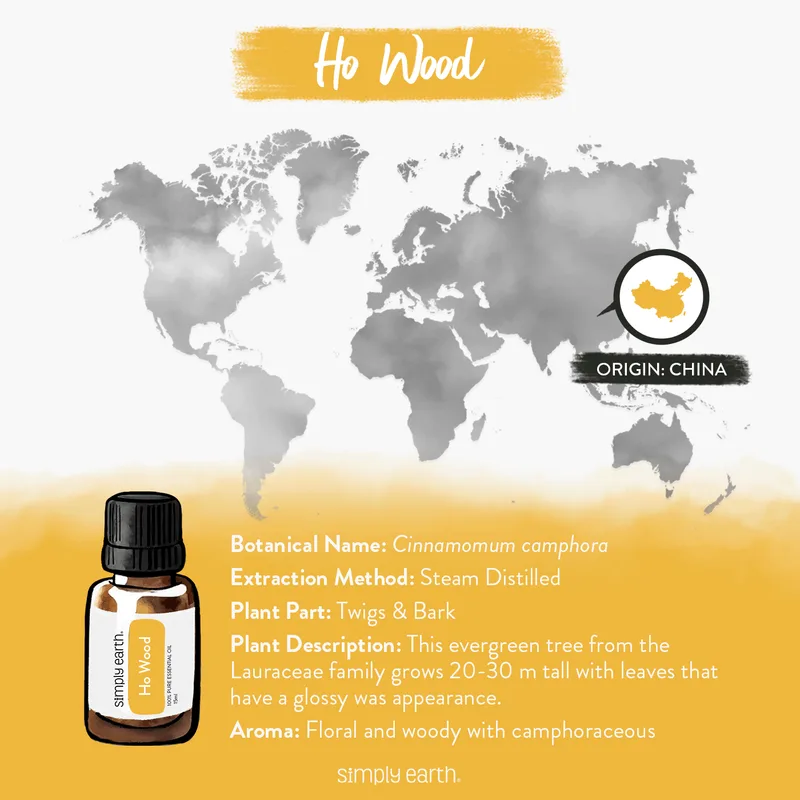
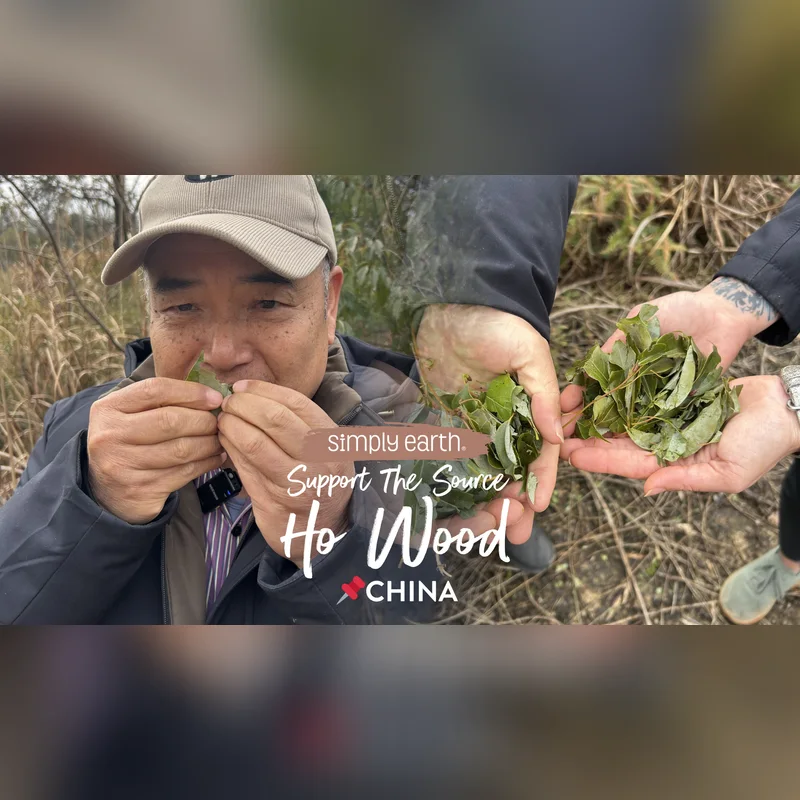
Simply Earth's ho wood is steam-distilled from the twigs and bark of Cinnamomum camphora grown in China. That is the origin on our own product record and on our sourcing infographic.
Using twig and bark rather than heartwood is the entire point. It is what makes this harvest repeatable instead of terminal, and it is the difference between an oil you can keep buying and an oil that ran out. Every batch is GC/MS tested before bottling and the report is available with the oil.
China
Where It's Grown
Twig & Bark
Plant Part
Public
GC/MS Results
Use It Right
Safety & Dilution Guide
Ho wood is one of the gentlest oils we sell. Simply Earth's record says plainly that it is generally safe — follow the dilution instructions and the rest of this list is short.
Always dilute before applying to skin. Simply Earth lists a maximum dilution rate of 5% for ho wood, and most everyday skincare uses sit well below that. See the dilution chart for the ratios.
Kid safe from age 2. That is among the most permissive ratings in the range, and it is why ho wood is the substitute we point people towards when camphor — from the same botanical species — is too strong for a younger child.
Pregnancy and breastfeeding — yes, but consult your doctor first. Simply Earth's product record says yes to both with that condition attached.
Cat safe and dog safe. Simply Earth lists ho wood as safe around both, which is unusual and worth knowing if you diffuse in rooms your pets share.
Sun safe. Unlike the citrus oils, ho wood carries no photosensitivity warning, so it is fine in a daytime facial oil or roll-on.
For external use only, and keep it away from your eyes. Patch test on your inner arm before the first topical use, as you would with any new oil.
Do not ingest it. Simply Earth does not recommend ingesting any essential oil except under the direction of a doctor certified in aromatherapy.
Shelf life is around three years. Keep the cap on and store it out of direct sun — oxidised oil belongs in a diffuser, not on skin.
These statements have not been evaluated by the Food and Drug Administration. This product is not intended to diagnose, treat, cure, or prevent any disease.
Real Results
What Earthies Are Saying About It
"I discovered this oil in one of your kits!!! I first used it as a carpet refresher. A couple drops of Ho Wood and baking soda! It completely replaced the synthetic carpet fresher my husband usually would purchase. I just love this calming, woody scent it's gorgeous! I also made my own laundry scent booster with this scent and it works so well!"
Cheri C.
Verified Buyer • Ho Wood Essential Oil
"I received Ho wood unfamiliar with its benefits. I watched the YouTube video. I'm a yoga teacher so meditation is a no brainer. I did not have lemon essential oil but did have Bergamot. What a calming scent. I'm starting a business and I'm experiencing the stress of it all. Thank you for sharing your knowledge and making it fun."
Tina
Verified Buyer • Ho Wood Essential Oil
"Ho Wood is a new oil for me, and based on other reviews I wanted to give it a try. So glad I did. It smells interesting right from the bottle; never mind that! Blended with other oils in a diffuser, it just makes everything smell better somehow. Thanks for a high quality product at a good price."
Terry
Verified Buyer • Ho Wood Essential Oil
OUR SIMPLY PURE PROMISE
What Goes Into Your Products Matters
Certified 100% Pure
No fillers, no synthetics. Just pure oil.
GC/MS Third-Party Tested
Batch-specific reports with every bottle.
Ethically Sourced from Quality Farms
Responsibly harvested. People and planet first.
100%
Pure Essential Oil
No carriers, no fillers
15mL
Bottle Size
MLM brands: 10mL
Public
GC/MS Tests
MLM brands: Rarely
Your Order Changes Lives: 13% of profits fight human trafficking globally.
Common Questions
Ho Wood Essential Oil FAQ
The questions Earthies ask most about this oil — starting with the one that brought most people here.
Is ho wood the same as rosewood? +
No. They are different trees — ho wood is <em>Cinnamomum camphora</em> and rosewood is <em>Aniba rosaeodora</em>. What they share is linalool, the compound that gives both oils their soft, woody-floral character, and that is why ho wood is used in place of rosewood. It is a substitution, not an equivalent, and the two oils are not chemically identical.
Why doesn't Simply Earth sell rosewood essential oil? +
Because rosewood is a threatened species. The oil comes from the heartwood, which means harvesting it kills the tree, and wild Amazonian populations collapsed as a result. Ho wood gives you the same linalool-rich profile from twigs and bark, so the tree keeps growing. We do not sell rosewood and we do not plan to.
What does ho wood essential oil smell like? +
Soft, woody and quietly floral. Simply Earth describes the aroma as woody and floral, and it sits as a middle note with a woody base. It is much gentler than camphor, which comes from the same botanical species, and sweeter and more rounded than most wood oils.
Is ho wood essential oil safe for kids and pets? +
Simply Earth lists ho wood as kid safe from age 2, cat safe and dog safe — one of the most permissive safety profiles in our range. For pregnancy and breastfeeding the record says yes to both, but consult your doctor first. Always dilute before applying to skin, up to a maximum of 5%.
Ho wood and camphor come from the same tree — how are they so different? +
Different chemotypes and different parts of the tree. Ho wood is distilled from the twigs and bark of a linalool chemotype, giving a soft floral oil that is kid safe from age 2. White camphor comes from the wood of a cineole-rich chemotype and is far stronger — kid safe only from age 10, and not safe during pregnancy or around cats and dogs. Same species, genuinely different oils.
Can I use ho wood instead of lavender? +
In a calming blend, often yes — linalool is the dominant constituent in both. The scent is completely different, though, so it is a swap worth making on purpose rather than by accident. Plenty of Earthies who have grown tired of lavender reach for ho wood instead.
Which Simply Earth blends contain ho wood? +
Six of them — Autumn Air, Good Vibes, Head Soothing, Homebody, Lava and Sleepy. That is more than almost any other single oil in the range, and it is a good indication of how well ho wood plays with others at a blending factor of 4.
About the Author: Katie Veldkamp
Katie Veldkamp
Certified Aromatherapist · Co-Founder, Simply Earth
Katie Veldkamp is a Certified Aromatherapist and co-founder of Simply Earth. She personally formulates and reviews SE's essential oil blends and verifies all benefit claims on Simply Earth content before it goes live.
Join 20,000+ Earthies Making Their Homes Natural
New recipes, usage guides, and DIY tips — delivered free.
No spam. Unsubscribe any time.

Learn by doing
Make your own natural products every month.
The Simply Earth Recipe Box ships 4 full-size essential oils, 6 natural recipes, and everything you need to make them. No guesswork.
Start My Recipe Box$39.99 for your first box, then $49.99/month. Skip, pause, or cancel anytime.