
Hemp Seed Oil: The Green One, and Not the CBD One

Katie Veldkamp
Lead Certified Aromatherapist
Fact Checked and Approved
Let's deal with the confusion first, because it is the reason most people arrive here. Hemp seed oil is pressed from the seed of the hemp plant. CBD oil is extracted from the flower and the leaf. They come from the same species and they are not the same product — different part of the plant, different extraction, different regulation, different point. Simply Earth's hemp seed oil is a cold-pressed carrier oil for skin and DIY, and its INCI name says exactly that: Cannabis Sativa Seed Oil. We did once sell a CBD extract alongside it, and we no longer do. What you will notice about the seed oil, if you have only ever used pale carriers, is that this one is green and smells faintly of itself — and that turns out to be the single most useful fact about it. Here is why, what our own records say it does, and where it earns its place on a shelf.
Hemp Seed Oil Is a Single-Ingredient Carrier
Cold Pressed, Unrefined, Nothing Added
 Shop Hemp Seed Oil
BEST FOR: DIY MAKERS WHO READ LABELS
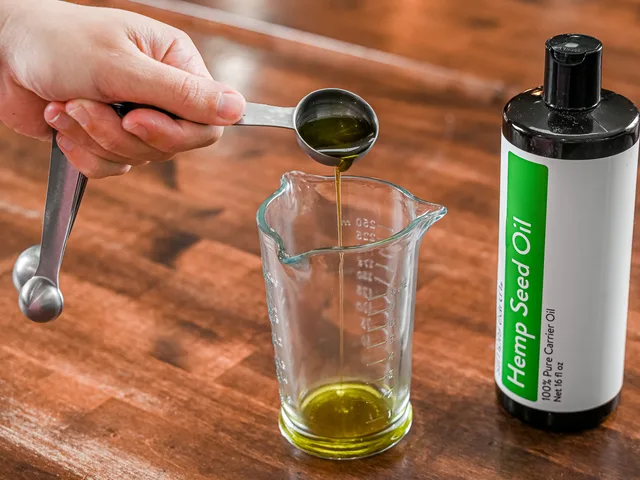
What is in the bottle is hemp seed oil, and that is the whole list. Simply Earth's ingredient record gives the extraction method as cold pressed and the oil as unrefined — the seeds are pressed without heat and the oil is not stripped afterwards. That is worth knowing before anything else on this page, because almost everything people notice about this oil traces back to it. It is also the one benefit the previous version of this page led with, and it still holds.
KATIE'S TIP
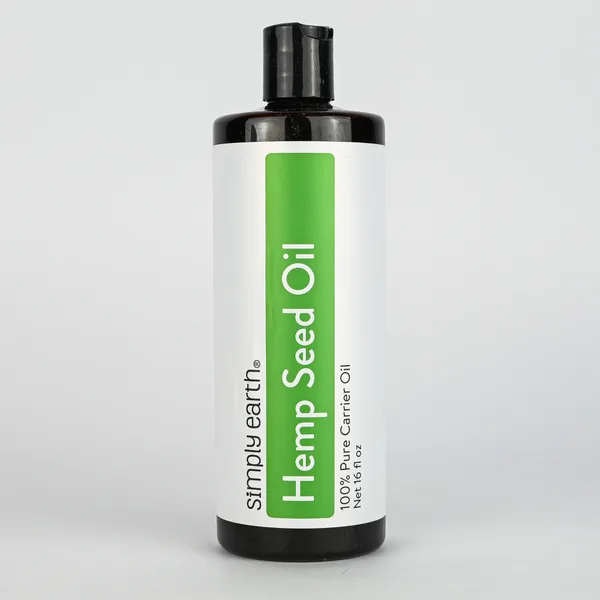
If you are new to carrier oils, buy the 1oz before the 16oz. This one has more personality than most, and you want to know whether you like it in a blend before you own half a litre of it.
USE IT IN →

BEST FOR: DRY SKIN AND DAILY MOISTURISING
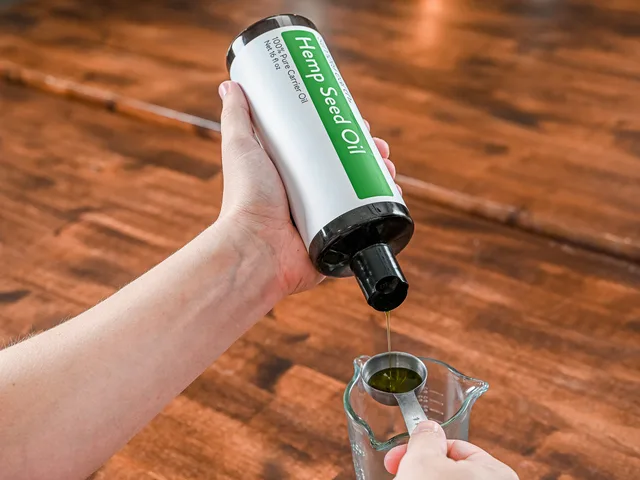
This is the plain one and the most common reason it ends up in a routine. A fixed oil sits in the top layer of skin and slows the water already there from leaving — which is why a moisturising oil works best on damp skin rather than dry. Simply Earth's ingredient record puts skincare at the top of hemp seed oil's uses, and the legacy version of this page described it the same way. It is a straightforward, unglamorous job, and this oil is good at it.
KATIE'S TIP
Straight out of the shower, before you have properly towelled off, is when any oil does the most work. Two or three drops is plenty for a face.
USE IT IN →

BEST FOR: SKIN THAT FEELS TIGHT OR STRIPPED
An oil layered over skin reduces how much water escapes from it, and skin that is not constantly losing water is more comfortable. That is a real and useful thing and it is what we are claiming. We are deliberately not saying that hemp seed oil repairs your skin barrier, which is how the earlier version of this page put it. Repair is a stronger word than we can support, and the difference between supporting something and repairing it is exactly the kind of gap we would rather not paper over.
KATIE'S TIP
Oil goes on last. Anything water-based you apply over the top of it is mostly going to sit there, because you have just made your skin harder for water to cross in either direction.
USE IT IN →
BEST FOR: ROUGH PATCHES, ELBOWS AND HANDS
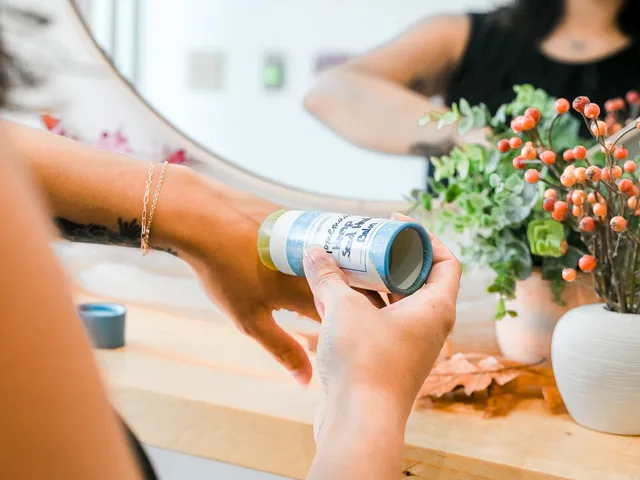
Ask anyone who makes salves why hemp seed oil is in the recipe and the answer is that it feels good on skin that is unhappy. Simply Earth's own Hemp Seed Healing Balm is built around it for that reason. We are calling this comfort rather than healing — the balm's name is a product name, not a claim about what the oil does to your body, and the previous version of this page blurred that line in a way we are not repeating.
KATIE'S TIP
Balms beat oils on hands, because they stay put. If you are making one, hemp seed oil is a good share of the liquid oil but not all of it.

BEST FOR: ACNE-PRONE AND OILY SKIN
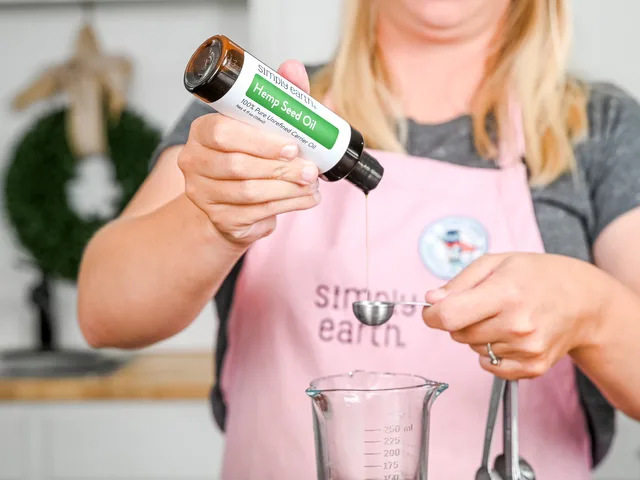
Simply Earth's ingredient record states that hemp seed oil's fatty acids may reduce acne, and we are quoting that rather than restating it as a fact, because "may" is doing real work in that sentence. What can be said more confidently is that this is a light, non-heavy oil that people with oily and breakout-prone skin generally get on with — which is not nothing, given how many facial oils those people have been told to avoid. If you have persistent acne, this is a moisturiser to try, not a treatment to rely on.
KATIE'S TIP
Patch test on your jaw for a few days before you commit your whole face. Skin that breaks out easily deserves a slower introduction to anything new.
USE IT IN →
Hemp Seed Oil Is Green, and Smells of Something
The Consequence of Leaving It Unrefined
 Shop Hemp Seed Oil
BEST FOR: ANYONE PLANNING A BLEND
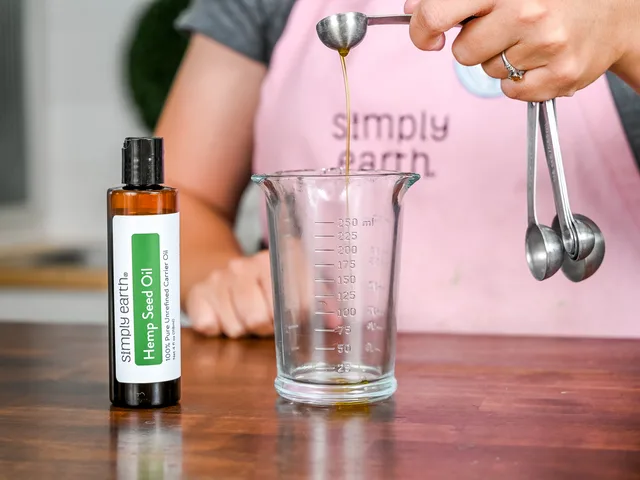
Our ingredient record describes the colour as dark to clear light green and the aroma as distinct; our product team describes it as a slightly nutty smell. Both are consequences of the oil being unrefined — refining is what makes other carriers pale and almost scentless. This is genuinely a benefit and genuinely a constraint, and you should know which you are dealing with. It will tint a white balm or lotion, and it brings its own smell into a blend. Plan for both and it is a lovely ingredient; ignore them and you will be surprised by your own body butter.
KATIE'S TIP
If you want hemp seed oil in a blend but not its colour or smell in charge, use it as part of the oil phase rather than all of it. A third is a sensible place to start.
USE IT IN →

Hemp Seed Oil Scores 1 to 2 on the EWG Scale
Cosmetic Grade, and Sold from 1oz to a Gallon
 Shop Hemp Seed Oil
BEST FOR: CLEAN-INGREDIENT ROUTINES AND BULK MAKERS
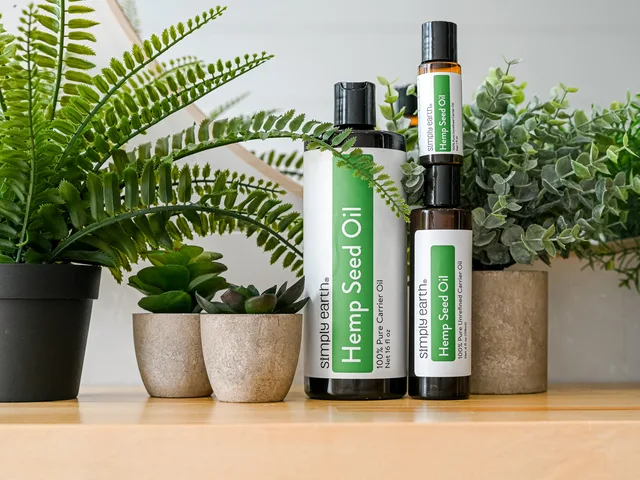
Simply Earth's ingredient record scores hemp seed oil 1 to 2 on the Environmental Working Group's scale, depending on use — the lowest two bands there are — and grades it Cosmetic. It is also worth knowing how we sell it, because that tells you who it is for. There is a 1oz bottle to try, a 16oz bottle for people who have started making things, and a one-gallon jug for people who have stopped counting. Not many ingredients we stock span that range.
KATIE'S TIP
Buying the gallon is only sensible if you will get through it inside two years. Decant what you are using into a smaller amber bottle and keep the jug shut and out of the light.
USE IT IN →
Put It to Work
How to Use Hemp Seed Oil
For Skin
- • Apply a few drops to the face or body after cleansing, while skin is still damp
- • Use it neat — hemp seed oil is the carrier, so there is no dilution rate to work out
- • Expect a faint green cast on very pale skin that settles as it absorbs
In Balms and Salves
- • Use it as part of the liquid oil alongside a butter and a wax
- • Add it after the beeswax and butters have melted and come off the heat
- • Keep it to a share of the oil phase so its colour does not take over
As a Base for Essential Oils
- • Build roll-ons, massage blends and facial oils on it the way you would any carrier
- • Account for its own aroma when you choose the essential oils going in
- • Follow the dilution guidance for the essential oil you are adding, not for the carrier
In Body Butters and Lotions
- • Swap it in for part of the oil phase of a whipped body butter
- • Expect the finished product to look cream or pale green rather than white
- • Pair it with a paler carrier if you want to keep the colour down
Know the Difference
Hemp Seed Oil vs. CBD, Apricot and Jojoba
The first column pair is the one worth stopping on, and it is the reason this page exists: hemp seed oil and CBD oil come from the same plant and almost nothing else about them matches, because one is pressed from the seed and the other is extracted from the flower and leaf — which is why the seed oil goes on your skin as a carrier and the extract was taken under the tongue, and why Simply Earth stocks the first and no longer stocks the second. Every cell here comes from our own ingredient and product records rather than from general reading, and the other row that earns its place is Refined or Unrefined, because hemp is the only unrefined oil in this table and that single fact explains the two columns beneath it — it is the only green one, and the only one with an aroma of its own.
Swipe to compare →
Hemp Seed Oil The subject of this page | CBD Oil The one it gets confused with | Apricot Oil The fast, near-neutral carrier | Jojoba Oil The long-keeping one | |
|---|---|---|---|---|
| Part of the Plant | Seeds | Flower and leaf | Kernels, from inside the stone | Seeds |
| How It Is Made | Cold pressed | CO2 extracted | Cold pressed | Cold pressed |
| INCI Name | Cannabis Sativa Seed Oil | Not a carrier oil | Prunus armeniaca (apricot) kernel oil | Simmondsia Chinensis Seed Oil |
| Cannabinoid Content | None claimed — it is a seed oil | Full spectrum, 500mg per bottle | None | None |
| What It Is For | A carrier oil for skin and DIY | Taken under the tongue | A carrier oil for skin and DIY | A carrier oil for skin and hair |
| Refined or Unrefined | Unrefined | Not applicable | Refined | Not stated |
| Colour | Dark to clear light green | Not applicable | Straw coloured | Clear bright golden |
| Aroma | Distinct, slightly nutty | Not applicable | Bland — refining removes most of the odour | Natural odour |
| Absorption | Average Absorption Rate (3) | Not applicable | Fast Absorption Rate (2) | Average Absorption Rate (3) |
| Shelf Life | 2 years | Not applicable | 2 years | 3 years |
| EWG Score | 1 to 2 | Not rated here | 1 | 1 |
| Sold at Simply Earth | Yes — 1oz, 16oz and 1 gallon | No longer sold | Yes | Yes |
| Simply Earth | This page's oil | — | — | — |
Perfect Pairs
What Hemp Seed Oil Pairs With
This is not a "blends well with" list in the aroma sense — hemp seed oil is the base, not the note on top. These are the essential oils people most often want carried in it: the skin-friendly ones for facial oils and balms, plus the ones that turn up in salves alongside it. Because this carrier brings a faint nuttiness of its own, it sits more comfortably under herbaceous, woody and resinous oils than under delicate florals. If you are layering carriers rather than essential oils, apricot keeps things paler and lighter, and jojoba adds slip and a longer shelf life.
From the Seed
Where Hemp Seed Oil Comes From
Hemp is understood to have originated in Central Asia, and it is one of the fastest-growing plants there is — it can be harvested three to four months after it goes in the ground. That speed is most of why it has been useful to people for so long, and why it turns up as the raw material for such an odd spread of things: paper, food, fibre and medicines, all from the same crop.
The oil is a narrower story than the plant. The seeds are cold pressed, and what comes out is pressed oil and nothing else — no solvent, no heat, no refining stage afterwards. That is the whole process, and it is why the oil still looks and smells like the seed it came from.
It is also worth saying plainly what this crop is and is not. Hemp is Cannabis sativa, the same species that CBD comes from, and the seed is simply a different part of it — the part with no meaningful cannabinoid content and a great deal of oil. The confusion is understandable and the botany is not actually complicated: same plant, different half, entirely different product.
The Chemistry
What Is Actually In Hemp Seed Oil
A carrier oil's chemistry is a fatty-acid profile rather than a constituent list — so this section names compounds and deliberately gives no percentages and no ratio.
Linoleic Acid
Polyunsaturated · Omega-6
The fatty acid most associated with hemp seed oil, and the one behind its reputation as a light rather than a heavy oil. Linoleic acid is the polyunsaturated end of the fatty-acid spectrum, and oils that lean that way tend to feel thinner on skin and sink in rather than sitting on top.
Alpha-Linolenic Acid
Polyunsaturated · Omega-3
The other polyunsaturated fatty acid hemp seed oil is known for, and the less common one — omega-3 is not something most carrier oils bring to a blend in any quantity. It is part of why hemp seed oil gets described as nutritionally unusual among the oils on a DIY shelf.
Gamma-Linolenic Acid
Polyunsaturated · The uncommon one
GLA is the fatty acid hemp seed oil is most often singled out for, because very few plant oils contain it at all — evening primrose and borage are the other names you will see. It is the reason hemp seed oil turns up in skincare formulation discussions far more often than its size on the market would suggest.
Cold Pressed, and Left Unrefined
Both are true, and together they explain the bottle
Simply Earth's record gives the extraction method as cold pressed and the finished oil as unrefined — pressed without heat, and not stripped afterwards. Refining is what removes colour and odour from a carrier oil, so skipping it is why ours is dark to clear light green with a distinct, slightly nutty aroma where a refined carrier is pale and quiet. The green is chlorophyll from the seed, and it is the most visible sign that nothing was taken out.
Being straight about the limits of this section: Simply Earth holds no batch fatty-acid assay for hemp seed oil, and the spec sheets attached to this ingredient are packaging documents — jug sizes, weights, bottle colours — rather than chemistry. There is no GC/MS either, and there would not be: GC/MS is how a distilled essential oil is verified, and this is a cold-pressed fixed oil, which is a different kind of product tested a different way. The fatty acids above are named because they characterise hemp seed oil, not because we are quoting a tested number — which is why you will not find an omega ratio or a GLA percentage anywhere on this page, however often you have seen one elsewhere. What we can point you at is our testing programme. See Our Testing →
Where It Comes From
Where We Source Our Hemp Seed Oil
Our supplier record for this oil gives its country of origin as Canada, and that supplier relationship is marked approved on our side. Canada is one of the larger regulated hemp-growing countries, which matters more for this crop than for most — hemp cultivation is licensed, and a settled regulatory home is part of why a supply chain for it exists at all.
The oil is cold pressed from the seeds and left unrefined, and it is graded Cosmetic. On the EWG scale our record puts it at 1 to 2 depending on use, the lowest two bands on that scale.
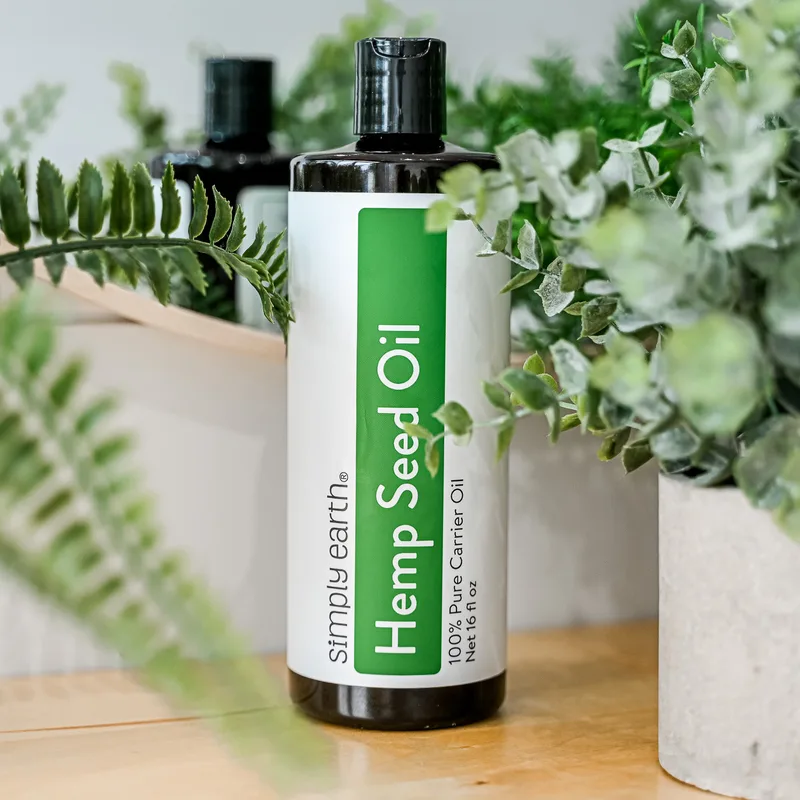
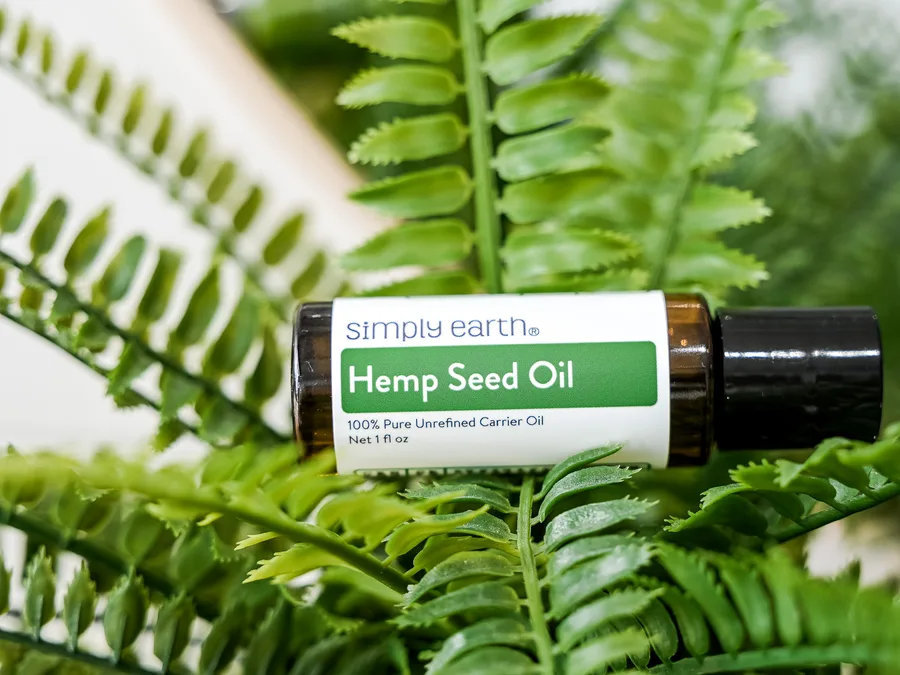
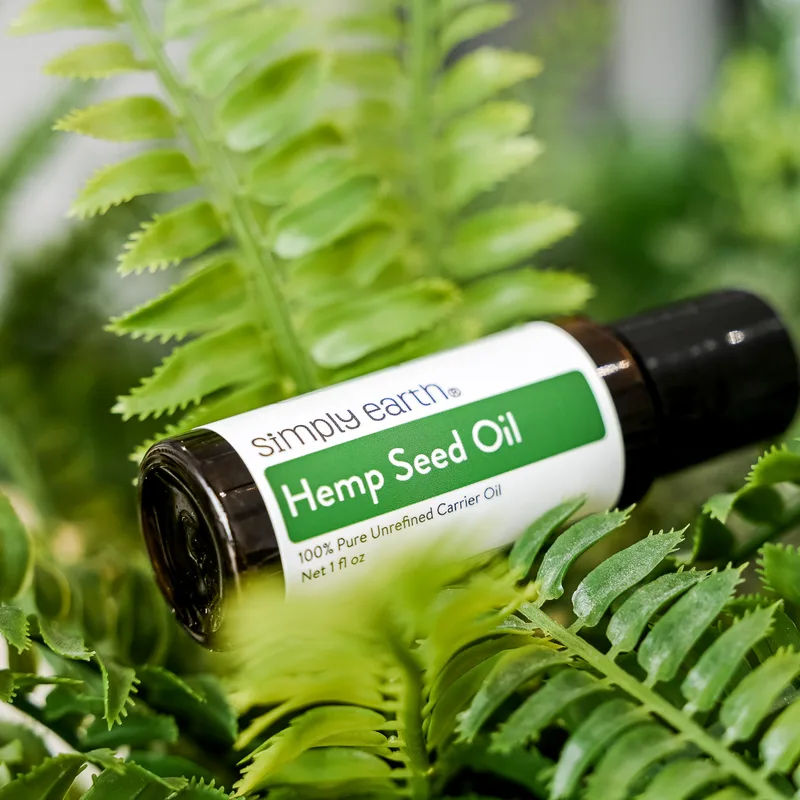
What we are not going to do is dress this up further. We know the country, the plant part and the extraction method, and all three are on the page above. We do not have a named farm, a harvest window, or a years-partnered figure for this particular ingredient, and there is no hemp-field photography in our library either — the picture above this is a bottle, not a crop, and we would rather tell you that than let a stock field stand in for one we have not visited.
Canada
Where It's Sourced
Seeds
Plant Part
Cold Pressed
Extraction
Use It Right
Things to Remember When Using Hemp Seed Oil
Hemp seed oil is not CBD oil, and it will not do what CBD is marketed to do. It is pressed from the seed and carries no meaningful cannabinoid content. If you came here looking for CBD, this is not a substitute for it, and we would rather say so than sell you the wrong bottle.
Use it externally. Simply Earth sells this as a cosmetic carrier oil for skin and DIY, not as a food or a supplement.
Patch test if you react to cannabis. Our ingredient record advises caution for anyone with a cannabis allergy, and a patch test before wider use is sensible for any new oil.
It will tint what you make. The oil is dark to clear light green, so balms, butters and lotions built on it come out cream or pale green rather than white. That is the unrefined oil showing, not a fault in your recipe.
Keep it off direct heat. Add it to a melted balm or butter after the mixture has come off the heat rather than melting it alongside the wax. This is standard practice for an unrefined oil you want to keep intact.
On eczema, be careful what you expect. Our ingredient record says hemp seed oil appears to reduce the symptoms of eczema, and that hedge is deliberate. Many people find an oil like this comfortable on eczema-prone skin; it is not a treatment, and eczema is worth a conversation with a doctor rather than a carrier oil.
There is no dilution rate for hemp seed oil. It is a carrier — the thing other oils get diluted into — so it is used neat, and it is never diffused.
Shelf life is 2 years. Store it in a cool area out of direct sunlight, which is what our own spec sheets say. Fixed oils go rancid rather than simply fading, so trust your nose: this one always smells faintly nutty, but sharp or paint-like means replace it.
These statements have not been evaluated by the Food and Drug Administration. This product is not intended to diagnose, treat, cure, or prevent any disease.
Real Results
What Earthies Are Saying About Hemp Seed Oil
"I really like this oil. I use it in my Deep Breath Chest Salve recipe. When I start coming down with a cold I rub the salve on my chest. Thanks Simply Earth. You're simply the best"
Rosanna A.
Verified Buyer • Hemp Seed Oil
"Loved all the products in this kit. Everything from the oil blends and bases. I used the blended oils to create salves and ointments. My favorite was the Skin Healing Ointment."
Laura K.
Verified Buyer • DIY Home Remedy Salves and Ointments Kit
"I made the exfoliating tea tree recipe and added a pinch of sea clay too. I followed it up with a hemp seed oil and frankincense mixture. I love how clean and soft my skin is!"
Angela B.
Verified Buyer • Face Wash Powder
OUR SIMPLY PURE PROMISE
What Goes Into Your Products Matters
Pure and Additive-Free
No fillers, no synthetic fragrance, no extenders.
Third-Party Tested
We test our products and publish the results.
Ethically Sourced from Quality Farms
Responsibly harvested. People and planet first.
EWG 1–2
Hazard Score
The lowest two bands on the scale
Canada
Country of Origin
Named, not implied
2 Years
Shelf Life
Stored cool and out of sunlight
Your Order Changes Lives: 13% of profits fight human trafficking globally.
Hemp Seed Oil FAQ
The questions Earthies ask most — starting with the one that brings most people here.
Is hemp seed oil the same as CBD oil? +
No, and this is the most important question on the page. Hemp seed oil is cold pressed from the seeds of the hemp plant and its INCI name is Cannabis Sativa Seed Oil. CBD oil is extracted from the flower and leaf of the same species and is sold for its cannabinoid content. They share a plant and almost nothing else — different part, different extraction, different regulation, different purpose. Hemp seed oil is a carrier oil you put on your skin. Simply Earth sells the seed oil and no longer sells a CBD extract, and swapping one for the other will not give you what either was bought for.
Does hemp seed oil contain THC or make you high? +
No. It is pressed from the seed, which is not where the cannabinoids are, and it is sold and regulated as a cosmetic carrier oil. There is no psychoactive effect and nothing to feel — it behaves like any other fixed oil on your skin.
Why is hemp seed oil green? +
Because it is unrefined. Simply Earth's ingredient record lists hemp seed oil as unrefined where apricot, argan and grapeseed are all refined, and refining is the stage that strips colour and odour out of a carrier oil. Skipping it leaves the chlorophyll from the seed in the bottle, which is the green, and leaves the oil smelling faintly nutty. Our record describes the colour as dark to clear light green and the aroma as distinct.
Will hemp seed oil turn my body butter green? +
It will tint it, yes — expect cream or pale green rather than white. That is normal and it is the unrefined oil doing it, not a mistake in your recipe. If you want to keep a paler colour, use hemp seed oil as part of the oil phase rather than all of it, and make up the rest with a refined carrier like apricot.
Is hemp seed oil good for acne-prone skin? +
It is a reasonable oil to try. Simply Earth's ingredient record says its fatty acids may reduce acne, and we are quoting that hedge rather than dropping it, because it is not a treatment claim. What is easier to say with confidence is that it is a light oil that people with oily and breakout-prone skin generally tolerate well. Patch test on your jaw for a few days first, and if your acne is persistent, see a doctor rather than relying on a carrier oil.
Can I use hemp seed oil on eczema? +
Many people find an oil like this comfortable on eczema-prone skin, and our ingredient record says hemp seed oil appears to reduce the symptoms of eczema. That wording is hedged on purpose and we have kept the hedge. It is a moisturising cosmetic oil, not a treatment for a medical skin condition, and eczema is worth a conversation with a doctor.
Does hemp seed oil need to be diluted? +
No. Hemp seed oil is the diluent — it is what you dilute essential oils into. You use it neat on skin, and you never put it in a diffuser, because a fixed oil does not evaporate. There is no dilution rate for it, and if a page gives you one for a carrier oil, that page has confused it with an essential oil.
How long does hemp seed oil last, and does it need refrigerating? +
Two years, and no. Simply Earth's ingredient record and all of its spec sheets give the shelf life as 2 years and the storage instruction as a cool area out of direct sunlight — the same figure as our apricot, argan and grapeseed oils. You will see hemp seed oil described elsewhere as needing the fridge; our own records do not ask for that. Carrier oils go rancid rather than just fading, so your nose is the real test. This one always smells faintly nutty, so it is a sharp or paint-like smell you are watching for, not the absence of a smell.
About the Author: Katie Veldkamp
Katie Veldkamp
Certified Aromatherapist · Co-Founder, Simply Earth
Katie Veldkamp is Simply Earth's Lead Certified Aromatherapist and the heart behind every product recommendation, recipe, and safety guide on this blog. With years of hands-on aromatherapy practice and a deep love for plant-based wellness, Katie fact-checks every health claim so that what you read is safe, science-informed, and actually useful.
Join 20,000+ Earthies Making Their Homes Natural
New recipes, usage guides, and DIY tips—delivered free.
No spam. Unsubscribe any time.
Learn by doing
Make your own natural products every month.
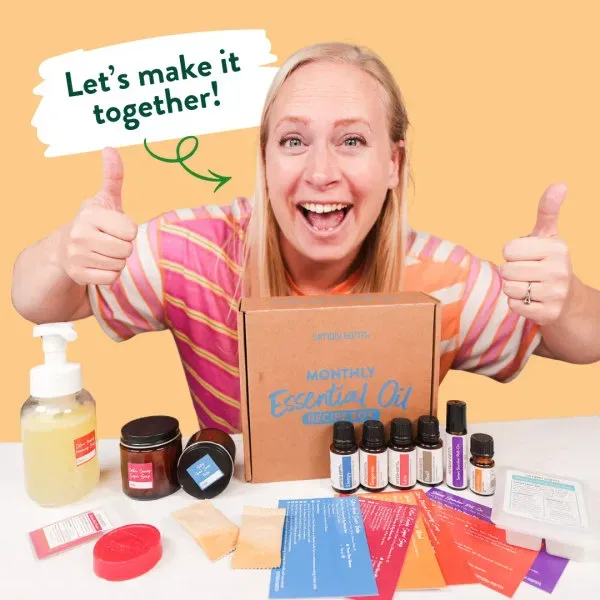
The Simply Earth Recipe Box ships 4 full-size essential oils, 6 natural recipes, and everything you need to make them. No guesswork.
Start My Recipe Box$39.99 for your first box, then $49.99/month. Skip, pause, or cancel anytime.