
Cajeput Essential Oil: Benefits, Uses & Recipes

Katie Veldkamp
Certified Aromatherapist
Fact Checked & Approved
Cajeput sits in the same genus as tea tree and gets recognised about a tenth as often. It is Melaleuca cajuputi — steam-distilled from the leaves of a tree with spongy white bark — and it smells camphorous and unexpectedly fruity, somewhere between eucalyptus and something sweeter. The chemistry is the reason to care: cajeput leads with 1,8-cineole, the compound eucalyptus is known for, while tea tree leads with terpinen-4-ol. Same family, genuinely different oils. Here is what cajeput actually does, the nine Simply Earth recipes that already use it, and the one safety line on this page that is not boilerplate.
Free Cheat Sheet
New to the Melaleucas?
Get the free Essential Oil Cheat Sheet and use every oil in your cabinet with confidence.
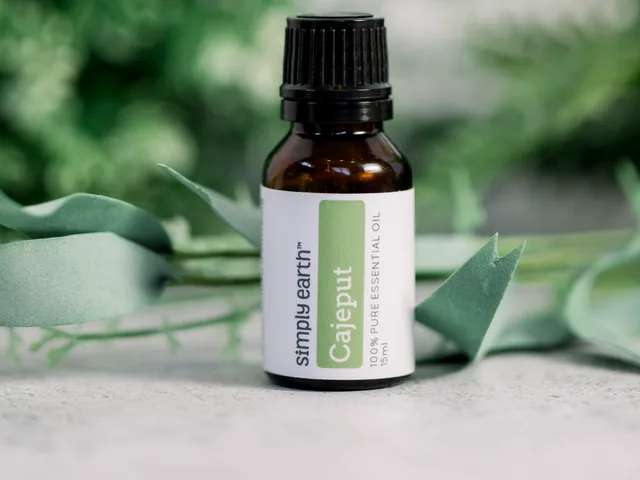
BEST FOR: CLEANSING BARS, WASHES & DIY SKINCARE
Cajeput has a long history in skin-cleansing preparations, and a 1992 study looked specifically at the antibacterial behaviour of cajeput oil when combined with antibacterial agents. That is chemistry observed in a lab rather than a promise about your skin, but it is the reason cajeput keeps turning up in cleansing soaps rather than in moisturising ones.
KATIE'S TIP
Cajeput's special dilution rate is 1 percent, which is low — so in a wash-off product like soap it earns its place without ever sitting on skin for long. That combination is why it suits cleansing recipes better than leave-on ones.
USE IT IN →

BEST FOR: AFTERNOON SLUMPS & DESK DIFFUSING
A 2017 paper on the chemical composition and effects of blended essential oils on humans is the source most often cited for cajeput's association with mental freshness. The aroma itself does a lot of the work here — camphorous and bright, it reads as alert rather than cosy, which is the opposite of what most people reach for at 3pm.
KATIE'S TIP
Two or three drops is genuinely enough. Cajeput has a blending factor of 5, so it carries further in a diffuser than its bottle size suggests, and overdoing it tips the room from fresh into medicinal.
USE IT IN →

BEST FOR: DIFFUSING IN A WELL-VENTILATED ROOM
This is the use cajeput is best known for, and the reason is 1,8-cineole — the same constituent that leads eucalyptus. Julia Lawless's Encyclopedia of Essential Oils records the traditional respiratory associations for cajeput, and cineole is used as a cough suppressant in traditional medicine. Read the safety section before you diffuse this one — cineole is also exactly why cajeput is not for young children.
KATIE'S TIP
Diffuse in a room with air moving through it, not a closed bathroom. If there is a child under 10 in the house, reach for a different oil entirely — this is the one benefit on this page with a hard limit attached to it.
USE IT IN →
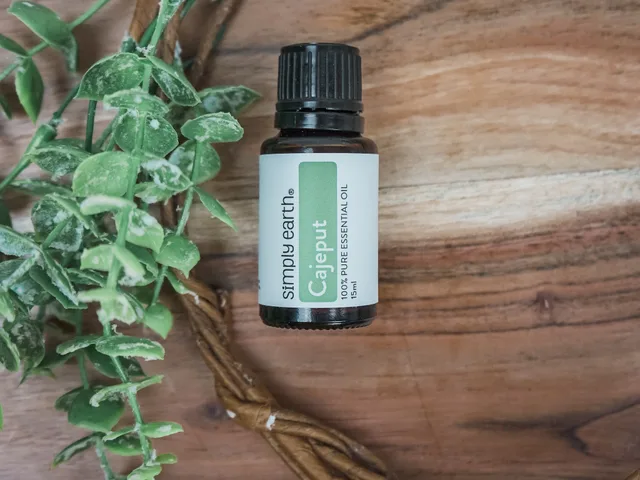
BEST FOR: EVENING ROUTINES & QUIET RESETS
A 2023 study looked at antidepressant and anxiolytic effects of Melaleuca cajuputi essential oil in a chronic immobilisation stress mouse model. Animal research is not a claim about people, and we are not going to present it as one — but it is the published work behind cajeput's reputation as a centering oil rather than a purely stimulating one.
KATIE'S TIP
Cajeput is a middle note, so it holds the centre of a blend rather than flashing off the top. Pair it with cedarwood if you want the grounding to land harder.
USE IT IN →

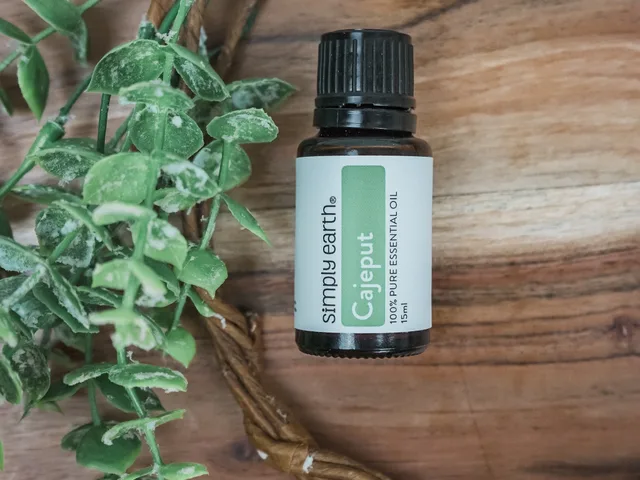
BEST FOR: POST-WORKOUT RUBS, BALMS & MASSAGE BARS
Cineole produces a warming, counter-irritant sensation when it is absorbed through skin, which is the mechanism behind cajeput appearing in so many muscle preparations. Simply Earth puts it into more massage and balm recipes than any other category, and it is the single most common reason Earthies keep a bottle around.
KATIE'S TIP
Blend it into melted butters and waxes as they start to cool rather than while they are hot — you keep more of the aroma, and the 1 percent dilution stays where you put it.


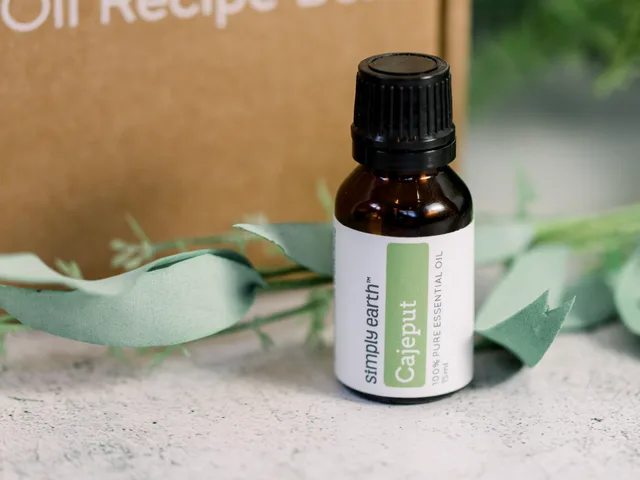
BEST FOR: ROLL-ONS, COMPRESSES & FOOT SOAKS
The cineole story carries over from muscles to joints, which is why cajeput turns up in roll-ons and compresses as often as in massage oils. The warming sensation is the point — it is a comfort measure applied to a specific spot, and it works best as part of a routine rather than a one-off.
KATIE'S TIP
A roll-on is the easiest format to keep the dilution honest. Simply Earth's Mover Soother recipe already does the maths for you, which is why it is the one I recommend first.


Reduces Appearance of Breakouts
The benefit cajeput shares with its famous cousin.
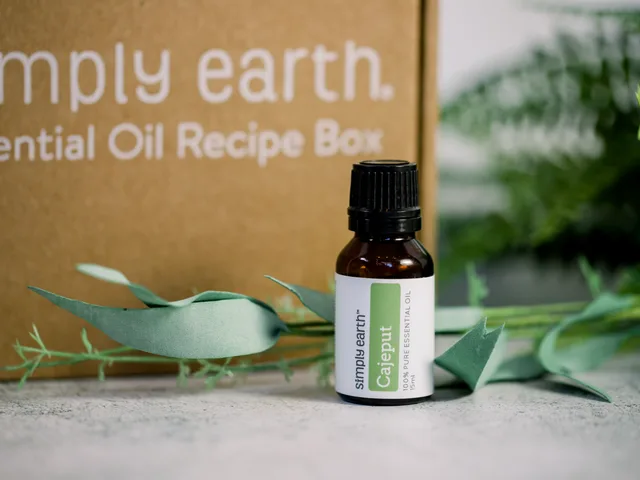 Shop Cajeput Essential Oil
BEST FOR: CLEANSING BARS & TARGETED DIY SKINCARE
Simply Earth lists this among cajeput's uses, and it is the clearest overlap with tea tree — both are Melaleucas, both show up in blemish-focused formulas. Cajeput is the less familiar option and carries the tighter 1 percent dilution, so treat it as an alternative to tea tree rather than a stronger version of it.
KATIE'S TIP
Never apply this neat to a blemish. Cajeput is explicitly not for sensitive or damaged skin, and a patch test on the inner forearm first is the right order of operations.
USE IT IN →
Put It to Work
How to Use Cajeput Essential Oil
Diffuse
- • 2–3 drops is plenty — cajeput has a blending factor of 5
- • Keep the room ventilated rather than closed
- • Not around children under 10, and not around anyone with breathing sensitivity
Topical
- • Simply Earth's special dilution rate for cajeput is 1% — unusually low
- • That is roughly 6 drops per ounce of carrier oil
- • Patch test on the inner forearm; never apply undiluted
- • Avoid sensitive or damaged skin entirely
DIY & Soap
- • Cleansing bars and washes suit it better than leave-on products
- • Add to melted butters and waxes as they begin to cool
- • Pairs naturally with cedarwood, clove bud, rosemary and thyme
Muscle & Joint Blends
- • Roll-ons, balms, massage bars and compresses
- • Warming rather than cooling — expect a gentle heat
- • Foot soaks work well; keep the oil dispersed in a carrier or salt first
Know the Difference
Cajeput vs Tea Tree vs Eucalyptus
Cajeput, tea tree and niaouli are all Melaleuca species, and cajeput gets confused with all of them plus eucalyptus. The table sorts it out using Simply Earth's own product records. Two things in it are worth pausing on. First, cajeput is the only one of these three that is safe around cats and dogs — tea tree and eucalyptus are both a no. Second, it is also the only one that is off-limits in pregnancy and the only one with a 1 percent dilution rate rather than 5 percent. So cajeput is not simply a gentler tea tree or a milder eucalyptus; it is safer in some rooms of your house and stricter in others. Niaouli (Melaleuca quinquenervia) rounds out the genus for reference, but Simply Earth does not currently sell it. If it is tea tree you actually want, that is Tea Tree Essential Oil, and the cineole-forward option is Eucalyptus.
Swipe to compare →
Cajeput Melaleuca cajuputi | Tea Tree The famous Melaleuca | Eucalyptus (Globulus) The cineole comparison | Niaouli The third Melaleuca | |
|---|---|---|---|---|
| Botanical Name | Melaleuca cajuputi | Melaleuca alternifolia | Eucalyptus globulus | Melaleuca quinquenervia |
| Where Ours Comes From | Australia | Australia | China | Not sold by Simply Earth |
| Aroma | Camphorous and fruity | Medicinal and woody | Clean and herbaceous | Not sold by Simply Earth |
| Main Constituents | 1,8-Cineole, α-Terpineol, γ-Terpinene | Terpinen-4-ol, γ-Terpinene, α-Terpinene | 1,8-Cineole, α-Pinene, Limonene | Not sold by Simply Earth |
| Note & Blending Factor | Middle, factor 5 | Middle, factor 3 | Top, factor 4 | Not sold by Simply Earth |
| Kid Safe | Children 10+ | Children 2+ | Children 10+ | Not sold by Simply Earth |
| Pregnancy & Breastfeeding | No | Yes, consult your doctor | Yes, consult your doctor | Not sold by Simply Earth |
| Cat & Dog Safe | Yes and yes | No and no | No and no | Not sold by Simply Earth |
| Special Dilution Rate | 1% | 5% | 5% | Not sold by Simply Earth |
| Price, 15mL | $12.99 | $12.99 | $10.99 | Not sold by Simply Earth |
| This article | The subject of this page | — | — | — |
Perfect Pairs
Cajeput Blends Well With…
Simply Earth lists cedarwood (Atlas or Himalayan), clove bud, rosemary and thyme (red) as cajeput's partners. Eucalyptus earns its place from the other direction — cajeput is the first oil listed on Eucalyptus Globulus's own blending notes.
The White Tea Tree
What Is Cajeput Essential Oil?
Cajeput essential oil is steam-distilled from the leaves of Melaleuca cajuputi, an evergreen in the Myrtaceae family — the same family as tea tree, niaouli, clove and eucalyptus. The tree is easy to pick out: spongy, papery white bark, pointed leaves, and flowers that come in red, green or white. The name itself comes from the Malay kayu putih, meaning white wood, which is as literal a description as botany gets.
What comes out of the still is a thin, colourless to pale yellow oil with an aroma most people describe as camphorous first and fruity second. That second note is the thing that separates it from eucalyptus on a smelling strip. It is sharper than tea tree and sweeter than eucalyptus, and it sits in the middle of a blend rather than at the top.
Cajeput has a long folk record across Southeast Asia for the common cold, headaches, toothache, sore muscles and fever — Simply Earth's own product notes open with exactly that list. Most of it is traditional use rather than clinical evidence, and this page treats it that way. What has actually been studied is narrower, and it is set out in the science section below.
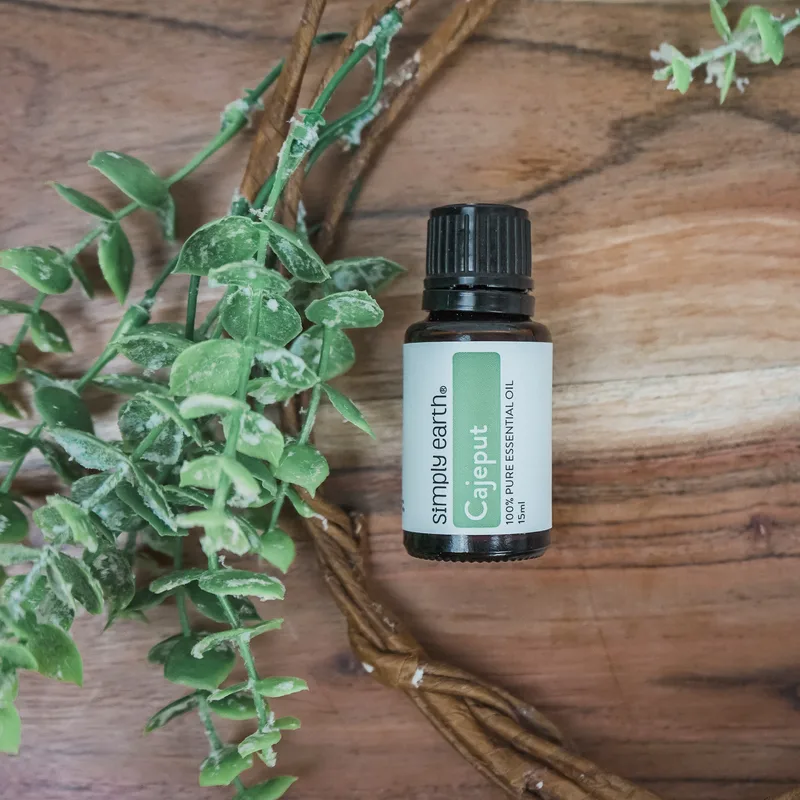
The Chemistry
The Science Behind This Oil
Simply Earth lists 1,8-cineole, α-terpineol and γ-terpinene as cajeput's main constituents. What follows is chemistry about those three compounds — not claims about what this oil will do for a person.
1,8-Cineole
The headline constituent · Also called eucalyptol
This is the compound that defines cajeput, and the one that makes it behave like eucalyptus rather than like tea tree. Because of its pleasant, spicy aroma and taste it is used commercially in flavourings, fragrances and cosmetics, it is an ingredient in commercial mouthwashes, and it has been used in traditional medicine as a cough suppressant. It is also the reason the safety section on this page matters: cineole-forward oils carry an age restriction that milder Melaleucas do not.
α-Terpineol
The softer note · Widely used in perfumery
Alpha-terpineol has a pleasant odour close to lilac and is a common ingredient in perfumes, cosmetics and aromatic scents. It attracts research interest across a wide range of biological applications, and it is used industrially to enhance skin penetration as well as for its insecticidal properties. In cajeput it is the constituent doing most of the work to round off cineole's sharper edge.
γ-Terpinene
The fruity edge · Strong antioxidant activity
Gamma-terpinene functions as an antioxidant, a plant metabolite and a volatile oil component. It is a major component of essential oils made from citrus fruits, has strong antioxidant activity, and carries a lemon odour — which is a large part of why cajeput reads as fruity rather than purely medicinal. Notably, it is also one of tea tree's three main constituents, which is the chemistry behind the two oils smelling like relatives.
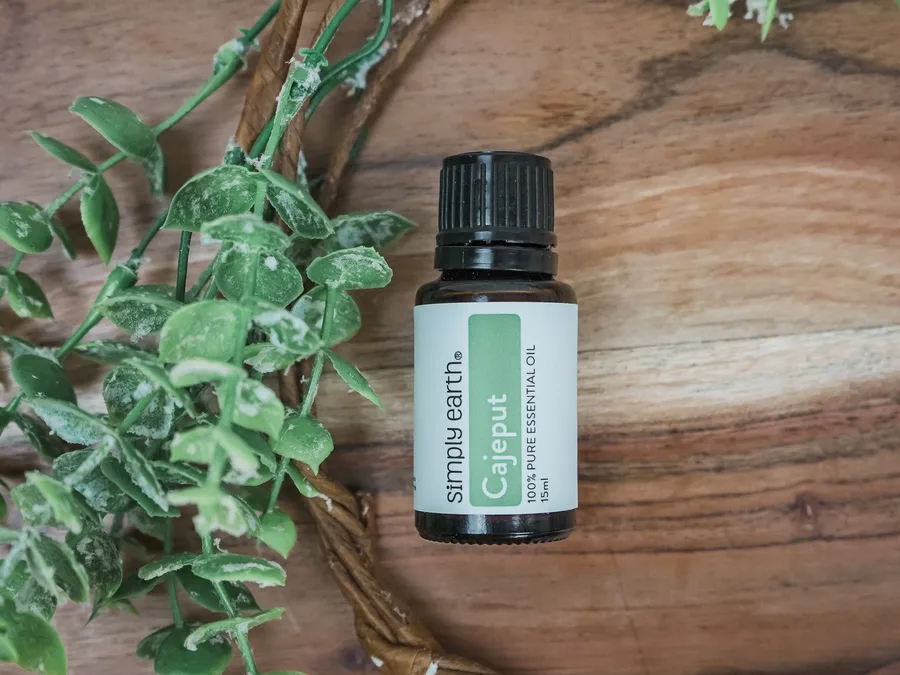
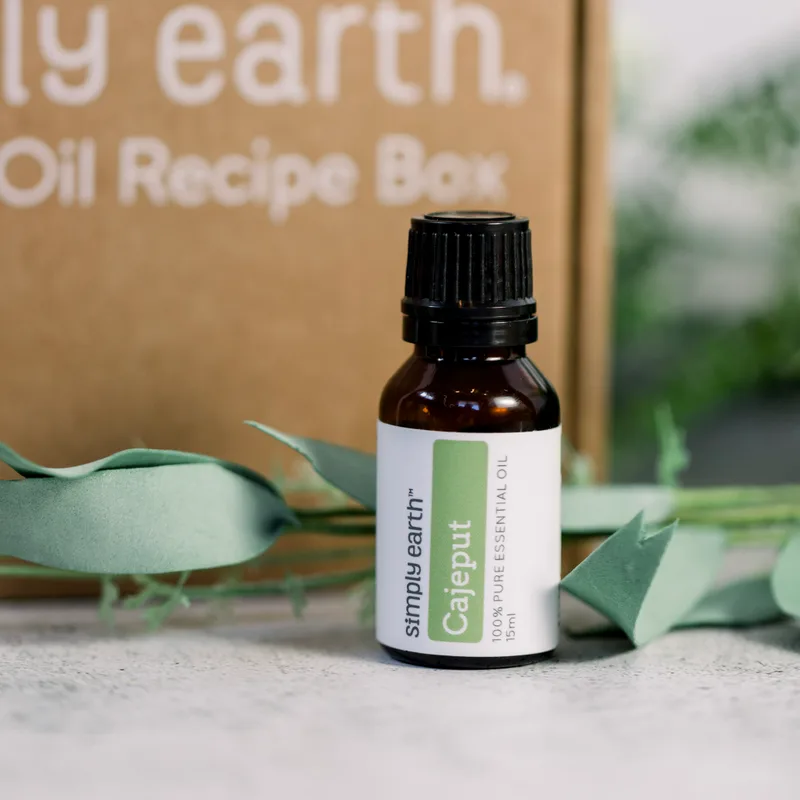
Simply Earth's Cajeput Essential Oil is steam-distilled from the leaf of Melaleuca cajuputi. Every bottle carries a batch-specific GC/MS report, which is worth more than usual on this oil: cineole content is what drives both cajeput's respiratory reputation and its age restriction, so knowing the actual profile of the batch in your hand is the point. We never blend our oils with synthetic fragrance, fillers or extenders. Shop Cajeput Essential Oil →
Where It Comes From
Where Our Cajeput Comes From
Simply Earth's product record lists Australia as the origin for our cajeput, steam-distilled from the leaf. Melaleuca cajuputi grows across Southeast Asia and northern Australia, and the species turns up widely enough through that range that country of origin genuinely varies between suppliers across the industry.
What we will not do is fill in the detail we do not publish. We do not currently record how long we have worked with this supplier, or what proportion of this oil is farm-direct, and rather than put a plausible-sounding number on a page we have left those out and flagged them internally. The same goes for the farm itself — we are not going to describe conditions we cannot point at a record for.
What we can stand behind is the part that is verifiable in every bottle: the species, the plant part, the extraction method, and a batch-specific GC/MS report that tells you what is actually in the oil you bought. Thirteen percent of the profit from it goes to fighting human trafficking, which is true of everything we sell.
Use It Right
Things to Remember When Using Cajeput
Do not diffuse or use cajeput around children under the age of 10. Because it is cineole-forward, it may cause difficulty breathing in young children. This is the most important line on this page.
Simply Earth lists cajeput as suitable for children aged 10 and over.
Not safe to use during pregnancy or while breastfeeding. Consult your doctor.
Simply Earth's special dilution rate for cajeput is 1 percent — roughly 6 drops per ounce of carrier oil. That is lower than most oils, including tea tree and eucalyptus at 5 percent.
Always dilute before applying to skin. Never apply cajeput undiluted.
Do not use on sensitive or damaged skin. Do a patch test on the inner forearm before first use, as it may cause skin irritation in some people.
For external use only. Avoid contact with the eyes.
Cajeput is listed as safe to diffuse and use topically around cats and dogs, which is unusual in this family of oils.
Sun safe — cajeput is not photosensitising.
Shelf life is 4 years. An oxidised oil, left with the cap off for long periods, is more likely to irritate skin — replace it rather than push on.
We do not recommend ingesting essential oils unless directed by a doctor certified in aromatherapy.
These statements have not been evaluated by the Food and Drug Administration. This product is not intended to diagnose, treat, cure, or prevent any disease.
Real Results
What Earthies Are Saying
"If you haven't yet given this oil a try, you must! Cajeput is quite similar to Tea Tree in smell but is slightly different in affects. Cajeput has a higher concentration of 1,8 Cineole (Eucalyptol), limonene and alpha-Terpineol while Tea Tree contains more Terpinen-4-ol and gamma-Terpinene."
Sharon R.
Verified Buyer • Cajeput Essential Oil
"I love this mold!! The little knobs on it really helps to massage out my pain! I made this for my husband and myself using ravensara, cajeput and relief blend and it works!!! I'm making massage bars for my family for Christmas!"
Nicole
Website Review • Massage Bar Silicone Mold
"This is an interesting oil. I do like it… It's hard to explain but for me I smell an earthy menthol smell. This oil has some amazing benefits though and for that alone I'll give it 4 stars. If you want to try this but aren't sure that it's for you, I suggest you read all the benefits of it, and then I say give it a go."
Julia R.
Website Review • Cajeput Essential Oil • 4 stars
OUR SIMPLY PURE PROMISE
What Goes Into Your Products Matters
Certified 100% Pure
No fillers, no synthetics. Just pure oil.
GC/MS Third-Party Tested
Every batch independently verified.
Ethically Sourced from Quality Farms
Responsibly harvested. People and planet first.
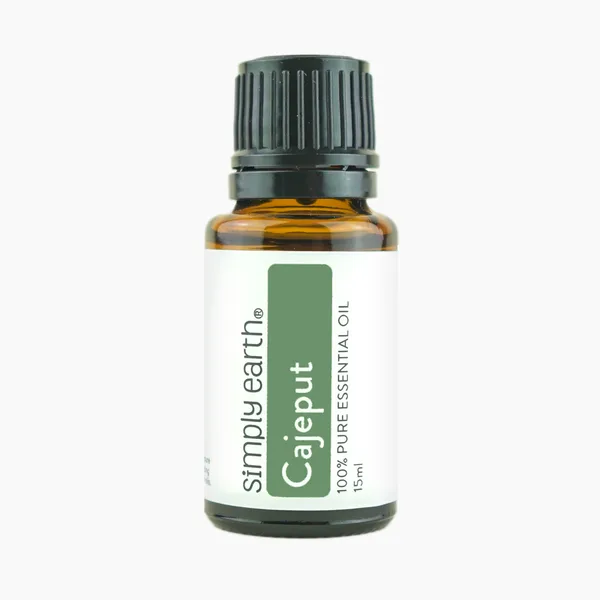
15mL
Bottle Size
MLM brands: 10mL
$10–16
Per Oil
MLM brands: $25–55+
Public
GC/MS Tests
MLM brands: Rarely
Your Order Changes Lives: 13% of profits fight human trafficking globally.
Cajeput Essential Oil FAQ
The questions people actually ask about cajeput — including the two safety ones that change whether you should buy it at all.
What is cajeput essential oil used for? +
Simply Earth lists seven uses — cleansing skin, energizing, supporting respiration, centering, soothing muscles, supporting joint function, and reducing the appearance of breakouts. In practice most people buy it for the muscle and joint blends, which is where it appears in the largest number of Simply Earth recipes.
What does cajeput essential oil smell like? +
Camphorous first, fruity second. It is sharper than tea tree and sweeter than eucalyptus. One Earthie described it as an earthy menthol smell, which is about as close as words get. It is a middle note with a blending factor of 5, so it carries further in a blend than you might expect.
Is cajeput the same as tea tree? +
No. They are both Melaleuca species — cajeput is Melaleuca cajuputi and tea tree is Melaleuca alternifolia — but their chemistry differs. Cajeput leads with 1,8-cineole, tea tree with terpinen-4-ol. The practical differences matter too — tea tree is kid safe from age 2 and dilutes at 5 percent, while cajeput is 10 and over and dilutes at 1 percent.
Is cajeput essential oil safe for kids? +
Only for children aged 10 and over. Do not diffuse or use cajeput around children under 10, because it may cause difficulty breathing. This is specific to cineole-forward oils and is the single most important safety point about cajeput. If you need a Melaleuca for a younger child, tea tree is listed as safe from age 2.
Is cajeput safe around cats and dogs? +
Yes. Cajeput is listed as safe to diffuse and use topically around both cats and dogs, which is genuinely unusual — tea tree and eucalyptus are both a no on this point. It is one of the strongest practical reasons to keep cajeput in the cabinet if you have pets.
How much cajeput essential oil should I use? +
Simply Earth's special dilution rate for cajeput is 1 percent, which is roughly 6 drops per ounce of carrier oil. For diffusing, 2 to 3 drops is plenty. Both numbers are lower than you would use for most oils, because cajeput is more concentrated in effect than its mild reputation suggests.
Can I use cajeput essential oil while pregnant? +
No. Simply Earth lists cajeput as not safe during pregnancy or while breastfeeding, and recommends consulting your doctor. This is one of the clearest differences from tea tree and eucalyptus, both of which are listed as usable with a doctor's guidance.
How long does cajeput essential oil last? +
Four years, stored with the cap on and away from heat and light. If it has been left open for long periods it can oxidise, which makes skin irritation more likely — at that point replace it rather than dilute it further.
About the Author: Katie Veldkamp
Katie Veldkamp
Certified Aromatherapist · Co-Founder, Simply Earth
Katie Veldkamp is a Certified Aromatherapist and co-founder of Simply Earth. She personally formulates and reviews SE's essential oil blends and verifies all benefit claims on Simply Earth content before it goes live.
Join 20,000+ Earthies Making Their Homes Natural
New recipes, usage guides, and DIY tips — delivered free.
No spam. Unsubscribe any time.

Learn by doing
Make your own natural products every month.
The Simply Earth Recipe Box ships 4 full-size essential oils, 6 natural recipes, and everything you need to make them. No guesswork.
Start My Recipe Box$39.99 for your first box, then $49.99/month. Skip, pause, or cancel anytime.