
Tangerine Essential Oil: The Citrus That Breaks the Citrus Rule

Katie Veldkamp
Lead Certified Aromatherapist
Fact Checked & Approved
Everyone who learns essential oils learns the citrus rule early: press an oil out of a citrus peel, put it on your skin, and stay out of the sun. It is good advice for bergamot, lemon, lime and bitter orange. It is not the rule for tangerine. Simply Earth lists Tangerine Essential Oil as sun safe, which makes it the rare cold-pressed citrus you can wear in daylight — and that one difference changes where this oil fits in your day. It is also kid safe from age two, gentler and sweeter than lemon, and it is the oil most people reach for when they want a room to feel brighter without it feeling sharp.
Free Cheat Sheet
New to Essential Oils? Start Here.
Get our free Essential Oil Guide — the safe-use basics, dilution rates, and the oils worth buying first.
Start Here
What Is Tangerine Essential Oil?
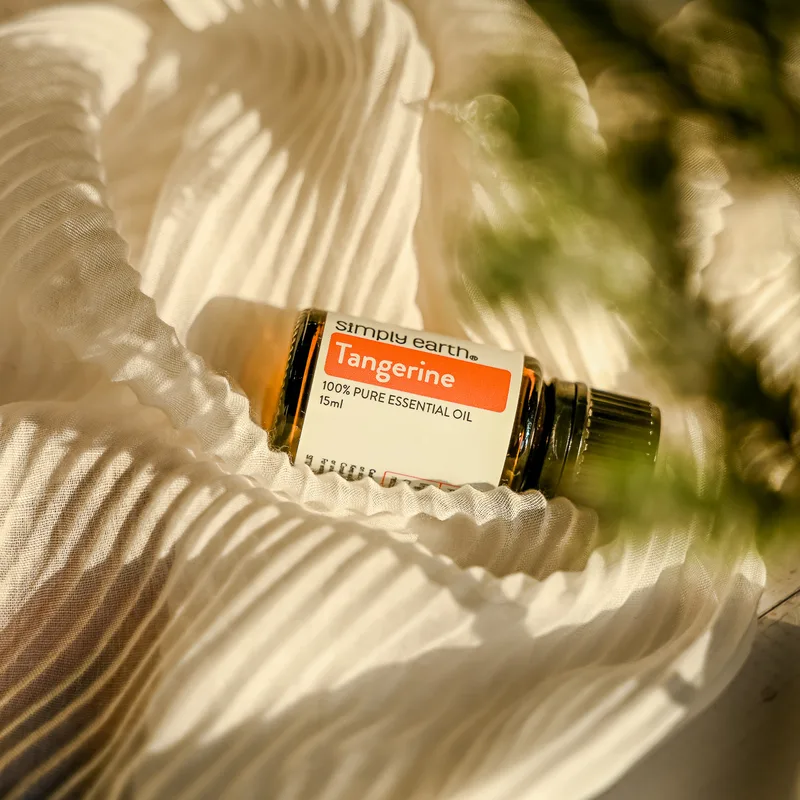
Tangerine Essential Oil is cold-pressed from the peel of Citrus reticulata — the same fruit you segment with your thumbs in winter. Nothing is distilled and nothing is extracted with solvent. The oil already sits in tiny glands in the rind, and pressing the peel simply releases it. That is why the aroma is so instantly familiar: it is very close to what you smell when you break the skin of a fresh tangerine.
The oil runs about 90% limonene, the compound that gives every citrus peel its brightness. Alongside it sit small amounts of γ-terpinene and myrcene. That composition explains most of what tangerine does well — it is a top note, thin, greenish-orange in the bottle, and it lifts a blend the moment you add it. Its blending factor is 7, which in practice means a little goes a long way.
What sets it apart from its shelf-mates is what it lacks. The furanocoumarins that make bergamot, lemon and lime react with sunlight are not a concern here: Simply Earth lists Tangerine Essential Oil as sun safe, and kid safe from age two. It is the citrus you can put in a daytime roll-on without planning your afternoon around it.
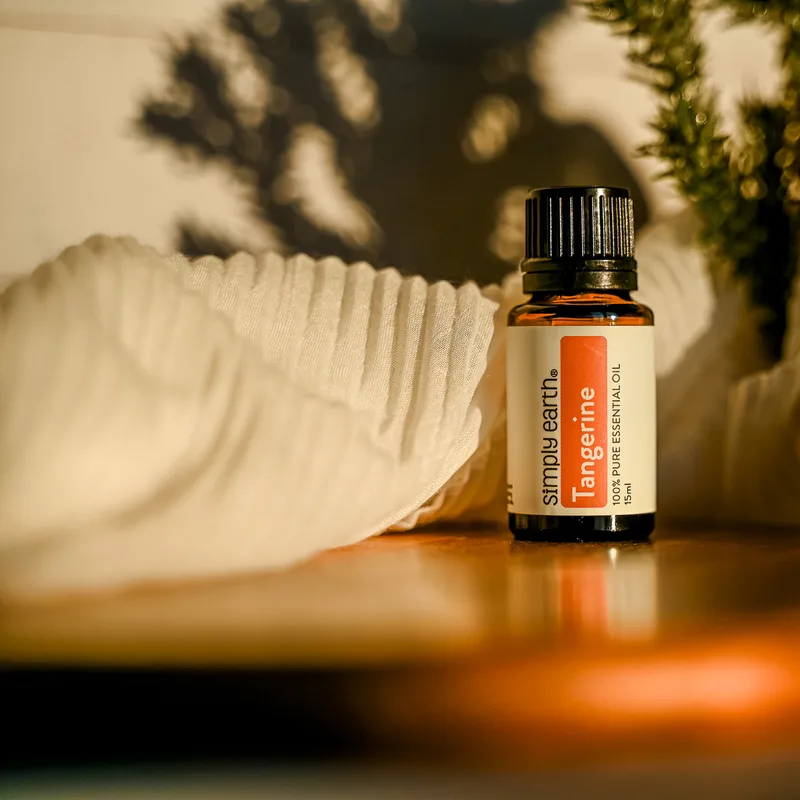
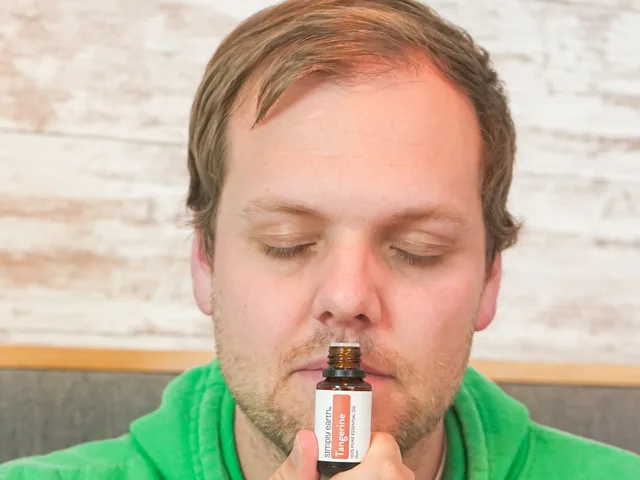
BEST FOR: DIFFUSING, INHALERS & SOLID PERFUME
This is the benefit people notice first, usually before they have read anything about it. Research on tangerine oil has recorded stimulating effects on mood and energy alongside its pleasant aroma, and in ordinary use the effect is immediate and hard to argue with. It is sweeter and rounder than lemon, which is exactly why it lands well in rooms where other people also have to live.
KATIE'S TIP
Two drops on a cotton pad tucked behind a radiator does more for a grey afternoon than most people expect. I keep the bottle by the kettle rather than in the oil drawer, because the oils I can see are the oils I actually use.


BEST FOR: MORNINGS, DESKS & STUDY SESSIONS
The same stimulating properties that lift mood make tangerine a natural fit for the start of the day or the middle of a long one. It is bright without being aggressive, which matters if you are diffusing somewhere other people are trying to concentrate. Where peppermint snaps you awake, tangerine simply raises the floor.
KATIE'S TIP
This is the oil I put in the shower rather than the diffuser. Three drops on the floor of the shower, away from the direct stream, and the steam does all the work while you are in there anyway.


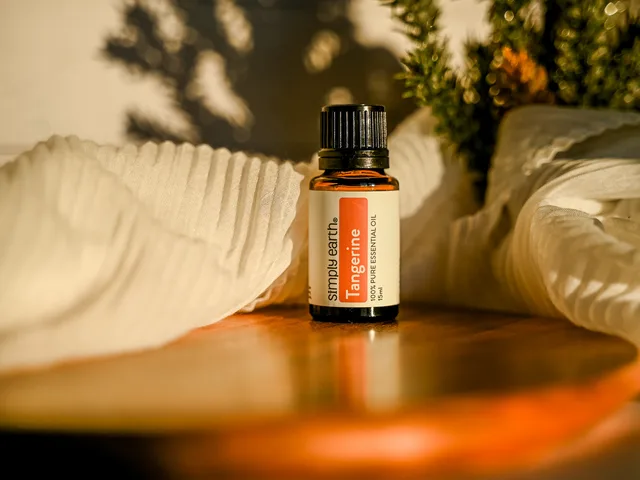
BEST FOR: TRANSITIONS, KIDS' ROOMS & QUIET PLAY
Citrus oils are usually filed under "energising", which makes tangerine easy to misread. A study on tangerine oil found that at low concentrations it showed sedative effects that may assist as you relax the body and mind. That combination — bright on the nose, settling underneath — is unusual, and it is why tangerine works in a child's room where a sharper citrus would not.
KATIE'S TIP
Low concentration is the part people skip. One drop in a diffuser with the door open is doing something different from six drops in a closed bedroom, and for this particular effect less genuinely is more.


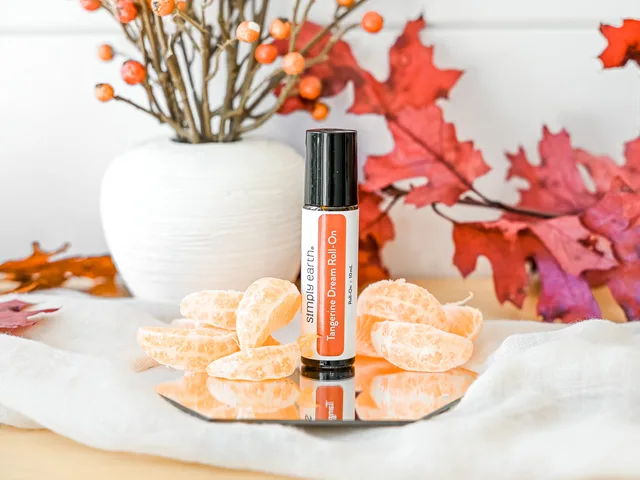
BEST FOR: BATHS, EVENING ROLL-ONS & WIND-DOWN
Most people would not put a citrus oil in a bedtime routine, which is why this one gets missed. It follows directly from the centring effect above — the same low-concentration calm, applied at the end of the day rather than the middle. Paired with a warm bath it makes a wind-down ritual that does not smell like a spa cliché.
KATIE'S TIP
Never tip essential oils straight into bathwater — they float and sit against skin undiluted. Stir them into a tablespoon of carrier oil or an unscented bath gel first, then into the water.


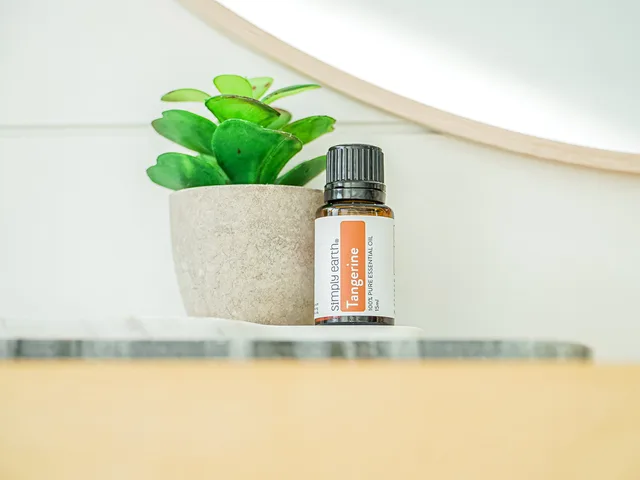
BEST FOR: FACE SERUMS, SCRUBS & BODY OIL
Tangerine has been studied for an impressive antioxidant profile and possible antimicrobial potential, which is why it turns up in so many skincare recipes. The practical advantage over its citrus cousins is the one that runs through this whole page — because it is sun safe, a tangerine face serum is not something you have to schedule around daylight the way a lemon or bergamot one is.
KATIE'S TIP
Still patch test, and still dilute — sun safe is not the same as irritation-proof. Simply Earth lists a special dilution rate of 5% for this oil, which is generous for a citrus, but start lower on facial skin.


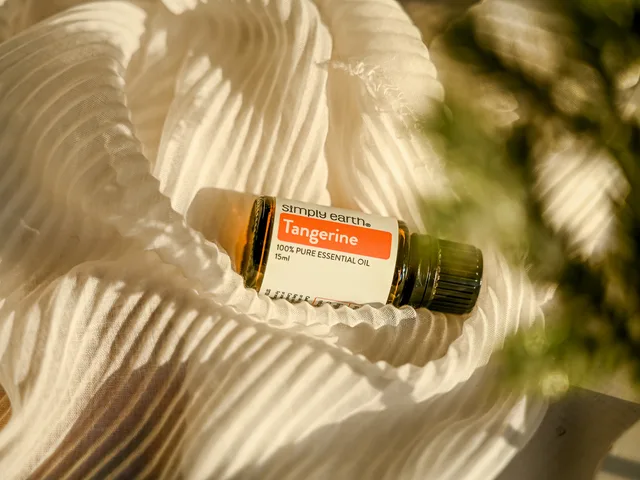
BEST FOR: SURFACE SPRAYS, LAUNDRY & AIR
Tangerine oil has been shown to have moderate radical scavenging activity, and limonene — 90% of this oil — is the same compound that makes citrus peel such a capable natural degreaser. That gives it a double life — an oil you diffuse for the mood it creates, and one you add to a cleaning blend because it genuinely earns its place there.
KATIE'S TIP
Tangerine is the one I add to laundry rather than the counter spray. It is softer than lemon on fabric that ends up against skin, and the scent survives the dryer better than you would expect.


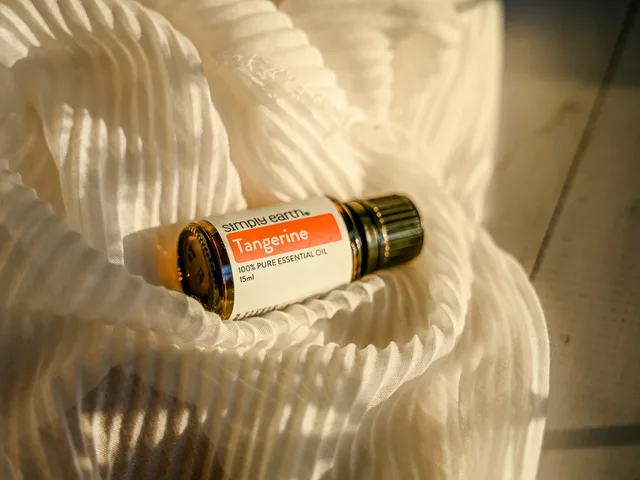
BEST FOR: AROMATIC USE & DILUTED MASSAGE
Citrus peel has a long history of use for settling the stomach, and tangerine is the one most often named for it — Simply Earth's own product description points to soothing a queasy stomach. The evidence here is more traditional than clinical, so treat it as a comfort measure rather than a treatment, and keep it aromatic or properly diluted on the skin. Never take essential oils internally.
KATIE'S TIP
Aromatic use is the honest version of this one. A drop on a diffuser bracelet after a heavy meal is a reasonable thing to try; a drop in a glass of water is not, and never has been.


Put It to Work
How to Use Tangerine Essential Oil
Diffuser
- • Add 3–5 drops to your diffuser of choice
- • Diffuse 30–60 minutes at a time rather than continuously
- • For the calming effect, use fewer drops rather than more
- • Pairs especially well with Palmarosa, Lavender and Cedarwood
Topical (Rollerball)
- • 10 ml roller bottle
- • 9 ml fractionated coconut oil or jojoba
- • 10–12 drops Tangerine Essential Oil (roughly 2% dilution)
- • Apply to wrists, chest or the back of the neck
- • Sun safe, so no need to plan around daylight
Bath
- • 1 tbsp fractionated coconut oil or a fragrance-free bath gel
- • 4–6 drops Tangerine Essential Oil
- • Mix into the oil or gel first, then add to warm bathwater
- • Never add undiluted essential oils directly to bath water
Household & Laundry
- • 10 drops onto a wool dryer ball or reusable dryer sheet
- • 20–25 drops in a 4 oz spray bottle with witch hazel and water
- • Shake before every use — oil and water separate
- • Test on an inconspicuous area of any fabric first
Skincare
- • Start at 1% on facial skin (about 6 drops per oz of carrier)
- • Simply Earth lists a special dilution rate of 5% for body use
- • Patch test on the inner arm before first use
- • Store the finished blend away from heat and light
Know the Difference
Tangerine vs Mandarin vs Clementine vs Satsuma
This is the question the old article never answered, and it is the one people actually arrive with. The short version is that a tangerine is a mandarin. They share a botanical name — Citrus reticulata — and the split between them is horticultural and commercial rather than scientific. The name "tangerine" comes from Tangier in Morocco, the port these fruits were shipped through into Europe, which is a naming convention about logistics rather than botany. Clementines and satsumas sit one step further out: both descend from the mandarin group, but they are grown as eating fruit far more often than they are pressed for oil.
Swipe to compare →
Tangerine The subject of this page | Mandarin The close relative | Clementine & Satsuma The hybrids | |
|---|---|---|---|
| Botanical Name | Citrus reticulata | Citrus reticulata — the same species, different cultivars | Clementine: Citrus × clementina. Satsuma: Citrus unshiu |
| What It Actually Is | A mandarin cultivar, named for the port it shipped from rather than for anything botanical | The parent group that tangerines belong to | Clementine is a mandarin × sweet orange hybrid; satsuma is a seedless mandarin from Japan |
| Aroma | Fresh, tangy and sweet — brighter than sweet orange | Sweeter and more floral, often described as softer | Sweet and mild, closer to the fruit than to a classic citrus oil |
| Extracted By | Cold-pressing the peel | Cold-pressing the peel, though some mandarin oils are distilled | Cold-pressing the peel where the oil is produced at all |
| Sun Safety | Listed sun safe by Simply Earth — unusual for a pressed citrus | Generally regarded the same way, being the same species | Not separately established; treat unknown citrus oils with the usual caution |
| The Short Version | The brightest of the mandarin family, and the one this page is about | Buy it if you want the same character a shade softer and sweeter | Mostly culinary fruits — you will rarely find them as a stocked essential oil |
| Simply Earth | This page | — | — |
Perfect Pairs
Tangerine Essential Oil Blends Well With…
Tangerine is a top note with a blending factor of 7, so it lifts a blend fast — add it last and add it sparingly. It is also the citrus inside Simply Earth's Winter Spice blend, where it brightens the warm spice notes rather than competing with them.
Where the Name Came From
A Fruit From East Asia With a Moroccan Name
The tangerine tree is a member of the Rutaceae family and is native to East Asia, though it is now grown worldwide. It is a modest tree — up to about four metres, usually thorny, with small, shiny green leaves and fruit that looks like a scaled-down orange.
The name has nothing to do with any of that. These fruits reached European markets through Tangier, the Moroccan port, and took the port's name with them. It is one of the more literal naming stories in the citrus world, and it explains why "tangerine" describes a trade route while "mandarin" describes the plant.
That distinction still shows up on shop shelves today. What you buy as tangerine and what you buy as mandarin are cultivars of the same species, selected and named by different growers in different markets — which is exactly why the two oils smell like close relatives rather than different things.
The Science
What's Actually in Tangerine Essential Oil
Percentages are those published on Simply Earth's original tangerine guide. Every bottle ships with a batch-specific GC/MS report, because a typical profile and your bottle's profile are not the same thing.
Limonene
~90% · The dominant compound
Limonene is the major component of tangerine and of most citrus peel oils, and at roughly 90% it defines this one almost completely. It is the source of the aroma, and it has been studied for anti-inflammatory, antioxidant and anti-stress properties. It is also why tangerine works as a natural degreaser in cleaning blends.
γ-Terpinene
~3% · The antioxidant contributor
Gamma-terpinene is present in far smaller amounts but contributes to tangerine's antioxidant activity. Compounds like this one are part of why citrus oils oxidise over time — and why an oil left with its cap off behaves differently from a fresh bottle.
Myrcene
~1.7% · The rounding note
Myrcene has a pleasant, slightly balsamic odour and is widely valued as a building block in flavour and fragrance work. In tangerine it sits in the background, softening the sharper edges of the limonene and contributing to the oil's anti-inflammatory character.
Where It Comes From
How Simply Earth Sources Tangerine Essential Oil
Tangerine oil is cold-pressed from the fruit peel — no steam, no solvent. The oil is already held in glands in the rind, and pressing is simply the least invasive way to get it out. That matters for a citrus oil in particular, because heat is what flattens the top notes that make it worth having.
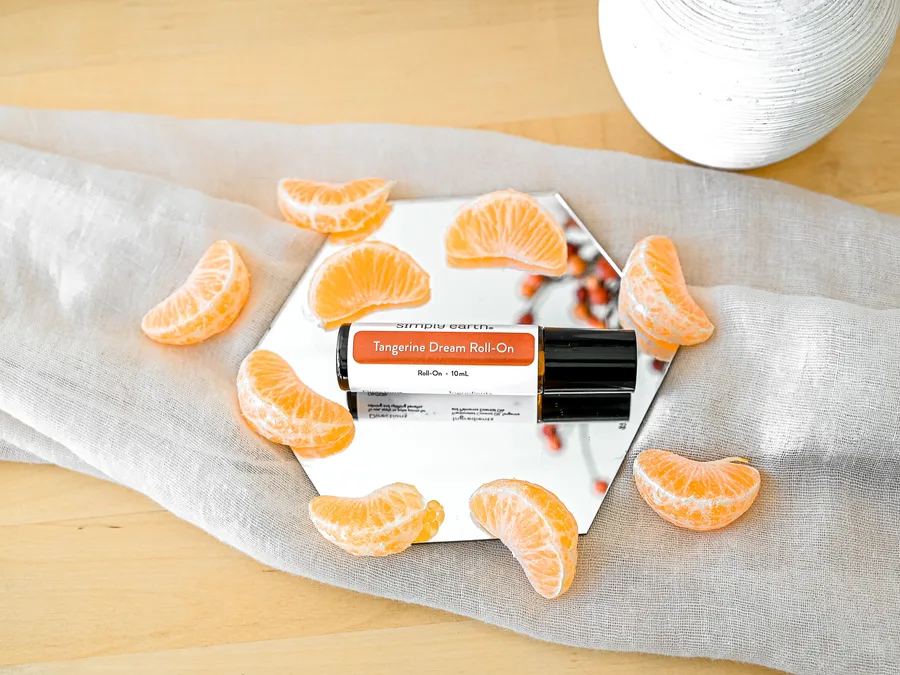
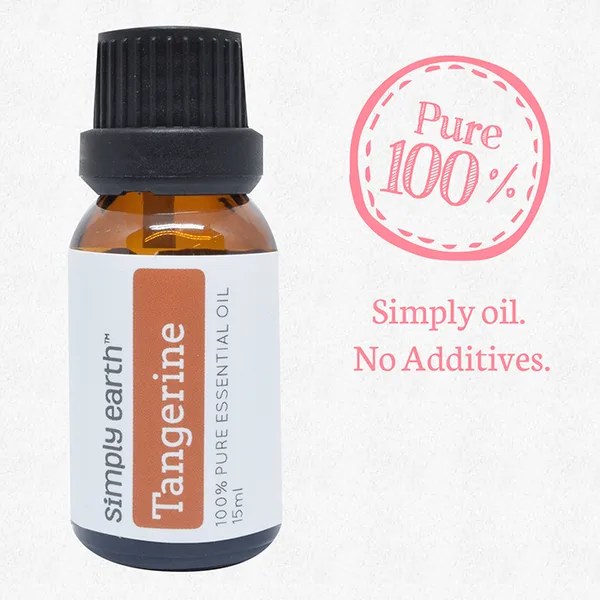
Every bottle of Simply Earth Tangerine Essential Oil is 100% pure, with no fillers, extenders or synthetic fragrance, and ships with a batch-specific GC/MS report — the third-party test that shows what is actually in the bottle you were sent rather than what a typical sample of the oil looks like. It is a 15 ml bottle at $10.99, which is the part of the Simply Earth model that tends to surprise people coming from multi-level brands.
13% of profits go to fighting human trafficking, which has been true of every product since the company started.
100%
Pure, no fillers or extenders
Every batch
GC/MS report with your bottle
13%
Of profits fight human trafficking
Use It Right
Safety & Dilution Guide
Always dilute before applying to skin — never apply any essential oil undiluted (neat).
Simply Earth lists a special dilution rate of 5% for this oil. Start lower on facial skin, around 1%.
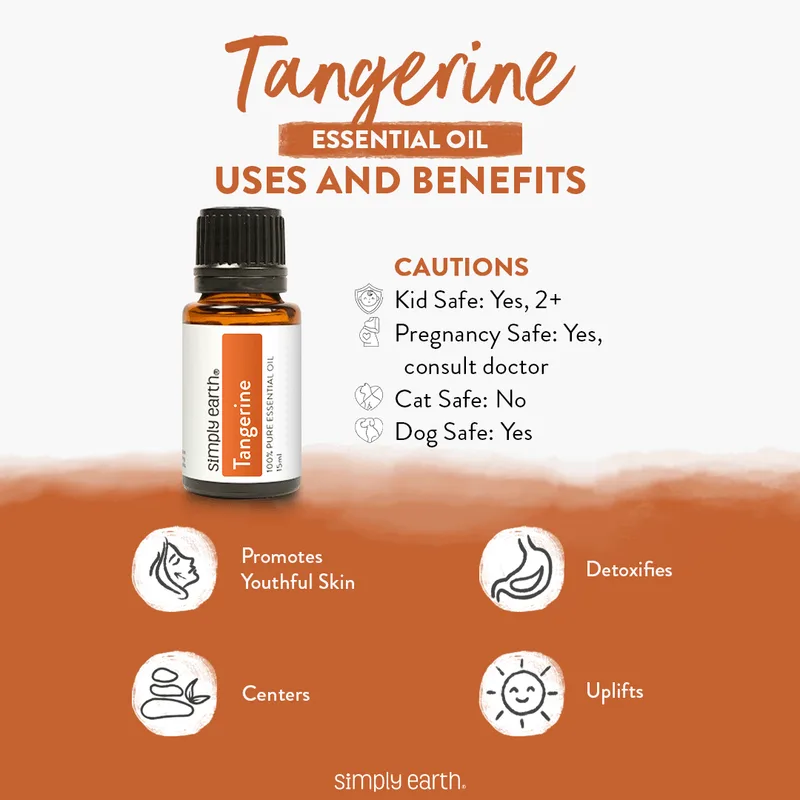
Sun safe: yes. Unlike bergamot, lemon and lime, tangerine is not considered phototoxic, so it does not require you to avoid sunlight after topical use.
Kid safe: yes, from age two.
Pregnancy and breastfeeding: generally considered safe, but consult your doctor first.
Cats: no — do not use tangerine oil around cats. Dogs: yes, with sensible ventilation.
Citrus oils oxidise faster than woods and resins. Keep the cap on, store somewhere cool and dark, and expect a shelf life of about 18 months.
An oxidised oil is more likely to irritate skin than a fresh one — if it smells sharp or turpentine-like, retire it from skin use.
Do a patch test on the inner arm before first topical use.
Never take essential oils internally.
These statements have not been evaluated by the Food and Drug Administration. This product is not intended to diagnose, treat, cure, or prevent any disease.
Real Results
What Earthies Are Saying
"I love, love, love a good citrus running in my diffuser and this tangerine hits the spot. It's aroma is good on its own but also mixed with other oils. I picture myself grabbing for this oil quite frequently in the months to come."
Tamara Middleton
Verified Buyer • Tangerine Essential Oil
"We absolutely love diffusing this tangerine oil in our diffuser in the morning as we wake up."
Lauren Primm
Verified Buyer • Tangerine Essential Oil
"I love the smell of tangerine, it was like walking in a orchard of trees, it makes me feel so at peace."
Audrey J
Website Review • Tangerine Essential Oil
OUR SIMPLY PURE PROMISE
What Goes Into Your Products Matters
Certified 100% Pure
No fillers, no synthetics. Just pure oil.
GC/MS Third-Party Tested
Every batch independently verified.
Ethically Sourced from Quality Farms
Responsibly harvested. People and planet first.
15mL
Bottle Size
MLM brands: 10mL
$10.99
Per Bottle
MLM brands: $25–55+
Public
GC/MS Tests
MLM brands: Rarely
Your Order Changes Lives: 13% of profits fight human trafficking globally.
Tangerine Essential Oil FAQ
The questions people actually ask about this oil — including the sun-safety one that trips up everyone who learned the citrus rule first.
Is tangerine essential oil photosensitive? +
No — Simply Earth lists Tangerine Essential Oil as sun safe. This surprises people, because most cold-pressed citrus oils are phototoxic. The furanocoumarins responsible for that reaction in bergamot, lemon, lime and bitter orange are not a concern in tangerine, so you do not need to keep treated skin out of sunlight. Normal dilution rules still apply.
What is the difference between tangerine and mandarin essential oil? +
Botanically, very little — both come from Citrus reticulata, and a tangerine is a cultivar within the mandarin group. The name "tangerine" comes from Tangier, the Moroccan port the fruit was shipped through. In practice tangerine oil tends to smell brighter and tangier, and mandarin a shade sweeter and more floral.
Is tangerine essential oil safe for kids? +
Simply Earth lists it as kid safe from age two. It is also one of the gentler citrus oils on the nose, which makes it easier to diffuse in a shared space than lemon. Diffuse in a ventilated room rather than a small closed one, and dilute properly for any topical use on children.
Is tangerine essential oil safe around pets? +
Not around cats — Simply Earth lists tangerine as cat safe, no. It is listed as dog safe. If you have cats, diffuse elsewhere in the house with the door open, and never apply citrus oils to a cat's skin or fur.
How many drops of tangerine should I use in a diffuser? +
Three to five drops suits most standard diffusers. If you are after the calming rather than the energising effect, use fewer — research on this oil associates the sedative effect with low concentrations, so a heavier hand works against you.
How long does tangerine essential oil last? +
About 18 months. Citrus oils oxidise faster than woods and resins because of their high limonene content, so keep the cap on tightly and store the bottle somewhere cool and dark. An oil that has gone sharp or turpentine-like has oxidised and should be retired from skin use.
What does tangerine essential oil blend well with? +
It is a top note with a blending factor of 7, so it lifts a blend quickly — add it last and go sparingly. It works especially well with Lavender, Geranium, Palmarosa, Clary Sage, Neroli, Frankincense, Cypress, Sandalwood and Patchouli. It is also the citrus in Simply Earth's Winter Spice blend.
Can I put tangerine essential oil directly on my skin? +
No. Dilute it in a carrier oil first, as you would any essential oil. Simply Earth lists a special dilution rate of 5% for tangerine, which is relatively generous, but start lower on the face and patch test on your inner arm before first use.
About the Author: Katie Veldkamp
Katie Veldkamp
Certified Aromatherapist · Co-Founder, Simply Earth
Katie Veldkamp is a Certified Aromatherapist and co-founder of Simply Earth. She personally formulates and reviews SE's essential oil blends and verifies all benefit claims on Simply Earth content before it goes live.
Join 20,000+ Earthies Making Their Homes Natural
New recipes, usage guides, and DIY tips — delivered free.
No spam. Unsubscribe any time.

Learn by doing
Make your own natural products every month.
The Simply Earth Recipe Box ships 4 full-size essential oils, 6 natural recipes, and everything you need to make them. No guesswork.
Start My Recipe Box$39.99 for your first box, then $49.99/month. Skip, pause, or cancel anytime.