
Sage Essential Oil: The Herb That Earned the Name "Savior"

Katie Veldkamp
Lead Certified Aromatherapist
Fact Checked & Approved
Sage has been called the master herb for about as long as anyone has been writing things down, and the Latin root of its name — salvia — is the same one that gives us "salvage" and "salvation". That is a lot to live up to for a small amber bottle. What you actually get is a sharp, green, faintly camphorous oil that wakes a room up: the one people reach for when their head is tight, their focus has gone, or they want the air to feel clean rather than perfumed. One thing to settle before you go further, because it is the single most common mix-up in the catalogue: this is not clary sage. Different species, different chemistry, different bottle.
Free Cheat Sheet
New to Essential Oils? Start Here.
Get our free Essential Oil Guide — the safe-use basics, dilution rates, and the oils worth buying first.
Start Here
What Is Sage Essential Oil?
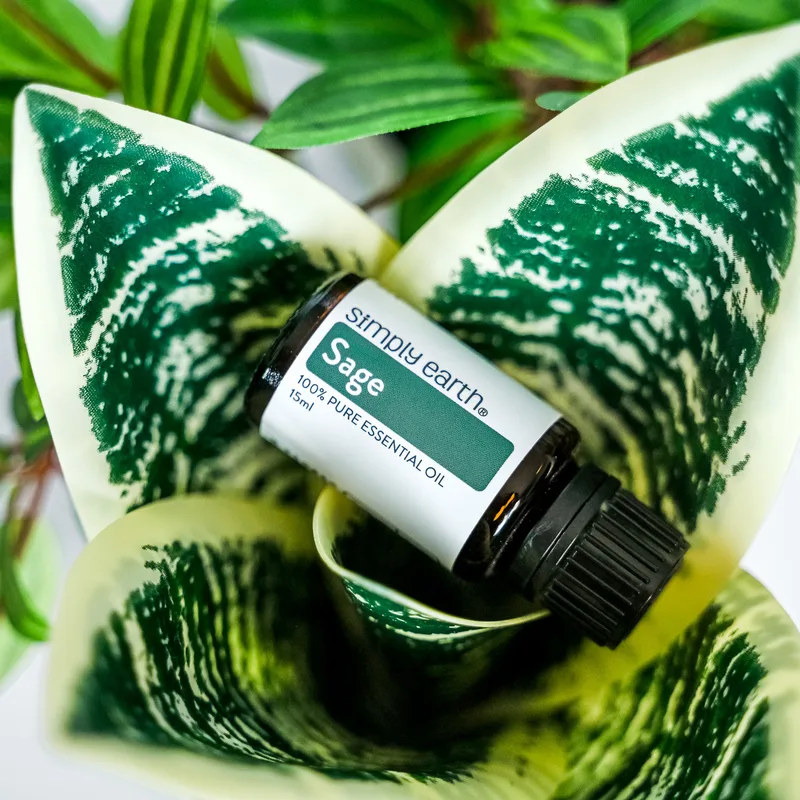
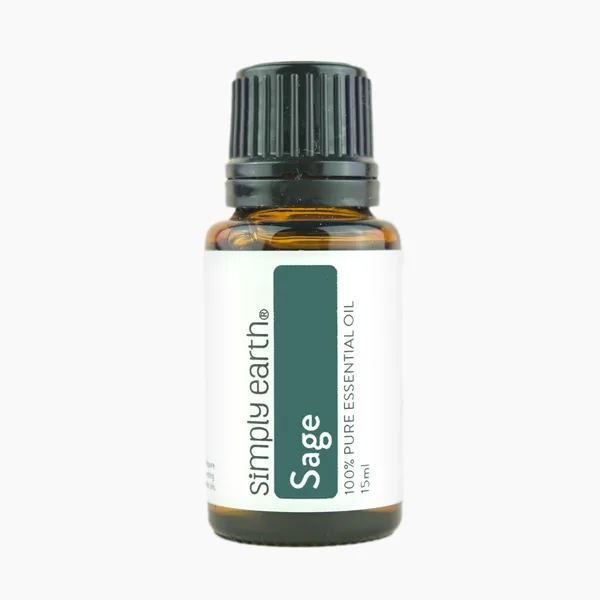
Simply Earth's Sage Essential Oil is steam-distilled from the leaves of Salvia lavandulaefolia, grown in Spain. You will also see this species sold as Spanish sage, and the distinction matters more than most botanical footnotes do — it is a different plant from both clary sage (Salvia sclarea) and from the common garden sage most people picture.
The aroma is earthy and floral, herbaceous with a green, faintly camphorous lift and a musty undertone that gives a blend some grip. It sits as a middle note, runs medium in consistency, is clear in colour, and carries a blending factor of 4 — which in practice means a little of it goes a long way.
Its chemistry is led by 1,8-cineole, camphor and α-pinene. That trio is the reason sage reads as bracing rather than soothing: 1,8-cineole is the same compound that gives eucalyptus its clarity, and α-pinene is what a pine forest smells like. If you have ever wondered why sage and rosemary feel like relatives, this is why — they share the same dominant compounds.
Every bottle ships with a batch-specific GC/MS report. The oil is 100% pure, steam-distilled, and third-party tested — no fillers, no synthetic fragrance, no extenders.
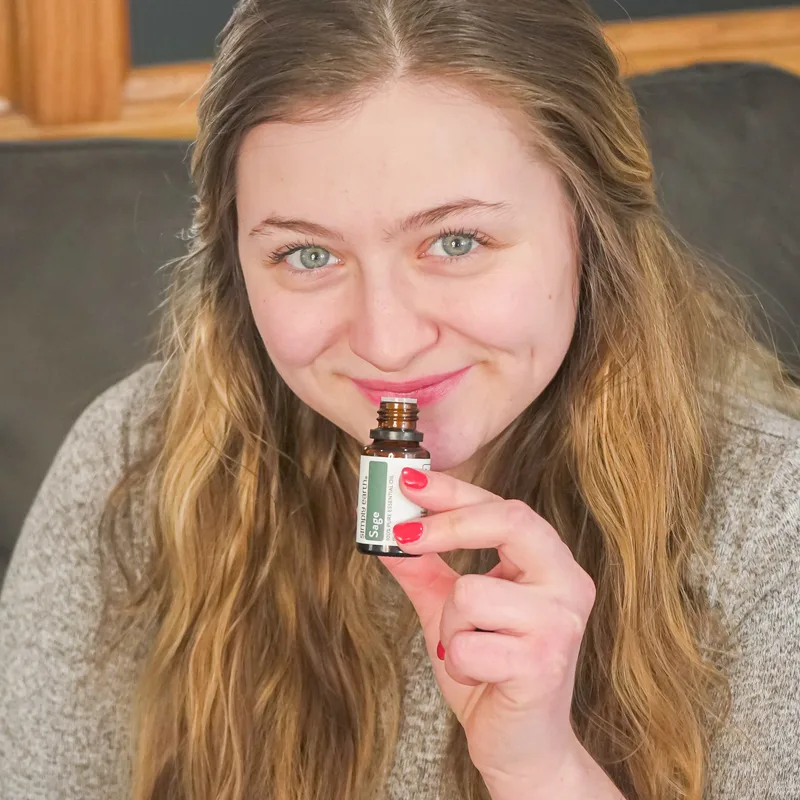
Sage Essential Oil Soothes Head Discomfort
The Reason Most People Buy This Oil
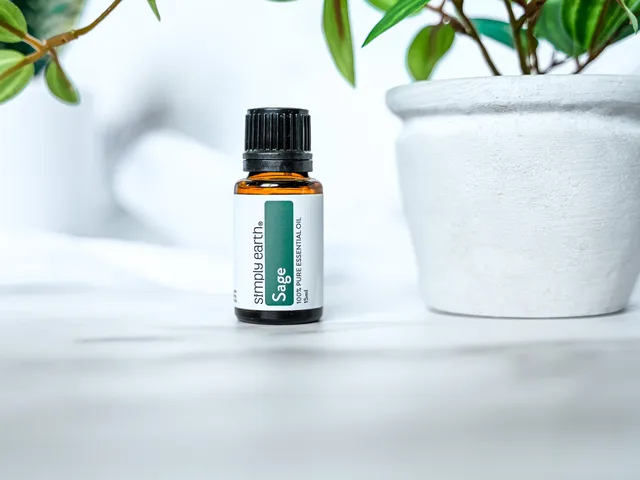 Shop Sage Essential Oil
BEST FOR: INHALERS & TEMPLE BLENDS
This is sage's headline use and the first benefit our own product record lists. Diffused or applied topically at a safe dilution, it is one of the standard reaches for the kind of tight, banded head discomfort that arrives after a long screen day. A 2014 review of the chemistry and pharmacology of Salvia documents anti-inflammatory activity among the genus' better-studied properties, which is the most likely explanation for a use this old.
KATIE'S TIP
An inhaler is the fastest way to use sage for this — it puts the oil where you need it without putting anything on your skin. I keep one in my bag and take three slow breaths from it rather than diffusing a whole room.


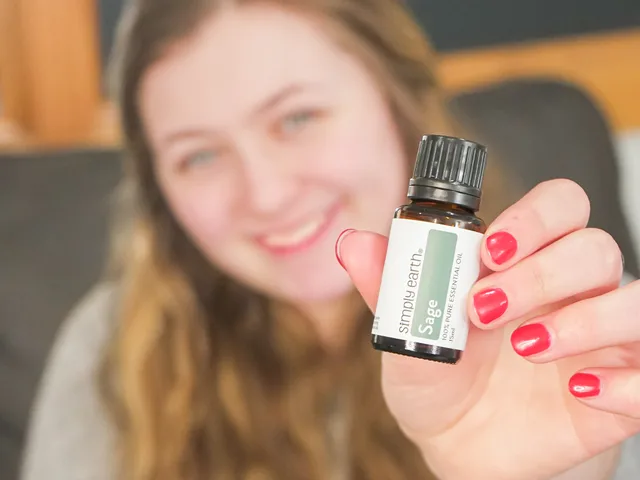
BEST FOR: MORNING DIFFUSING
This is the benefit with the most direct evidence behind it. A 2005 placebo-controlled study of Salvia lavandulaefolia — the exact species in this bottle, not a relative — gave healthy young volunteers acute doses and found consistent improvements in self-rated alertness alongside measurable effects on mood and cognitive performance. Sage is what you diffuse when you want the room to feel switched on.
KATIE'S TIP
Sage on its own can read as medicinal first thing in the morning. One drop of it with two of Lemon is my fix — the citrus takes the edge off without losing the green lift that made you reach for sage.

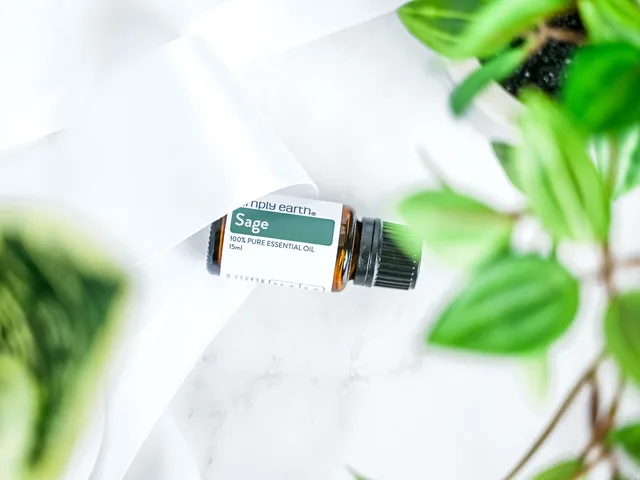
BEST FOR: EVENING DIFFUSING
Energising and calming sound like opposites, and the fact that the same 2005 study reports both is the interesting part. What it actually measured was mood modulation — subjects came out both more alert and more content. In everyday use that lands as an oil which clears mental clutter rather than sedating you, which is a genuinely different thing from what lavender does.
KATIE'S TIP
This is the one I use when I am too wound up to settle but do not want to feel drowsy. Sage with a citrus blend in the diffuser, two hours before bed — not at bedtime.
Sage Essential Oil Promotes Circulation
A Traditional Use With Chemistry Behind It
 Shop Sage Essential Oil
BEST FOR: DILUTED BODY BLENDS
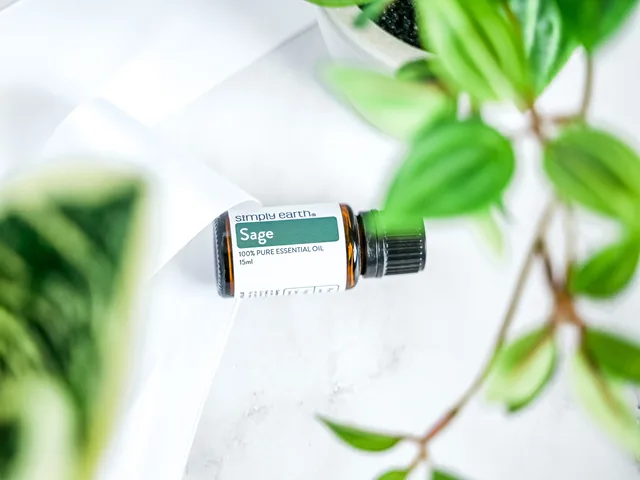
Sage has been used for circulation for centuries, and it is one of the seven uses on our own product record. The 2014 Salvia review covers the genus' documented effects on blood flow and vascular tone. Used in a properly diluted body blend and worked in with pressure, this is the oil people reach for on legs and feet at the end of a long day on them.
KATIE'S TIP
Always work upward, from ankle towards knee, rather than down. And keep sage's dilution conservative here — it is a stronger oil than its gentle green smell suggests.

Sage Essential Oil Supports Joint Function
The Topical Use With a Study Behind It
 Shop Sage Essential Oil
BEST FOR: WARMING RUBS
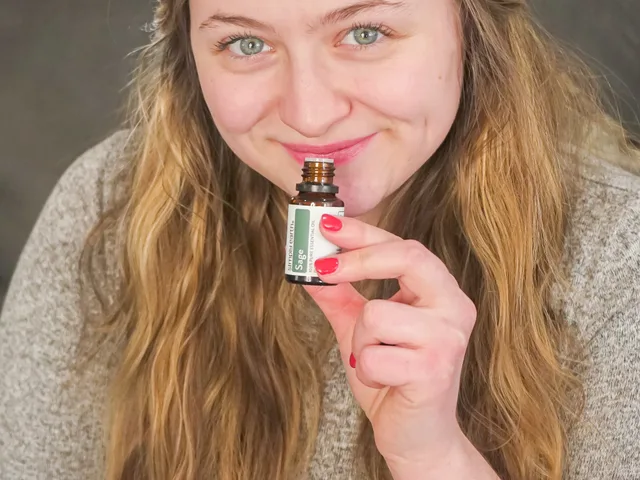
A 2012 study applied essential oils topically in an ointment to an adjuvant arthritis model and found the severity of symptoms reduced. That is animal research rather than a human trial, and it is worth being plain about that — but it is real published work, it is specifically about topical application, and it lines up with how sage has been used on stiff, complaining joints for a very long time.
KATIE'S TIP
Sage suits a warming rub better than a cooling one. Blend it into a balm with something resinous rather than something minty, and give it a minute to work in before you cover up.
Sage Essential Oil Supports Women's Wellness
Why Both Sages Ended Up With This Reputation
 Shop Sage Essential Oil
BEST FOR: DILUTED PERSONAL CARE
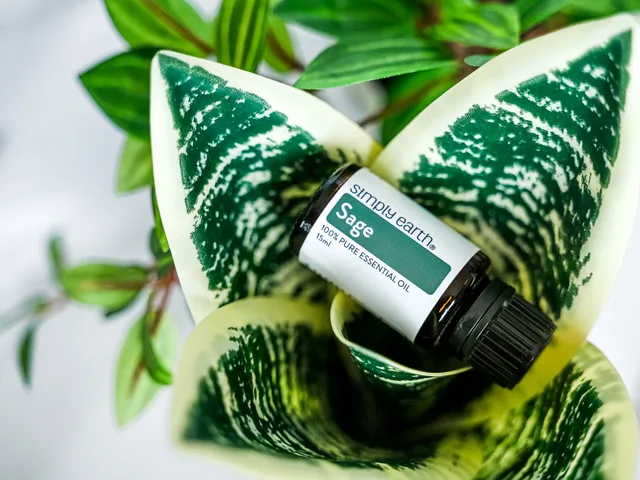
This use sits on our product record and it comes with its own caution attached, which is unusual enough to be worth stating plainly. Spanish sage may act on the body in ways similar to estrogen. For most people that is simply context. For anyone with a hormone-sensitive condition — breast, uterine or ovarian cancer, endometriosis, uterine fibroids — it is the reason this oil is not for you. Read the safety section before using sage here.
KATIE'S TIP
If you came to sage looking for cycle support specifically, clary sage is the oil with the trial behind it for that, not this one. They are genuinely different tools and I would rather point you at the right bottle.
BEST FOR: RITUAL & FOCUS BLENDS
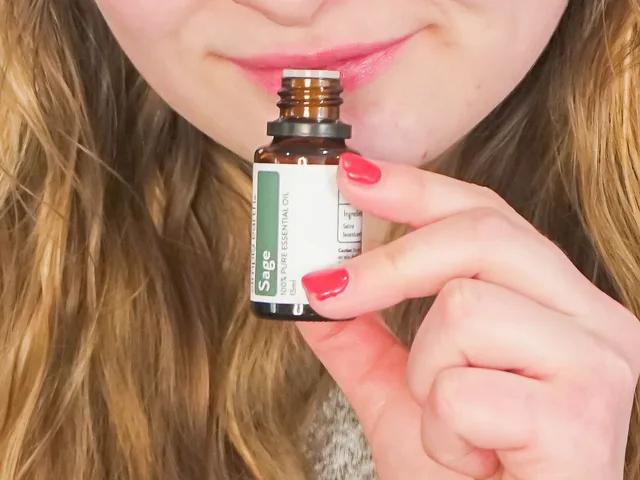
The 2005 study described sage as modulating mood and cognition acutely — in plain language, the effect arrives quickly rather than building over weeks. That is the thread running back through every culture that treated sage as a plant for clearing a space and settling a mind. You do not need to burn anything to get at it; a bottle and a diffuser do the same job with none of the smoke.
KATIE'S TIP
My favourite use for sage is at the start of something rather than the end — before a focused block of work, not after it. Diffuse it for ten minutes before you sit down and the room feels ready.
Put It to Work
How to Use Sage Essential Oil
Diffuse
- • 3–4 drops in the morning for alertness, or two hours before bed when you are mentally cluttered rather than tired
- • Pair with Lemon or another citrus to soften sage's medicinal edge
- • Blend with Rosemary for a focus diffuser blend — they share their two dominant compounds
Topical
- • Dilute before every skin application; sage's special dilution rate is 5%
- • Work upward from the ankles in circulation and leg blends
- • Use a warming rather than cooling base for joint and muscle rubs
DIY & Personal Care
- • Add to an aromatherapy inhaler — the fastest way to use sage for head discomfort
- • Use in room sprays where you want the air to read clean rather than perfumed
- • Works in lip and balm recipes at very low inclusion for its green, herbal character
DIY Recipes
- • Clarity & alertness: Fresh Vibes Aromatherapy Inhaler
- • Mood & atmosphere: Love Birds Diffuser Blend, True Love Room Spray
- • Personal care: Currant Wine Lip Crayon
Know the Difference
Know the Difference: Sage vs Clary Sage
This is the distinction that matters most on this page, and it catches people out constantly. Sage and clary sage are two different species with two genuinely different chemistries — sage is led by 1,8-cineole, camphor and α-pinene, clary sage by linalyl acetate and linalool. They do not smell alike, they are not used for the same things, and swapping one for the other in a recipe will not give you what the recipe intended. If you are here for cycle support, clary sage is the page you want. Simply Earth carries all three oils below, so this is not about steering you to one — it is about not reaching for the wrong bottle.
Swipe to compare →
Sage Essential Oil The subject of this page | Clary Sage Essential Oil A different species entirely | Rosemary Essential Oil The oil it shares chemistry with | |
|---|---|---|---|
| Botanical Name | Salvia lavandulaefolia — Spanish sage, grown in Spain | Salvia sclarea — a different species in the same genus | Rosmarinus officinalis |
| Aroma | Earthy and floral — green, herbaceous, faintly camphorous, musty undertone | Light and sweet — hay, tobacco and cedar | Sharp, green and distinctly camphorous |
| Key Chemistry | 1,8-cineole, camphor and α-pinene | Linalyl acetate, linalool and geranyl acetate — a completely different profile | 1,8-cineole and camphor — two of the same three |
| Best For | Head discomfort, alertness, circulation, joints, clearing a space | Cycle comfort, stress and rest — the oil with the dysmenorrhea trial behind it | Focus, scalp and hair, muscle blends |
| The Difference That Matters | Bracing and clarifying — reach for it when you want a room switched on | Not interchangeable: if a recipe says clary sage, sage will not do the same job | The closest thing to sage in the catalogue, and the easier substitute of the two |
| Simply Earth | This page | — | — |
Perfect Pairs
What Sage Essential Oil Blends Well With
Sage's herbaceous, faintly musty character wants company that either brightens it or grounds it. Citrus lifts it, florals round it off, and woods and resins give it somewhere to sit. This list comes straight from our own product record, and with a blending factor of 4 you will generally want sage in the supporting role rather than the lead.
The Master Herb
History of Sage Essential Oil
Sage has one of the longest continuous records of use of any plant in the cabinet — thousands of years, across cultures that had no contact with one another. The Greeks and Romans credited it with healing a startling range of complaints, enough that it collected the nicknames it still carries: the master herb, and sage the savior.
In traditional Chinese medicine, practitioners turned to sage for fertility and for the symptoms of menopause — an early version of the same women's-wellness reputation the plant still has today, arrived at independently.
Beyond the medicinal record, sage has been a ceremonial plant for as long. It became a symbol of strength and of wisdom, and the practice of using it to clear a space is one of the most widespread plant rituals there is. The oil is a modern way into a very old idea: that a room can be reset by what you put into the air.
The Chemistry
The Science Behind Sage Essential Oil
Three compounds lead this oil — and two of them are the same ones that make rosemary work.
1,8-Cineole
Oxide · Also called eucalyptol
The compound most responsible for sage reading as clear and bracing rather than sweet. Named for the plant it was first isolated from, 1,8-cineole is used widely in flavourings, fragrances and cosmetics for its spicy, camphorous character, and appears in traditional medicine as a cough suppressant. It is the reason sage feels like it opens up the space around your head.
Camphor
Ketone · The cooling edge
A waxy, colourless solid with a powerful aroma, long used as a decongestant, to ease the feeling of congestion in the upper airway, and topically for sprains, swelling and inflammation where it produces a slight local numbing. It is also a documented insect deterrent. Camphor is the constituent doing most of the work in sage's traditional joint and muscle uses.
α-Pinene
Monoterpene · The forest note
The organic compound found in the oils of coniferous trees, and the single most abundant terpene in the natural world. It is documented as anti-inflammatory and likely antimicrobial, and — most relevant here — it is associated with aiding memory and increasing alertness. Sage's cognitive reputation and its pine-forest top note come from the same molecule.
Batch-Tested, Every Bottle
Steam-distilled from leaf, grown in Spain
Simply Earth's Sage Essential Oil ships with a batch-specific GC/MS report with every bottle, so the constituent profile you get is the profile of the oil in your hand rather than a generic species average. That matters more for sage than for most oils, because the sage genus varies so widely between species.
Simply Earth's Sage Essential Oil is 100% pure Salvia lavandulaefolia, steam-distilled from the leaf and grown in Spain — no fillers, no synthetic fragrance, no extenders. We third-party test our products and publish the results. See Our Testing →
Use It Right
Things to Remember When Using Sage Essential Oil
Always dilute before applying to skin. Sage's special dilution rate is 5%. Full guidance is in our dilution chart.
Not for hormone-sensitive conditions. Spanish Sage may have effects similar to estrogen. If you have a condition that could be worsened by estrogen — breast, uterine or ovarian cancer, endometriosis or uterine fibroids — do not use this oil.
Take care during pregnancy. Consult your doctor before use.
Oxidized oil is more likely to irritate. Keep the cap tightly closed between uses.
Safe for children aged 10 and over. Use a conservative dilution and avoid the face and nose area.
Not safe for cats. More detail in our guide to essential oils and cats.
Not safe for dogs. See our guide to essential oils for pets — and always let pets leave the room while you diffuse.
Sun safe. Sage is not phototoxic, so it will not make skin more sensitive to sunlight.
We don't recommend ingesting essential oils unless under the direction of a doctor certified in aromatherapy. More on why we say that.
Not interchangeable with Clary Sage Essential Oil. See "Know the Difference" above — they are different species with different chemistry and different uses.
Shelf life is 4 years. Store in a cool area out of direct sunlight, away from heat.
These statements have not been evaluated by the Food and Drug Administration. Essential oils are not intended to diagnose, treat, cure, or prevent any disease.
Real Results
What Earthies Are Saying About Sage Essential Oil
"This one smells herbaceous and spicy, just like when you burn sage, but without the smoke! Actually, I think it smells better! I highly recommend."
Rosalie
Website Review • Sage Essential Oil
"While you can definitely smell the light earthy tone to the sage it also smells slightly floral with a touch of mint like scent — it is wonderful! I could wear this on its own (diluted with carrier oil of course) just by itself, no other aromas, as a perfume."
Sarah Traub
Verified Buyer • Sage Essential Oil
"Everyone who smells this one just loves it. I put it in shampoo and even put a few drops on a cotton pad to put in my pillow case at night. The quality is at least as good (if not better) than those other brands."
Ann Bridges
Website Review • Sage Essential Oil
OUR SIMPLY PURE PROMISE
What Goes Into Your Products Matters
Pure & Additive-Free
No fillers, no synthetic fragrance, no extenders.
Third-Party Tested
We test our products and publish the results.
Ethically Sourced from Quality Farms
Responsibly harvested. People and planet first.
Spain
Country of Origin
Steam-distilled from the leaf
4 Years
Shelf Life
Stored cool and out of sunlight
Every Bottle
GC/MS Report
Batch-specific, not a species average
Your Order Changes Lives: 13% of profits fight human trafficking globally.
Sage Essential Oil FAQ
The questions Earthies ask most — starting with the one that sends people to the wrong bottle.
What is sage essential oil good for? +
Our product record lists seven uses — soothing head discomfort, energising, calming, promoting circulation, supporting joint function, supporting women's wellness, and centering. In practice most people buy it for the first two, and the alertness effect is the one with the most direct evidence behind it, from a 2005 placebo-controlled study of this exact species.
What is the difference between sage and clary sage essential oil? +
They are two different species with two different chemistries. Sage is Salvia lavandulaefolia — Spanish sage — led by 1,8-cineole, camphor and α-pinene, and it smells green, herbaceous and faintly camphorous. Clary sage is Salvia sclarea, led by linalyl acetate and linalool, and it smells sweet and hay-like. Sage is used for clarity, alertness and circulation; clary sage is used for cycle comfort, stress and rest. If a recipe calls for one, do not substitute the other.
Does sage essential oil contain thujone? +
Thujone is not among the main constituents of the sage we sell. Simply Earth's Sage Essential Oil is Salvia lavandulaefolia, Spanish sage, and its main constituents are 1,8-cineole, camphor and α-pinene. The thujone question usually comes up because a different species, Salvia officinalis or common garden sage, is known for it. The two are not the same oil.
What does sage essential oil smell like? +
Earthy and floral, with a green herbaceous body, a faintly camphorous lift and a musty undertone. Customers describe it as smelling like burning sage without the smoke, and several say it reads slightly minty. It is a middle note with a blending factor of 4, so it carries further in a blend than you might expect.
How do I dilute sage essential oil? +
Sage has a special dilution rate of 5%, which is higher than the general guidance for many single oils, so check our dilution chart rather than assuming a default. Always dilute before applying to skin, use a conservative dilution for children aged 10 and over, and avoid the face and nose area.
Is sage essential oil safe during pregnancy and around pets? +
Take care during pregnancy and consult your doctor before use. Sage is not safe for cats or dogs, so always let pets leave the room while you diffuse, and see our pet safety guides. Sage is also not suitable for anyone with a hormone-sensitive condition, because Spanish sage may have effects similar to estrogen.
Can I use sage instead of rosemary? +
They are the closest pair in the catalogue — sage and rosemary share two of their three dominant compounds, 1,8-cineole and camphor — so they overlap meaningfully on focus and on muscle and joint blends. Rosemary is the sharper and more familiar of the two; sage carries a mustier, more floral undertone. Of all the substitutions people ask about, this is the one that works best.
About the Author: Katie Veldkamp
Katie Veldkamp
Certified Aromatherapist · Co-Founder, Simply Earth
Katie Veldkamp is Simply Earth's Lead Certified Aromatherapist and the heart behind every product recommendation, recipe, and safety guide on this blog. With years of hands-on aromatherapy practice and a deep love for plant-based wellness, Katie fact-checks every health claim so that what you read is safe, science-informed, and actually useful.
Join 20,000+ Earthies Making Their Homes Natural
New recipes, usage guides, and DIY tips—delivered free.
No spam. Unsubscribe any time.

Learn by doing
Make your own natural products every month.
The Simply Earth Recipe Box ships 4 full-size essential oils, 6 natural recipes, and everything you need to make them. No guesswork.
Start My Recipe Box$39.99 for your first box, then $49.99/month. Skip, pause, or cancel anytime.