
Ravensara Essential Oil: 7 Benefits, Uses & Recipes

Katie Veldkamp
Lead Certified Aromatherapist
Fact Checked & Approved
Ravensara is the essential oil most likely to arrive in your house as something other than what you expected. There are two reasons for that, and they compound. The first is its near-twin: ravintsara, a different oil from a different tree, whose name differs by one letter and whose chemistry is not the same. The second is quieter and catches even people who have bought ravensara before — the oil sold under this name is not always from the same plant. Simply Earth's is Ravensara anisata, steam distilled from the reddish, intensely aromatic bark of a Madagascan tree in the laurel family. Earlier bottles were Ravensara aromatica, distilled from the leaf. Same shelf, same label, genuinely different oil — and a couple of Earthies noticed before we wrote it down. This article is about the bark oil: what it does, what it smells like, and the one safety number that matters more than anything else on this page.
In this Guide
Free Cheat Sheet
New to Essential Oils? Start Here.
Get our free Essential Oil Guide — the safe-use basics, dilution rates, and the oils worth buying first.
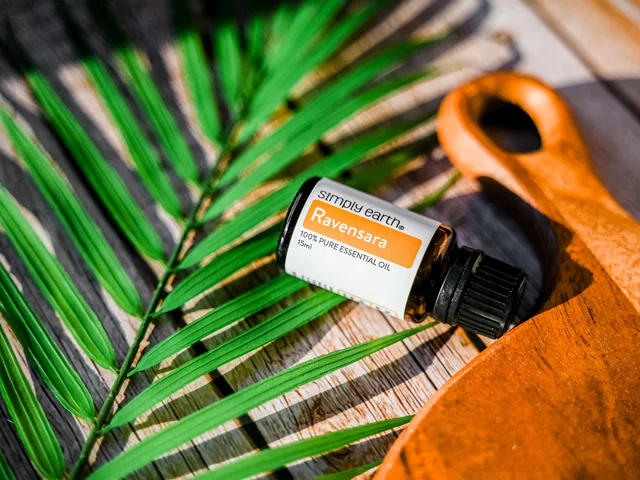
BEST FOR: SEASONAL DIFFUSING
"Boosts Immunity" is the first item on Simply Earth's own list of uses for this oil, and immune support is one of the three things Madagascan traditional medicine used the bark for. Worth being straight about the evidence, though — there is no trial of this oil preventing illness in anyone. What there is: a long traditional record, and a chemistry that behaves like the other camphoraceous oils people reach for when the seasons turn. Diffuse it because the season has turned and it smells like the right thing to be breathing, not because it is a substitute for anything your doctor would give you.
KATIE'S TIP
This is a diffuser oil first and a skin oil a distant second. Given the dilution limit further down this page, diffusing is where ravensara is easiest to use well — one or two drops against a fir, a citrus or a eucalyptus.

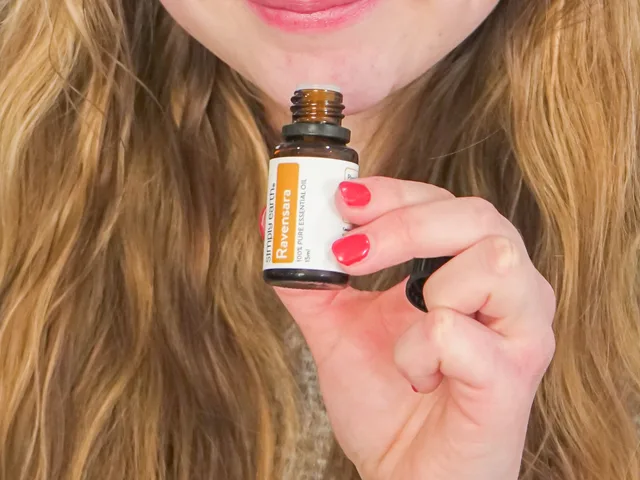
BEST FOR: STUFFY NOSES & COLD SEASON
Camphoraceous oils earn their reputation in the specific, short-lived misery of a blocked nose, and ravensara sits squarely in that family — it is the oil our own Vapor Chest Roll-On and stuffy-nose diffuser recipes were built around. The sensation is the point here. Camphor-type aromatics register as cooling and opening in the nose, which is why they feel like they are doing something well before anything measurable has changed. That is a real comfort effect and it is worth having; it is not decongestion in the pharmacological sense.
KATIE'S TIP
Steam, not skin. A bowl of hot water, one drop, a towel over your head, eyes shut. You get the whole benefit of the aroma without going anywhere near the dilution question.
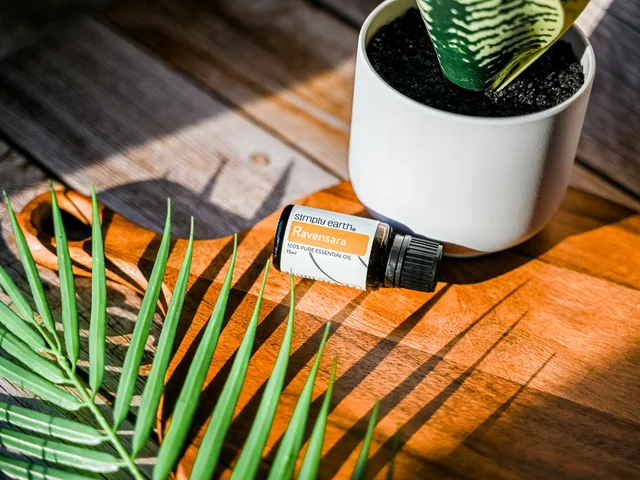
BEST FOR: EVERYDAY BREATHING SUPPORT
This is the best-evidenced row on the page, and the evidence is about inhaling rather than about swallowing or rubbing. A randomised controlled trial by Choi and Park (2016) had patients with perennial allergic rhinitis inhale an aromatherapy oil blend and found improvement in nasal symptoms, obstruction in particular. A separate randomised, double blinded, placebo controlled trial by Hawkins, Hires, Dunne and Keenan (2022) used a throat spray of blended essential oils and reported better lung function among the women taking part. Both are blends — ravensara was one oil among several in each, so neither is evidence for ravensara on its own. That is the honest shape of the research and it is still more than most oils have.
KATIE'S TIP
Both of those studies put the oil in the air or in a spray, not on skin. If you want to use ravensara the way it has actually been studied, a diffuser is the closest you will get at home.
USE IT IN →

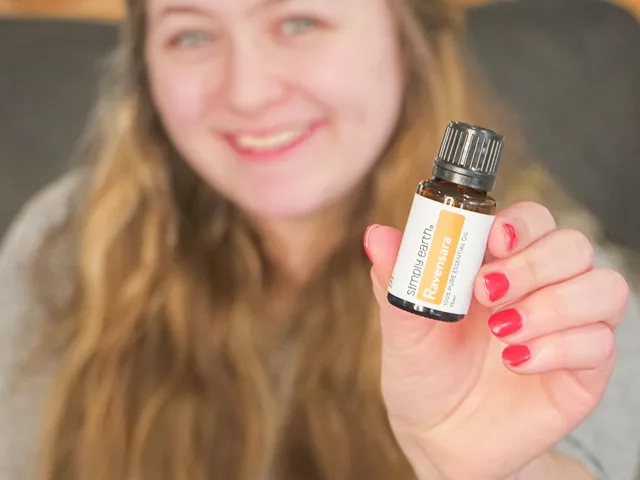
BEST FOR: DILUTED MASSAGE BLENDS
Simply Earth lists joint support among this oil's uses, and the legacy version of this article reached for a 2020 review by Assis and colleagues to explain it. Worth saying precisely what that paper is — a review of the antinociceptive (pain-dulling) activity of individual essential oil constituents, leaning on molecular docking studies, which are computational models of how a compound might bind rather than measurements of anyone's knee. It is a reasonable reason to think the chemistry is interesting. It is not a clinical result, and this page is not going to present it as one.
KATIE'S TIP
Read the safety section before you make anything topical with this oil. Ravensara's dilution ceiling is far lower than almost everything else on our shelf, and the older roll-on recipes on our blog were written before that limit came in.

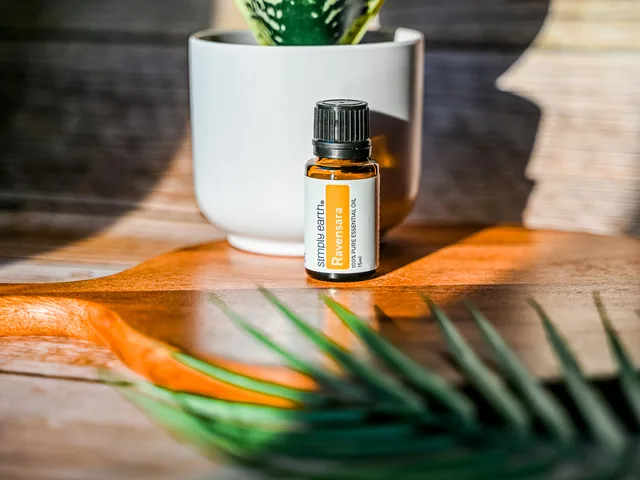
BEST FOR: AFTER EXERTION & END-OF-DAY BLENDS
"Relaxes Muscles" is on Simply Earth's own use list, and it is the benefit Earthies describe unprompted more than any other — one reviewer, a practising aromatherapist, wrote about putting it in her diffuser after a storm and finding her neck and back tension had let go within about fifteen minutes. Aroma and muscle tension are genuinely linked through how relaxed you are rather than through anything happening in the muscle fibre itself, which is a less dramatic mechanism than it sounds and a real one.
KATIE'S TIP
If you want the relaxing effect without the dilution arithmetic, run it in a diffuser in the room you are stretching or winding down in. You lose nothing that matters.

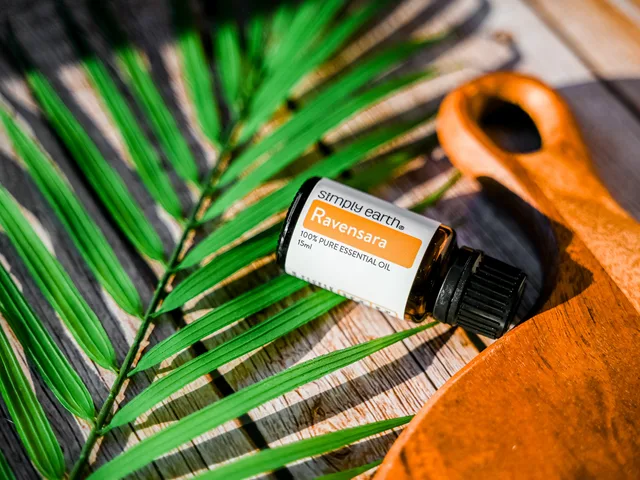
BEST FOR: RINSE-OFF & HOUSEHOLD BLENDS
Skin cleansing is on Simply Earth's use list and it is one of the three things the bark was traditionally used for in Madagascar. There is a real tension in this row and it is better named than hidden — the oil that is listed as cleansing skin is also the oil with the lowest dilution ceiling we sell and a skin sensitivity rated high. Those two facts do not cancel out; they just mean ravensara belongs in rinse-off and household formats rather than in a leave-on face product, and belongs there in very small amounts.
KATIE'S TIP
Scrubs and sprays over serums and balms. Anything that washes off keeps contact time short, which is exactly what you want from an oil with this safety profile.


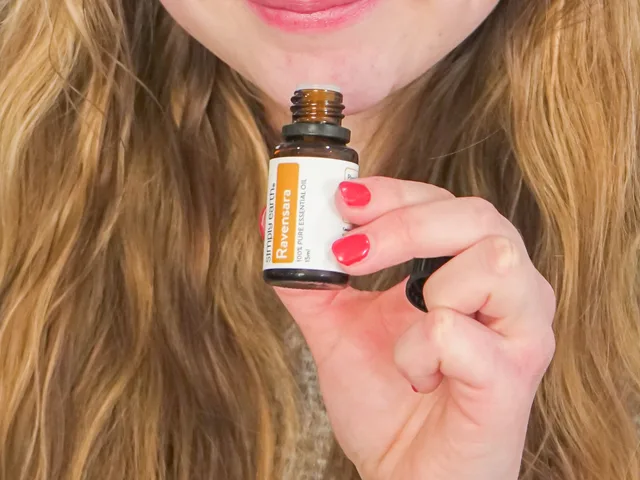
BEST FOR: DIFFUSING BEFORE SOMETHING DAUNTING
Simply Earth's own product description says this oil "has great benefits for mental wellness as it promotes self confidence and has a calming effect" — and we have said the same thing publicly in a reply to an Earthie's review. There is a recipe on this blog called the Boost Confidence Diffuser Blend built on exactly that idea. The older version of this article listed six benefits and missed this one entirely, which is a shame, because for an oil with a very restrictive topical limit, the uses that happen in the air are the ones most people can actually reach for.
KATIE'S TIP
One drop of ravensara against two of bergamot is the combination in our confidence blend, and the ratio is doing real work — ravensara is medicinal enough that it needs something bright in front of it.

Put It to Work
How to Use Ravensara Essential Oil
Diffuser
- • 1–2 drops, with something brighter in front of it
- • The easiest way to use this oil well, given its topical limit
- • Pairs naturally with fir needle, eucalyptus, citrus and cypress
- • Listed by Simply Earth as both cat safe and dog safe
Steam Inhalation
- • 1 drop in a bowl of hot water, towel over the head, eyes closed
- • Closest home version of how the research actually used it
- • Not for young children — this oil is kid safe from age 10
Topical — read the safety section first
- • Maximum dilution 0.1%, far lower than most oils on our shelf
- • That is well under one drop per ounce of carrier oil
- • Skin sensitivity is rated HIGH; patch test on the inner arm
- • Not for use in pregnancy or while breastfeeding
Household & Rinse-Off
- • Scrubs, foot sprays and surface blends suit it better than leave-on skincare
- • Short contact time is the point
- • For external and aromatic use only — never add to food
Know the Difference
Ravensara vs. Ravintsara vs. Ravensara aromatica
Three oils, names that differ by a letter or a word, and a great deal of confusion — including among suppliers. Start with what they are not: ravensara and ravintsara are not from different families, which is a claim you will see repeated. They are different genera in the same family, Lauraceae — the laurel family that also gives us cinnamon, camphor and bay. That shared family is exactly why the mix-up survives. What separates them is the plant and the part: ravintsara is a leaf oil from the camphor tree and is typically dominated by 1,8-cineole; Simply Earth's ravensara is a bark oil from Ravensara anisata, and cineole is not what leads it. The third column is the one that catches returning customers — earlier Simply Earth bottles held Ravensara aromatica, the leaf oil, and it smells noticeably different from the bark oil that replaced it. Only the first column is taken from Simply Earth's own product record; the other two are general reference and are marked where we hold no record of our own.
Swipe to compare →
Ravensara (anisata) The oil Simply Earth sold | Ravintsara The one-letter near-twin | Ravensara aromatica The older leaf oil | |
|---|---|---|---|
| Botanical Name | Ravensara anisata | Cinnamomum camphora ct. 1,8-cineole | Ravensara aromatica |
| Plant Family | Lauraceae | Lauraceae | Lauraceae |
| Plant Part | Bark | Leaf | Leaf |
| Named Constituents | Estragole, Linalool, Limonene | Typically 1,8-cineole dominant | Not a Simply Earth record |
| Aroma | Medicinal and camphorous, woody, faintly sweet | Fresh and cineole-sharp | Lighter and more eucalyptus-like |
| Maximum Dilution | 0.1% | Not a Simply Earth record | Not a Simply Earth record |
| Sold by Simply Earth | Discontinued | N/A — not sold by Simply Earth | Previously, now replaced |
| Simply Earth | The oil on this page | — | — |
Perfect Pairs
Ravensara Blends Well With…
All eleven come from Simply Earth's own product notes. The pattern is worth noticing — conifers, camphoraceous oils and clean herbs. Ravensara is medicinal enough that it wants either a partner that agrees with it, like fir needle or eucalyptus, or a bright citrus-adjacent one to lift it.
The Oil That Heals
The Tree Madagascar Called a Cure-All
In Madagascar, where the tree grows, Ravensara anisata was known in traditional medicine as a "cure-all" — and specifically as a tool for cleaning, immunity and respiration. Those three uses have survived into every modern description of the oil, this one included, which is unusual: most traditional reputations get quietly narrowed on the way to a product page. Ravensara's did not.
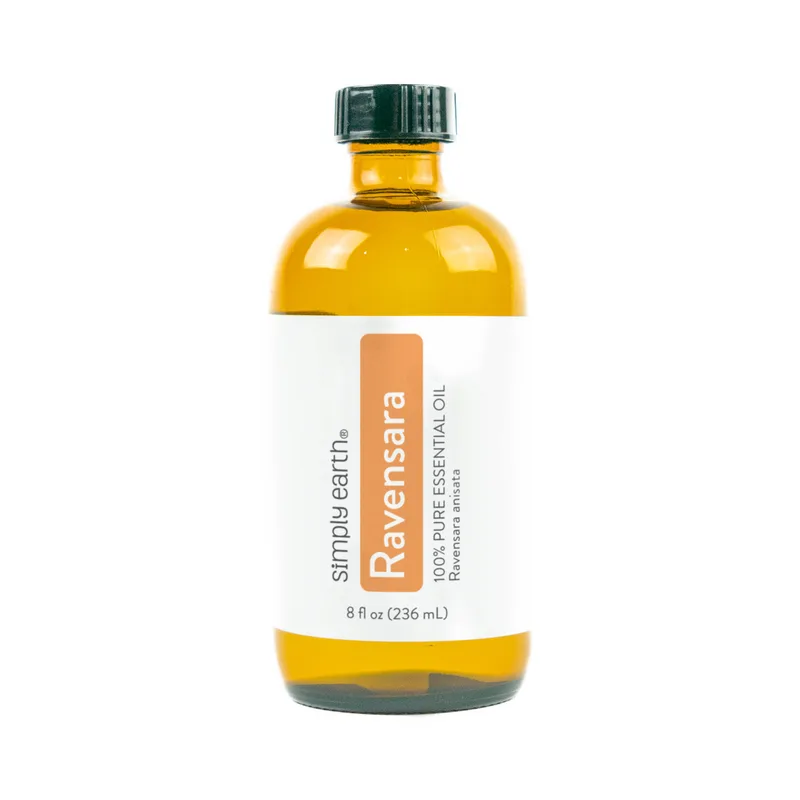
The tree is more impressive than the small amber bottle suggests. It belongs to Lauraceae, the laurel family, and grows up to twenty metres tall with several buttress roots flaring out at the base for support. The bark is reddish and intensely aromatic, the leaves small, green and elliptical. It is the bark that Simply Earth's oil is steam distilled from, which is the single detail that separates this oil from most of what is sold under the ravensara name.
The name has attracted more attention than the plant. A 2001 patent application by Jean Pierre Willem claimed compositions built on Ravensara aromatica — the leaf oil, the other species — for a long list of conditions. It is worth knowing the document exists, because it is where a good deal of ravensara's internet reputation originally came from. It is also worth knowing what it is: a patent application about a different species is a claim someone filed, not a finding anyone demonstrated, and this article does not rest anything on it.
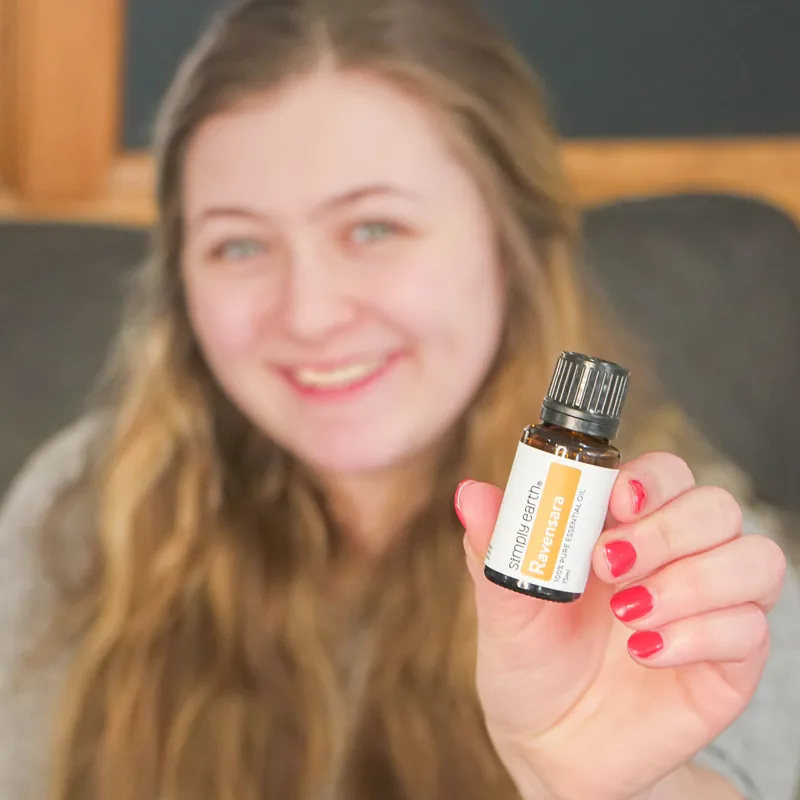
What's Inside
What's Actually In the Bottle
Three constituents, taken from Simply Earth's own product record. The first of them is the reason the safety section below is the most important part of this page.
Estragole
Named first · The reason for the safety limit
Estragole is the compound that makes tarragon, anise, fennel and basil smell the way they do, and it is the first constituent Simply Earth lists for this oil. It is also the reason ravensara carries a far stricter dilution ceiling than almost anything else on our shelf — estragole draws real toxicological attention, and our safety record notes it as potentially carcinogenic. If you have ever opened this bottle and caught something faintly like licorice, that is estragole, and it is the honest signature of a bark-distilled ravensara.
Linalool
Floral · Softening
A naturally occurring compound found across flowers and spice plants, with a pleasant floral scent carrying a touch of spice. It turns up in soaps, fragrances, food flavourings and household products, and in this oil it is the note that keeps a medicinal, camphorous bark oil from being entirely austere.
Limonene
Bright · Lifting
The major component of citrus peel oils and one of the most widely used aroma compounds there is. Its role here is the same as in black pepper or juniper — it lifts the top of the aroma so the heavier, more medicinal part of the profile does not sit flat.
Simply Earth holds a spec sheet for this raw material, but it carries no approved batch constituent percentages — so no percentage is quoted anywhere on this page, including for estragole. Naming the constituents is what the record supports; quantifying them is not.
Where It Comes From
Bark, Steam and Madagascar
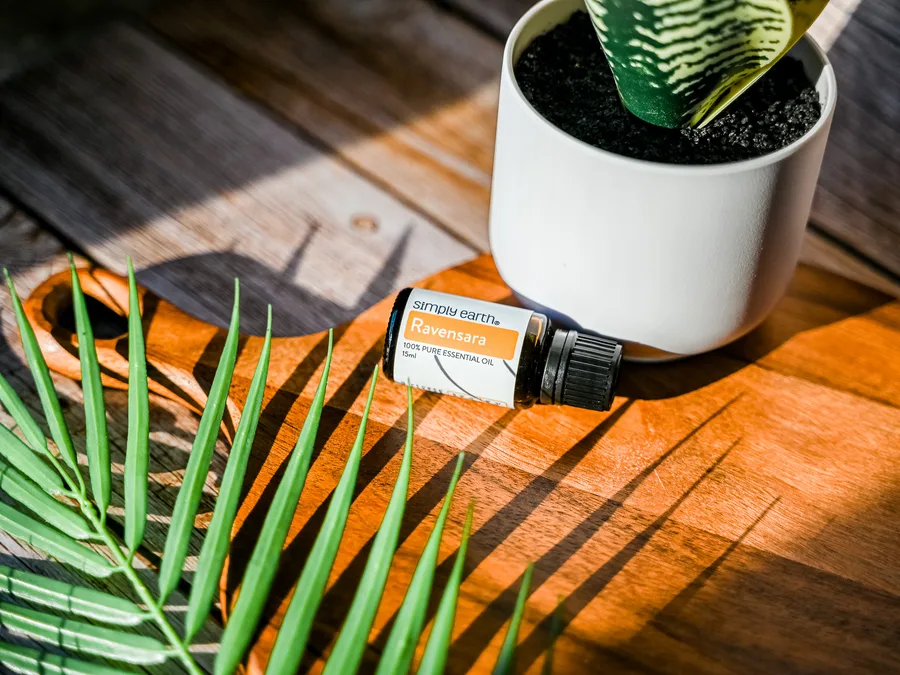
Ravensara anisata is Madagascan, and Simply Earth's oil is steam distilled from the bark rather than the leaf. All three of those facts — origin, method and plant part — come off the product record and the bottle's own label, which matters here more than it would on most pages: bark versus leaf is the difference between this oil and the one it replaced.
Beyond that, we would rather show you a gap than fill it with something plausible. Simply Earth does not hold a published farm partnership, a years-partnered figure or a farm-direct percentage for ravensara in any of its databases, so none of those numbers appear above. The three statistics shown are the three we can stand behind.
Madagascar
Where It Grows
Steam Distilled
Extraction Method
Bark
Plant Part
Use It Right
Things to Remember When Using This Oil
Maximum dilution is 0.1% — read that again. Simply Earth's safety record sets the ceiling for this oil at one tenth of one percent, which is well under a single drop per ounce of carrier oil. That limit was set deliberately, on the recommendation of Tisserand and Young's safety reference, and it is roughly ten times stricter than a typical everyday oil. If a ravensara recipe anywhere asks for more, the recipe is out of date, not the limit.
⚠️ Older recipes on this blog predate that limit. Several Simply Earth roll-on and balm recipes linked from this page were written before the dilution rate was revised and call for considerably more ravensara than 0.1%. They are linked because they genuinely contain the oil — but reduce the ravensara in them, or make them as diffuser blends instead. We are reviewing those recipes.
Estragole is why. Simply Earth's record notes that because of its estragole content this oil may be potentially carcinogenic. That is the sole reason for the dilution ceiling, and it is not a reason to panic about a bottle you already own — it is a reason to use it in the air far more often than on skin.
Not for use during pregnancy or breastfeeding. Simply Earth's safety record lists this oil as not pregnancy safe and not breastfeeding safe.
Blood clotting disorders — talk to your doctor first. Our record carries a specific caution for anyone with a clotting disorder.
Skin sensitivity is rated HIGH. Always dilute, always patch test on the inner arm before first use, and avoid contact with eyes. For external and aromatic use only.
Kid safe from age 10, per Simply Earth's product guidance — an unusually high floor, and consistent with everything else on this list.
Cat safe and dog safe, per Simply Earth's product guidance. More on using essential oils with cats and with dogs.
Sun safe — no photosensitivity caution applies to this oil. Shelf life is around 4 years.
We don't recommend ingesting essential oils unless under the direction of a doctor certified in aromatherapy. Here is why we don't ingest essential oils. See our dilution chart for how to measure small percentages.
These statements have not been evaluated by the Food and Drug Administration. This product is not intended to diagnose, treat, cure, or prevent any disease.
Real Results
What Earthies Are Saying
"Ravensara is, in my opinion, one of the most underused and underestimated essential oils. It's a powerhouse — and I admit, even as an aromatherapist, I had underestimated it. I put it in my diffuser with my normal blend and within 15 minutes my muscles had fully relaxed."
Vicki D.
Verified Buyer • Ravensara Essential Oil
"I absolutely LOVE Ravensara. I just added it to an inhaler for allergies, and an inhaler for colds. My husband and I have year round allergies and this has truly been a blessing to have around the house."
Liz R.
Verified Buyer • Ravensara Essential Oil
"I think Ravensara is now one of my top 3 scents. It's not overpowering in any way — I would say it's on the calm side. A very lovely scent!"
Courtney R.
Verified Buyer • Ravensara Essential Oil
OUR SIMPLY PURE PROMISE
What Goes Into Your Products Matters
Certified 100% Pure
No fillers, no synthetics. Just pure oil.
GC/MS Third-Party Tested
Batch-specific reports with every bottle.
Ethically Sourced from Quality Farms
Responsibly harvested. People and planet first.
Madagascar
Where It Grows
Steam distilled from the bark
0.1%
Maximum Dilution
Set on Tisserand & Young guidance
Public
GC/MS Tests
MLM brands: Rarely
Your Order Changes Lives: 13% of profits fight human trafficking globally.
Ravensara Essential Oil FAQ
The questions Earthies actually ask about this oil — starting with the two that come up most, which are both about it not being the oil people expected.
What is the difference between ravensara and ravintsara? +
They are different trees that share a family. Ravintsara is distilled from the leaves of the camphor tree, Cinnamomum camphora, and is typically dominated by 1,8-cineole. Simply Earth's ravensara is Ravensara anisata, steam distilled from the bark, and cineole is not what leads it — the constituents named on our record are estragole, linalool and limonene. Both belong to the laurel family, Lauraceae, which is a large part of why the two names get swapped so often.
Why does my new bottle of ravensara smell different from my old one? +
Because it probably is a different oil. Earlier Simply Earth bottles held Ravensara aromatica, distilled from the leaf. The later ones hold Ravensara anisata, distilled from the bark. Two Earthies spotted the change from the smell alone before we wrote about it. The bark oil is heavier, more medicinal, and carries a faintly sweet, licorice-like edge that the leaf oil does not.
Why does ravensara smell like licorice or anise? +
That is estragole, the first constituent on our record for this oil. It is the same compound that gives tarragon, anise, fennel and basil their character. In a bark-distilled ravensara it is a signature rather than a fault — if your bottle has that note, it is behaving as the record says it should.
How much ravensara essential oil is safe to use on skin? +
Very little. Simply Earth's safety record sets a maximum dilution of 0.1%, which is well under one drop per ounce of carrier oil and about ten times stricter than a typical everyday oil. The limit exists because of the oil's estragole content and was set on the recommendation of Tisserand and Young's safety reference. Skin sensitivity is rated high, so patch test even at that dilution.
Is ravensara essential oil safe during pregnancy? +
No. Simply Earth's safety record lists ravensara as neither pregnancy safe nor breastfeeding safe. Anyone with a blood clotting disorder should also speak to a doctor before using it.
Is ravensara safe around children and pets? +
It is listed as kid safe from age 10, which is a higher floor than most oils, and as both cat safe and dog safe. As with any oil, diffuse in a ventilated room and give pets a way to leave.
Can I still buy ravensara essential oil from Simply Earth? +
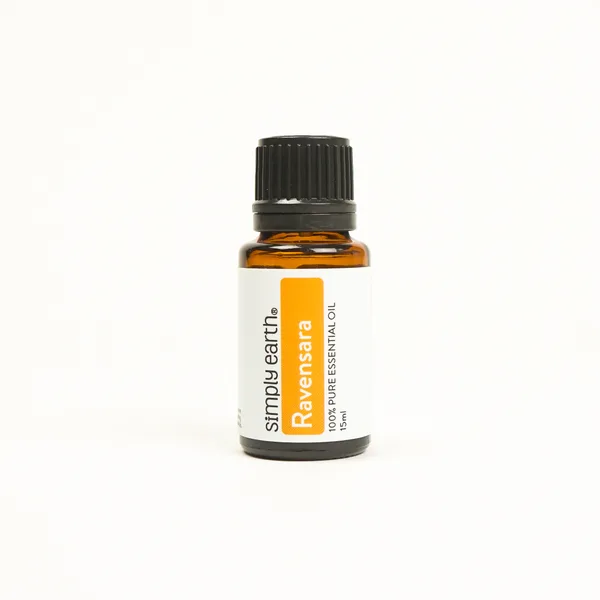
Not at the moment — ravensara is no longer an active product in our store, which is why there is no buy link on this page. The oil still appears in older recipes on this blog, and everything here about how it behaves and how to use it safely still applies to a bottle you already own.
What does ravensara blend well with? +
Our product notes list eleven — German chamomile, Java citronella, cypress, globulus eucalyptus, fir needle, ginger root, juniper berry, lavender, rosemary, tea tree and wintergreen. Conifers and camphoraceous oils agree with it most naturally; something brighter in front of it stops it reading as purely medicinal.
About the Author: Katie Veldkamp
Katie Veldkamp
Certified Aromatherapist · Co-Founder, Simply Earth
Katie Veldkamp is a Certified Aromatherapist and co-founder of Simply Earth. She personally formulates and reviews SE's essential oil blends and verifies all benefit claims on Simply Earth content before it goes live.
Join 20,000+ Earthies Making Their Homes Natural
New recipes, usage guides, and DIY tips — delivered free.
No spam. Unsubscribe any time.

Learn by doing
Make your own natural products every month.
The Simply Earth Recipe Box ships 4 full-size essential oils, 6 natural recipes, and everything you need to make them. No guesswork.
Start My Recipe Box$39.99 for your first box, then $49.99/month. Skip, pause, or cancel anytime.