
Lemon Myrtle Essential Oil Benefits, Uses & Recipes

Katie Veldkamp
Certified Aromatherapist
Fact Checked & Approved
Lemon Myrtle is the oil people describe as smelling "more like lemon than lemon does" — and for once that is chemistry rather than marketing. Steam-distilled from the leaves of Backhousia citriodora, a flowering Australian tree, this oil runs as high as 98% citral, the compound that gives lemon its scent in the first place. That makes it the cleanest, sharpest citrus note on the shelf, a genuinely effective household cleaner, and an oil that needs a little more care on skin than its brightness suggests. Here is what it actually does, how Simply Earth says to dilute it, and where to put it to work.
In this Guide
Free Cheat Sheet
Not sure which oil to reach for?
Get the free Essential Oil Cheat Sheet and understand essential oils with confidence.
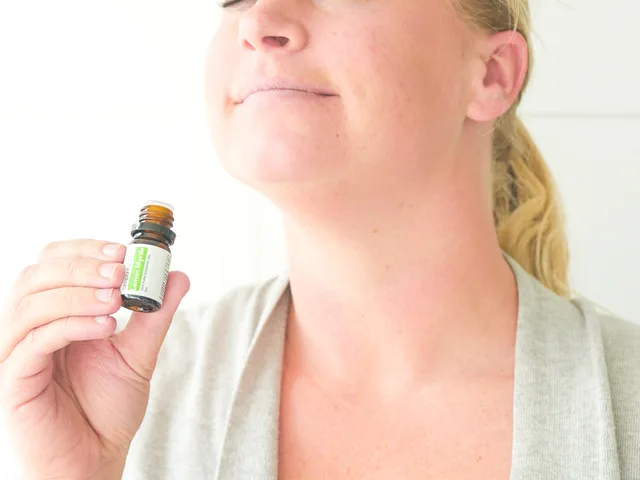
BEST FOR: SEASONAL THREATS & WINTER MONTHS
Laboratory research on lemon myrtle leaf extract has reported anti-inflammatory and antioxidant activity, which is the kind of oxidative-stress support people are reaching for when they diffuse it through a long winter. Simply Earth's own product record lists promoting immunity as its first use, and it is the reason this oil tends to come out of the cupboard in February rather than July.
KATIE'S TIP
Diffuse it alongside Tea Tree when someone in the house is under the weather. The two are listed as blend partners on our own bottle, and the combination smells clean rather than medicinal.
Use it in

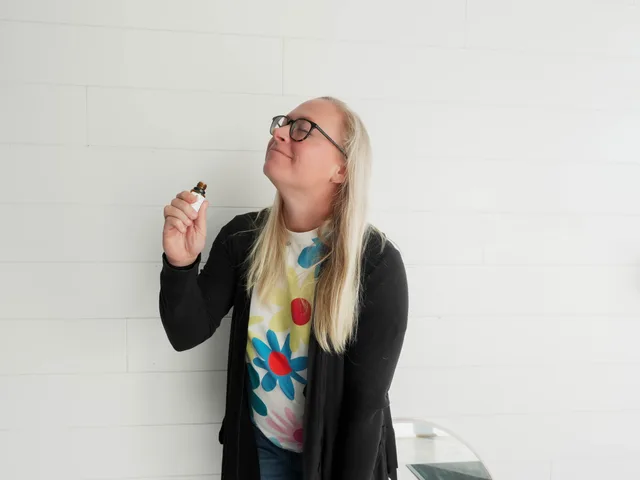
BEST FOR: DIFFUSING WHEN YOU ARE CONGESTED
Lemon myrtle has been studied for antibacterial and antifungal activity, which is part of why it earns a place in the diffuser when a cough is going round. It will not clear congestion the way a steam bowl does — what it does is keep the air in the room feeling clean and bright, which is a surprisingly large part of feeling better indoors.
KATIE'S TIP
Three to four drops in the diffuser, run for 30–60 minutes rather than all night. Your nose adapts fast, and a shorter session actually registers more.
Use it in
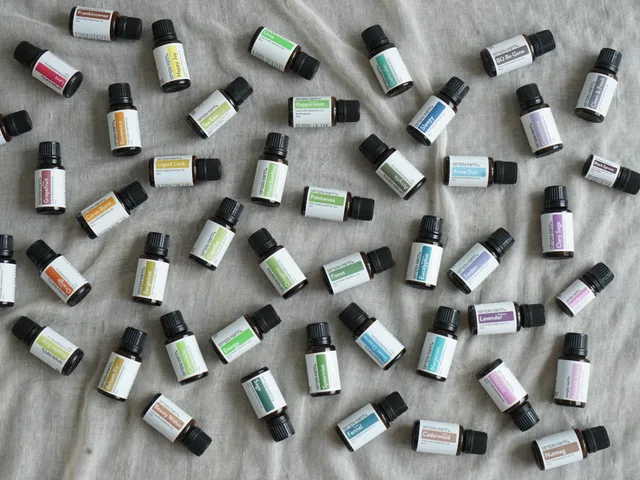
BEST FOR: SURFACE SPRAYS & DEODORISING
Published work on Backhousia citriodora reported significant antimicrobial activity against a range of organisms, and this is the use Earthies write to us about most. Citral is a solvent as well as a scent, so lemon myrtle does not just cover a smell — it is genuinely good at cutting through the stale, damp, forgotten-gym-bag category of household odour.
KATIE'S TIP
This is my desert-island cleaning oil. If you only ever use lemon myrtle for one thing, make it the kitchen bin and the carpet.

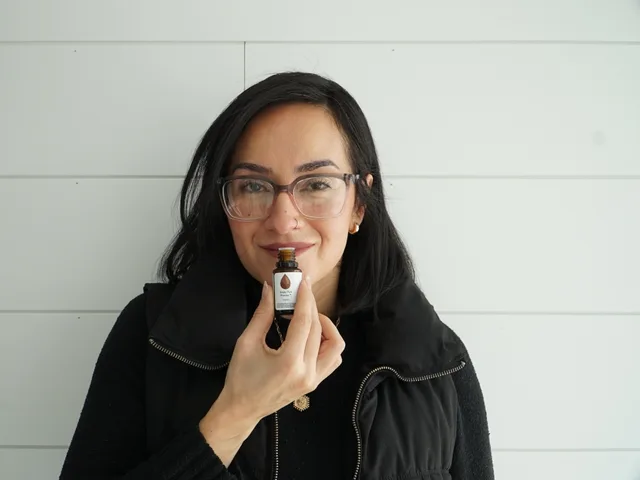
BEST FOR: DIY CLEANSERS & SCRUBS
The same antimicrobial research is why lemon myrtle turns up in soaps, washes and cleansing formulations. It is a good addition to DIY skincare — but it is also a high-citral oil, and citral is a known skin sensitiser. This is the row to pair with the safety section below rather than read on its own: always diluted, never neat, and never from a bottle that has been left open long enough to oxidise.
KATIE'S TIP
Patch test on your inner forearm before anything goes near your face, and keep an oxidised bottle out of skincare entirely — old citrus is what causes most reactions.
Use it in

BEST FOR: AFTER-DINNER DIFFUSING
Citral has been studied for anti-adipogenic effects, and lemon myrtle leaf extract for anti-inflammatory activity that researchers have discussed in the context of calming inflamed digestive tissue. Those are findings about the compounds in laboratory settings, not a promise about your evening — but a bright citrus note after a heavy meal is a long-standing use and a pleasant one.
KATIE'S TIP
Diffuse it in the kitchen while you clear up. It doubles as the after-dinner smell and the thing cutting through the cooking oil in the air.
Use it in
BEST FOR: EVENING BATHS & MASSAGE
This is the one that surprises people. Lemon myrtle smells more lemony than lemon, and yet the aroma reads as calming rather than energising — fresh and clearing in a way that helps a room feel settled. It is a genuinely good bath or massage-oil scent for the end of a long day, provided it is diluted properly.
KATIE'S TIP
Try it diluted in a carrier for an evening massage oil. Pair it with Lavender if you want the calm to lead and the citrus to sit underneath.
Use it in
Relaxes Muscles
The use that is on our bottle but not on the old post.
 Shop Lemon Myrtle Essential Oil
BEST FOR: POST-WORKOUT MASSAGE BLENDS
Simply Earth's own product record lists relaxing muscles among lemon myrtle's uses, which is what earns this row its place — it is a use we stand behind on the bottle even though the older article never covered it. Diluted into a carrier oil it makes a bright, non-medicinal massage blend, which is a welcome change from the usual mint-and-camphor approach.
KATIE'S TIP
Blend it with Black Pepper — also on our blend-partner list — for a post-workout massage oil that warms without the menthol hit.
Use it in
Put It to Work
How to Use Lemon Myrtle Essential Oil
Diffuse
- • 3–4 drops for a bright, clean-smelling room
- • Pair with Tea Tree for winter, Lavender for evenings
- • Run 30–60 minutes at a time rather than continuously
Topical
- • Always dilute — Simply Earth lists a 5% special dilution rate for this oil
- • Patch test first; citral is a known skin sensitiser
- • Never use an oxidised bottle on skin
Household
- • Sprinkle-and-vacuum carpet refreshers with baking soda
- • Surface sprays for bins, shoe racks and damp corners
- • A few drops on a wool dryer ball for laundry
DIY
- • Soaps, body washes and sugar scrubs as the top note
- • Bath salts and massage oils
- • Anchor it with a wood or resin — it is a top note and fades first
Know the Difference
Lemon Myrtle vs. Lemon vs. Lemongrass vs. Lemon Eucalyptus
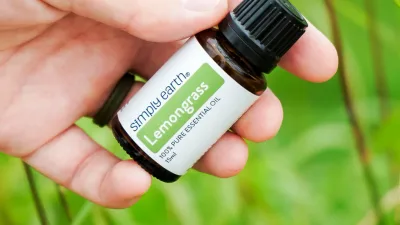
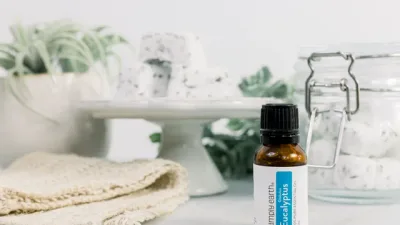
Four oils carry a lemon scent and not one of them is related to the others — an Australian myrtle tree, a citrus fruit, a tropical grass and a eucalyptus. Lemon myrtle is the outlier worth knowing: it is the most lemon-smelling of the four despite containing no lemon at all, and it is the only one of the four that is not phototoxic. Simply Earth carries all four, so this is a "which one do you want" table rather than a "which one do we stock" one.
Swipe to compare →
Lemon Myrtle Backhousia citriodora | Lemon Citrus limon | Lemongrass Cymbopogon flexuosus | Lemon Eucalyptus Corymbia citriodora | |
|---|---|---|---|---|
| Plant part | The leaves of a flowering Australian tree | Fruit peel of a small thorny citrus tree | The leaves and stalks of a tall tropical grass | The leaves of a eucalyptus tree |
| Extraction | Steam-distilled | Cold-pressed | Steam-distilled | Steam-distilled |
| Scent | The most intensely lemon of the four — sweet, crisp, almost sherbet | Bright, sharp, true lemon rind | Grassy and lemony, slightly earthy | Sharp lemon-menthol |
| Sun safety | Sun safe — not phototoxic | Phototoxic — keep treated skin out of the sun | Sun safe | Sun safe |
| Skin sensitivity | Higher — very high citral, a known sensitiser; dilute and patch test | Medium — phototoxic rather than sensitising | Higher — a known sensitiser, patch test first | Higher — a known sensitiser, patch test first |
| Best for | Deodorising, cleaning and the cleanest citrus note you can buy | Cleaning, skincare and mornings | Insect blends and deodorising | Insect blends and respiratory support |
| Sold by Simply Earth | Yes — Lemon Myrtle Essential Oil | Yes — Lemon Essential Oil | Yes — Lemongrass Essential Oil | Yes — Lemon Eucalyptus Essential Oil |
| This article | The subject of this page | — | — | — |
Perfect Pairs
Lemon Myrtle Blends Well With…
Lemon myrtle is a top note with a blending factor of 6, so it arrives first and leaves first — and it is loud. Start with one drop where you would use two of anything else, and anchor it with a wood or a resin if you want the blend to last. The Simply Earth blend that already uses it is Sparkling Lemon, where it is the first of five botanicals.
An Australian Original
History of Lemon Myrtle Essential Oil
Lemon myrtle is native to the subtropical rainforests of Queensland, Australia, and it is a genuinely striking tree — a flowering evergreen that can reach around 6 metres (20 feet), with broad glossy leaves and creamy white flower clusters at the ends of its branches. It is grown ornamentally for exactly that reason, and the leaves release their scent when you brush past them.
Long before it was distilled commercially, the leaves were used by Aboriginal Australians as food and as a traditional medicine — lemon myrtle is one of a handful of Australian native botanicals, alongside things like wattleseed and finger lime, whose culinary and medicinal use goes back thousands of years and which the wider world only met recently. It is worth naming that history rather than skipping past it: this is an oil with an origin story that predates the essential oil industry by a very long way.
The commercial oil is a much newer thing. Lemon myrtle farming grew up around the extraordinary citral content of the leaf, and the industry has been successful enough that the oil is now a fixture on shelves far from Queensland.
The Chemistry
What's the Science Behind This Oil?
Two naturally occurring compounds account for nearly all of lemon myrtle's character — and one of them accounts for almost all of it. These are facts from the chemistry literature about the compounds, not claims about what this product does to a person.
Citral
90–98% of the oil · Geranial + Neral
Citral is not one compound but two isomers — geranial and neral — and together they make up the overwhelming majority of lemon myrtle. That concentration is the highest of any oil Simply Earth sells and it is the whole story of this oil: it is why lemon myrtle out-lemons lemon, why it works so well on odour, and why it needs diluting properly. Citral has been studied for antimicrobial and antifungal activity.
Limonene
Monoterpene · Bright · Solvent
The compound common to citrus peel oils, used industrially as a plant-derived solvent and as a fragrance ingredient. In lemon myrtle it sits underneath the citral and adds to the oil's usefulness around the house.
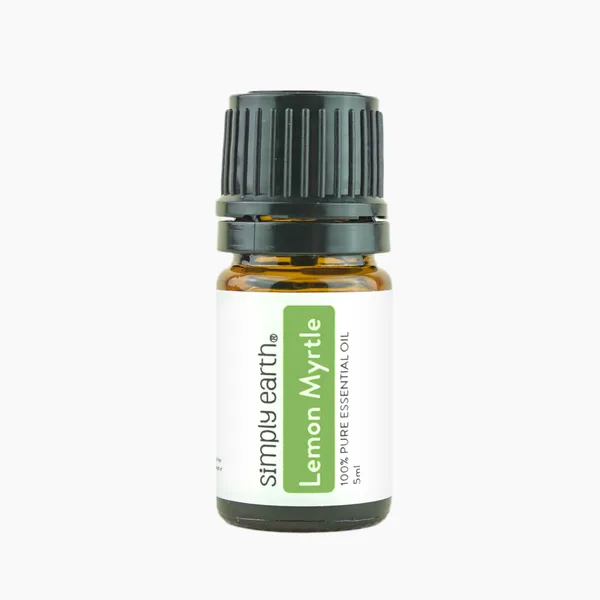
Simply Earth's Lemon Myrtle Essential Oil is steam-distilled from the leaf of Backhousia citriodora, grown in Australia. We third-party test our oils and publish the results, and we never blend them with synthetic fragrance, fillers or extenders. A batch-specific GC/MS report ships with every bottle, which is where you will find the citral percentage for your own batch. Shop Lemon Myrtle Essential Oil →
Where It Comes From
Where Our Lemon Myrtle Comes From
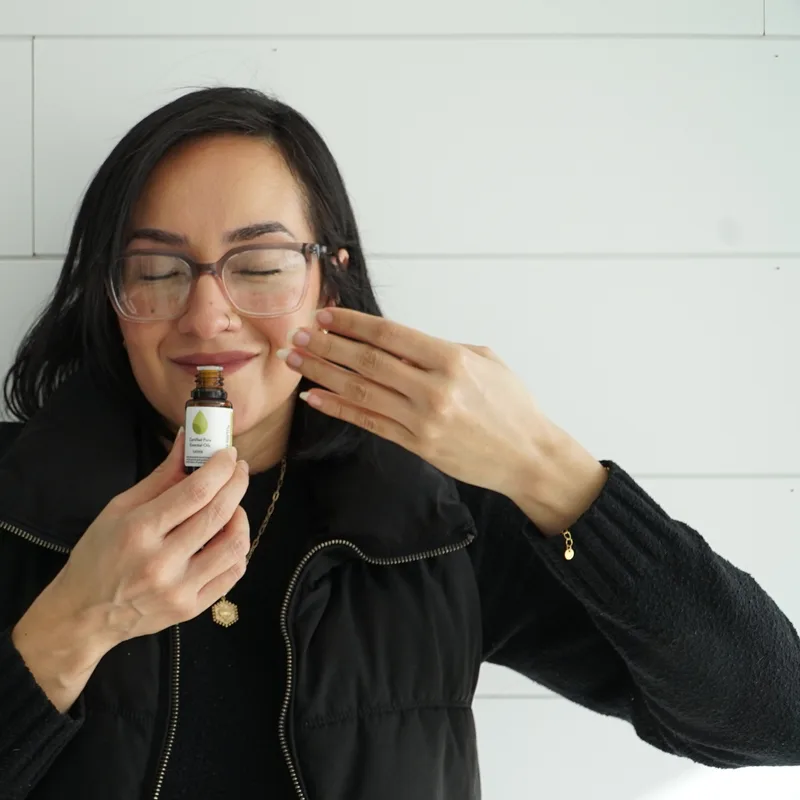
Simply Earth's Lemon Myrtle Essential Oil comes from Australia, steam-distilled from the leaf of Backhousia citriodora. Steam distillation is what makes this oil possible at all: the citral sits in the leaf, and carrying it over in steam is how you get a clear-to-pale-yellow oil that smells like the leaf crushed in your hand rather than like a cooked version of it.
The plant itself does most of the work here. Lemon myrtle is unusual in how much aromatic compound a single leaf carries, which is why the oil is so concentrated and why a bottle lasts longer than you expect — one drop genuinely does what two of another citrus would.
Every bottle ships with a batch-specific GC/MS report, so the citral figure on your bottle is your bottle's, not an average.
Use It Right
Things to Remember When Using This Oil
Always dilute before applying to skin. Simply Earth lists a special dilution rate of 5% for Lemon Myrtle. Because this is a very high-citral oil and citral is a known skin sensitiser, start lower than the maximum and work up rather than starting at the top.
Patch test before any wider use, and never use an oxidised bottle on skin. A citrus oil that has been left with the cap off is far more likely to irritate than a fresh one.
Safe to use on children age 10 and up.
Not recommended during pregnancy. Consult your doctor before use if you are pregnant.
Not recommended while breastfeeding.
Generally safe around dogs. Not cat safe — avoid diffusing around cats or applying it anywhere they could come into contact with it.
☀️ Sun safe. Unlike Lemon, lemon myrtle is not phototoxic, so it does not carry a sun-exposure restriction.
Shelf life is about 2 years. If the scent turns flat or waxy, replace it.
We do not recommend ingesting essential oils unless under the direction of a doctor certified in aromatherapy.
These statements have not been evaluated by the Food and Drug Administration. This product is not intended to diagnose, treat, cure, or prevent any disease.
Real Results
What Earthies Are Saying About It
"Citral, which is known for its cleansing properties, is the main chemical component in Lemon Myrtle. Use Lemon Myrtle to cleanse the skin or surfaces or purify the air. Always dilute Lemon Myrtle with a carrier oil to minimize skin sensitivity. It is also a mood booster."
Christina Durham
Verified Buyer • Lemon Myrtle Essential Oil
"I use Lemon Myrtle for its antibacterial properties. We are fighting colds and the start of allergies. But with Lemon Myrtle, the symptoms have all but been eliminated. Really great! And from this company, it is pure and money goes to stop trafficking."
Susie S.
Verified Buyer • Lemon Myrtle Essential Oil
"I can't say enough about this company. Loved my first order til now. Love these oils. Thankful they are 100% and no middle man. Thank you Simply Earth. And you support a great cause."
Misty O.
Verified Buyer • Lemon Myrtle Essential Oil
OUR SIMPLY PURE PROMISE
What Goes Into Your Products Matters
Certified 100% Pure
No fillers, no synthetics. Just pure oil.
GC/MS Third-Party Tested
Batch-specific report with every bottle.
Ethically Sourced from Quality Farms
Responsibly harvested. People and planet first.
Australia
Where It Is Grown
Backhousia citriodora
Leaf
Plant Part
Steam-distilled
Every Batch
GC/MS Tested
Report ships with the bottle
Your Order Changes Lives: 13% of profits fight human trafficking globally.
Lemon Myrtle Essential Oil FAQ
The questions Earthies ask most — starting with the one about how it can possibly smell more like lemon than lemon.
What does lemon myrtle essential oil smell like? +
Like lemon, only more so. Lemon myrtle is up to 98% citral — the compound responsible for the lemon scent — which is a higher concentration than lemon oil itself carries. Simply Earth's own record describes the aroma as sweet and citrusy; most people reach for words like crisp, clean or sherbet-like the first time they smell it.
Is lemon myrtle essential oil phototoxic? +
No. Unlike Lemon, which is cold-pressed from citrus peel and is phototoxic, lemon myrtle is steam-distilled from a leaf and is sun safe. There is no need to keep treated skin out of the sunlight. Its skin consideration is sensitisation from its very high citral content, not photosensitivity.
How much lemon myrtle essential oil should I dilute? +
Simply Earth lists a special dilution rate of 5% for this oil. Because lemon myrtle is a very high-citral oil and citral is a known skin sensitiser, it is sensible to start well below that and work up, and to patch test on the inner forearm first. Never apply it neat.
What is the difference between lemon myrtle and lemongrass? +
They are unrelated plants. Lemon myrtle is steam-distilled from the leaf of an Australian flowering tree, Backhousia citriodora, and is the most intensely lemon-smelling of the lemon-scented oils. Lemongrass is steam-distilled from a tropical grass and smells grassier and slightly earthy. Both are high in citral and both need careful dilution. Simply Earth carries both.
Is lemon myrtle essential oil safe for kids and pets? +
It can be used on children age 10 and up. It is generally safe around dogs, but it is not cat safe — avoid diffusing it around cats or applying it anywhere a cat could come into contact with it. It is not recommended during pregnancy or while breastfeeding.
What recipes use lemon myrtle essential oil? +
How long does lemon myrtle essential oil last? +
About two years. That is longer than a cold-pressed citrus oil like Lemon, which oxidises within about a year, because lemon myrtle is distilled from a leaf rather than pressed from a peel. If the scent goes flat or waxy, replace it rather than putting it on skin.

About the Author: Katie Veldkamp
Katie Veldkamp
Certified Aromatherapist · Co-Founder, Simply Earth
Katie Veldkamp is a Certified Aromatherapist and co-founder of Simply Earth. Her mission is to cut through the noise around essential oils so you can use them with confidence. Everything in this article has been reviewed and approved by Katie.
Learn essential oils the easy way
Every month we ship four pure essential oils, six natural recipes, and everything you need to make them. No guesswork.
No spam. Unsubscribe any time.

Learn by doing
Make your own natural products every month.
The Simply Earth Recipe Box ships four full-size essential oils, six natural recipes, and every container and ingredient those recipes call for — so you make the thing instead of reading about it.
Start My Recipe BoxPause, skip or cancel any time. 13% of profits fight human trafficking.