
Coffee Essential Oil: Uses, Benefits & Recipes

Katie Veldkamp
Certified Aromatherapist
Fact Checked & Approved
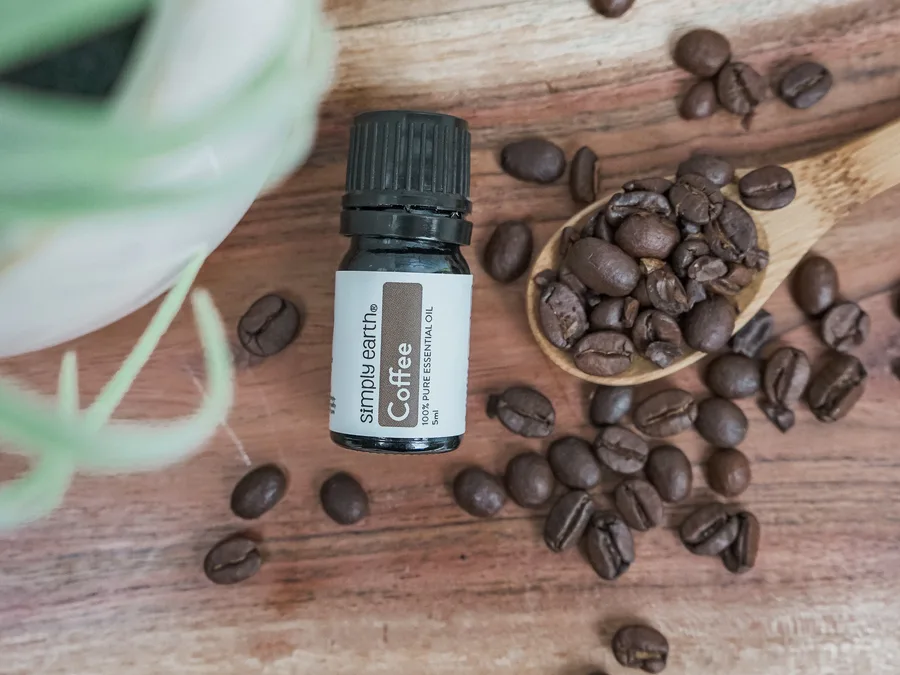
The first thing people say about coffee essential oil is that it actually smells like coffee — not the sweet, synthetic coffee of a candle aisle, but the real thing, dark and roasted. That comes down to how it is made. Simply Earth's is a CO2 extract pulled straight from roasted Coffea arabica beans rather than a steam distillate, which keeps the heavy aromatic compounds that make a fresh pot smell the way it does. It is thick, it is dark brown, it is genuinely invigorating to be around, and it contains no caffeine whatsoever.
In this Guide
Free Cheat Sheet
New to essential oils?
Get the free Essential Oil Cheat Sheet and understand essential oils with confidence.
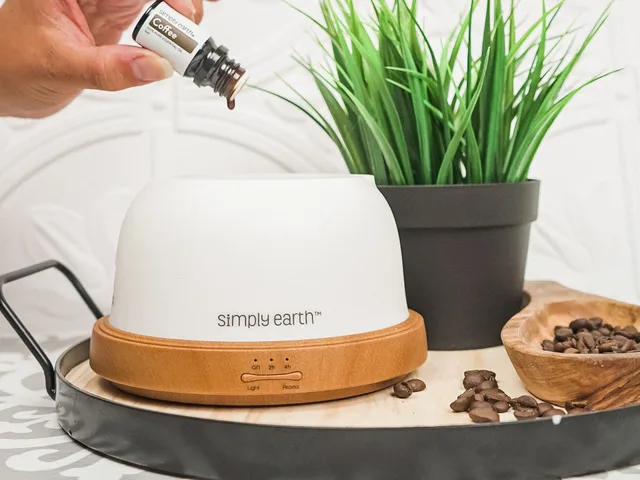
BEST FOR: AFTERNOON SLUMPS & EARLY STARTS
Energizes is the first use Simply Earth lists for this oil, and it works the way the smell of a fresh pot works rather than the way a cup of coffee does. Diffused in a room where someone is working, it reads as "awake" more immediately than citrus does — citrus is bright, coffee is familiar, and familiar gets there first. Worth being clear about what is happening: this is aroma, not chemistry. There is no caffeine in the bottle and nothing is entering your bloodstream.
KATIE'S TIP
One drop is plenty. Coffee has a blending factor of 3 and a very large aroma, and it will take over a diffuser blend given the slightest opportunity.


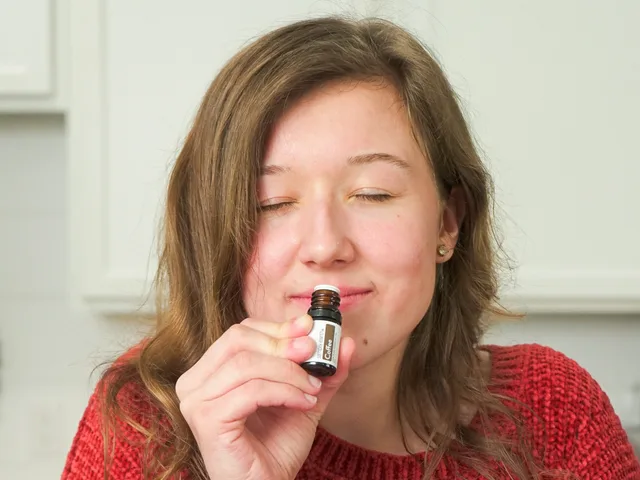
BEST FOR: DESK WORK, STUDYING & LONG DRIVES
Supports Awareness is the second use on Simply Earth's record, and it is the one that separates coffee from the obvious energising oils. Where the first benefit is about lift, this one is about attention — the difference between wanting to get up and being able to settle into something. It pairs particularly well with grapefruit or juniper berry when what you want is a clear head rather than a buzz, and a personal inhaler is the most concentrated way to get it.
KATIE'S TIP
An inhaler beats a diffuser for this one. The point is a deliberate, sharp hit of scent at the moment your attention goes, not a room that smells of coffee all day until you stop noticing it.


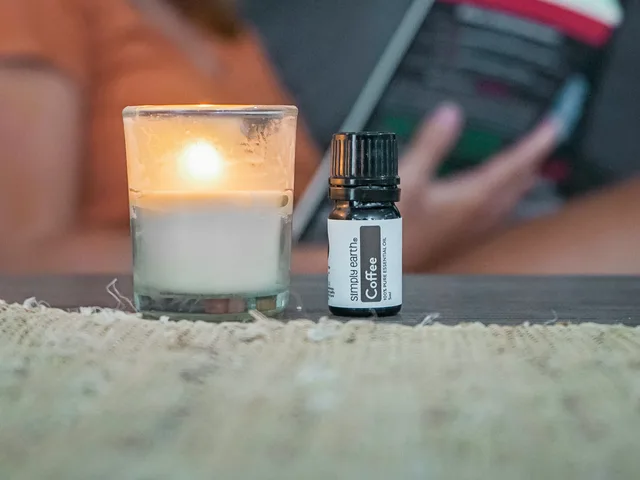
BEST FOR: AUTUMN & WINTER BLENDS
Warms is the third use on the record and the one that makes coffee useful in things you make rather than things you diffuse. It is a middle note with real body, and blended with vanilla, sandalwood or Peru Balsam it gives a room the same quality as a cafe in winter. Candles and sugar scrubs suit it especially well, because the base carries the aroma further and for longer than water vapour does.
KATIE'S TIP
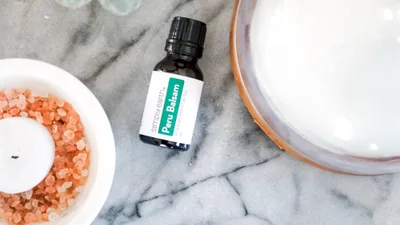
Peru Balsam is the pairing to try first if you want a vanilla-coffee effect — two separate Earthies arrived at that combination on their own and said so in their reviews.


Put It to Work
How to Use Coffee Essential Oil
Diffuse
- • 1 drop coffee with 2 drops sweet orange or grapefruit is the easiest place to start
- • Simply Earth's own guidance for this oil is to use it aromatically
- • Run it 30–60 minutes rather than continuously — a smell that is always there stops registering
- • Also in the Espresso, Autumn Days and Rise and Shine! diffuser blends
Inhalers & Roll-Ons
- • A personal inhaler is the most concentrated way to use coffee, and the best one for focus
- • Ready-made options include the Espresso Yourself, Winter Ember, Empowerment and Alert roll-ons
- • The Immune Boosting Inhaler pairs it with copaiba and grapefruit
DIY, Candles & Scrubs
- • Jingle Java Sugar Scrub, Morning Joe Shower Steamer and the Ice Cream Candle all use it
- • Warmth carries in wax and sugar better than it does in water vapour
- • ⚠️ Coffee oil is thick and dark brown — it will tint a pale product and stain light fabric, so test a small batch first
Around the House
- • DIY Fall Scented Pinecones are the simplest household use of it
- • Coffee with cedarwood makes a good winter room blend
- • A reed diffuser holds the aroma in a small room without any device at all
Know the Difference
CO2 Extract vs Steam Distilled vs Fragrance Oil
Coffee has no botanical varieties worth comparing — it is Coffea arabica either way. The question that actually decides whether you like this oil is how it was made, and it is the reason so many people describe their first bottle of coffee oil as disappointing. Simply Earth's is a CO2 extract, and that is the whole difference. One Earthie put it better than we can: she had tried other coffee essential oils, found they "smell chemically made just fake", and said this one "smells legit like coffee".
Swipe to compare →
Coffee CO2 Extract What is in our 5mL bottle | Steam-Distilled Coffee The other natural route | Coffee Fragrance Oil Synthetic, not an oil | |
|---|---|---|---|
| How it is made | Pressurised CO2 through roasted beans | Steam passed through the beans | Synthesised in a laboratory |
| What it smells like | Fresh roasted coffee | Thinner and more cooked, less true to the bean | Sweet and candy-like |
| Natural? | Yes | Yes | No |
| Colour and body | Dark brown and thick | Paler and thinner | Varies with the formulation |
| Contains caffeine | No | No | No |
| Sold by Simply Earth | Yes — 5mL, $15.99 | No | No |
| The one Simply Earth sells | We carry this | — | — |
Perfect Pairs
Coffee Blends Well With…
This is Simply Earth's own pairing list for coffee, taken from the product record rather than assembled by us. Separately, it is worth knowing which oils coffee actually shares a recipe with in Simply Earth's own recipe library — that list is shorter and slightly different: Mandarin appears in all nine, Winter Spice in four, Clove in three and Balsam Fir in two. Coffee is a middle note with a blending factor of 3, so start at one drop whichever pairing you try.
Where It Came From
The History of Coffee
The coffee plant was discovered in eleventh-century Ethiopia and had reached the Arabian peninsula by the fourteenth. What grows on it is not really a bean at all: Coffea arabica produces white flowers that smell faintly of jasmine, followed by a red, cherry-like fruit, and the "bean" is the seed sitting inside that fruit.
Its medicinal reputation arrived before the drink did. Simply Earth's own record notes that soon after its discovery coffee was found to have medicinal properties by boiling it in water — the fruit first, the roasted seed later. What followed is one of the fastest agricultural expansions in recorded history, and the reason almost every culture now has a version of the same morning ritual.
The essential oil is a modern footnote to all of that, and a genuinely different proposition from the drink. CO2 extraction pulls the aromatic fraction out of roasted beans without cooking it a second time, which is why the oil smells like the pot rather than like a memory of the pot — and why it carries the smell of coffee without carrying any of the caffeine.
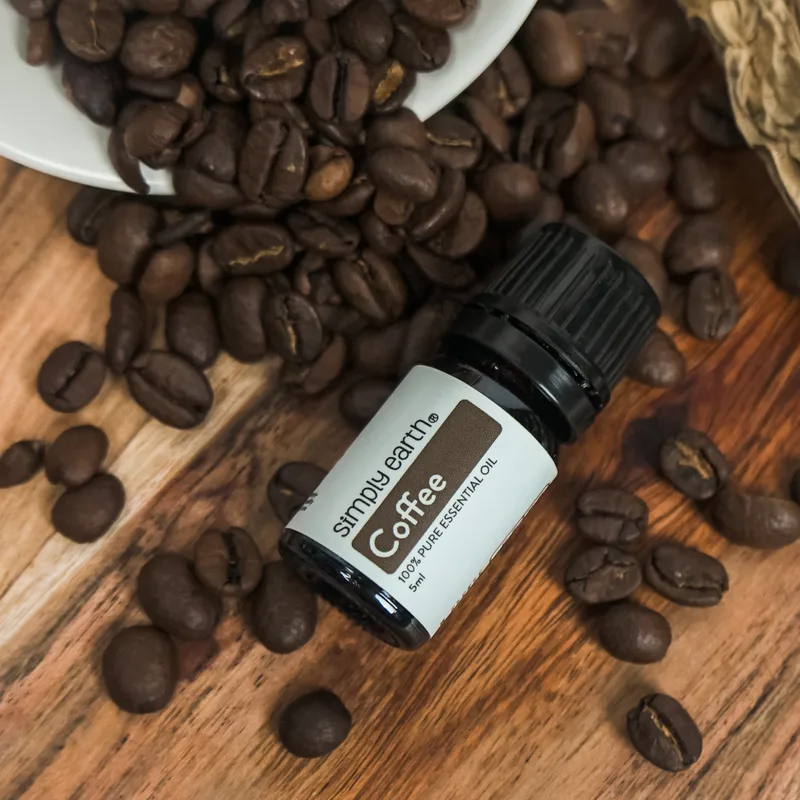
The Chemistry
What's the Science Behind This Oil?
⚠️ Simply Earth's record lists exactly one main constituent for this SKU — Oleic Acid — which is unusual and is a consequence of CO2 extraction producing a heavier, more oil-like fraction than steam distillation does. Rather than pad this section with aromatic compounds from the general coffee-chemistry literature and imply they came from our data, we have left it at what we can actually stand behind. The batch report is the document that answers this properly.
Oleic Acid
The only constituent on Simply Earth's record · Thick · Heavy
A monounsaturated fatty acid, and the single main constituent Simply Earth lists for this oil. It is the straightforward explanation for the two things you notice as soon as you open the bottle: the extract is thick, and it is dark brown. It is also why coffee behaves so well in scrubs, balms and candles, where a heavier oil sits in the base and keeps releasing scent, and less well in a recipe expecting something thin and volatile.
CO2 Extraction
Listed on the record as the extraction method · Not a compound
Steam distillation carries over the light, volatile fraction of a plant. Pressurised CO2 does not need heat to do its work, so it lifts a broader and heavier fraction — including the large, roasted-smelling molecules that steam tends to leave behind or degrade. That is the documented reason a CO2 coffee extract smells like a fresh pot while a steam distillate smells thin, and it is also why the constituent list for this oil looks so unlike the constituent list for a citrus or a mint.
Support the Source
Where Our Coffee Oil Comes From
Simply Earth's coffee extract is made from Coffea arabica grown in Venezuela, and the plant part used is the bean itself rather than the flower or the fruit around it.
The roasting matters more here than the growing does, and it is the step most people skip past. The compounds that make coffee smell like coffee do not exist in a green bean — they are created by roasting, in the same reaction that makes bread smell like bread. Extract a green coffee bean and you get something that smells vegetal and faintly of hay. Roast it first and then run pressurised CO2 through it, and you get the aroma you were actually after. Every coffee extract worth buying is made from roasted beans, and that is why.
What we can tell you about this specific bottle is the part that is verifiable: every batch is GC/MS tested before it is bottled, and the report for your batch is available with it. We would rather point you at that than at a story about a farm we cannot document — the numbers some brands publish about years partnered and farm-direct percentages are not numbers Simply Earth currently records for this oil, and this page is not going to estimate them.
Use It Right
Things to Remember When Using This Oil
⚠️ Simply Earth recommends using this oil aromatically. Our own record says there is limited documentation on how best to use coffee extract, so the honest position is that diffusing and inhaling are well understood here and topical use is less so. Treat the guidance below as the ceiling, not the target.
Dilute to 5% or less for any topical use. That is the special dilution rate on Simply Earth's record for this specific oil.
Kid safe from age 10 and up. That is this oil's own figure and it is higher than many on our shelf — it is not a general rule about essential oils and children.
Pregnancy and breastfeeding: "Yes, consult doctor" on both. That is a consult-first answer rather than a clearance.
⚠️ Not cat safe. Dogs are fine. If there is a cat in the house, this is one to keep out of the rooms it uses and away from a diffuser it cannot walk away from.
Sun safe — there is no phototoxicity caution on this oil.
⚠️ It is thick and dark brown, and it behaves like it. It will tint a pale lotion or soap and it will stain light-coloured fabric. Make a small test batch before you commit a whole jar of something.
It contains no caffeine. The aroma is stimulating; the chemistry is not. Nothing about smelling this oil is equivalent to drinking a cup of coffee.
Shelf life is 3 years. Keep it capped, out of direct sun, and away from heat.
For external use only, and keep it away from your eyes. We do not recommend ingesting essential oils, including this one, unless you are directed to by a doctor certified in aromatherapy.
These statements have not been evaluated by the Food and Drug Administration. This product is not intended to diagnose, treat, cure, or prevent any disease.
Real Results
What Earthies Are Saying
"I was pleasantly surprised as I've tried other coffee essential oils and they smell chemically made, just fake — and this stuff smells legit like coffee."
Kyleigh Robinson
Website Review • Coffee Essential Oil
"If you love coffee like I do, or like making candles or scrubs, this essential oil is PERFECT! They had a recipe for Morning Joe shower steamer and my hubby LOVES them! I also tried their vanilla latte set and love it — Peru Balsam is the PERFECT replacer for vanilla!"
Samantha Hofer
Website Review • Coffee Essential Oil
"I love this oil. Smells so fresh and makes great blends to customize your perfect coffee drink smell. Highly recommend."
Dian Forney
Verified Buyer • Coffee Essential Oil
OUR SIMPLY PURE PROMISE
What Goes Into Your Products Matters
Certified 100% Pure
No fillers, no synthetics. Just pure oil.
GC/MS Third-Party Tested
Every batch independently verified.
Ethically Sourced from Quality Farms
Responsibly harvested. People and planet first.
CO2
Extraction
Most coffee scents: synthetic
$15.99
Per 5mL Bottle
MLM brands: $25–55+
Public
GC/MS Tests
MLM brands: Rarely
Your Order Changes Lives: 13% of profits fight human trafficking globally.
Coffee Essential Oil FAQ
The questions people actually ask before buying this one — starting with the two that come up every time, which are whether it contains caffeine and why it smells so much better than the last coffee oil they tried.
Does coffee essential oil contain caffeine? +
No. Caffeine is not an aromatic compound and it does not come across in a CO2 extract, so there is none in the bottle. The aroma is stimulating to be around and that is a real effect of scent, but it is not pharmacology — smelling this oil is not a substitute for a cup of coffee and does not do what caffeine does.
Why does Simply Earth's coffee oil smell like real coffee when others don't? +
Because of how it is made. Ours is a CO2 extract, which uses pressurised carbon dioxide rather than heat and steam, and that lifts the heavier roasted-smelling molecules that steam distillation tends to leave behind or degrade. A steam distillate reads thin and cooked by comparison, and a "coffee fragrance oil" is synthetic and usually reads sweet. This is the single most common reason someone dislikes their first bottle of coffee oil.
Can I put coffee essential oil on my skin? +
Cautiously, and diluted to 5% or less. Simply Earth's record is unusually candid here — it says there is limited documentation on how best to use this oil and recommends using it aromatically. So diffusing, inhalers and reed diffusers are the well-understood uses, roll-ons at a proper dilution are reasonable, and anything beyond that is less well documented than it would be for a common oil like lavender.
Is coffee essential oil safe around pets? +
It is safe around dogs and it is not cat safe. That is Simply Earth's own guidance for this oil. In practice that means keeping it out of the rooms a cat uses and never diffusing it somewhere a cat cannot leave.
What age is coffee essential oil safe for? +
Simply Earth clears it for children aged 10 and up. That is higher than a lot of oils on our shelf, and it is this oil's own figure rather than a general rule.
Will coffee essential oil stain or discolour what I make with it? +
It can, and it is worth planning around. The oil is thick and dark brown — that is the oleic acid — so it will tint a pale lotion, soap or scrub and it will stain light-coloured fabric. Make a small test batch before you commit a full jar, and prefer recipes that are already dark or that you do not mind going a shade browner.
What recipes can I actually make with coffee essential oil? +
Nine Simply Earth recipes use it, and they are linked with their own photographs further up this page — Espresso Yourself Roll-On, Morning Glow Shower Diffuser, Morning Joe Shower Steamer, Solace Air Inhaler, Mini Joy Reed Diffuser, Whiff & Wonder Dough Set, Jingle Java Sugar Scrub, Hearth Light Diffuser Blend and Winter Ember Roll-On. Beyond those there are the older blog recipes — the Espresso, Autumn Days, Rise and Shine! and Do Your Homework! diffuser blends, the Immune Boosting Inhaler, the Empowerment and Alert roll-ons, the Ice Cream Candle and the DIY Fall Scented Pinecones.
What does coffee essential oil blend well with? +
Simply Earth's own list is Bergamot, Cedarwood (Atlas or Himalayan), Grapefruit (Pink), Juniper Berry, Neroli, Peru Balsam, Sandalwood and Vanilla. In our actual recipes the oil coffee turns up with most often is Mandarin, which shares all nine of them, followed by Winter Spice, Clove and Balsam Fir. Peru Balsam is the one reviewers keep discovering on their own, because it gets you to a vanilla-coffee accord.
Does coffee essential oil come with a GC/MS report? +
Simply Earth states that batch-specific GC/MS reports are available with every bottle. On this oil that matters more than usual, because "coffee scent" is a category where synthetic fragrance oils are common and a report is the only way to confirm what is actually in the bottle.
About the Author: Katie Veldkamp
Katie Veldkamp
Certified Aromatherapist · Co-Founder, Simply Earth
Katie Veldkamp is a Certified Aromatherapist and co-founder of Simply Earth. Her mission is to cut through the noise around essential oils so you can use them with confidence, and everything in this article has been reviewed and approved by her.
Learn essential oils the easy way
Every month we ship four pure essential oils, six natural recipes, and everything you need to make them. No guesswork.
No spam. Unsubscribe any time.

Learn by doing
Make your own natural products every month.
The Simply Earth Recipe Box ships four full-size essential oils, six natural recipes, and every container and ingredient those recipes call for — so you make the thing instead of reading about it.
Start My Recipe BoxPause, skip or cancel any time. 13% of profits fight human trafficking.