
Bay Essential Oil Benefits, Uses & Recipes

Katie Veldkamp
Certified Aromatherapist
Fact Checked & Approved
Bay is the oil most likely to be mislabelled in your own head. Two completely different plants get sold as "bay essential oil" — the Mediterranean bay laurel whose dried leaf you drop into a pot of soup, and the Caribbean shrub behind the smell of old-fashioned bay rum aftershave. They belong to different botanical families, they smell nothing alike, and they carry different safety guidance. Simply Earth sells the laurel — Laurus nobilis, steam-distilled from the leaf, grown in Crete. Here is what it actually does, the seven uses we publish for it, why it carries an unusually low 0.5% dilution ceiling, and how to tell the bays apart before you buy the wrong one.
In this Guide
Free Cheat Sheet
New to Essential Oils? Start Here.
Get our free Essential Oil Guide — the safe-use basics, dilution rates, and the oils worth buying first.
Start Here
What Is Bay Essential Oil?
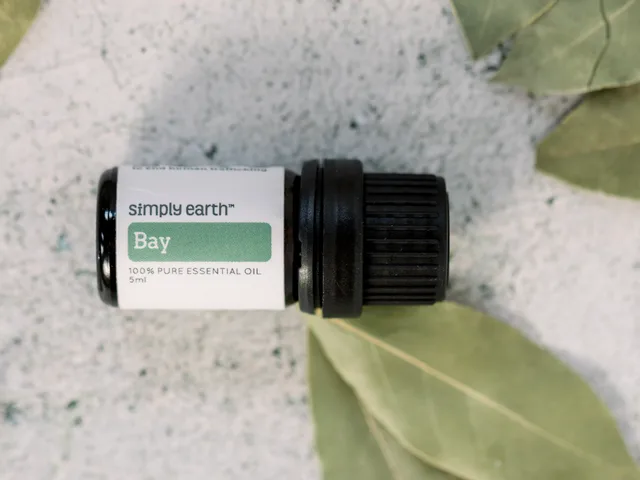
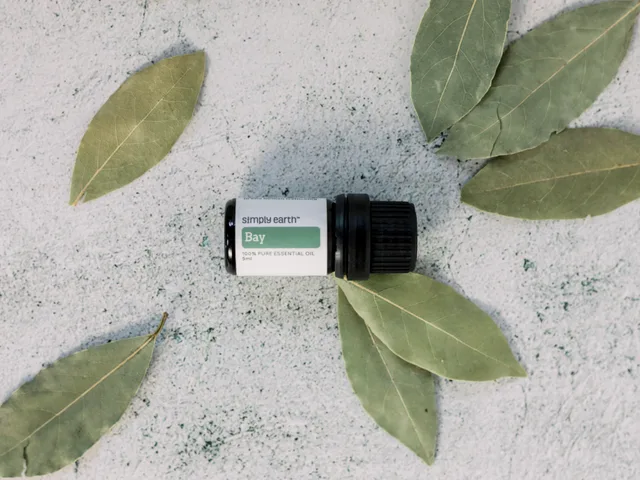
Simply Earth's Bay Essential Oil is steam-distilled from the leaf of Laurus nobilis — bay laurel, the same plant as the dried bay leaf in your spice drawer. It is a thin, clear oil with a sweet, herbal aroma, a top note with a blending factor of 2, which in practice means it announces itself early in a blend rather than sitting underneath it the way a wood or a resin does.
The name is where the trouble starts, because "bay" on a label covers more than one plant, and they are not close relatives. Laurus nobilis belongs to the laurel family, Lauraceae. West Indian bay, usually sold as bay rum, is Pimenta racemosa — a member of the myrtle family, related to allspice, and the source of that barbershop aftershave scent. It is typically rich in eugenol, which brings skin-sensitisation cautions that the laurel does not carry in the same way. A third plant, California bay (Umbellularia californica), is sold as bay too, and is a different genus again.
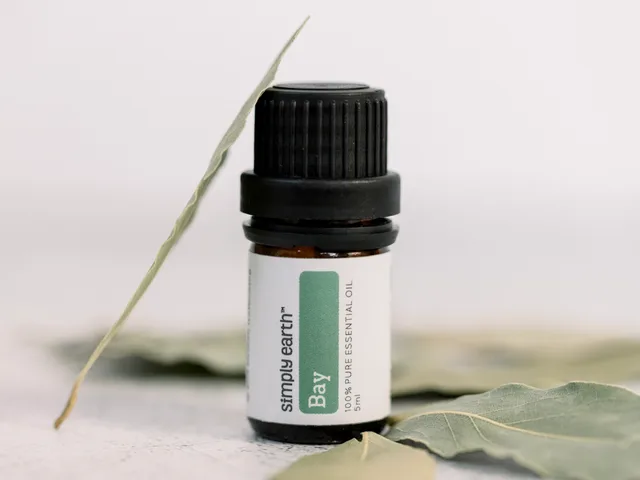
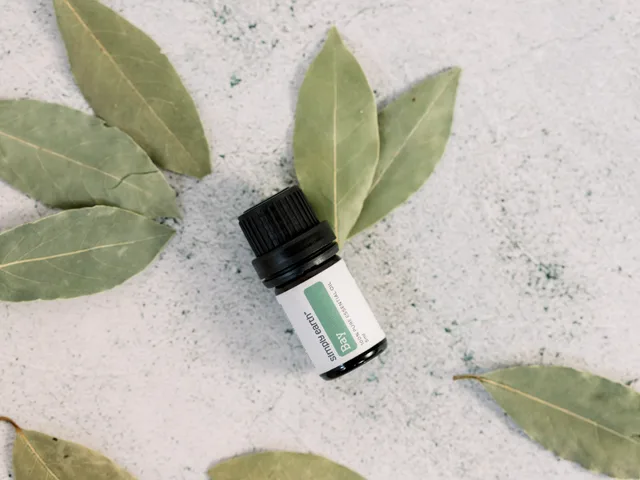
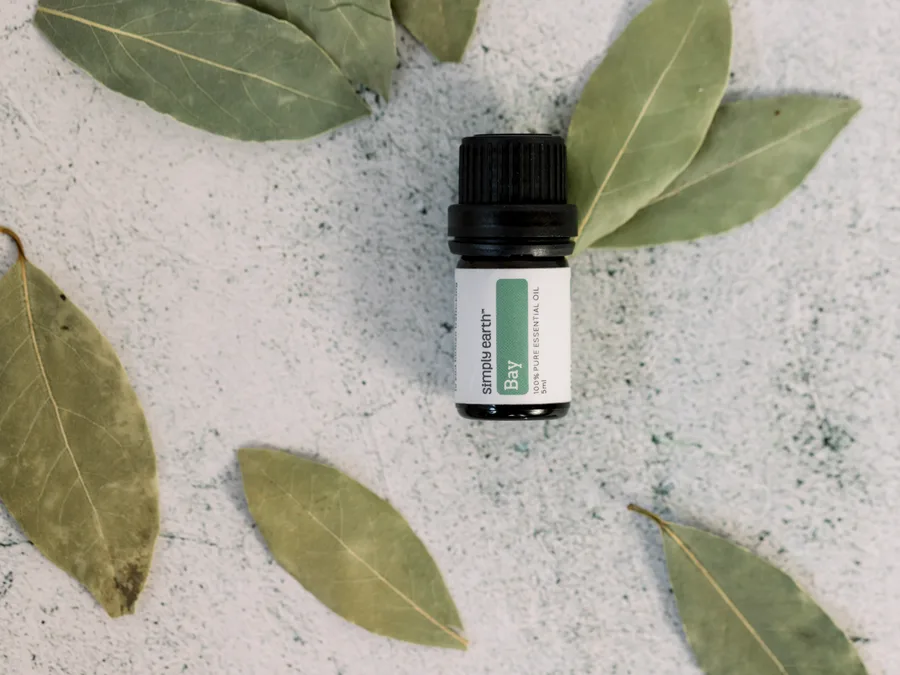
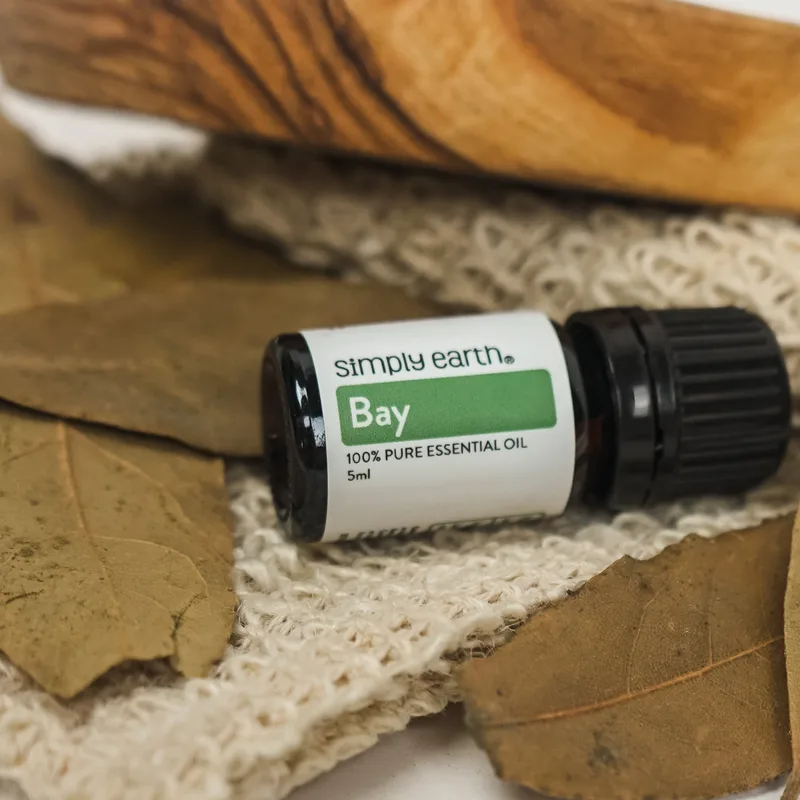
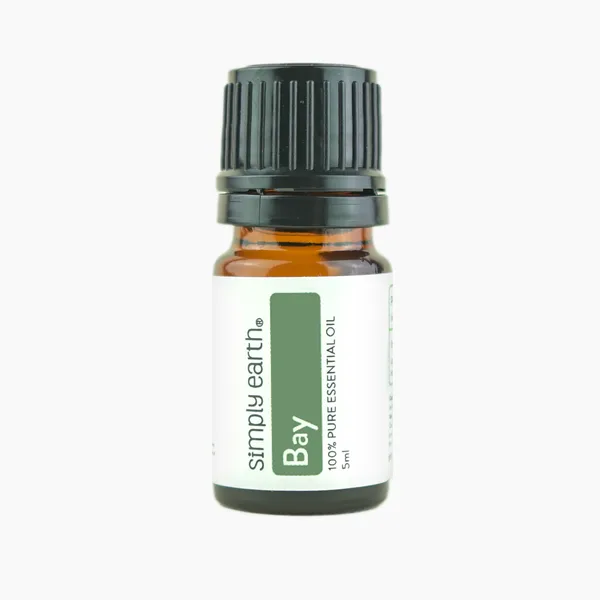
You can tell which one you are holding from the constituent list rather than from the label. Simply Earth publishes ours: 1,8-cineole, α-terpinyl acetate, linalool and sabinene — a cineole-led profile characteristic of laurel, not the eugenol-dominant profile of Pimenta. Every bottle ships with a batch-specific GC/MS report, which is the document that tells you what is genuinely in the bottle you were sent. Bay comes in a 5mL bottle rather than the 15mL most of the range is sold in.
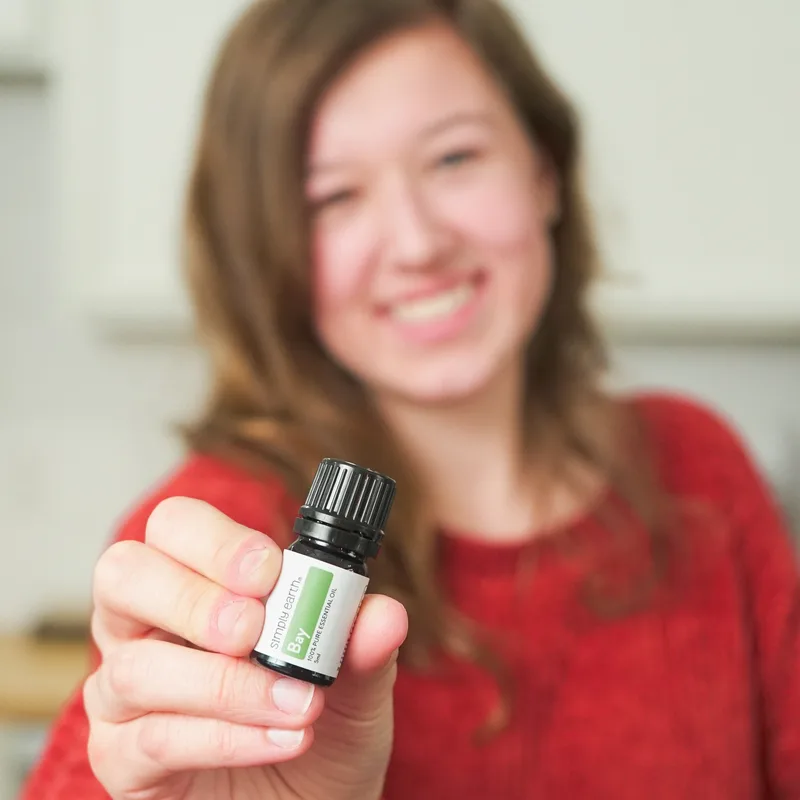
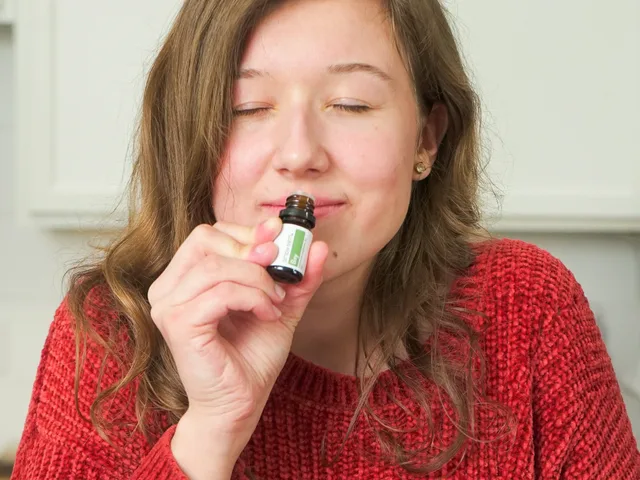
BEST FOR: DIFFUSER BLENDS & QUIET MOMENTS
Centering is the first use Simply Earth lists for this oil, and it is the one our older article left out entirely. Bay sits in an unusual spot among the settling oils — herbal and lightly sweet rather than floral or woody, so it steadies a room without making it smell like a spa. As a top note with a blending factor of 2 it arrives quickly, which makes it a better choice for a short deliberate reset than for something you run all evening. Our own product notes describe it as uplifting and energising, and as an oil that can promote confidence.
KATIE'S TIP
One drop is genuinely enough in a diffuser blend — that is what our own September Stroll recipe uses. Bay is assertive, and the mistake people make is treating it like a citrus.
USE IT IN

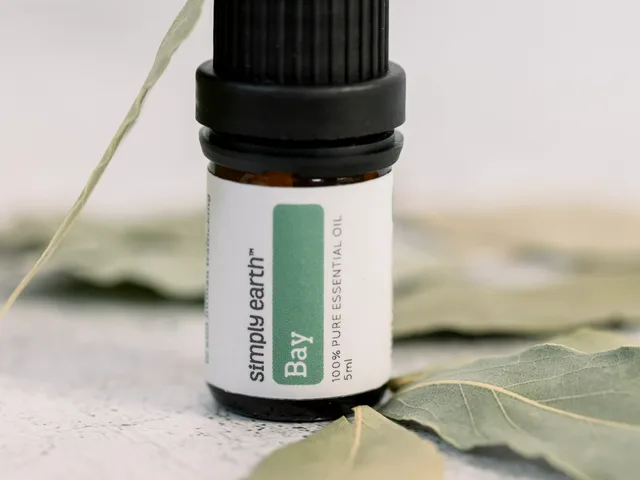
BEST FOR: DIFFUSING FOR ADULTS
Supporting respiration is on Simply Earth's list for this oil, and of the seven it is the one most consistent with what is actually in the bottle — 1,8-cineole is the first constituent we publish for bay, and it is the same compound that leads eucalyptus. That is a fact about the chemistry rather than a promise about an outcome. One caution matters more here than anywhere else on this page, and it is ours rather than a generic one — do not diffuse this oil around children under 10, because our own safety notes say it could cause problems with breathing. This is an adults-in-the-room oil.
KATIE'S TIP
Pair it with Eucalyptus (Globulus) or Fir Needle — both are on our own blending list for bay, and both push it in the same direction.
USE IT IN
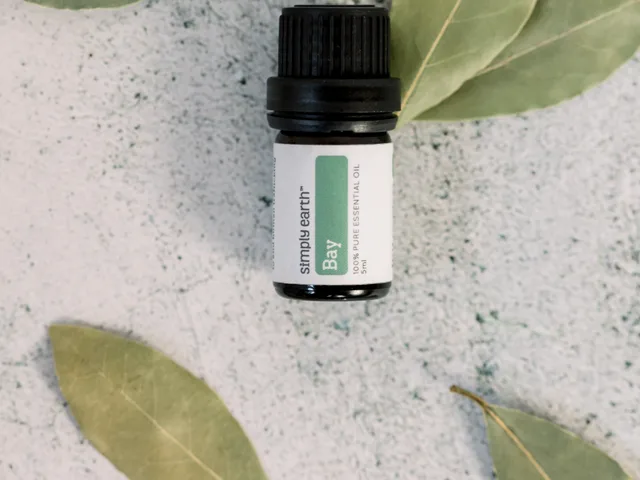
BEST FOR: PRE-WASH SCALP OILS & SOAPS
Soothing the scalp is the use that separates bay from the other herbaceous oils, and it is why bay turned up in Simply Earth's May 2026 Hair Care Recipe Box. Treat it as a diluted, rinse-out step rather than anything you leave in — and on this oil that means genuinely diluted, because our maximum is 0.5%, several times stricter than most of the range. Massage it in, leave it briefly, wash it out. We are not claiming it grows hair; the honest version is the one we publish, which is that it soothes the scalp.
KATIE'S TIP
At 0.5% you get roughly 1 drop per 2 teaspoons of carrier oil. Measure it rather than eyeballing it — this is not an oil where a generous pour is a harmless mistake.


BEST FOR: DILUTED MASSAGE & BODY BLENDS
Promoting circulation is on our published list for bay, and it is why it appears in warming body recipes rather than only in diffuser blends. There is a specific caution attached to this one that you should read before using it that way — Simply Earth's own cautions for bay note that this oil could inhibit blood clotting. If you take an anticoagulant, have a clotting condition, or have surgery coming up, this is an oil to raise with your doctor rather than one to experiment with.
KATIE'S TIP
Keep bay to a small fraction of a massage blend and let a carrier and a gentler oil do the volume. Cypress is on our blending list and is the natural partner here.
USE IT IN
BEST FOR: DILUTED TUMMY ROLL-ONS
Aiding digestion is another of the seven uses Simply Earth lists, and bay is in our own Digestive Support Roll-On at 2 drops — a useful illustration of the scale this oil works at. The important words are aromatic or diluted topical. Cooking with a dried bay leaf and using the essential oil are not the same activity — the oil is enormously more concentrated, and we do not recommend ingesting essential oils at all.
KATIE'S TIP
A roll-on is the format that makes sense for this one — you get a controlled dose over a small area, which is exactly what a 0.5% oil wants.
USE IT IN

BEST FOR: SEASONAL DIFFUSER & SOAP BLENDS
This is where honesty matters more than enthusiasm. Simply Earth lists "Promotes Immunity" for bay — note that this is deliberately softer than the "boosts immunity" phrasing our older article used, and softer is the accurate version. Nothing here treats or prevents illness, and no essential oil does. What is true is that bay is a traditional inclusion in seasonal diffuser blends and household soaps, and that it is one of the oils Earthies reach for at that time of year. Take it as a scent-and-ritual claim, not a medical one.
KATIE'S TIP
Bay, Lemon and Rosemary is a clean seasonal trio, and all three are on our own blending list for this oil.
USE IT IN
BEST FOR: KITCHEN DIFFUSING
Rejuvenating appetite is the most unexpected item on Simply Earth's list for bay, and here too our current wording is softer than the older article's "stimulates appetite" — appetite is a physiological process, and we are not claiming to change one. What is easy to believe and easy to test is the aromatic version — bay laurel is a culinary smell before it is anything else, and diffusing it in a kitchen reads as food in a way that a lavender or a citrus simply does not. That association is the honest mechanism here.
KATIE'S TIP
Diffuse it while you cook rather than while you eat. One drop, and let the actual food take over from there.
USE IT IN
Put It to Work
How to Use Bay Essential Oil
Diffuser
- • 1–3 drops — bay is assertive, and our own recipes use 1
- • A top note with a blending factor of 2, so it arrives fast
- • Pairs with Eucalyptus (Globulus), Fir Needle, Lemon or Rosemary
- • Do NOT diffuse around children under 10
- • Neither cat safe nor dog safe — keep pets able to leave the room
Topical (Roller)
- • 0.5% is the maximum dilution — about 1 drop per 2 tsp of carrier oil
- • That is several times stricter than most oils in the range
- • Patch test on the inner arm before the first full use
- • For external use only — avoid contact with eyes
Scalp & Hair
- • Always dilute into a carrier oil, never apply neat
- • A rinse-out pre-wash step, not a leave-in treatment
- • Massage in, leave briefly, then wash it out
Household
- • Handmade soaps — see the Flowers, Spice & Something Nice Soap
- • Sugar scrub bars and other rinse-off bath products
- • Seasonal room blends with Lemon and Rosemary
DIY
- • Roll-ons, such as our Digestive Support Roll-On
- • Diffuser blends, such as the September Stroll Diffuser Blend
- • Keep the total bay content low and let carriers do the volume
Know the Difference
Bay Laurel vs. Bay Rum
This is the single most useful thing to understand before buying an oil labelled "bay", and it is the correction this article exists to make — our own older post never named the species at all. Bay laurel is Laurus nobilis, the Mediterranean tree whose dried leaf goes into soup, and it is what Simply Earth sells. West Indian bay, usually sold as bay rum, is Pimenta racemosa — not a variety of the same plant but a member of a different family altogether, closer to allspice, typically eugenol-rich, and responsible for the old-fashioned aftershave smell many people expect from the word "bay". California bay is Umbellularia californica, a third plant again. They differ in aroma, in chemistry and in safety guidance, so the label alone is not enough: check the botanical name, and check the batch-specific GC/MS report that ships with your bottle.
Swipe to compare →
Bay Laurel The subject of this page | West Indian Bay / Bay Rum A different botanical family | California Bay A different genus again | |
|---|---|---|---|
| Botanical Name | Laurus nobilis | Pimenta racemosa | Umbellularia californica |
| Plant Family | Lauraceae, the laurel family | Myrtaceae, the myrtle family — related to allspice | Lauraceae, but a different genus |
| Also Sold As | Bay, Bay Laurel, Sweet Bay, Laurel Leaf | Bay Rum, West Indian Bay, Bay Oil | California Laurel, Oregon Myrtle, Pepperwood |
| Plant Part | Leaf | Leaf | Leaf |
| Aroma | Sweet and herbal — the culinary bay leaf | Spicy and clove-like — the barbershop aftershave note | Sharp and camphoraceous |
| Main Constituents | 1,8-cineole, α-terpinyl acetate, linalool, sabinene | Typically eugenol-rich | Typically umbellulone-rich |
| Typically Used For | Diffusing, scalp care, soaps, roll-ons and massage blends | Aftershaves, colognes and hair tonics | Rarely used in aromatherapy |
| Kid Safe | From age 10, and never diffused around under-10s | N/A — not currently sold | N/A — not currently sold |
| Pregnancy & Breastfeeding | No — Simply Earth lists this oil as unsafe for both | N/A — not currently sold | N/A — not currently sold |
| Cat & Dog Safe | Neither — not cat safe and not dog safe | N/A — not currently sold | N/A — not currently sold |
| Max Dilution | 0.5% | N/A — not currently sold | N/A — not currently sold |
| Sold by Simply Earth | Yes, 5mL | Not currently sold | Not currently sold |
| Simply Earth | This page's oil | — | — |
Perfect Pairs
Bay Essential Oil Blends Well With…
Simply Earth's own blending list for this oil. It is a strikingly green, coniferous set — no florals and no spices — which tells you where bay naturally belongs. Bay is a top note with a blending factor of 2, so give it something with more staying power underneath: Cypress and Fir Needle are the easiest places to start, and Lemon is the one to reach for in a bright seasonal blend.
The Victor's Crown
History of Bay Essential Oil
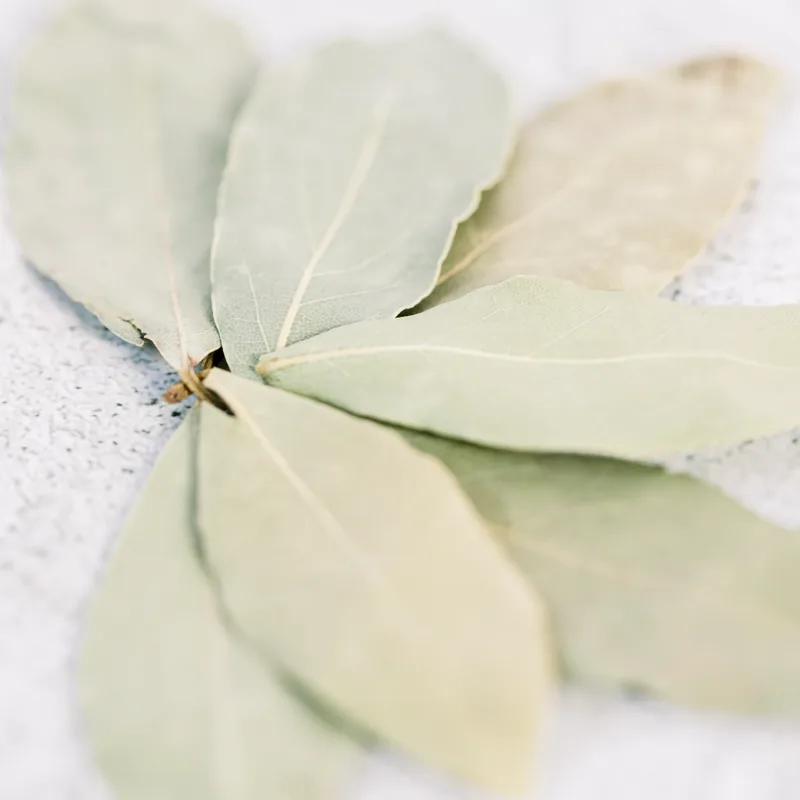
Bay laurel has the best-documented history of any oil in the range, and it is genuinely the history of this species rather than a story borrowed from a neighbour. The laurel wreath was the victor's crown of ancient Greece and Rome — worn by winning athletes, returning generals and honoured poets. Simply Earth's own product notes for this oil record exactly that: the laurel leaf as the wreath that crowned men in ancient Greece and Rome.
The language outlived the empire. "Laureate" — as in poet laureate, or Nobel laureate — comes straight from laurus, the laurel. So does "baccalaureate", from bacca lauri, the laurel berry. When someone rests on their laurels, or goes looking for laurels to win, they are using a two-thousand-year-old image of a bay wreath. Few plants have left that much of themselves inside a language.
It is worth being precise about which bay owns this story, because the other one does not. The laurel wreath, the oracle at Delphi and the word "laureate" all belong to Laurus nobilis, the Mediterranean tree in this bottle. Bay rum — Pimenta racemosa — has a real and quite separate history in the Caribbean, where the leaves were distilled with rum into a cologne that became a barbershop staple. Both stories are true; only one of them is this oil's. The essential oil itself is a far more recent thing than either: steam distillation is what turns a cooking leaf into the concentrate on this page, and that concentration is exactly why the safety section below matters.
The Chemistry
What's the Science Behind This Oil?
Four naturally occurring compounds account for bay's character — and on this oil the constituent list does double duty, because it is also how you tell bay laurel from bay rum. These describe the compounds, not effects on people:
1,8-Cineole
Fresh · Camphoraceous · Widely studied
The first constituent on Simply Earth's own list for bay, and also the compound that identifies the species — a cineole-led profile is characteristic of bay laurel, whereas the West Indian bay it gets confused with is typically dominated by eugenol instead. It is the same major compound that leads eucalyptus, and it accounts for the clean, opening freshness underneath bay's sweeter herbal character. This describes the compound, not an effect on a person.
α-Terpinyl Acetate
Sweet · Herbal · Fruity edge
The second on our list, and the one that most explains why bay smells sweet rather than purely medicinal. An ester found across a range of aromatic plants, it softens the cineole and gives the oil the rounded, slightly fruity herbal note that reads as culinary rather than clinical. It is a large part of the reason bay laurel and bay rum smell nothing alike.
Linalool
Floral · Green · Extremely common
The third constituent we publish for bay, and the one it shares with lavender, clary sage and bergamot. A naturally occurring terpene alcohol found in a great many flowers and spice plants, it is among the most common fragrance compounds in the world, and it adds a faintly floral lift at the edge of bay's green sharpness.
Sabinene
Woody · Peppery · Structural
The fourth on our list — and the one our older article left out, which is why it is here now. A bicyclic monoterpene also found in black pepper, juniper and nutmeg, it contributes a dry, peppery, faintly woody edge that keeps bay from tipping over into sweetness. These are facts about the compounds themselves, from the chemistry literature, rather than claims about what this product does.
Simply Earth's Bay Essential Oil is steam-distilled from the leaf of Laurus nobilis, grown in Crete. Batch-specific GC/MS reports are available with every bottle — and on an oil whose name is shared by plants from two different botanical families, that report is the only thing that confirms what is actually in the bottle you were sent. We never blend our oils with synthetic fragrance, fillers or extenders. See Our Testing →
Support The Source
How Simply Earth Sources Bay
Simply Earth's product record for this oil names Crete as the origin — which is about as close to the plant's home as an origin gets. Laurus nobilis is native to the Mediterranean basin, and Crete sits in the middle of its natural range rather than at the edge of some transplanted plantation belt. That matters more for bay than for most oils, because the plant it gets confused with is Caribbean: a Mediterranean origin is itself part of the evidence that you are holding the laurel.
The oil is steam-distilled from the leaf, which is the ordinary and appropriate method for an aromatic leaf — there is no solvent step and nothing is extracted chemically. What comes off the still is the aromatic fraction of the leaf itself.
Every bottle is 100% pure, with no fillers, extenders or synthetic fragrance, and ships with a batch-specific GC/MS report. Bay has a 4-year shelf life, longer than the citrus oils, so a 5mL bottle used at 0.5% will last you a long time. 13% of profits go to fighting human trafficking, as they have on every Simply Earth product since the company started.
Crete
Where It's Grown
Steam Distilled
From the Leaf
Every Batch
GC/MS Tested
Use It Right
Things to Remember When Using This Oil
Dilute to 0.5% or less — this is the number that matters most. Simply Earth lists a special maximum dilution of 0.5% for bay, several times stricter than most oils in the range. That is roughly 1 drop per 2 teaspoons of carrier oil. See our dilution chart.
Do not diffuse or use it around children under 10. Simply Earth's own safety note for bay says it could cause problems with breathing in children under 10. This is firmer than a general kid-safety caution — it applies to diffusing in a shared room, not only to topical use.
It could inhibit blood clotting. This is listed in Simply Earth's own cautions for bay. If you take an anticoagulant, have a clotting disorder, or have surgery coming up, talk to your doctor before using this oil.
Not safe during pregnancy. Simply Earth lists bay as not safe to use if you are pregnant. Do not use it, and consult your doctor before using any essential oil in pregnancy.
Not safe while breastfeeding. Listed as not breastfeeding safe. Take that at face value and choose a different oil.
For kids age 10 and over only. Bay is not one of the gentle oils — much of the kid-safe range starts at age 2. Dilute conservatively even then, and keep bottles out of reach.
Not cat safe and not dog safe. Simply Earth lists bay as unsafe around both. Keep it away from pets and from the surfaces they use, make sure animals can always leave the room, and never apply essential oils directly to an animal.
Not phototoxic. Simply Earth lists this oil as sun safe, so there is no sun-exposure restriction the way there is with the citrus oils.
May irritate some skin — patch test first. For external use only, and avoid contact with the eyes. Oil that has oxidised after being left with the cap off is more likely to irritate. If contact happens, flush with a carrier oil rather than water.
Never ingest it. We do not recommend ingesting essential oils. Cooking with a dried bay leaf is not remotely the same thing as using this concentrate.
Store cool, dark and tightly capped. Simply Earth lists a 4-year shelf life for bay.
These statements have not been evaluated by the Food and Drug Administration. This product is not intended to diagnose, treat, cure, or prevent any disease.
Real Results
What Earthies Are Saying About It
"This oil is so interestingly wonderful! I love it so much. It did not smell exactly how I expected it to, but sometimes that's the beauty in trying new things. It's better than I expected… those craft stores that have the fake plants and potpourri smelling goodies + some pizza/oregano is exactly what this reminds me of."
Julia R.
Website Review • Bay (Laurel Leaf) Essential Oil
"I love diffusing bay leaf essential oil… it is sweet and uplifting. Nice addition to my immunity blend…"
Rochelle S.
Verified Buyer • Bay (Laurel Leaf) Essential Oil
"Small but packs a punch."
Barbara Terrebonne
Verified Buyer • Bay (Laurel Leaf) Essential Oil
OUR SIMPLY PURE PROMISE
What Goes Into Your Products Matters
Certified 100% Pure
No fillers, no synthetics. Just pure oil.
GC/MS Third-Party Tested
Batch-specific reports with every bottle.
Ethically Sourced from Quality Farms
Responsibly harvested. People and planet first.
Crete
Where It's Grown
Native Mediterranean range, per our product record
Steam Distilled
From the Leaf
No solvents, nothing extracted chemically
Public
GC/MS Tests
MLM brands: Rarely
Your Order Changes Lives: 13% of profits fight human trafficking globally.
Bay Essential Oil FAQ
The questions people actually ask about bay — starting with which bay you are holding.
Which bay does Simply Earth sell — bay laurel or bay rum? +
Bay laurel. Ours is Bay (Laurel Leaf) Essential Oil, distilled from the leaf of Laurus nobilis and grown in Crete — the Mediterranean tree whose dried leaf is a cooking staple. We do not sell West Indian bay or bay rum, which is Pimenta racemosa, a member of a different botanical family and the source of the old barbershop aftershave scent. If you are shopping elsewhere, check the botanical name rather than the label.
What is bay essential oil good for? +
Simply Earth lists seven uses for it — centering, promoting immunity, rejuvenating appetite, supporting respiration, aiding digestion, soothing the scalp and promoting circulation. In practice it is a sweet, herbal top-note oil that does its best work in small amounts — diffuser blends, well-diluted roll-ons, rinse-out scalp treatments and handmade soaps.
How much should I dilute bay essential oil? +
This is the most important practical fact about bay. Simply Earth lists a special maximum dilution of 0.5%, several times stricter than most oils in our range — roughly 1 drop per 2 teaspoons of carrier oil. Treat it as a ceiling rather than a target, measure rather than eyeball it, patch test on the inner arm first, and keep it away from your eyes.
Is bay essential oil safe for children? +
Only from age 10, and there is an extra caution that catches people out. Simply Earth's own safety notes say bay should not be diffused or used around children under 10, because it could cause problems with breathing — so this applies to running a diffuser in a shared room, not just to putting it on skin. Much of our kid-safe range starts at age 2; bay is a clear exception.
Is bay essential oil safe during pregnancy? +
No. Simply Earth lists bay essential oil as not safe during pregnancy, and not safe while breastfeeding either. Choose a different oil, and talk to your doctor before using any essential oil in pregnancy.
Is bay essential oil safe around cats and dogs? +
No to both. Simply Earth lists bay as neither cat safe nor dog safe, which is stricter than many oils in the range that are safe around one but not the other. Keep it out of rooms your pets use, off the surfaces they walk across, and never apply an essential oil directly to an animal.
Can I use bay essential oil if I take a blood thinner? +
Talk to your doctor first. Simply Earth's own cautions for bay note that this oil could inhibit blood clotting, so anticoagulant medication, a clotting disorder or upcoming surgery are all good reasons to get medical advice before using it rather than after.
Can I cook with bay essential oil instead of a bay leaf? +
No. It is the same plant, but a dried bay leaf and the essential oil are not interchangeable — the oil is enormously more concentrated, and we do not recommend ingesting essential oils at all. Use the leaf in the pot and the oil in a diffuser or a properly diluted topical blend.

About the Author: Katie Veldkamp
Katie Veldkamp
Certified Aromatherapist · Co-Founder, Simply Earth
Katie Veldkamp is a Certified Aromatherapist and co-founder of Simply Earth. Her mission is to cut through the noise around essential oils so you can use them with confidence. She personally formulates and reviews SE's essential oil blends and verifies all benefit claims on Simply Earth content before it goes live.
Join 20,000+ Earthies Making Their Homes Natural
New recipes, usage guides, and DIY tips — delivered free.
No spam. Unsubscribe any time.

Learn by doing
Make your own natural products every month.
The Simply Earth Recipe Box ships 4 full-size essential oils, 6 natural recipes, and everything you need to make them. No guesswork.
Start My Recipe Box$39.99 for your first box, then $49.99/month. Skip, pause, or cancel anytime.