Start Your DIY Journey – 20% Off + FREE Shipping

Simply Earth

How to Make Natural Foundation at Home: 6 Shades, Liquid or Pressed

Katie Veldkamp

Katie Veldkamp

Lead Certified Aromatherapist

Fact Checked & Approved

Nov 19, 2026 9 min read
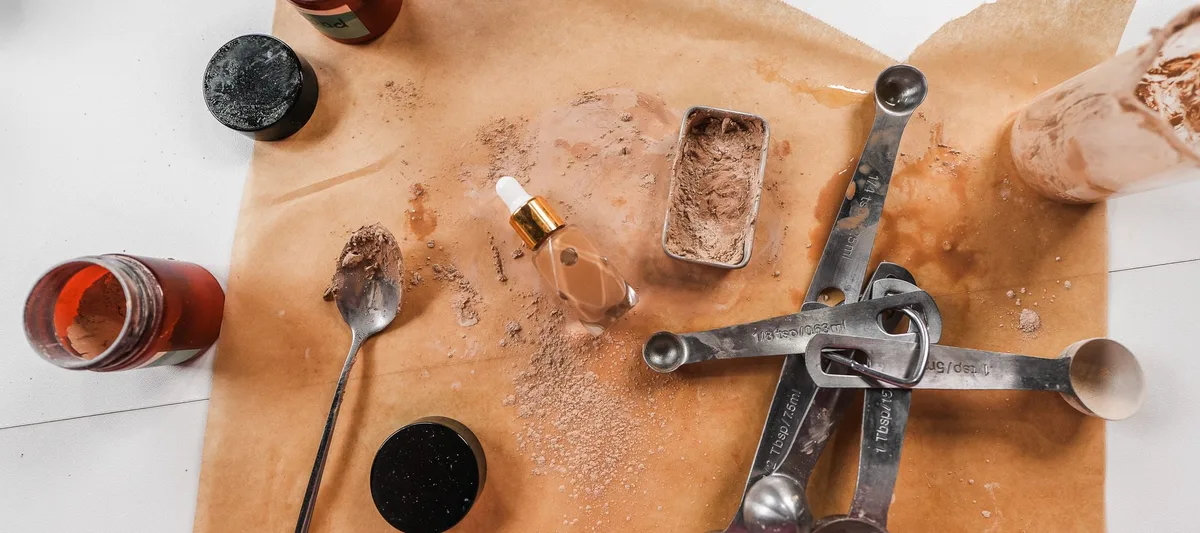
Homemade natural foundation, liquid in a dropper bottle and pressed powder in a tin, with Jojoba Oil and pigment jars on parchment

This natural foundation recipe started as a string of failed experiments. My cream versions separated, went chunky, or fell apart once the pigments went in. What finally worked was the simplest option: a custom pigment blend mixed with Jojoba Oil. It goes on light, feels gentle on sensitive skin, and gives a dewy finish. Press the same blend into a tin and you have a matching powder to build coverage and cut shine. Start with one of my six shade blends below and tweak it until it's yours.

Free Cheat Sheet

New to essential oils? Start with the free cheat sheet

Which oil for what, and how much to use. One printable page.

Get It Free

Why This Natural Foundation Works

Simple really is best. Two ingredients give you natural coverage that lets your skin breathe, and one premixed shade works for both a liquid foundation and a pressed powder.

Light and Dewy

Jojoba Oil blends in smoothly for a glowy finish that never feels heavy or cakey.

Your Exact Shade

Iron oxides and ultramarines let you nudge the color warmer, cooler, lighter, or deeper.

Liquid or Pressed

Wear the liquid as a base, then press the same blend into a powder to build coverage and reduce shine.

Gentle on Skin

No fillers you can't pronounce, and it suits sensitive skin.

01

Premixed Pigment Shade

A custom color

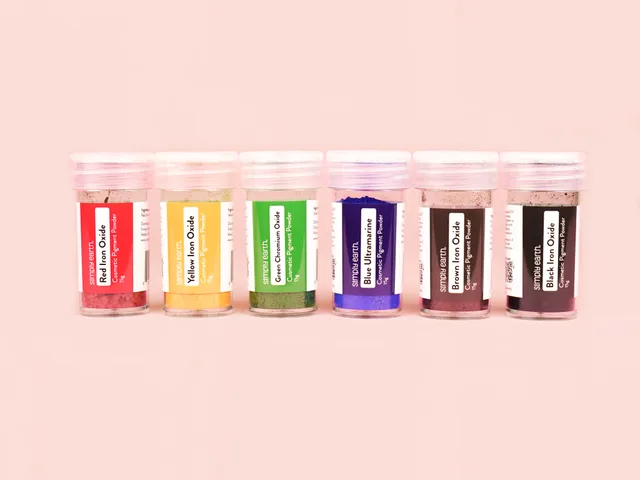
Six Simply Earth pigment powder shakers in red, yellow, green, blue, brown, and black on a pink backgroundShop DIY Mineral Makeup Base

BEST FOR: MATCHING SKIN TONE

The pigment shade is a blend made once and reused. It's DIY Mineral Makeup Base tinted with natural iron oxides and blue ultramarine, plus green chromium oxide and black iron oxide for the deeper shades. Each of the six shade blends below makes a larger batch that keeps in a small jar for many batches of foundation. Each batch uses ½–1 tsp, depending on the coverage wanted.

KATIE'S TIP

Pigments clump, so a coffee grinder kept only for DIY products mixes them best. A pestle and mortar or a spoon works too. Just mix thoroughly.

02

Jojoba Oil

The skin-like base

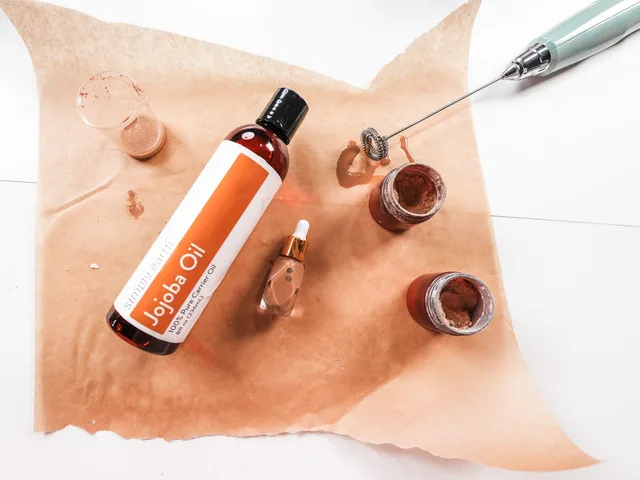
Bottle of Simply Earth Jojoba Oil on parchment beside jars of pigment blend and a small dropper bottleShop Jojoba Oil

BEST FOR: SENSITIVE SKIN THAT DISLIKES HEAVY MAKEUP

Jojoba Oil is lightweight and closely mimics skin's own oils, so it blends in beautifully and won't feel greasy. Four teaspoons turn the pigment shade into a liquid foundation. A pressed powder needs only 4–6 drops, added one at a time.

KATIE'S TIP

For the pressed powder, stop adding drops as soon as the mix holds together like damp sand.

03

Glass Prism Serum Bottle

The foundation bottle

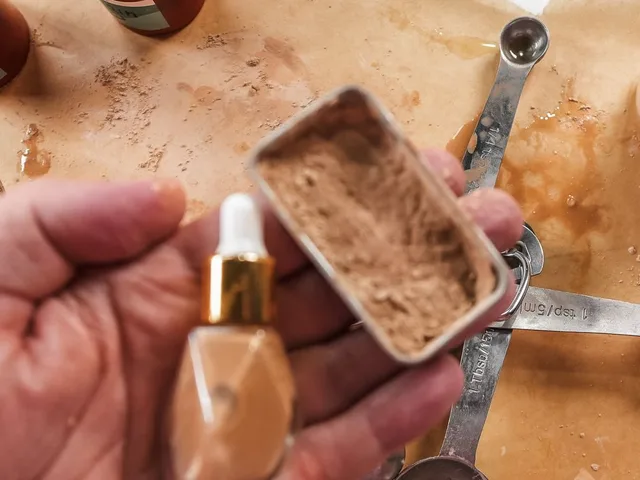
Hand holding a glass prism dropper bottle of liquid foundation and a tin of pressed powder foundationShop Glass Prism Serum Bottle

BEST FOR: STORING AND DISPENSING THE LIQUID FOUNDATION

This glass prism bottle holds the finished liquid foundation, and its dropper makes it easy to put a few drops on fingertips or a sponge. It holds 0.5oz (15mL). The recipe makes about 30mL, so one batch fills it with some left over. Store the rest in a second bottle or any clean jar.

KATIE'S TIP

Shake the bottle before every use. The pigments settle in the oil, and a quick shake brings the color back to even.

04

Cosmetic Tin

The pressed powder compact

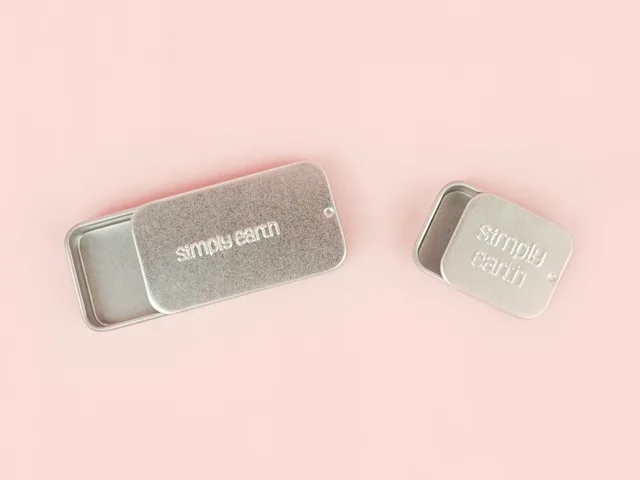
Rectangle and square Simply Earth slide-top cosmetic tins on a pink backgroundShop Cosmetic Tin

BEST FOR: PRESSING AND CARRYING THE POWDER FOUNDATION

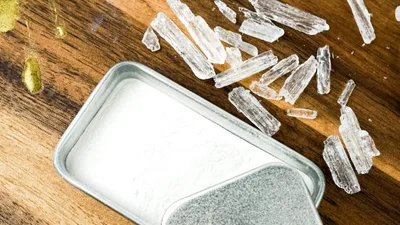
This slide-top tin is where the pressed powder sets and stays. The square tin holds 8mL (0.25oz), enough for one pressed batch of 1 tsp pigment blend. The rectangle tin holds 15mL (0.5oz) for a larger compact. The lid slides shut, so it travels in a bag without spilling.

KATIE'S TIP

Leave the lid off for the full 24 hours while the powder sets, then slide it closed.

Natural Foundation Recipe

30mL

Makes

Liquid foundation

30 min

Ready in

Pressed powder sets 24 hrs

7

Ingredients

Including tools

Kids over 2: YesPregnancy & nursing: YesCats & dogs: N/A · no essential oil
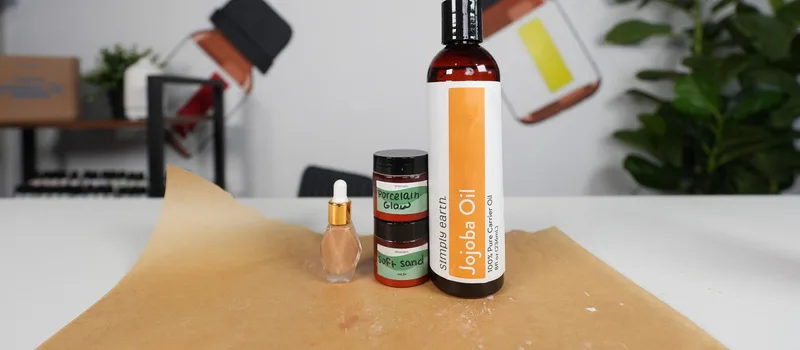
Simply Earth Jojoba Oil beside a dropper bottle of homemade liquid foundation and two jars of premixed pigment shades
Pin

DIY Natural Liquid Foundation

Ingredients

Get Ingredients in the Recipe Box

Directions

  1. 1Choose your shade. Pick one of our 6 shade blends (see shade guide), or create your own using pigment powders and DIY Mineral Makeup Base. Wear a mask while blending—these powders are ultra-fine and easy to inhale. Mix thoroughly for an even color. Sift or blend to remove clumps. Once you're happy with the color, store it in a small jar. You'll use ¼–1 tsp of this blend in your recipe depending on your desired coverage.
  2. 2To make a liquid foundation: In a small liquid measuring cup, mix together your Jojoba Oil and pigment shade. Light/sheer coverage: start with ½ tsp pigment blend. Medium coverage: ¾ tsp. Fuller coverage: try 1 tsp, but test it—too much pigment can make it cakey or streaky. Pour your mixture into a container. To use, shake the bottle, then apply to skin and blend.
  3. 3To make a pressed powder: Mix 1 tsp premixed pigment blend with Jojoba Oil one drop at a time, until it holds together when pressed (like damp sand). Spoon into a clean tin. Press firmly with the back of a spoon until smooth and flat. Let sit uncovered for 24 hours to set. Use a brush to apply.
Find Your Shade

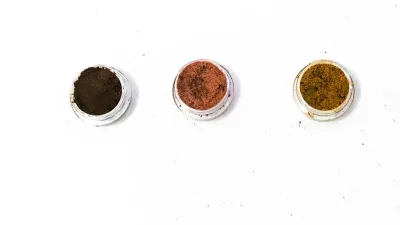
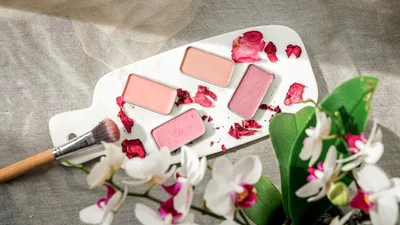
Each shade is the pigments below plus 2½ tsp (6g) DIY Mineral Makeup Base. Mix one, test it on your jawline in natural light, then tweak it.

ShadePigments (each with 2½ tsp (6g) DIY Mineral Makeup Base)Best for
1: Porcelain Glow1/8 tsp (0.5g) Yellow Iron Oxide · 1/32 tsp (0.1g) Red Iron Oxide · 1/32 tsp (0.087g) Blue UltramarineCool-to-neutral fair skin with pink or ivory undertones that burns easily
2: Soft Sand¼ tsp (1g) Yellow Iron Oxide · 1/16 tsp (0.2g) Red Iron Oxide · 1/16 tsp (0.175g) Blue UltramarineLight, neutral skin with subtle warmth
3: Warm Linen½ tsp (2g) Yellow Iron Oxide · 1/8 tsp (0.4g) Red Iron Oxide · 1/8 tsp (0.35g) Blue UltramarineLight-to-medium skin with golden or olive undertones
4: Golden Almond½ tsp (2g) Yellow Iron Oxide · ¼ tsp (0.8g) Red Iron Oxide · ⅛ tsp (0.35g) Blue Ultramarine · ⅛ tsp (0.35g) Green Chromium OxideWarm medium-tan skin with golden, olive, or warm undertones
5: Amber Bronze¾ tsp (3g) Yellow Iron Oxide · ½ tsp (1.6g) Red Iron Oxide · ¼ tsp (0.7g) Blue Ultramarine · ¼ tsp (0.7g) Green Chromium Oxide · 1/8 tsp (0.175g) Black Iron OxideRich tan skin with golden or neutral undertones
6: Rich Mocha¾ tsp (3g) Yellow Iron Oxide · ½ tsp (1.6g) Red Iron Oxide · ¼ tsp (0.7g) Blue Ultramarine · ¼ tsp (0.7g) Green Chromium Oxide · ¼ tsp (0.35g) Black Iron OxideDeep, warm skin with golden or neutral undertones

How to Tweak Your Shade

Every skin tone is a little different, so treat these six blends as starting points. Add pigment a pinch at a time and test again between each change.

Porcelain Glow: For more yellow tone, add a pinch more yellow iron oxide. For pink or rosy, add a tiny bit more red iron oxide. Too cool or muted? Reduce the blue ultramarine slightly. Too dark or heavy? Add a touch of base without pigment or white mica.

Soft Sand: For golden or yellow, add a tiny bit more yellow. For cool or pink, add a pinch more red. Dull or gray? Reduce the blue slightly. For brighter or lighter, add white mica or base without pigment.

Warm Linen: For golden or yellow, add a pinch more yellow. For rosy or neutral, add a bit more red. Too muted or cool? Remove or reduce the blue. Too warm or olive? Add a touch of red and a drop of base without pigment.

Golden Almond: For more olive, add a touch more green chromium oxide. For warmer or golden, add more yellow. For more balance or richness, add a bit more red. Gray or dull? Reduce the blue. Too dark? Add base without pigment or white mica.

Amber Bronze: For golden or peach, add a touch more yellow or red. For olive or neutral, increase the green slightly. For more depth, add a pinch more black. Muted or flat? Reduce the green and blue slightly. Too dark? Add base or white mica.

Rich Mocha: For warm golden or red, add more red or yellow. For neutral or olive, add a bit more green. Deeper? Add a touch more black. Cool or muted? Reduce the blue or green slightly. Too dark? Add base or white mica.

Mix two shades: Combining shades is an easy way to follow your skin through the year. My summer mix is half Porcelain Glow and half Soft Sand. In winter, it's ¾ Porcelain Glow and ¼ Soft Sand.

How to Store Your Natural Foundation

Keep the liquid foundation capped in a cool, dry place, and shake it before each use. Keep the pressed powder lidded once it has set.

Shelf life: About 12 months.

Pro tip: Make your shade blend in a big batch and keep it in its own jar. Your next bottle of liquid foundation or a matching pressed powder then takes just a couple of minutes.

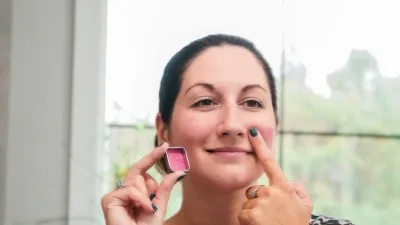
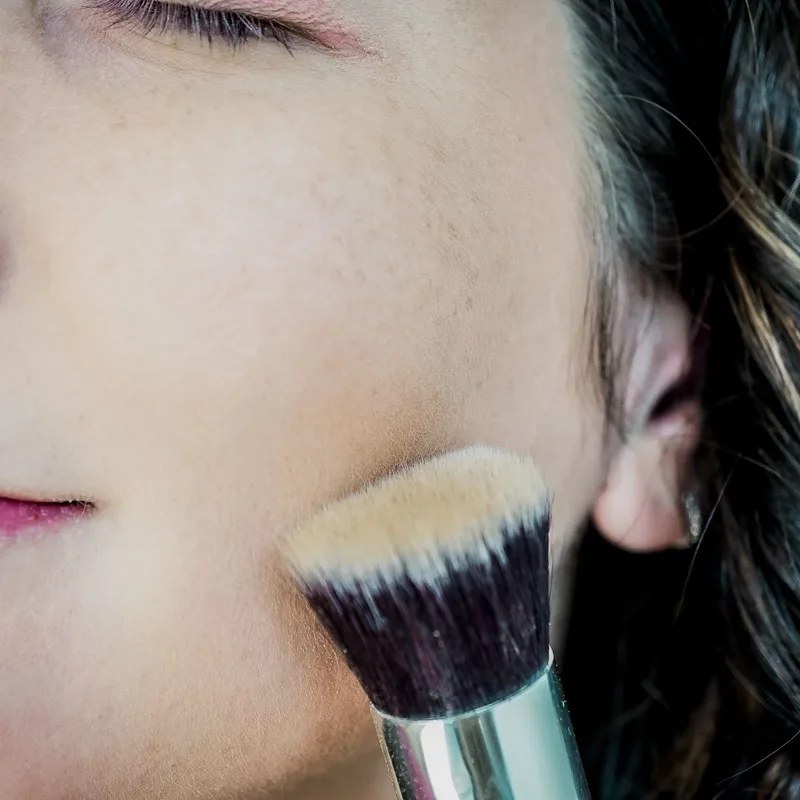
Applying homemade natural foundation to the cheek with a makeup brush

Use It Right

Safety Tips Before You Make Natural Foundation

  • Wear a mask while blending loose pigment powders. They're ultra-fine and easy to inhale.

  • Patch test on your jawline or inner arm before wearing it all over your face.

  • Safe for kids 2 and up, and during pregnancy and breastfeeding.

  • Keep makeup tools and containers clean to keep the foundation fresh.

  • Not for eating.

  • These statements have not been evaluated by the Food and Drug Administration. This product is not intended to diagnose, treat, cure, or prevent any disease.

Real Results

What Earthies Are Saying

"The recipe was very easy to complete. A coffee grinder worked best for me, plus a mask. I made the shade "Light." The color was perfect! Most foundations tend to be too orange or pink on me. This was a lovely neutral. I love that the color and lightness/darkness are adjustable. The product amount is generous and will last me a while! It'll save me money and I love that a portion is going to a great cause! I have sensitive skin, normal/dry, with Rosacea. The coverage was perfect and it doesn't dry out my skin. Thanks Simply Earth!"

Laurel

Website Review • DIY Mineral Foundation Recipe

"I am in love with this makeup base! I love that it has so many uses for eyeshadow, bronzer, blush, highlighter, and foundation!! I have used MANY different companies before with makeup and I have such sensitive skin that nothing really works! This base is great for sensitive skin and great for someone wanting a more toxin free life! It is lightweight and so versatile!!"

Mariah B.

Website Review • DIY Mineral Makeup Base

"The DIY Mineral Makeup Base makes creating our own DIY mineral makeup so easy! All we have to do is add pigment or Mica powder, mix it up, add a little almond or jojoba oil if we choose to make it creamy and we're all set. I love knowing that I'm making mineral makeup that is good for mine and my daughter's skin. It can be a bit messy to use so make sure you're in a room where there's not a lot of movement blowing the powder around but it's easy to clean up. We use the mineral makeup base to make eyeshadow, blush, bronzer, foundation, and powder. It's very versatile and a little goes a very long way."

Crystal Martin

Website Review • DIY Mineral Makeup Base

Go Deeper: More DIY Makeup Recipes

Three more natural makeup recipes to make with the same base and pigments.

OUR SIMPLY PURE PROMISE

What Goes Into Your Products Matters

Certified 100% Pure

No fillers, no synthetics. Just pure oil.

GC/MS Third-Party Tested

Every batch independently verified.

Ethically Sourced from Quality Farms

Responsibly harvested. People and planet first.

Your Order Changes Lives: 13% of profits fight human trafficking globally.

Simply Earth farm partners harvesting

Key Takeaways

  • Two ingredients. A premixed pigment shade and Jojoba Oil make a natural liquid foundation.
  • One shade, two forms. The same blend works as a liquid foundation and a pressed powder.
  • Six tested shades. Each one is easy to tweak warmer, cooler, lighter, or deeper.
  • Wear a mask while blending loose powders.
  • Less pigment is more. Too much looks cakey, so start with ½ tsp.

Frequently Asked Questions About Natural Foundation

How do I find my foundation shade? +

Start with the closest of the six shades, test it on your jawline in natural light, and tweak it with a pinch of yellow, red, or blue pigment.

Why did my homemade cream foundation separate? +

Cream bases are tricky once pigments go in. Mixing your pigment blend with Jojoba Oil is far more reliable.

How do I make pressed powder foundation? +

Add Jojoba Oil to 1 tsp of pigment blend one drop at a time until it's like damp sand, press it into a tin, and let it set for 24 hours.

How much pigment should I use in liquid foundation? +

Use ½ tsp for light coverage, ¾ tsp for medium, and up to 1 tsp for fuller coverage. Test it, because too much pigment can look cakey or streaky.

Can I mix two foundation shades? +

Yes. Combining shades is a great way to follow your skin tone from season to season.

How long does homemade foundation last? +

About 12 months. Keep it capped in a cool, dry place and shake the liquid before each use.

About the Author: Katie Veldkamp

Katie Veldkamp

Katie Veldkamp

Certified Aromatherapist · Co-Founder, Simply Earth

✓ NAHA Certified⭐ 50K+ Recipe Box Members📺 125K YouTube Subscribers

Katie Veldkamp is a Certified Aromatherapist and co-founder of Simply Earth. She personally formulates and reviews SE's essential oil blends and verifies all benefit claims on Simply Earth content before it goes live.

Katie Veldkamp holding the Simply Earth Recipe Box

Learn by doing

Make your own natural products every month.

The Simply Earth Recipe Box ships 4 full-size essential oils, 6 natural recipes, and everything you need to make them. No guesswork.

Start My Recipe Box

$39.99 for your first box, then $49.99/month. Skip, pause, or cancel anytime.