
Pine Essential Oil Benefits, Uses & Recipes

Katie Veldkamp
Certified Aromatherapist
Fact Checked & Approved
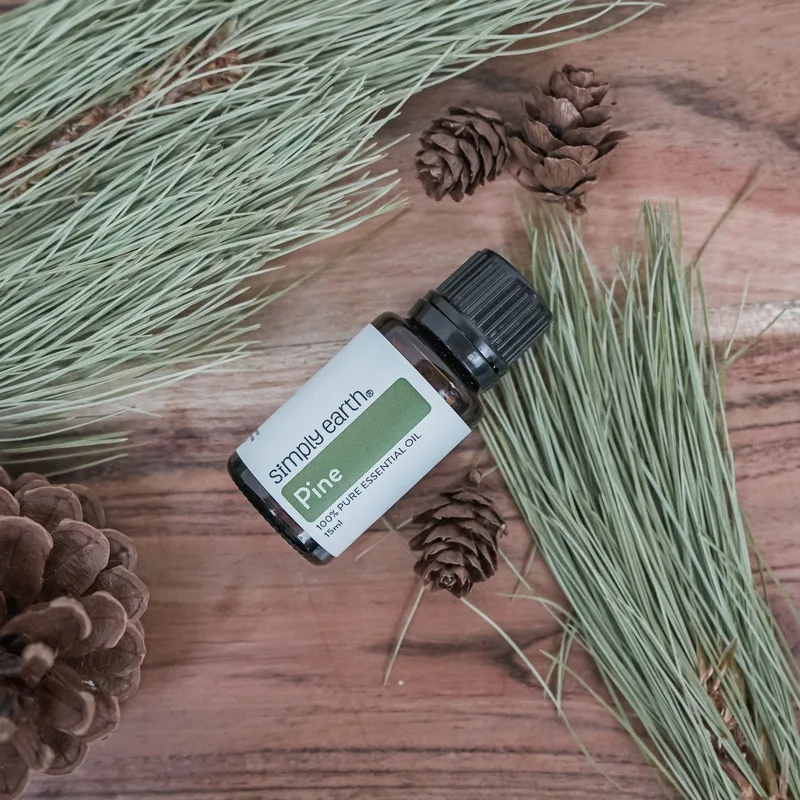
Most people meet pine once a year, in December, and file it under Christmas. That is a shame, because pine is one of the hardest-working cleaning oils on the shelf and it does not care what month it is. Simply Earth's Pine is Pinus sylvestris — Scots pine — steam distilled from needles and twigs grown in Bulgaria. It smells like a cut tree and behaves like a cleaner, which is exactly the combination that makes it worth keeping next to the vinegar rather than with the holiday decorations. Here is what pine actually does, the recipes we use it in, and how it differs from the fir and spruce sitting beside it.
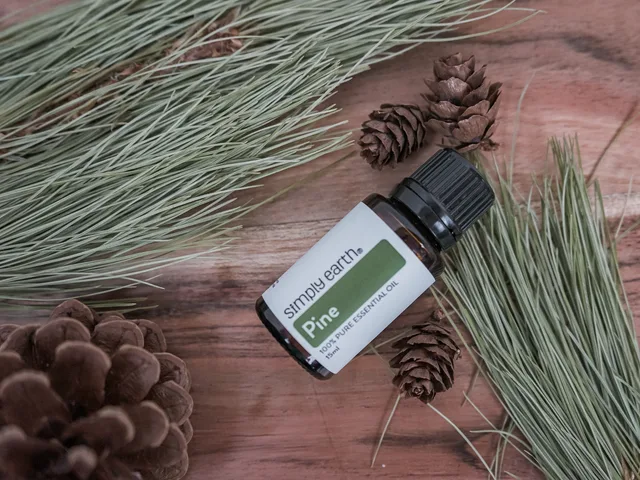
BEST FOR: ALL-PURPOSE SPRAYS, COUNTERS & FLOORS
There is a reason the smell of pine reads as clean to almost everyone — it was the working ingredient in household cleaners long before it was a fragrance in them. Laboratory work on coniferous essential oils has found activity against a range of bacteria and fungi, which is the property that made pine useful in the first place. Swap it into a vinegar-and-water spray and you get the scent and the scrubbing power from the same bottle. Hong et al., 2004
KATIE'S TIP
My rule is 15 drops of pine per 16 oz of spray. Any more and it stops smelling like a forest and starts smelling like a janitor's closet — pine is potent, and restraint is what keeps it pleasant.


BEST FOR: KITCHENS, TRASH CANS & MUSTY ROOMS
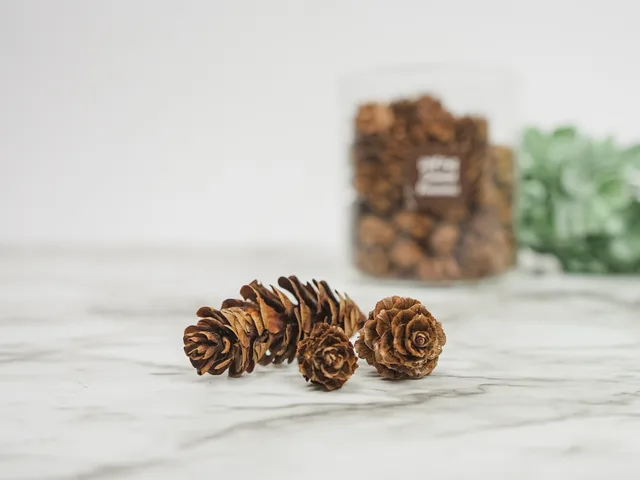
Pine does not mask an odour so much as replace it with something the nose reads as fresh air. Korean research into pine needle oil looked at exactly this use — developing it as a natural deodorant — and it is why a few drops on a cotton pad at the bottom of a bin outperforms most of what you can buy. It is the cheapest fix in the house for a room that smells shut-up.
KATIE'S TIP
Dried pine cones are the most underrated diffuser you own. Ten drops per cone, a lidded jar overnight to let it soak in, then a bowl of them by the door. They keep scenting for weeks and cost nothing.


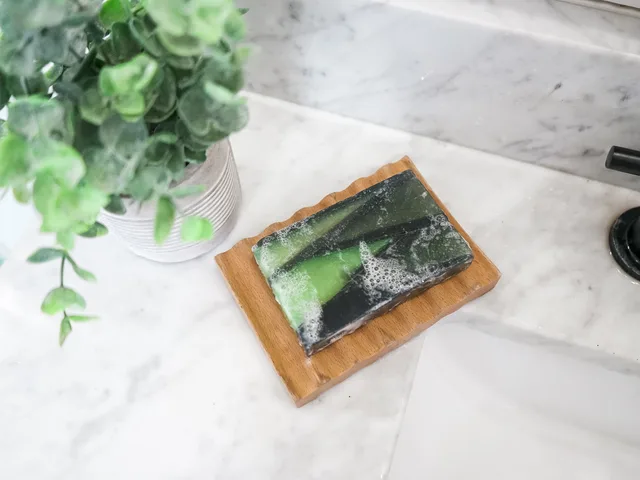
BEST FOR: SOAP, FACE MASKS & BODY WASH
One of the two benefits Simply Earth lists on the bottle itself. The same laboratory activity that makes pine a good surface cleaner is what makes it a reasonable addition to a wash or a mask, at a fraction of the concentration. Keep it under a 5% dilution and treat it as a supporting note rather than the main event — pine is bracing, and skin does not need bracing.
KATIE'S TIP
If you are new to this, start with soap rather than a leave-on product. A melt-and-pour bar rinses off in seconds, so it is a low-stakes way to find out how your skin feels about pine before you commit it to a face oil.


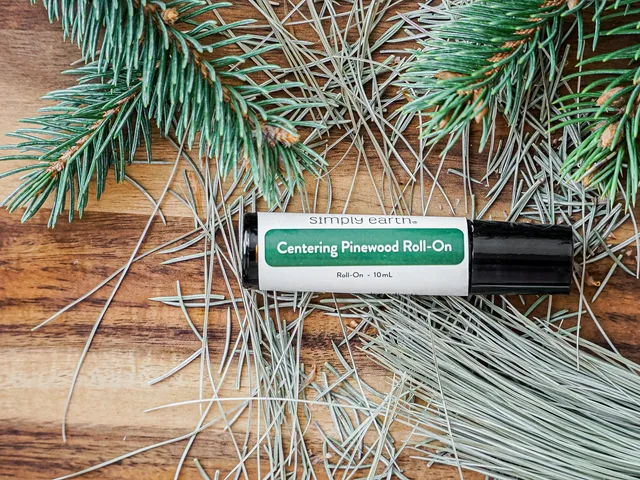
BEST FOR: POST-HIKE & STIFF MORNINGS
Pine carries bornyl acetate, a constituent that has been studied for analgesic and anti-inflammatory effects in volatile oils. That is a fact about the compound rather than a promise about a bottle, and it is the honest version of a claim you will see stated much more confidently elsewhere. In practice pine goes into a roll-on you keep in a coat pocket and use on the joints that complain after a long walk. Wu et al., 2004
KATIE'S TIP
Pair it with a warming oil rather than another evergreen. Pine plus black pepper or ginger in a 2% roller does more for a stiff knee than pine plus fir, which just smells like more forest.


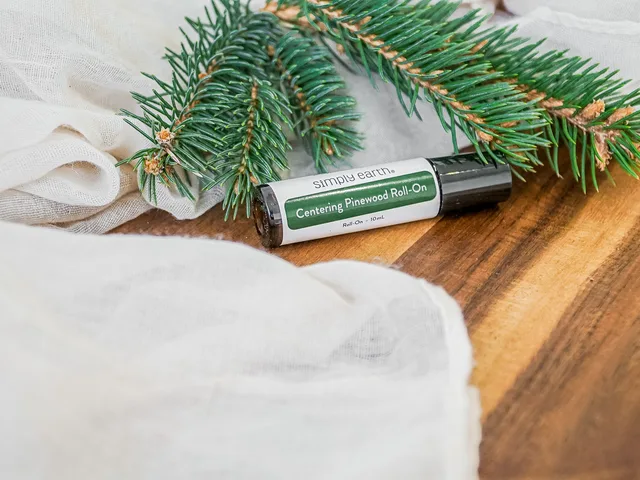
BEST FOR: AFTER THE GYM & DESK TENSION
Same constituent, different application. This is the use our reviewers land on unprompted more than any other — pine turns up in muscle rubs, post-workout rollers and bath blends because a cold, resinous scent suits the job. Dilute it into a carrier and work it in properly; pine is not an oil to dab on and hope.
KATIE'S TIP
Warm bath, one tablespoon of carrier oil, five drops of pine mixed into the oil first. Never straight into the water — it will float, hit one patch of skin at full strength and ruin an otherwise good evening.

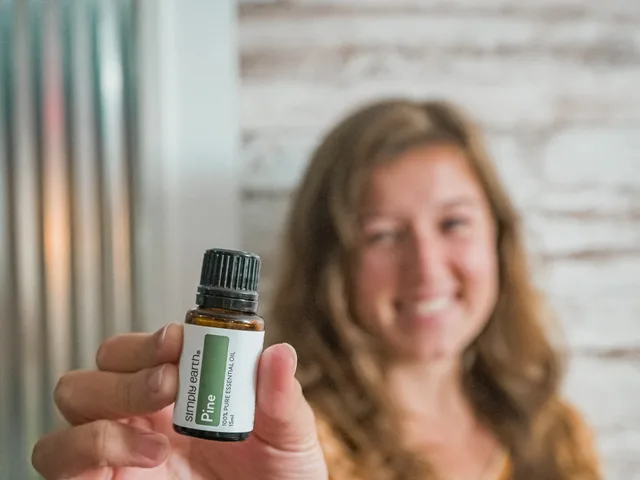
BEST FOR: MONDAY MORNINGS & MIDDAY SLUMPS
Pine's dominant constituent, α-pinene, is described in the chemistry literature as supporting alertness. Whether or not you want to lean on that, the practical version is simpler — pine smells like being outside in cold air, and that is a reliable way to feel less sluggish at a desk at three in the afternoon. It belongs in the diffuser you keep at work, not the one by the bed.
KATIE'S TIP
Two drops of pine to three of sweet orange. Pine alone can feel a bit austere first thing in the morning, and the citrus takes the edge off without making it sweet.


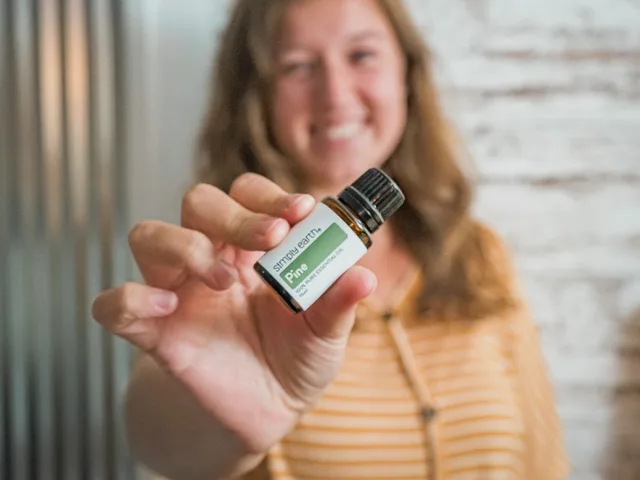
BEST FOR: SHOWER STEAMS & COLD SEASON
This one comes from our own recipe library rather than from a study. We named a recipe Breath of Pine and titled another Breathe Easy with Centering Pinewood Roll-On, and pine is the oil we reach for in the Peppermint & Pine Salve — three separate recipes built around the same instinct. Cold, resinous oils feel clearing in steam, and pine is the cheapest way to find that out. Aromatic use only, and it is not a treatment for anything.
KATIE'S TIP
Do it in the shower rather than a bowl of hot water. Three drops on the floor away from the stream, hot water running, door shut. You get the steam without leaning over a basin, which is the part nobody actually keeps doing.


Put It to Work
How to Use Pine Essential Oil
Diffuser
- • 3–5 drops — pine is potent and a base-heavy room gets tiring fast
- • Blending factor 6, so it holds its own against citrus
- • 30–60 minutes at a time rather than all day
- • Not cat safe or dog safe — give pets a route out of the room
Topical (Roller)
- • 10 ml roller bottle topped with a carrier oil
- • 5% is the maximum dilution Simply Earth lists for this oil
- • Patch test on the inner arm before the first full use
- • External use only — keep it away from the eyes
Household Cleaning
- • 15 drops per 16 oz of a vinegar-and-water spray
- • Add to a shower spray for the tiles and the smell at once
- • A few drops on cotton at the bottom of a bin or hamper
- • Ten drops per dried pine cone for a scent that lasts weeks
Bath & Steam
- • Mix into a tablespoon of carrier oil before it goes near the water
- • 5–6 drops is plenty for a full bath
- • Shower steam — 3 drops on the floor, out of the water's path
- • Never add an undiluted oil straight to bathwater
DIY
- • Soap, body wash, salves and solid lotion bars
- • Roll-ons, room sprays and candles
- • Pairs naturally with charcoal in masks and toothpaste
Know the Difference
Pine vs. Spruce vs. Fir
"Pine" on a label can mean a lot of things, and two of them are not pine. Ours is Scots pine, Pinus sylvestris, and it is the aromatherapy standard — the oil you want if a recipe just says "pine". Black spruce and balsam fir smell adjacent and behave differently, and the table below is the short version of how. Two more warnings worth carrying: we also sell Fir Needle, another distinct oil, and our Alpine Clean is a safer fragrance oil, not an essential oil at all — it smells like a pine forest and contains no pine. If you are buying for a recipe's therapeutic properties, that distinction matters. If you are buying for scent throw in a candle, it may not.
Swipe to compare →
Pine (Scotch) The subject of this page | Organic Black Spruce The softer, rounder evergreen | Organic Balsam Fir The sweet, balsamic one | |
|---|---|---|---|
| Botanical Name | Pinus sylvestris | Picea mariana | Abies balsamea |
| Origin | Bulgaria | Canada | Canada |
| Plant Part | Needles and twigs | Fresh twigs and needles | Needles |
| Aroma | Evergreen and woody, close to natural turpentine | Woody and evergreen, softer than pine | Balsamic and pine-like, noticeably sweeter |
| What We List It For | Cleanses skin and cleans | Soothes respiration and supports joint function | Uplifts and deodorizes |
| Grade | Conventional | USDA + MOSA Certified Organic | USDA + MOSA Certified Organic |
| Blending Factor | 6 | 5 | 6 |
| Kid Safe | Yes, from age 2 | Yes, from age 2 | Yes, from age 2 |
| Cat & Dog Safe | No — the one to watch on this row | Yes | Yes |
| Max Dilution | 5% | 5% | 5% |
| Shelf Life | 3 years | 5 years | 4 years |
| Simply Earth | This page's oil | — | — |
Perfect Pairs
Pine Essential Oil Blends Well With…
Simply Earth's own blending list for this oil. At a blending factor of 6 pine sits in the middle — it will not disappear under a citrus and it will not bulldoze a floral. The two easiest places to start are Eucalyptus for anything clearing and Lavender for anything you want to soften.
Older Than the Cleaning Aisle
History of Pine Essential Oil
Pine is one of the first plants anyone bothered to write down a use for. Hippocrates — the physician the medical oath is named after — studied pine needles, and the tree kept a place in European folk medicine for centuries afterwards. Native to Eurasia, Pinus sylvestris is now grown across much of the world, which is why the same oil turns up under so many different origins.
The older uses were resolutely practical rather than mystical. Pine needles were reportedly used to stuff mattresses, on the understanding that lice and fleas would keep away from them. The ancient Egyptians used pine kernels against bacteria in food and to slow contamination. Neither of those is an aromatherapy tradition; both are early versions of the same observation that put pine into cleaning products two thousand years later.
That continuity is the interesting part of pine's story. Most oils have a heritage of ritual and a modern life in wellness. Pine has a heritage of scrubbing, deodorizing and keeping things from going off — and that is still, honestly, what it is best at.
The Chemistry
What's the Science Behind This Oil?
Three naturally occurring compounds account for most of what pine smells like and most of what it has been studied for. These are facts about the compounds, not claims about what a bottle does to a person:
α-Pinene
The lead constituent
The compound that gives pine its name and most of its smell, found in the oils of many coniferous trees. It is described in the chemistry literature as anti-inflammatory and likely antimicrobial, and as supporting memory and alertness — which is the chemistry behind the Energizes row above.
β-Pinene
Woody · Green · Abundant
A monoterpene with a woody, green, pine-like smell, and one of the most abundant compounds released by forest trees anywhere. When people say a walk in the woods smells like a walk in the woods, this is a large part of what they are actually smelling.
δ-3-Carene
Sweet · Pungent · Damp woodland
The compound that keeps pine from smelling one-dimensional. Its odour is usually described as a mix of fir needles, musky earth and damp woodland, and it is used in the perfume industry and as a chemical intermediate in its own right.
Simply Earth's Pine Essential Oil is steam distilled from the needles and twigs of Pinus sylvestris, grown in Bulgaria. Batch-specific GC/MS reports are available with every bottle, and we never blend our oils with synthetic fragrance, fillers or extenders. See Our Testing →
Support The Source
Where Our Pine Comes From
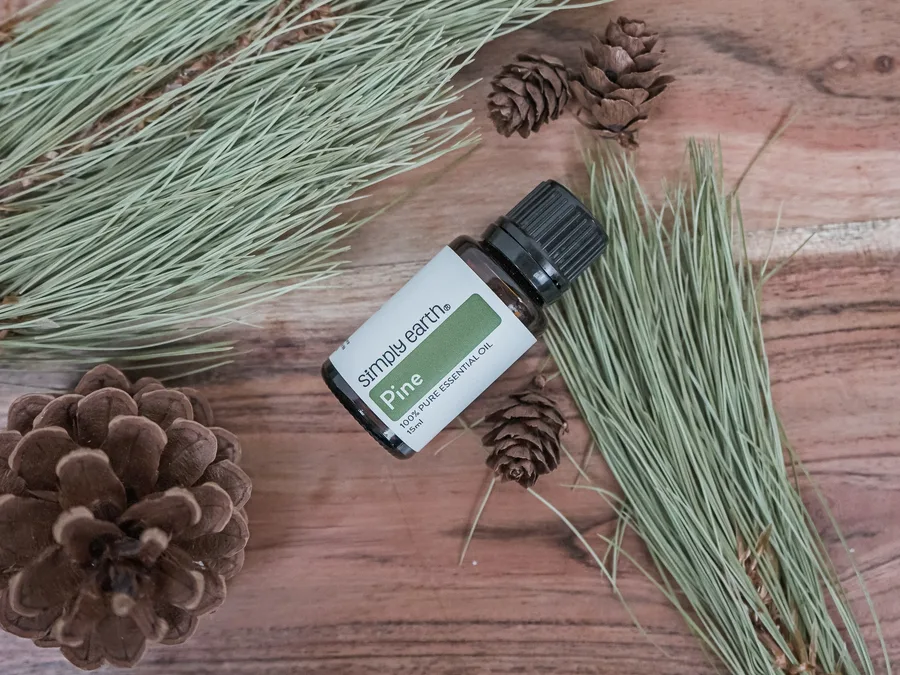
Simply Earth's Pine is grown in Bulgaria and steam distilled from the needles and twigs of Pinus sylvestris — an evergreen conifer that reaches around 35 metres, with cones that are red at pollination. The needles are the point: this is a leaf oil, not a wood or a resin oil, which is why it smells like a living tree rather than a cut one.
That plant part also explains the shorter shelf life. Pine keeps for about three years from opening, against five for our Black Spruce, because needle oils rich in pinenes oxidise more readily than heavier wood oils do. Keep it capped, cool and dark and it will hold; leave the lid off on a windowsill and it will turn, and an oxidised pine is measurably more likely to irritate skin.
Every batch is GC/MS tested and a batch-specific report is available with every bottle. Our oils are bought farm-direct and never blended with fillers or synthetic fragrance — which for pine matters more than most, because "pine scent" is one of the most heavily imitated smells in the world.
Bulgaria
Where It's Grown
Needles & Twigs
What We Distill
Public
GC/MS Results
Use It Right
Things to Remember When Using This Oil
Always dilute before applying to skin. Simply Earth lists a maximum dilution of 5% for this oil. See our dilution chart for how that works out per bottle size.
Not cat safe and not dog safe. This is the one to read twice — most of our evergreens are pet safe and pine is not. Diffuse only where an animal can leave the room, and never apply oils to a pet. Our guide to essential oils and cats and our guide to essential oils and dogs both go into more detail.
Safe to use around children age 2 and up. Still dilute conservatively for children, and keep bottles out of reach.
Pregnancy and breastfeeding — consult your doctor. Simply Earth lists pine as safe for both with medical guidance.
Sun safe. Pine is not phototoxic, so unlike the citrus oils there is no sun-exposure restriction after topical use.
Pine oxidises — this is the big one. Left with the cap off for long periods it is considerably more likely to irritate skin. Shelf life is 3 years from opening, stored cool, dark and tightly capped. If it smells sharp or turpentine-like rather than fresh, replace it rather than putting it on skin.
Patch test first, and go easy. Pine is generally well tolerated when properly diluted, but it is a bracing oil. For external use only, and avoid contact with the eyes — flush with a carrier oil rather than water if that happens.
Never ingest it. We do not recommend ingesting essential oils unless directed by a doctor certified in aromatherapy. Here is why we do not ingest essential oils.
These statements have not been evaluated by the Food and Drug Administration. This product is not intended to diagnose, treat, cure, or prevent any disease.
Real Results
What Earthies Are Saying
"Love the way this smells, just like having pine trees in my living room!!"
Ruth T.
Verified Buyer • Pine Essential Oil
"I have really enjoyed using this oil. It is the perfect compliment to the Muscle Reliever recipe I had found."
Amy H.
Verified Buyer • Pine Essential Oil
"The concentrated, 100% pure Pinus Sylvestris keeps the fragrance of the holiday in your home for the whole year when you diffuse it. You can add a few drops of orange and cinnamon to your diffuser along with the pine to make your house smell like you're baking."
Verified Buyer
Verified Buyer • Pine Essential Oil
OUR SIMPLY PURE PROMISE
What Goes Into Your Products Matters
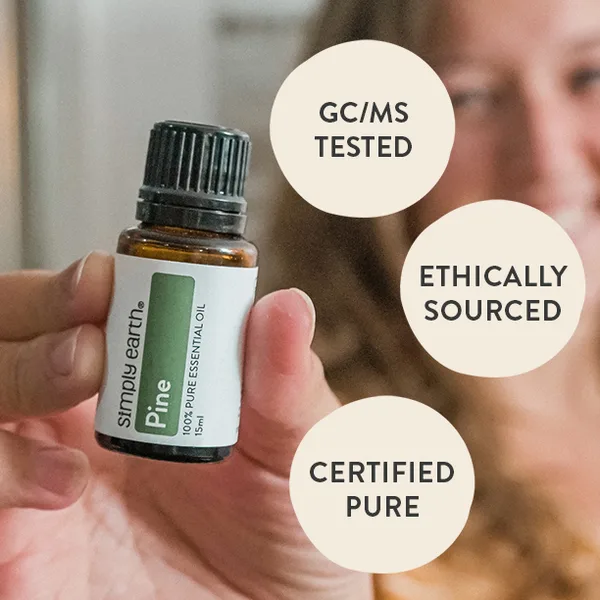
Certified 100% Pure
No fillers, no synthetics. Just pure oil.
GC/MS Third-Party Tested
Every batch independently verified.
Ethically Sourced from Quality Farms
Responsibly harvested. People and planet first.
15mL
Bottle Size
MLM brands: 10mL
$10–16
Per Oil
MLM brands: $25–55+
Public
GC/MS Tests
MLM brands: Rarely
Your Order Changes Lives: 13% of profits fight human trafficking globally.
Pine Essential Oil FAQ
The questions we get asked most about this oil — what it smells like, how it differs from its neighbours on the shelf, and the two safety points that actually matter.
What does pine essential oil smell like? +
Evergreen and woody, with a cold, resinous edge — our own product notes describe it as close to natural turpentine, which is more flattering than it sounds. It is the smell of a freshly cut tree rather than a sweet holiday candle. Straight from the bottle it is sharp; in a diffuser or blended into a product it softens considerably.
Is pine essential oil safe for dogs and cats? +
No. Simply Earth lists pine as neither cat safe nor dog safe, which makes it an exception among our evergreens — black spruce and balsam fir are both listed as safe for pets. Only diffuse pine in a room an animal can leave, never apply it to a pet, and if you want an evergreen scent in a house with animals, reach for spruce or fir instead.
What is the difference between pine, spruce and fir essential oil? +
Three different trees. Pine is Pinus sylvestris from Bulgaria, distilled from needles and twigs, and it is the sharpest and most cleaning-oriented of the three. Black spruce is Picea mariana from Canada, softer, and listed for respiration and joint function. Balsam fir is Abies balsamea, also Canadian, sweeter and balsamic. Pine has the shortest shelf life of the three and is the only one that is not pet safe.
How much pine essential oil should I use in a cleaning spray? +
About 15 drops per 16 oz of a vinegar-and-water spray. Pine is potent and more is not better — past roughly 20 drops it stops reading as fresh and starts reading as industrial. Shake before each use, since the oil will separate out.
Can I put pine essential oil on my skin? +
Yes, diluted. Simply Earth lists a maximum dilution of 5%, and for leave-on products well under that is more comfortable. Patch test on the inner arm first. One caveat specific to pine — an oxidised bottle is considerably more likely to irritate skin, so check that yours still smells fresh before a topical use.
How long does pine essential oil last? +
Three years from opening, stored cool, dark and tightly capped. That is shorter than most of our range because pine is a needle oil rich in pinenes, and those oxidise faster than the compounds in wood or resin oils. A pine that has gone sharp and solvent-like has turned, and belongs in a cleaning spray rather than on skin.
Is Alpine Clean the same as pine essential oil? +
No, and this catches people out. Alpine Clean is one of our Safer Fragrance Oils — it is formulated to smell like a crisp pine forest and it contains no pine essential oil. It is a good choice for candles and soap where you want a reliable scent throw. It is the wrong choice if you are following a recipe for pine's properties rather than its smell.
What blends well with pine essential oil? +
Our own list runs Citronella, Clary Sage, Coriander, Cypress, Eucalyptus, Frankincense, Juniper Berry, Lavender, Myrrh, Rosemary and Tea Tree. In practice, eucalyptus for anything clearing, lavender to soften it, and sweet orange to make it friendlier in a morning diffuser. Pine plus another evergreen mostly just gives you more evergreen.
About the Author: Katie Veldkamp
Katie Veldkamp
Certified Aromatherapist · Co-Founder, Simply Earth
Katie Veldkamp is a Certified Aromatherapist and co-founder of Simply Earth. She personally formulates and reviews SE's essential oil blends and verifies all benefit claims on Simply Earth content before it goes live.
Join 20,000+ Earthies Making Their Homes Natural
New recipes, usage guides, and DIY tips — delivered free.
No spam. Unsubscribe any time.

Learn by doing
Make your own natural products every month.
The Simply Earth Recipe Box ships 4 full-size essential oils, 6 natural recipes, and everything you need to make them. No guesswork.
Start My Recipe Box$39.99 for your first box, then $49.99/month. Skip, pause, or cancel anytime.