
Fennel Essential Oil: Benefits, Uses & Recipes

Katie Veldkamp
Lead Certified Aromatherapist
Fact Checked & Approved
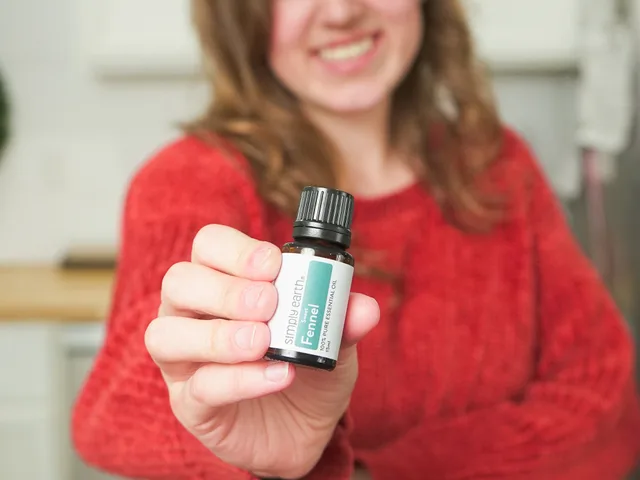
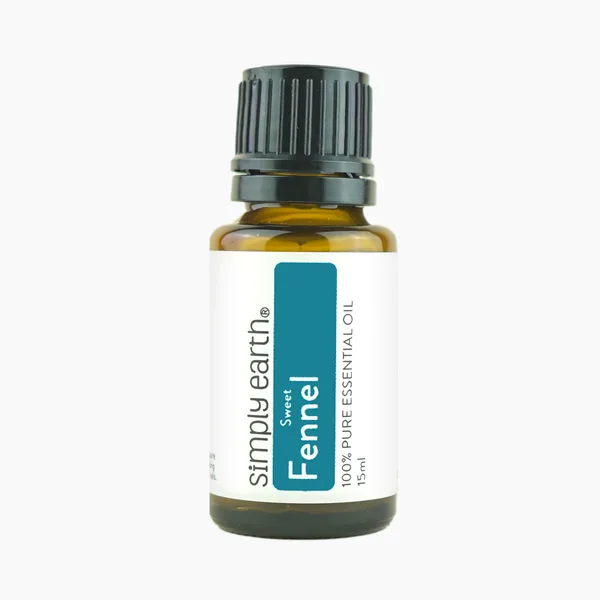
Fennel is the oil people are sure they will hate. It smells like black licorice — properly, unmistakably — and roughly half of everyone has feelings about black licorice. Then they put one drop in a diffuser next to an orange oil and change their minds in about ninety seconds. Simply Earth's is sweet fennel, steam distilled from the seeds of Foeniculum vulgare, and it is a genuinely useful oil rather than a novelty: it is the one to reach for after a heavy meal, the one in the cravings conversation, and one of the most effective cleaning oils in the cabinet. It also has a shorter list of people who should use it than almost any oil we sell — so read the safety section before you buy, not after.
Free Cheat Sheet
New to Essential Oils? Start Here.
Get our free Essential Oil Guide — the safe-use basics, dilution rates, and the oils worth buying first.
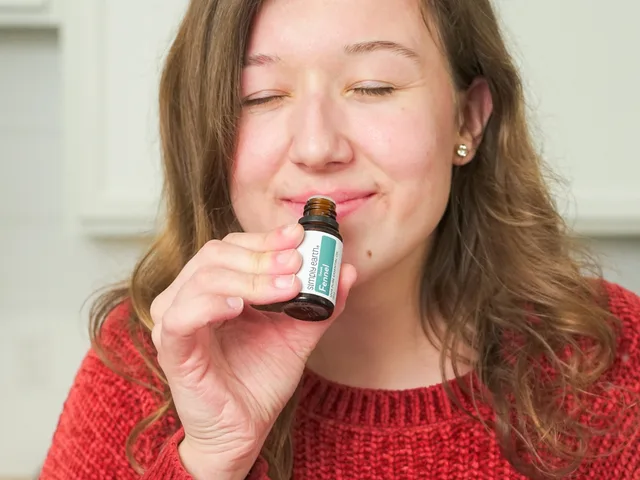
BEST FOR: AFTER-MEAL ROLLERS, TUMMY BLENDS & BLOATING
This is fennel's headline use and the one with the most behind it. A wide-ranging review of Foeniculum vulgare (Badgujar et al., 2014) describes antispasmodic activity that may ease discomfort caused by spasms, and the same review discusses effects on gas and gut motility. That matches how people have used the plant for a very long time — fennel seeds are still handed out after meals in a lot of the world. Simply Earth lists "Aids Digestion" first on the product itself, which is not a coincidence.
KATIE'S TIP
Two drops in a 10ml roller of fractionated coconut oil, rolled onto the stomach and massaged clockwise. Clockwise is the direction the large intestine runs, and it is the detail most people leave out.
USE IT IN →

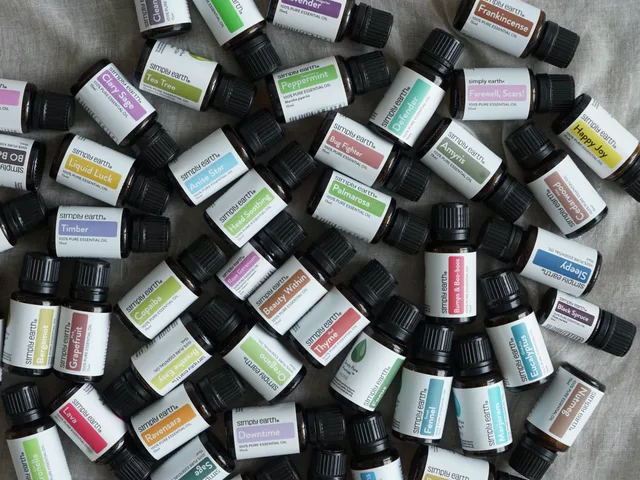
BEST FOR: SEASONAL RESETS, SKIN BLENDS & MORNING DIFFUSING
A study of fennel seed essential oil and extracts published in Flavour and Fragrance Journal (Anwar et al., 2009) found high antioxidant activity with good radical-scavenging behaviour. Worth being plain about what that means: antioxidant activity measured in a lab dish is a property of the oil, not a promise about what happens in your body. It is a good reason to include fennel in a skin blend and a poor reason to expect it to detox anything on its own.
KATIE'S TIP
Pair it with a citrus oil rather than using it alone. Fennel is heavy and sweet, and grapefruit or lemon lifts it into something you actually want to smell all morning.
USE IT IN →

BEST FOR: MONTHLY-CYCLE ROLLERS & WARM COMPRESSES
The same antispasmodic activity behind the digestion row is why fennel turns up in blends for monthly cramps. A review of fennel in women's health (Mahboubi, 2019) gathers clinical work on dysmenorrhea, premenstrual syndrome, amenorrhea, menopause, lactation and polycystic ovary syndrome. That is a genuinely substantial body of research, and it is mostly on fennel taken internally as a herb or extract rather than on the essential oil used aromatically — so treat this as supportive comfort care alongside your doctor, not as a treatment. And read the safety section first: this is exactly the property that makes fennel the wrong oil for some people.
KATIE'S TIP
A warm compress beats a roller here. Two drops in a bowl of warm water, swirl a flannel through it, wring it out and lay it low on the abdomen — heat does half the work.
USE IT IN →

Promotes Hormone Balance
Fennel's estrogen-like activity is real — which cuts both ways.
 Shop This Oil
BEST FOR: MENOPAUSE BLENDS & CYCLE SUPPORT
Fennel is one of the few essential oils with well-documented estrogen-like activity, and the women's health review above is built on exactly that. It is why the oil keeps appearing in menopause and cycle blends. It is also why this is the one benefit on this page that doubles as a warning: an oil that behaves a little like estrogen is an oil to avoid entirely if you are pregnant or breastfeeding, or if you have endometriosis or an estrogen-dependent cancer. Simply Earth's own product record says so plainly, and so do we.
KATIE'S TIP
If any of those apply to you, do not "use it carefully" — use a different oil. Clary sage and geranium cover a lot of the same ground without the estrogenic question.
USE IT IN →
BEST FOR: AFTERNOON DIFFUSING & INHALER STICKS
A 2015 study in overweight Korean women (Bae et al.) found that drinking fennel tea suppressed short-term appetite — lower hunger, lower prospective food consumption, greater fullness. It is a small, short study of fennel tea, not of inhaling the essential oil, so the honest version of this claim is that fennel has a real and interesting appetite signal attached to it and that Earthies find the smell genuinely helps at 3pm. Simply Earth thought it was strong enough to build a whole cravings roundup around, with fennel on it.
KATIE'S TIP
An inhaler stick beats a diffuser for this one, because cravings do not wait until you are in the room with your diffuser. Five drops on the wick, and it lives in a pocket.
USE IT IN →

BEST FOR: SURFACE SPRAYS, BIN CLEANING & KITCHEN BLENDS
The Anwar study that measured fennel's antioxidant activity also tested it against bacteria and pathogenic fungi and found it effective against a range of them. In practice that makes fennel a sensible addition to a kitchen surface spray, where its sweet, clean, faintly aniseed smell does something no citrus oil does. It is not a disinfectant and should not replace one, but as the aromatic half of a vinegar spray it is excellent.
KATIE'S TIP
Fennel is potent and it lingers. In a 16oz surface spray, six drops is plenty — go heavier and your kitchen smells like a liquorice factory for two days.
USE IT IN →
BEST FOR: FACE OILS, CLEANSING BARS & SUGAR SCRUBS
This row is not carried over from the legacy article, which listed six benefits. It comes from Simply Earth's own product record, which lists seven — and "Cleanses Skin" is the one that went missing. It is corroborated by Simply Earth's own benefits graphic for this oil, which names exactly three uses: aids digestion, detoxifies, and cleanses skin. The antimicrobial and antioxidant findings above are the chemistry behind it, and fennel has a long history in homemade face creams, lotions and soaps for exactly this reason.
KATIE'S TIP
Keep it at or below 1% on the face even though the oil's overall limit is 2.5%. Facial skin is thinner, and fennel is a strong oil with a strong smell — a little reads as deliberate, a lot reads as a mistake.
USE IT IN →


Put It to Work
How to Use Fennel Essential Oil
Diffuser
- • 1–2 drops is genuinely enough — fennel is one of the strongest scents we sell
- • Best against a citrus oil — orange and grapefruit are the Earthie favourites
- • A top note with real staying power, so it outlasts the citrus beside it
- • Ventilate the room and never diffuse around cats or dogs
Topical (Roller & Massage)
- • 10ml roller with fractionated coconut oil or jojoba
- • Maximum 2.5% dilution — that is about 7 drops in a 10ml roller
- • Keep to 1% for anything that goes on the face
- • Over the stomach after meals, or low on the abdomen with warmth
Household
- • Around 6 drops in a 16oz vinegar-and-water surface spray
- • Excellent in bins, drains and fridges where a sweet-clean note helps
- • Pairs well with lemon and rosemary in a kitchen blend
DIY & Personal Care
- • Face creams, lotions, shampoos, conditioners and soaps
- • Sugar scrubs and cleansing bars, where the scent survives the process
- • For external and aromatic use only — never add it to food or drink
Know the Difference
Sweet Fennel vs. Bitter Fennel vs. Anise Star
There are two fennels and they share a botanical name, which is the whole problem. Sweet fennel and bitter fennel are both Foeniculum vulgare; they differ by variety and by what ends up in the bottle. Simply Earth sells the sweet one — it is on the label, it is in the folder name, and it is what every reference on this page is about. The other regular mix-up is not a fennel at all: anise star is Illicium verum, a completely unrelated plant that happens to share fennel's leading aromatic compound, which is why the two smell like cousins.
Swipe to compare →
Sweet Fennel Essential Oil The subject of this page | Bitter Fennel Essential Oil The other fennel — we do not sell it | Anise Star Essential Oil A different plant, a similar smell | |
|---|---|---|---|
| Botanical Name | Foeniculum vulgare | Foeniculum vulgare | Illicium verum |
| Plant Family | Apiaceae — the carrot and parsley family | Apiaceae | Schisandraceae — not related at all |
| Plant Part | Seed | Seed | Fruit (the star-shaped pod) |
| Aroma | Sweet, earthy, clean, unmistakably black licorice | Sharper and more medicinal than sweet fennel | Sweeter and more confectionary than fennel |
| Why It Matters | The gentler of the two fennels and the one used in skincare | N/A — not sold by Simply Earth, so we will not describe a bottle we have not tested | Shares the anethole note, which is why the two get confused |
| Sold by Simply Earth | Yes, 15mL | No | Yes |
| Simply Earth | This page's oil | — | — |
Perfect Pairs
Fennel Blends Well With…
The first five are the pairings on Simply Earth's own record for this oil. The rest are not guesses either — they are the oils whose own product records name fennel as a partner, plus the citrus oils Earthies reach for unprompted. Citrus is the easiest place to start.
Old Medicine
Roman Warriors and Warded-Off Spirits
Fennel has one of the more theatrical reputations in the cabinet. Historically it was believed to ward off evil spirits, to strengthen eyesight, and to neutralise poisons — three claims that tell you more about how highly the plant was regarded than about what it does. Roman warriors were said to eat fennel for strength and readiness before battle.
The plant itself is less dramatic and more useful. Fennel belongs to the Apiaceae family, alongside carrot, parsley and coriander. It is a herb with feathery leaves and yellow flowers, growing on stalks with pale green bulbs at the base, and it reaches up to two and a half metres — around eight feet — at full height. It grows across most of temperate Europe and is cultivated well beyond it.
What is in this bottle is not the bulb you would roast, and not the feathery leaf. It is the seed, steam distilled. That matters, because the seed is where the aromatic compounds concentrate, and it is why fennel essential oil smells so much more intensely of licorice than eating fennel ever does.
What's Inside
What's Actually In the Bottle
Three constituents, carried forward from Simply Earth's own record for this oil. Percentages shift between harvests, which is exactly why a batch report is worth more than a number printed on a web page.
trans-Anethole
The lead constituent · The licorice note
The chief constituent of fennel essential oil and the compound doing almost all of the smelling. Trans-anethole is used widely as a flavouring and fragrance agent, and it is the reason fennel, anise and star anise all read as the same note despite being different plants. It is also one of the compounds readily absorbed from the digestive tract by diffusion.
Limonene
Bright · Lifting
A cyclic monoterpene found across the citrus oils, and a common fragrance ingredient in perfumery, aftershave, bath products and personal care. It is also used as a solvent in cleaning agents — which is part of why fennel earns its place in a surface spray rather than just smelling nice in one.
Fenchone
Sharp · Camphor-like
An organic compound with a structure and an odour similar to camphor, used as a flavouring in foods and in perfumery. Fenchone is the sharper edge sitting underneath the sweetness, and it is a large part of what separates fennel from the softer, rounder smell of star anise.
Every batch of Simply Earth Fennel is GC/MS tested and a batch-specific report is available with every bottle. No spec sheet for a specific batch is linked on this page, so no constituent percentages are quoted here — only the compounds Simply Earth names for the oil.
Support The Source
Where Our Fennel Comes From
Fennel is steam distilled from the seed — not the bulb, and not the feathery leaf. It is a straightforward extraction, and a gentle one: steam lifts the aromatic fraction out of the crushed seed and leaves the rest of the plant behind.
On origin, we would rather show you the disagreement than pick a side quietly. Simply Earth's product record lists Egypt as the origin for this oil. Simply Earth's own Support The Source campaign — the photograph above — was shot in a Bulgarian fennel field, and the Source infographic for this oil says Bulgaria too. Both are real Simply Earth sourcing records; what we cannot tell you from here is which one describes the bottle currently on the shelf. Rather than print one country as fact, we are naming both and flagging it internally.
What does not change between harvests: every batch is GC/MS tested and the batch-specific report is available with the bottle.
Foeniculum vulgare
What We Distill
Seed
Plant Part
Available
Batch GC/MS Report

Use It Right
Things to Remember When Using This Oil
Do not use fennel if you are pregnant or breastfeeding. This is not a "check with your doctor" oil — Simply Earth's own record lists it as unsafe for both, because of the estrogen-like activity that makes it useful elsewhere.
Do not use it if you have endometriosis or an estrogen-dependent cancer. Same reason. Choose a different oil rather than a smaller dose.
Fennel may inhibit blood clotting. Do not use it alongside anticoagulant or antidiabetic medication without talking to your doctor first.
Always dilute before applying to skin, at 2.5% or less — roughly 7 drops in a 10ml roller, and half that on the face. Here is a dilution chart for getting it right.
If the oil has been oxidized — left with the cap off for long periods — it is more likely to irritate skin. Fennel keeps about 3 years; replace it after that.
Safe for children aged 10 and over, diluted properly. Not for younger children.
Not safe for cats or dogs. Simply Earth lists this oil as unsafe for both, so keep it out of rooms your pets use and off your skin if they will be close to it. More on using essential oils with cats and with dogs.
We don't recommend ingesting essential oils unless under the direction of a doctor certified in aromatherapy. Here is why we don't ingest essential oils.
These statements have not been evaluated by the Food and Drug Administration. This product is not intended to diagnose, treat, cure, or prevent any disease.
Real Results
What Earthies Are Saying
"I don't like the taste of black licorice but I love the scent of this Fennel! I have been putting it in my diffuser with lemon and have really enjoyed it."
Sandra
Verified Buyer • Fennel Essential Oil
"I actually hate black licorice, so when I saw this was coming in my August box I considered exchanging it. However, I'm so glad I didn't! It added depth to the orange, which had an incredible effect. It is super potent so this bottle is going to last me forever."
Jessa
Verified Buyer • Fennel Essential Oil
"I love black licorice, fennel root and anise, so this was perfect for me. It smells just like black licorice and is the perfect strength. I mix it in my diffuser with peppermint and sometimes lavender. Would highly recommend!"
Victoria
Verified Buyer • Fennel Sweet Essential Oil
OUR SIMPLY PURE PROMISE
What Goes Into Your Products Matters
Certified 100% Pure
No fillers, no synthetics. Just pure oil.
GC/MS Third-Party Tested
Batch-specific reports with every bottle.
Ethically Sourced from Quality Farms
Responsibly harvested. People and planet first.
Foeniculum vulgare
Botanical Source
Steam distilled from the seed
Sweet Fennel
Which Fennel
The gentler of the two varieties
Public
GC/MS Tests
MLM brands: Rarely
Your Order Changes Lives: 13% of profits fight human trafficking globally.
Fennel Essential Oil FAQ
The questions Earthies actually ask about this oil — starting with the one about the smell, because it is always the one about the smell.
What does fennel essential oil smell like? +
Black licorice, and there is not much point pretending otherwise. It is warm and sweet with an earthy, clean edge underneath, and it is strong — Earthies routinely describe one bottle lasting years because a single drop goes so far. People who dislike the taste of licorice very often like the smell of this oil anyway, which is the single most common thing our reviewers say about it.
What is fennel essential oil used for? +
Simply Earth lists seven uses on the product itself — aiding digestion, detoxifying, supporting women's wellness, promoting hormone balance, cleaning, cleansing skin and balancing cravings. In practice most Earthies use it for three of those. A roller over the stomach after meals, a diffuser blend with a citrus oil, and a homemade surface spray.
Who should not use fennel essential oil? +
More people than with most oils, so it is worth reading properly. Do not use fennel if you are pregnant or breastfeeding, if you have endometriosis or an estrogen-dependent cancer, or if you are taking anticoagulant or antidiabetic medication without speaking to your doctor. It is safe for children aged 10 and over when properly diluted, and it is not safe for cats or dogs.
Is Simply Earth's fennel sweet or bitter fennel? +
Sweet. Both are Foeniculum vulgare, which is why the two get confused, but sweet fennel is the gentler of the pair and the one used in skincare. It is on the label, and it is the only fennel Simply Earth sells.
Can fennel essential oil really help with cravings? +
There is a real signal, and it is smaller than the internet suggests. A 2015 study found that drinking fennel tea suppressed short-term appetite in overweight women — less hunger, more fullness. That was fennel tea, not inhaled essential oil, so treat aromatic use as a helpful habit rather than a proven appetite suppressant. Plenty of Earthies find the smell genuinely useful in the late afternoon.
How much fennel essential oil should I use? +
Less than you think. The maximum topical dilution for this oil is 2.5%, which is about 7 drops in a 10ml roller, and 1% is the sensible ceiling on the face. In a diffuser, one or two drops is enough, and in a 16oz surface spray, around six. Fennel is one of the most potent scents in the range and it lingers.
Is fennel essential oil safe around pets? +
No. Simply Earth lists fennel as unsafe for both cats and dogs, which is stricter than the guidance on many of our oils. Keep it out of rooms your pets spend time in, and do not apply it to your own skin if a pet will be curled up against you afterwards.
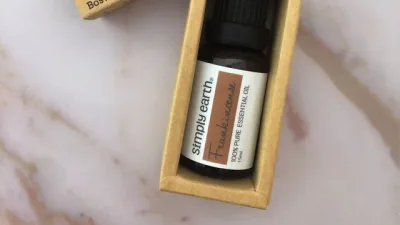
About the Author: Katie Veldkamp
Katie Veldkamp
Certified Aromatherapist · Co-Founder, Simply Earth
Katie Veldkamp is a Certified Aromatherapist and co-founder of Simply Earth. She personally formulates and reviews SE's essential oil blends and verifies all benefit claims on Simply Earth content before it goes live.
Join 20,000+ Earthies Making Their Homes Natural
New recipes, usage guides, and DIY tips — delivered free.
No spam. Unsubscribe any time.
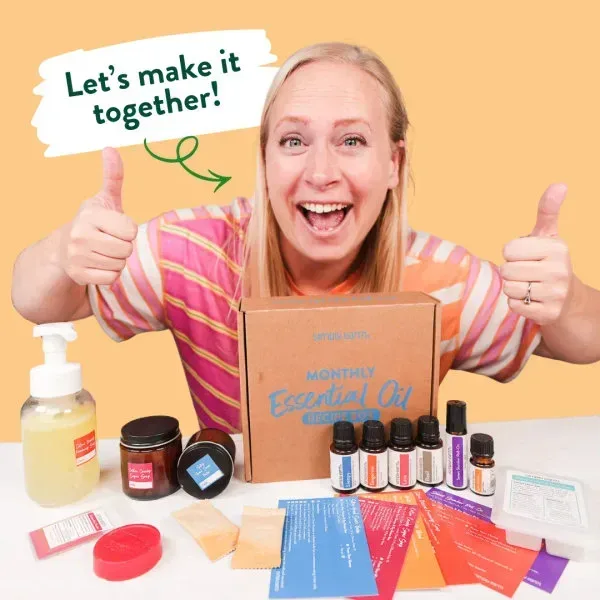
Learn by doing
Make your own natural products every month.
The Simply Earth Recipe Box ships 4 full-size essential oils, 6 natural recipes, and everything you need to make them. No guesswork.
Start My Recipe Box