
Black Pepper Essential Oil: 7 Benefits, Uses & Recipes

Katie Veldkamp
Lead Certified Aromatherapist
Fact Checked & Approved
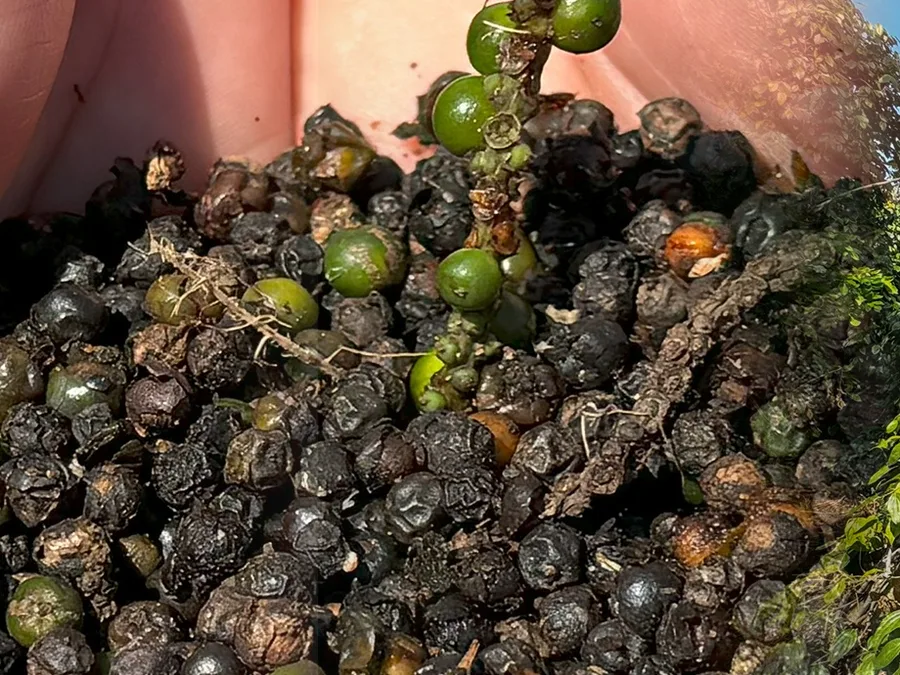
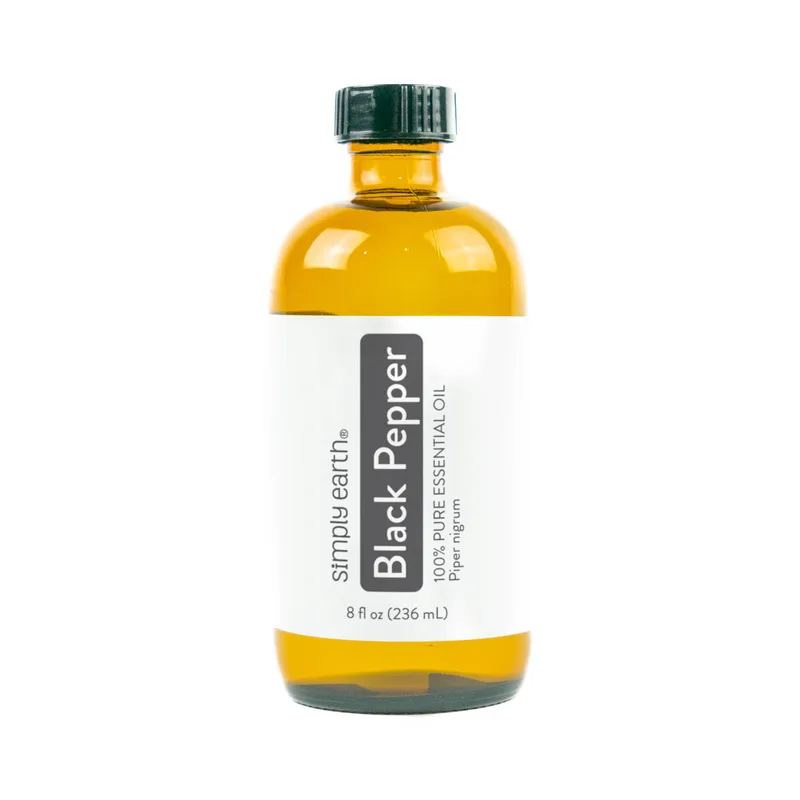
Black pepper was once valuable enough to be used as money, which is a strange thing to remember while you are grinding it over eggs. The essential oil is that same spice concentrated — steam distilled from the dried, unripe berries of Piper nigrum, a climbing vine whose fruit is barely five millimetres across. It smells sharp, warm and unmistakably peppery, and it behaves very differently from the sweet and floral oils most people start with. This is a warming oil: the one to reach for in a massage blend on a cold morning, in an inhaler when a craving hits, or as the single spicy drop that stops a diffuser blend smelling like everyone else's. Simply Earth's comes from Malagassi, a farm in Madagascar we buy from directly.
In this Guide
Free Cheat Sheet
New to Essential Oils? Start Here.
Get our free Essential Oil Guide — the safe-use basics, dilution rates, and the oils worth buying first.
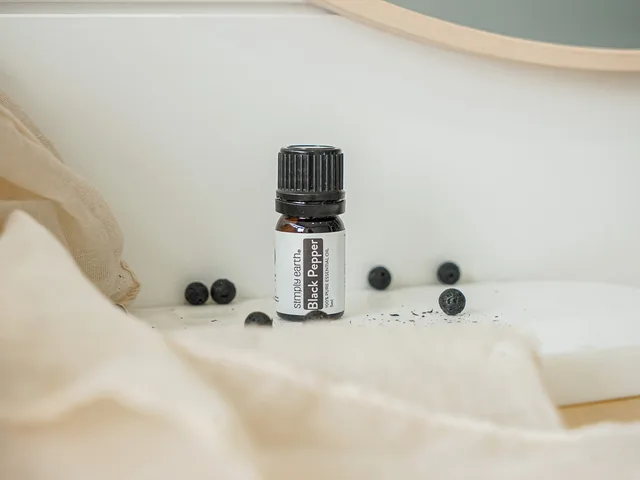
BEST FOR: PERSONAL INHALERS & QUIT-SMOKING SUPPORT
This is the one benefit where the research is about inhaling black pepper aroma rather than about the spice in food, which makes it the strongest-grounded row on this page. A small comparison study on a US campus by Cordell and Buckle (2013) found inhaled black pepper aroma reduced nicotine cravings and lengthened the gap between cigarettes. It was a small study, so treat it as promising rather than settled — but if you are white-knuckling a habit, a black pepper inhaler is a genuinely reasonable thing to keep in a pocket.
KATIE'S TIP
Fifteen drops on the wick of a blank inhaler, capped, in your bag. When the craving arrives you have about four seconds of willingness — the inhaler has to already be within reach or it does not work.
USE IT IN →

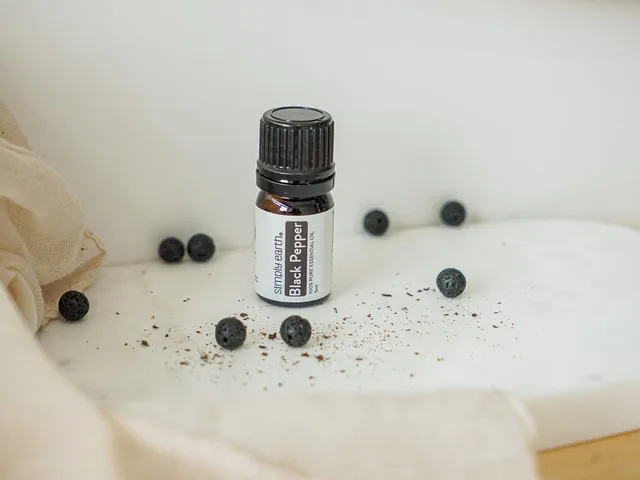
BEST FOR: MASSAGE BLENDS & WARMING ROLL-ONS
Boosting circulation is on Simply Earth's own list of uses for this oil, and there is a clinical trial behind it. A randomised controlled study by Handan, Ayse Sonay and Ahmet (2021) applied black pepper essential oil topically before peripheral IV catheter insertion and found it increased the visibility and diameter of veins. That is a narrow, practical finding rather than a claim about your whole cardiovascular system — but it is a real measurement of the oil doing something warming at the surface.
KATIE'S TIP
Two percent in a carrier oil across the shoulders on a cold morning. It warms slowly rather than all at once, so give it five minutes before you decide it is not working and add more.
USE IT IN →
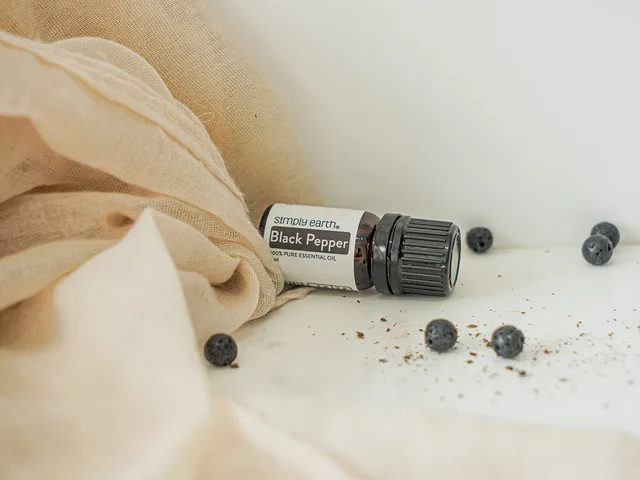
BEST FOR: COLD HANDS, WINTER BLENDS & AUTUMN DIFFUSING
"Warms" is the first use Simply Earth lists for black pepper, and the chemistry behind it is not mysterious. trans-β-Caryophyllene, the compound the legacy version of this article named first, is associated with improved cold tolerance at low ambient temperatures — which is a technical way of saying black pepper reads as warm to the body as well as to the nose. It is why this oil turns up in muscle rubs and winter diffuser blends far more often than its reputation as a kitchen spice would suggest.
KATIE'S TIP
Black pepper is a middle note with a thin consistency, so it moves fast in a blend. One drop is usually the whole of your spice budget — two and it stops being a background note and starts being the point.
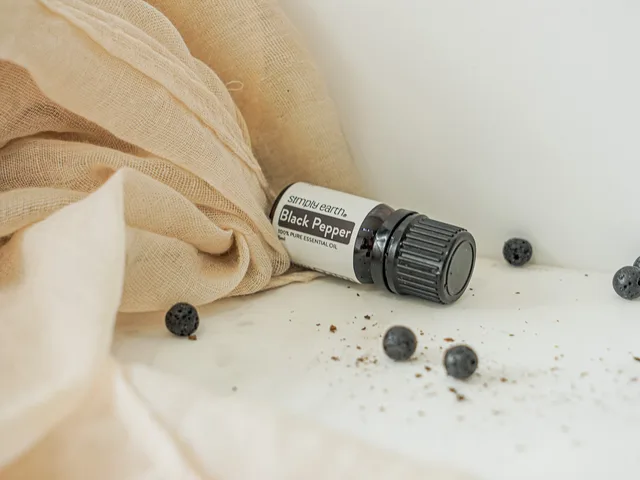
BEST FOR: DILUTED TUMMY MASSAGE
Black pepper's association with digestion is old enough to predate any chemistry, and a 2018 review by Zuzanna and colleagues gathers the medicinal literature on black pepper alongside curcuma and ginger. Aromatherapists typically use it as a diluted clockwise abdominal massage rather than anything ingested — Simply Earth does not recommend taking essential oils internally except under a doctor certified in aromatherapy.
KATIE'S TIP
Clockwise, following the direction of the colon, one to two percent in a carrier. Warm the oil in your palms first — cold oil on a tense stomach undoes most of the point.
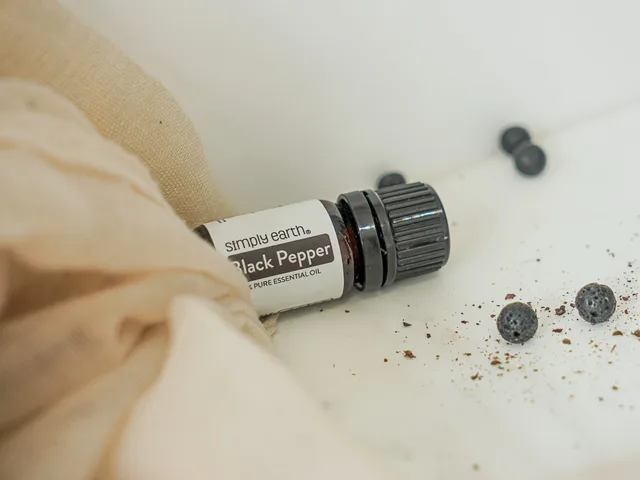
BEST FOR: COLD-SEASON DIFFUSING
A 2021 review of the phytochemistry and therapeutic potential of black pepper essential oil and piperine by Kaliyaperumal and colleagues catalogues the respiratory and antimicrobial properties attributed to the oil and concludes they merit further study. That is an honest summary of where the evidence sits — worth diffusing in the cold months, not a treatment for anything.
KATIE'S TIP
Black pepper is too sharp to diffuse on its own for long. One drop against three or four of a citrus or a soft blend is the ratio that makes it read as warmth rather than as a sneeze.
USE IT IN →

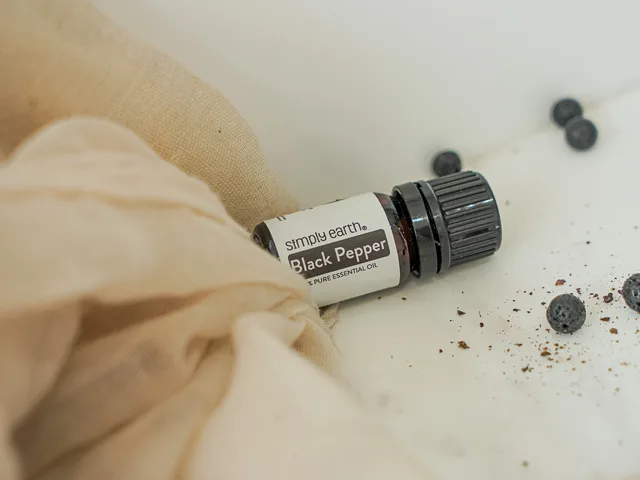
BEST FOR: HOUSEHOLD & FRESHENING BLENDS
Research by Gülçin (2009) found black pepper seeds showed strong total antioxidant activity, resisting a large majority of free-radical damage in laboratory testing. Worth being precise about what that is and what it is not — it was measured in vitro, on the seeds, not on people and not on the distilled essential oil. An earlier version of this article described the oil as detoxifying the body — it does not, and that framing has been removed rather than softened.
KATIE'S TIP
This is the row I would treat as the least practical of the seven. Use black pepper because it smells good and warms things up, not because of an antioxidant number from a test tube.
USE IT IN →
Studied for Cholesterol — With a Big Caveat
The research is about the spice, not the oil.
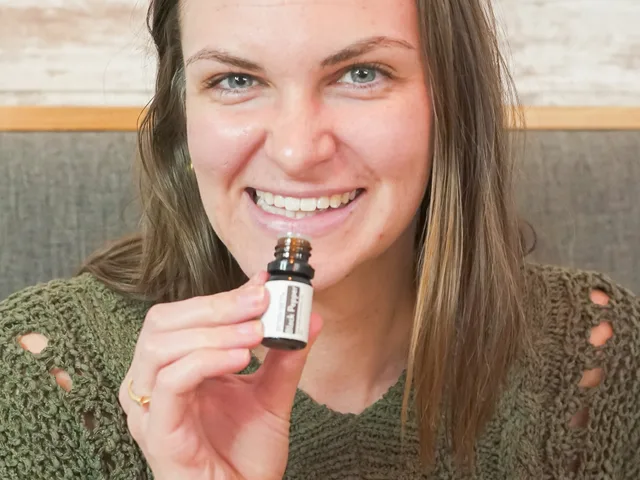 Shop This Oil
BEST FOR: SEASONING YOUR FOOD, HONESTLY
A 2013 cell-culture study by Duangjai and colleagues found black pepper extract and its compound piperine reduced cholesterol uptake and affected cholesterol transporter proteins. Here is the caveat that matters more than the finding — piperine is what makes pepper taste hot, and it is essentially absent from the steam-distilled essential oil — it is too heavy to carry over in steam. So this is evidence for black pepper the spice on your food, not for black pepper the essential oil in your diffuser. We have kept the row because the legacy article made the claim and readers arrive looking for it, and corrected what it says.
KATIE'S TIP
If cholesterol is the reason you are here, the useful version of this is a pepper grinder, not a bottle of oil. Talk to your doctor about the rest.
Put It to Work
How to Use Black Pepper Essential Oil
Diffuser
- • 1 drop against 3–4 drops of a citrus or a soft blend
- • Never the lead note — black pepper takes over a room fast
- • Especially good in autumn and winter blends
- • Listed by Simply Earth as both cat safe and dog safe
Topical (Roller & Massage)
- • 10ml roller bottle with fractionated coconut oil or jojoba
- • 1–2% for daily use; no special dilution rate applies to this oil
- • Shoulders, lower back and calves for warming blends
- • Patch test on the inner arm before the first full use
Personal Inhaler
- • 15 drops of black pepper on a blank inhaler wick
- • The best-evidenced way to use this particular oil
- • Keep it where the craving happens, not in a cupboard
Household
- • A single drop lifts a citrus cleaning blend out of the ordinary
- • Pairs with orange and lemon in a kitchen diffuser
- • For external and aromatic use only — never add to food
Know the Difference
Black Pepper vs. Pink Pepper vs. Oleoresin
Three things get sold under the word "pepper" and only one of them is on this page. Black pepper essential oil is steam distilled from the dried unripe berries of Piper nigrum. Pink pepper comes from Schinus molle, a completely different plant — Simply Earth sells it too, and one reviewer describes it as peppery with a fruity finish, which is a fair summary of the difference. Oleoresin is a culinary solvent extract that keeps the piperine and therefore the heat; it is not an essential oil and we do not sell it. If a "black pepper oil" claims to be spicy on the tongue, that is oleoresin or a fragrance oil, not this.
Swipe to compare →
Black Pepper Essential Oil The subject of this page | Pink Pepper Essential Oil A different plant entirely | Black Pepper Oleoresin A culinary extract, not an oil | |
|---|---|---|---|
| Botanical Name | Piper nigrum | Schinus molle | Piper nigrum |
| What It Is | Steam distilled essential oil | Steam distilled essential oil | Solvent extract used for flavouring |
| Plant Part | Dried unripe berries | Dried ripe berries | Dried berries |
| Aroma | Warm and spicy, crisp and sharply peppery | Peppery with a soft fruity finish | Concentrated culinary pepper |
| Contains Piperine | No — too heavy to carry over in steam | No | Yes — this is where the heat lives |
| Origin | Madagascar | Varies by harvest | N/A — not sold by Simply Earth |
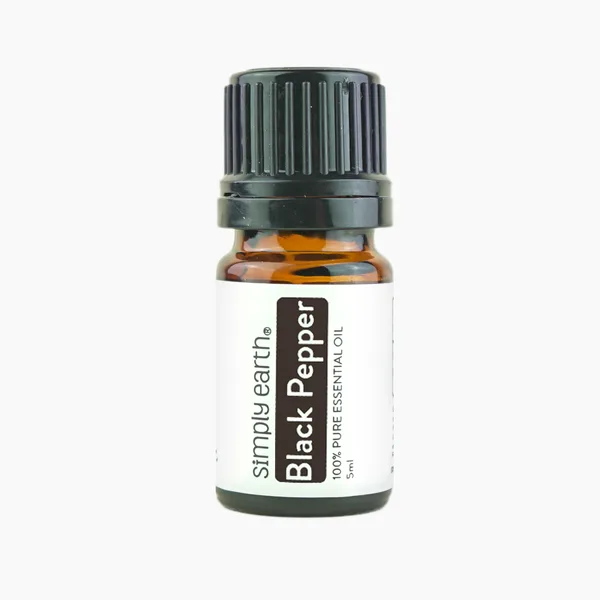
| Sold by Simply Earth | Yes, 5mL | Yes | N/A — not sold by Simply Earth |
| Simply Earth | This page's oil | — | — |
Perfect Pairs
Black Pepper Blends Well With…
Simply Earth's own product notes list all sixteen. The citrus oils are the safest place to start — one drop of black pepper against three or four of grapefruit or orange is the combination Earthies come back to most.
Black Gold
The Spice That Was Once Money
Black pepper has a nickname it earned honestly: black gold. There was a stretch of history when peppercorns were valuable enough to be used as currency — to pay rents, settle debts and stand in for coin — and the trade routes that carried them shaped a good deal of the map. It is genuinely strange to hold that against the jar sitting next to your stove.
The plant itself is undramatic. Piper nigrum belongs to the family Piperaceae, and it is a flowering vine rather than a tree or a bush, producing tight strings of fruit called peppercorns about five millimetres across. Black pepper — as opposed to white or green — is made from the green, unripe drupes, picked before they ripen and then dried until they wrinkle and darken. That timing is the whole difference between the three.
The essential oil is a more recent idea than the spice, and a different product from it. Steam distillation lifts the aromatic, volatile part of the berry and leaves the piperine behind, which is why the oil smells intensely of pepper but has none of pepper's bite on the tongue. What you get is the scent and the warmth without the heat — which turns out to be exactly what you want in a massage blend.
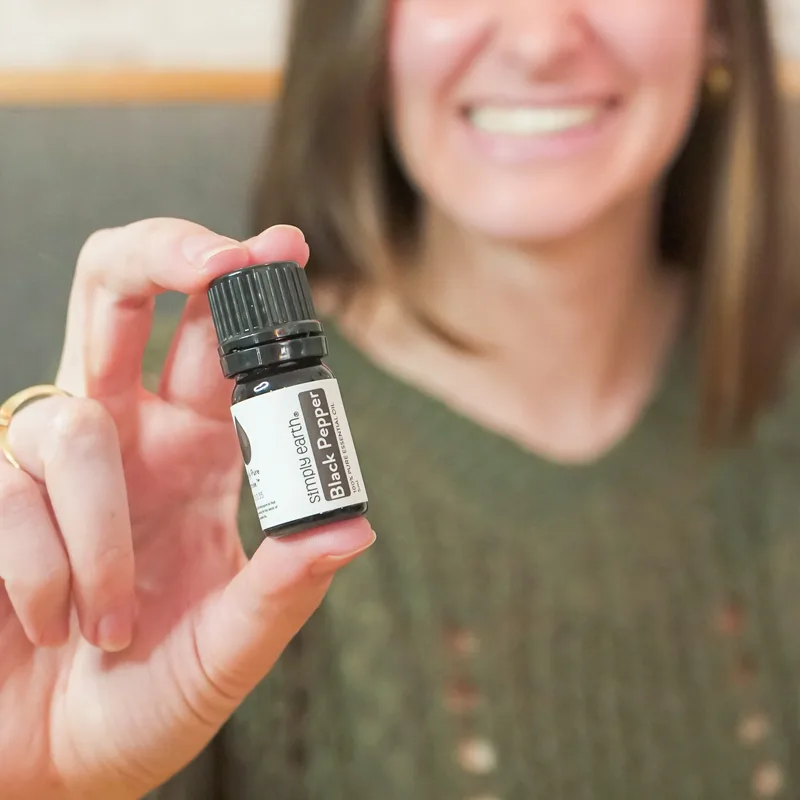
What's Inside
What's Actually In the Bottle
Three constituents, taken from Simply Earth's own product record. What is not in the bottle matters just as much — piperine, the compound that makes pepper hot, does not survive steam distillation.
trans-β-Caryophyllene
The lead constituent · Warming
The first compound Simply Earth lists for this oil and the one most responsible for how it behaves. A sesquiterpene found across many spice plants, caryophyllene contributes much of black pepper's aroma and is associated with improved cold tolerance at low ambient temperatures. It is the reason this oil reads as warming rather than merely spicy.
Limonene
Bright · Lifting
The same compound that dominates citrus peel oils, and the reason black pepper is not as heavy as its reputation suggests. Limonene is widely used as a fragrance ingredient in cosmetics and perfumery, and as a solvent in cleaning products. In this oil it lifts the top of the aroma so the spice does not sit flat.
Sabinene
Peppery · Green
One of the compounds that gives black pepper its distinctive spiciness. Sabinene is used in the perfume, flavour and pharmaceutical industries for its pleasant odour, and has been studied for antifungal and anti-inflammatory activity. It sits between the caryophyllene and the limonene and holds the whole aroma together.
Every batch of Simply Earth Black Pepper is third-party GC/MS tested and a batch-specific report is available with every bottle. We do not hold a linked spec sheet for a specific batch on this page, so no constituent percentages are quoted here — only the compounds Simply Earth names for the oil.
Support The Source
Straight From Malagassi Farm, Madagascar
Simply Earth sources its black pepper directly from Malagassi, a farm in Madagascar — and this is one of the few oils where we have been out to film it. Madagascar grows some of the best black pepper in the world, and buying from the farm rather than through a chain of traders means the money reaches the people actually growing it, in the form of work and investment in their community.
That matters more here than the phrase "ethically sourced" usually signals. Madagascar's vanilla and spice trades are famous for how little of the final price reaches the grower. A direct relationship is the difference between a farm that can plan and a farm that takes whatever this season's buyer offers.
Every batch is GC/MS tested by a third party and the batch-specific report is available with the bottle.
Madagascar
Where It's Grown
Steam Distilled
From Dried Berries
Public
GC/MS Results
Use It Right
Things to Remember When Using This Oil
Always dilute before applying to skin. Black pepper is a warming oil and is unlikely to irritate skin when diluted properly. Simply Earth lists no special dilution rate for it — the general guidance applies. See our dilution chart for the rates.
Do a patch test on the inner arm before the first full use. This oil may cause skin irritation in some individuals.
Don't overdo it. Simply Earth's own product guidance notes that using too much of this oil could over-stimulate the kidneys. More is not better with black pepper — it rarely improves a blend and it is the one real caution on the label.
Avoid contact with eyes. For external and aromatic use only.
Kid safe from age 2, per Simply Earth's product guidance.
Pregnancy and breastfeeding: listed as safe, but consult your doctor first.
Cat safe and dog safe, per Simply Earth's product guidance. More on using essential oils with cats and with dogs.
We don't recommend ingesting essential oils unless under the direction of a doctor certified in aromatherapy. Here is why we don't ingest essential oils.
If the oil has been oxidized — left with the cap off for long periods — it is more likely to cause skin irritation. Replace it.
These statements have not been evaluated by the Food and Drug Administration. This product is not intended to diagnose, treat, cure, or prevent any disease.
Real Results
What Earthies Are Saying
"I didn't think I would like this oil. I was pleasantly surprised — even if I can smell the pepper, the smell is not overwhelming. Love it, I'm sure I'll make more blends with this oil."
Joanne B.
Verified Buyer • Black Pepper Essential Oil
"I love the Black Pepper Essential Oil. I used it most recently in my cold water diffuser with this blend for a nice fragrance to start the Autumn season — 3 drops Bergamot, 2 drops Black Pepper, 2 drops Grapefruit. The black pepper added a nice spice to the overall scent and it was so easy to use."
Lisa F.
Verified Buyer • Black Pepper Essential Oil
"Sharp spicy aroma that makes masculine products full of awesomeness."
Suzan C.
Verified Buyer • Black Pepper Essential Oil
OUR SIMPLY PURE PROMISE
What Goes Into Your Products Matters
Certified 100% Pure
No fillers, no synthetics. Just pure oil.
GC/MS Third-Party Tested
Batch-specific reports with every bottle.
Ethically Sourced from Quality Farms
Responsibly harvested. People and planet first.
Madagascar
Where It's Grown
Farm partner Malagassi
Dried Berries
What We Distill
Steam distilled, no piperine carried over
Public
GC/MS Tests
MLM brands: Rarely
Your Order Changes Lives: 13% of profits fight human trafficking globally.
Black Pepper Essential Oil FAQ
The questions Earthies actually ask about this oil — including the two where the honest answer is "less than you have read elsewhere".
What does black pepper essential oil smell like? +
Sharp, warm and unmistakably peppery, with a crisp edge. Simply Earth describes the aroma as warm and spicy. It is a middle note with a thin consistency, and it is much stronger in a blend than most people expect — one drop usually does the whole job.
Is black pepper essential oil spicy on the skin? +
It is warming rather than hot. The compound that makes ground pepper burn your tongue is piperine, and piperine is too heavy to carry over in steam distillation, so it is essentially absent from the essential oil. You get the scent and a gentle warmth, not the bite. Dilute it anyway.
Can black pepper essential oil really help with cravings? +
It is the best-evidenced use for this oil. A small 2013 comparison study found that inhaling black pepper aroma reduced nicotine cravings and lengthened the time between cigarettes. It was a small study, so it is promising rather than proven — but unlike most claims made for this oil, that research was about inhaling the aroma, which is exactly how you would actually use it.
Does black pepper essential oil lower cholesterol? +
No, and we would rather say so plainly. The research people cite is a cell-culture study of black pepper extract and piperine — the spice, not the distilled oil. Since piperine does not survive steam distillation, that finding does not transfer to the essential oil. Black pepper on your food is a different conversation, and one for your doctor.
How much black pepper essential oil should I use in a diffuser? +
One drop, against three or four drops of something softer or brighter. Black pepper is not a solo diffusing oil — on its own it is sharp enough to make people sneeze. Citrus oils are the easiest partners.
Is black pepper essential oil safe around pets and children? +
Simply Earth lists it as kid safe from age 2, and as both cat safe and dog safe. As with any oil, diffuse in a ventilated room and give pets a way to leave. For topical use on children, dilute well and patch test first.
What is the difference between black pepper and pink pepper essential oil? +
They come from two unrelated plants. Black pepper is Piper nigrum, the vine that produces culinary peppercorns. Pink pepper is Schinus molle, a tree whose berries only look like peppercorns. Simply Earth sells both — pink pepper is peppery with a soft fruity finish, black pepper is sharper and warmer.
Where does Simply Earth's black pepper essential oil come from? +
Malagassi, a farm in Madagascar that Simply Earth buys from directly and has visited and filmed. Madagascar grows some of the best black pepper in the world, and buying farm-direct means more of the price reaches the people growing it.
About the Author: Katie Veldkamp
Katie Veldkamp
Certified Aromatherapist · Co-Founder, Simply Earth
Katie Veldkamp is a Certified Aromatherapist and co-founder of Simply Earth. She personally formulates and reviews SE's essential oil blends and verifies all benefit claims on Simply Earth content before it goes live.
Join 20,000+ Earthies Making Their Homes Natural
New recipes, usage guides, and DIY tips — delivered free.
No spam. Unsubscribe any time.

Learn by doing
Make your own natural products every month.
The Simply Earth Recipe Box ships 4 full-size essential oils, 6 natural recipes, and everything you need to make them. No guesswork.
Start My Recipe Box$39.99 for your first box, then $49.99/month. Skip, pause, or cancel anytime.